Lietuvēns

Tradition: Latvian Mythology
Alternative Names: Lietuvēns, Lietonis, Lītūņš
Category: Demon


The Myth

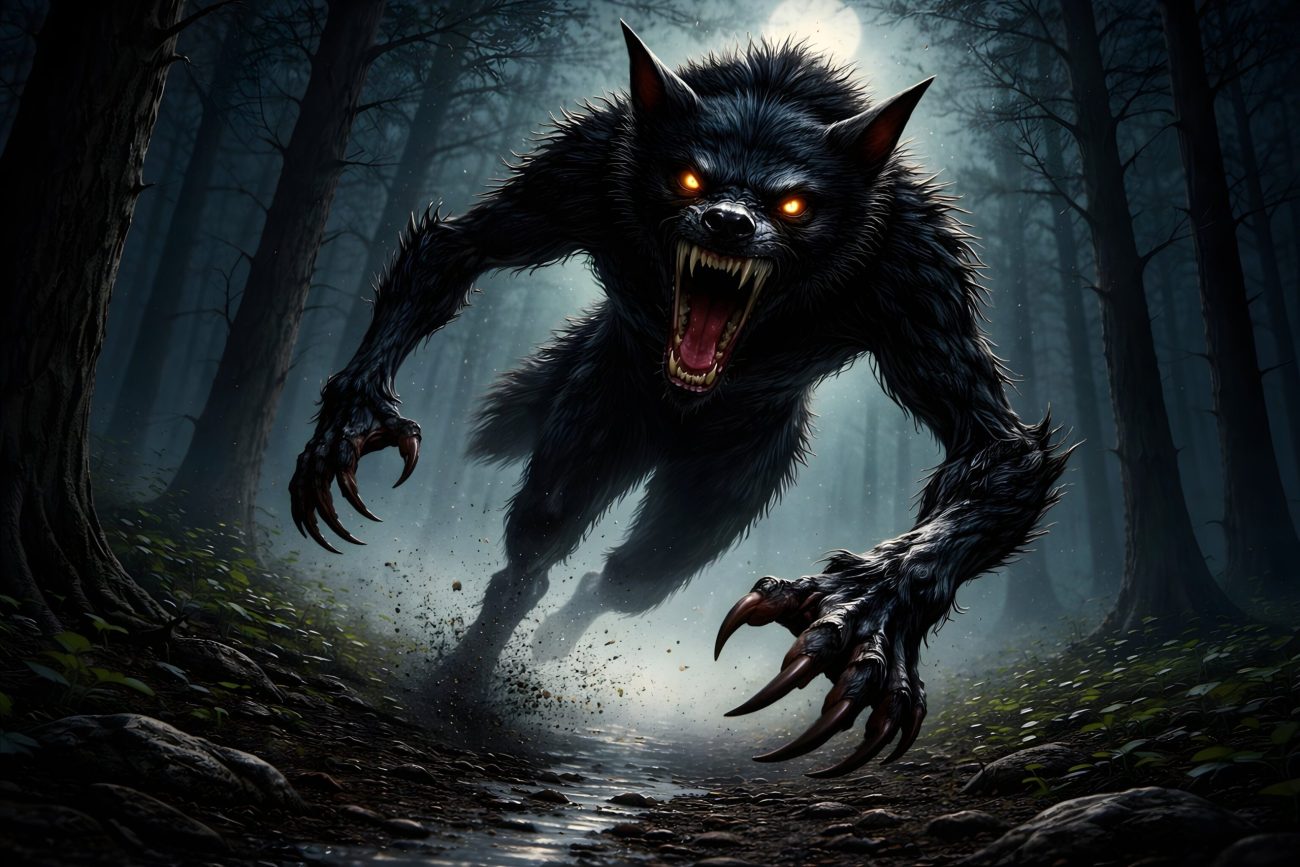
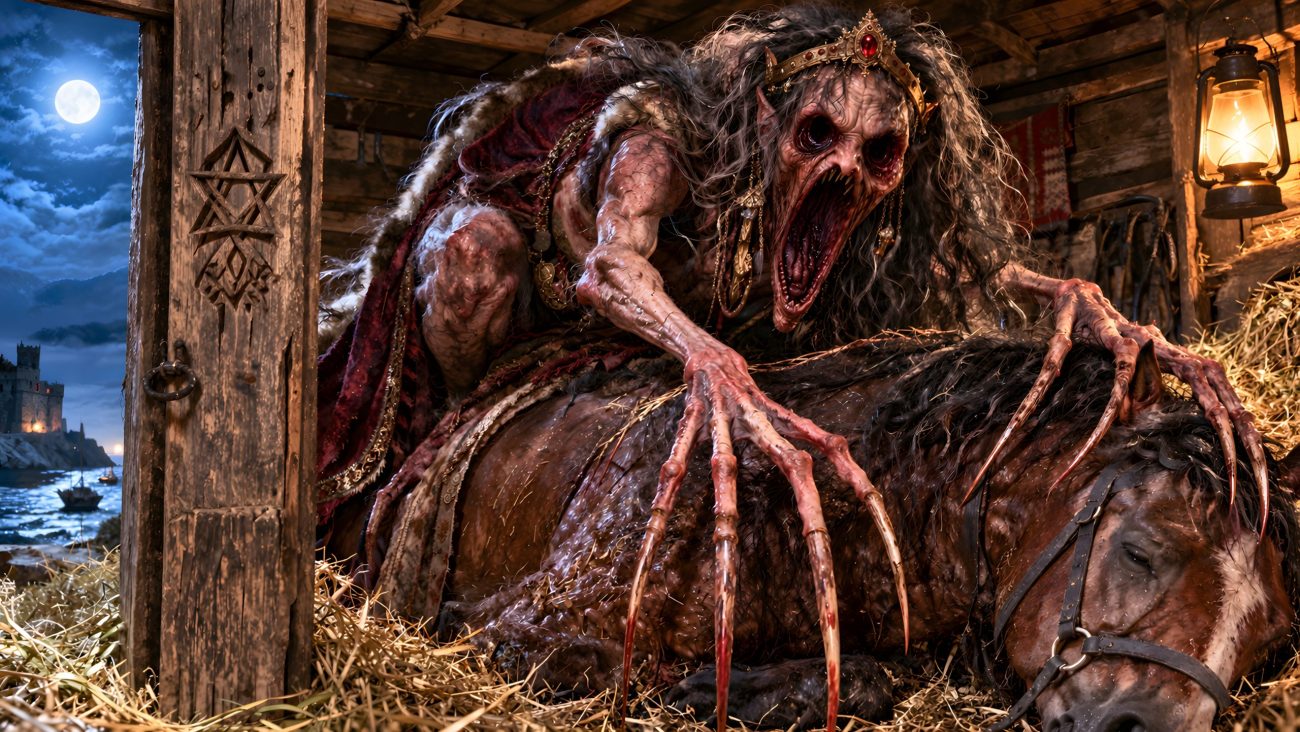
Lietuvēns is usually described as a small, wretched-looking child that moves quickly. It sometimes takes the form of an ugly, vicious woman resembling a witch. It can enter houses through holes, cracks, keyholes, or other small openings and always leaves through the same place by which it entered.

Lietuvēns is believed to be the soul of a murdered person who was strangled, drowned, or hanged and is cursed to remain in the world for as long as that person was originally meant to live. In some beliefs, it is the soul of an unbaptized child.

At night, Lietuvēns rides upon sleeping people and domestic animals, particularly horses and cows, and strangles or crushes them beneath its weight. Its victim rapidly becomes exhausted and covered in sweat, losing their strength as the creature tortures them. The victim may see only a glimpse of Lietuvēns and feel its entire weight pressing down upon them, making it difficult to breathe or move. Eventually the creature leaves, sometimes leaving the victim close to death. Sleep paralysis is therefore understood as an attack by Lietuvēns.

Lietuvēns can also attack animals, although it is said not to torment people or animals that were born during the daytime.

A person attacked by Lietuvēns can drive it away by moving the little or big toe of the left foot. The creature immediately flees.

The Lietuvēns cross is another protection against the creature. It may be a simple pentagram or a larger double form made from two pentagrams. The strongest form is associated with the auseklis, the morning star and the victory of light over darkness. The sign can be placed on doors, thresholds, windows, animals, or even on the fingernails of someone suffering from an attack. It must be drawn in a single continuous movement; if the line is broken, the protection will not work.

Lietuvēns may also be trapped by sealing the hole, crack, or keyhole through which it entered. A piece of mottled wood is used to close the opening. If the creature cannot find a way out, it may transform into a beautiful young woman and remain inside the house until the opening is restored. As soon as the exit is opened, she escapes.

Farm animals can be protected by attaching a knife, comb, or scythe to their backs, since Lietuvēns can be injured by sharp objects. It may also be driven away with a rowan stick when caught behind an animal’s left ear. Oiling an animal’s back makes it too slippery for Lietuvēns to ride, and animals with a cut right ear are also said to be avoided by the creature.

Lietuvēns can finally be freed by finding its body and burying its bones with proper honors. At the moment of burial, a thunderstorm and lightning are said to arise, signifying that the troubled soul has finally been taken into the other world.


Sources

“Lietuvēns.” Wikipedia: The Free Encyclopedia. Wikimedia Foundation. Accessed September 12, 2026. https://en.wikipedia.org/wiki/Lietuv%C4%93ns

Māra

Tradition: Latvian Mythology
Alternative names: Māre, Mārīte, Mārša, Māršava
Category: Deity, Cow


The Myth

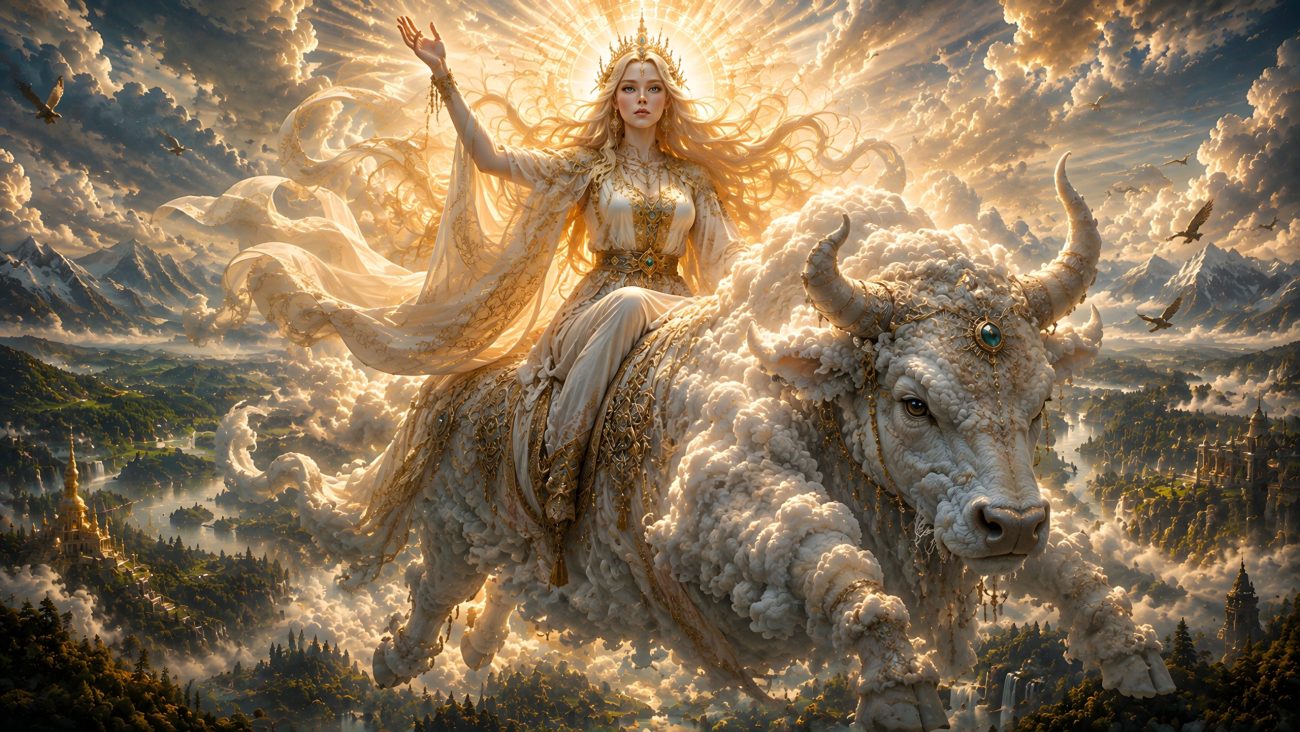
Māra is described as the highest-ranking goddess in Latvian mythology and an ancient Dawn-goddess, previously called Austra.

She is the patroness of feminine duties, including children and cattle, as well as economic activities such as bread-making, money, and markets. She is associated with the land itself, which is called Māras zeme, or “Māra’s land.”

Māra is also called the Mother of Cows (Govu māte). In this role, she is associated with the protection and care of cattle.

Māra is described as the alternate side of Dievs. At death, Māra takes a person’s body, while Dievs takes their soul.

A festival called Māras was held in her honor on August 15.


Sources

“Māra.” Wikipedia: The Free Encyclopedia. Wikimedia Foundation. Accessed August 29, 2026. https://en.wikipedia.org/wiki/M%C4%81ra


Lāčplēsis

Tradition / Region: Latvian Mythology
Alternative names: The Bear-Slayer
Category: Bear, Hero


The Myth

Lāčplēsis, whose name means “The Bear-Slayer,” is the legendary hero of the Latvian national epic. According to the story, he was destined by the gods to defend the Latvian people against foreign invaders. His extraordinary strength came from his bear-like heritage, as his mother was said to have been a she-bear, and his supernatural power resided in his bear ears.

As a young man, Lāčplēsis earned his name by saving his foster father from a charging bear. Grasping the animal by its jaws, he tore it apart with his bare hands. Afterwards, he journeyed to Burtnieki Castle to continue his education, but his travels soon led him into adventures involving witches, spirits, and the forces of the Devil.

While staying at the castle of Aizkrauklis, Lāčplēsis uncovered the secret activities of the witch Spīdala, who served the Devil. She attempted to kill him by casting him into the whirlpool of Staburags, but he was rescued by the goddess Staburadze and taken to her crystal palace beneath the waters. There he met the maiden Laimdota, with whom he fell in love, and later befriended the mighty hero Koknesis.

Lāčplēsis fought many supernatural enemies during his journeys. He battled the giant Kalapuisis before the two heroes made peace and united against the invading German crusaders. He also spent a night in a cursed sunken castle, breaking its enchantment, and later defeated monstrous beings with three, six, and nine heads on the Enchanted Island. During these adventures he freed Spīdala from her pact with the Devil and reunited with Laimdota and Koknesis.

Eventually the struggle against the German crusaders reached its climax. The traitor Kangars revealed the secret of Lāčplēsis’ strength to the enemy, explaining that his power came from his bear ears. During a final contest with the Dark Knight, both of Lāčplēsis’ bear ears were severed, robbing him of his immense strength. Even so, he wrestled his opponent to the edge of the Daugava, throwing the Dark Knight into the river while falling in himself.

Neither hero was seen again. The legend promises that the struggle was not truly finished and that one day Lāčplēsis will rise again to defeat the Dark Knight, bringing freedom to the Latvian people once more.


Sources

Wikipedia contributors. (n.d.). Lāčplēsis. In Wikipedia. Retrieved June 29, 2026, from https://en.wikipedia.org/wiki/L%C4%81%C4%8Dpl%C4%93sis


Jūras Ķēmi

Tradition / Region: Latvian Mythology
Alternative names: Sea Monsters, Monsters of the Northern Sea
Category: Sea Dweller


The Myth

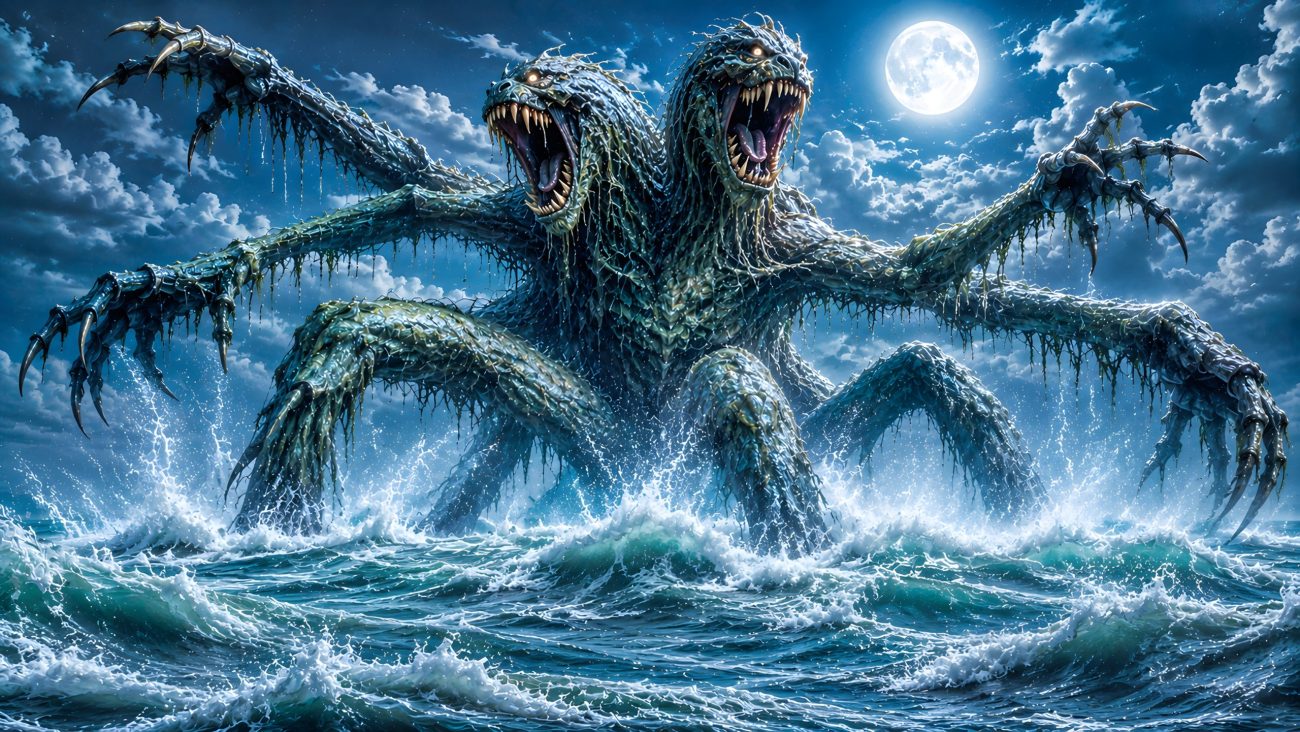
The Jūras Ķēmi are monstrous beings said to dwell in the storm-filled northern seas. They appear during violent winds, thick fog, and freezing darkness, surrounding ships and leading sailors astray.

When the hero Lāčplēsis sailed across the White Sea in search of Laimdota, his ship was driven far from its course by terrible storms. The crew believed that evil powers had surrounded them, for sea monsters tormented the ship day and night, preventing them from finding their way through the endless mist.

The monsters are never fully described, making them even more mysterious. They are portrayed as supernatural horrors that haunt the sea itself, appearing alongside blizzards, hail, darkness, and unnatural weather. Only when the radiant Northern Maiden (Ziemeļmeita) appeared to guide the lost sailors did the ship finally escape their reach.

The Jūras Ķēmi remain shadowy creatures of the unknown ocean—malevolent beings that embody the dangers of the northern sea, attacking lost ships and luring travelers ever deeper into its deadly waters.


Sources

Pumpurs, A. (1888). Lāčplēsis. J. Dēliņa grāmatu spiestuve.


Viesulis

Tradition / Region: Latvian Mythology
Alternate Names: Whirlwind Spirit
Category: Spirit


The Myth

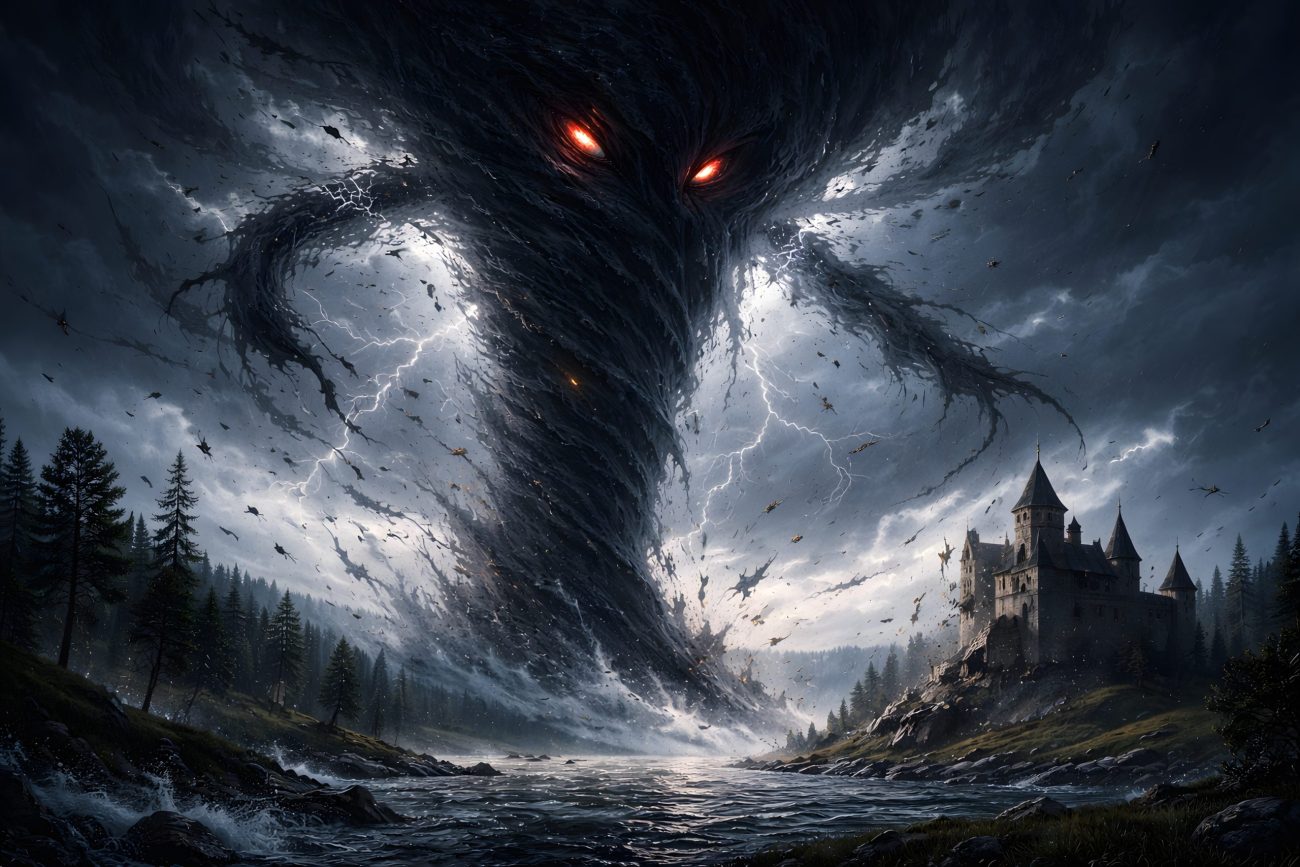
Viesulis is a destructive whirlwind entity from Latvian epic tradition, most notably appearing in the works of Andrejs Pumpurs. It is not merely natural wind, but a supernatural force associated with chaos, divine conflict, and demonic influence.

Viesulis manifests as a violent, living storm — a spiraling whirlwind capable of reshaping the land. In the myth, it is sent by dark forces (the devil or opposing powers) as a weapon, descending from the sky with destructive intent. It is not random: it acts with purpose, targeting specific places.

When it appears, it brings catastrophic consequences. In one account, a whirlwind descends upon the Burtnieki lands, and through human interference and misjudgment, it causes a lake to collapse into the earth, burying a castle beneath it. This shows that Viesulis is not only destructive by nature, but also amplifies the consequences of human actions.

Unlike witches or sorcerers, Viesulis does not speak, scheme, or deceive. Its power lies in raw force — wind, pressure, and motion — acting as an instrument of higher supernatural will rather than an independent thinker.

Viesulis exists between natural and supernatural realms, embodying the idea that storms are not just weather, but manifestations of unseen powers. It represents sudden disaster, divine punishment, or chaos unleashed upon the world.


Sources

AILAB contributors. (n.d.). Pumpurs – Lāčplēsis (3. daļa). In AILAB, from https://web.archive.org/web/20060131100844/http://www.ailab.lv/Teksti/Senie/Pumpurs/3.dala.html

Pumpurs, A. (1888). Lāčplēsis (Bearslayer), III Song: Kangar and Dieterich – The War with the Estonians – The Sunken Castle of the Witches. In Latvian national epic poetry.


Līkcepure

Tradition / Region: Latvian Mythology
Alternate Names: Nagcepure
Category: Sorcerer


The Myth

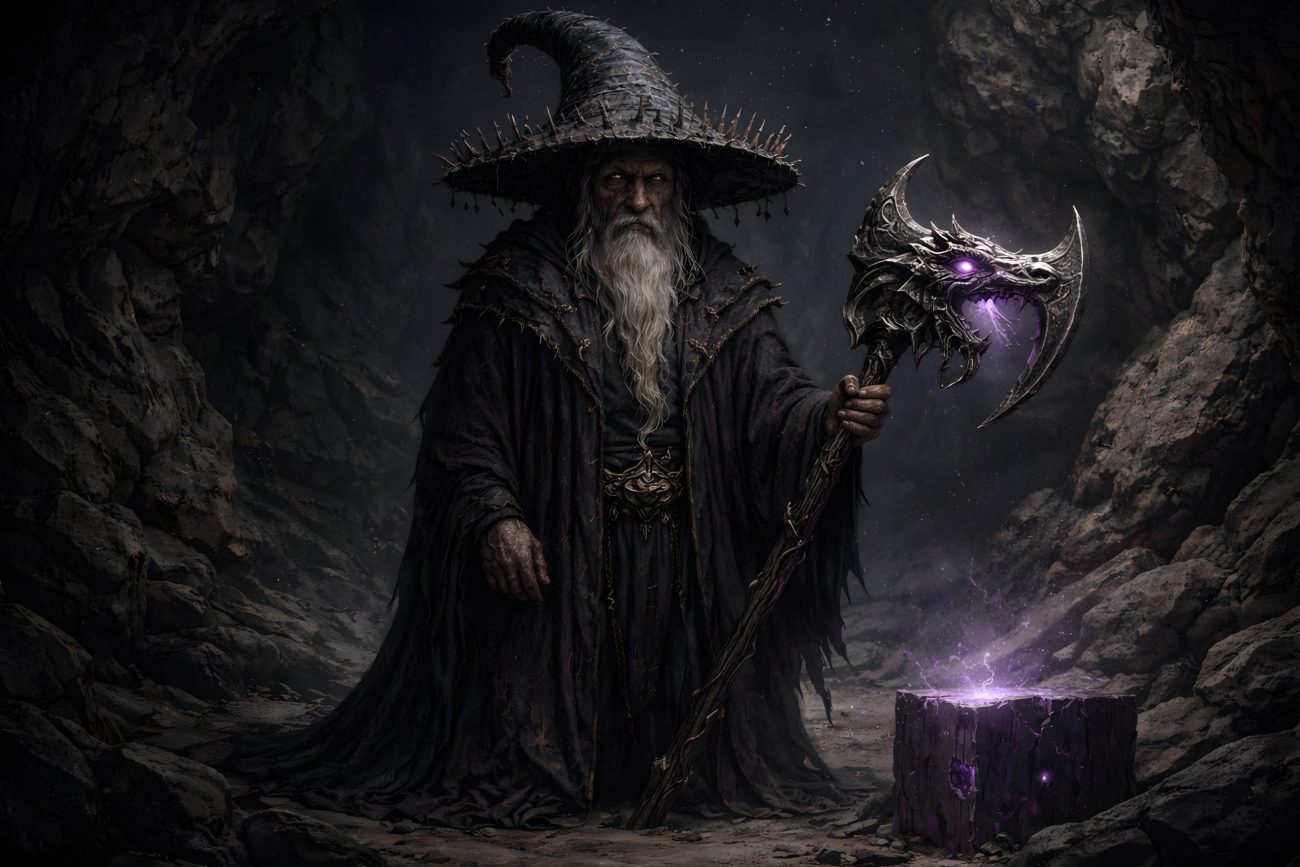
Līkcepure is described as the chief of witches, a powerful supernatural figure distinguished by a crooked hat with a brim made from human cut nails, and referred to as lame.

In the story, during the witches’ gathering inside the devil’s pit, Līkcepure appears after the others have performed their rituals. He emerges hissing and is identified as the leader among the witches. He asks whether everything is prepared, and upon confirmation, strikes a block with an axe. The room fills with fire, and the block transforms into a golden chariot, while the axe becomes a dragon harnessed to it.

He rides with the old witch and takes part in the gathering where the dragon breathes sparks and smoke. When a man named Kangars is brought before him, Līkcepure declares that his time has come and orders that he be thrown into the dragon’s throat. After Kangars begs for more time, Līkcepure offers to spare him if he agrees to certain conditions. Kangars accepts, and Līkcepure grants him additional years.

After this, Līkcepure announces that the matter is finished, departs with the witch, and disappears as fire fills the chamber again.


Sources

AILAB contributors. (n.d.). Pumpurs – Lāčplēsis (2. daļa). In AILAB, from https://web.archive.org/web/20060131100630/http://www.ailab.lv/Teksti/Senie/Pumpurs/2.dala.html

Pumpurs, A. (1888). Lāčplēsis (Bearslayer), II Song: The Bear-World’s First Heroic Deed. In Latvian national epic poetry.


Uguns pūķis

Tradition / Region: Latvian Mythology
Alternate Names: —
Category: Dragon


The Myth

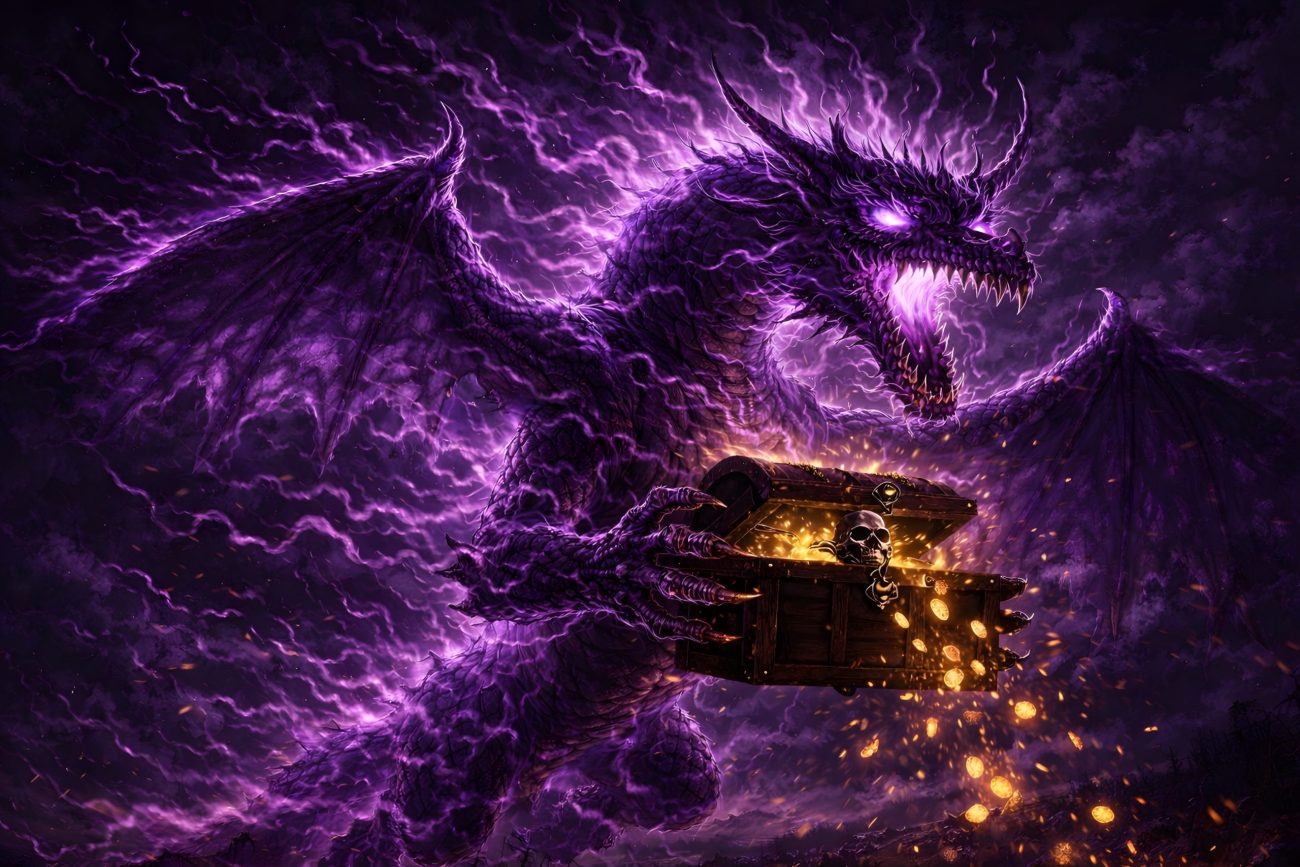
The Uguns pūķis appears as a fire-associated dragon connected to witches and magical activity, seen carrying goods through the night.

In the story, as Lāčplēsis follows Spīdola and enters the dark supernatural setting, dragons with tails are seen moving through the night. These dragons carry money and belongings while flying, and fiery sparks come from them as they move. They appear together with witches and other supernatural beings in the same environment.

Later, a dragon is also seen in connection with the witches’ gathering, where it is bound to a transformed object and breathes out sparks and smoke. It remains present as part of the witches’ actions and surroundings.


Sources

AILAB contributors. (n.d.). Pumpurs – Lāčplēsis (2. daļa). In AILAB, from https://web.archive.org/web/20060131100630/http://www.ailab.lv/Teksti/Senie/Pumpurs/2.dala.html

Pumpurs, A. (1888). Lāčplēsis (Bearslayer), II Song: The Bear-World’s First Heroic Deed. In Latvian national epic poetry.


Giant Bat

Tradition / Region: Latvian Mythology
Alternate Names: —
Category: Bat


The Myth

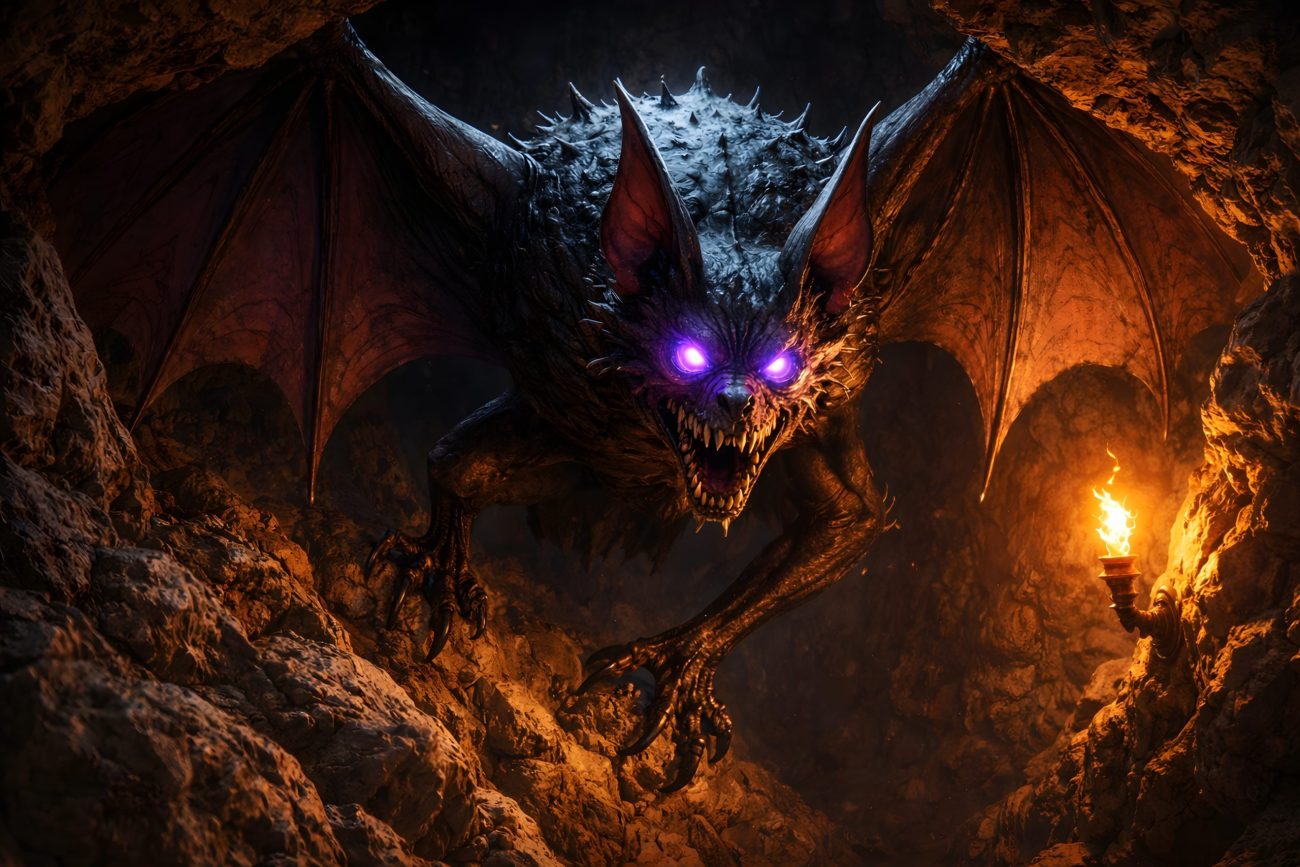
The Giant Bat appears in the underworld setting of the Devil’s Pit, where unnatural creatures inhabit a dark subterranean space entered by Lāčplēsis while following witches.

As Lāčplēsis descends into the pit, deep darkness surrounds him and large bats fly around his head. They move through the air within the underground space together with other creatures such as snakes, owls, and toads. The bats remain present in the smoky, dimly lit environment as he continues deeper into the place where the witches gather.


Sources

AILAB contributors. (n.d.). Pumpurs – Lāčplēsis (2. daļa). In AILAB, from https://web.archive.org/web/20060131100630/http://www.ailab.lv/Teksti/Senie/Pumpurs/2.dala.html

Pumpurs, A. (1888). Lāčplēsis (Bearslayer), II Song: The Bear-World’s First Heroic Deed. In Latvian national epic poetry.


Sumpurnis

Tradition / Region: Latvian Mythology
Alternate Names: Sumpurs, Sumpurni (plural)
Category: Dog, Forest dweller


The Myth

In Latvian tradition, the Sumpurnis is a fearsome being that lives deep within the forests.

It is described as a creature with a human body but the head of a dog. Some tales say it may instead have a bird’s head, a single eye, or a single leg, but it always remains something neither fully human nor beast. The creatures wear garments made from leaves and dwell far from settlements, hidden in the wilderness.

Sumpurni are said to prey on people. They attack travelers, tear them apart, and feed on their flesh and blood. If they do not kill a victim at once, they may bind the person and keep them captive until they decide to eat them later.

Stories often portray them as the opposite of humans. Where people farm and raise animals, the Sumpurni roam as hunters. Where people eat animals, they eat human flesh. They speak in strange, unintelligible voices and live beyond the order of human society.

They were believed to have their own rulers and nobles, marked by long tails that signified status among them. Their closest kin were said to be dogs, and in some stories they were linked with werewolves, sharing with them the idea that a person might be transformed into such a creature through sorcery. In those tales, a magical belt could bind someone into the form, and only by tearing it free could the spell be broken.

Thus the Sumpurnis was remembered as a forest-dwelling dog-headed devourer — a creature of the wilds, living beyond the world of men and feared wherever the deep woods began.


Sources

Wikipedia contributors. (n.d.). Sumpurnis. In Wikipedia, from https://lv.wikipedia.org/wiki/Sumpurnis


Putis

Tradition / Region: Latvian mythology
Alternate Names: Putiene
Category: Dragon


The Myth

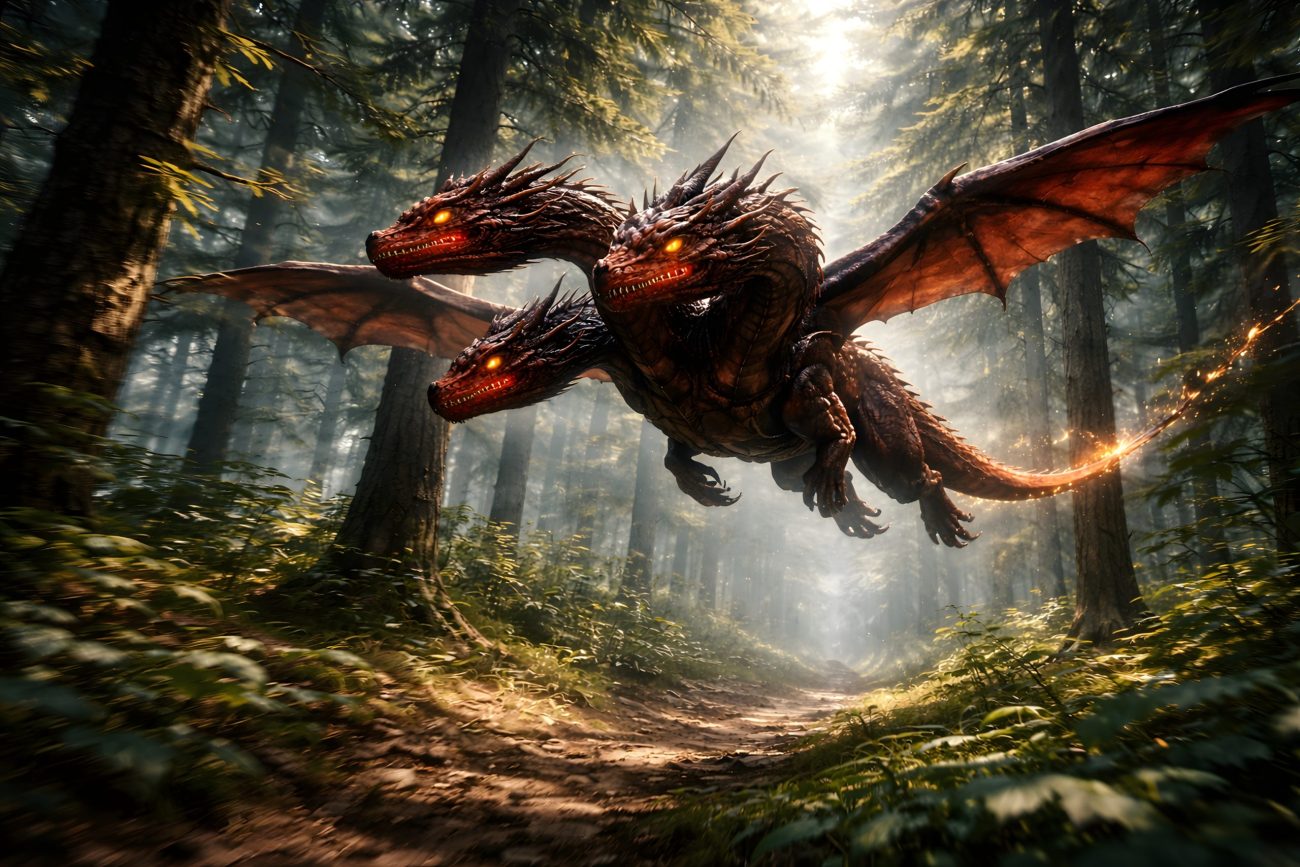
Putis is a fire-breathing, many-headed dragon in Latvian folklore that lives in or near water. When tamed, it brings wealth to a household by stealing food and money from others at night and carrying them through the air while appearing as a flying flame. A domesticated putis lives in farm outbuildings, must be fed blood and given sacrifices, and can be killed with a silver bullet.

According to legend, a farm owner may obtain a putis by buying one or by selling their own soul, or the soul of someone close to them, to the devil or to the putis itself. Once bound to the household, the dragon steals goods from neighbors and brings them home to its master.

However, the price of keeping such a creature is severe. The master of a putis is said to die in agony and find no peace after death, unable to receive God’s blessing.


Sources

Bestiary. (n.d.). Pukis. From https://www.bestiary.us/pukis