Tradition: Latvian Mythology
Alternative Names: Zemnieks
Category: House dweller
The Myth
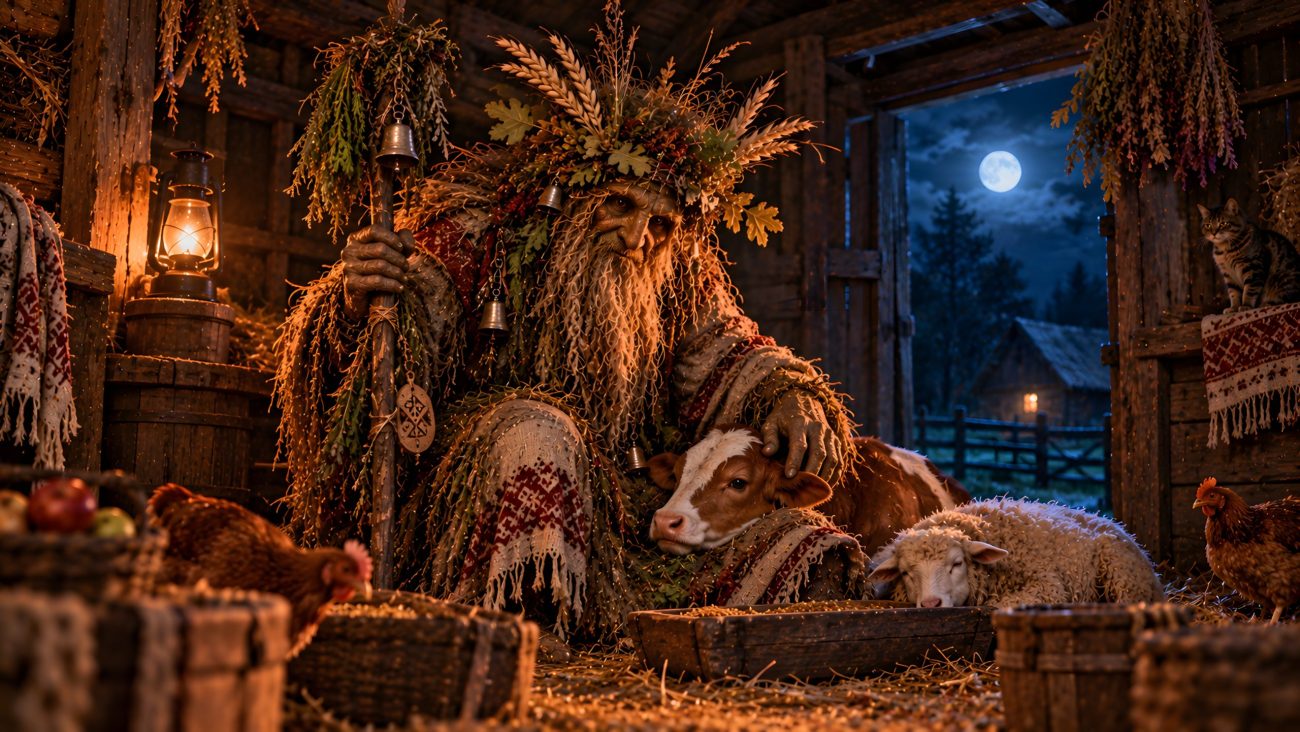
Zemnieks is a protective household spirit in Latvian pagan mythology, regarded as the master and patron of the home. It safeguards the ordinary life of the family and ensures fertility, prosperity, and the health of both people and animals. Its role resembles that of the Slavic Domovoi, although Zemnieks belongs specifically to Latvian tradition. It should not be confused with Putis, another patron spirit associated with Latvian homes.
In ancient Latvia, Zemnieks was honoured through rituals intended to maintain the well-being of the household. One important observance was the festival of Zemnieks, during which livestock were sacrificed to the spirit. These offerings reflected its responsibility for fertility and the prosperity of the family, including the health and productivity of its animals.
Zemnieks was originally associated with agriculture and the earth. As a deity connected with farming, it received particular reverence from rural communities whose livelihoods depended on fertile land and successful harvests. Its worship was especially significant among peasants, for whom the health of livestock and the fertility of the fields were essential to survival.
Over time, the importance of Zemnieks changed as Latvian society developed. With the decline of village life and the growth of cities, the spirit’s original agricultural significance diminished. Its role in popular belief gradually shifted, and it came to be understood more as a household spirit than as a deity specifically associated with agriculture. These changes occurred alongside the spread of Christianity, which contributed to the transformation of older pagan beliefs.
Zemnieks represents the close relationship between domestic welfare, agricultural fertility, and the supernatural in traditional Latvian religion. Its evolution from an agricultural deity into a household protector reflects the changing circumstances of the communities that honoured it, while its central concern remained the prosperity and well-being of the home and its inhabitants.
Sources
“Zemnieks.” New Bestiary (Bestiary.us). https://www.bestiary.us/zemnieks