Velna Bedre

Tradition: Latvian Mythology
Alternative Names: Devil’s Pit
Category: Ghost


The Myth

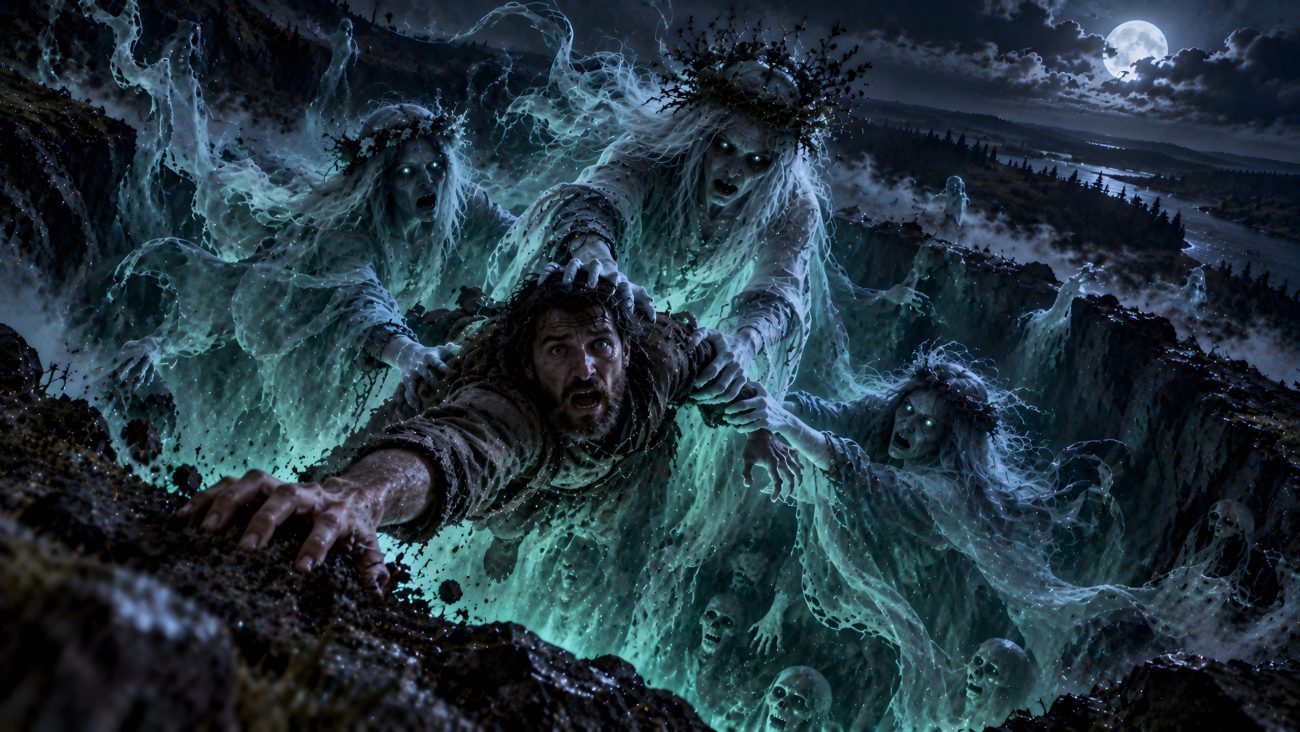
Velna Bedre, meaning the Devil’s Pit, is a sinister place in Latvian legend associated with dangerous supernatural forces. According to Andrejs Pumpurs’s epic poem Lāčplēsis, the pit lies in a landscape shaped by the actions of the devil and the thunder god Pērkons. In the tale, the devil digs a bottomless hole in the course of the Daugava River, causing the river to plunge into its depths. Pērkons responds with lightning and redirects the waters, raising a steep-sided hill around the pit.

The place retains its frightening reputation long after these events. Travellers passing through the area at night are warned that ghosts appear and attempt to deceive them, luring them into the pit and bringing them harm. The legend presents Velna Bedre as a dangerous place where the ordinary world borders a realm of malevolent supernatural beings.

Velna Bedre is also connected to the witch Spīdala and her companions. After travelling through the night on enchanted wooden blocks, they descend into the Devil’s Pit, where witches gather in a strange underground dwelling filled with bones, skulls, magical objects, and monstrous creatures. The pit thus serves not merely as a haunted landmark but as an entrance to a hidden world of witches, devils, and dark magic.


Sources

Pumpurs, Andrejs. “II daļa.” In Lāčplēsis. Archived version, Internet Archive Wayback Machine, January 31, 2006. https://web.archive.org/web/20060131100630/http://www.ailab.lv/Teksti/Senie/Pumpurs/2.dala.html

Urguči

Tradition: Latvian Mythology
Alternative Names: Urguči
Category: Ghost


The Myth

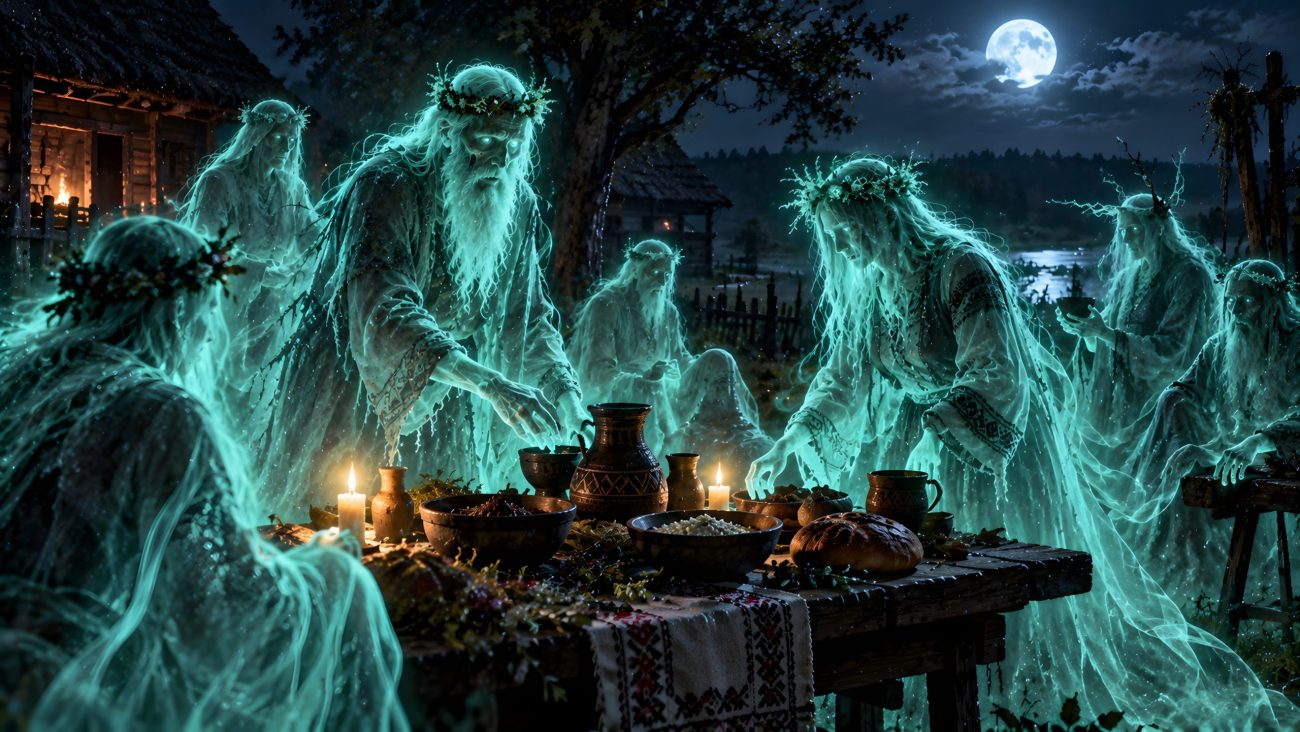
The Urguči are spirits of the dead in Latvian mythology who were traditionally welcomed with offerings of food and drink. During a ritual, the spirits were summoned to join a feast and were given nourishment before being ceremonially sent back to the world of the dead. The ritual involved washing and preparing food and drink for the visiting spirits, allowing the living to honour the dead and share a temporary gathering with them.

The Urguči are particularly associated with Simjuda Day, a traditional day connected with the remembrance of the dead. During the observance, the spirits were invited to partake in the offerings before being dismissed at the end of the gathering. They were understood as beings who could return temporarily to the world of the living, accept the hospitality offered to them, and then depart once the ritual was complete.

The Urguči may have been imagined as spirits whose presence was accompanied by indistinct, growling, or roaring sounds. Their precise appearance is not described, but their association with ritual feasting and the return of the dead makes them distinctive among Latvian spirits. Their visits represent a temporary meeting between the living and the deceased, in which offerings provide a way to welcome the dead while ensuring that they eventually return to their own realm.


Sources

“Urguči.” Vikipēdija (Latvian Wikipedia). Wikimedia Foundation. Accessed October 15, 2026. https://lv.wikipedia.org/wiki/Urgu%C4%8Di