Rukh

Tradition / Region: Arabian mythology, Madagascar Mythology
Alternate Names: Roc
Category: Bird


The Myth

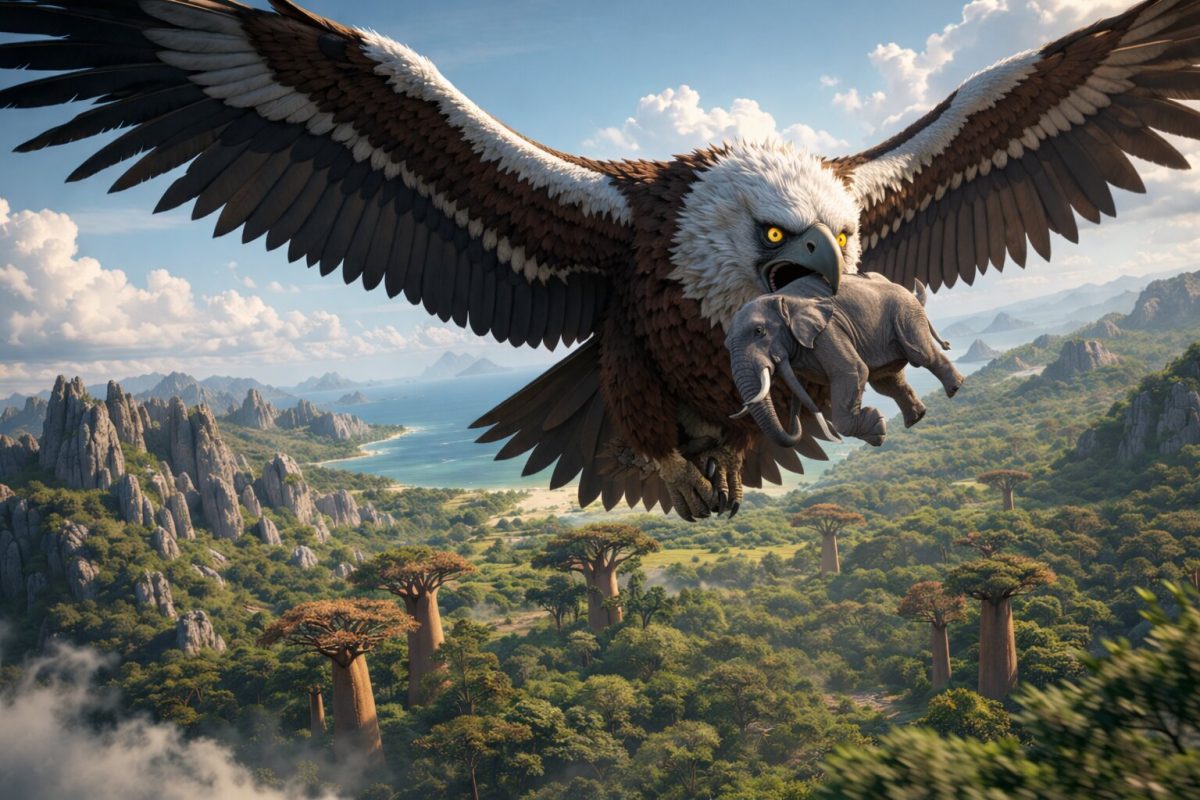
The Rukh is a colossal bird of prey said to live in distant lands, often associated with Madagascar or remote mountains. Its exact appearance is not fixed, but it is always described as enormous, sometimes so large that its wings stretch for vast distances. It preys on the largest animals, including serpents, elephants, and rhinoceroses, and is strong enough to carry them through the air. It is also said to use stones to kill prey.

The sailor Sindbad encountered the Rukh during his travels. On one voyage, he found himself stranded on an island and discovered a great white dome, which proved to be the egg of the bird. When the Rukh returned and settled upon it, Sindbad tied himself to its leg so that it might carry him away. The bird later flew off and landed elsewhere, where it seized a giant serpent before departing again, allowing Sindbad to escape.

On another journey, Sindbad’s companions landed on an island and found a similar egg. Ignoring his warning, they broke it open and killed the chick. Soon the two parent birds appeared and pursued the fleeing ship. Each carried a massive stone in its talons. One missed, but the other struck the vessel directly, destroying it and killing all aboard except Sindbad.

In another tale, a magician urged Aladdin to obtain a Rukh egg to hang in his palace. This request angered the genie, who declared it an insult and revealed that the suggestion came from an enemy.

Travellers also spoke of encounters with the bird. One man obtained a feather quill from a chick cut from an enormous egg; the parent bird attacked their ship with a falling stone, though they escaped. It was said that those who ate the chick’s flesh never grew old. Another traveller saw a distant Rukh in the sky over the seas, so vast it resembled a moving mountain. Others described the bird as able to seize elephants, lift them into the air, and drop them to the ground before feeding on them.


Gallery


Sources

A Book of Creatures. (2015, October 23). Rukh. From https://abookofcreatures.com/2015/10/23/rukh/


Interpretive Lenses

Religious Readings
  • Christian Ascetic Deep Dive
Philosophical Readings
  • Nietzschean Deep Dive
Psychological Readings
  • Jungian Deep Dive
Esoteric Deep Dive
  • Hermetic Deep Dive
Political / Social Readings
  • Marxist Deep Dive

Tretretretre

Tradition / Region: Madagascar Mythology
Alternate Names: Tratratratra
Category: Forest dweller, Monkey


The Myth

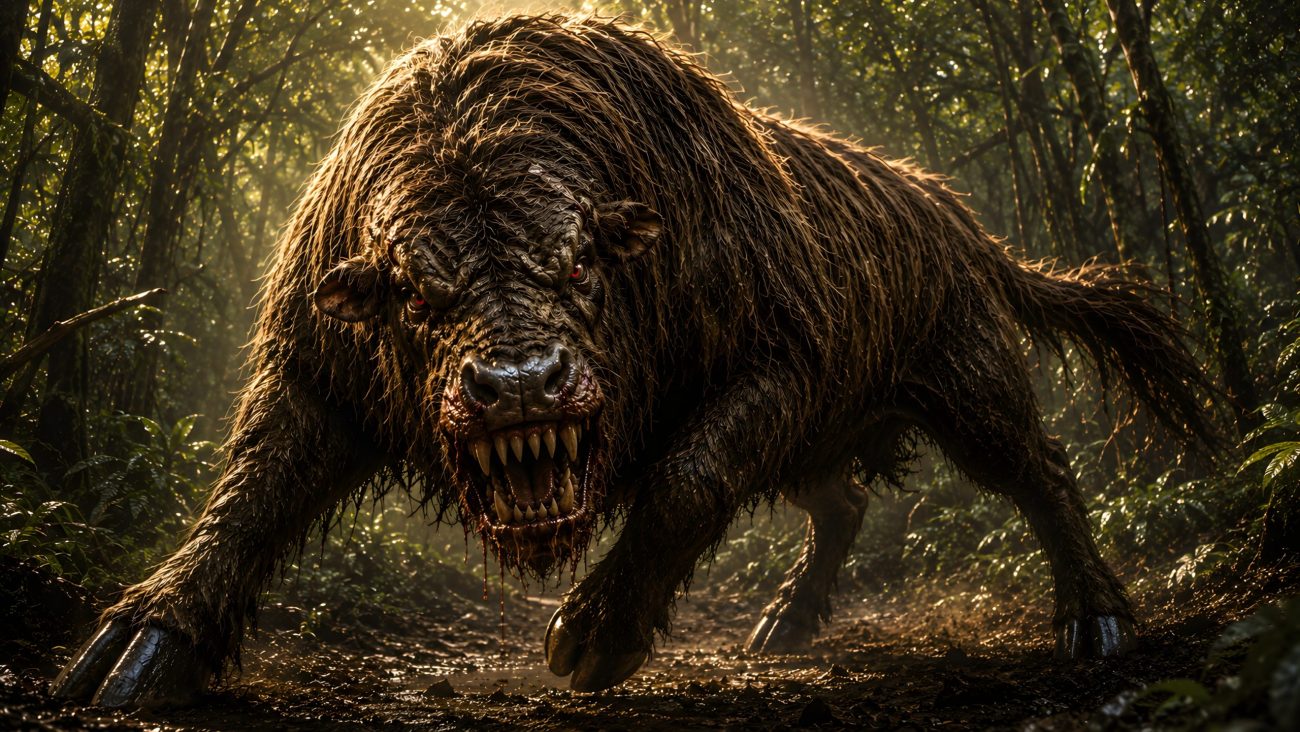
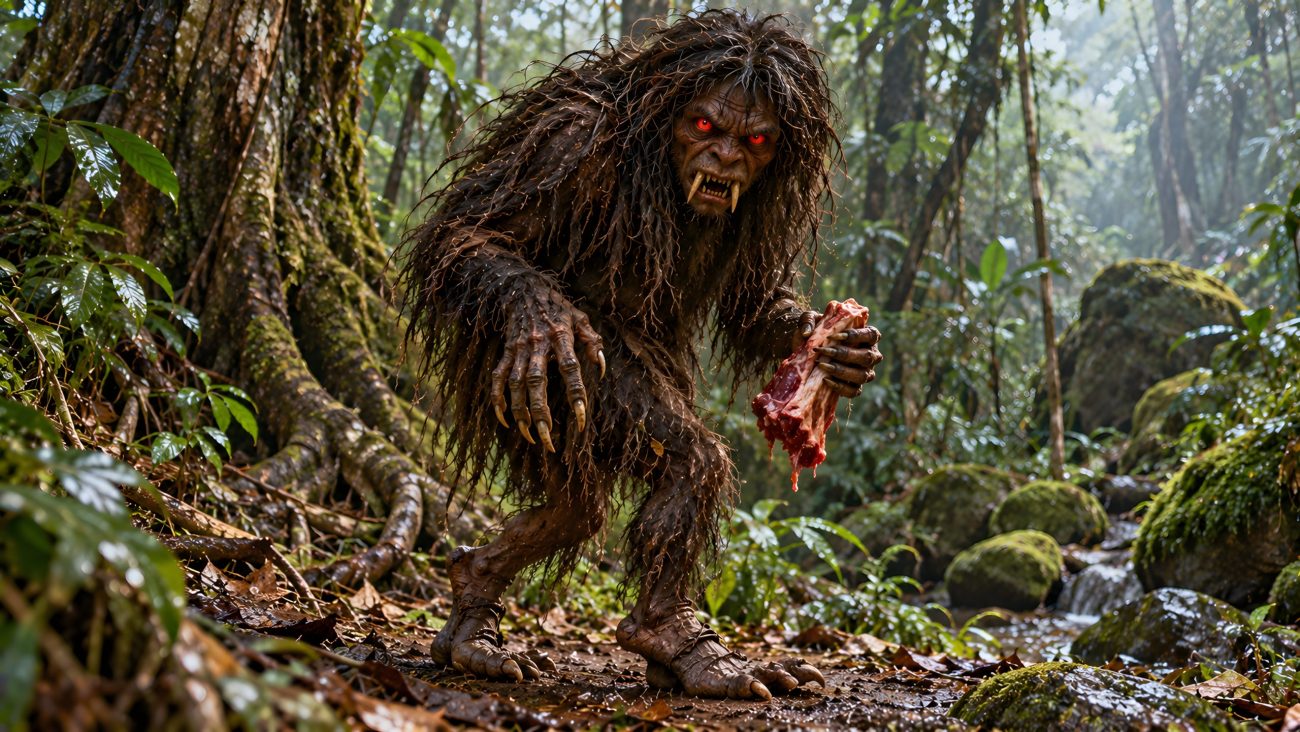
Tretretretre is a shaggy forest creature from Madagascar said to be about the size of a calf. It has monkey-like forelimbs and hind limbs, a short tail, curly hair, and a round, human-like head and face.

It was described as living in forested regions and being agile, able to climb trees easily. Local people were said to fear it, though it was also said to fear humans in return.

Some accounts suggest that stories of Tretretretre may be linked to large extinct lemurs that once inhabited Madagascar. These included massive, slow-moving tree-dwelling animals that lived until several centuries ago. Their extinction has been attributed to environmental change and human activity.


Gallery


Sources

Bestiary. (n.d.). Tretretretre. From https://www.bestiary.us/tretretretre


Interpretive Lenses

Religious Readings
  • Christian Ascetic Deep Dive
Philosophical Readings
  • Nietzschean Deep Dive
Psychological Readings
  • Jungian Deep Dive
Esoteric Deep Dive
  • Hermetic Deep Dive
Political / Social Readings
  • Marxist Deep Dive

Angalapona

Tradition / Region: Madagascar Mythology
Alternate Names:
Category: Dwarf, River dweller


The Myth

The Angalapona is a human-like being smaller than a grown person, only slightly larger than a child. It lives in water but is never wet, dwelling in a cave beneath the water into which no water enters. It moves through the water by a turning door and passes back and forth without becoming soaked. Its hair is very long, nearly reaching the ground when it stands. It is regarded as a director of divination and the foretelling of fortunate days, and diviners call upon it when working oracles.

A woman named Renisoarahanoro was once in an uninhabited place when the Angalapona called to her by a name pleasing to it. It led her toward its dwelling, and they passed through the water without becoming wet. When they reached the cave, she refused to go farther and stayed at the entrance. She would not eat its food, such as raw eels and crayfish, and because she remained by the doorway her clothes became covered in water-plants. The Angalapona and his wife decided to send her home, but first they granted her the power of divination. After that, people consulted her for this purpose.

Another person, Rainitsimanahy, said that while he was in an uninhabited place, an Angalapona came to him at night and wished him to be its husband. When he refused, it followed him continually.

Many people say they have seen this being, especially those afflicted with a disease called jila.


Gallery


Sources

Sibree, J. (1896). Madagascar before the conquest: The island, the country, and the people, with chapters on travel and topography, folk-lore, strange customs and superstitions, the animal life of the island, and mission work and progress among the inhabitants. New York: Macmillan; London: T. F. Unwin.


Interpretive Lenses

Religious Readings
  • Christian Ascetic Deep Dive
Philosophical Readings
  • Nietzschean Deep Dive
Psychological Readings
  • Jungian Deep Dive
Esoteric Deep Dive
  • Hermetic Deep Dive
Political / Social Readings
  • Marxist Deep Dive