Alber

Tradition / Region: Austrian Mythology
Alternate Names: —
Category: Dragon


The Myth

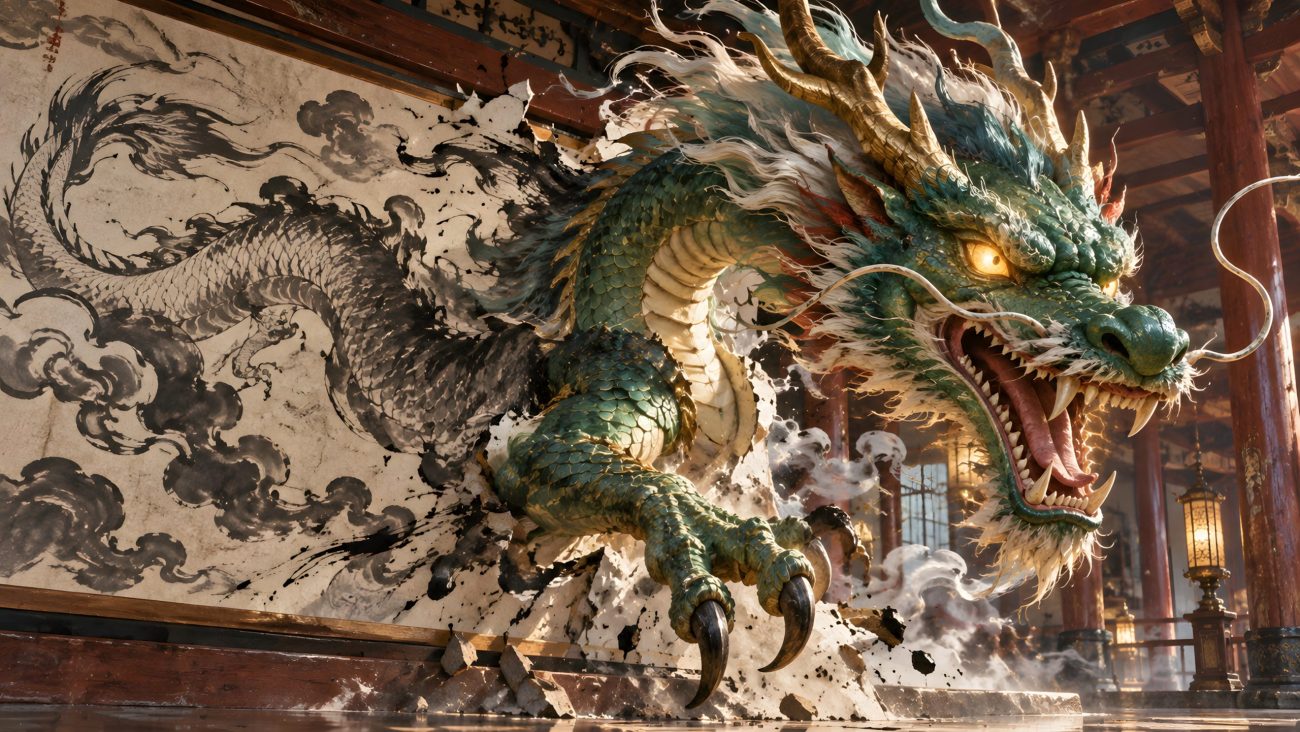
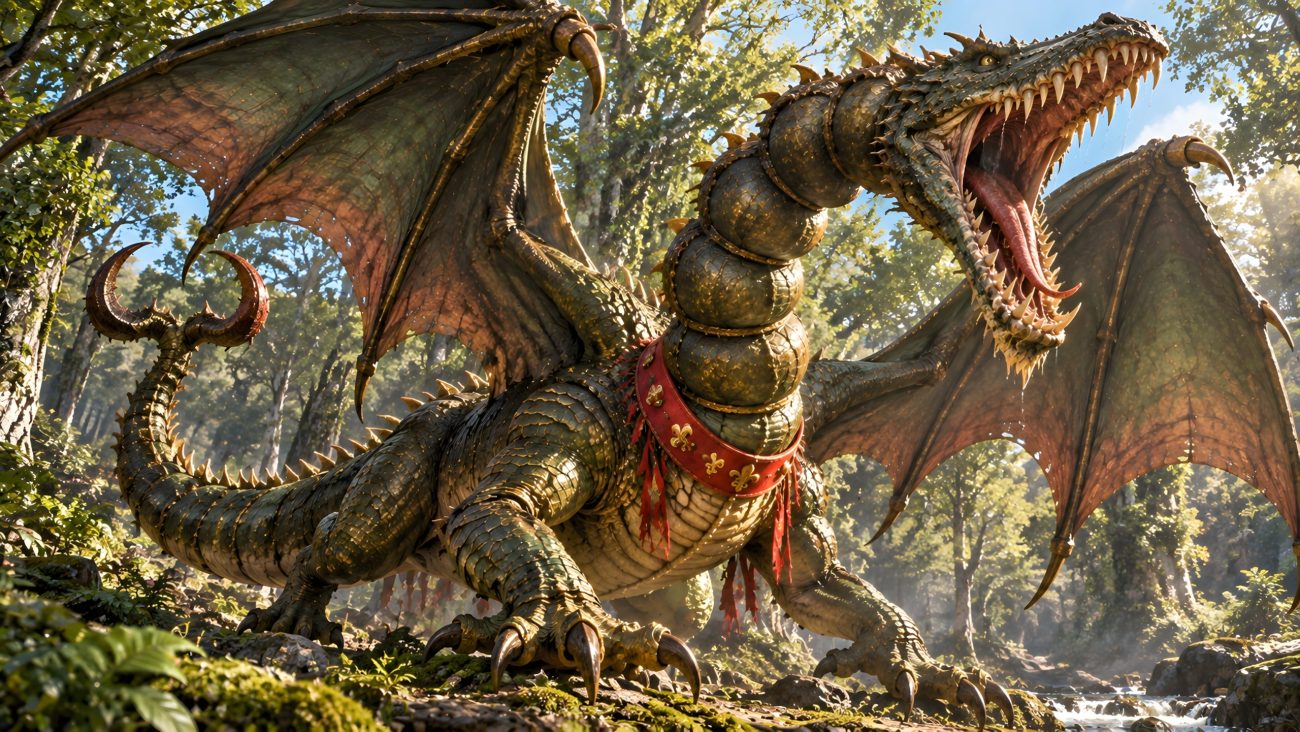
The Alber is a demonic being said to appear as a great fiery dragon descending from the mountain known as the “Devil’s Corner.” It glows with an intense, unnatural light and flies through the mountains toward the valley, bringing with it signs of disaster such as plague, war, and famine.

It is not merely a creature, but a manifestation of destructive forces, associated directly with the devil and appearing during ominous or cursed moments.

In one account, two men climbed a cherry tree near a sacred cross during a pitch-black night. One of them, a dishonest and reckless man, had made a bet to steal cherries, while the other was an honest villager who had been persuaded to join him.

As they were in the tree, the Alber suddenly passed by, lighting the darkness with its fiery glow. The dishonest man was overcome with fear, nearly falling from the tree, while the honest man remained calm and even addressed the creature without fear.

Because of his integrity and lack of wrongdoing, the Alber had no power over him and departed immediately.

The Alber represents a demonic force that is drawn to corruption and wrongdoing, yet powerless against those who remain morally upright and unafraid.


Sources

A Book of Creatures contributors. (2021, May 3). Alber. In A Book of Creatures, from https://abookofcreatures.com/2021/05/03/alber/


Putis

Tradition / Region: Latvian mythology
Alternate Names: Putiene
Category: Dragon


The Myth

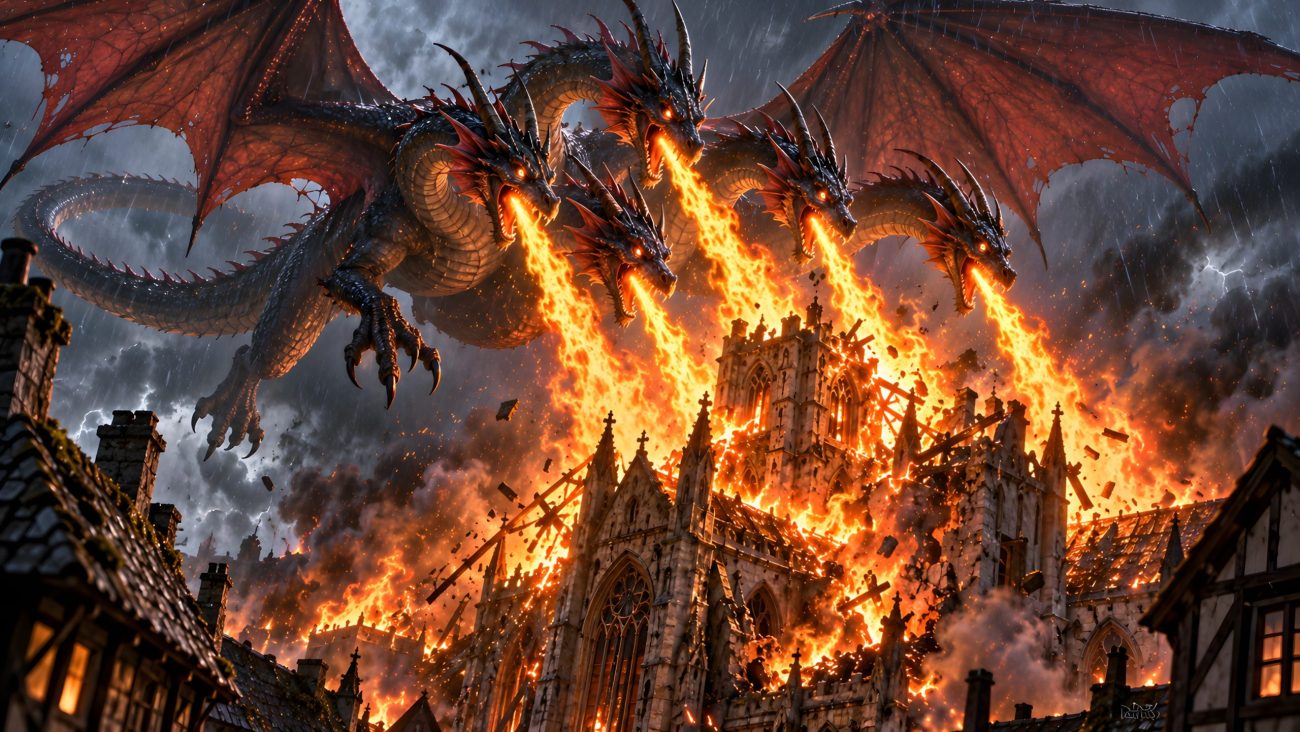
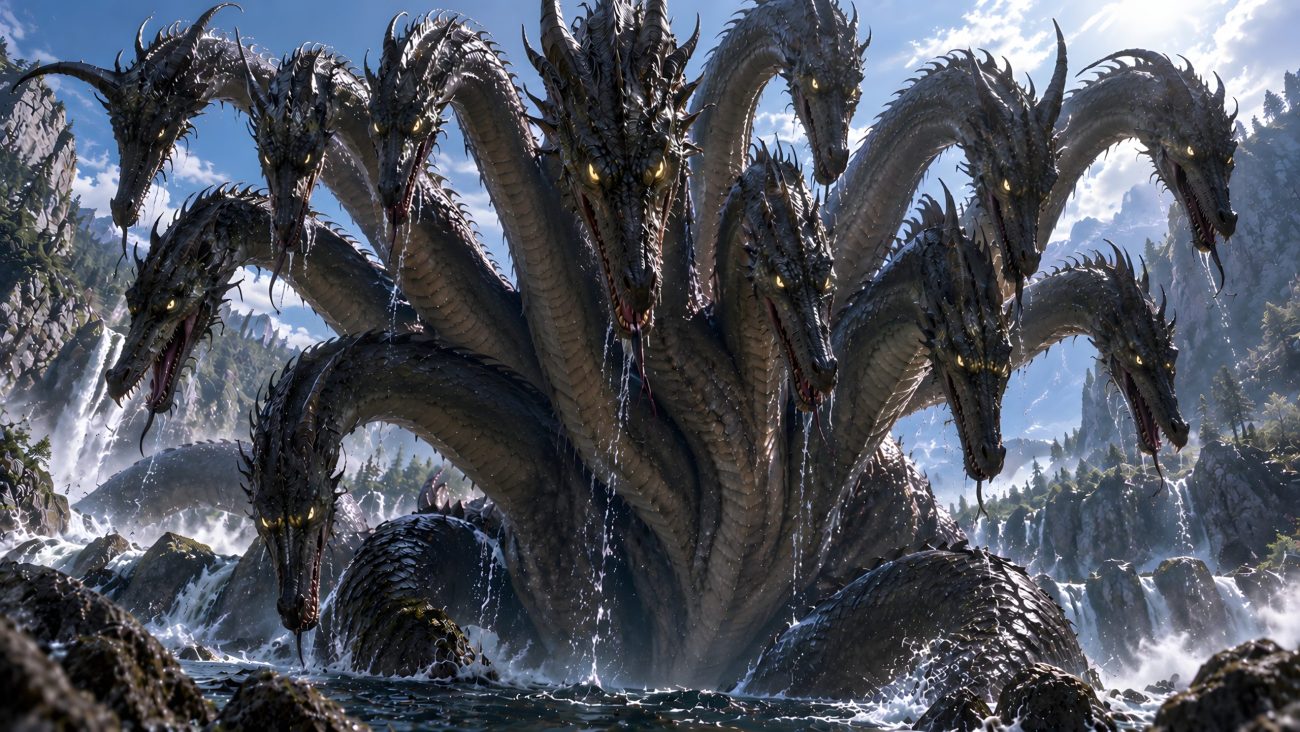
Putis is a fire-breathing, many-headed dragon in Latvian folklore that lives in or near water. When tamed, it brings wealth to a household by stealing food and money from others at night and carrying them through the air while appearing as a flying flame. A domesticated putis lives in farm outbuildings, must be fed blood and given sacrifices, and can be killed with a silver bullet.

According to legend, a farm owner may obtain a putis by buying one or by selling their own soul, or the soul of someone close to them, to the devil or to the putis itself. Once bound to the household, the dragon steals goods from neighbors and brings them home to its master.

However, the price of keeping such a creature is severe. The master of a putis is said to die in agony and find no peace after death, unable to receive God’s blessing.


Sources

Bestiary. (n.d.). Pukis. From https://www.bestiary.us/pukis


Smo of Minarken

Tradition / Region: Romanian Mythology
Alternate Names:
Category: Dragon


The Myth

A shepherd from Minarken once told how his companion Simon proved himself against the dreaded Smo.

In those days, the young men of the village often kept watch over their masters’ flocks at night. They would gather around their fire in the hills, laughing, boasting, and telling stories to pass the long hours.

One night Simon suddenly said, half in jest, “Do you think I could summon the Smo if I saw him flying past?”

The others laughed, but wagers were quickly made. Bottles of brandy were promised if he could do it, and Simon agreed.

Not long afterward, a flash of lightning appeared in the western sky. Soon the men saw what they feared most — the fiery Smo drawing nearer. Sparks streamed from it as it flew high through the darkness.

Simon sprang up. From his belt he drew the small iron fork he carried beside his knife. He swung it three times above his head and hurled it into the ground before him. Then he shouted across the mountains:

“When I call you, you must follow me and come to this place!”

Far away, the blazing dragon suddenly turned and came snarling toward them. At Simon’s command it halted before him.

“Where are you going?” Simon demanded.

With a dull voice and fire pouring from its mouth and eyes, the Smo answered, “I go to my sweetheart in the village below.”

“She is mine, not yours,” Simon declared. “You will stay here as long as I wish.”

And the spirit obeyed him.

For a long time Simon held the fiery dragon there beside the fire while the others watched in fear and amazement. Only toward morning did he lift the fork again, cast it once more into the ground, and command:

“Go back where you came from — but you shall not go to my village.”

At once the Smo rose into the air and drifted westward, slowly vanishing toward the dark horizon. By then the roosters were already crowing and the sky over the mountains was turning pale.

For when dawn comes, the spirits of the night must withdraw, and the world belongs again to humankind.


Sources

sagen.at contributors. (n.d.). Stephan und der Drachen. In sagen.at, from https://www.sagen.at/texte/sagen/rumaenien/siebenbuergen/stephan.html

sagen.at contributors. (n.d.). Berufung des Smo. In sagen.at, from https://www.sagen.at/texte/sagen/rumaenien/siebenbuergen/berufungdessmo.html


Linddur of the Peak

Tradition / Region: Romanian Mythology
Alternate Names: The Kronstadt Lindworm; Peak Dragon; The Mountain Linddur
Category: Dragon


The Myth

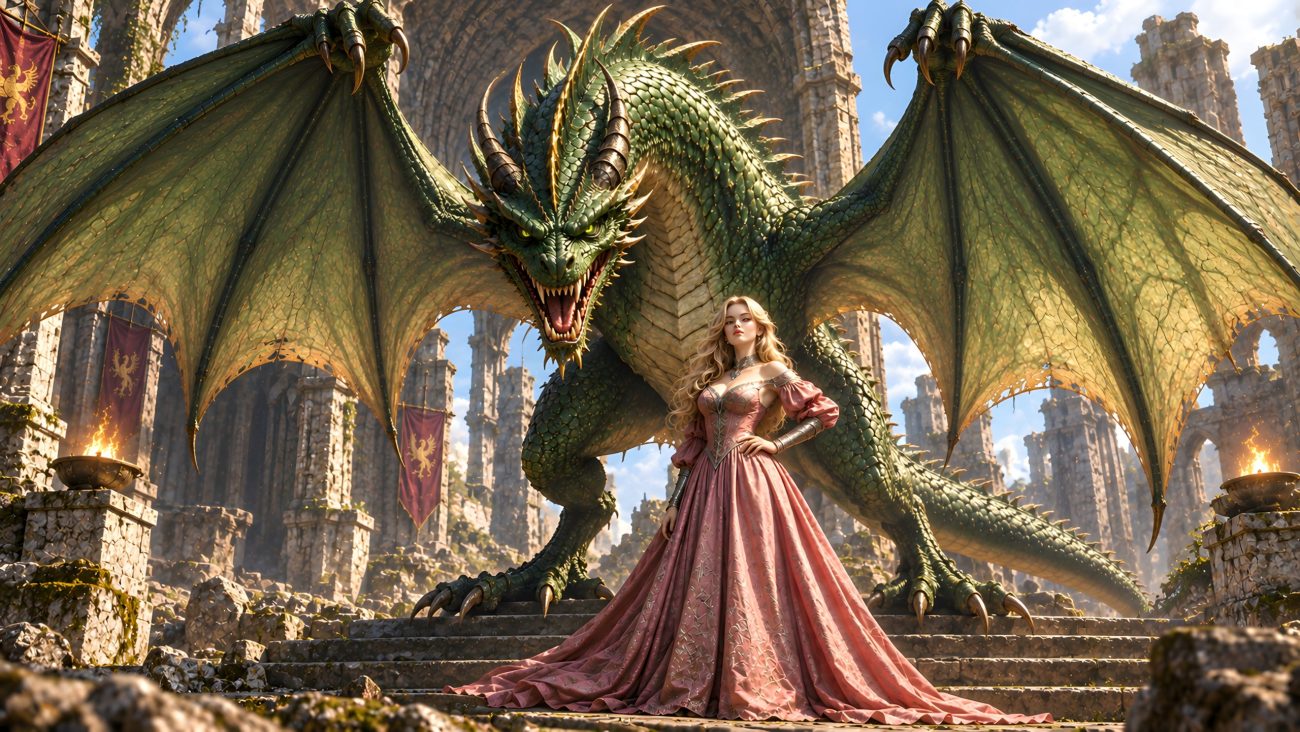
Not long after the town of Kronstadt was founded among the mountains, people said a dreadful dragon lived in a small cave high on a peak above the settlement. The creature, called the Linddur, would fly down into the valley whenever hunger drove it, devouring both people and animals and filling the region with fear.

One day the son of the town judge, a student preparing to preach, went outside the walls to memorize his sermon. Near the city wall he found a quiet place and began to recite his words aloud. He spoke so loudly and earnestly that the Linddur heard him from its mountain cave.

The dragon swooped down before the youth could escape and swallowed him whole.

Grief spread through the town, for the young man was well loved, and his parents were overcome with sorrow. While they mourned, a stranger came before the judge and said, “Strength cannot defeat such a beast, but cunning may. If we act quickly, your son may yet be saved.”

The judge promised him a rich reward. The stranger took a calfskin and filled it with quicklime. He laid it out in an open patch of grass near the castle and hid nearby, bleating like a calf.

Hearing the sound, the Linddur descended at once. It saw what it thought was prey and devoured the calfskin greedily. Soon afterward it was seized by a terrible thirst and flew to the nearest water to drink deeply.

But the quicklime within it drank the water faster still and burned with such heat that the dragon’s body swelled and burst apart. When the beast split open, the student was found still alive inside and was rescued.

In gratitude, the judge rewarded the clever stranger with many gifts. And to remember the deliverance, the image of the Lindworm was set upon the wall that leads from the eastern corner of the city up toward the archer’s battlement, so that all would recall the dragon that once haunted the peak above Kronstadt.


Sources

sagen.at contributors. (n.d.). Der Lindwurm auf der Zinne. In sagen.at, from https://www.sagen.at/texte/sagen/rumaenien/siebenbuergen/lindwurm.html


Zwergel

Tradition / Region: Romanian Mythology
Alternate Names: The Dragon of Wendchenberg; The Rock Dragon; Fire Dragon of Klein-Logdes
Category: Dragon


The Myth

In the hills near Kreisch, high on the Wendchenberg, there lies a rocky cleft known as the Zwergelloch. Long ago, people said a terrible creature lived there, called the Zwergel.

The villagers feared it greatly. To keep the monster from descending upon them, they were forced to offer it a human sacrifice every week. Only by feeding it could they keep it in its rocky lair and spare the village from destruction.

The same creature was also seen in other places. Once, it flew over Klein-Logdes, breathing fire as it crossed the sky. Yet whenever the flames touched the earth, they died at once, as if the ground itself would not burn.

The Zwergel was not only a devourer but also a spirit that could seize human bodies. It once possessed a Wallachian maid, who wasted away under its power. Her mother, in desperation, laid her out on a bier as if she were already dead and called neighbors and relatives to mourn her. Through this false funeral, the creature was driven out, and the girl was freed.

But in the mountains, people still spoke of the cleft in the rock and of the being that once lived there — the Zwergel, the dragon that demanded flesh and could enter the living as easily as it flew through the sky.


Sources

sagen.at contributors. (n.d.). Drachen. In sagen.at, from https://www.sagen.at/texte/sagen/rumaenien/siebenbuergen/drachen.html


Dragon of Mordiford

Tradition / Region: British Mythology
Alternate Names: The Mordiford Dragon
Category: Dragon, Wyvern


The Myth

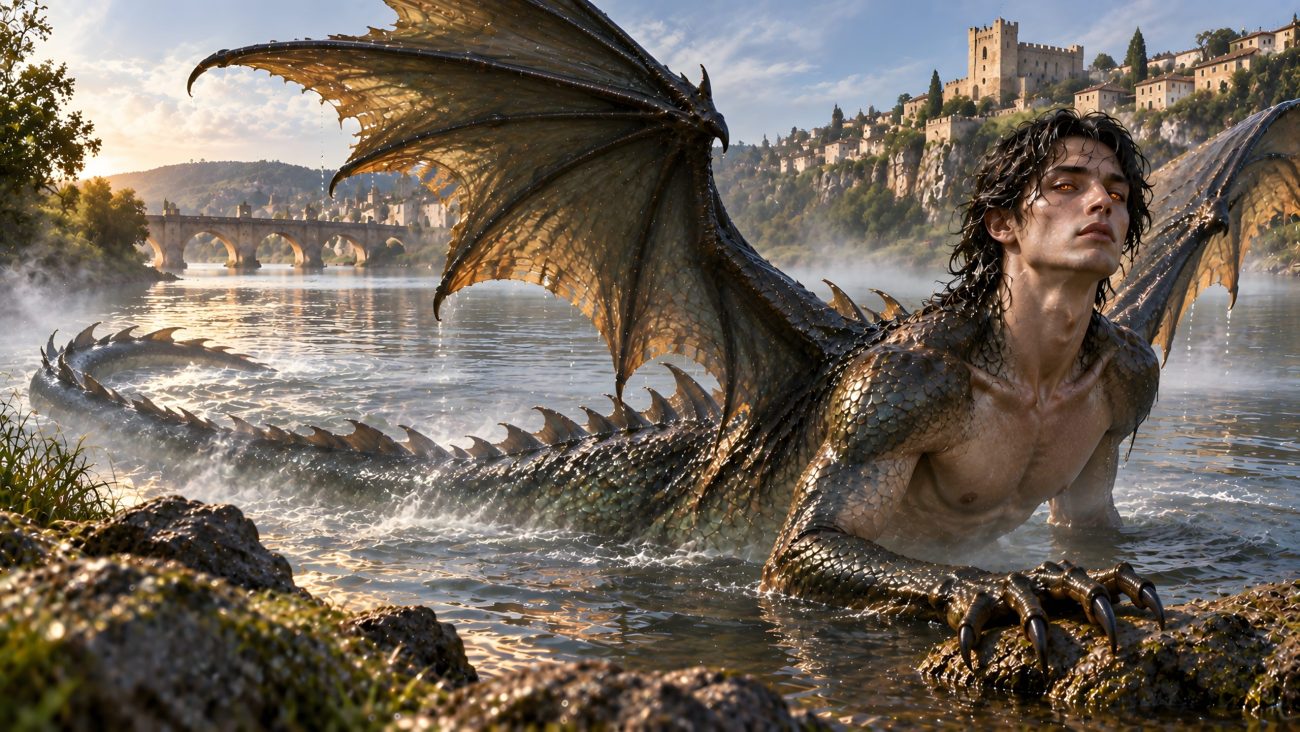
Near the village of Mordiford, where the River Lugg meets the River Wye, there once lived a dragon whose story is closely bound to a young girl named Maud.

Maud was a child who longed deeply for a companion of her own. One day, while wandering in the woodland near her village, she discovered a small, bright creature among the flowers. It had a narrow snout and tiny, translucent wings, and it moved with curious life. Delighted, Maud took the creature home, believing she had finally found the pet she desired.

Her parents, however, recognized the truth at once. The creature was no harmless animal but a young wyvern, and they warned Maud that it would bring danger upon the village. They ordered her to return it to the forest immediately. Though she pretended to obey, Maud could not bear to part with it. Instead, she hid the wyvern in a secluded place in the woods and secretly returned to it each day.

Maud fed the creature milk, played with it, and watched as it grew stronger, learning to stretch and beat its wings. Month by month, it grew larger, its body taking on a deep emerald color, its wings becoming broad and powerful. What had once been small enough to cradle soon became something vast and dangerous.

In time, the dragon’s hunger changed. Milk no longer satisfied it, and it began to crave meat. It descended upon nearby farms, killing sheep and cattle. When the farmers tried to stop it, the dragon turned on them as well, discovering a taste for human flesh. The countryside fell into fear.

Maud continued to visit the dragon, begging it to stop its violence. The beast ignored all pleas. Though it spared Maud—its first and only friend—it killed everything else in its path, until the people of Mordiford could endure no more.

At last, a man from the Garstone family armed himself and went into the forest to confront the dragon. When he found it, the wyvern unleashed fire upon him, but he pressed forward and drove his weapon through its throat, killing it where it lay among the trees.

Hearing the struggle, Maud rushed from the forest. She arrived too late. The dragon lay dead, and Maud fell beside it, overwhelmed with grief for the creature she had raised and loved.

Thus ended the dragon of Mordiford—born of wonder, nurtured in secrecy, and destroyed when its nature could no longer be contained. The tale remains a reminder that affection alone cannot tame what is meant to grow beyond human control.


Gallery


Sources

Wikipedia contributors. (n.d.). Dragon of Mordiford. In Wikipedia, The Free Encyclopedia, from https://en.wikipedia.org/wiki/Dragon_of_Mordiford


Interpretive Lenses

Religious Readings
  • Christian Ascetic Deep Dive
Philosophical Readings
  • Nietzschean Deep Dive
Psychological Readings
  • Jungian Deep Dive
Esoteric Deep Dive
  • Hermetic Deep Dive
Political / Social Readings
  • Marxist Deep Dive
Other
  • How to Invite The Dragon of Mordiford

Lou Carcolh

Tradition / Region: France (Gascony; Hastingues)
Alternate Names: Carcolh, Liu-Karkul
Category: Snail / dragon


The Myth

Lou Carcolh is a monstrous creature of Gascon folklore, whose name means “snail.” It is said to dwell in a deep cavern beneath the town of Hastingues in southwestern France. Half serpent and half mollusk, Lou Carcolh possesses a vast, elongated body crowned by an enormous shell as large as a house.

From its gaping mouth extend numerous long, hairy tentacles, slick with mucus. These appendages spread outward from the cave, lying flat against the ground and coated in thick slime. The tentacles can reach great distances, and anything that comes within their grasp is seized and dragged back toward the cave. Once pulled inside, the victim is swallowed whole.

People said that the creature’s slime could sometimes be seen long before Lou Carcolh itself appeared, glistening on the ground as a warning of its presence. Those who followed the trail too closely risked being taken without a sound, hauled away by the creature’s unseen reach.

Lou Carcolh became so closely associated with Hastingues that the creature’s name was used as a nickname for the town itself, which stands upon a rounded hill. In local tradition, the men of Hastingues were said to warn young women playfully, “The Carcolh will catch you,” invoking the lurking monster beneath the ground.

Through these stories, Lou Carcolh is remembered as a vast, slimy dragon-snail, hidden beneath the earth, whose silent tentacles stretched outward to claim the unwary and pull them into the darkness below.


Interpretive Lenses

Religious Readings
Philosophical Readings
Psychological Readings
Esoteric Deep Dive
Political / Social Readings
Other

Põhja konn

Tradition / Region: Estonian Mythology
Alternate Names: The Dragon of the North, The Northern Frog, The Frog of the North
Category: Frog, Dragon


The Myth

Põhja konn is a monstrous being said to come from the far north. It is described as a vast and terrible creature that devastates the land wherever it travels. In some tellings, its body is said to be as large as an enormous ox, with the legs of a frog and a long, snake-like tail stretching the length of a chain. Its body is covered in scales said to be stronger than stone or iron. It moves across the land in enormous leaps, devouring people and animals alike and leaving desolation behind it.

According to the tale collected by Friedrich Reinhold Kreutzwald, the monster’s destruction seemed unstoppable. It was said that Põhja konn might have devoured every living creature in the world had it not been opposed. The people believed that only someone in possession of King Solomon’s ring could defeat the creature.

A brave young man set out to find a way to stop Põhja konn. His journey led him to a powerful magician from the East, who told him that the birds might aid him. The magician gave the youth a magical brew that allowed him to understand the language of birds and promised that if the youth returned with King Solomon’s ring, he would explain the writing engraved upon it.

Listening to the birds, the youth learned that only a witch-maiden could help him and that she could be found at a certain spring on the night of the full moon. He went there and met her. Though she was angered by his approach, she forgave him and took him to her home. While there, the youth heard a mysterious voice warning him not to give her any blood.

The witch-maiden asked the youth to marry her. When he hesitated, she offered him King Solomon’s ring in exchange for three drops of his blood and explained the powers the ring possessed. The youth pretended to doubt her words, and she demonstrated the ring’s magic, allowing him to try it himself. Using its power of invisibility, the youth escaped and flew away with the ring.

He returned to the magician, who read the inscription on the ring and gave him precise instructions on how to kill Põhja konn. The youth then traveled to a kingdom where a king had promised his daughter and half his realm to anyone who could slay the monster. Following the magician’s directions, the king provided the youth with an iron horse and an iron spear. Using these and the powers of the ring, changing it from finger to finger as instructed, the youth confronted Põhja konn and killed it.

After the monster’s defeat, the youth married the princess. However, the witch-maiden soon sought revenge. She transformed into an eagle, attacked the youth, reclaimed King Solomon’s ring, and chained him inside a cave, intending to leave him there to die. Many years passed before the magician came to the king and revealed that the youth could still be found. Guided once again by birds, they located the cave and freed him. Though he was weak and emaciated, the magician nursed him back to health. The youth returned to his wife and lived in prosperity, but he never saw the ring again.

In other tellings, Põhja konn does not perish completely. After being defeated, it retreats deep underground, where it lies hidden. It is said to promise its service to the brave hero who overcame it, should the land ever face danger again. To awaken Põhja konn, however, one must know the ancient languages of birds or snakes. In later times, when enemies threatened the land and these languages were nearly forgotten, only a few people remembered the old words and were able to call the creature forth, driving the invaders away.

Across its many versions, Põhja konn remains a vast frog-dragon of the north, a being of immense power whose presence brings ruin, whose defeat reshapes kingdoms, and whose fate lies somewhere between destruction, sleep, and return.


Raróg

Tradition / Region: Polish Mythology
Alternate Names: Raroh, Raróg
Category: Bird, Spirit


The Myth

The Raróg is a being of fire, most often seen as a flaming falcon or hawk streaking across the sky. It is not a creature of nests or forests, but one bound to heat, flame, and the upper reaches of the world. When it moves, it may blaze like a living ember, spiral through the air like a whirlwind, or descend suddenly in a flash of fire.

Some traditions tell that the Raróg may be born in an unusual way. An egg kept warm upon a household stove for nine days and nights can hatch into the spirit. Once it comes into being, it does not remain fixed in shape. At times it appears as a fiery bird, at others as a dragon-like form, a small humanoid spirit, or a spinning column of flame. Like fire itself, its nature is unstable and ever-changing.

The Raróg is said to dwell at the crown of the Slavic world tree, where it guards the entrance to Vyraj, a warm and radiant realm associated with life, renewal, and the seasonal flight of birds away from winter. From this height, it watches the boundary between the human world and a distant paradise beyond decay and cold.

In some regions, particularly in Polish folklore, the Raróg appears in a smaller and gentler form. It is described as a tiny fire-bird that can be carried in a pocket and brings good fortune to the one who possesses it. Even in this form, it remains a creature of flame, closely tied to later legends of the Firebird, whose feathers continue to glow long after being plucked.

Across all its tellings, the Raróg endures as a living embodiment of fire itself — swift, radiant, and dangerous, forever moving between worlds in flickers of flame.