Dragon of Wyl

Tradition / Region: Swiss Mythology
Alternative names: Dragon Reed
Category: Crocodile, Dragon


The Myth

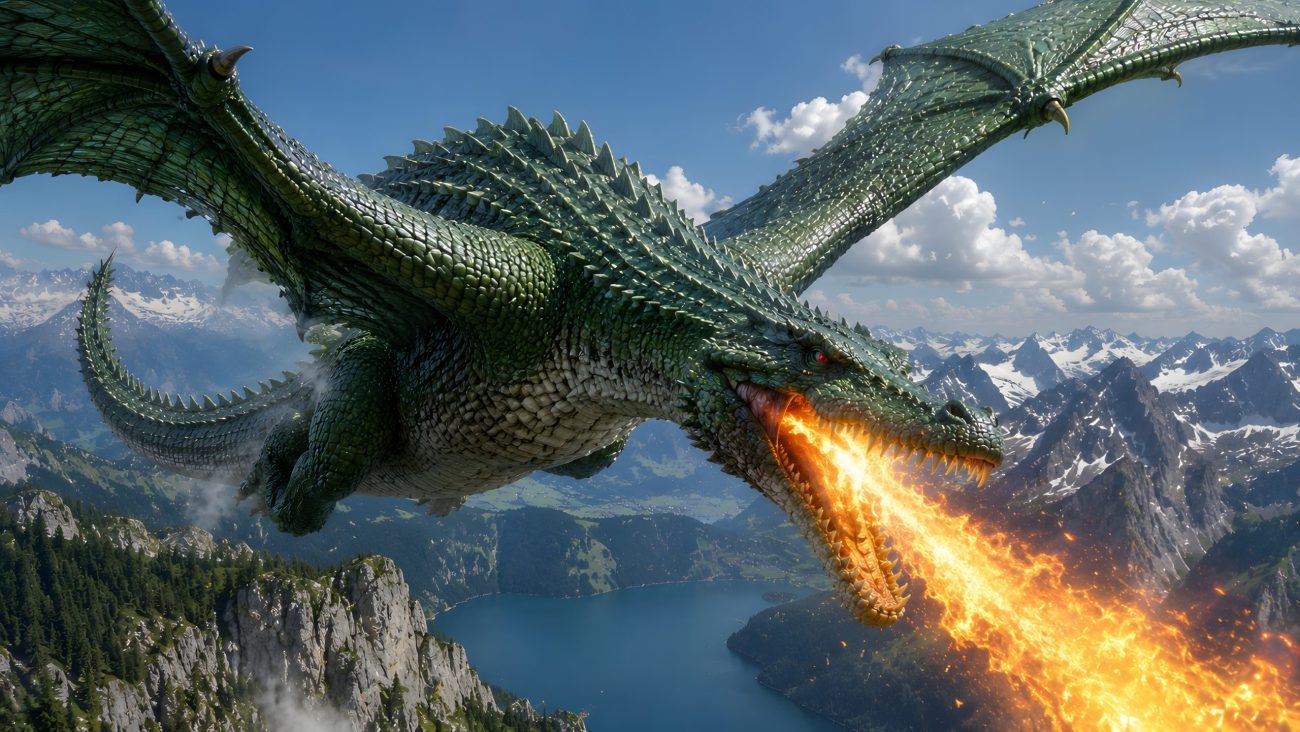
According to a legend from Unterwalden, a terrible dragon once lived in a cave above the village of Wyl on the shores of Lake Lucerne. The monster was described as a hideous lindworm covered in scales with razor-sharp claws. When it flew through the air, it resembled a gigantic flying crocodile, and it could breathe fire from its jaws.

The dragon devastated the surrounding countryside, devouring livestock and shepherds alike. No one was safe from its attacks, and even children and young women gathering food in the fields lived in constant fear. The destruction became so severe that the village earned the name Ödwyl, meaning “Desolate Wyl.”

A banished knight named Struthan Winkelried offered to slay the beast in exchange for permission to return to his homeland. Desperate for deliverance, the people accepted his offer.

Struthan confronted the dragon wearing chainmail and carrying a lance wrapped in thorn bushes. When the fire-breathing monster charged, it hurled itself onto the thorn-covered lance. After a fierce struggle, the dragon was slain.

As the knight withdrew his weapon, some of the dragon’s blood ran onto his bare arm. Although he immediately washed it away, the poisonous blood proved fatal, and he died soon afterward.

The people mourned the hero who had freed them from the dragon’s terror and built a memorial chapel on the place where he had defeated the monster.


Sources

SAGEN.at. (n.d.). Das Drachenried. In Traditionelle Sagen. Retrieved June 29, 2026, from https://www.sagen.at/texte/sagen/schweiz/allgemein/drachenried.html

Drache am Hirschensprung

Tradition / Region: Swiss Mythology
Alternate Names: Dragon of Hirschensprung
Category: Dragon


The Myth

In the narrow pass known as the Hirschensprung, where the land road is forced between steep rock faces to avoid the flood-prone Rhine plain, an old legend tells of a monstrous dragon that once lived among the cliffs.

The place itself already carried a name tied to danger and escape. It was said that a stag, hunted and cornered, once leapt across the chasm to evade its pursuers—an impossible jump that gave the site its name: Hirschensprung, the “stag’s leap.”

But long after that, something far worse inhabited the pass.

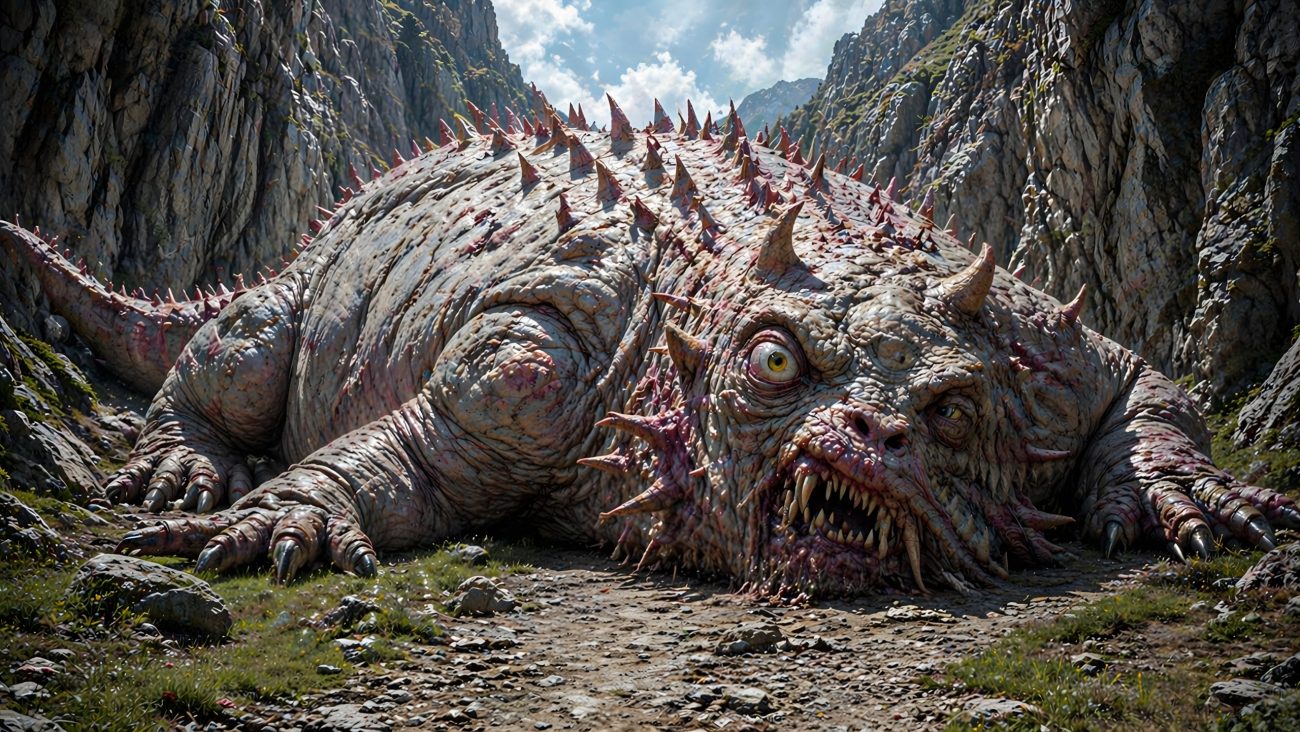
A dragon took up residence among the rocks, a grotesque and terrifying creature that threatened everything living in the area. It haunted the narrow route, making travel dangerous and filling the surrounding lands with fear. Neither man nor beast could pass safely while it remained.

The local farmers, unable to endure the threat any longer, devised a practical but brutal solution. Rather than confronting the creature with weapons, they used cunning.

They heated a ploughshare—an iron blade used for cutting earth—until it glowed red-hot. Then, approaching the dragon, they provoked it into opening its jaws. At the right moment, they hurled the burning iron straight into its mouth.

The dragon, driven by its insatiable hunger, swallowed it instantly.

Moments later, the heat consumed it from within. After a brief but violent death struggle, the creature perished.

Yet the story does not end with its death.

The dragon, according to local belief, still remains at Hirschensprung—but no longer alive. Its body turned to stone in the place where it died. Even now, people claim that its form can be seen in the rock itself: its head and gaping jaws protruding from the cliff face, while its tail stretches across the landscape toward the pass.

The position of the stone formation suggests that, in its final agony, the dragon twisted violently before becoming fixed forever in the mountain.


Sources

sagen.at contributors. (n.d.). Der Drache am Hirschensprung. In sagen.at, from https://www.sagen.at/texte/sagen/schweiz/st_gallen/hirschensprung.html