Lavandières de Nuit

Tradition: French Mythology
Alternative Names: Washerwomen of the Night, Kannerez Noz, Bean Nighe, Mille-Lorraines, Teurdous
Category: Fairy


The Myth

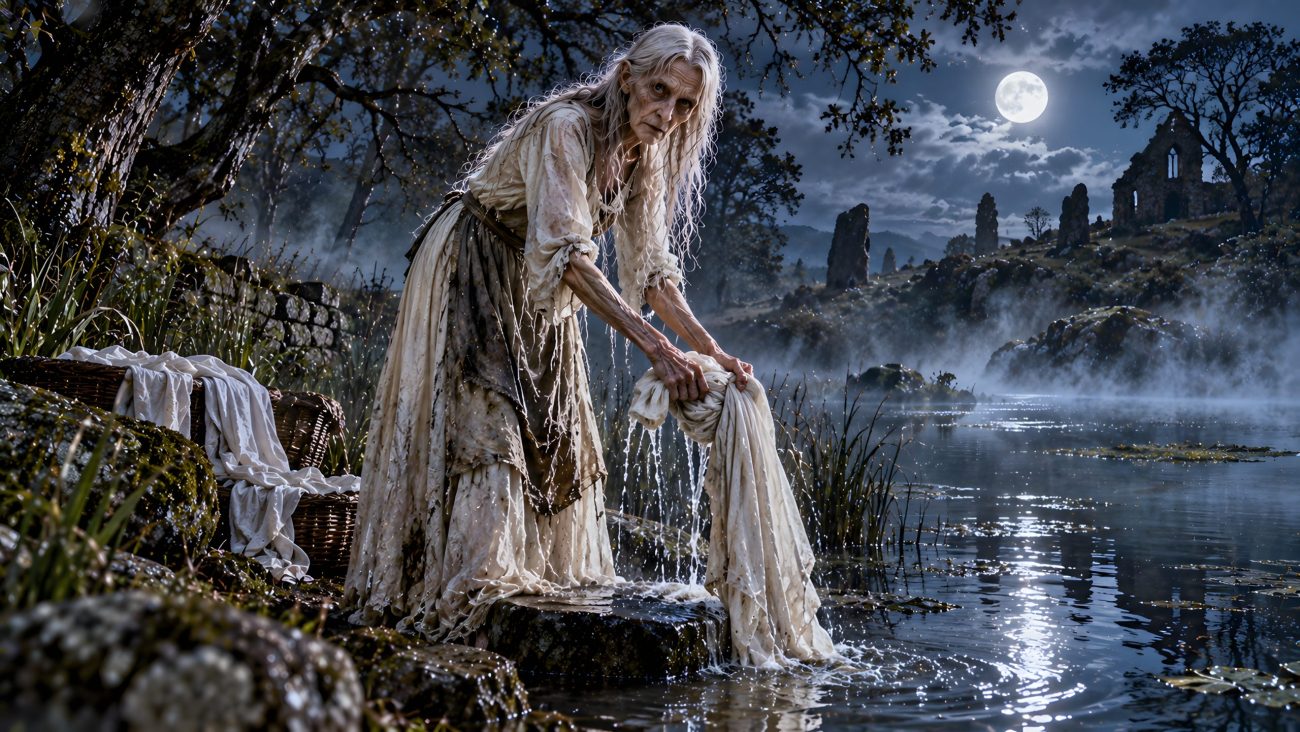
The Lavandières de Nuit are supernatural washerwomen who appear at night beside ponds, rivers, and other bodies of water. They are usually imagined as tall, gaunt, withered old women, although the Gollières a Noz of Romandie are described as beautiful as they are cruel. Some sing while they wash, earning the name Kannerez Noz, or “night singers.” Their songs are mournful and are sometimes associated with the dead; in Morbihan they are said to sing of wringing rags and the shrouds of dead wives. Some washerwomen are condemned spirits forced to wash a burial shroud as punishment for sins committed during life. Among them are women who worked at their laundry on Sundays, greedy misers who refused proper clothing to the poor, and women guilty of infanticide. In the darkest stories, the sheets they wash remain stained with blood and reveal the outline of the murdered child.

The Lavandières are especially dangerous when they encounter people at night. In Brittany, they may call upon passers-by to help wring their laundry. Those who refuse can be drowned, while those who agree may have their arms broken or be forced to continue until exhaustion. The only way to survive the task is to wring the cloth in precisely the same direction as the washerwomen, following every turn they make throughout the night. A single mistake can result in the victim being crushed and twisted to death. Another escape is to tell them, “Wring out your sins, and I will wring out mine.” Running away can also save a person, while freshly ploughed fields are places the washerwomen cannot cross. The sign of the cross and biblical verses are likewise said to protect against them. Different communities tell of their own washerwomen: the Lavandière of Chantepie endlessly washes the dirty shroud in which she buried her husband; those of Fond-de-Fond hold up the bodies of the newly dead; those around Landéda spare goodhearted people but tie sinners into knots; and several washerwomen gather at the pond of Roc-Reu, where anyone attempting to touch them is drowned.

Related traditions appear throughout the Celtic and French-speaking world. The Bean Nighe of the British Isles are women who died in childbirth and are condemned to wash the clothes of people destined to drown until the day they themselves were supposed to die. Seeing one can therefore foretell death. Some are connected with the Morrigan and wash the clothing of the dead; in one tale, Cú Chulainn encounters the daughter of Bodhbh washing bloodstained clothes while weeping, shortly before his death in battle. Around Dinan, the Teurdous is a rare male counterpart who offers to help washerwomen wring their clothes, only to break their arms if they accept. The Mille-Lorraines of Lower Normandy form fairy circles around ponds, while the Lavandière of Noes Gourdais is said to appear in the early morning with a skull instead of a head. Around Dinan, these supernatural washerwomen became so strongly associated with the night that strange sounds from frogs and toads were sometimes interpreted as their washboards and singing. There were also real women who washed clothing at night, whether because they worked during the day or wished to avoid being seen, and even thieves exploited the legend: one French warden once encountered two spectral-looking washerwomen and spent the entire night helping them wash fine clothing, only to discover afterward that the garments had been stolen from a nearby castle.


Sources

“Lavandière de Nuit.” A Book of Creatures. April 17, 2015. A Book of Creatures
https://abookofcreatures.com/2015/04/17/lavandiere-de-nuit
Abonde

Tradition: French Mythology
Alternative Names: Dame Abonde, Fairy Abonde
Category: Fairy


The Myth

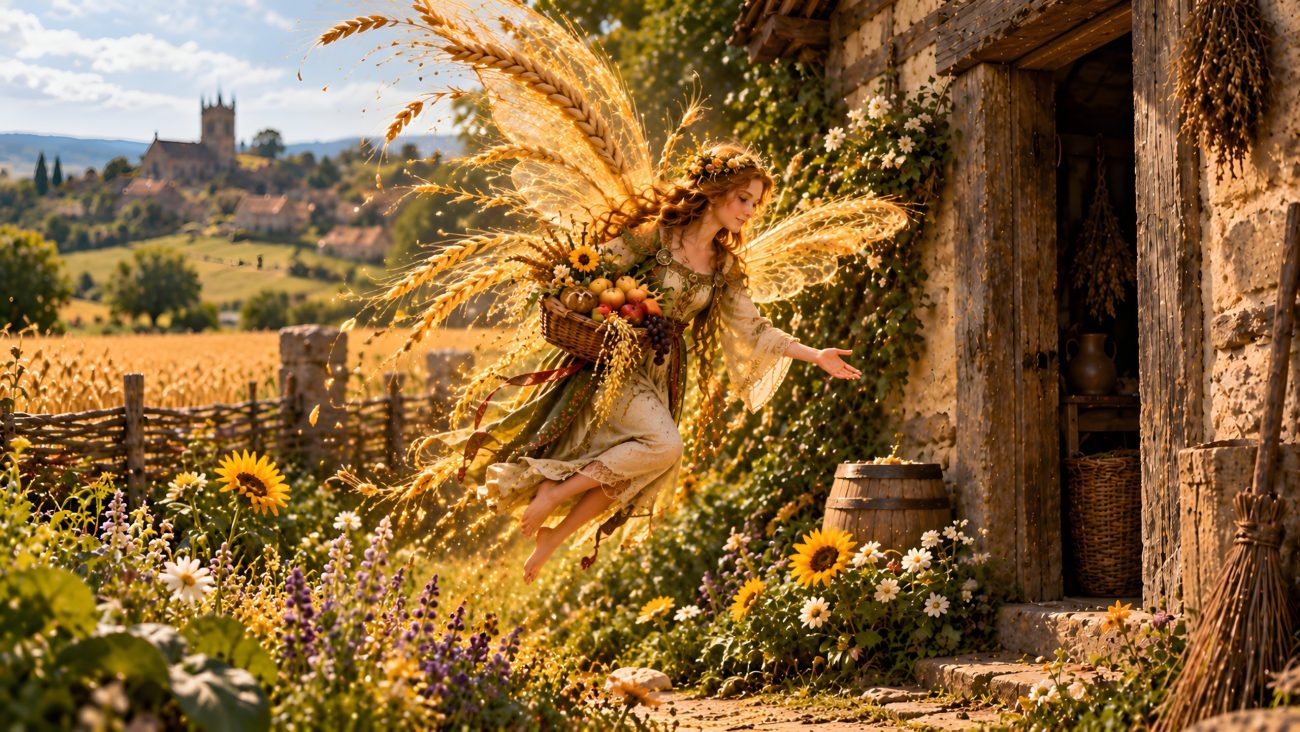
Abonde, also called Dame Abonde, is a benevolent female fairy or spirit associated with fertility and abundance. She was believed to visit human households, particularly those of ordinary and poor people, bringing prosperity and plenty to the homes she favored. People sought her goodwill by leaving offerings of food and drink, hoping that her presence would bring abundance to the household and ensure the continued fertility of the land.

Abonde was said to visit houses at night, and medieval accounts describe people who claimed to have flown through the night with her. The belief was criticized by medieval Christian writers, who regarded such nocturnal encounters as superstition. Her connection with abundance also appeared in ritual traditions surrounding marriage: one medieval account describes grains of wheat being scattered over newlyweds while people called out for abundance, although the source does not establish with certainty that this ceremony was directly dedicated to Abonde.

Her role was therefore that of a generous supernatural visitor whose favor could bring prosperity, fertility, and the renewal of agricultural abundance. She belonged to a wider world of rural beliefs in which supernatural beings were approached through offerings and rituals intended to secure good fortune for the household and its crops. Over time, medieval clerical authorities increasingly condemned and demonized such beliefs, but Abonde remained remembered as one of the great benevolent fairies associated with abundance.


Sources

“Abonde (fée).” Wikipédia, l’encyclopédie libre (French Wikipedia). Wikimedia Foundation. Accessed October 5, 2026. https://fr.wikipedia.org/wiki/Abonde_(f%C3%A9e)


Tréo-Fall

Tradition: French Mythology
Alternative Names: Danserien-Noz, Dañserion-Noz, Night Dancers
Category: Fairy


The Myth

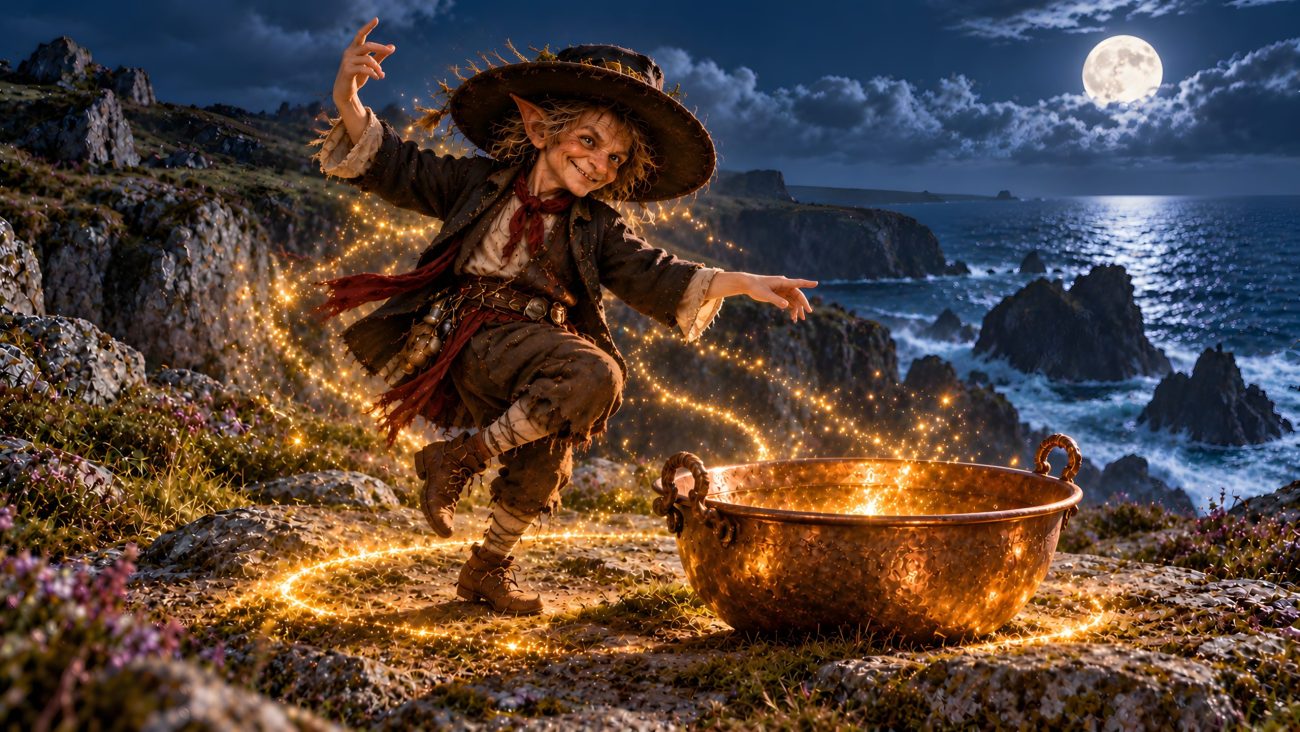
The Tréo-Fall are small goblin-like fairies said to gather at night on the cliffs of Ushant, where they dance beneath the moonlight. Their appearance is only vaguely described, but they are consistently portrayed as very small beings. In some accounts they wear large round hats and dance around a copper basin. They invite passing humans to join their mysterious dances, sometimes promising them great treasures in return. The invitation is dangerous, however, because those who become caught up in their dancing may suffer terrible injuries.

A person who encounters the Tréo-Fall must know how to escape their enchanted dance. The traditional protection is to stick a knife into the ground and touch it at every circle of the dance. If the dancer manages to complete the required circles while maintaining this ritual, the Tréo-Fall will grant whatever request is made of them. Those who fail to escape can be subjected to their cruel tricks, with some unfortunate dancers said to end up with broken kidneys. Their behavior therefore shifts between generosity and malice: they may reward someone who willingly joins their dance, while punishing or cursing those who insult them.

Stories of the Night Dancers were also told around Plouaret in the Côtes-d’Armor. One tale tells of two half-sisters, one beautiful, graceful and kind, the other ugly, mean and spiteful. The good girl was deliberately sent along a road where the Night Dancers gathered at the Croaz-ann-neud crossroads. She encountered a crowd of little men dancing in the moonlight and accepted their invitation. Pleased by her kindness, they showered her with gifts. Her jealous stepmother then sent the wicked girl along the same road, expecting her to receive the same rewards. When the little dancers invited her to join them, however, she insulted them, and they cursed her instead. Another version tells of seven dwarfs wearing large hats, six of whom danced with the good girl and kissed her in gratitude, while the seventh remained apart.


Sources

“Tréo-Fall.” Wikipedia: The Free Encyclopedia. Wikimedia Foundation. Accessed October 4, 2026. https://en.wikipedia.org/wiki/Tr%C3%A9o-Fall


Tiffenottes

Tradition: French Mythology
Alternative Names: Tiffenotes
Category: Fairy


The Myth

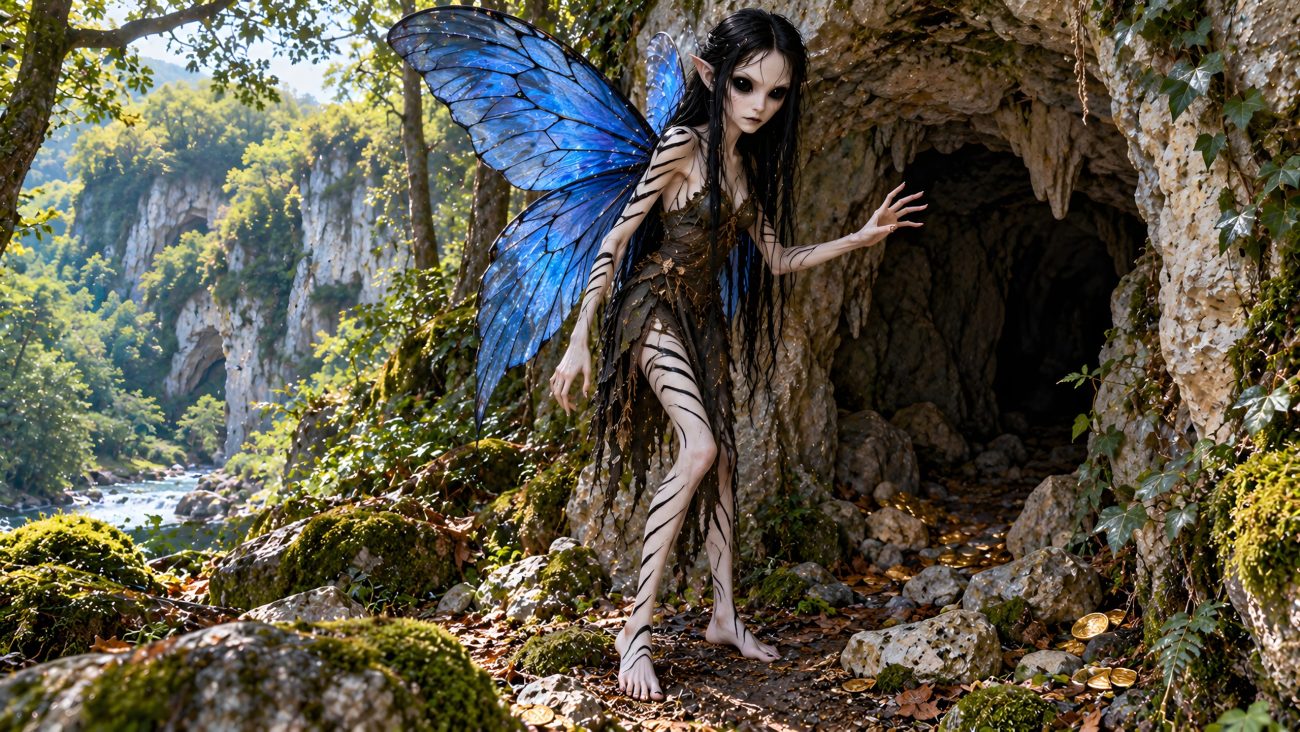
The Tiffenottes are small fairies of the Moselle who live secretly in forests, caves, and rocky places. They are often playful but can also be malicious, fiercely protective of their hidden existence. At Pré Aubry near the Côte de Drince, they are said to gather and dance among the rocks. A person who intrudes upon them may receive either a terrible curse or unexpected gifts and riches, depending on the legend.

One of the best-known stories comes from Rombas, where three Tiffenottes are said to live inside caves in the forest. A young herdsman once noticed a magnificent, unusually large cow emerging from the woods and joining his herd. He cared for the animal as though it belonged to him, but every evening it disappeared back into the forest. The next day it returned, this time carrying small tulle bags filled with gold, which it left for the young man. The strange arrangement continued for months, and the more kindly he treated the cow, the more gold it brought him.

Eventually, curiosity—or more likely greed—overcame the herdsman. He decided to follow the cow when it returned to the forest and discovered that it belonged to the three Tiffenottes. When the fairies saw that he had followed their secret and betrayed their trust, they became furious. In one telling they beat him with whips; in another, he managed to flee. Either way, when he emerged from the forest, his entire herd had disappeared. The beautiful cow never again came down from the woods, and the herdsman lost the mysterious source of his wealth.


Sources

“Tiffenotte.” Wikipédia, l’encyclopédie libre (French Wikipedia). Wikimedia Foundation. Accessed October 4, 2026. https://fr.wikipedia.org/wiki/Tiffenotte


Annequin

Tradition / Region: French Mythology, Belgian Mythology
Alternate Names: Hannequet; Hannequin; Harliquin
Category: Fairy


The Myth

In the folklore of the Ardennes, the annequin is a malevolent fairy creature, often described as a kind of goblin or will-o’-the-wisp. It is known above all for luring humans to their deaths. Those who encounter an annequin are said to be drawn irresistibly toward marshes and wetlands, where they become lost and drown.

The annequins are closely associated with the mesnie Hellequin, the spectral procession that roams the night sky, and through it with the figure later known as Harlequin. Their nature is restless and predatory, bound to movement, noise, and disappearance.

According to tradition, annequins gather in a round dance every Saturday night. On certain nights, they are said to pass above houses, flying through the air while emitting shrill, piercing whistles. Anyone who is surprised by their passage is believed to vanish forever, leaving no trace behind.

The annequins are said to dwell especially in wooded areas, particularly in the forests of Puilly, where their presence is marked by strange sounds, sudden lights, and the dangerous pull toward bogs and swamps. Those who follow these signs are rarely seen again.

In the legends of the Ardennes, the annequin is remembered as a being of deception and disappearance, a nocturnal spirit whose call leads not to wonder, but to death.


Sources

Wikipedia contributors. (n.d.). Annequin (folklore). In Wikipedia, from https://fr.wikipedia.org/wiki/Annequin_(folklore)