Abja

Tradition / Region: Albanian Mythology
Alternate Names:
Category: Ghost


The Myth

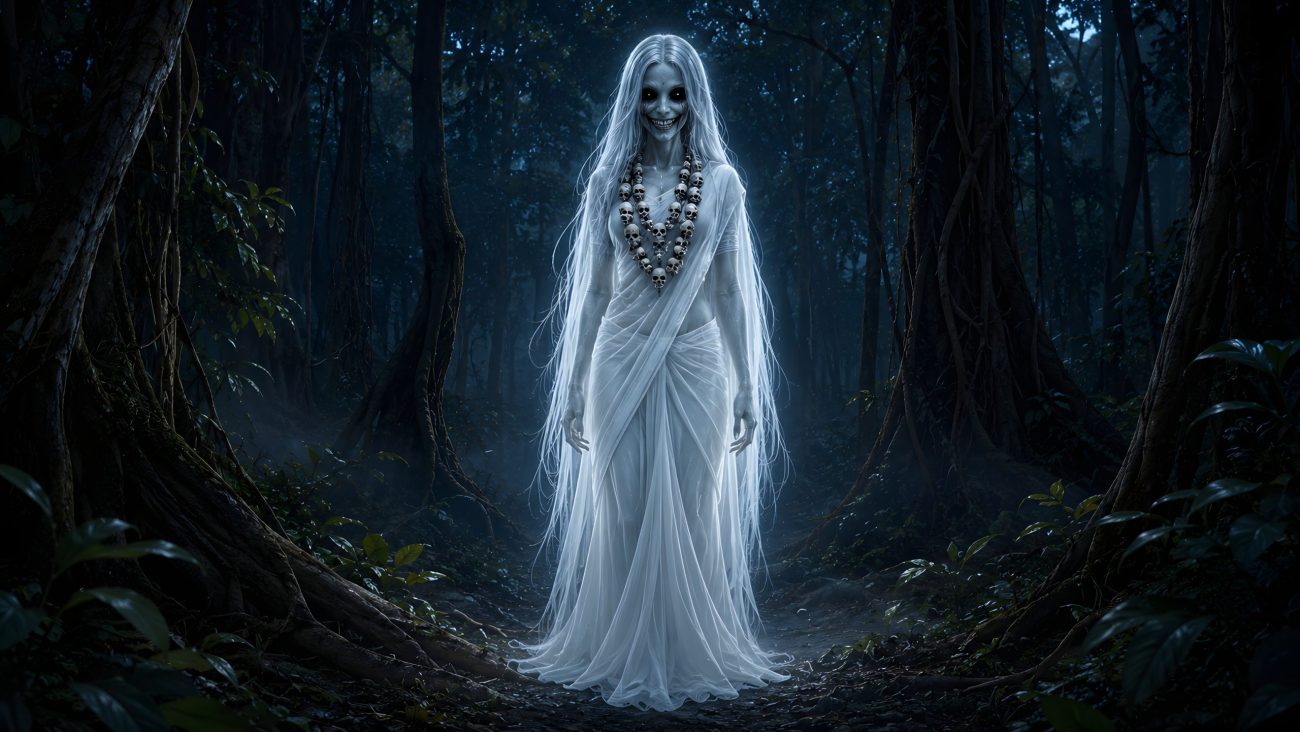
Abja is a ghostly figure in Albanian folklore, appearing in the form of a woman wrapped in a rough shroud or a thick cloak made of coarse woolen fabric. The name Abja derives from abá or abája, referring to such a garment.

She is described simply as a female apparition distinguished by this heavy, coarse covering, which conceals her body and form. No further actions, speech, or narrative events are consistently recorded; her defining characteristic is her appearance as a shrouded female ghost.


Sources

Elsie, R. (2001). A Dictionary of Albanian Religion, Mythology, and Folk Culture. p. 4.


Aghach Kishi

Tradition / Region: Azerbaijani mythology
Alternate Names: Mesha Adam
Category: Monkey, Forest dweller, Mountain dweller, Ghost


The Myth

In the mountainous forests there lives Aghach Kishi, the Woodman. He is a wild, ghostlike being, his body covered in hair, moving through the trees with a will of his own. Some say he resembles a man, others a beast, but he belongs fully to the forest.

Aghach Kishi wanders near villages and gardens, where he sometimes appears without warning. He has a strong, unpleasant smell, and he is known to take clothing left behind by humans. In older times, people would leave garments for him on purpose, hoping to avoid angering him.

Though he does not always attack, encounters with Aghach Kishi are uneasy and unsettling. He is a reminder that the forests are not empty, and that something older and untamed still walks among the trees.


Sources

JAMnews.net. (2017). The magical creatures of Azerbaijani mythology. Retrieved from https://jam-news.net/azerbaijani-demons/


Begho Bhoot

Tradition / Region: Bengali Mythology
Alternative Name: –
Category: Tiger, Ghost


The Myth

In the mangrove forests of the Sundarbans, where land and water blur and survival depends on entering dangerous terrain, the Begho Bhoot is believed to arise from those who died by the claws of tigers. The name comes from bāgh (tiger) and bhoot (ghost), marking it as the spirit of a person claimed by the forest’s most feared predator.

The Begho Bhoot is said to haunt jungle paths, riverbanks, and tidal inlets—places where honey gatherers, fishermen, and woodcutters must pass to earn their living. These spirits do not wander into villages or homes. They remain bound to the routes of labor, appearing where people still risk their lives to survive.

Accounts describe Begho Bhoots as frightening travelers, sometimes by imitating the roar of a tiger, other times by whispering or misleading those who are already lost. In doing so, the spirit draws people deeper into danger, reenacting the circumstances of its own death. The ghost does not seek revenge, but repeats the moment of terror endlessly.

The Begho Bhoot is closely tied to Dakshin Rai, the lord of the Sundarbans, who rules over beasts and spirits alike and often appears as a tiger himself. Under his authority, death by tiger is not random—it is an expression of the forest’s law. Those taken by tigers are believed to pass into his domain, becoming part of the forest rather than leaving it.

Within Bengali belief, the Begho Bhoot represents collective loss and shared fear. It is the memory of people who entered the forest out of necessity and never returned. The ghost exists not as a curse upon the living, but as a warning embedded in the landscape itself.

When the forest grows silent and a roar echoes where no tiger is seen, it is said that the Begho Bhoot is near—an echo of lives lost, reminding all who walk the Sundarbans that survival there is never guaranteed, only permitted for a time.


Sources

Wikipedia contributors. (n.d.). Ghosts in Bengali culture. In Wikipedia, from https://en.wikipedia.org/wiki/Ghosts_in_Bengali_culture
Jeekim

Tradition / Region: Estonian Mythology
Alternative Name: –
Category: Spirit


The Myth

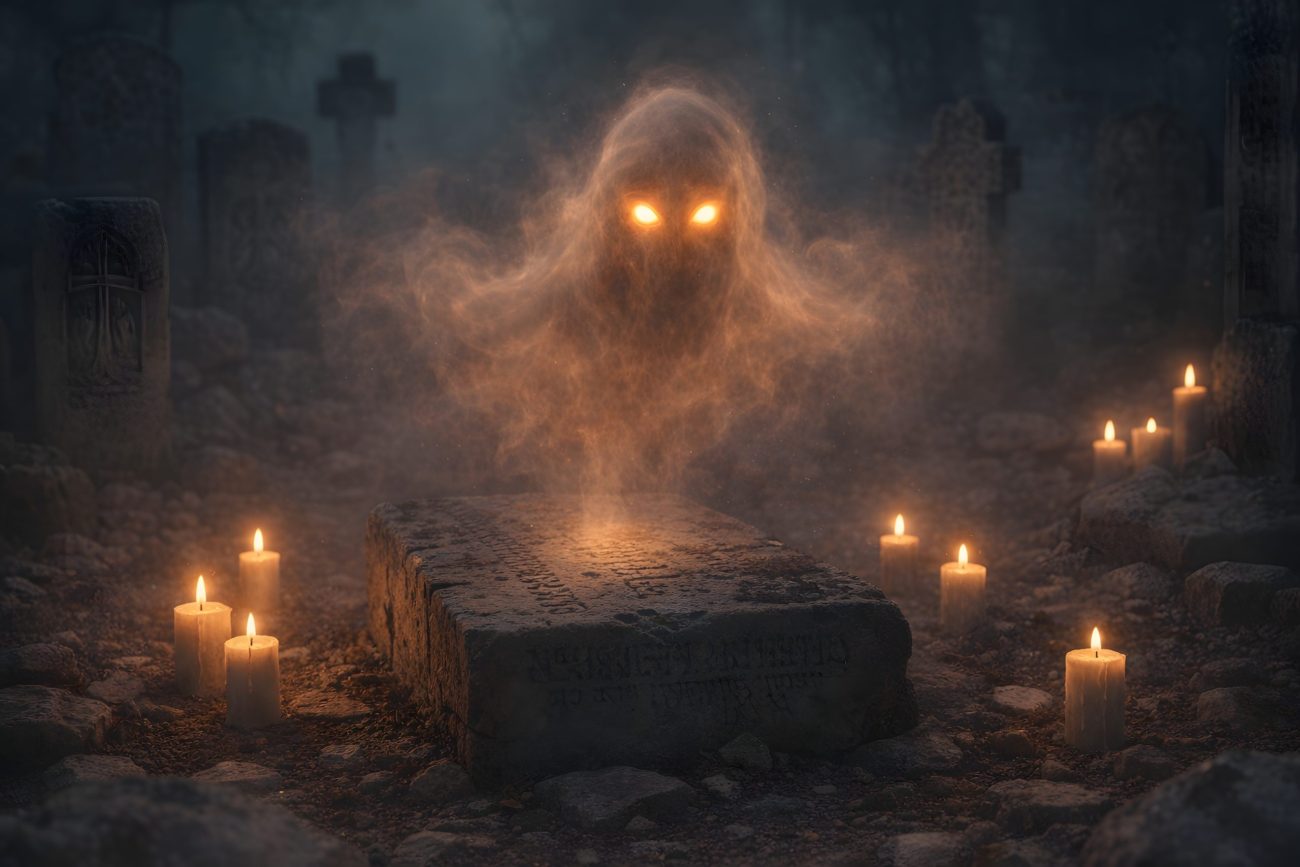
Jeekim is a penitent cemetery spirit found in Estonian legends and myths. The name Jeekim refers to a spirit bound to burial grounds, associated with repentance and unrest rather than active malevolence.

In traditional belief, Jeekim dwells among graves as a presence marked by penitence, suggesting a soul unable to leave the cemetery due to unresolved guilt or unfinished atonement. No detailed deeds or encounters are preserved, and the spirit is known primarily through its association with the place of the dead.

Jeekim belongs to a group of Estonian cemetery spirits whose existence is attested in folklore sources but whose myths survive only in fragmentary form, emphasizing presence and state rather than narrative action.


Kamingmålik

Tradition / Region: Inuit mythology (Tuneq people)
Alternate Names:
Category: Spirit of the dead


The Myth

Kamingmålik is the spirit of a woman belonging to the Tuneq people. She is remembered as a human spirit that persists after death, retaining her identity as a woman of the Tuneq. Her presence places her among the spirits that originate from human lives rather than purely natural or animal forces.


Interpretive Lenses

Religious Readings
Philosophical Readings
Psychological Readings
Esoteric Deep Dive
  • Hermetic Deep Dive
Political / Social Readings
Other

Rankweil Geist

Tradition / Region: Austrian Mythology
Alternate Names:
Category: Ghost


The Myth

In the region between Dornbirn and Haselstauden, people walking at night often heard sneezing beneath the bridge over the Fischbach. Most ignored the sound and continued on their way. One night, however, a traveler, hearing the sneezing, called out, “God help you, if you need help.”

At once, a man appeared before him and answered that he could indeed be helped—if the traveler would carry him that very night to Rankweil. Though exhausted, the traveler agreed, saying that he would first return home to eat supper and tell his wife of his plan. When he did so, his wife pleaded with him not to keep such a dangerous promise, but he refused to break his word.

The man returned to the bridge, where the spirit awaited him. The ghost leapt onto his back, and the traveler was forced to carry it all the way through the night, bearing its heavy weight until they reached Rankweil. At the steps of the church, the spirit finally dismounted and said, “You have redeemed me, and I will redeem you as well.”

The man, drenched in sweat and weakened by the ordeal, returned home. From that night on, he fell ill, and six weeks later he died. It was said that the ghost had vowed during his lifetime to make a pilgrimage to Rankweil but had never fulfilled his promise. After death, he was forced to wander until someone carried him there, binding his redemption to the life of the one who helped him.


Igosha

Tradition / Region: Russian Mythology
Category: Ghost


The Myth

Igosha is a spirit found in Russian folk belief, understood as the soul of a stillborn baby or a child who died before baptism. It is described as an armless and legless creature, sometimes invisible, sometimes imagined as a small, malformed being. Because it died without baptism, the igosha is believed to be unable to find rest.

According to belief, stillborn or unbaptized children often remained close to the place where they were buried—frequently under the floor of the house, near the hut, or within the household space itself. Over time, such spirits could become domestic beings, lingering inside the home and wandering through it at night.

The igosha behaves much like other house spirits such as the brownie or kikimora. It plays pranks, causes disturbances, and brings mischief, especially if it is ignored or disrespected. People believed that if the household failed to acknowledge the igosha—by not leaving a spoon, a piece of bread, or other small offerings—it would become more troublesome. In some traditions, people would throw a mitten or hat out the window as a gesture of recognition, treating the igosha as a house spirit rather than denying its presence.

One belief says that the kikimora feeds the igosha wolfberries, which the spirit can eat without choking, reinforcing its non-human nature. The igosha is often described as incomplete or unfinished, reflecting the idea that it barely entered the world before dying. Its lack of arms and legs is sometimes interpreted as a sign of this incompleteness or as a hint of a snake-like nature.

Information about igosha is rare, and the belief appears only sporadically in folklore records. The figure later inspired the literary fairy tale “Igosha” by V. F. Odoevsky, published in 1833, which drew directly on these traditional ideas of an unbaptized, restless child-spirit haunting the domestic space.


Lady Rokujo

Tradition / Region: Japan (Heian-period court literature)
Alternate Names: Rokujo no Miyasudokoro, Miyasudokoro
Category: Vengeful spirit / living ghost


The Myth

Lady Rokujo was a noblewoman of great refinement, the daughter of a minister and once the wife of the Crown Prince. Widowed at a young age, she later became the lover of Hikaru Genji. Though dignified and proud of her rank, she suffered deeply from jealousy and humiliation, especially as Genji’s affections shifted toward younger women. These unspoken emotions slowly twisted within her.

During the events recorded in The Tale of Genji, her resentment grew so powerful that her spirit began to leave her body without her conscious will. At the Kamo Festival, after being humiliated in a carriage dispute involving Genji’s lawful wife, Lady Aoi, Lady Rokujo’s spirit fully manifested. Invisible yet deadly, it began to torment Lady Aoi, who was pregnant at the time.

Lady Aoi suffered greatly. After a long and painful labor, she gave birth to a son, but her condition suddenly worsened, and she died only days later. Meanwhile, Lady Rokujo realized that her spirit had wandered when she noticed the smell of ritual mustard seeds clinging to her own clothing. Genji himself witnessed her spirit while tending to Lady Aoi. Horrified by what she had become, Lady Rokujo resolved to sever her ties with him.

She left the capital, parting from Genji at Nonomiya, and traveled to Ise with her daughter, who served as a sacred princess. Yet even distance could not quiet her heart. After returning to Kyoto, Lady Rokujo fell ill and died, entrusting her daughter to Genji’s care. Death, however, did not end her suffering.

Her spirit continued to appear, driven by lingering obsession. It haunted Lady Murasaki and later the Third Princess, afflicting them with sickness and terror. Through these hauntings, her bitterness toward Genji was made known again and again.

Only after memorial rites were performed, urged by Genji and carried out for her troubled soul, was it hoped that Lady Rokujo might finally find release. Until then, she endured as one of the most feared figures of courtly legend — a woman whose restrained emotions became so powerful that even death could not contain them.


Interpretive Lenses

Religious Readings
Philosophical Readings
Psychological Readings
Esoteric Deep Dive
Political / Social Readings
Other

Ba-kujira-tata

Tradition / Region: Japanese Mythology
Alternate Names: Monster Whale Curse
Category: Whale, Ghost


The Myth

During his years working as a kamishibai artist, Mizuki Shigeru once created a paper-theater story called Monster Whale. The tale told of a man who ate nothing but whale meat. Over time, his body began to change, and he slowly came to resemble a whale himself. As the story neared its end, the man was struck by a severe fever. Even after consulting a doctor, no cause for the illness could be found.

While performing this story repeatedly, Mizuki himself fell ill with an unexplained fever. Medical treatment brought no answers, and the sickness lingered. Eventually, he decided to stop performing Monster Whale. Soon after, his fever disappeared as suddenly as it had come.

Mizuki laughed it off at the time, calling it the curse of the monster whale. Yet as years passed, he reconsidered the experience. He came to feel that the story may have touched on something unseen, something that did not reveal itself openly. As the tale of the monster whale concludes in his later writings, collected in works such as Nihon Yokai Taizen, it leaves a quiet warning: though nothing may seem to be happening, there is always something mysterious moving just beyond human sight.


Sources

TYZ Yokai Blog contributors. (n.d.). Bake-kujira (鯨骨霊 / バクジラ). In TYZ Yokai Blog, from https://tyz-yokai.blog.jp/archives/1077754091.html