Eksitaja

Tradition / Region: Estonian Mythology
Alternate Names:
Category: Forest dweller, Swamp dweller, Spirit


The Myth

Eksitaja is an evil spirit known for causing people to lose their way in forests and bogs. Those who encounter Eksitaja become confused and disoriented, unable to recognize familiar paths or landmarks. Even places well known to the traveler can suddenly seem strange and misleading.

The spirit does not attack directly, but instead leads people astray, drawing them deeper into wilderness areas such as dense forests or marshy bogs. Victims may wander for long periods, sometimes until exhaustion or danger overtakes them.

Eksitaja embodies the fear of becoming lost in nature, where direction fails and the landscape itself seems to turn against those who travel through it.


Sources

Wikipedia contributors. (n.d.). Estonian mythology. In Wikipedia, The Free Encyclopedia, from https://en.wikipedia.org/wiki/Estonian_mythology


Liiva-Annus

Tradition / Region: Estonian mythology
Alternative name: –
Category: Spirit


The Myth

Liiva-Annus is one of the most widespread names used by Estonians to refer to Death itself, understood not merely as an abstract end, but as an active, personified spirit. Because death was feared as something that could be summoned by name, people avoided calling it directly and instead used substitute names and nicknames. Among these were Mulla-Madis, Kalmu-Kaarel, Haua-Kusta, Toone-Toomas, Death-Peeter, as well as descriptive titles such as the scytheman, boneman, blackman, and coldfoot. Liiva-Annus is one of the most enduring of these euphemisms.

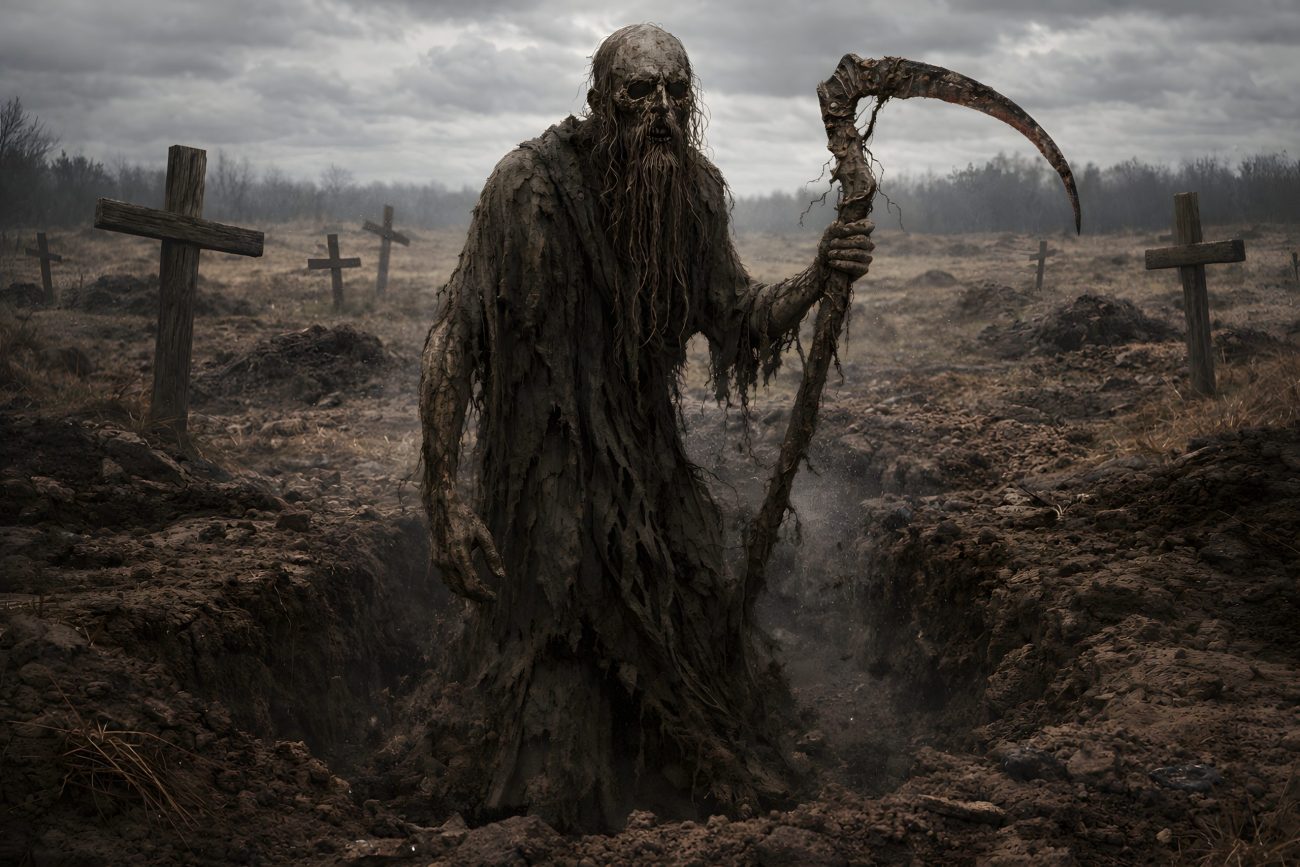
In folk imagination, Liiva-Annus appears as an old man who comes to claim human lives by force. He is said to beat people to death using tools associated with earth and burial—such as a scythe, shovel, pickaxe, or similar implements—linking him closely to the grave, soil, and the labor of digging. His presence is sudden, unavoidable, and final.

The figure of Liiva-Annus belongs to a broader, internationally known image of Death found throughout Christian Europe: the aged reaper who harvests human lives. In Estonian tradition, however, his many names emphasize both fear and familiarity—Death is ever-present, but must be spoken of carefully, indirectly, and with respect.


Rahaaugu Haldjad

Tradition / Region: Estonian mythology
Alternative name: –
Category: Spirit


The Myth

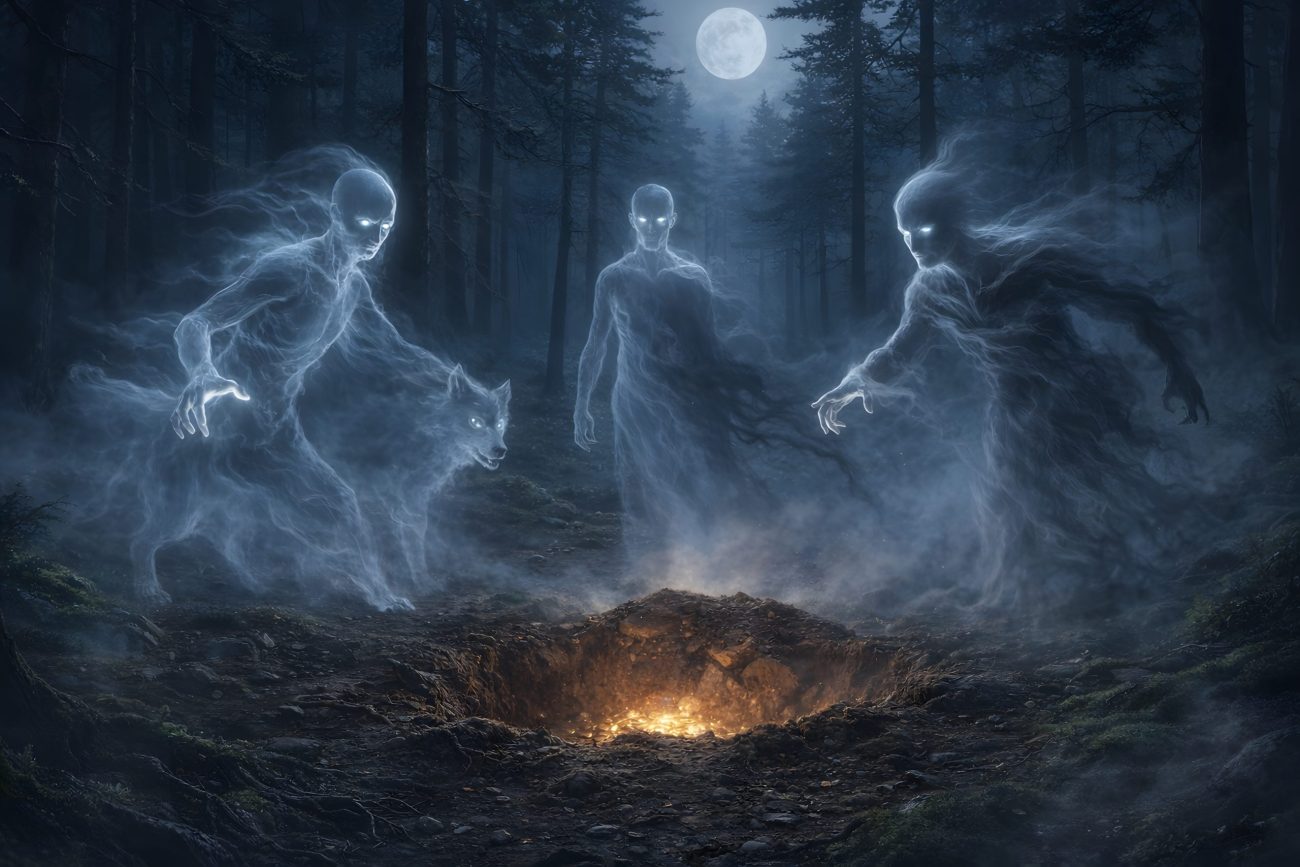
Rahaaugu haldjad, the Fairies of the Money Pit, are spirits believed to guard buried treasure hidden in the earth. In ancient times, money and valuable metal objects were often buried to protect them from war, raids, or theft. When the owners of these treasures died or were unable to return, the wealth remained underground, and the soul of the person who buried it became bound to the site as its guardian.

These spirits are not pagan priests or “old pagans,” despite later confusion in folklore. Their role is specific: they are keepers of wealth, bound to the treasure by death and unfinished responsibility. In some cases, a single money pit may be guarded by several fairies, reflecting that the treasure once had multiple owners, all of whom became its guardians after death.

To those deemed worthy, a fairy of the money pit may appear in a dream, inviting the dreamer to seek the hidden treasure. Yet this invitation is also a trial. Before allowing the treasure to be taken, the fairy tests the seeker’s courage. It may conjure shadowy apparitions, ghosts, or frightening visions, or transform itself into animals such as a dog, goat, wolf, or bear to terrify the human.

Only those who face these trials without fear or hesitation may succeed. In this way, the Rahaaugu haldjad embody the belief that wealth is never freely given, and that courage, resolve, and moral strength are required to claim what lies buried beneath the earth.


Ebajalg

Tradition / Region: Estonian mythology
Category: Spirit, Demon


The Myth

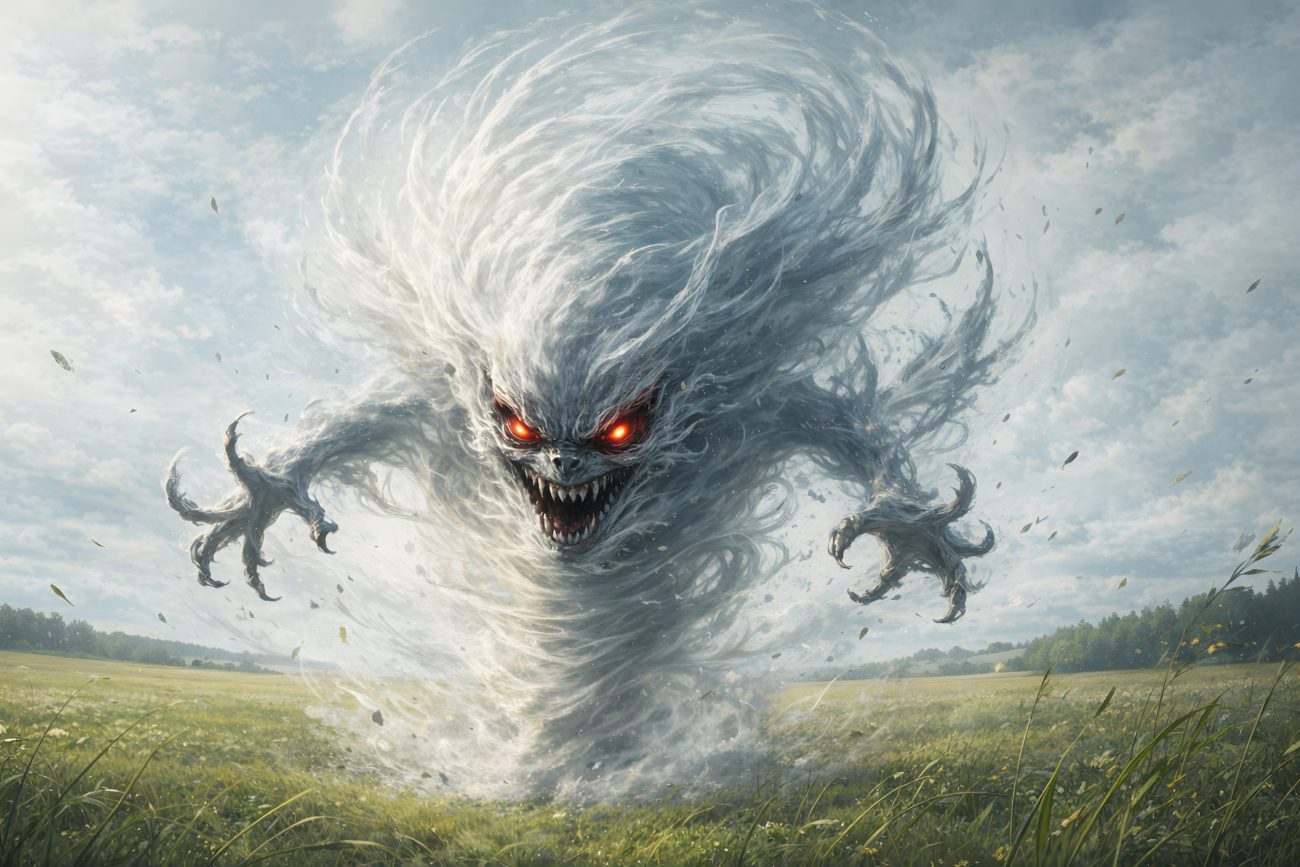
Ebajalg is a being of Estonian folklore that manifests as a violent whirlwind. Rather than a natural phenomenon alone, it is believed to be a malicious spirit or demon moving through the landscape in the form of spinning wind.

Ebajalg is associated with sudden destruction and overwhelming force. When it appears, it may tear through fields, damage buildings, or scatter objects, its strength far beyond that of ordinary wind. Encounters with Ebajalg are not personal or communicative; its presence is felt through impact and chaos rather than speech or form.

In Estonian belief, Ebajalg represents the dangerous animation of nature itself—an unseen will acting through the air, embodying the fear that destruction may arise suddenly, without warning, and without human cause.


Jeekim

Tradition / Region: Estonian Mythology
Alternative Name: –
Category: Spirit


The Myth

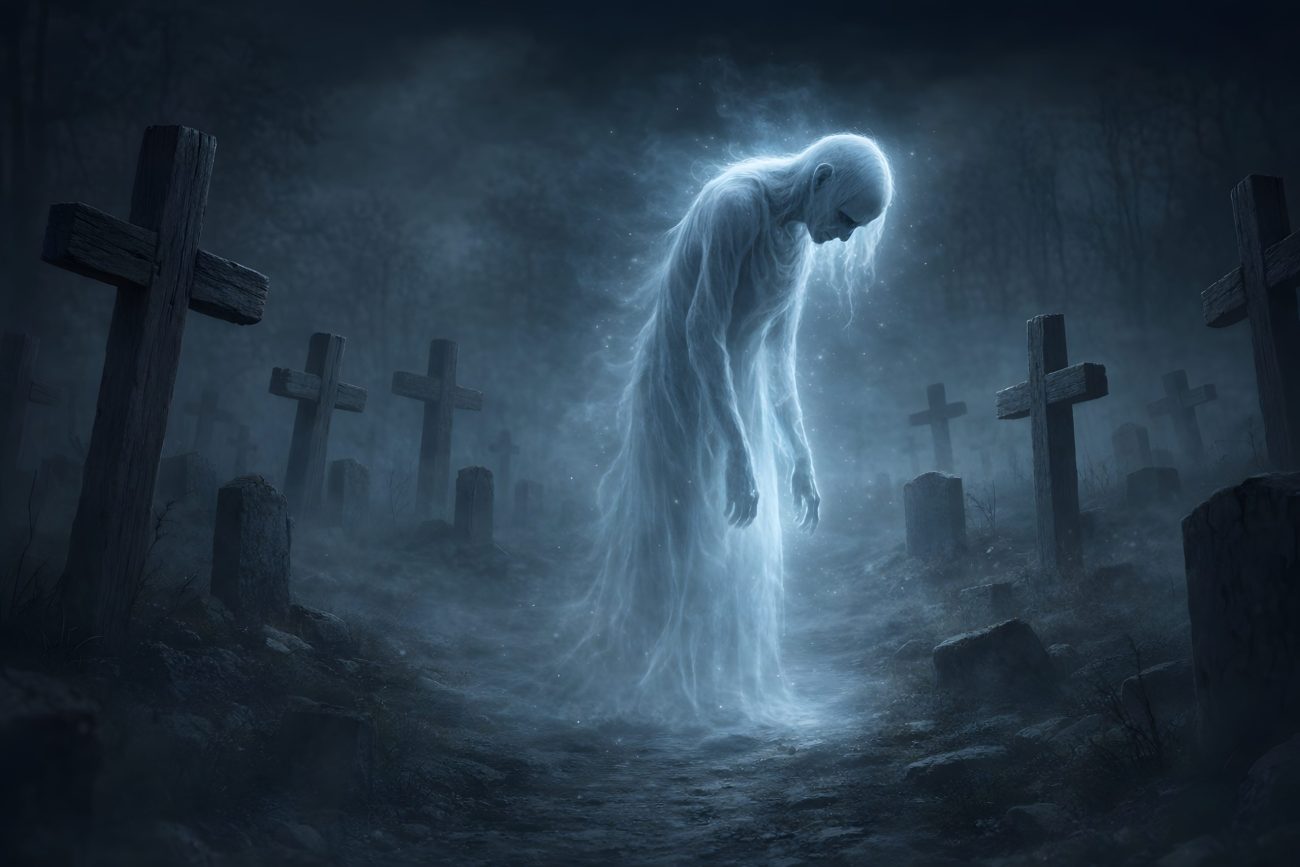
Jeekim is a penitent cemetery spirit found in Estonian legends and myths. The name Jeekim refers to a spirit bound to burial grounds, associated with repentance and unrest rather than active malevolence.

In traditional belief, Jeekim dwells among graves as a presence marked by penitence, suggesting a soul unable to leave the cemetery due to unresolved guilt or unfinished atonement. No detailed deeds or encounters are preserved, and the spirit is known primarily through its association with the place of the dead.

Jeekim belongs to a group of Estonian cemetery spirits whose existence is attested in folklore sources but whose myths survive only in fragmentary form, emphasizing presence and state rather than narrative action.


Veehaldjas

Tradition / Region: Estonian Mythology
Alternate Names: Vetevaim; Näkk (in some regions); Vesihaldijas; Merehaldjas; Vee-ema; Vesineits; Mereneid; Merineitsi
Category: Spirit


The Myth

In Estonian folk belief, a Veehaldjas is the guardian spirit of a body of water. Every sea, river, lake, spring, or well was believed to have its own water spirit who ruled and protected it. The vetevaim also appears as a character in the national epic Kalevipoeg.

Closely related to the veehaldjas are beings such as mereemad (sea mothers), meretaadid (sea fathers), järvevanad (lake elders), vete-emad, and their daughters. These figures, especially known in southern Estonia and on the islands, were usually benevolent. They granted abundance and calm waters but could punish those who polluted or disrespected their domain.

In some areas, the veehaldjas was associated with the soul of a drowned person, a ghost, a goblin-like being, or—especially in southern Estonia—with the devil. In this form, the water spirit was dangerous and malicious, dragging people beneath the surface to drown them. The näkk is the most well-known of these hostile water spirits, and parents often frightened children with stories of the näkk to keep them away from water.

The veehaldjas could appear in many forms: most often as a human—usually a woman—but also as a bird, animal, or even an object. Coastal fishermen offered food and drink to water spirits in exchange for good fishing luck.

According to folklorist Matthias Johann Eisen, the name vesihaldijas was most commonly used in Viru, Harju, and Järva counties, while in Läänemaa and other regions the näkk was more often considered the ruler of the waters. Both the vesihaldijas and the näkk were sometimes described as equally fierce, though the merehaldjas was occasionally said to warn humans or refrain from harming them.

To protect themselves from dangerous water spirits, people placed small human-shaped figures near the water’s edge. These effigies were believed to frighten the veehaldjas away, preventing it from harming passersby.

Many female water beings—called vesineitsid, mereneitsid, mereneiud, and the daughters of sea or water spirits—were considered gentle and helpful. Some legends say these beings could appear with sea cows grazing on land. If a human herded them together with ordinary cattle, the sea cows would remain on land, give birth, and produce a strong and valuable breed of dairy animals.

Through these many forms, the veehaldjas embodies both the generosity and the danger of water, guarding life-giving resources while punishing disrespect and carelessness.