Enchanted Lion of Ntringui

Tradition / Region: Comoros Mythology
Alternative names: The Lion Guardian of Ntringui, The Stone Lion of the Mountain
Category: Object, Lion


The Myth

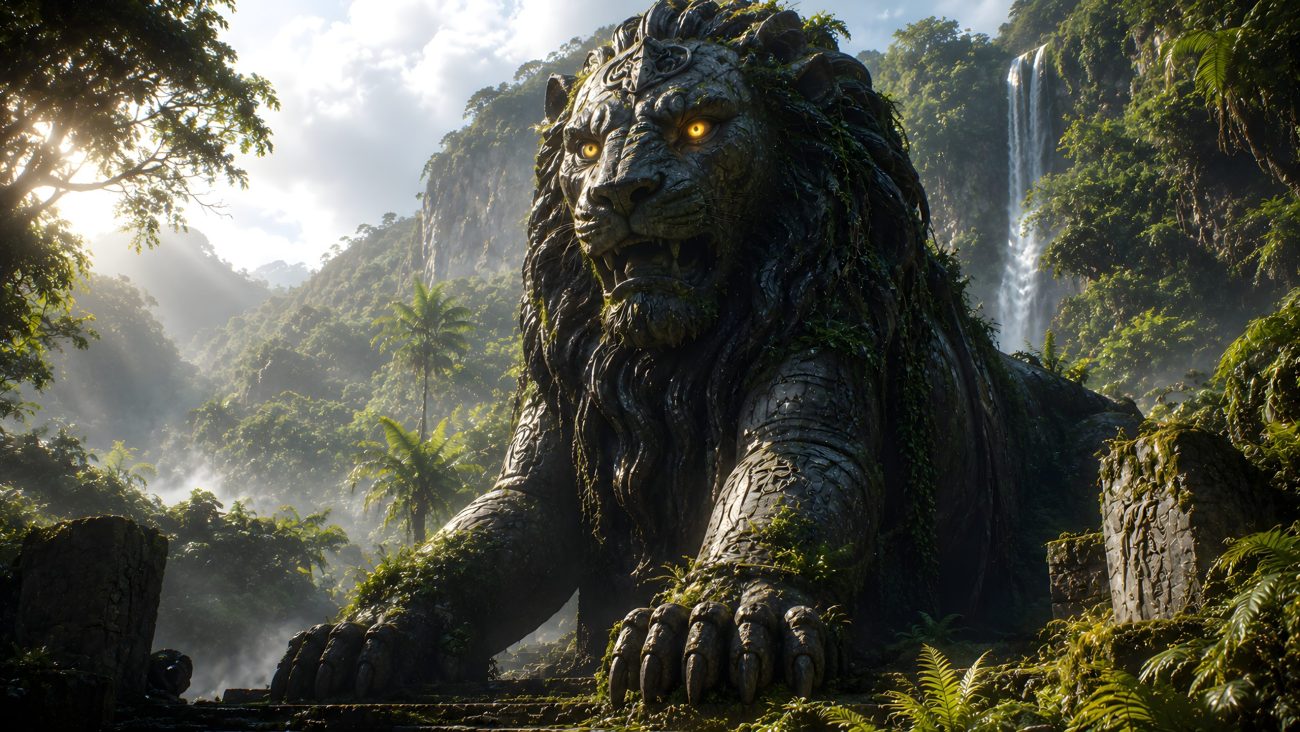
Deep within the forests of Mount Ntringui, travelers speak of an enormous stone lion hidden among tangled vines and ancient trees. The statue is said to guard the sacred paths leading toward the mountain’s supernatural heart. Though carved from stone, the lion is believed to possess awareness, intelligence, and the power to judge the souls of those who approach it.

According to legend, the lion stands within a secluded clearing surrounded by dense jungle where the air grows unnaturally silent. Moss and roots cover much of its body, but its face remains perfectly untouched, its eyes fixed upon the mountain paths as if eternally watching intruders.

The people of Anjouan believe the statue was placed there long ago by the Mountain Spirit of Ntringui to prevent the selfish, greedy, and cruel from reaching the sacred summit. Many who sought the mountain’s hidden wonders reportedly fled after hearing growls echo through the forest or seeing the lion’s eyes glow in the darkness.

The most famous story connected to the lion concerns a young woman named Amina, who climbed Mount Ntringui hoping to help her struggling village. Unlike treasure seekers who came before her, Amina sought nothing for herself. She wished only for prosperity and peace for her people.

While traveling through the mountain forest, she reached the clearing of the lion statue. As she approached, the ground trembled and the lion’s stone eyes began to shine with supernatural light. The creature spoke with a voice like thunder and demanded proof that her heart was pure.

Instead of showing fear, Amina knelt before the lion and explained that she desired no riches or glory, only relief for her starving village. The enchanted guardian recognized the sincerity in her words. Its expression softened, and with a deafening roar it moved aside, allowing her passage deeper into the mountain.

Because of this story, the Enchanted Lion became a symbol of courage, humility, and spiritual worthiness in Anjouan folklore. The statue is not viewed as evil, but as a sacred protector that separates the pure-hearted from those corrupted by greed.

Even today, some villagers claim strange things happen near the forests of Ntringui. Travelers report hearing distant roaring despite there being no lions on the island, while others speak of glimpsing glowing eyes between the trees before suddenly losing the mountain path. Many believe the Enchanted Lion still guards the hidden mysteries of Ntringui, waiting silently for the next worthy soul to approach.


Sources

Hichamou, P. (n.d.). Prince tales of the Comoros: Legends, mysteries & enchantments from the Isles of the Moon.


Eel Spirit of Sima

Tradition / Region: Comoros Mythology
Alternative names: The Eel of Sima, The Eel Guardian
Category: Fish


The Myth

The Eel Spirit of Sima is a supernatural being associated with the coastal waters of Anjouan. She is described as a radiant eel with shimmering, iridescent skin that glides through the ocean with unnatural grace. In village traditions, the spirit is believed to guard the balance between the people of Sima and the sea that sustains them.

According to legend, the spirit first revealed herself after a violent storm struck the coast of Sima. When the sea finally calmed, villagers discovered a strange eel trapped in a shallow tide pool. Unlike ordinary eels, its body reflected brilliant colors beneath the sunlight, and its movements seemed almost magical.

The elders argued over whether the creature was a blessing or a curse. A fisherman named Hamadi eventually brought the eel home and prepared it as food. The taste was said to be unlike anything known before — rich, tender, and deeply nourishing. Soon the eel became highly valued among the people of Sima and was regarded as a sacred gift from the ocean itself.

Over time, stories spread that the eel was connected to a powerful spirit living beneath the sea. The Eel Spirit was said to appear during nights of the full moon, moving silently through the waters while blessing fishermen with calm seas and plentiful catches.

The villagers believed the spirit demanded balance and respect. Those who took only what they needed were rewarded with prosperity. But greed and wastefulness were believed to anger her.

One famous story tells of a fisherman named Mwana who ignored the warnings of the elders and tried to catch enormous quantities of eel for profit. As his nets overflowed, the sea suddenly became unnaturally silent. A glowing figure emerged from the water — the Eel Spirit herself.

She asked Mwana why he had taken more than he needed and warned him that the eel was meant for survival and cultural harmony, not greed. Terrified, Mwana begged forgiveness and released most of his catch back into the sea.

Afterward, the elders declared that the eel must always be harvested with restraint and gratitude. Ceremonies and festivals were held in honor of the spirit, and the eel became a sacred symbol of Sima’s identity and connection to the ocean.

Today, the legend of the Eel Spirit remains tied to ideas of respect for nature, sustainability, and the spiritual bond between coastal communities and the sea. In local tradition, the shimmering figure of the spirit can still sometimes be seen beneath the moonlit waters near Sima, silently watching over her people.


Sources

Hichamou, P. (n.d.). Prince tales of the Comoros: Legends, mysteries & enchantments from the Isles of the Moon.


Silver Bird of Dzialandze

Tradition / Region: Comoros Mythology
Alternative names: The Birds of Dzialandze, The Jinn’s Birds
Category: Bird


The Myth

The Silver Birds of Dzialandze are mystical creatures said to inhabit the enchanted lake of Dzialandze on Anjouan. They are described as elegant birds with feathers that shimmer like polished silver beneath the sunlight and moonlight alike. Their songs are soft, haunting, and strangely melodic, echoing across the lake and forest like voices from another world.

According to local tradition, the birds serve the jinn who dwell within the sacred waters of Dzialandze. The lake itself is believed to possess supernatural purity: no fallen leaf, branch, or speck of dirt is ever allowed to rest upon its surface. Whenever something falls from the surrounding forest canopy, the silver birds descend instantly, snatching it away before it can touch the water.

The people of Anjouan believe the birds are not ordinary animals but spiritual guardians bound to the lake by an ancient pact with the unseen world. Their endless vigilance preserves the sacred balance between nature, spirits, and humanity.

One of the most famous legends surrounding the birds tells of a curious boy named Hani. Fascinated by stories of the lake, he secretly traveled there at dawn to witness the miracle for himself. Hidden among the bushes, he watched in amazement as a single falling leaf was caught midair by a flash of silver wings before it touched the water.

Overcome with curiosity, Hani threw handfuls of leaves into the air to test the birds. They darted through the sky with supernatural speed, catching every leaf before it landed. But as they did, mist rose from the lake and a luminous jinn emerged from the waters.

The spirit warned Hani that the lake was sacred and remained pure because of the harmony between the jinn and the silver birds. Disturbing that balance, the jinn explained, could invite chaos into the world.

Humbled and frightened, Hani apologized. The jinn forgave him and instructed him to teach others to respect the mysteries of Dzialandze rather than seek to control or challenge them.

From that day onward, the Silver Birds became symbols of sacred balance, spiritual guardianship, and the invisible forces protecting the natural world. Even today, stories persist of travelers hearing strange songs near the lake at dusk or glimpsing flashes of silver wings moving silently through the mist above the water.


Sources

Hichamou, P. (n.d.). Prince tales of the Comoros: Legends, mysteries & enchantments from the Isles of the Moon.


Woman in White of Ziarani

Tradition / Region: Comoros Mythology
Alternative name: The Guardian of Ziarani’s Cave
Category: Spirit


The Myth

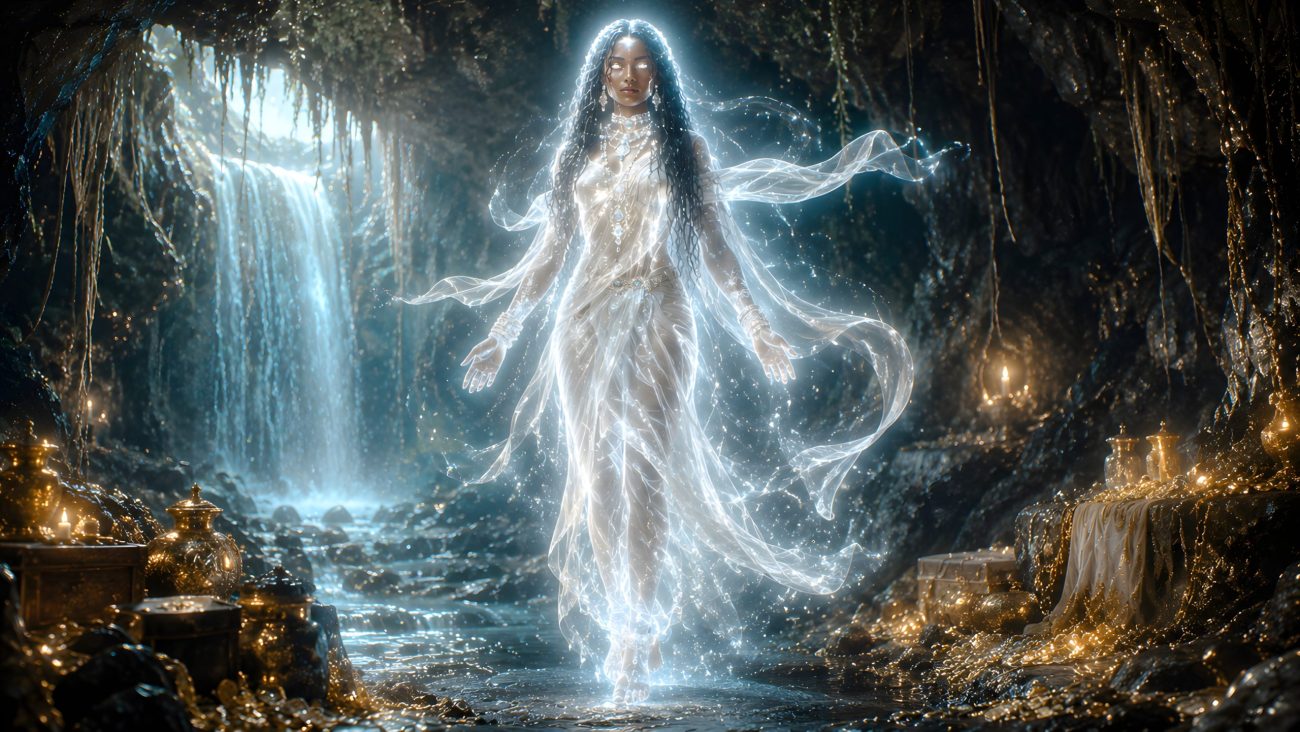
The Woman in White is a mysterious spirit figure said to dwell within the hidden cave of Ziarani, an ancient village remembered in Comorian legend for its destruction during a devastating tribal war. She is described as a calm and sorrowful woman clothed entirely in white, appearing deep inside a cavern guarded by jinn and sealed from the world of the living.

According to the legend, the prosperous village of Ziarani once hid its women, children, elders, and sacred treasures inside a secret cave concealed behind a waterfall. The men of the village left to fight invading enemies, promising they would return once the battle was won. But the warriors were overwhelmed and massacred, leaving only a few survivors scattered across the surrounding lands.

When survivors later returned to rescue their families, they found the cave mysteriously sealed. Strange whispers echoed through the forest, lights flickered among the trees, and unseen beings were said to guard the sanctuary. Elders claimed the cave had fallen under the protection of powerful jinn who forbade anyone from entering again.

Over the generations, many people searched for the hidden treasure of Ziarani. None succeeded. Some disappeared entirely, while others fled in terror after hearing voices calling their names from the darkness.

The most famous encounter came from a young man named Karim, whose grandmother had supposedly been hidden in the cave during the war. Determined to uncover the truth, he entered the forest alone after years of studying old traditions and consulting mystics.

After days of searching, Karim discovered the hidden cave. Inside he found vast chambers glowing with strange light, filled with untouched gold, jewels, and ancient objects frozen in silence. At the center stood the Woman in White.

She appeared neither young nor old, but timeless. Her expression was peaceful yet deeply mournful, as though she carried the memory of the village’s destruction within her. She spoke to Karim gently, asking why he had come.

When Karim begged to know what had happened to his people, the spirit woman told him that the dead were now at peace and that the jinn had fulfilled their promise to protect them forever. She warned him that the cave did not belong to the living and ordered him to leave the past undisturbed.

Moments later the cave shook violently, the supernatural light vanished, and Karim awoke outside the forest with the entrance nowhere to be found.

Since then, the Woman in White has remained a legendary guardian figure in the folklore of Sima District. She is associated with hidden treasure, mourning, sacred memory, and the boundary between the living world and the spirit world. Travelers still speak of ghostly lights in the forest and the feeling of unseen eyes watching from the darkness around Ziarani.


Sources

Hichamou, P. (n.d.). Prince tales of the Comoros: Legends, mysteries & enchantments from the Isles of the Moon.