Ellén Trechend

Tradition / Region: Irish Mythology
Alternative names: Ellen Trechend
Category: Bird


The Myth

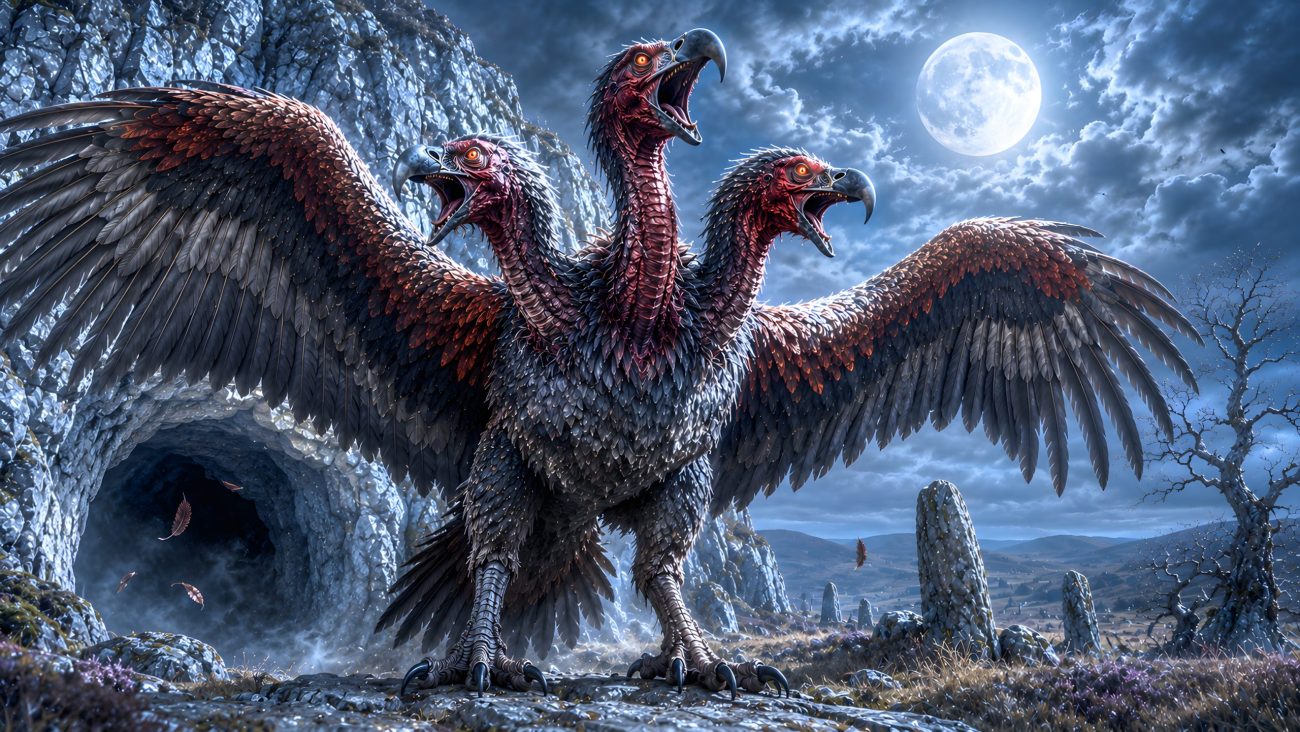
The Ellén Trechend is a terrifying three-headed monster from Irish mythology, often described as a monstrous three-headed bird or vulture. It emerged from the cave of Cruachan during a time of great destruction and ravaged Ireland, bringing devastation wherever it flew.

According to the Cath Maige Mucrama, the creature laid waste to the land until it was confronted by the Ulster poet and hero Amergin, who succeeded in slaying the monstrous being and ending its reign of terror.

Later Irish tradition associates the Ellén Trechend with the horrors released from the cave of Cruachan on Samhain. Alongside a host of goblins came a flock of copper-red birds led by a gigantic three-headed vulture, a creature widely believed to be the Ellén Trechend itself. As the leader of these supernatural birds, it became one of the most fearsome monsters associated with the opening of the Otherworld.


Sources

Wikipedia contributors. (n.d.). Ellén Trechend. In Wikipedia. Retrieved June 29, 2026, from https://en.wikipedia.org/wiki/Ell%C3%A9n_Trechend


Night Raven

Tradition / Region: German Mythology, Austrian Mythology
Alternative names: Nightraven; Nachtkrapp; Nachtrabe; Nattravn; Nattramn; Nattkorp
Category: Bird


The Myth

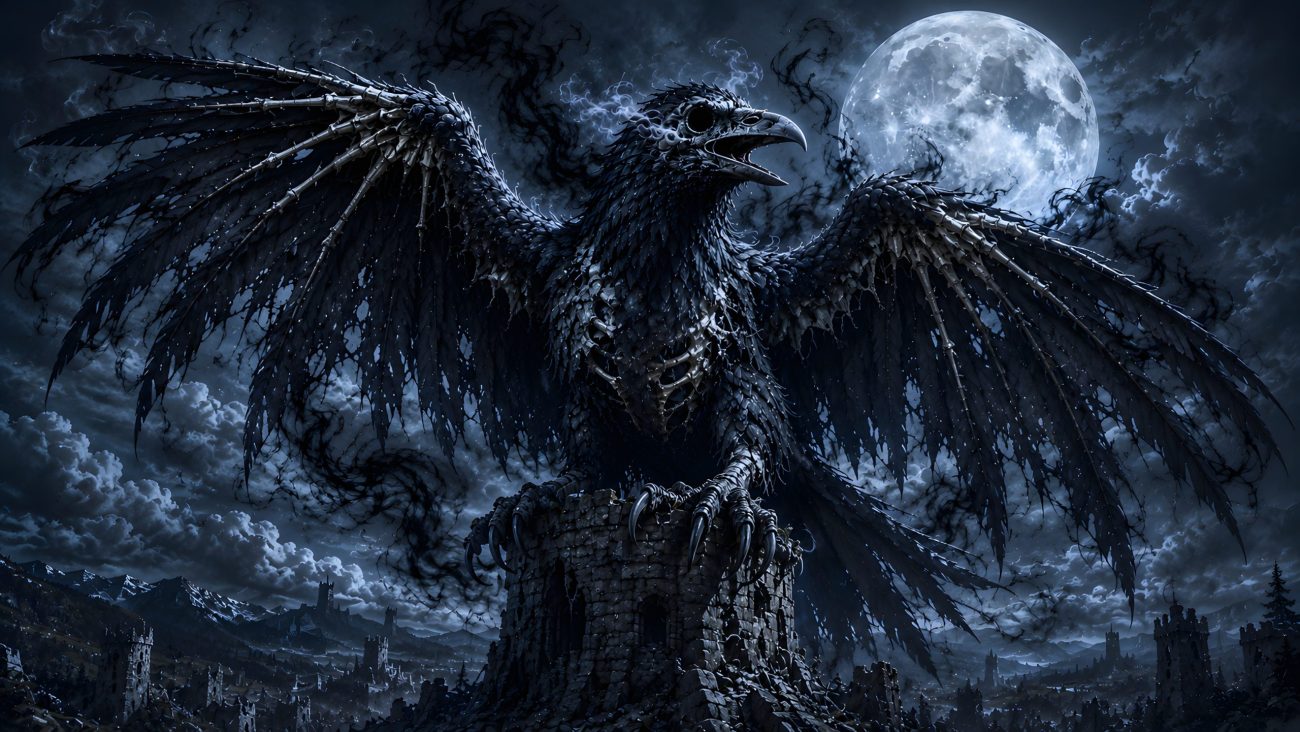
The Night Raven is a fearsome supernatural bird said to appear only after dark. Across much of Europe it is described as a giant raven-like creature that haunts forests, crossroads, and lonely places, often serving as a harbinger of death and misfortune. In many traditions, Night Ravens are not ordinary birds at all, but the spirits of the dead transformed into raven form.

In German folklore, the Night Raven leaves its hiding place after sunset to hunt. It is especially feared by children, whom it is said to snatch from the night and carry away to its nest. Some stories claim it tears its victims apart before devouring them, while others say it simply stuffs disobedient children into a sack and disappears into the darkness. Northern German legends also speak of an Iron Bird, whose iron wings beat offenders to death.

Scandinavian traditions often portray Night Ravens as the restless ghosts of suicides, murderers, unbaptized children, or those buried in unconsecrated ground. They fly through the night in the form of ravens or even skeletal birds, filling the darkness with eerie creaks and shrill cries. Some tales warn that gazing into the empty eye sockets of these ghostly birds brings death, while holes in their wings spread sickness and disease.

Though their forms vary from region to region, Night Ravens are almost always seen as omens of suffering, restless spirits, and the dangers that lurk in the darkness. Their cries and shadowy flights served for centuries as warnings to keep travelers from wandering at night and children safely indoors.


Sources

Wikipedia contributors. (n.d.). Night raven. In Wikipedia. Retrieved June 29, 2026, from https://en.wikipedia.org/wiki/Night_raven


Kan-Kerede

Tradition / Region: Altai Mythology, Russia Mythology
Alternative names: Khan-Kerede
Category: Bird


The Myth

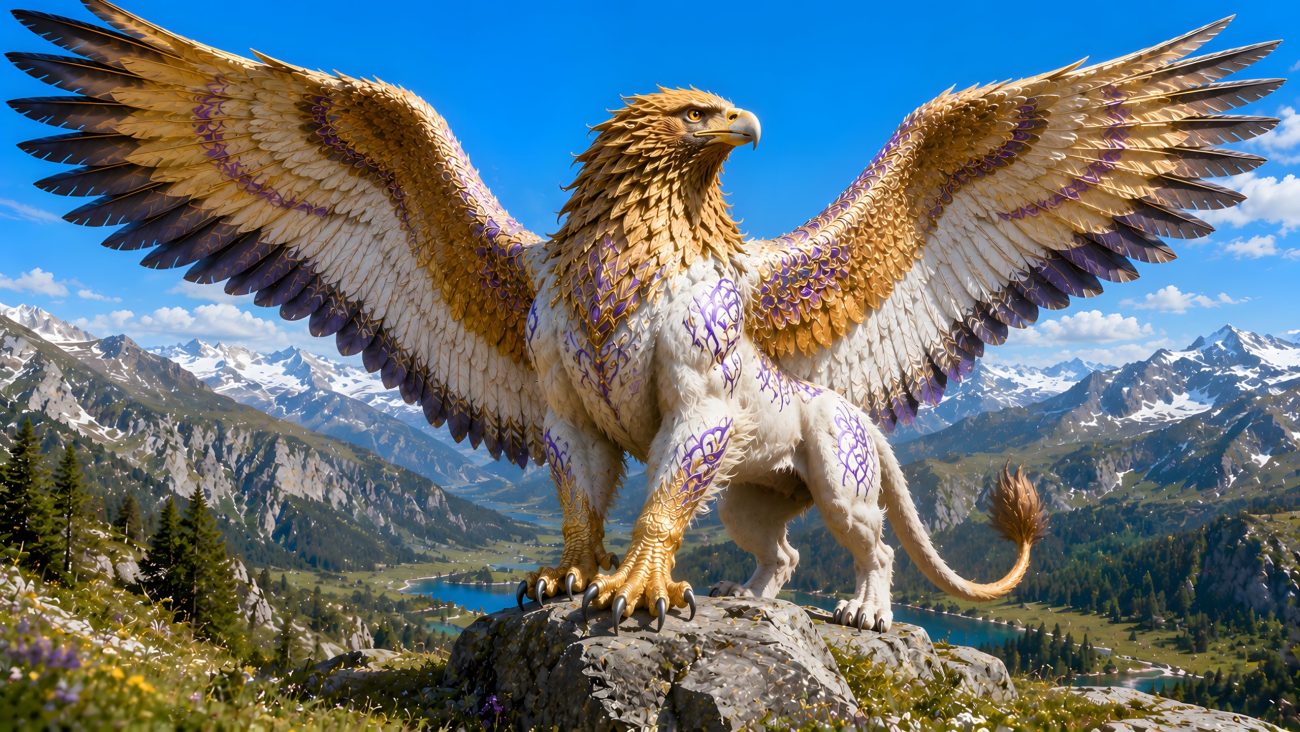
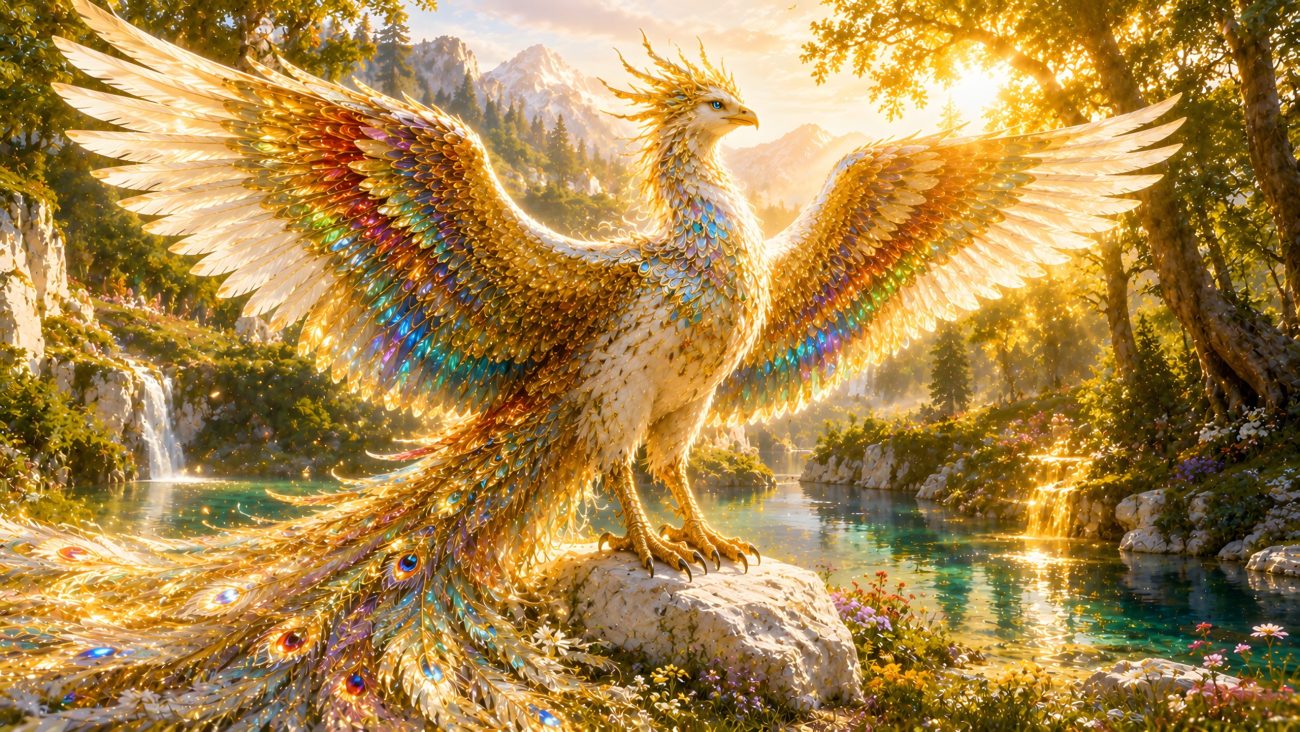
The Kan-Kerede is a sacred bird of Altai folklore, described as either a griffin or a garuda-like creature. It is a wondrous guardian associated with peace, happiness, prosperity, and the protection of the natural world, serving as the patron of animals, birds, and nature. It is so important that it appears at the center of the coat of arms of the Altai Republic.

Kan-Kerede is usually portrayed with the head and golden wings of a bird and the body of a lion with golden claws. According to Altai tradition, the mythical bird watches over the land and protects its people, symbolizing divine guardianship and the flourishing of the homeland.

In Altai belief, Kan-Kerede is not a fearsome monster but a benevolent protector. As a sacred heavenly bird, it embodies good fortune and serves as a powerful emblem of harmony between humanity and the natural world.


Sources

Bestiary.us. (n.d.). Kan-Kerede. In New Bestiary: Encyclopedia of Imaginary Beings. Retrieved June 29, 2026, from https://www.bestiary.us/kan-kerede


Itsumade

Tradition / Region: Japanese Mythology
Alternative names: Itsumaden
Category: Bird


The Myth

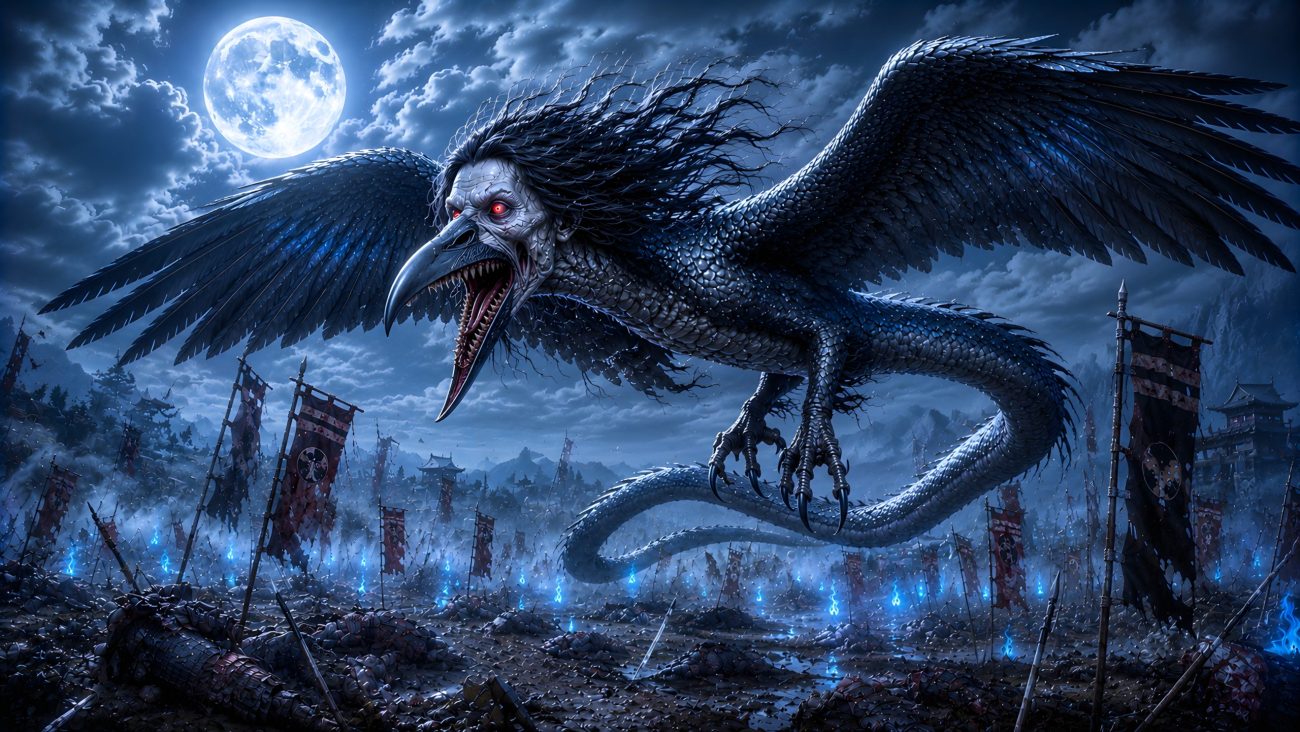
The Itsumade is a monstrous bird yokai that appears during times of great suffering, such as plagues, famines, and battlefields filled with the unburied dead. It has the face of a human, a long pointed beak lined with saw-like teeth, the body of a serpent, enormous wings spanning nearly five meters, and talons as sharp as swords. Throughout the night it circles overhead, crying, “Itsumade? Itsumade?” (“Until when?”), as if demanding to know how long the suffering will continue.

According to the Taiheiki, during a devastating plague in 1334, the eerie bird appeared every night above the Imperial Palace, terrifying the capital with its dreadful cries. Unable to endure the nightly hauntings, the imperial court summoned the master archer Oki no Jirōzaemon Hiroari, recalling the famous slaying of the nue by Minamoto no Yorimasa.

Hiroari faced the creature with a whistling signal arrow and shot the monstrous bird from the sky, ending its nightly appearances. Later traditions identified the creature as the Itsumade, believing it to be born from the restless spirits of those who died in misery and whose bodies or souls had not yet been properly laid to rest.


Sources

Wikipedia contributors. (n.d.). Itsumade. In Wikipedia. Retrieved June 29, 2026, from https://en.wikipedia.org/wiki/Itsumade.

Meyer, M. (n.d.). Itsumade. Yokai.com: The Illustrated Database of Japanese Folklore. Retrieved June 29, 2026, from https://yokai.com/itsumade/.


Gamayun

Tradition / Region: Russia Mythology
Alternative names: Gamayun
Category: Bird


The Myth

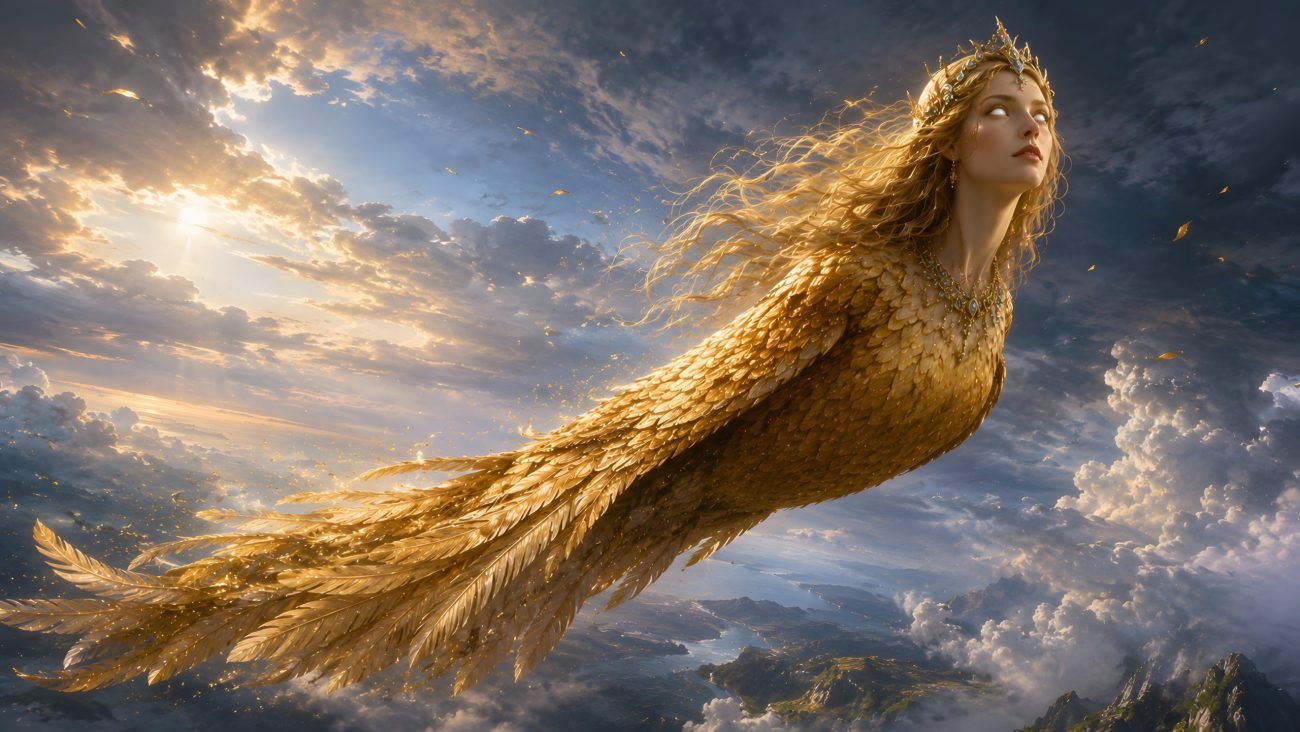
The Gamayun is a prophetic bird of Russian folklore, dwelling on a mythical island in the far eastern paradise. She is depicted as a great bird with the head of a woman and is believed to possess complete knowledge of the gods, heroes, humanity, and all of creation. From her distant home, she delivers divine messages and reveals prophecies to the world.

Like the Sirin and Alkonost, the Gamayun combines the form of a bird with that of a woman. Her words are regarded as expressions of divine wisdom, and those who hear her prophecies are believed to receive knowledge of events yet to come.

In Russian books from the seventeenth to the nineteenth centuries, the Gamayun was also described as a bird without wings or legs, remaining forever in flight by using only her tail. According to these traditions, if the Gamayun were ever to fall from the sky, it foretold the death or downfall of rulers and great statesmen.


Sources

Wikipedia contributors. (n.d.). Gamayun. In Wikipedia. Retrieved June 29, 2026, from https://en.wikipedia.org/wiki/Gamayun


Snallygaster

Tradition / Region: American Mythology
Alternative names: Schneller Geist
Category: Bird


The Myth

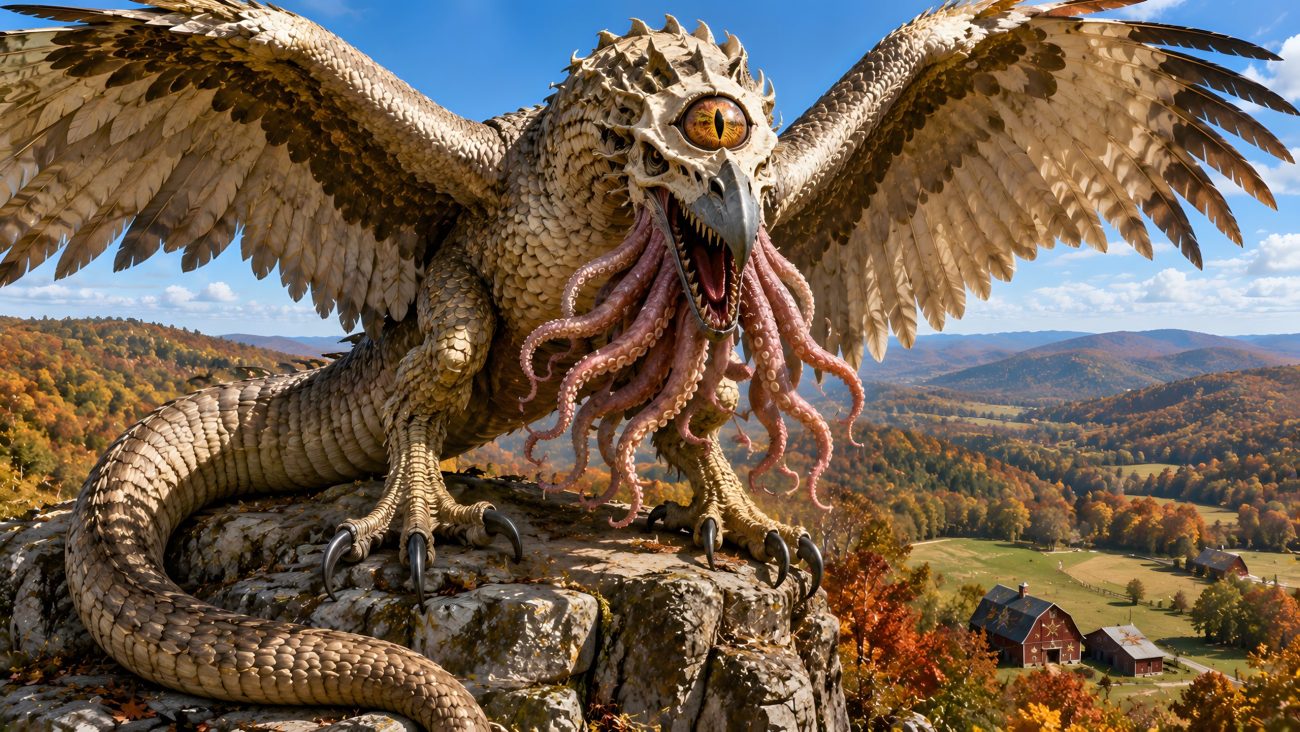
The Snallygaster is a terrifying bird-reptile monster from the folklore of Maryland, especially around Frederick County. According to early German settlers, it was a winged creature with the body of a reptile, a long metallic beak lined with razor-sharp teeth, steel-like claws, and sometimes octopus-like tentacles. Some tales also gave it a single eye in the center of its forehead. It was said to fly silently through the night before swooping down to seize people or livestock in its claws.

Early legends claimed the Snallygaster drank the blood of its victims, making it one of the most feared monsters in the region. To protect themselves, local people painted seven-pointed stars on their barns, believing the strange symbol would keep the creature away.

In 1909, reports spread across Maryland describing encounters with a huge flying beast whose enormous wings, pointed beak, iron-like claws, and piercing whistle terrified witnesses. The stories became so widespread that rewards were reportedly offered for the creature’s hide, although the wave of sightings was later revealed to have been an elaborate newspaper hoax inspired by the older German-American legend. Despite this, the Snallygaster remains one of the best-known monsters of American folklore.


Sources

Wikipedia contributors. (n.d.). Snallygaster. In Wikipedia. Retrieved June 29, 2026, from https://en.wikipedia.org/wiki/Snallygaster


Swan Queen

Tradition / Region: Lithuanian Mythology
Alternative names: Swan Maiden; Swan, the King’s Wife; Queen Swan
Category: Bird


The Myth

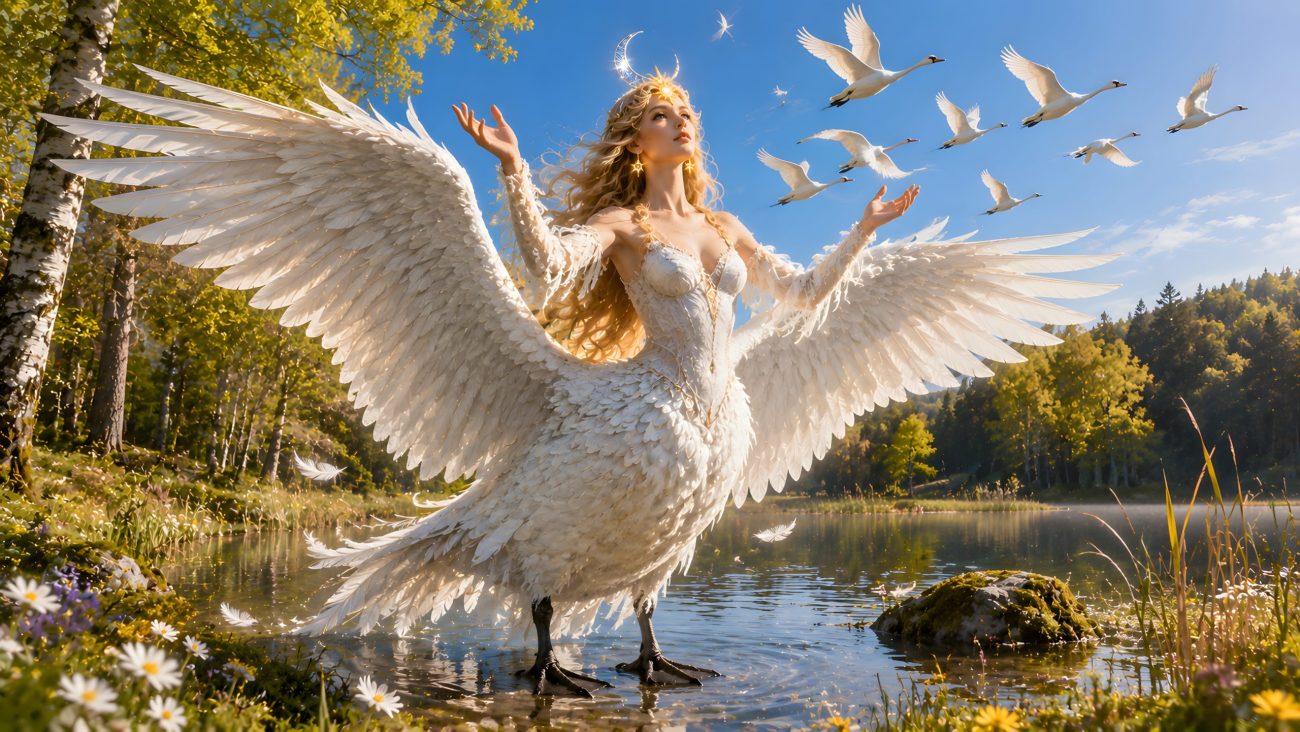
The Swan Queen is a magical woman who can transform between human and swan by wearing or removing her feathered wings. In one tale, an elderly couple discovers that a swan is secretly becoming a beautiful woman to perform the household chores while they are away. They burn her swan wings, leaving her unable to return to her flock, and she remains with them as their adopted daughter.

Later, a king encounters the maiden during a hunt and marries her. They have a child together, but when her swan family flies overhead, they bring her a new set of feathers. Regaining her true form, the Swan Queen transforms back into a swan and flies away, leaving her husband and child behind.

Although she returns from time to time to lull her child to sleep, the king longs to keep her with him. Following the advice of a wise old man, he spreads tar upon the windowsill where she lands. Her wings become trapped, preventing her escape, and she is transformed into a human once more, remaining with her family forever.


Sources

Wikipedia contributors. (n.d.). The Swan Queen. In Wikipedia. Retrieved June 29, 2026, from https://en.wikipedia.org/wiki/The_Swan_Queen


Giant Raven

Tradition / Region: Buryat Mythology, Mongolian Mythology, Russian Mythology
Alternative names: Giant Black Ravens
Category: Bird


The Myth

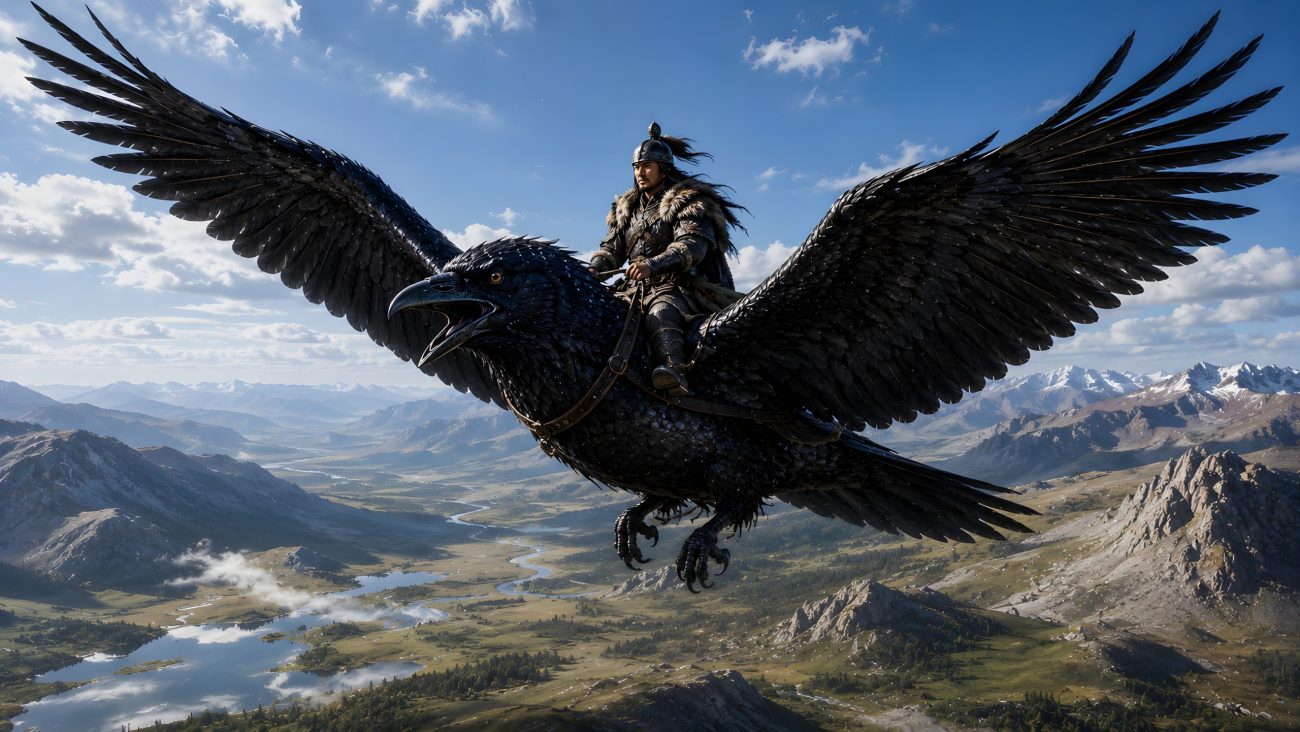
In the Epic of Geser, the Giant Ravens dwell in a dark valley within the kingdom of the mangadhai, the land of evil spirits. The valley is filled with enormous black ravens that lie sleeping until travelers approach, whereupon they rise into the air, circling overhead with harsh caws and croaks. The surrounding cliffs are so steep that even an eagle cannot fly over them, leaving no escape.

As Tumen Jargalan, the wife of Abai Geser, attempts to cross the valley, the ravens gather around her and she finds herself trapped. At that moment, a mysterious naked little red boy appears, riding a white raven while leading a black raven. After hearing where she is going, he tells her she has arrived at the proper time, seats her upon the raven he leads, and flies her safely across the valley of the giant ravens.


Sources

Jamba, T. (Trans.). (n.d.). The Battle with Abarga Sesen Mangadhai (The Seventh Branch). BuryatMongol.com. Retrieved June 29, 2026, from https://web.archive.org/web/20070613200651/http://www.buryatmongol.com/halaa7.html


Giant Magpie

Tradition / Region: Buryat Mythology, Mongolian Mythology, Russian Mythology
Alternative names: Giant Magpies
Category: Bird


The Myth

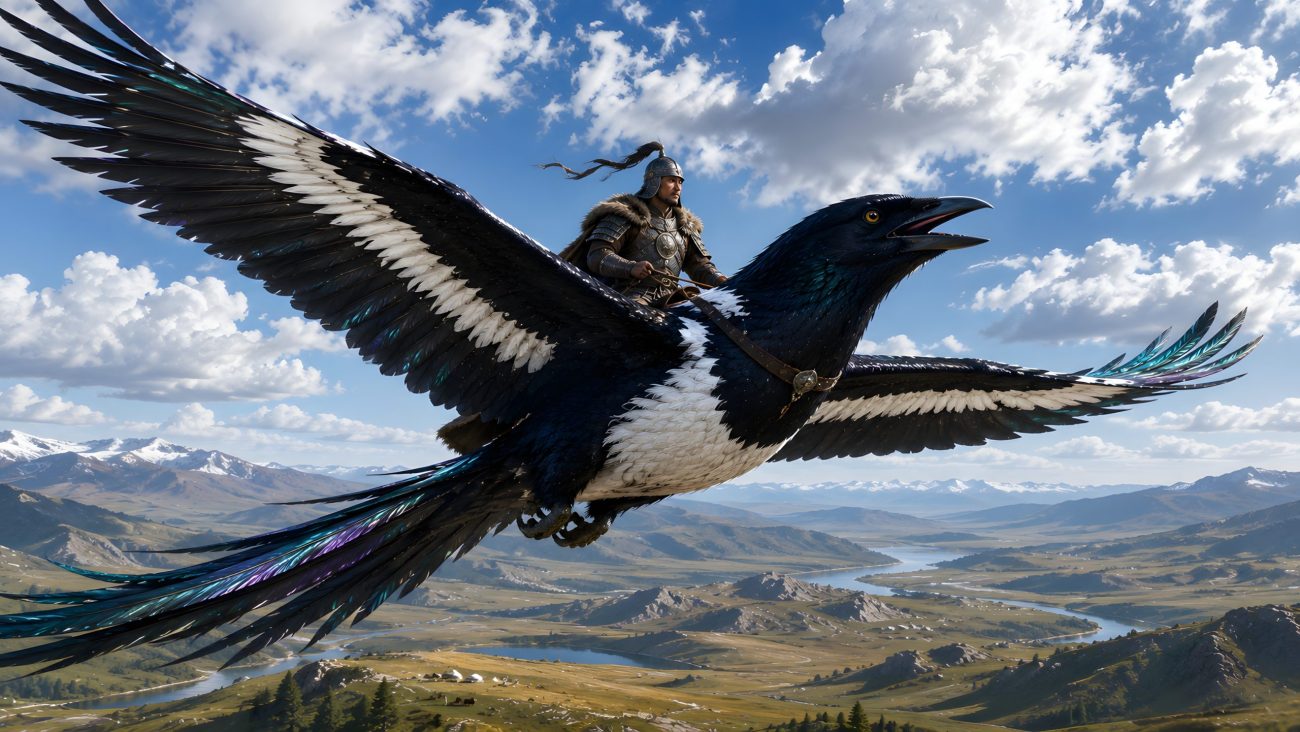
In the Epic of Geser, the Giant Magpies inhabit a terrible valley within the land of the mangadhai, the realm of evil spirits. Each magpie is described as having a body as large as a cow, and they lie sleeping across the valley, blocking all passage. Anyone attempting to cross risks being devoured, while the surrounding cliffs are so high that even an eagle cannot fly over them.

After abandoning her husband, the hero Abai Geser, Tumen Jargalan enters the valley and finds herself trapped among the monstrous birds. As the giant magpies stir and threaten to eat her, a mysterious naked little red boy appears, riding a spotted magpie and leading another. Hearing her purpose, he declares that she has arrived at the proper time, places her upon the magpie he leads, and safely carries her over the valley of the enormous birds.


Sources

Jamba, T. (Trans.). (n.d.). The Battle with Abarga Sesen Mangadhai (The Seventh Branch). BuryatMongol.com. Retrieved June 29, 2026, from https://web.archive.org/web/20070613200651/http://www.buryatmongol.com/halaa7.html


Giant Eagle

Tradition / Region: Albanian Mythology
Alternative names: Mother Eagle
Category: Bird


The Myth

A Giant Eagle appears in the Albanian tale of The Scurfhead after the hero is betrayed by his brothers and trapped in the underworld. Wandering in despair, he discovers a nest of young eagles threatened by a great serpent. Taking pity on them, he slays the snake and saves the eaglets before resting beneath their tree.

When the mother eagle returns, she first believes the sleeping stranger has harmed her young. The eaglets quickly reveal that he is their savior, and the grateful bird promises to repay his kindness. At the hero’s request, she agrees to carry him back to the world above, but only after he gathers enough bread, roasted meat, and water to sustain the long journey through the skies.

The Giant Eagle bears the hero out of the underworld on her back, returning him safely to the surface. Thanks to the eagle’s aid, the Scurfhead survives his brothers’ betrayal, completes his adventures, and is ultimately reunited with the maiden who had remained faithful to him.


Sources

Jarník, J. U. (1883). For the Love of a Dove. In Příspěvky ku poznání nářečí albánských (Rada VI, díl 12). Abhandlungen der Königlich-Böhmischen Gesellschaft der Wissenschaften zu Prag. Tiskem Dra. Edvarda Grégra. English translation by Robert Elsie. Retrieved June 29, 2026, from http://www.albanianliterature.net/folktales/tale_02.html