Huri

Tradition / Region: Japanese Mythology
Alternative names: Furi, Huryū, Hurin, Hiwri
Category: Bird


The Myth

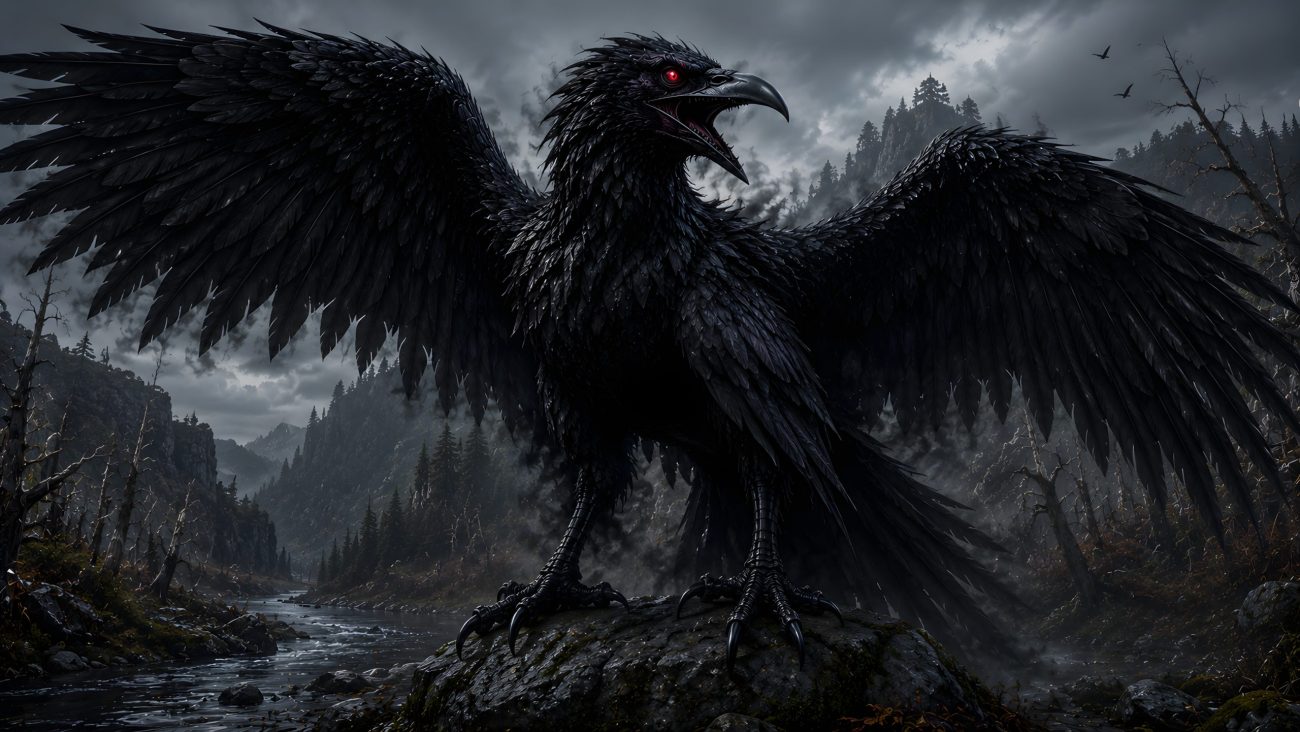
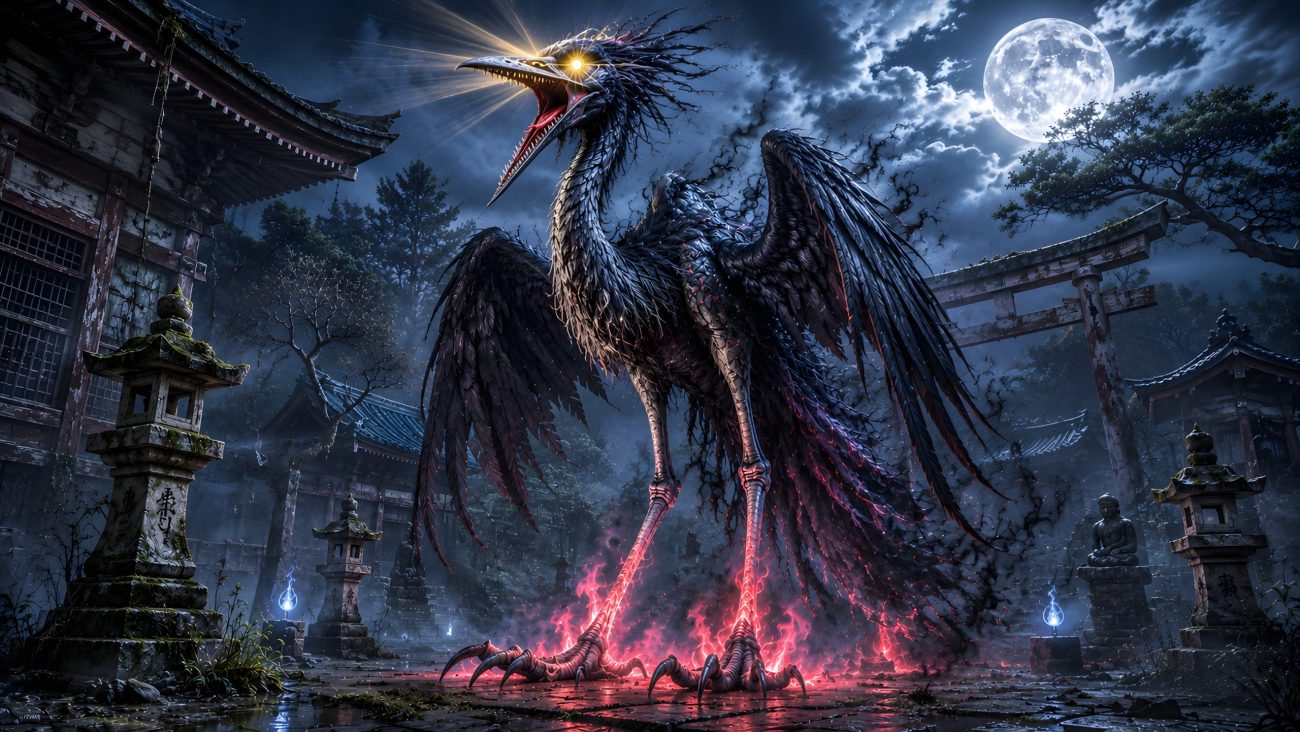
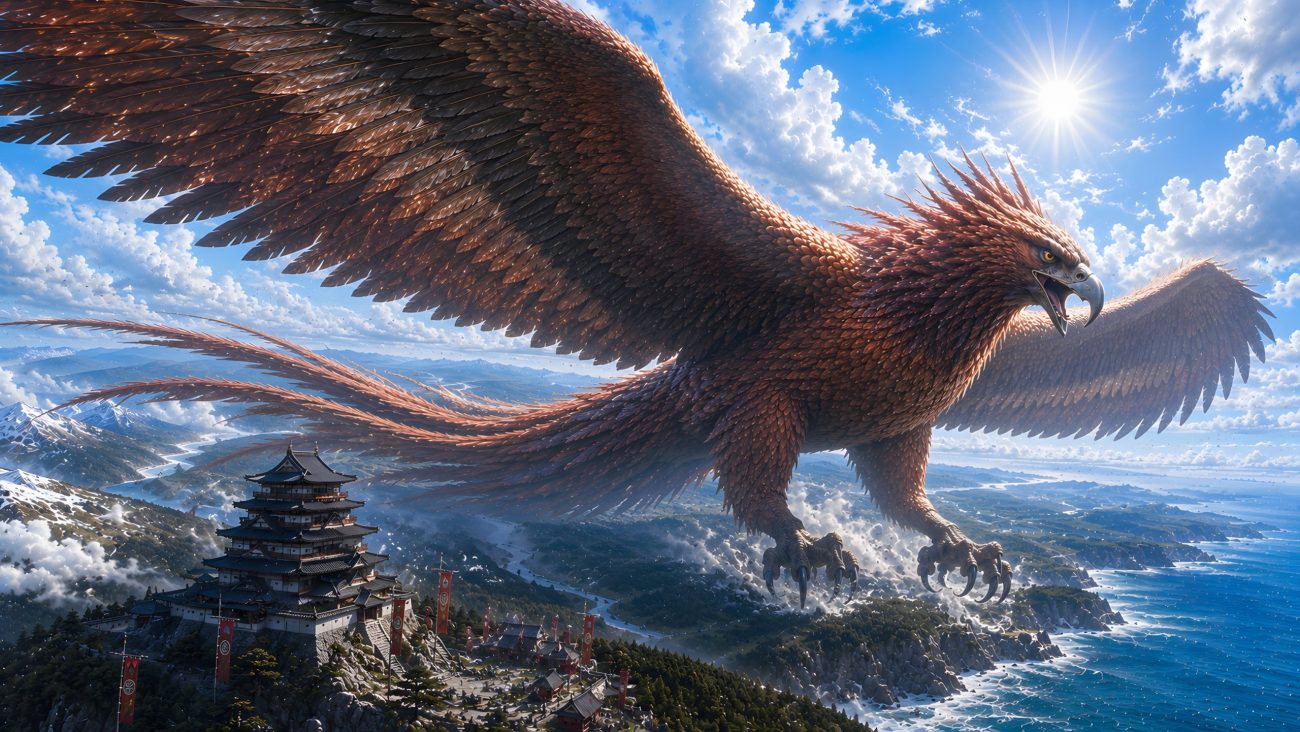
The Huri is a gigantic bird of Ainu tradition, so immense that a single wing is said to measure seven ri (about 28 kilometers). When it spread its wings, they darkened the sky, and the beating of its wings created violent winds and storms.

Ancient stories tell that the ancestors of the Huri were driven into caves after being defeated by the gods who protected humankind. Seeking revenge, the bird rode upon dark clouds and brought fierce storms that destroyed fish, livestock, and human settlements.

The Huri appears in many legends across Hokkaido. In some places it was feared as a man-eating monster that carried away people, ravaged villages, and hunted both humans and wild animals. Heroes armed with sacred swords, great spears, or clever decoys eventually slew the monstrous bird after fierce struggles.

Other traditions remember the Huri more peacefully. It hunted deer, fish, whales, and other large prey but left people unharmed. This changed when a young woman defiled the bird’s sacred drinking place. Enraged, the Huri seized her, carried her away, and cast her into a distant stream before abandoning the region forever.

One tale tells of the bird capturing two children who later became the ancestors of the Sumunkur Ainu, only for a goddess to drive the giant bird away and rescue them. Another story recounts how the Huri’s pride was humbled when it mistook the tentacle of an enormous sea monster for a tree and one of the creature’s nostrils for a cave, teaching the mighty bird that there were beings even greater than itself.


Sources

“Huri (Ainu Legendary Bird).” Wikipedia: The Free Encyclopedia. Wikimedia Foundation. Accessed July 27, 2026. https://en.wikipedia.org/wiki/Huri_(Ainu_legendary_bird)
Hato Ningen

Tradition / Region: Japanese Mythology
Alternative names: Pigeon Human, Hatojin
Category: Bird


The Myth

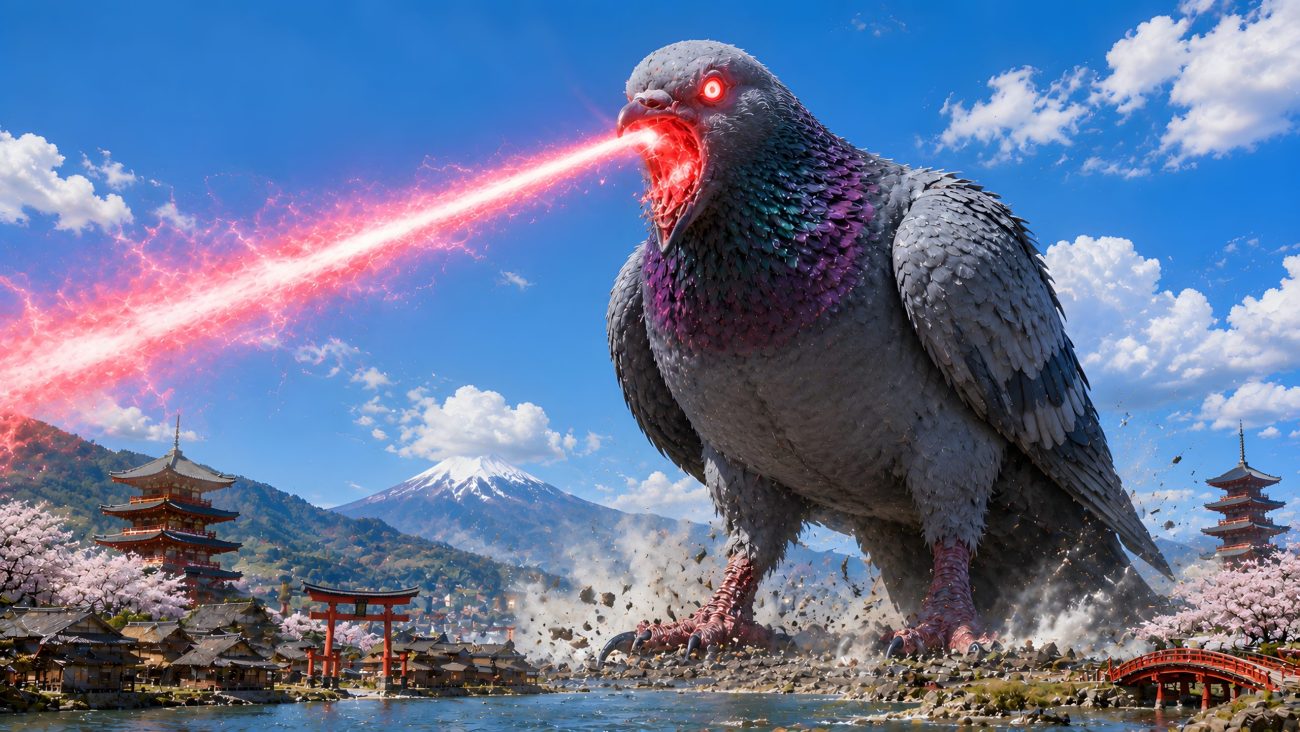
The Hato Ningen is a monstrous being said to be born when a human’s brain is exchanged with that of a pigeon. Regarded as a messenger of the demon world, it possesses both human awareness and the savage instincts of a beast.

It is described as an enormous creature about 50 meters long. A single beat of its wings can blow away wooden houses, while a strange beam fired from its mouth causes anything it strikes to explode or melt.

According to the tradition, pigeons captured by monsters grow to gigantic size and cry out, “Koredamona.” Although immensely destructive when enraged, the Hato Ningen is said not to harm children or people who love animals. Because of its overwhelming strength, however, it was often blamed for disasters and persecuted.

One story claims that during the Edo period, a samurai named Ikuma Umenosuke was kidnapped by a Dutch doctor and subjected to an operation in which his brain was replaced with that of a pigeon. After awakening, he transformed into a Hato Ningen, rampaged through Fukuoka, and destroyed the city before the tale was carried back to Yamagata by a traveling merchant.


Sources

Takahashi, Toshihiro. “ハトニンゲン (Hato Ningen).” 新版TYZ 妖怪図鑑 (New TYZ Yokai Encyclopedia). TYZ Yokai Blog. Accessed July 27, 2026. https://tyz-yokai.blog.jp/archives/1020704023.html


Suzaku

Tradition / Region: Chinese Mythology, Japanese Mythology
Alternative names: Vermilion Bird, Shujaku
Category: Bird


The Myth

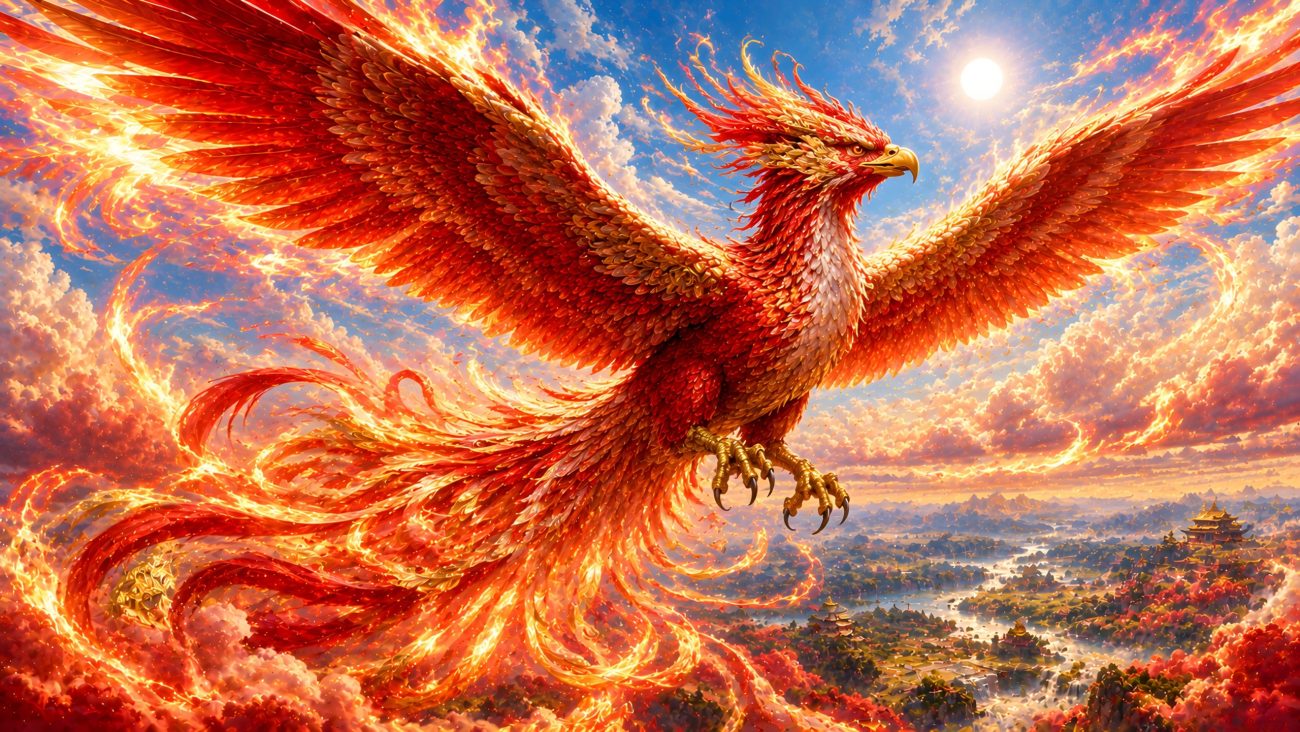
Suzaku is the sacred red bird that rules the southern quarter of the heavens. As one of the Four Divine Beasts, it governs the direction of the south and is associated with the element of fire. It is regarded as a divine bird that flies before the heavenly powers, leading the way.

Ancient traditions describe the Vermilion Bird as the guardian of the southern regions. During military campaigns, banners bearing its image were raised at the front of encampments as a sign of its protection. It was also believed to represent the southern heavens, where it watched over the world alongside the other three Divine Beasts.

Some traditions identify Suzaku with the sacred phoenix, describing it as a heavenly bird of mysterious nature whose true form is unknown.

The worship of Suzaku spread from China to Japan, where it became one of the country’s most revered guardian spirits. The great southern gate of the Imperial Palace was named the Suzaku Gate, and the broad avenue leading to it was called Suzaku Avenue, honoring the divine bird that protected the southern direction.


Sources

Takahashi, Toshihiro. “朱雀 (Suzaku).” 新版TYZ 妖怪図鑑 (New TYZ Yokai Encyclopedia). August 20, 2025. Accessed July 27, 2026. https://tyz-yokai.blog.jp/archives/1085334027.html


Enba

Tradition / Region: Japanese Mythology
Alternative names: Yanba
Category: Bird


The Myth

Enba is a gigantic bird that dwells in the Yama Refuge, one of the sixteen places attached to the lowest level of the Eight Great Hells, the Avīci Hell. It is described as being as large as an elephant, with a sharp beak that burns with flames.

The Yama Refuge is the place of punishment for those who blocked the flow of rivers and caused others to die of thirst.

When Enba seizes a sinner, it flies high into the sky, carrying its victim across the heavens before dropping them from a great height. The sinner’s body shatters upon the ground, only to be restored so the punishment can begin again.

The refuge is also filled with paths covered in sharp blades that slice the feet of the damned, while dogs with flaming teeth continually bite and torment them. Together, the blazing birds, burning dogs, and fields of blades inflict endless suffering upon the condemned.


Sources

Takahashi, Toshihiro. “エンバ (Enba).” 新版TYZ 妖怪図鑑 (New TYZ Yokai Encyclopedia). TYZ Yokai Blog. Accessed July 27, 2026. https://tyz-yokai.blog.jp/archives/1010655136.html


Itsumade

Tradition / Region: Japanese Mythology
Alternative names: Itsumaden
Category: Bird


The Myth

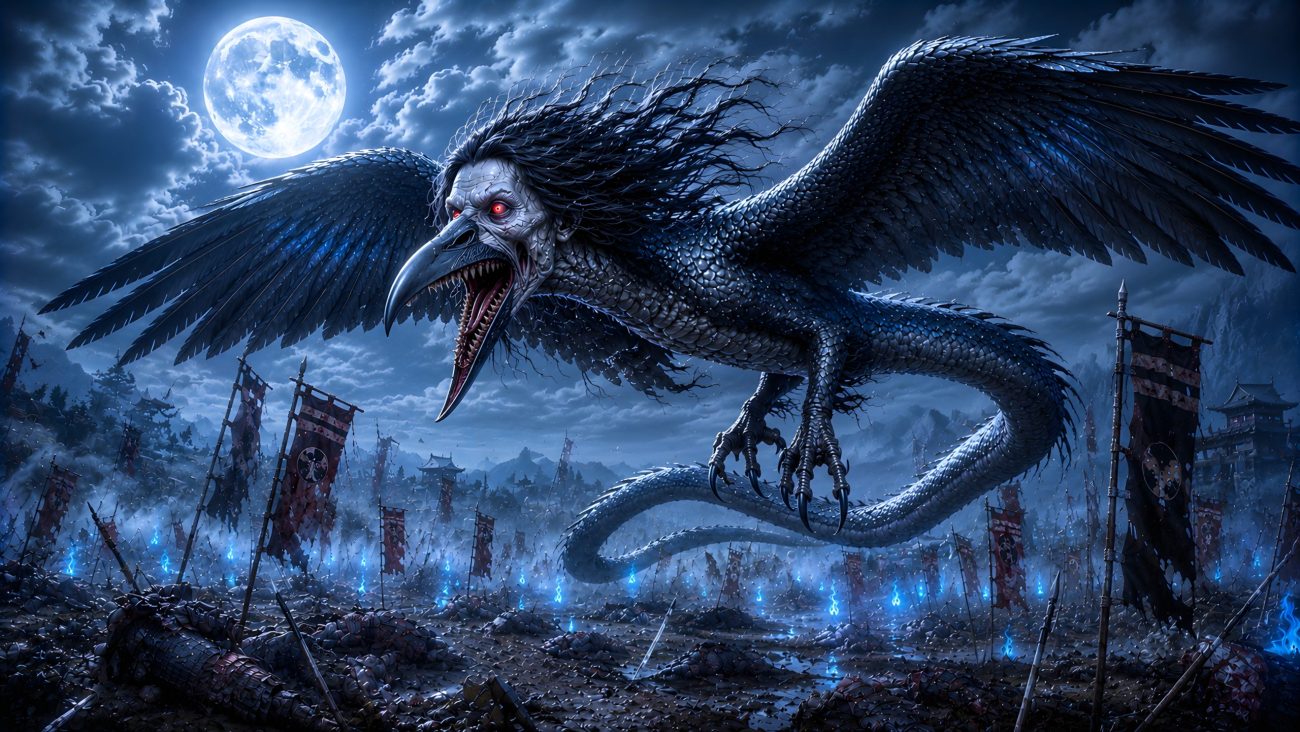
The Itsumade is a monstrous bird yokai that appears during times of great suffering, such as plagues, famines, and battlefields filled with the unburied dead. It has the face of a human, a long pointed beak lined with saw-like teeth, the body of a serpent, enormous wings spanning nearly five meters, and talons as sharp as swords. Throughout the night it circles overhead, crying, “Itsumade? Itsumade?” (“Until when?”), as if demanding to know how long the suffering will continue.

According to the Taiheiki, during a devastating plague in 1334, the eerie bird appeared every night above the Imperial Palace, terrifying the capital with its dreadful cries. Unable to endure the nightly hauntings, the imperial court summoned the master archer Oki no Jirōzaemon Hiroari, recalling the famous slaying of the nue by Minamoto no Yorimasa.

Hiroari faced the creature with a whistling signal arrow and shot the monstrous bird from the sky, ending its nightly appearances. Later traditions identified the creature as the Itsumade, believing it to be born from the restless spirits of those who died in misery and whose bodies or souls had not yet been properly laid to rest.


Sources

Wikipedia contributors. (n.d.). Itsumade. In Wikipedia. Retrieved June 29, 2026, from https://en.wikipedia.org/wiki/Itsumade.

Meyer, M. (n.d.). Itsumade. Yokai.com: The Illustrated Database of Japanese Folklore. Retrieved June 29, 2026, from https://yokai.com/itsumade/.


Anshōtei

Tradition / Region: Japanese Mythology
Alternative names: Anshōtei
Category: Bird


The Myth

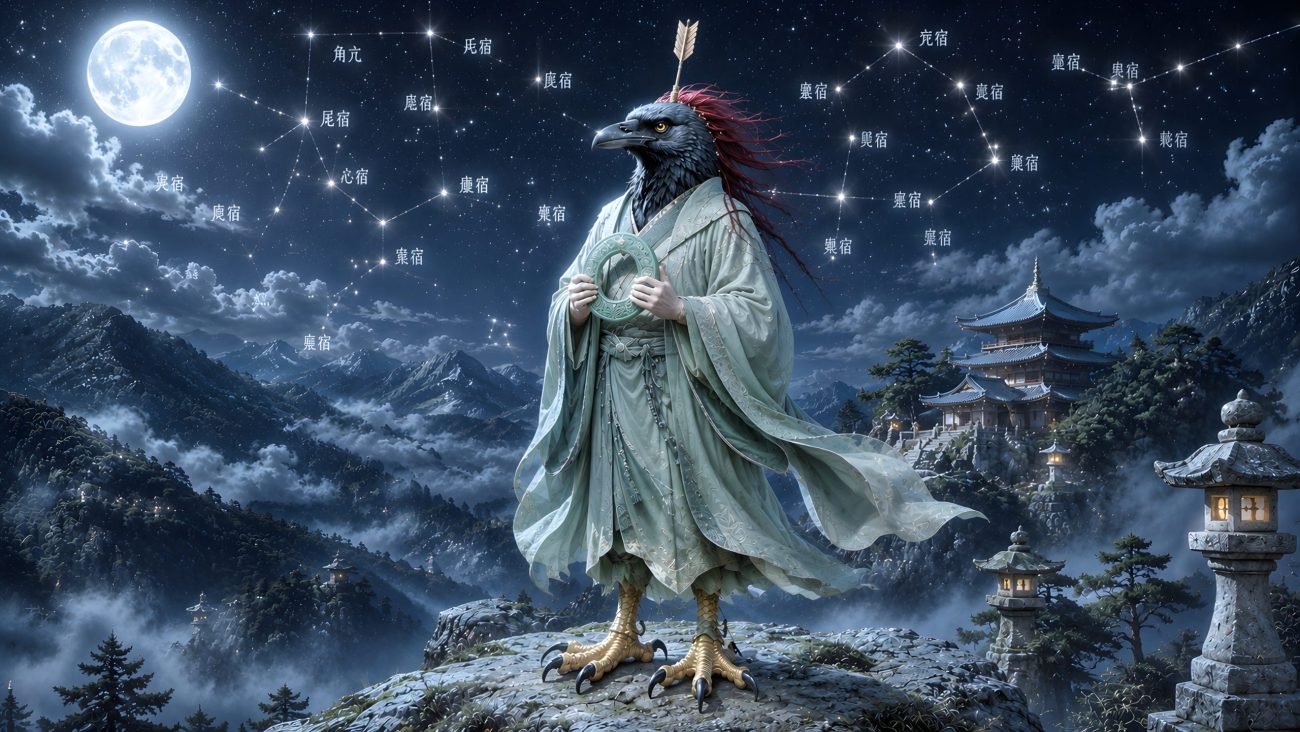
Anshōtei is a bird-headed disease demon associated with the Kishuku constellation in the system of Shukuyōdō, a form of esoteric Buddhist astrology. It is depicted with the head and feet of a bird, a ring-like object held in its hands, and an arrow embedded in its forehead, like many other disease demons.

On the day governed by the Kishuku constellation, Anshōtei is said to appear in people’s dreams disguised as a beautiful woman, seeking to uncover their innermost thoughts. Those it afflicts are struck with a wasting disease of the lungs, such as tuberculosis, which is believed to bring death within three years.

To avert its curse, anyone who dreams of Anshōtei on a Kishuku day should make offerings of incense, paper money, and tea. These offerings are said to appease the demon and drive it away before the illness takes hold.


Sources

TYZ. (2020, August 8). 暗鐘亭 (Anshōtei). In 新版TYZ 妖怪図鑑. Retrieved June 29, 2026, from https://tyz-yokai.blog.jp/archives/1077741574.html


Jasin Bird

Tradition / Region: Japanese Mythology
Alternative names: Jasintori; Jasin Bird
Category: Bird


The Myth

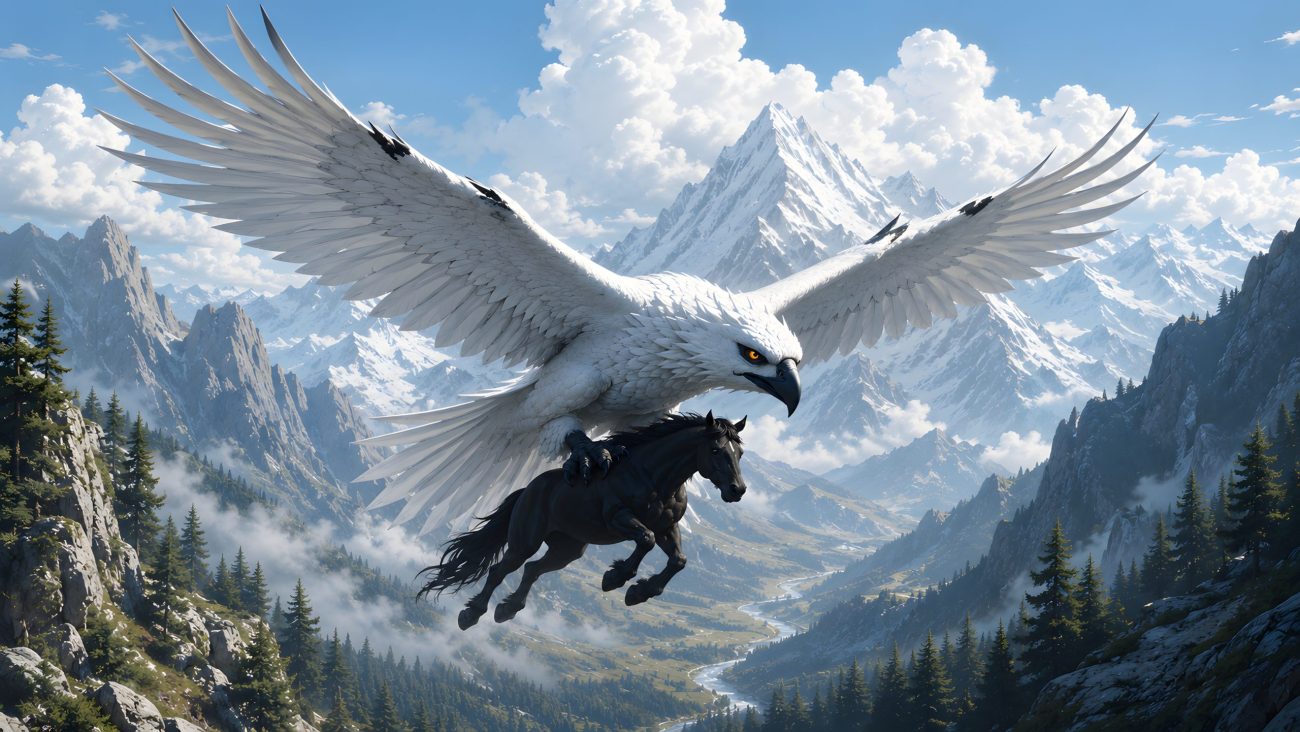
The Jasin Bird is a gigantic bird said to come from across the sea. Resembling an enormous hawk, it terrorized a village by flying in every night and carrying away oxen, horses, and other livestock. A samurai resolved to end the attacks by hiding inside the carcass of a dead horse, allowing the bird to seize him and carry him back to its nest.

At the nest, the samurai found the Jasin Bird feeding its chicks while a great serpent crawled nearby. He emerged from the horse’s body and slew the parent bird before killing all of its hungry young. The serpent escaped unharmed, and the samurai began the long journey home.

Unable to cross a great river, the samurai was met by a beautiful woman who revealed herself to be the serpent transformed into human form. Grateful that he had spared her life, she turned her own body into a bridge so he could cross the river and gave him a bamboo tube containing a miraculous medicine capable of curing every disease. After he reached the opposite bank, the serpent disappeared beneath the water.

The samurai never returned to his original village but settled in another land, marrying the daughter of an old woman who had lost her family to the Jasin Birds. Years later, the old woman accidentally poured out the miraculous medicine into her garden. A new healing herb sprang from the ground where it fell, and from that time onward the village lived in peace, for the Jasin Birds never returned.


Sources

Wikipedia contributors. (n.d.). Kurangaituku. In Wikipedia. Retrieved June 29, 2026, from https://en.wikipedia.org/wiki/Kurangaituku


Furari-bi

Tradition / Region: Japanese Mythology
Alternative names: Wandering Fire; Burari-bi
Category: Bird, Dog


The Myth

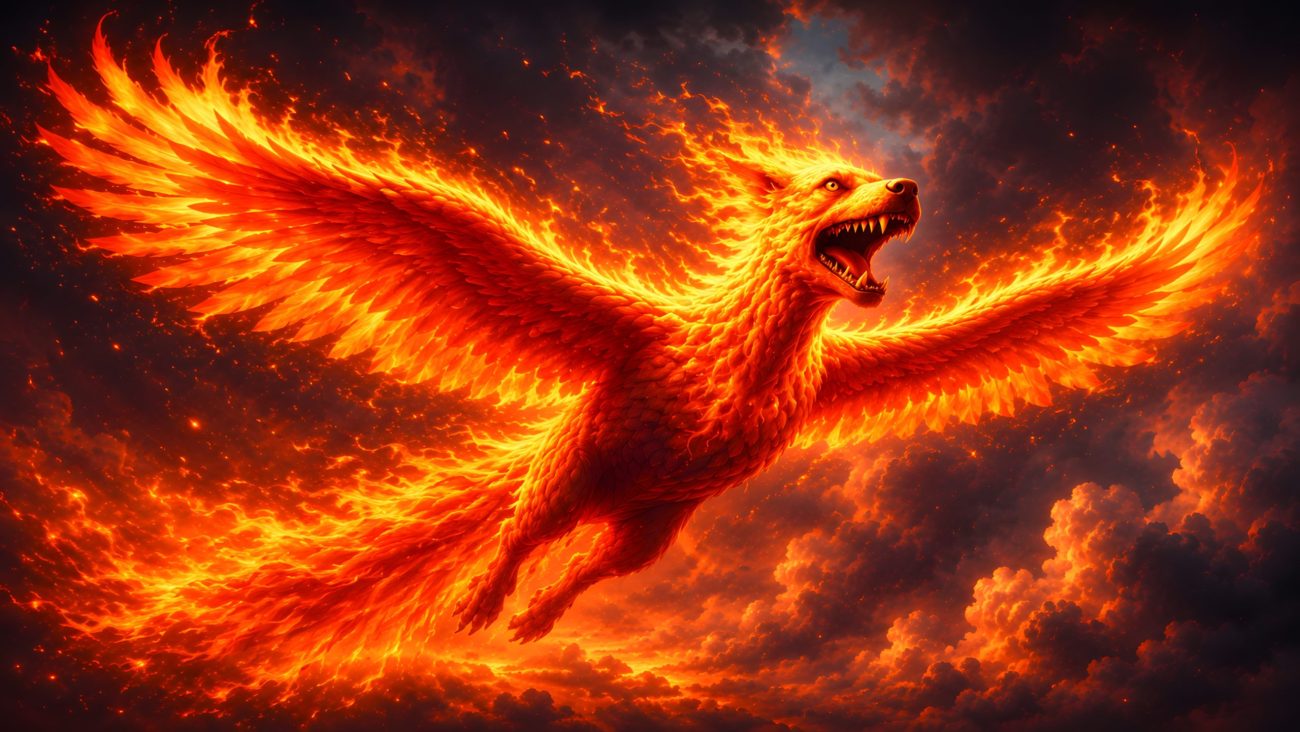
The Furari-bi (“Wandering Fire”) is a mysterious yokai depicted as a bird surrounded by flames. In some Edo-period illustrations, it has a bird’s body with a dog-like face emerging from the center of the fire, while in others it appears as a more conventional flaming bird. Another illustrated tradition refers to the same creature as Burari-bi.

Unlike many yokai, the Furari-bi is known almost entirely from illustrated monster scrolls, including the Hyakkai Zukan, Gazu Hyakki Yagyō, and the Hyakki Yagyō Emaki. These works portray it as a wandering mass of living fire in avian form, but they provide no accompanying story or explanation of its behavior.

Because the Furari-bi appears only in these illustrations, no traditional legend describing its origin or powers has survived. Modern interpretations of the yokai are therefore considered later speculation rather than part of the original folklore.


Sources

TYZ. (2016, May 21). 雉子娘 (Kiji Musume). In 新版TYZ 妖怪図鑑. Retrieved June 29, 2026, from https://tyz-yokai.blog.jp/archives/1057632664.html


Kunne Cikap

Tradition / Region: Japanese Mythology
Alternative names: Black Bird; Kunne Cikap-po
Category: Bird


The Myth

The Kunne Cikap (“Black Bird”) is a monstrous bird from Ainu tradition. It was said to dwell at the Black River (Kunne pe) in the northern lands until it was overcome by the culture hero Ponyaunpe during his adventures. It is paired with the Hure Cikap (“Red Bird”), another fearsome bird that lived in the Red Forest.

In later Ainu tradition and literature, the Kunne Cikap came to represent evil and ill omens. It is described as a black bird that gathers in flocks to peck at the bodies of the dead, becoming a symbol of darkness, falsehood, and malevolent forces. This image appears in Ainu poetry, where the bird is invoked as something that should not be feared despite its sinister reputation.


Sources

Wikipedia contributors. (n.d.). Kunne cikap. In Wikipedia. Retrieved June 29, 2026, from https://en.wikipedia.org/wiki/Kunne_cikap


Inmaraki

Tradition / Region: Japanese Mythology
Alternative names: Yinmaraki; Onmoraki (variant)
Category: Bird


The Myth

The Inmaraki is a monstrous bird that appears in the 1809 revenge tale Konjin Chōgorō Chūkō Monogatari. After the concubine Oyuki and her young son Tsuyuichi are cruelly abused and ultimately killed, their restless spirits unite into a single terrifying being. The creature appears as a black, crane-like bird with blazing eyes and a shrill cry, confronting the woman responsible for their suffering.

The Inmaraki is accompanied by the ghosts of Oyuki and her headless son, who continue to haunt their tormentor. As the apparitions appear again and again, they drive her into terror, madness, and eventually death, completing their revenge.

The creature is based on the older Onmoraki, a bird yokai said to arise from the lingering energy of a corpse. In Konjin Chōgorō Chūkō Monogatari, however, it is specifically called Inmaraki and is depicted as the physical manifestation of the vengeful spirits of the murdered mother and child, making it a distinct variation of the older legend.


Sources

TYZ. (2018, October 20). 陰摩羅鬼 (Inmaraki). In 新版TYZ 妖怪図鑑. Retrieved June 29, 2026, from https://tyz-yokai.blog.jp/archives/1072670895.html