Kekko

Tradition / Region: Chinese Mythology
Alternative names: Jiegou; Keikin (Japanese variant)
Category: Bird, Rat


The Myth

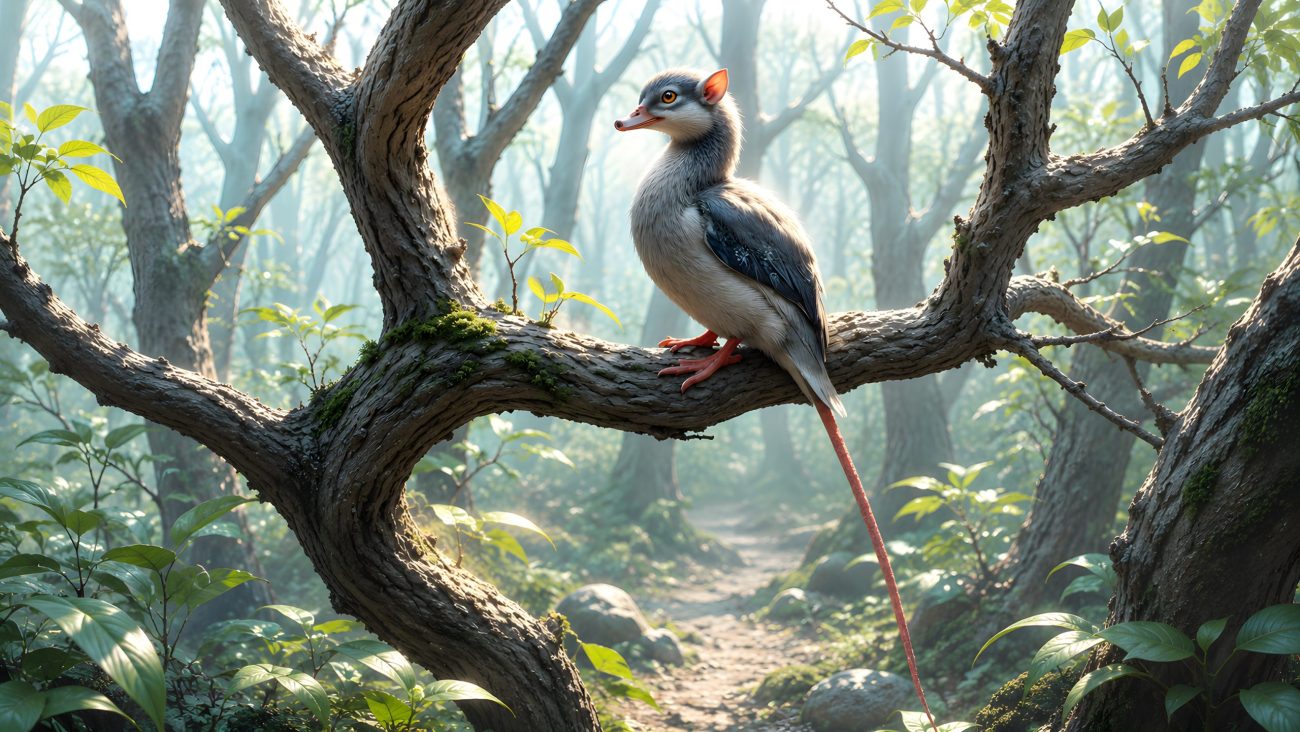
The Kekko is a legendary bird described in the ancient Chinese Classic of Mountains and Seas. It is said to dwell upon Mount Kō, where it resembles a duck but possesses the tail of a mouse and is unusually adept at climbing trees.

The bird is feared as a harbinger of disease. Whenever a Kekko appears in a region, sickness is believed to spread among the people, making its arrival a dreadful omen. Rather than attacking directly, its mere presence foretells widespread illness.

In later centuries, stories of the Kekko spread from China to Japan through encyclopedias and illustrated collections of strange creatures. During the Edo period it was occasionally depicted alongside other exotic birds and beasts from the Classic of Mountains and Seas, preserving its reputation as one of the ominous creatures of ancient Chinese legend.


Sources

TYZ. (2020, March 15). ケッコ (Kekko). In 新版TYZ 妖怪図鑑. Retrieved June 29, 2026, from https://tyz-yokai.blog.jp/archives/1077285093.html


Rakshasa Bird

Tradition / Region: Chinese mythology
Alternative names: Rakshasa Bird
Category: Bird


The Myth

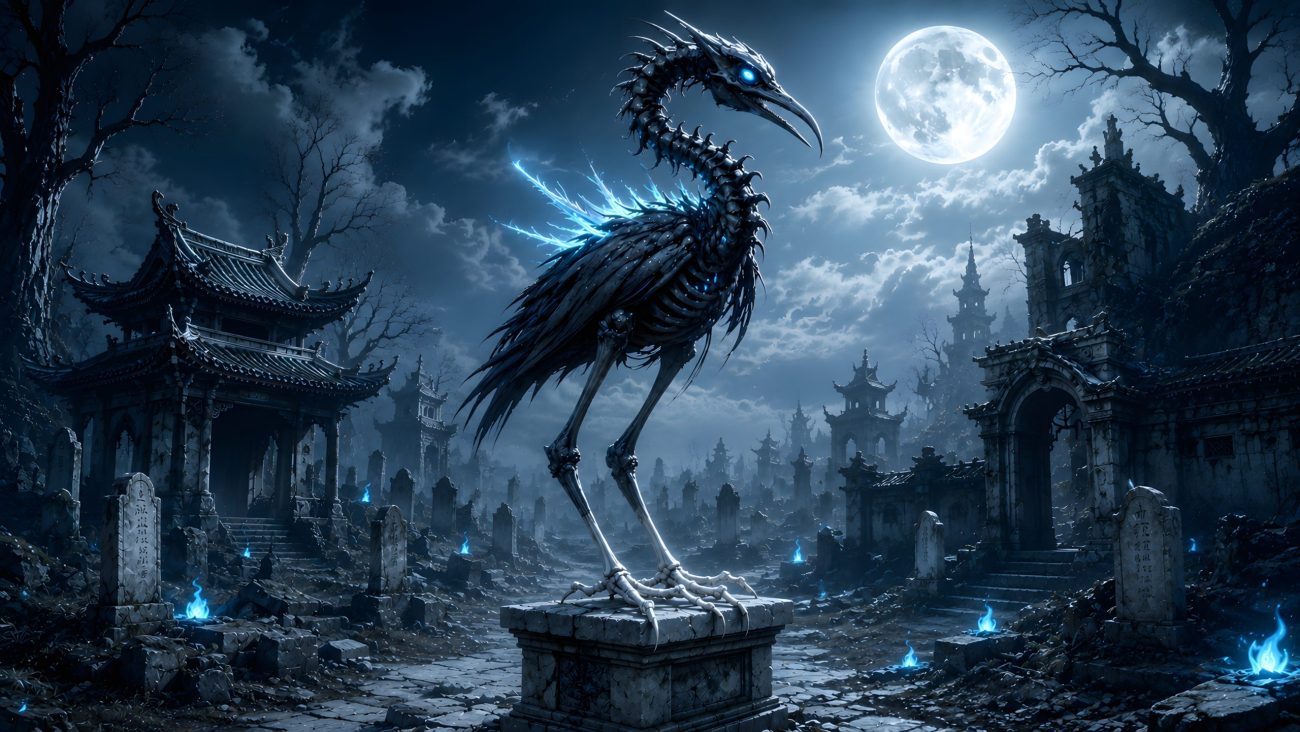
The Rakshasa Bird is a monstrous bird said to have been born from the accumulated evil essence of an abandoned graveyard. Slightly larger than a gray crane, it has a hooked beak, enormous snow-white claws, and glowing blue eyes. One of its most terrifying powers is the ability to transform into human form in order to deceive its victims.

According to a tale from the Zi Bu Yu, a bride was traveling to her wedding when a violent whirlwind rose from an ancient cemetery and surrounded her sedan chair. When she arrived at the groom’s home, a second bride—identical in appearance, clothing, and manner—stepped from the same sedan chair. Unable to distinguish the real bride from the impostor, the wedding proceeded with both women present.

That night, the false bride revealed her true nature. She tore out the groom’s eyes and attacked the real bride before transforming into a huge gray-black bird. As frightened servants rushed into the room, they saw the creature perched upon a beam with its hooked beak, white claws, and eerie blue eyes before it escaped into the darkness. Although the couple survived after months of recovery, both remained blind. Ever afterward, the Rakshasa Bird was feared as a shape-shifting demon that delights in devouring human eyes.


Sources

維基百科貢獻者. (n.d.). 羅剎鳥. In 維基百科,自由的百科全書. Retrieved June 29, 2026, from https://zh.wikipedia.org/wiki/%E7%BD%97%E5%88%B9%E9%B8%9F


Nine-Headed Bird

Tradition / Region: Chinese mythology
Alternative names: Nine Phoenix; Ghost Chariot; Ghost Bird; Guiche
Category: Bird


The Myth

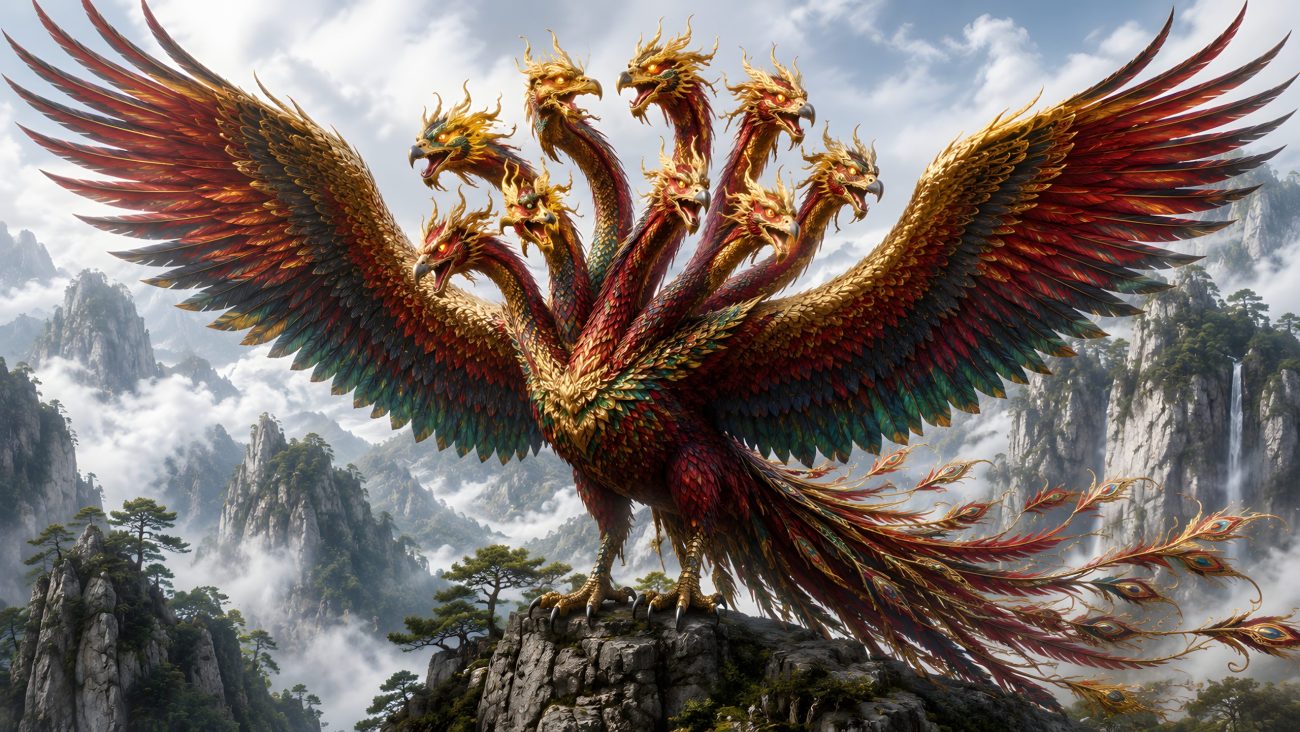
The Nine-Headed Bird, also known as the Nine Phoenix, was originally a divine bird worshipped by the ancient Chu people. It was described as having a bird’s body, a human face, and nine heads, serving as a sacred totem of the Chu state. Over time, however, it came to be rejected by the dominant Zhou culture, and its image gradually changed from that of a revered deity into a fearsome monster associated with misfortune.

Later traditions portray the Nine-Headed Bird as an evil spirit that flies through the night, especially during the first month of the year. People believed it brought disaster wherever it appeared, so families would beat on their beds and doors, extinguish their lamps, and use dogs to drive it away. According to legend, the bird originally had ten heads until one was bitten off by a dog, leaving a bleeding neck that dripped blood upon houses, an omen of coming calamity.

Other accounts describe the creature as resembling a duck with brilliant red feathers. It was feared for entering homes under cover of darkness to steal the souls of those inside. Because of this, dogs were believed to be its greatest weakness, and their presence or even the mention of them was thought to frighten the Nine-Headed Bird away.


Sources

維基百科貢獻者. (n.d.). 九頭鳥. In 維基百科,自由的百科全書. Retrieved June 29, 2026, from https://zh.wikipedia.org/wiki/%E4%B9%9D%E9%A0%AD%E9%B3%A5


Tōjukei

Tradition / Region: Japanese Mythology, Chinese Mythology
Alternative names: Spitting-Swallowing Chicken; Ribbon-Spitting Chicken
Category: Bird


The Myth

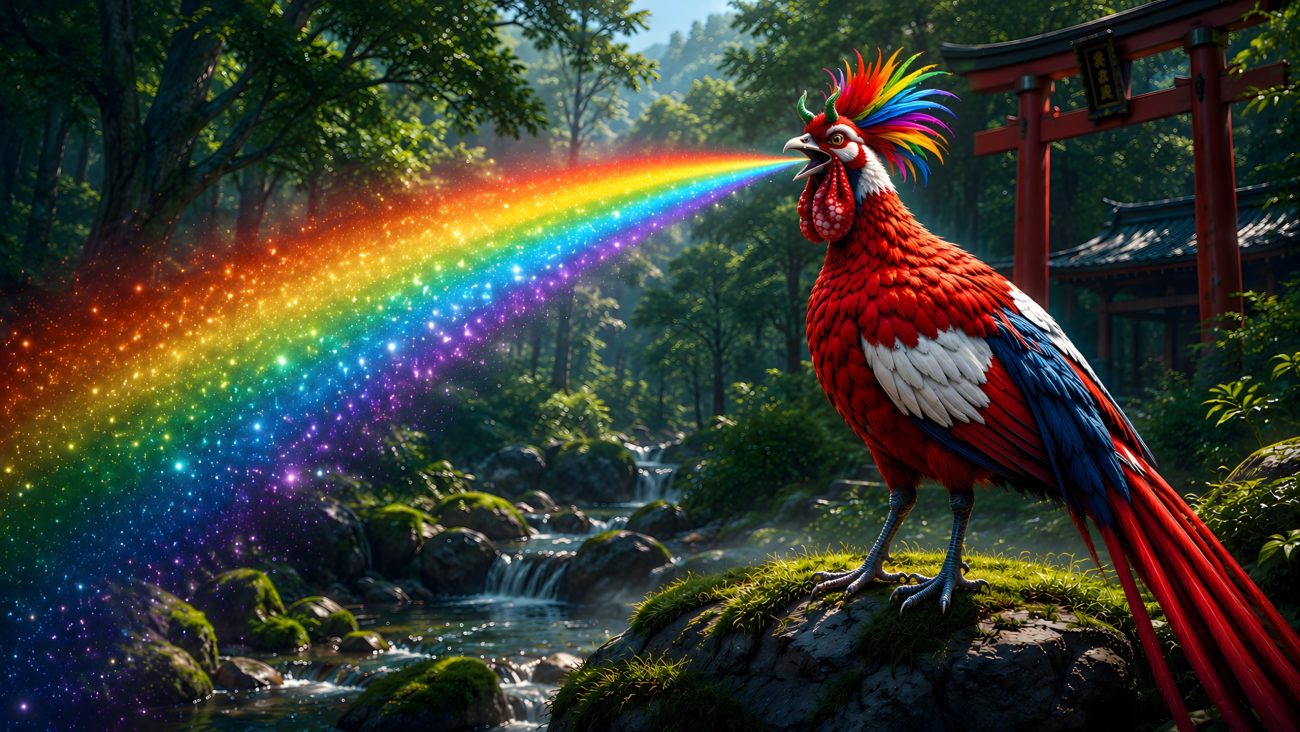
The Tōjukei is a legendary bird described in Chinese and Japanese tradition. It is said to resemble a pheasant or turkey and bears two green horns upon its head. During the clear days of spring and summer, the fleshy wattles hanging from its throat spread open, giving the impression that the bird is spitting out long ribbons, from which it takes its name.

Another tradition explains the name differently. It says that when the Tōjukei breathes toward the sun, its breath shines in five brilliant colors like a rainbow, resembling a brightly colored ribbon. Because of its unusual appearance and marvelous qualities, the bird became a popular subject in Japanese paintings and temple decorations.


Sources

TYZ. (2017, January 24). 吐綬鶏 (Tojukei). In 新版TYZ 妖怪図鑑. Retrieved June 29, 2026, from https://tyz-yokai.blog.jp/archives/1063934758.html


Messenger of the Queen Mother

Tradition / Region: Chinese Mythology
Alternative names: Wangmu Shizhe; Queen Mother’s Messenger
Category: Bird


The Myth

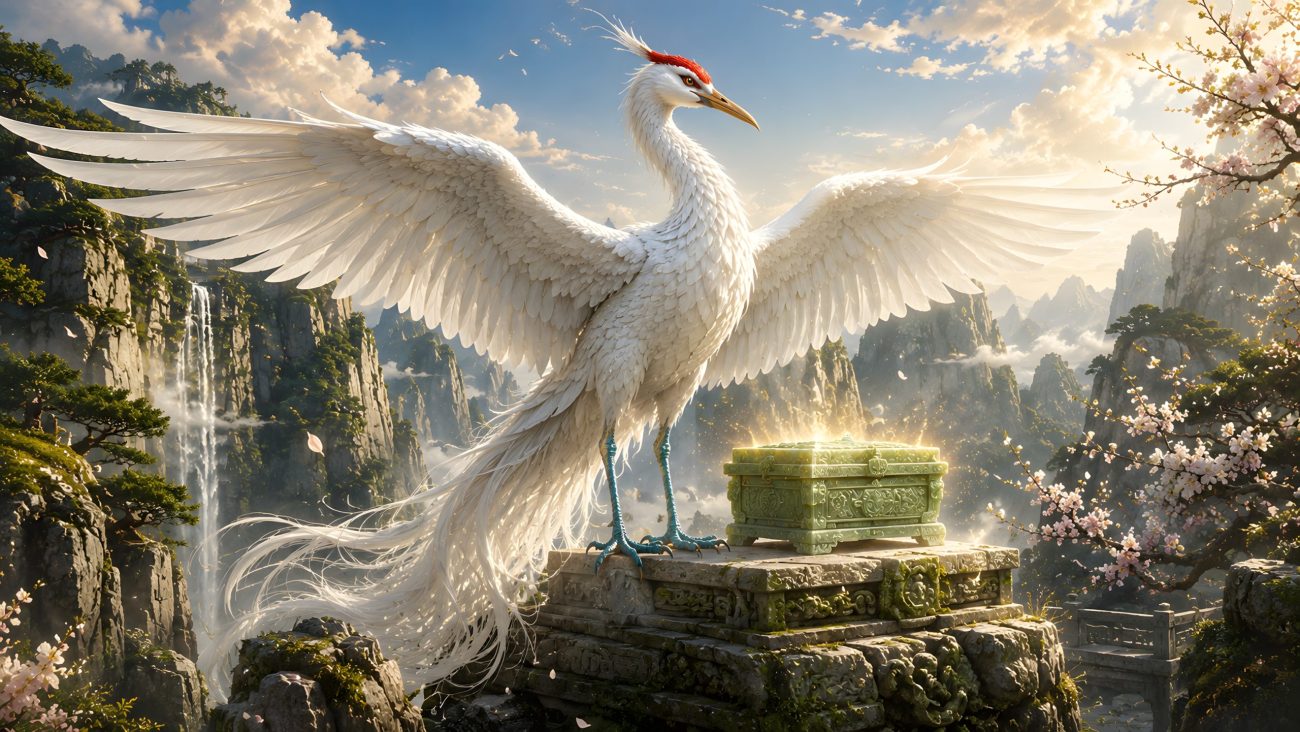
The Messenger of the Queen Mother is a mythical bird recorded in the Youyang Zazu. It is described as having blue feet, a reddish-yellow beak, white wings, and a crimson forehead. The bird is said to dwell on Han Mountain in Qi Commandery.

According to the legend, Emperor Wu of Han once climbed the mountain and discovered a jade casket measuring five inches in length. As he descended the mountain, the jade casket suddenly transformed into a white bird and flew away. People believed that the mountain contained a medicine casket belonging to the Queen Mother of the West, and that this miraculous bird had been appointed to guard it.


Sources

維基百科貢獻者. (n.d.). 王母使者. In 維基百科,自由的百科全書. Retrieved June 29, 2026, from https://zh.wikipedia.org/wiki/%E7%8E%8B%E6%AF%8D%E4%BD%BF%E8%80%85


Shang Yang

Tradition / Region: Chinese Mythology
Alternative names: Shangyang
Category: Bird


The Myth

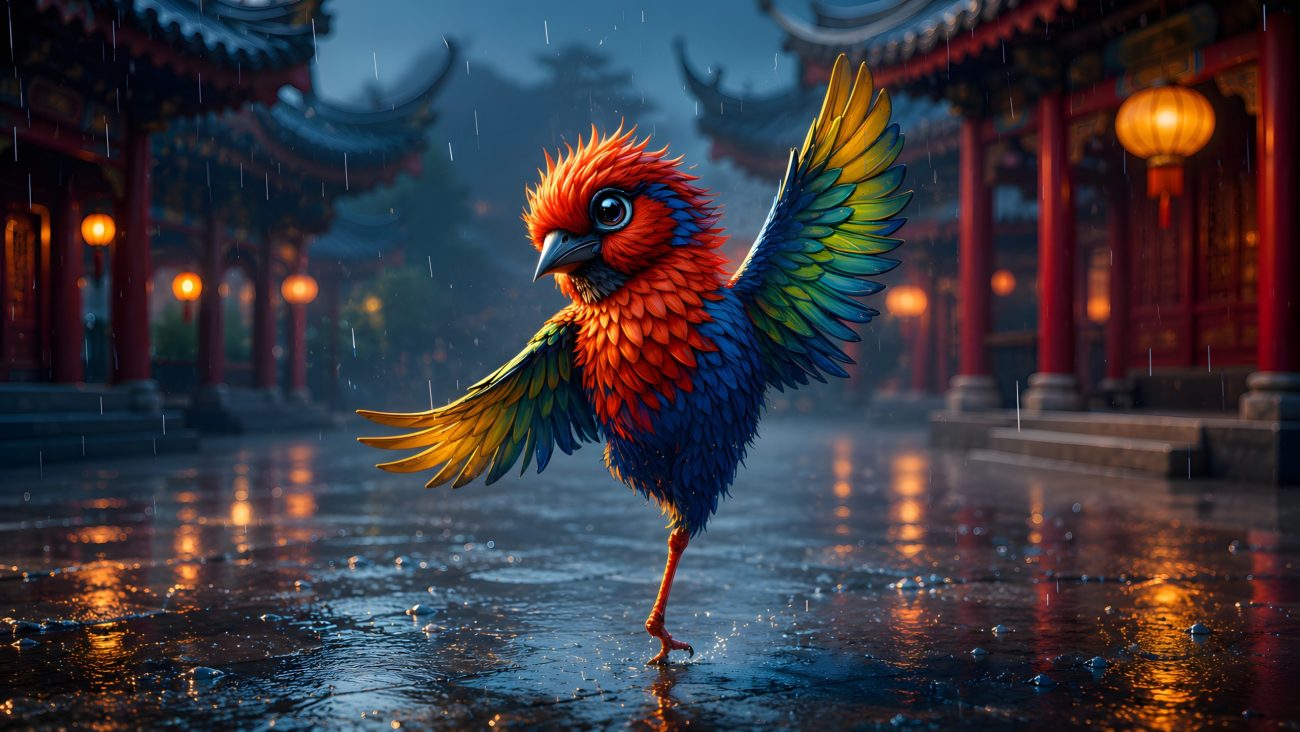
The Shang Yang is a legendary one-legged bird associated with rain and floods in Chinese mythology. It is said to hop and dance upon a single leg whenever heavy rain is about to fall, making its appearance a sure sign that rivers will soon overflow.

According to Confucius’ Family Sayings, the bird once appeared in the state of Qi, where it danced before the ruler’s palace. When the Duke of Qi asked Confucius about the strange creature, Confucius identified it as the Shang Yang and warned that its dance foretold a great flood. He advised the people to repair their dikes and drainage channels, and soon afterward torrential rains arrived, causing widespread flooding.

Because of this legend, the Shang Yang became a symbol of approaching rain. Its dance gave rise to the saying “Shang Yang dances”, an expression used to predict heavy rainfall and floods.


Sources

維基百科貢獻者. (n.d.). 商羊. In 維基百科,自由的百科全書. Retrieved June 29, 2026, from https://zh.wikipedia.org/wiki/%E5%95%86%E7%BE%8A


Zhu

Tradition / Region: Chinese Mythology
Alternative names: Zhū; Zhu Bird
Category: Bird


The Myth

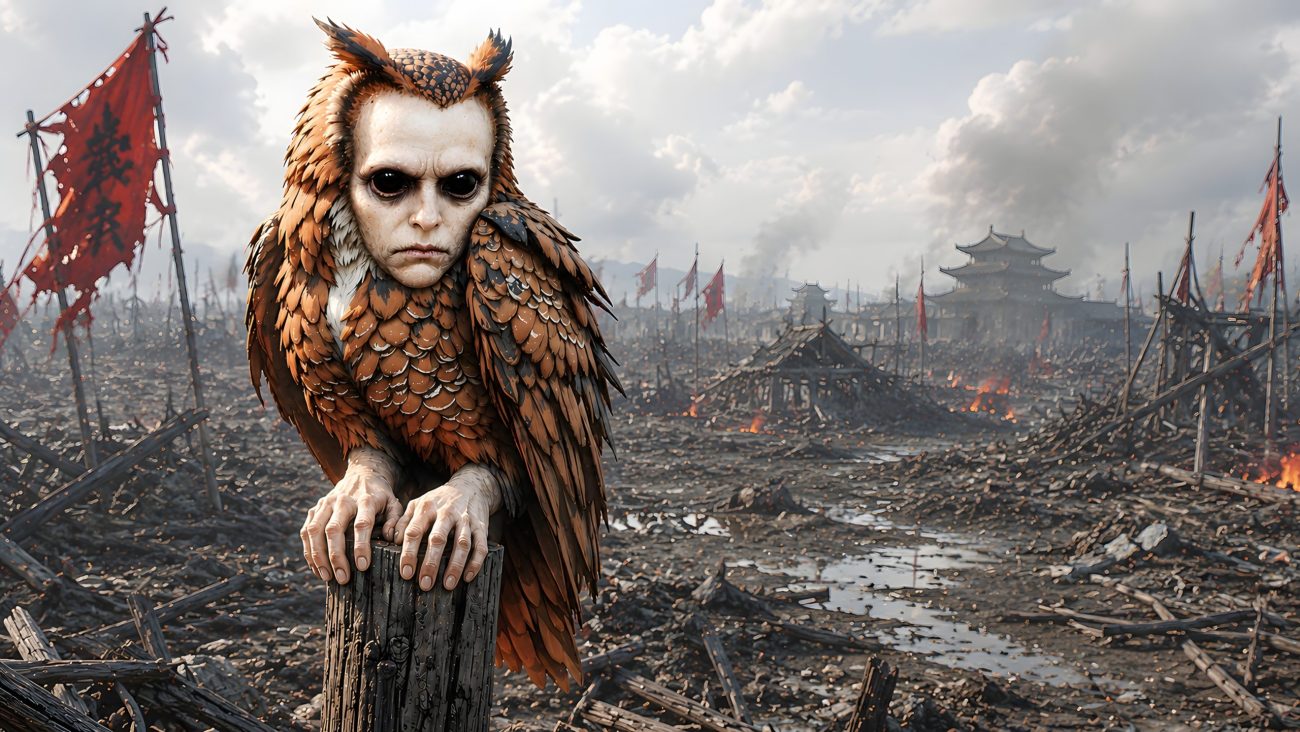
The Zhu is a strange bird described in the Classic of Mountains and Seas. It resembles an owl but has human hands instead of wings or claws. Its cry sounds like a loud quacking noise, and its appearance is said to foretell the banishment of virtuous and talented people from the region where it is seen.

Later tradition identifies the Zhu as the transformed form of Danzhu, the son of the legendary Emperor Yao. After rebelling against Emperor Shun and suffering defeat, Danzhu drowned himself in the South China Sea out of shame and became the Zhu bird. Because of this origin, the bird came to symbolize exile and misfortune. It is also said that Danzhu’s descendants founded the distant Kingdom of Danzhu, whose inhabitants possessed human faces and the wings of birds.


Sources

維基百科貢獻者. (n.d.). 鴸鳥. In 維基百科,自由的百科全書. Retrieved June 29, 2026, from https://zh.wikipedia.org/wiki/%E9%B4%B8%E9%B8%9F


Gu Diao

Tradition / Region: Chinese Mythology
Alternative names: Gudiao
Category: Bird


The Myth

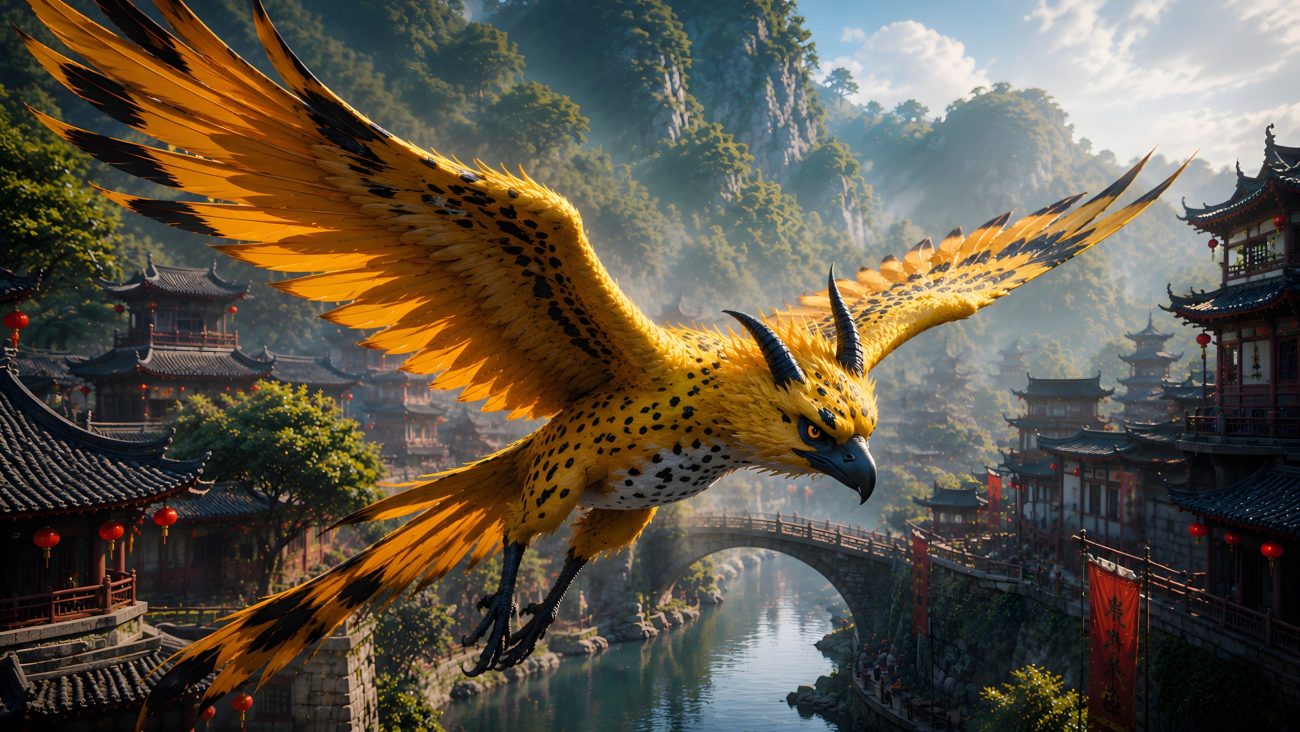
The Gu Diao is a man-eating monster described in the Classic of Mountains and Seas. It is said to live in the Zegeng River beside Mount Luwu. The creature resembles an eagle with horns upon its head, cries like a human infant, and preys upon people.

Later sources offer different descriptions of the Gu Diao. The Pianya also describes it as an eagle with horns, while the Book of Things and Things (Shiwu Ganzhu) portrays it as a leopard-like beast with a bird’s beak, a single horn, and the cry of a baby. Despite these differing appearances, all accounts describe it as a fearsome supernatural creature.


Sources

維基百科貢獻者. (n.d.). 蠱雕. In 維基百科,自由的百科全書. Retrieved June 29, 2026, from https://zh.wikipedia.org/wiki/%E8%A0%B1%E9%9B%95


Bifang

Tradition / Region: Chinese Mythology
Alternative names: Bi Fang
Category: Bird


The Myth

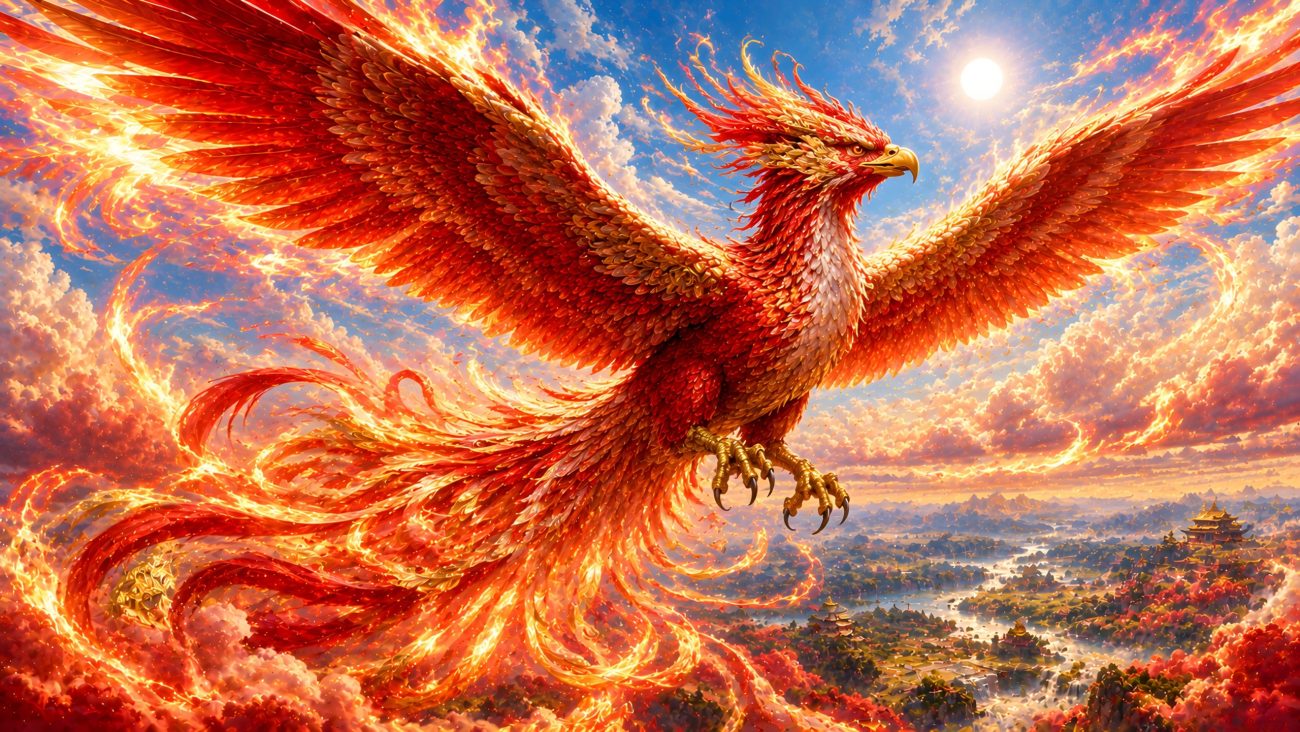
The Bifang is a legendary bird of Chinese mythology, most famously described in the Classic of Mountains and Seas (Shanhaijing). It is said to resemble a crane with a single leg, a green body marked with red patterns, and a white beak. Its name imitates the sound of its call, and it is believed to dwell on Mount Zhang’e, in the distant lands beyond the realm of ordinary people.

The Bifang is closely associated with fire. Its appearance is regarded as an omen that a great fire will soon occur, making it both a supernatural messenger and a harbinger of disaster. Despite this fearful reputation, the bird is not portrayed as malicious, but rather as a sign through which Heaven reveals what is to come.

Other ancient traditions present the Bifang in a more favorable light. The Hanfeizi describes it as a companion of the legendary Yellow Emperor (Huangdi), making it an auspicious creature connected with one of China’s greatest culture heroes. The Huainanzi further associates the bird with the element of Wood in the system of the Five Phases, reflecting its place within the cosmic order of ancient Chinese mythology.


Sources

Wikipedia contributors. (n.d.). Bifang. In Wikipedia. Retrieved June 29, 2026, from https://en.wikipedia.org/wiki/Bifang


Qinglong

Tradition / Region: Chinese Mythology
Alternative names: Blue Bird
Category: Bird


The Myth

The Qinglong is a mythical bird described in the Classic of Mountains and Seas. It is one of four strange birds that dwell upon Xuandan Mountain, alongside the Huangyu, Qingniao, and Huangniao.

These birds are said to possess human faces, long hair, and brilliantly colored plumage. The Qinglong itself is associated with the color blue.

The appearance of these birds together is considered a terrible omen. Whenever the Qinglong, Huangyu, Qingniao, and Huangniao gather in or above a kingdom, it foretells the destruction of that nation. Their arrival is not a cause of the disaster but a supernatural sign that the country’s downfall is imminent.


Sources

Wikipedia contributors. (n.d.). 青鴍. In 维基百科,自由的百科全书. Retrieved June 29, 2026, from https://zh.wikipedia.org/wiki/%E9%9D%92%E9%B4%8D