Mǎbànshé

Tradition: Chinese Mythology
Alternative Names: 馬絆蛇, 馬絆, Maban, Hooked Snake
Category: Rat


The Myth

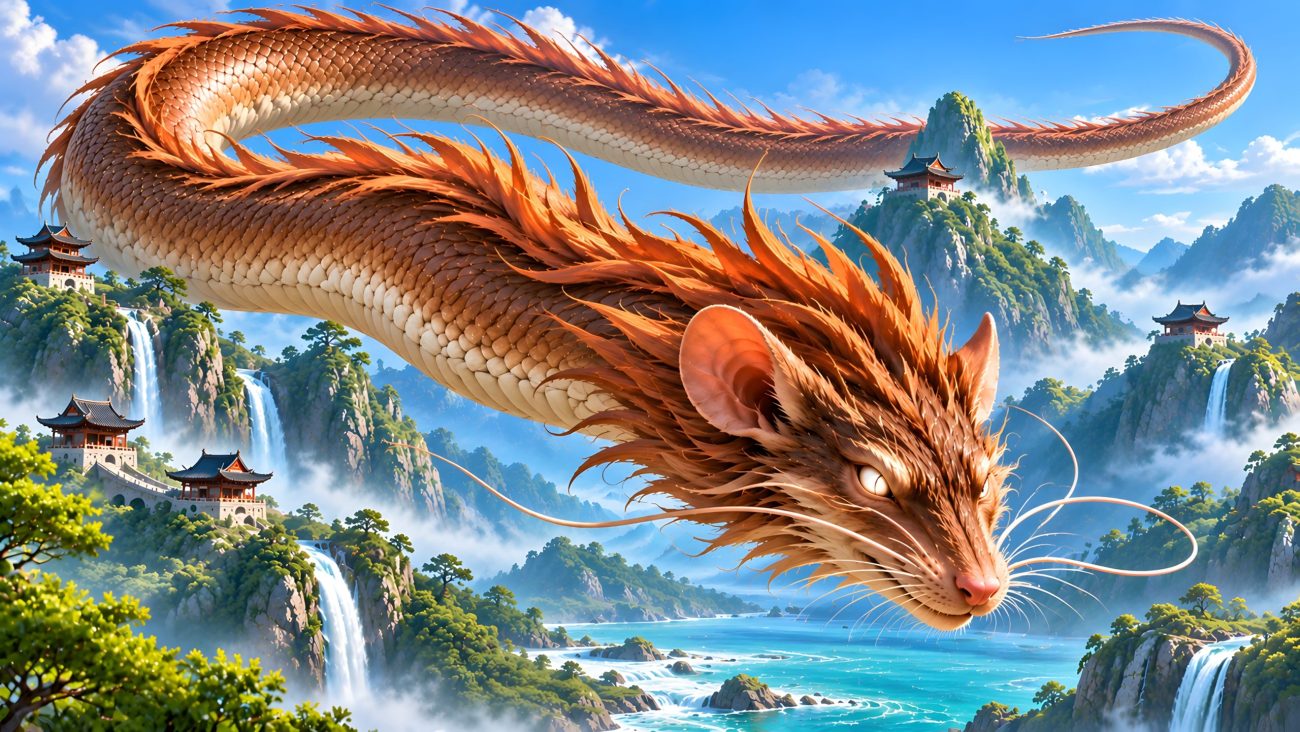
Mǎbànshé, also known as Mǎbàn, is a dangerous aquatic creature from Chinese folklore, particularly associated with rivers in Sichuan and Yunnan. Recorded in the Taiping Guangji, it is described as a type of jiao, a dragon-like water creature. One account compares its body to a leech, while another describes a creature with a head resembling that of a cat or rat and a body marked with patches of white. It is said to inhabit a deep pool at the ancient city of Hanzhou and to attack people who venture near its waters.

Because Mǎbànshé was considered a threat to local communities, villagers reportedly sought brave individuals willing to confront and kill it. The name itself was said to be a regional Shu term for a jiao, reflecting the varied names given to dangerous aquatic beings in Chinese tradition.

Other accounts identify Mǎbànshé with the goushe, or Hooked Snake, another legendary aquatic creature. These differing descriptions suggest that the name may have referred to more than one kind of dangerous water monster, with its exact appearance and identity varying between sources.


Sources

“馬絆蛇 (Mǎ bàn shé).” Chinese Wikipedia. Wikimedia Foundation. https://zh.wikipedia.org/wiki/%E9%A6%AC%E7%B5%86%E8%9B%87
Yin Shu

Tradition: Chinese Mythology
Alternative Names: 陰鼠, Hidden Rodent, Hidden Mouse
Category: Rat


The Myth

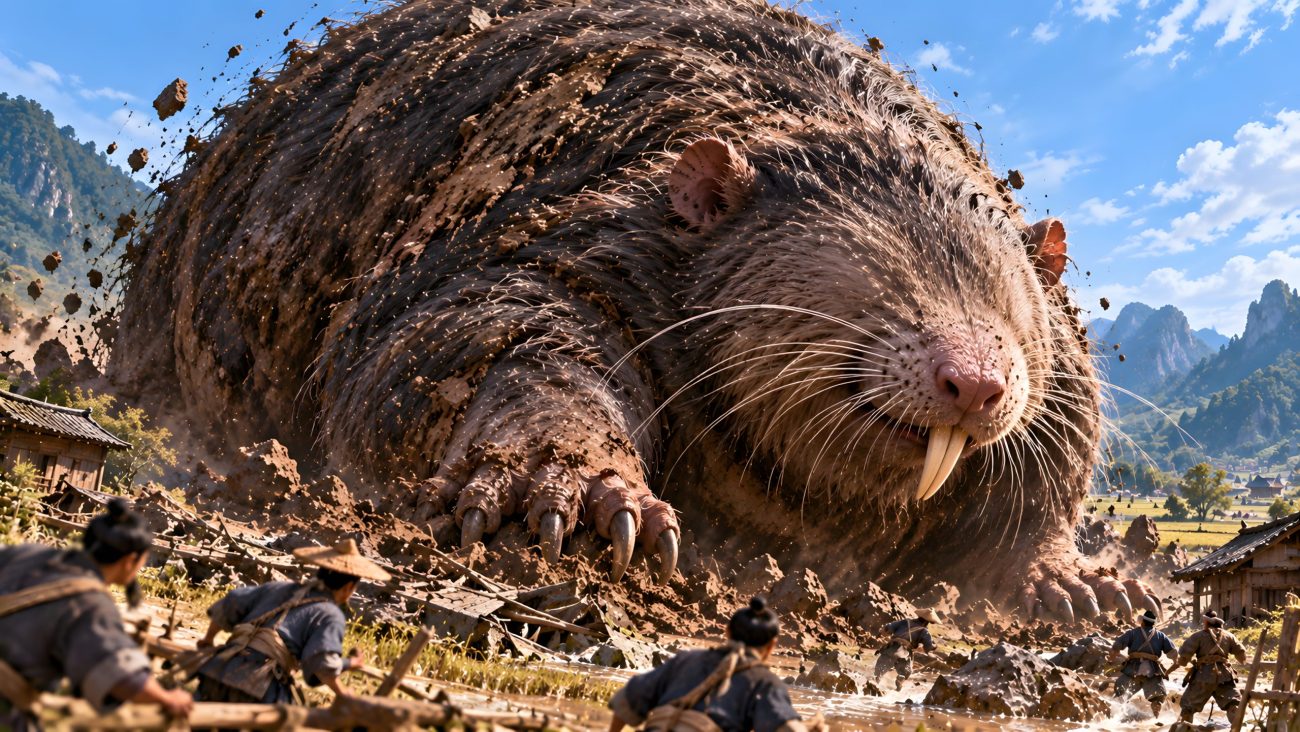
Yin Shu, meaning “Hidden Rodent” or “Hidden Mouse,” is a legendary subterranean creature described in Chinese writings, including the Li Ji (Book of Rites) in some accounts. It dwells in dark caves and underground passages, rarely emerging into the open. Similar beliefs were recorded in Siberia, where mammoth fossils were interpreted as the remains of enormous mole-like beasts that tunneled beneath the earth, tearing up riverbanks as they moved. These creatures were believed to die when exposed to daylight.

Descriptions of the Yin Shu vary between sources. It is generally portrayed as a gigantic, dark, mouse-like animal, with accounts from Manchurian manuscripts claiming it can grow from the size of a buffalo to that of an elephant. It has short legs, a short neck, small eyes, and either no tail or only a stub. Despite its immense strength, it is said to be slow-moving and unintelligent, digging extensive underground chambers in places where the fu-kia plant grows. Floods that inundate plains were sometimes believed to drive these hidden beasts into view, where sunlight would kill them.

The legend became associated with the discovery of prehistoric remains. Mammoth bones were reportedly sold in Chinese drugstores under the name Yin Shu, reflecting the belief that such enormous fossils belonged to giant rodents living beneath the earth. The creature therefore represents a folkloric explanation for the mysterious bones of extinct animals, combining subterranean monster traditions with early interpretations of paleontological discoveries.


Sources

“Yin Shu.” A Book of Creatures. https://abookofcreatures.com/?s=Yin+Shu


Xishu

Tradition: Chinese Mythology
Alternative Names: 奚鼠, 磎鼠, 鼷鼠
Category: Rat


The Myth

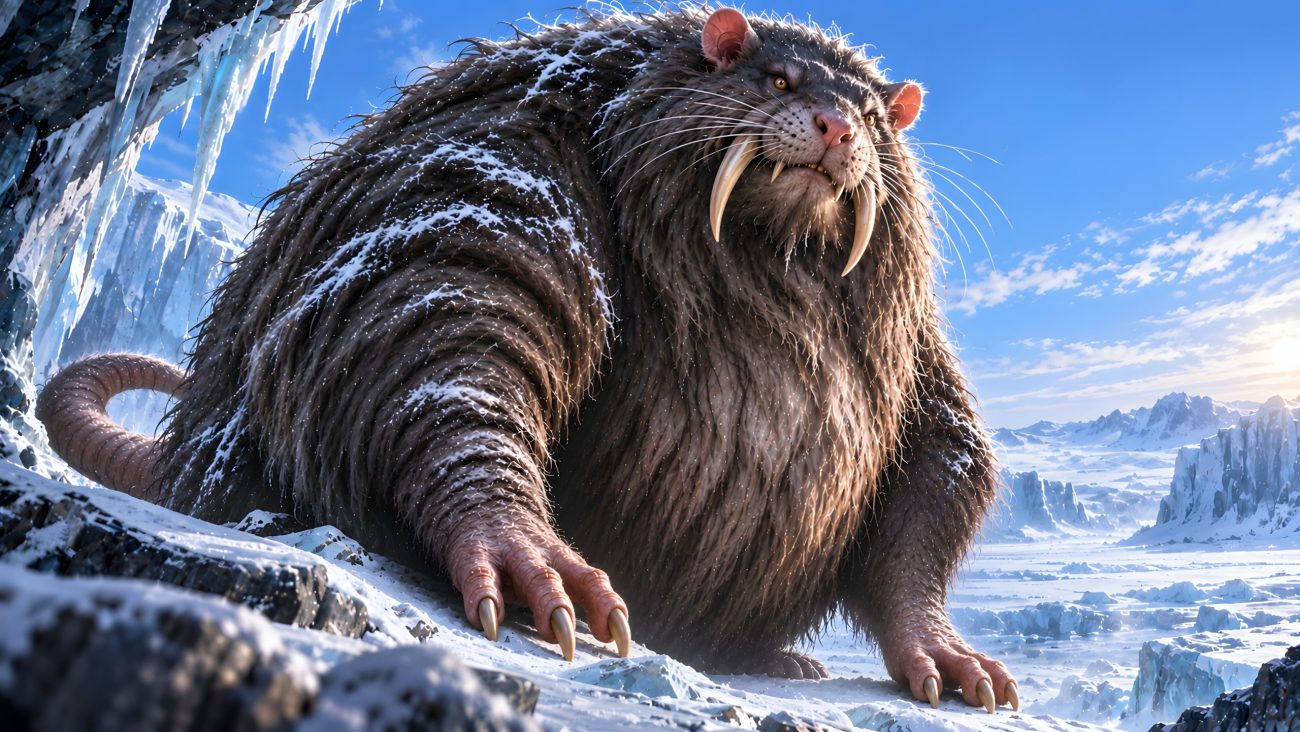
Xishu is a gigantic, rat-like creature described in the Chinese text Shenyi Jing (Classic of Divine Marvels). It is said to live underground beneath an enormous northern ice sheet, reportedly stretching for thousands of miles and reaching a thickness of hundreds of zhang. There, it feeds on the grass, trees, and roots growing around the ice.

Accounts describe Xishu as weighing hundreds or even thousands of jin, with some versions claiming that its flesh alone weighs ten thousand jin. Its meat is said to provide warmth when eaten, making it particularly valuable in the freezing northern regions. Its thick fur can be fashioned into clothing and blankets that offer exceptional protection against the cold.

Xishu possesses other remarkable properties: a drum made from its hide is said to produce a sound audible a thousand miles away, while its hairs can be used to summon other rats. Some modern interpretations suggest that the creature may have been inspired by the woolly mammoth or possibly the musk ox, although neither identification is certain. Its enormous size, insulating fur, and association with the frozen north make it a striking example of a legendary animal adapted to an extreme environment.


Sources

“鼷鼠 (Xīshǔ).” Chinese Wikipedia. Wikimedia Foundation. https://zh.wikipedia.org/wiki/%E9%BC%B7%E9%BC%A0


Shujing

Tradition: Chinese Mythology
Alternative Names: 鼠精, Rat Spirit, Rat Demon
Category: Rat


The Myth

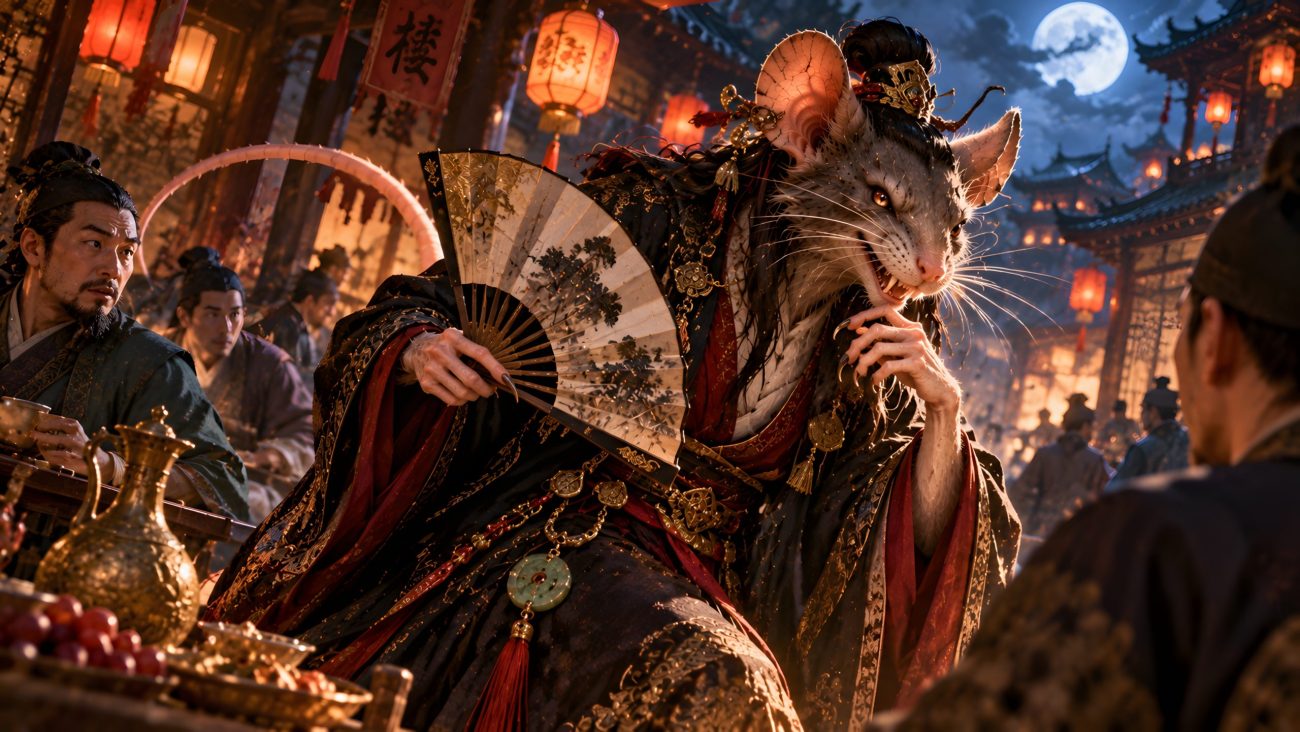
Shujing, meaning “Rat Spirit,” refers to supernatural rat creatures in Chinese folklore. These spirits appear in traditional tales as shapeshifters capable of taking human form and causing trouble among people. They are recorded in works such as the Yunxian Zaji and other collections of strange stories.

In Ma Chongqiu, preserved in the Taiping Guangji, a rat spirit causes supernatural disturbances before eventually being defeated by a Daoist. Another tale, recorded by the Tang dynasty writer Li Yin in the Xiaoxiang Lu, describes a group of rat spirits transforming into young men in Chang’an. They rob and murder people until a Daoist confronts them with an ancient mirror. When the mirror reveals their true nature, the disguised spirits flee, abandoning their armour and weapons.

These stories portray rat spirits as deceptive and dangerous beings whose ability to disguise themselves allows them to prey on unsuspecting people. Their supernatural powers, however, can be overcome by spiritual knowledge and the methods of a skilled Daoist.


Sources

“鼠精 (Shǔjīng).” Chinese Wikipedia. Wikimedia Foundation. https://zh.wikipedia.org/wiki/%E9%BC%A0%E7%B2%BE


Senso

Tradition: Chinese Mythology, Japanese Mythology
Alternative Names: 仙鼠, Celestial Rat, Immortal Mouse, Tensō, Hiso
Category: Rat


The Myth

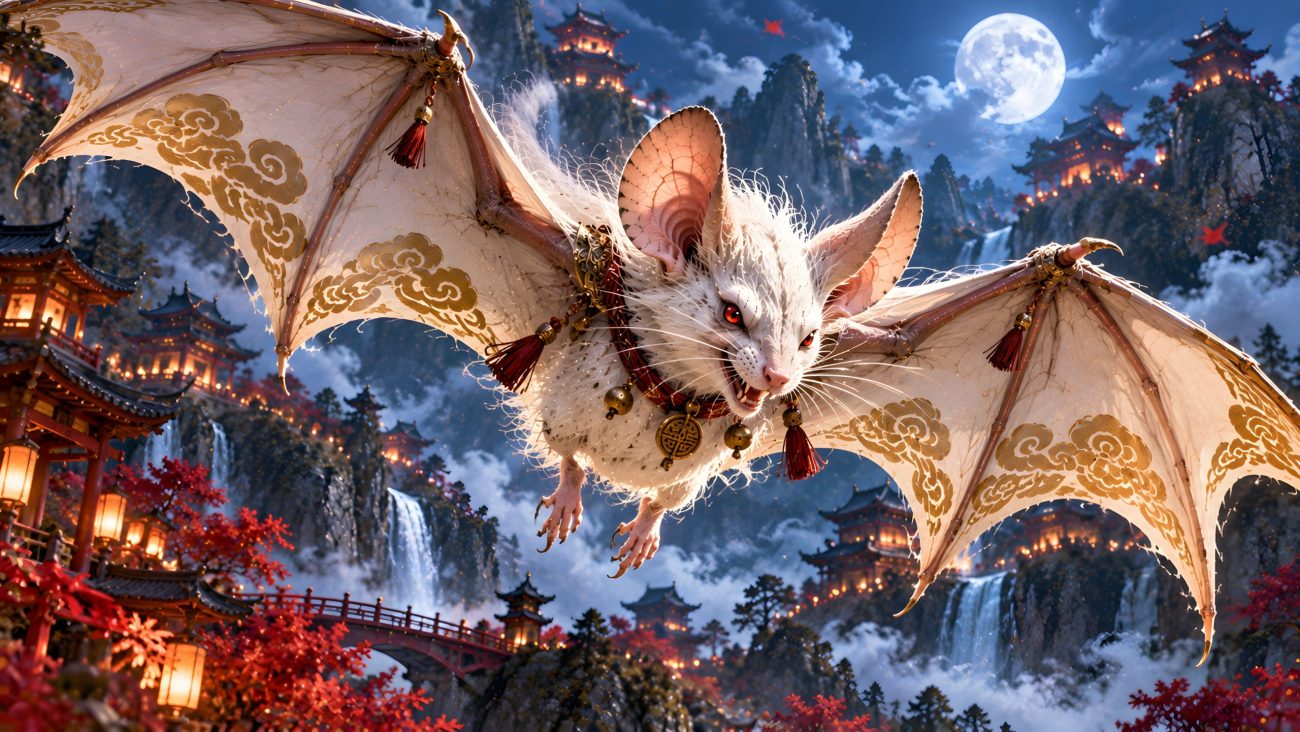
Senso, meaning “Immortal Rat,” is an old name for the bat, whose appearance resembles that of a mouse with wings. In traditional Chinese lore, bats were sometimes believed to originate from mice that had lived for an exceptionally long time. The Chinese text Xuanzhong Ji states that a mouse becomes a bat after reaching one hundred years of age.

The bat was also associated with longevity and immortality. According to the Xian Jing, it was known as the Senso and would turn silver-white after a thousand years. Ge Hong’s Baopuzi likewise describes thousand-year-old bats becoming as white as snow and associates them with substances used in the search for immortality.

These beliefs also appeared in poetry. The Tang poet Bai Juyi described a thousand-year-old mouse transforming into a white bat and hiding in a dark cave to escape danger. Another poem, quoted in the Japanese Jikkinshō, tells of a mouse that gains wings through immortality but is soon eaten by a crow or kite. The story warns against envying another’s fortune, suggesting that apparent advancement may still lead to danger.


Sources

“Senno.” 新版TYZ 妖怪図鑑 (New TYZ Yokai Encyclopedia). https://tyz-yokai.blog.jp/archives/1078433271.html


Huǒshǔ

Tradition: Chinese Mythology
Alternative Names: 火鼠, Fire Rat, Firelight Beast, Huǒguāng Shòu
Category: Rat


The Myth

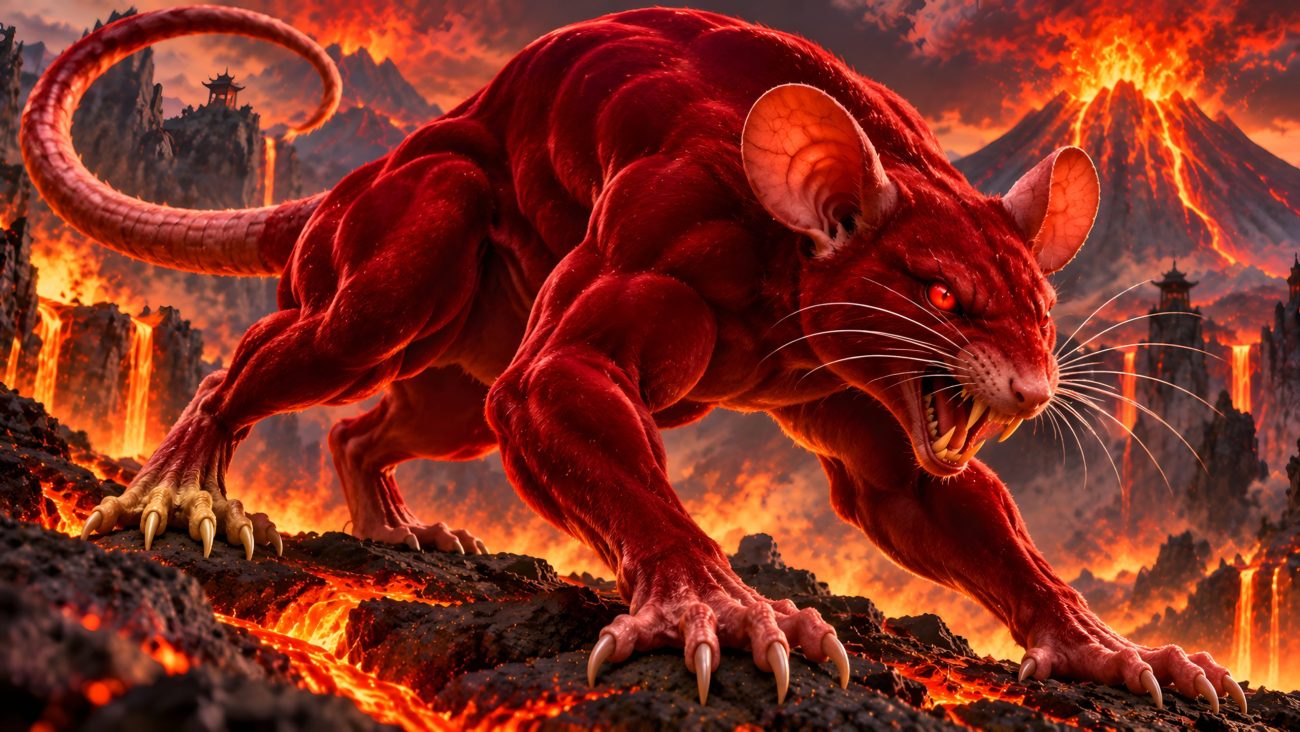
Huǒshǔ, the Fire Rat, is a legendary creature in Chinese mythology said to dwell amid supernatural flames. Some accounts place it among the burning trees of a volcanic region at the southern edge of the world, while others associate it with Mount Kunlun or the fiery mountains of the western and southern lands. It is described as a gigantic rat weighing around 250 kilograms, with fur approximately 50 centimetres long and as fine as silk.

The Fire Rat’s most remarkable feature is its fire-resistant fur. Cloth woven from its hair is known as huǒhuàn bù, or fire-washed cloth. Unlike ordinary fabric, it does not burn; when it becomes dirty, it can be thrown into a fire, emerging pure white as the flames consume the impurities.

The creature appears in Chinese texts such as the Shényì Jīng and is mentioned in later encyclopaedias and natural histories. Its legend also travelled to Japan, where the fire rat’s pelt became the impossible treasure sought by Prince Abe in The Tale of the Bamboo Cutter. The Fire Rat thus became closely associated with a magical garment that could withstand fire.


Sources

“火鼠 (Huǒshǔ).” Chinese Wikipedia. Wikimedia Foundation. https://zh.wikipedia.org/wiki/%E7%81%AB%E9%BC%A0


Fēishǔ

Tradition: Chinese Mythology
Alternative Names: 飞鼠, Flying Rat, Flying Mouse
Category: Rat


The Myth

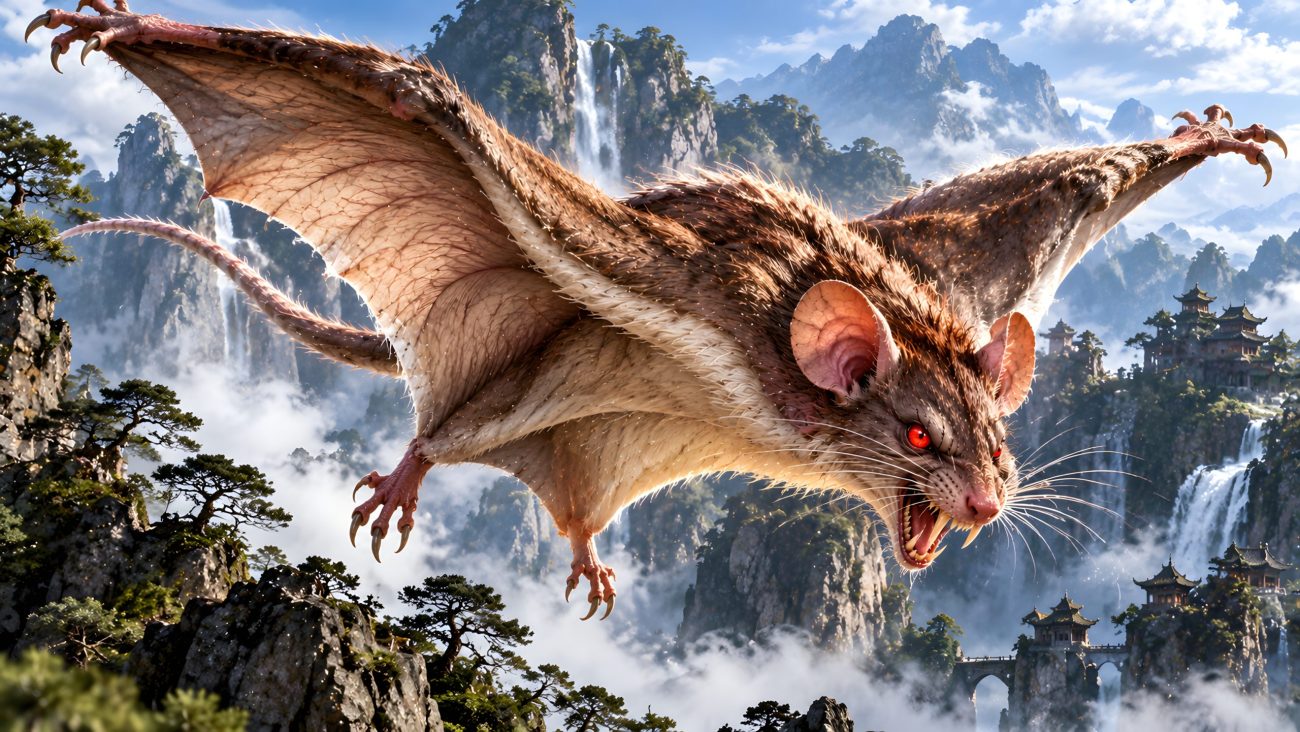
Fēishǔ is a legendary flying beast recorded in the Classic of Mountains and Seas. It is described as resembling a rabbit, but with the head of a rat, and possessing the ability to fly using its back.

According to the Classic of Mountains and Seas, the Fēishǔ lives in the Tianchi Mountains. Later commentary in the Shanhaijing Buzhu also associates it with the Yao’an and Menghua regions of Yunnan. Its identity has sometimes been linked to flying squirrels or bats.

The creature was also believed to be useful as food. Traditional accounts claim that its flesh could be eaten and used as a remedy for difficult childbirth.


Sources

“飞鼠 (Fēishǔ).” Chinese Wikipedia. Wikimedia Foundation. https://zh.wikipedia.org/wiki/%E9%A3%9E%E9%BC%A0_(%E5%A6%96%E6%80%AA)


Kekko

Tradition / Region: Chinese Mythology
Alternative names: Jiegou; Keikin (Japanese variant)
Category: Bird, Rat


The Myth

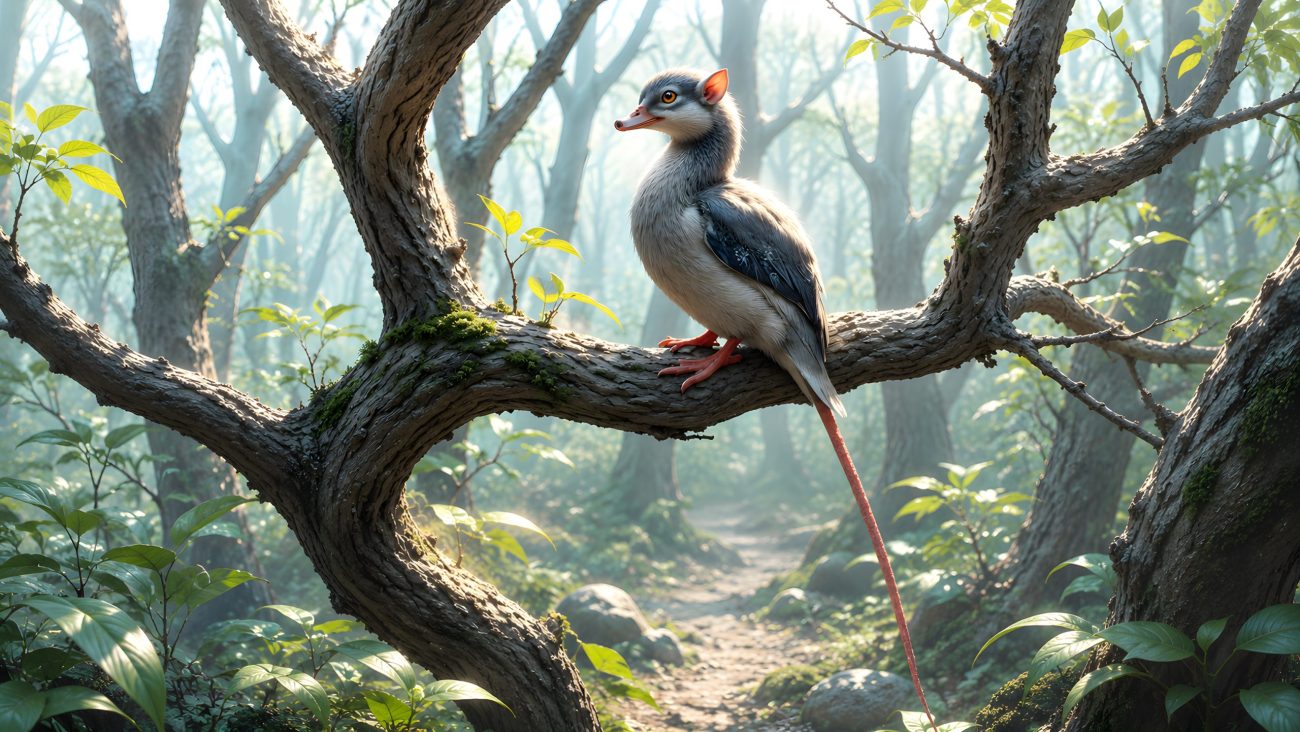
The Kekko is a legendary bird described in the ancient Chinese Classic of Mountains and Seas. It is said to dwell upon Mount Kō, where it resembles a duck but possesses the tail of a mouse and is unusually adept at climbing trees.

The bird is feared as a harbinger of disease. Whenever a Kekko appears in a region, sickness is believed to spread among the people, making its arrival a dreadful omen. Rather than attacking directly, its mere presence foretells widespread illness.

In later centuries, stories of the Kekko spread from China to Japan through encyclopedias and illustrated collections of strange creatures. During the Edo period it was occasionally depicted alongside other exotic birds and beasts from the Classic of Mountains and Seas, preserving its reputation as one of the ominous creatures of ancient Chinese legend.


Sources

TYZ. (2020, March 15). ケッコ (Kekko). In 新版TYZ 妖怪図鑑. Retrieved June 29, 2026, from https://tyz-yokai.blog.jp/archives/1077285093.html