Raigōin

Tradition: Japanese Mythology
Alternative Names: 頼豪院, Raigō仙人 (Raigō Sennin)
Category: Rat


The Myth

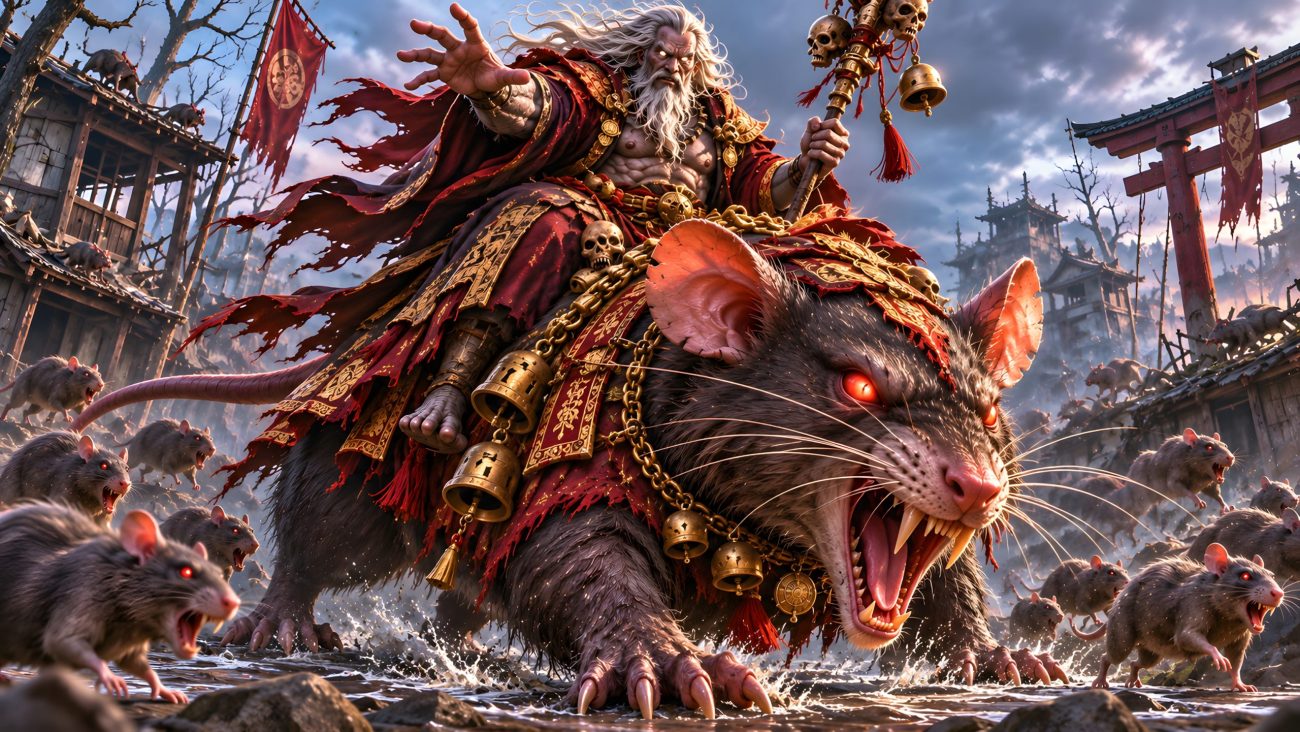
Raigōin is a sorcerer and practitioner of black magic in Santō Kyōden’s historical fantasy novel Mukashigatari Inazuma Byōshi. Set during the Chōroku era (1457–1460), the story follows the intrigues of the Sasaki family, where powerful retainers plot to control the family inheritance. Raigōin is hired by the corrupt steward Fuwa Dōken to curse Tsukiwaka, the young heir to the family estate.

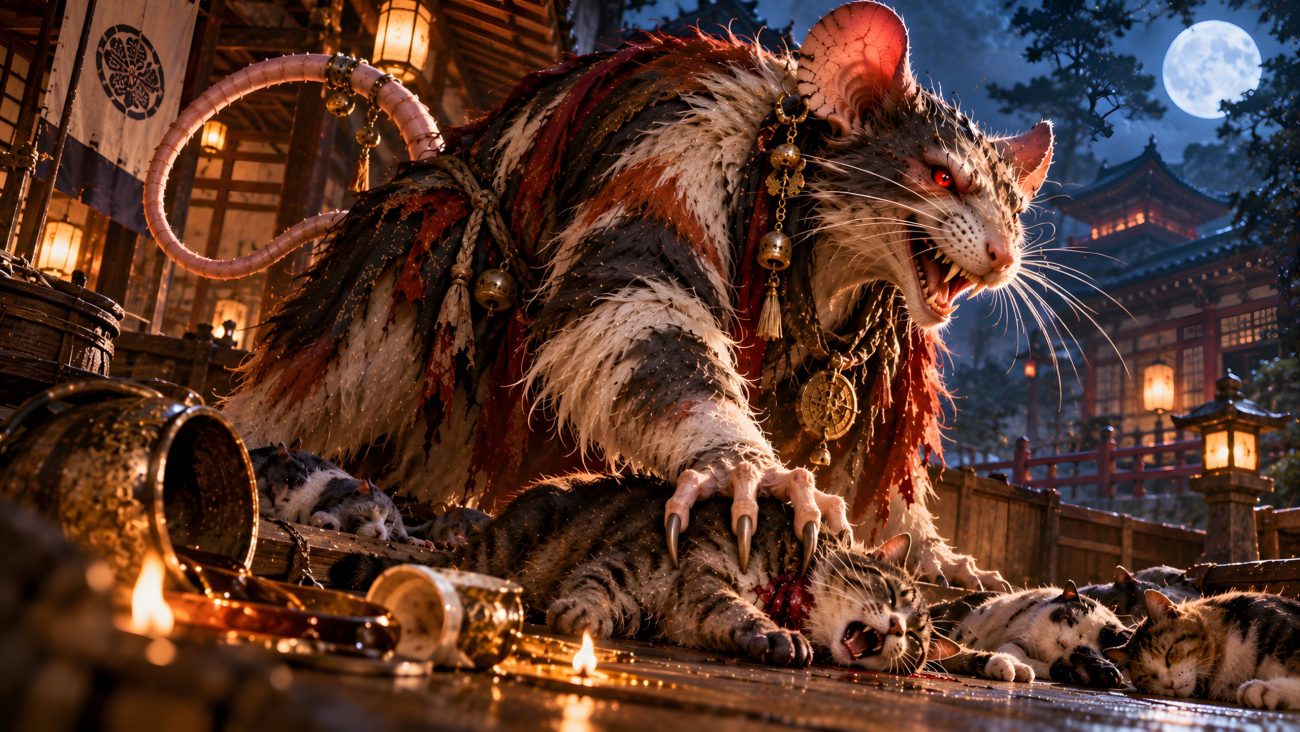
After Raigōin performs his rituals, Tsukiwaka falls gravely ill and suffers terrifying attacks by swarms of rats. The creatures first appear at night, while his attendants fall asleep, but eventually invade his room even during the day. They gnaw away his hair and scalp, leaving painful, poisonous sores. One night, the warrior Yamazaburō witnesses a gigantic rat, as large as a dog, attacking the boy. He strikes it with a small blade, whereupon the rat releases smoke and transforms into Raigōin. The sorcerer escapes by chanting spells, unleashing a violent wind, and spitting dozens of rats from his mouth to attack his pursuer. With the sorcerer wounded, Tsukiwaka begins to recover.

Raigōin later helps Dōken and his ally, Kuchide no Kata, frame Tsukiwaka and his mother, Ginnan no Mae, for using curses against the family. Their conspiracy leads to the mother and son being condemned, but they are rescued by loyal retainers. Eventually, Raigōin is captured and forced to confess his involvement in the plot, exposing the conspirators and bringing about their downfall. The character draws inspiration from the historical monk Raigō of Miidera, whose legend tells of his transformation after death into a swarm of rats. Stories about this monk often depict him becoming a giant rat or spewing rats from his mouth. Raigōin’s confrontation with Yamazaburō also echoes theatrical scenes in which the villainous Niki Danjō or Suganuma Kosuke reveals himself after taking the form of a rat.


Sources

“Raigouin.” 新版TYZ 妖怪図鑑 (New TYZ Yokai Encyclopedia). https://tyz-yokai.blog.jp/archives/1077252077.html
Ka En So

Tradition: Japanese Mythology
Alternative Names: かえんそ, 火炎鼠, Flame Rat
Category: Rat


The Myth

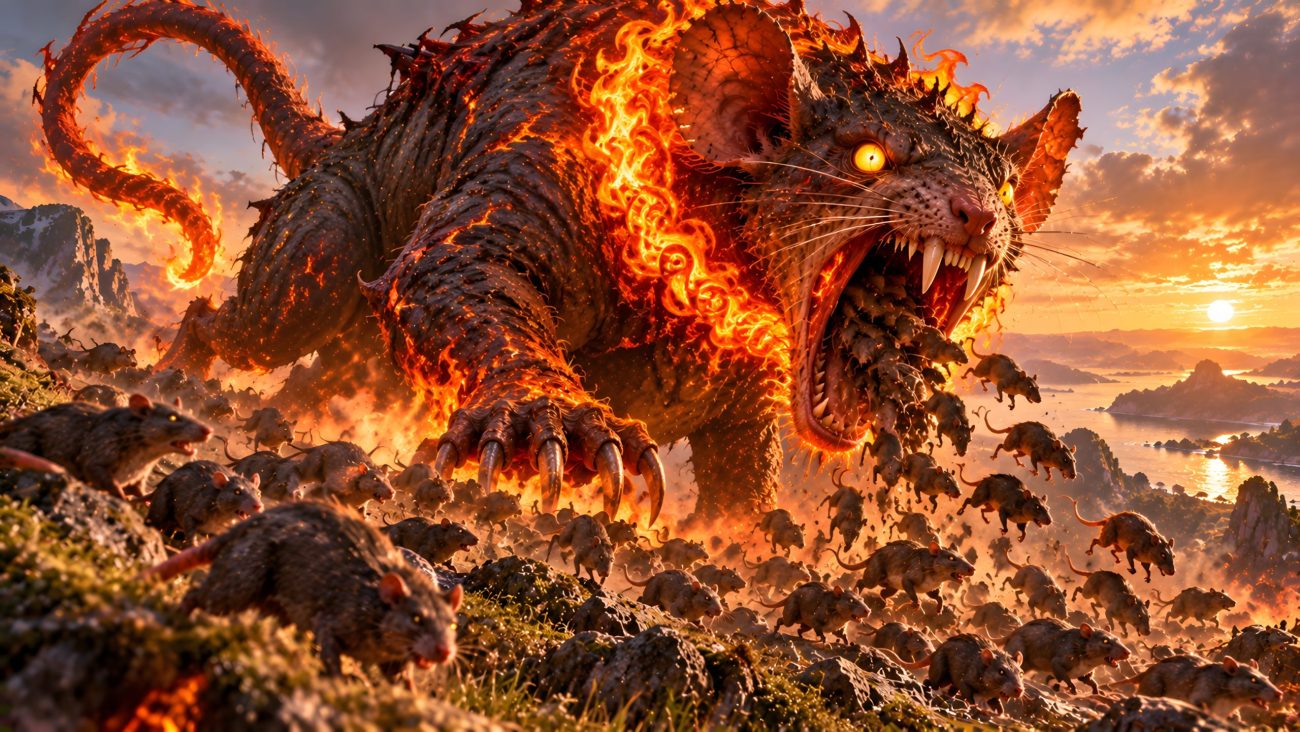
The Kaenso is a terrifying supernatural creature whose body burns with flames. Its most distinctive and frightening ability is to spew countless rats from its charred mouth, unleashing swarms of rodents to attack people.

According to legend, anyone who kills a rat will become a Kaenso after death. This curse transforms the rat-killer into a fiery monster, condemned to spread terror through the same creatures they once killed.

The Kaenso combines the destructive power of fire with the unsettling image of endless rats pouring from a monstrous mouth. Its appearance evokes a creature consumed by flames, while its ability to unleash swarms of rodents makes it a particularly disturbing yokai.

A similar creature, the Nezumi Onna, or “Rat Woman,” is described as possessing nearly identical characteristics. Both figures are associated with the terrifying image of supernatural beings that spew countless rats from their mouths.


Sources

“Kaenso.” 新版TYZ 妖怪図鑑 (New TYZ Yokai Encyclopedia). https://tyz-yokai.blog.jp/archives/1077180999.html


Nezumi Daimyōjin

Tradition: Japanese Mythology
Alternative Names: 鼠大明神, Great Rat Deity
Category: Rat


The Myth

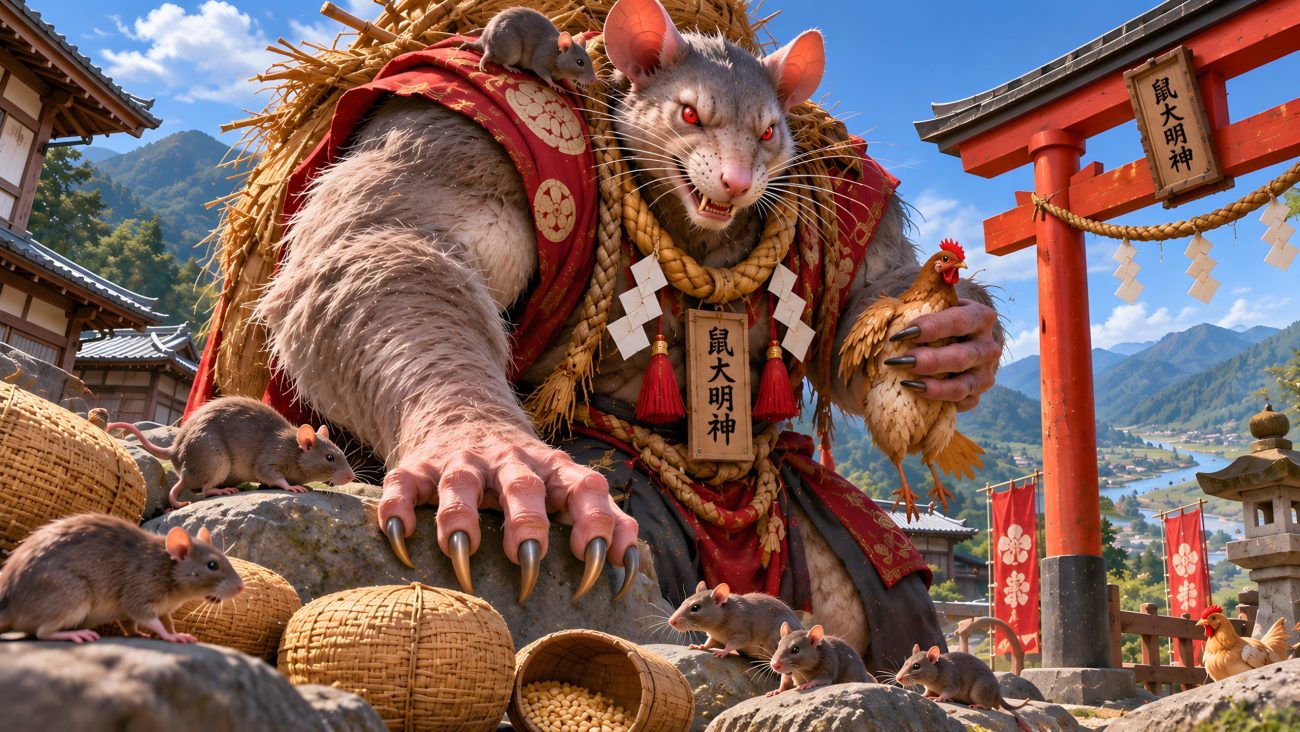
Nezumi Daimyōjin is a legendary giant rat associated with Sakaki in Hanishina District, Nagano Prefecture. Its story is connected to local place names, including Nezumi and Iwahana. According to tradition, a dangerous infestation of tsutsugamushi, or mites associated with scrub typhus, once plagued the village of Nezumi-juku. Seeking a solution, the villagers asked a gigantic rat living in a nearby cave to eliminate the pests. The rat agreed and devoured them all within three days.

Grateful for its service, the villagers offered the rat rice and fish every day. Growing ever larger, however, it eventually began roaming the village openly and devouring rabbits and chickens. Matters reached a crisis when it bit off an elderly woman’s wrist. Although the villagers remembered its earlier help, they decided the creature had become too dangerous to tolerate. Unable to find a cat capable of confronting it, they sent a representative across the sea to Tang China to seek a gigantic, tiger-like cat.

The great Tang cat agreed to help and travelled to the village, where it fought the rat in a battle whose roars echoed across the surrounding region. The cat eventually prevailed, and the rat struck its head against a projecting rock called Iwahana before dying. A nearby lake then burst its banks, and the rat was swept away by the raging flood. The victorious cat was also carried off by the waters; although it managed to crawl ashore, it soon died from exhaustion. In gratitude, the villagers established Karane-ko Shrine in honour of the cat and built a small shrine to the fallen rat, commemorating it as Nezumi Daimyōjin.


Sources

“Nezumi Daimyojin.” 新版TYZ 妖怪図鑑 (New TYZ Yokai Encyclopedia). https://tyz-yokai.blog.jp/archives/1077214312.html


Oiwa no Nezumi

Tradition: Japanese Mythology
Alternative Names: お岩の鼠, Oiwa’s Rats, Rats of Yotsuya Kaidan
Category: Rat


The Myth

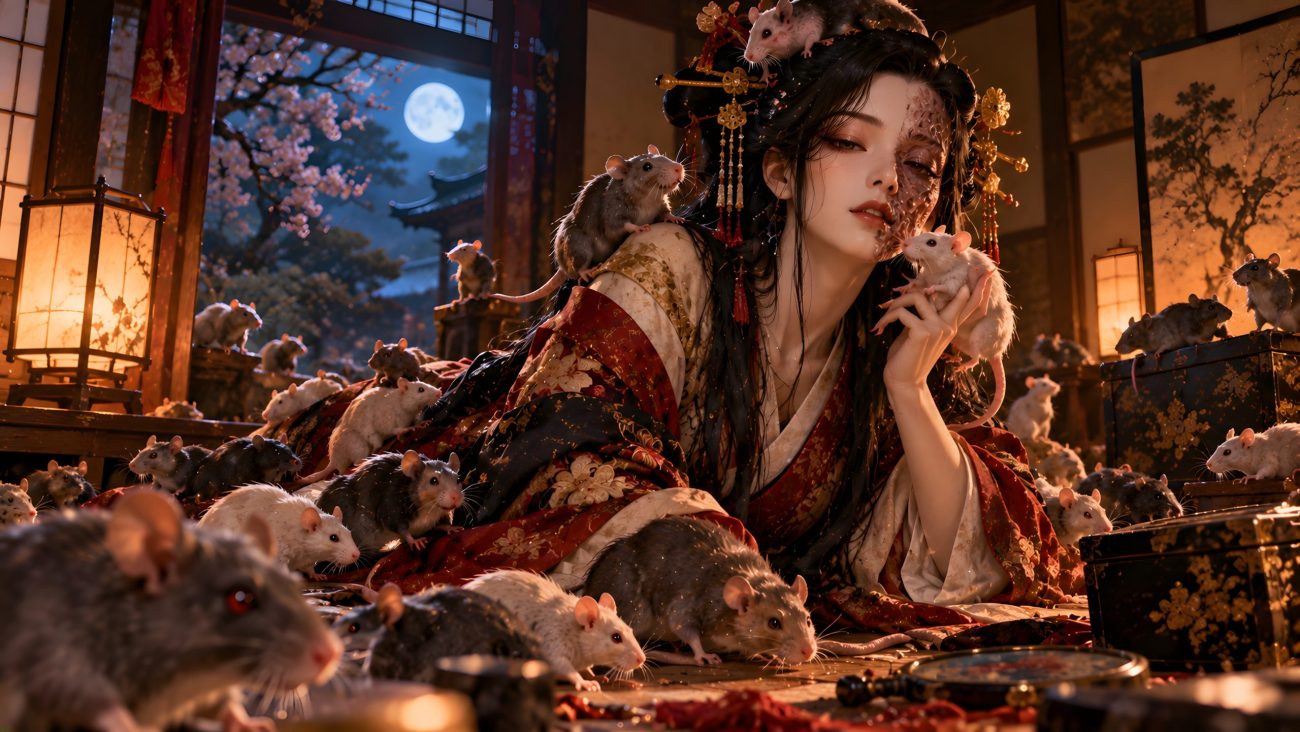
Oiwa no Nezumi refers to the supernatural rats that appear throughout Tōkaidō Yotsuya Kaidan, the famous ghost story and kabuki play written by Tsuruya Nanboku IV. Oiwa, who is traditionally said to have been born in the Year of the Rat, becomes a vengeful spirit after being poisoned and betrayed by her husband, Tamiya Iemon. Rats serve as her supernatural agents, tormenting those responsible for her suffering and helping bring about their downfall.

After Oiwa dies, a gigantic rat appears and kills a cat before disappearing in a flash of spiritual fire. Later, swarms of rats attempt to carry away Oiwa’s infant, gather around the severed head of Iemon’s second wife, Oume, and steal a protective amulet entrusted to Oume’s nurse, O-Maki. When the nurse pursues the rat that has taken the amulet into a river, she falls in and drowns. In another episode, a rat carrying Oiwa’s comb appears before Naosuke, indirectly revealing her death to her sister, Osode.

The rats continue to haunt Iemon as Oiwa’s revenge unfolds. They appear in his dreams, transform his surroundings into terrifying visions, destroy an important document by gnawing through it, and swarm over those who have wronged Oiwa. During the final confrontation, numerous rats cling to Iemon’s sword, causing him to drop it and allowing Osode’s betrothed, Sato Yomoshichi, to strike him down. Even as Iemon struggles against his fate, the rats continue to torment him alongside Oiwa’s vengeful spirit. In the play, they become recurring manifestations of her wrath, turning the ordinary rat into an instrument of supernatural retribution.


Sources

“Oiwa.” 新版TYZ 妖怪図鑑 (New TYZ Yokai Encyclopedia). https://tyz-yokai.blog.jp/archives/1077209622.html


Onitsuchi Nezumi

Tradition: Japanese Mythology
Alternative Names: 鬼土鼠, Demon Earth Rat
Category: Rat


The Myth

Onitsuchi Nezumi is a mysterious yokai depicted in a Japanese illustrated scroll of monstrous beings, examples of which are known as Bakemono-zukushi Emaki. One surviving depiction is held on deposit at the Fukuoka Prefectural Museum of Art.

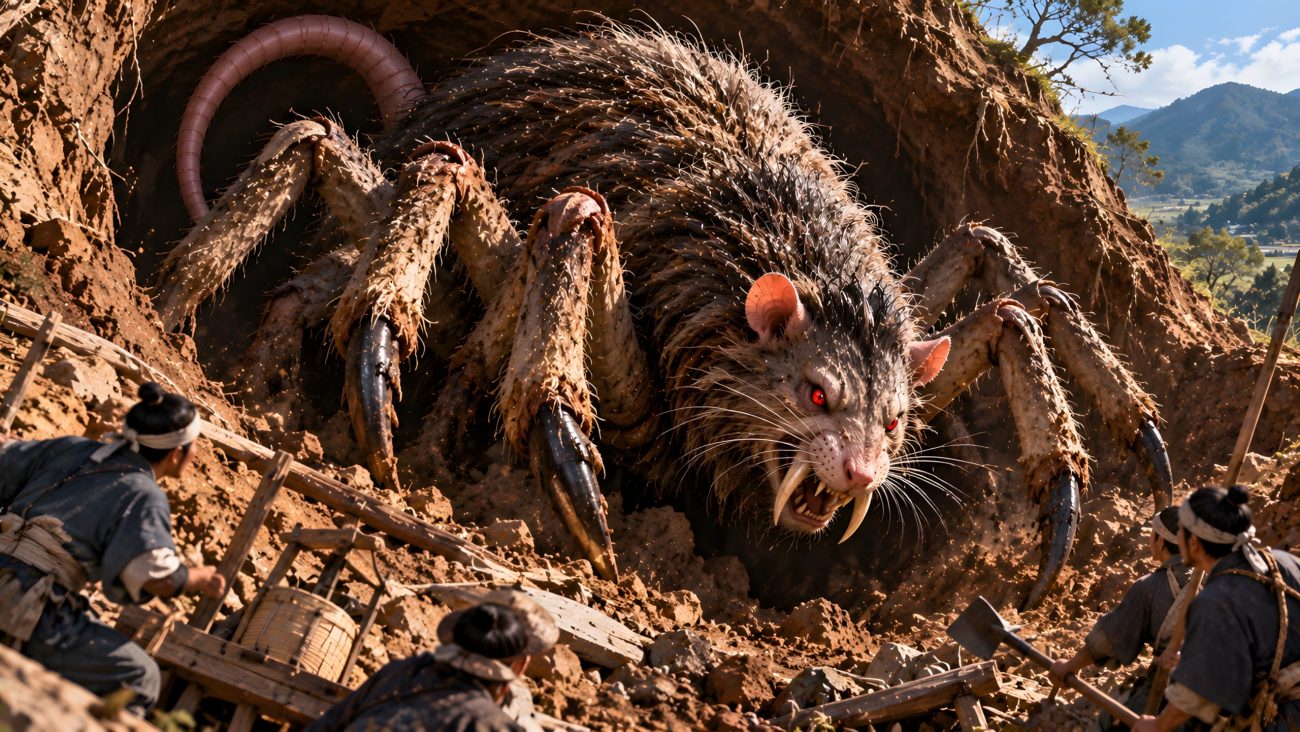
According to the scroll’s accompanying account, a strange groaning sound emerged from beneath the earth in the mountains of Matsuzaki, in Chikugo Province. The ground trembled as the sound was heard, prompting local people to dig into the earth. There they discovered a bizarre creature, which an elderly man identified as an Onitsuchi Nezumi.

Despite its name, the creature’s identity is uncertain. Its illustrated appearance is identical to a yokai labelled Ushi-oni (牛鬼), or Ox Demon, in other monstrous-creature scrolls. This suggests that the same image may have circulated under different names in Japanese yokai traditions.


Sources

“Onitsuchi Nezumi.” 新版TYZ 妖怪図鑑 (New TYZ Yokai Encyclopedia). https://tyz-yokai.blog.jp/archives/1077118021.html


Shiro Nezumi no Bantō

Tradition: Japanese Mythology
Alternative Names: 白鼠の番頭, White Rat Head Clerk
Category: Rat


The Myth

Shiro Nezumi no Bantō, or the White Rat Head Clerk, is a folkloric figure based on the traditional belief that white mice are messengers of Daikokuten, a deity associated with wealth and prosperity. A white mouse living in a household was considered an auspicious sign that fortune would come to its inhabitants. The term shiro nezumi consequently became a metaphor for a loyal and capable head clerk or employee whose service helped a merchant’s business prosper. By contrast, dishonest servants who stole from or harmed their masters were called kuro nezumi, or black rats.

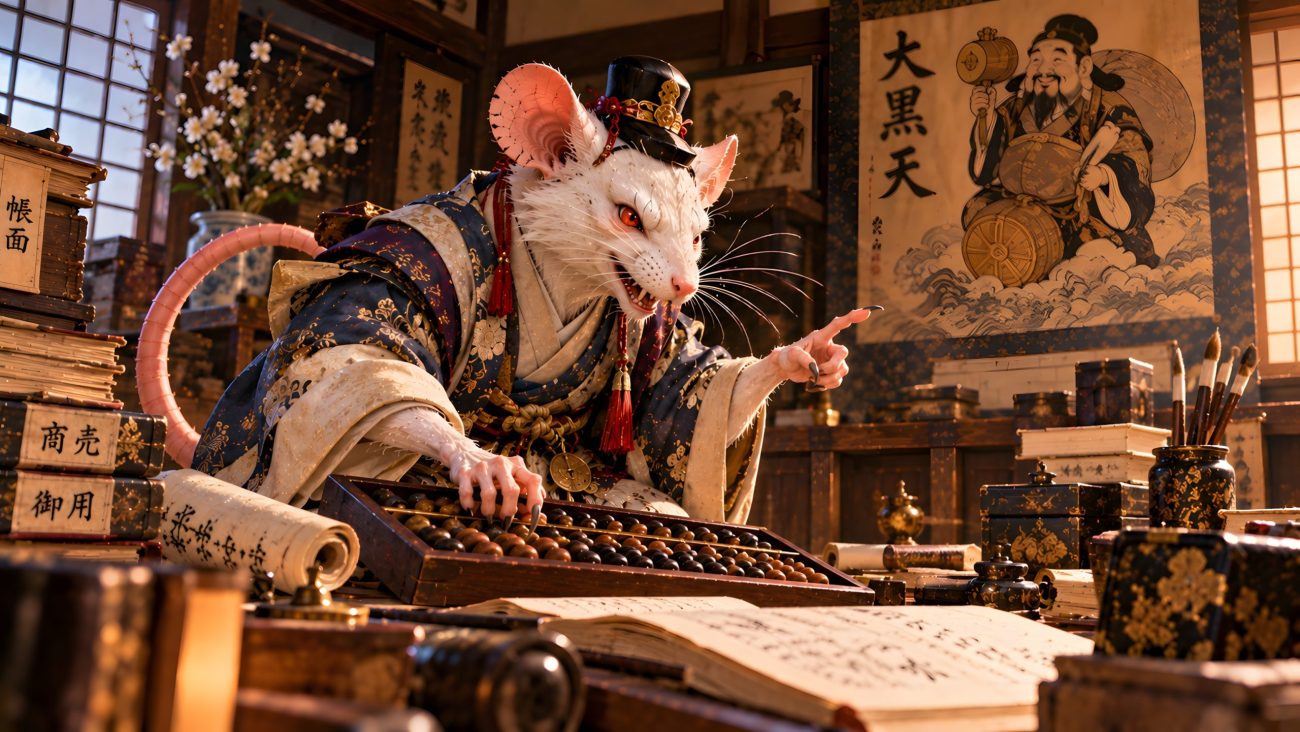
In Kotowaza Heso no Yadogae, the White Rat Head Clerk is depicted literally as a white rat, working with an abacus while admonishing the retired head of a merchant family. He asks where the young master has been since the previous day, noting that rumours about his behaviour are spreading and criticising the elder for being too lenient with his son.

The retired merchant, portrayed with extraordinarily long eyes that extend beyond his face, brushes aside the clerk’s concerns and reassures him that his vigilance is appreciated. Nevertheless, he appears unwilling to discipline his son’s extravagant lifestyle. The scene uses humour and visual exaggeration to contrast the diligent, responsible employee with a wealthy patriarch who continues to indulge his wayward heir.


Sources

“Shironezumi.” 新版TYZ 妖怪図鑑 (New TYZ Yokai Encyclopedia). https://tyz-yokai.blog.jp/archives/1077096672.html


Nezumi no Bakemono

Tradition: Japanese Mythology
Alternative Names: 鼠の化物, Rat Monster, Mouse Monster
Category: Rat


The Myth

Nezumi no Bakemono is a satirical yokai described in Ōmachi Keigetsu’s Eiri Kunwa, published in 1916, in a section titled Hyakki Hirugyō. It is listed as the thirty-eighth of forty-one monsters and depicts a rat standing upright on two legs in a comical pose.

According to the account, an outbreak of plague led authorities to purchase rats for five sen each. Alarmed by this development, the rats transformed into monsters. Yet even after changing their forms, they retained their natural habits of gnawing and stealing. Their sharpness of tooth varied: those with poor teeth gnawed at their parents’ shins, while those with somewhat sharper teeth gnawed at their masters’ households.

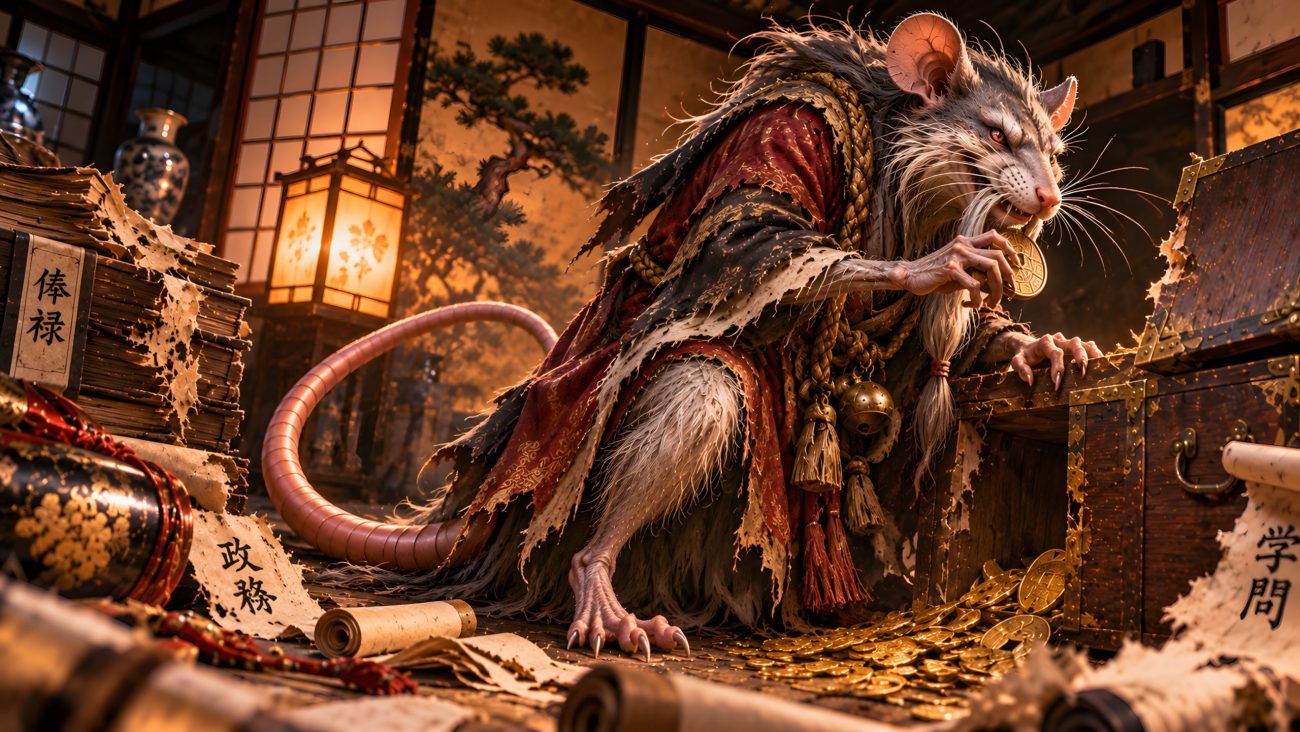
The satire extends beyond ordinary theft. Some of these creatures gnaw away at government salaries and positions, the wealth and livelihoods of the people, and even learning, religion, and morality. However, they consume these things without understanding their true value. The author laments that the world has become overwhelmed by such monsters, using the rat’s habit of gnawing as a metaphor for people who exploit others, misuse their positions, or take only fragments of knowledge for personal gain.


Sources

“Nezumi-bakemono.” 新版TYZ 妖怪図鑑 (New TYZ Yokai Encyclopedia). https://tyz-yokai.blog.jp/archives/1077096665.html


Kodama Nezumi

Tradition: Japanese Mythology
Alternative Names: 小玉鼠, Kodama Mouse, Kodama Rat
Category: Rat


The Myth

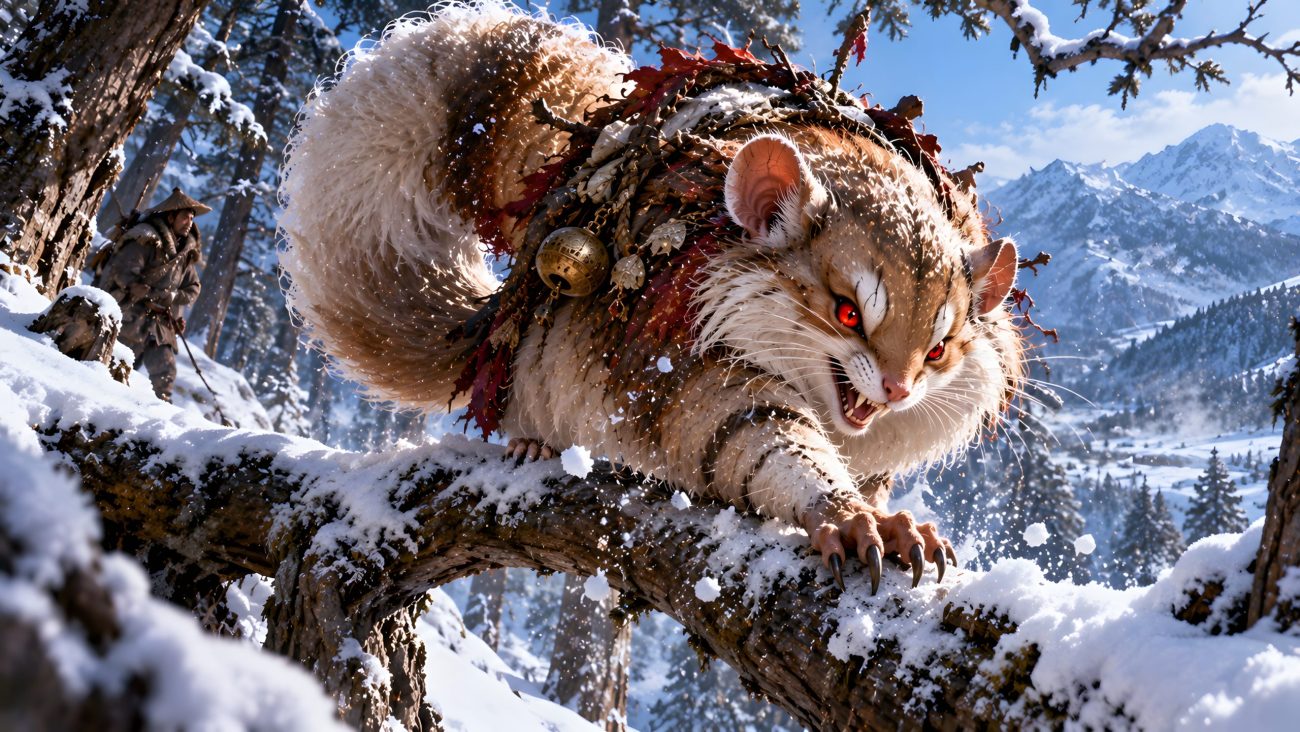
Kodama Nezumi is a supernatural creature known among the matagi, traditional hunters of Akita Prefecture, particularly in Kitaakita and Senboku districts. It resembles a swollen Japanese dormouse and is said to suddenly burst with a loud popping or explosive sound. Hearing this noise was considered an ominous sign that foretold failed hunts and other misfortunes. In some communities, the sound was believed to signal the displeasure of the mountain deity, and hunters who heard it were expected to return home rather than continue into the mountains.

Regional traditions describe the creature bursting along its back, and hunters recalled its sound as either louder than a gunshot or a soft, sudden pop. Some believed that reciting a protective Buddhist invocation three times could help ward off its influence, although speaking about the creature itself was also considered unlucky. The sound was associated with accidents and disasters, including a tale of a hunter whose sleeping shelter caught fire after he heard it.

Legends about the creature’s origin tell of a woman who sought shelter in a mountain hut during winter. One group of hunters refused her because women were forbidden in the mountains, while another took pity on her and offered her lodging. The woman, revealed to be the mountain deity, gave birth to twelve children on branches of the mizuki tree before flying away. The hunters who sheltered her were rewarded with good fortune, while those who rejected her were transformed into Kodama Nezumi. According to some versions, the transformed hunters resented their fate and caused misfortune by bursting with a loud noise.

Despite its supernatural reputation, Kodama Nezumi is identified in folklore research with the Japanese dormouse, a small mammal that hibernates curled into a ball. During winter logging, dormant dormice could tumble out of trees, and workers reportedly called them kinoko-tama. Folklorist Mutō Tetsujō suggested that the creature’s name and its echoing burst might be connected to kodama, the Japanese word for an echo or a tree spirit.


Sources

“Kodama Nezumi.” 新版TYZ 妖怪図鑑 (New TYZ Yokai Encyclopedia). https://tyz-yokai.blog.jp/archives/1010654298.html


Kyūso

Tradition: Japanese Mythology
Alternative Names: 旧鼠, Old Rat, Aged Rat
Category: Rat


The Myth

Kyūso refers to an old rat that has acquired supernatural qualities through age. It appears in Japanese works such as Ehon Hyaku Monogatari and Okina gusa, where it is associated with extraordinary strength, unusual behaviour, and strange relationships with cats and humans.

In Ehon Hyaku Monogatari, one account describes a rat from Shigi in Yamato with red, black, and white fur that habitually caught and ate cats. Another tale, set in Dewa during the late fifteenth century, tells of an old rat that had lived undisturbed in a stable for generations. After the household cat died from poison, the rat reportedly nursed and raised her five kittens before eventually disappearing. This remarkable story was passed down to Matsuo Bashō through Kawai Sora. The same book also references a tale from the Chinese collection Taiping Guangji involving an old rat that entered into a relationship with a human woman.

A different account in Okina gusa, set in Nagoya around the beginning of the Hōreki era (1751–1764), describes a gigantic old rat that repeatedly stole oil from a household lamp. When confronted by cats, it killed one by biting its neck. Eventually, however, another cat defeated the rat by remaining still until the creature attacked, then killing it with a bite. These stories portray the Kyūso as a formidable creature whose extraordinary age grants it unusual abilities, while also exploring the shifting relationship between cats and rats.


Sources

“Kyuso.” 新版TYZ 妖怪図鑑 (New TYZ Yokai Encyclopedia). https://tyz-yokai.blog.jp/archives/1076714120.html


Nezumi Kijo

Tradition: Japanese Mythology
Alternative Names: 鼠鬼女, Rat Demon Woman
Category: Rat


The Myth

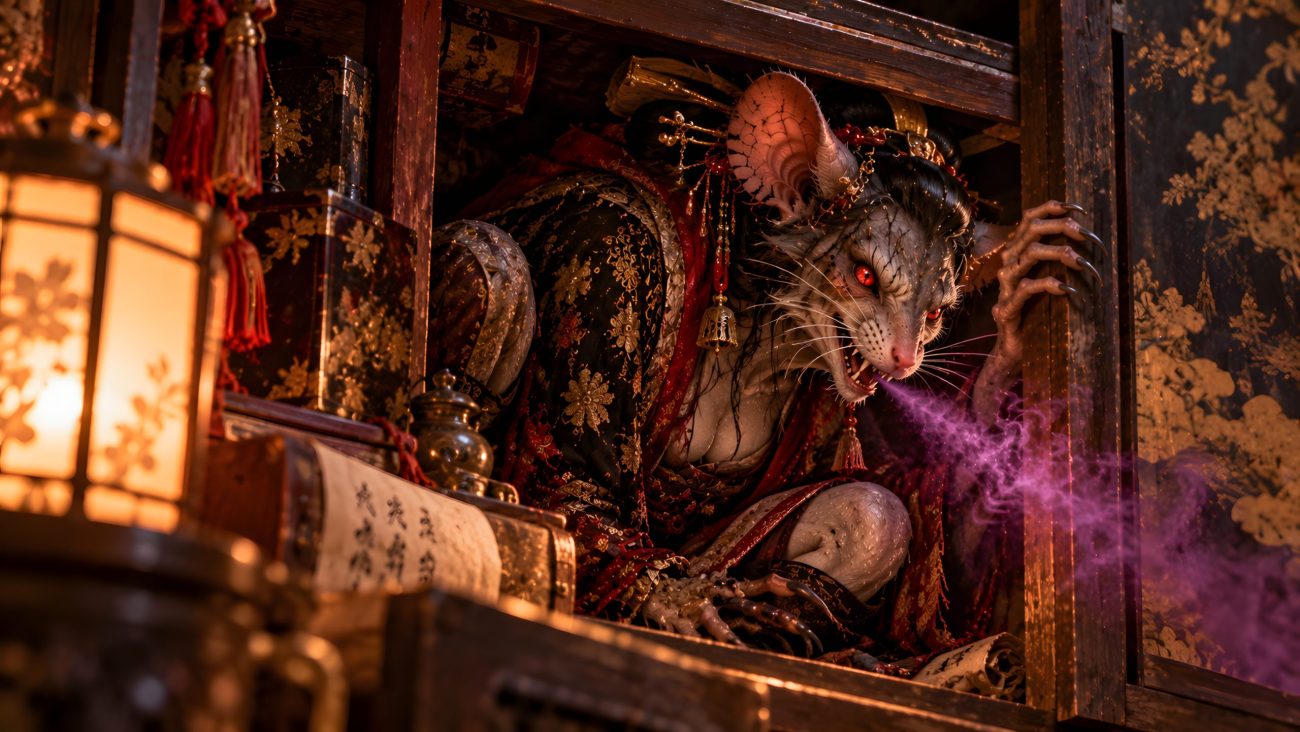
Nezumi Kijo is a yokai mentioned in the Japanese work Tōsei Kojitsuke Kaiō (当世故事附選怪興). It is said to leave unharmed those who carry a protective talisman used in religious rites, while those without one are threatened with a poisonous breath described as the intimidating menace of a gatekeeper.

The creature’s name is a play on nezumi-kido (鼠木戸), a narrow entrance gate used at theatres and other entertainment venues. These gates were designed to prevent people from entering without paying. Because visitors had to crouch and squeeze through them, they were likened to mice entering a hole.

Nezumi Kijo’s behaviour reflects the gatekeepers who guarded these entrances: paying visitors carrying their admission money were allowed inside, while those attempting to enter without paying were intimidated and turned away. The yokai appears to be a humorous personification of this practice rather than a creature described through an independent body of folklore.


Sources

“Nezumikijo.” 新版TYZ 妖怪図鑑 (New TYZ Yokai Encyclopedia). https://tyz-yokai.blog.jp/archives/1076912062.html