Tesso

Tradition: Japanese Mythology
Alternative Names: 鉄鼠, Iron Rat, Raigō Nezumi
Category: Rat


The Myth

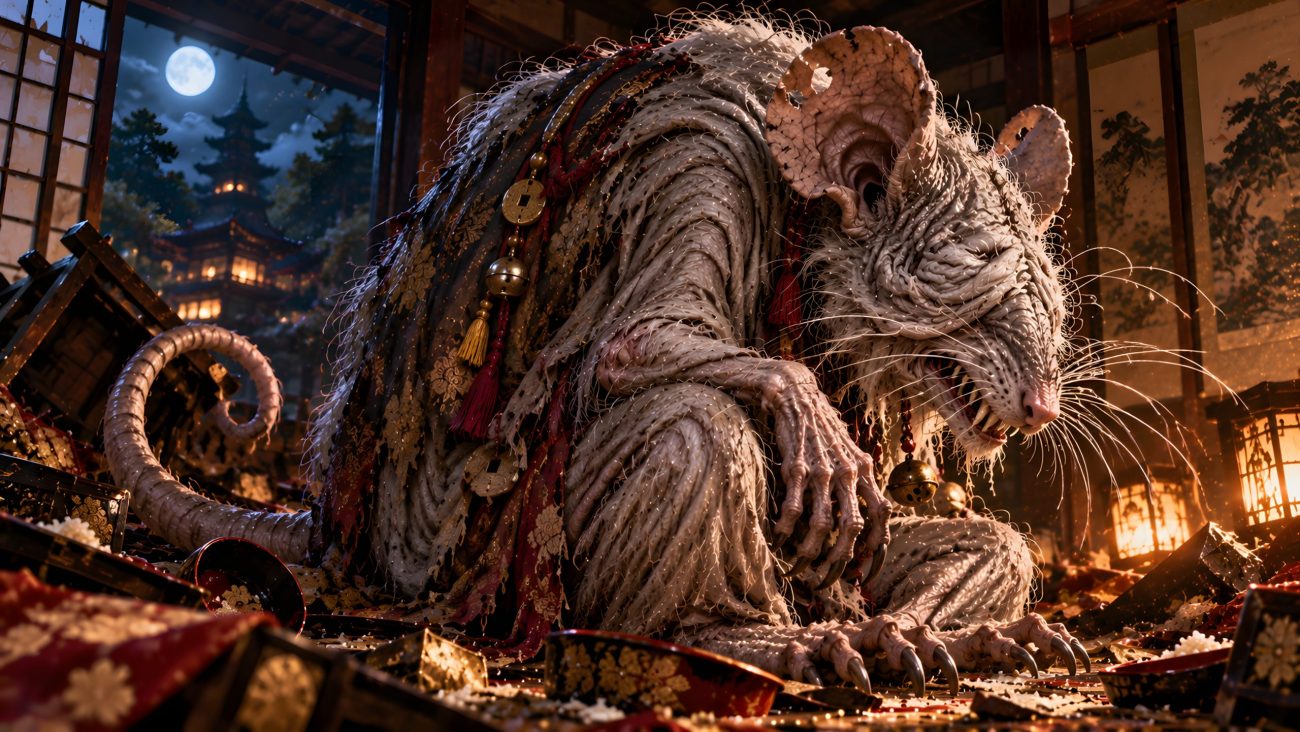
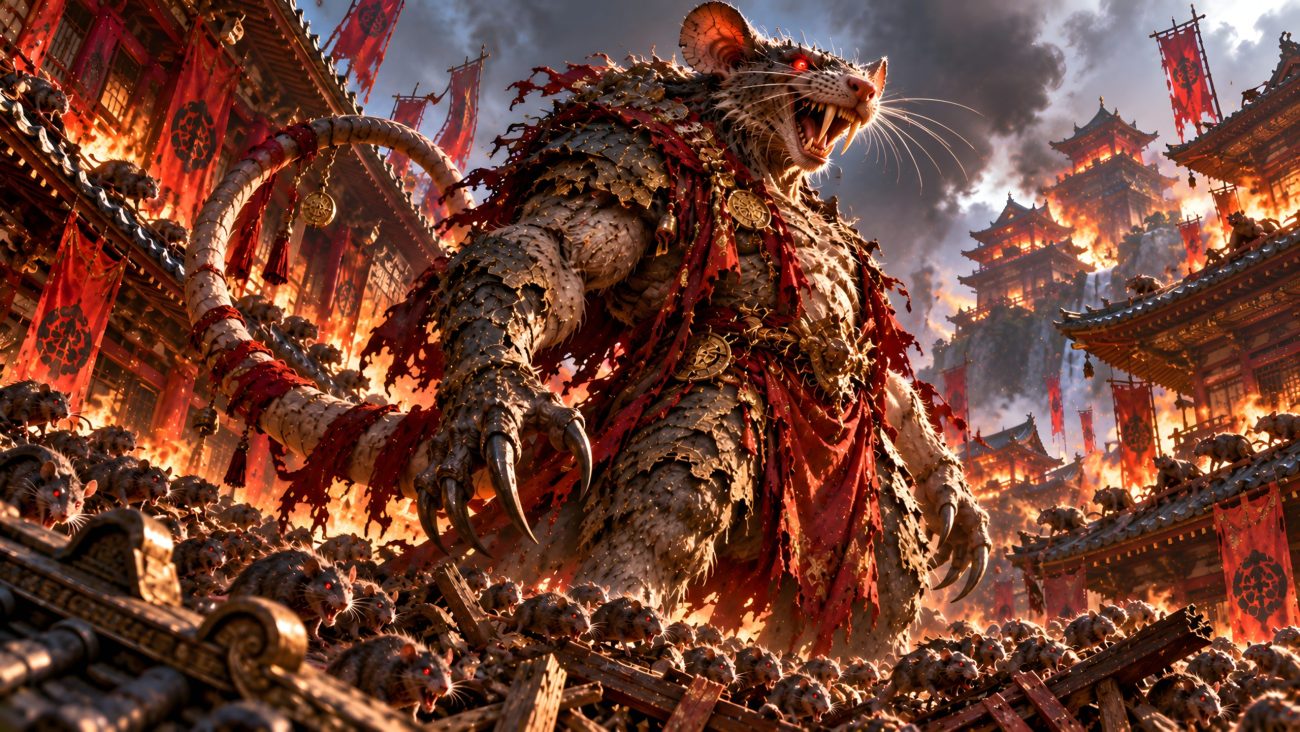
Tesso, meaning “Iron Rat,” is a monstrous supernatural rat born from the vengeful spirit of the Buddhist monk Raigō. During the reign of Emperor Shirakawa, Raigō served as abbot of Mii-dera in Shiga Prefecture. After praying for the birth of a royal heir, he was promised permission to build a new ordination hall at his monastery. However, the powerful rival temple Enryaku-ji pressured the Emperor into breaking his promise. In despair and anger, Raigō undertook a hunger strike and died after one hundred days.

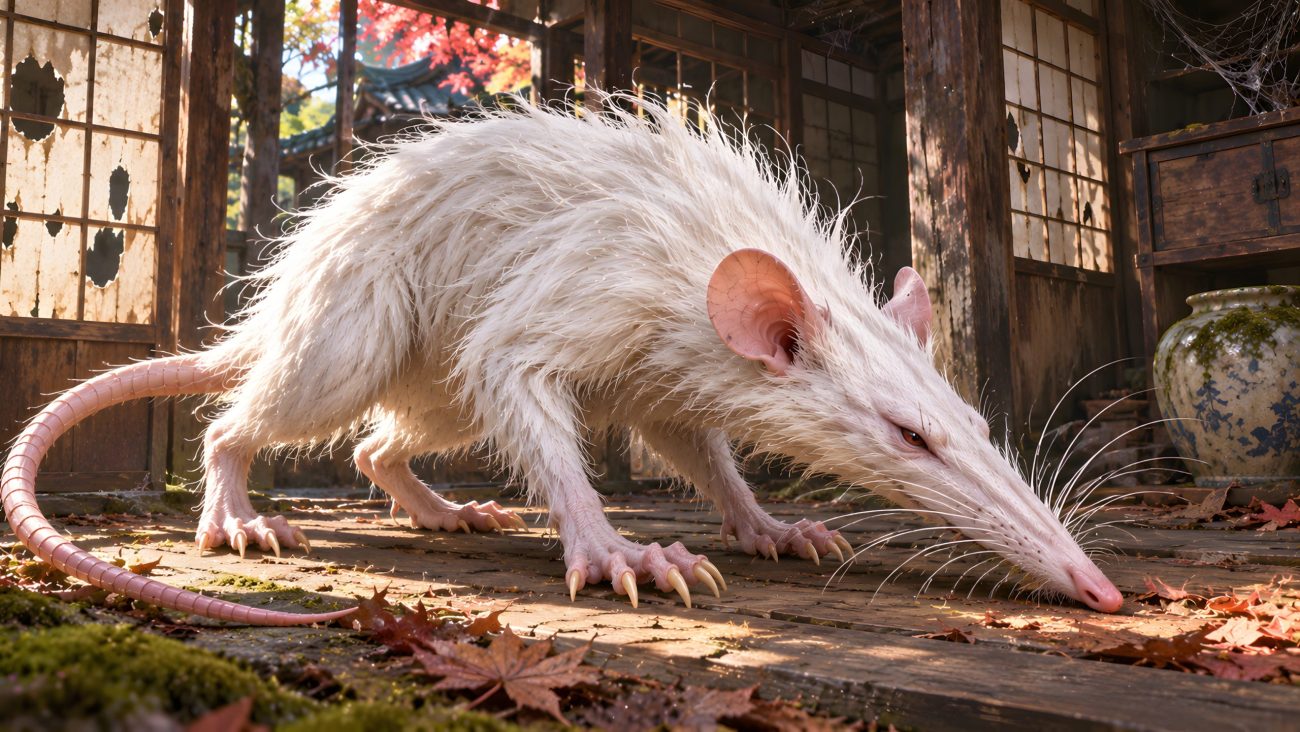
Consumed by resentment, Raigō became an onryō, a vengeful ghost. His spirit was said to have appeared near the young Prince Taruhito, who died soon afterward, leaving the Emperor without an heir. Raigō’s spirit then transformed into a gigantic rat with a body as hard as stone and teeth and claws as strong as iron.

Tesso summoned a vast army of rats and led them against Enryaku-ji on Mount Hiei. The creatures gnawed through the monastery’s buildings, destroyed its furnishings, and devoured sacred Buddhist texts, scrolls, and even statues of the Buddha. The devastation continued until a shrine was established to appease Raigō’s spirit. According to tradition, Raigō’s shrine faces north toward Mount Hiei and Enryaku-ji, the monastery at the centre of his legendary vengeance.


Sources

“Tesso.” Yokai.com. https://yokai.com/tesso/

Senso

Tradition: Chinese Mythology, Japanese Mythology
Alternative Names: 仙鼠, Celestial Rat, Immortal Mouse, Tensō, Hiso
Category: Rat


The Myth

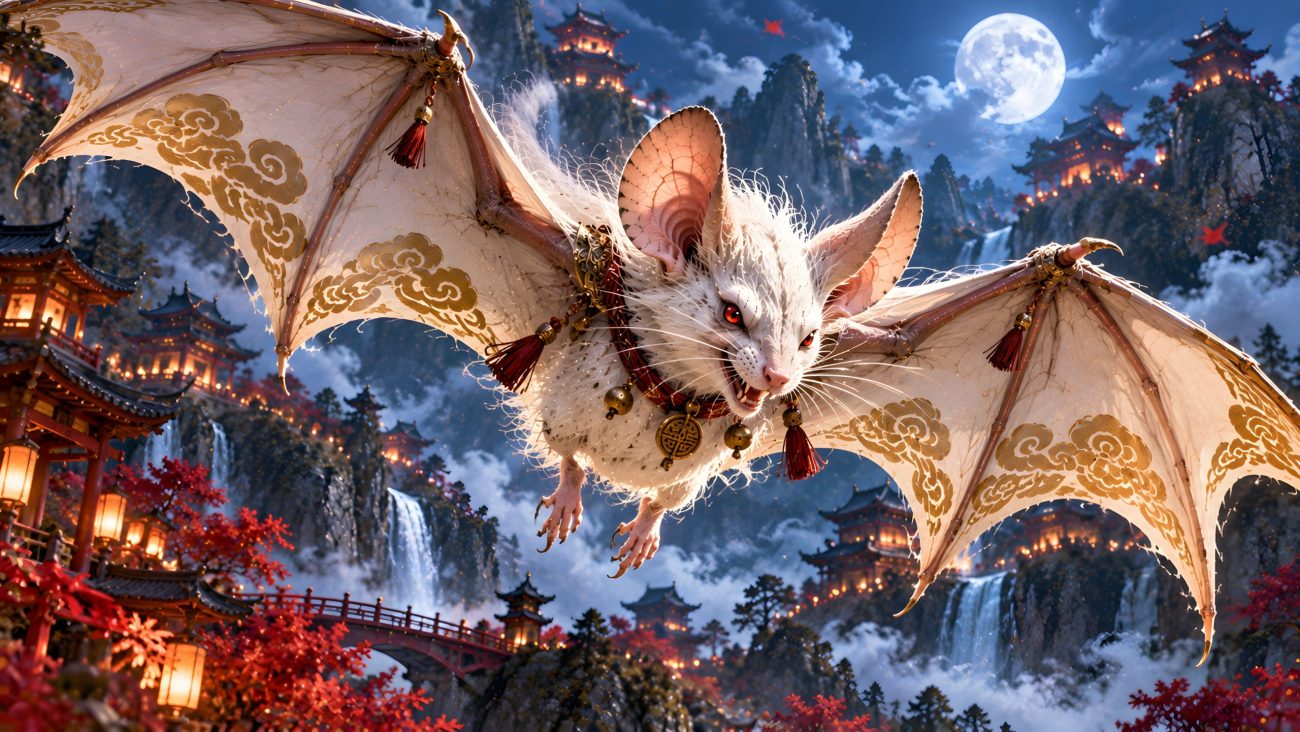
Senso, meaning “Immortal Rat,” is an old name for the bat, whose appearance resembles that of a mouse with wings. In traditional Chinese lore, bats were sometimes believed to originate from mice that had lived for an exceptionally long time. The Chinese text Xuanzhong Ji states that a mouse becomes a bat after reaching one hundred years of age.

The bat was also associated with longevity and immortality. According to the Xian Jing, it was known as the Senso and would turn silver-white after a thousand years. Ge Hong’s Baopuzi likewise describes thousand-year-old bats becoming as white as snow and associates them with substances used in the search for immortality.

These beliefs also appeared in poetry. The Tang poet Bai Juyi described a thousand-year-old mouse transforming into a white bat and hiding in a dark cave to escape danger. Another poem, quoted in the Japanese Jikkinshō, tells of a mouse that gains wings through immortality but is soon eaten by a crow or kite. The story warns against envying another’s fortune, suggesting that apparent advancement may still lead to danger.


Sources

“Senno.” 新版TYZ 妖怪図鑑 (New TYZ Yokai Encyclopedia). https://tyz-yokai.blog.jp/archives/1078433271.html


Nezumi Jōdo

Tradition: Japanese Mythology
Alternative Names: 鼠浄土, Nezumi no Jōdo, Mouse Paradise, Obusubi Kororin, Dango Kororin
Category: Rat


The Myth

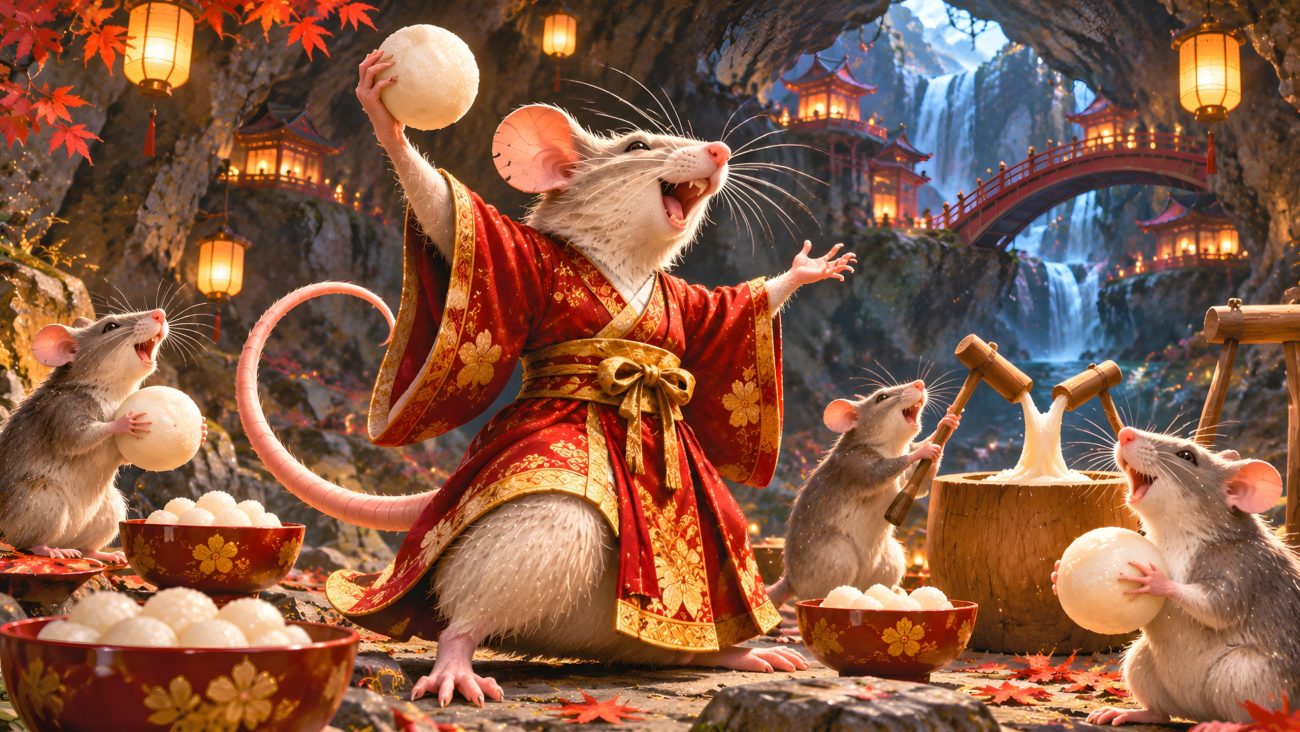
Nezumi Jōdo, meaning “Mouse Pure Land,” is a Japanese folktale in which an old man discovers a hidden underground paradise inhabited by mice. The story begins when his rice ball or dumpling rolls into a mouse hole while he is working in the mountains or fields. Following it underground, he discovers a wonderful world where mice sing, dance, and pound rice into mochi.

The mice welcome the old man because he has shared his food with them. In gratitude, they entertain him and send him home with rice cakes, food, gold, silver, and other treasures. His household becomes prosperous, making his envious neighbour determined to find the same riches. The greedy neighbour deliberately enters the mouse hole, hoping to obtain treasure for himself. However, he tries to frighten the mice by imitating a cat, causing them to turn against him. Depending on the version, he is bitten, suffers terrible misfortune, or even dies.

The tale is widely known in Japan, particularly through children’s stories titled Obusumi Kororin or Dango Kororin, named after the food that rolls into the mouse hole. It reflects the association of mice with prosperity and good fortune, partly through their connection with the deity Daikokuten. The underground mouse world also resembles the kakurezato, or hidden village: an isolated, peaceful place imagined as a land of abundance beyond ordinary human society.


Sources

“Nezumi Jōdo.” 新版TYZ 妖怪図鑑 (New TYZ Yokai Encyclopedia). https://tyz-yokai.blog.jp/archives/1077096659.html


Atama Kuro Nezumi

Tradition: Japanese Mythology
Alternative Names: 頭の黒い鼠, Black-Headed Rat, Human Rat
Category: Rat


The Myth

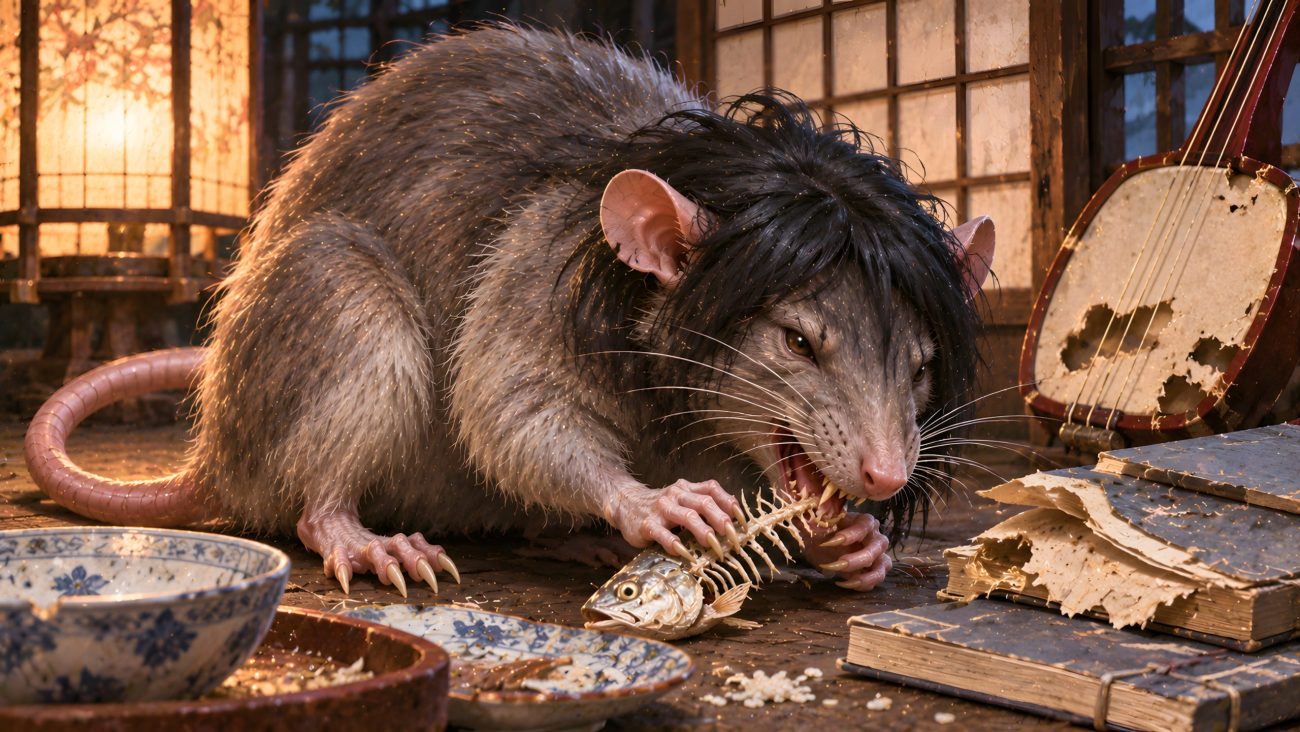
Atama Kuro Nezumi, meaning “Black-Headed Rat,” is a satirical figure in Japanese folklore and popular expression. The name originally refers to a human thief, particularly a servant or employee who secretly steals money and valuables from the household where they work. The phrase mocks people who behave like rats stealing from a home, while their black hair reveals that the culprit is actually human.

In Santō Kyōden’s illustrated work Bakemono Wakan Honzō, the Black-Headed Rat is depicted as a giant rat with black hair growing on its head, exhibited alongside other bizarre supernatural curiosities. It is also called Ashika. By day, it supposedly sleeps constantly, but at night it searches the dining table for food, gnawing on fish bones and other leftovers.

The creature is further accused of damaging books, chewing shamisen instruments, and generally making a nuisance of itself. These exaggerated animal behaviours satirize the habits of troublesome people who steal food, create disorder, sleep excessively, and make noise practising music. The Black-Headed Rat is therefore less a literal monster than a humorous portrayal of human misbehaviour.


Sources

“Ashika.” 新版TYZ 妖怪図鑑 (New TYZ Yokai Encyclopedia). https://tyz-yokai.blog.jp/archives/1076881525.html


Inugami Nezumi

Tradition: Japanese Mythology
Alternative Names: 犬神鼠, Dog God Rat
Category: Rat


The Myth

Inugami Nezumi, meaning “Dog God Rat,” is a supernatural creature associated with traditions of possession on Aijima in Abu District, Yamaguchi Prefecture, Japan. It is linked to the inugami, or dog spirit, which was believed to possess certain families and bring supernatural influence upon their households.

The creature is described as having a long snout resembling that of a twenty-day-old mouse. It is said to belong to a family or group of seventy-five animals. Similar numbers appear in Japanese folklore about possessing spirits, including dog gods and tube foxes, which were believed to travel in groups or multiply until they numbered seventy-five.

The Inugami Nezumi is therefore one example of the animal spirits associated with hereditary possession beliefs in Japanese folklore.


Sources

“Inugami Rat.” 新版TYZ 妖怪図鑑 (New TYZ Yokai Encyclopedia). https://tyz-yokai.blog.jp/archives/1076855304.html


Hinezumi

Tradition: Japanese Mythology
Alternative Names: 火鼠, Hinonezumi, Fire Rat, Fire Mouse
Category: Rat


The Myth

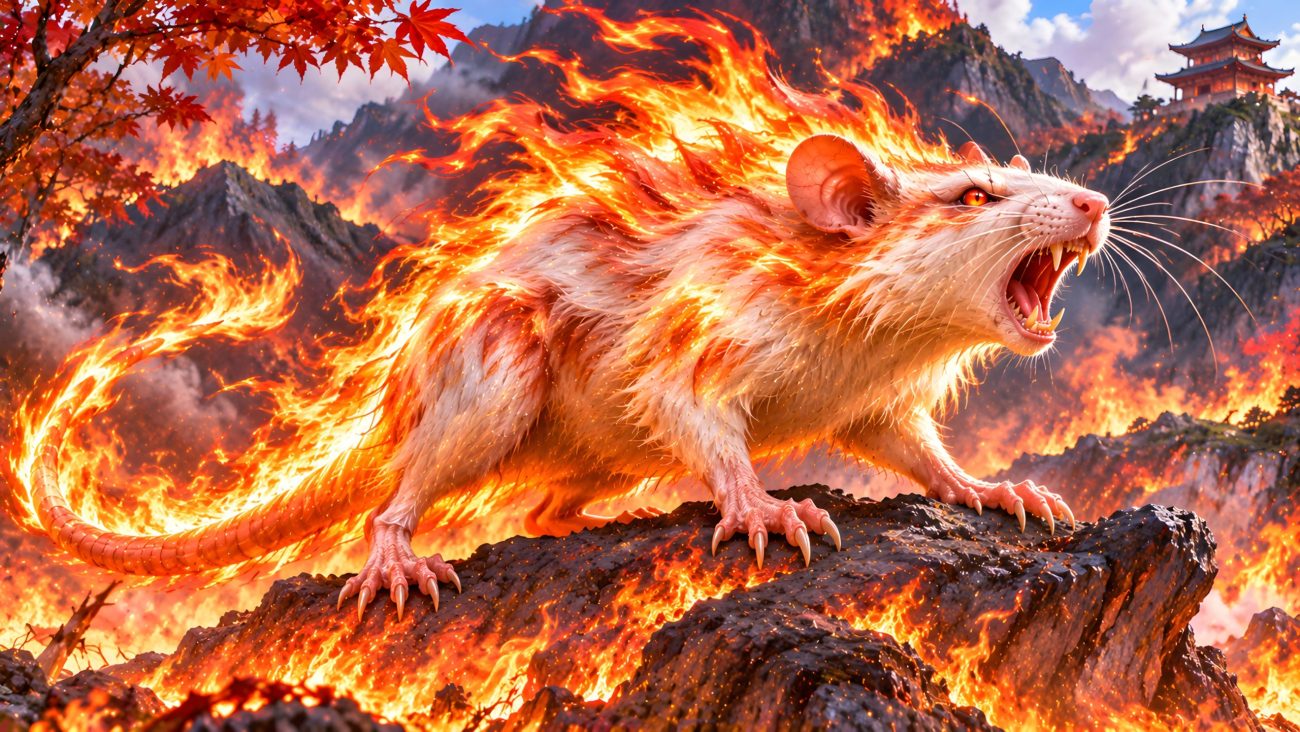
Hinezumi, meaning “Fire Rat,” is an imaginary creature said to live within flames. Its legend originated in China and was introduced to Japan in ancient times. The name appears in the Wamyō Ruijushō, a Japanese dictionary compiled during the Heian period.

According to accounts cited in the Wakan Sansai Zue, fire rats inhabit fiery regions of the western lands and southern seas. They are said to dwell in mountains where wildfires burn during spring and summer before disappearing in autumn and winter. The creature is described as a large beast whose fur can be woven into a special fire-resistant fabric called huǒhuàn bù. This cloth does not burn, and when it becomes dirty, placing it in a fire is said to restore its whiteness.

The fire rat is particularly famous in Japan through The Tale of the Bamboo Cutter. Princess Kaguya asks her suitors to obtain a coat made from the Fire Rat’s fur. Minister Abe no Miushi pays a great sum to acquire one from China, but when Kaguya tests it in a fire, the garment burns to ashes. His failure reveals that the coat is a fake, exposing the impossibility of obtaining the legendary treasure.


Sources

“Hinezumi.” 新版TYZ 妖怪図鑑 (New TYZ Yokai Encyclopedia). https://tyz-yokai.blog.jp/archives/1076766984.html


Aka Nezumi

Tradition: Japanese Mythology
Alternative Names: 赤鼠, Red Rat, Ōshū Red Rat, Island-Crossing Rat
Category: Rat


The Myth

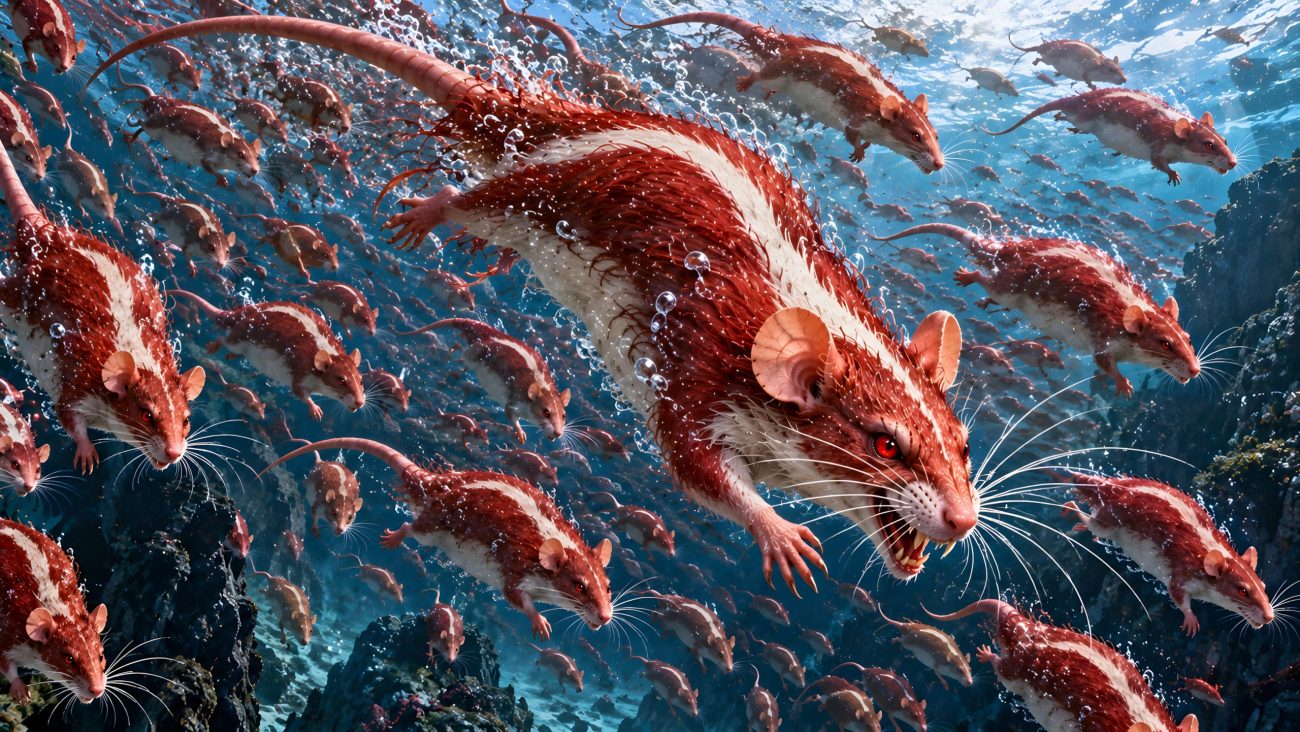
Aka Nezumi, meaning “Red Rat,” is associated with a legendary plague of rats recorded in the Japanese miscellany Ichwa Ichigen, written by Ōta Nanpo. According to the account, in around April 1679, fishermen off the coast of Tsugaru in Ōshū saw what appeared to be an enormous shoal of sardines approaching the shore. When they cast their nets, however, they discovered that they had caught countless rats instead. The creatures had white undersides, with red heads and red stripes along their backs.

The fishermen dragged the rats ashore and killed as many as they could, but the survivors fled inland, reportedly spreading as far as the territories of Nanbu and Satake. The rats devastated the countryside, destroying rice seedlings, eating bamboo roots and other vegetation, invading houses, and consuming stores of grain overnight. Some were later found dead in enormous heaps in the mountains, with hundreds of bodies piled together.

The same account mentions similar incidents elsewhere in Japan, including rats caught in fishing nets at Shinkai in Shimōsa, where sailors called them “island-crossing rats.” It also records a rat infestation in Mino Province in 1791 that damaged crops. These stories preserve the memory of destructive rodent invasions that were interpreted as extraordinary events.


Sources

“Akanezumi.” 新版TYZ 妖怪図鑑 (New TYZ Yokai Encyclopedia). https://tyz-yokai.blog.jp/archives/1077180876.html


Nezumi no Yōkai

Tradition: Japanese Mythology
Alternative Names: 鼠の妖怪, Rat Yokai, Mouse Demon
Category: Rat


The Myth

Nezumi no Yōkai, meaning “Rat Yokai,” is a supernatural tale recorded in the seventh volume of Inu Hariko. The story takes place during the Ōnin era (1467–1469), when a wealthy merchant named Tokuda lived near Shijō in Kyoto. Troubled by political unrest, he left the city and moved into an abandoned country residence near Kamo.

After Tokuda hosted a drinking party for his relatives, a mysterious procession arrived at the house during the night. A dignified man claimed to be its former owner and asked to borrow the residence for his son’s wedding. Hundreds of finely dressed guests, servants, warriors, and attendants entered, bringing lanterns, elaborate furnishings, and wedding gifts. They held a lavish feast, and Tokuda and his guests joined the celebrations.

Suddenly, a strong wind extinguished every light. When the lamps were relit, the entire wedding party had vanished. The house’s furniture, utensils, and valuable possessions had been gnawed and damaged, while an old hanging scroll depicting a cat sleeping beneath peonies remained untouched. A learned scholar named Murai Chōgen explained that the apparent wedding guests were actually old rats, which feared the image of their natural enemy. Following his advice, Tokuda discovered a large colony of aged rats beneath a stone embankment nearby and destroyed them. Afterward, the strange disturbances ceased.


Sources

“Nezumi-yokai.” 新版TYZ 妖怪図鑑 (New TYZ Yokai Encyclopedia). https://tyz-yokai.blog.jp/archives/1076939672.html


Fuku Nezumi

Tradition: Japanese Mythology
Alternative Names: 福鼠, Lucky Mouse, Fortune Mouse, Auspicious Rat
Category: Rat


The Myth

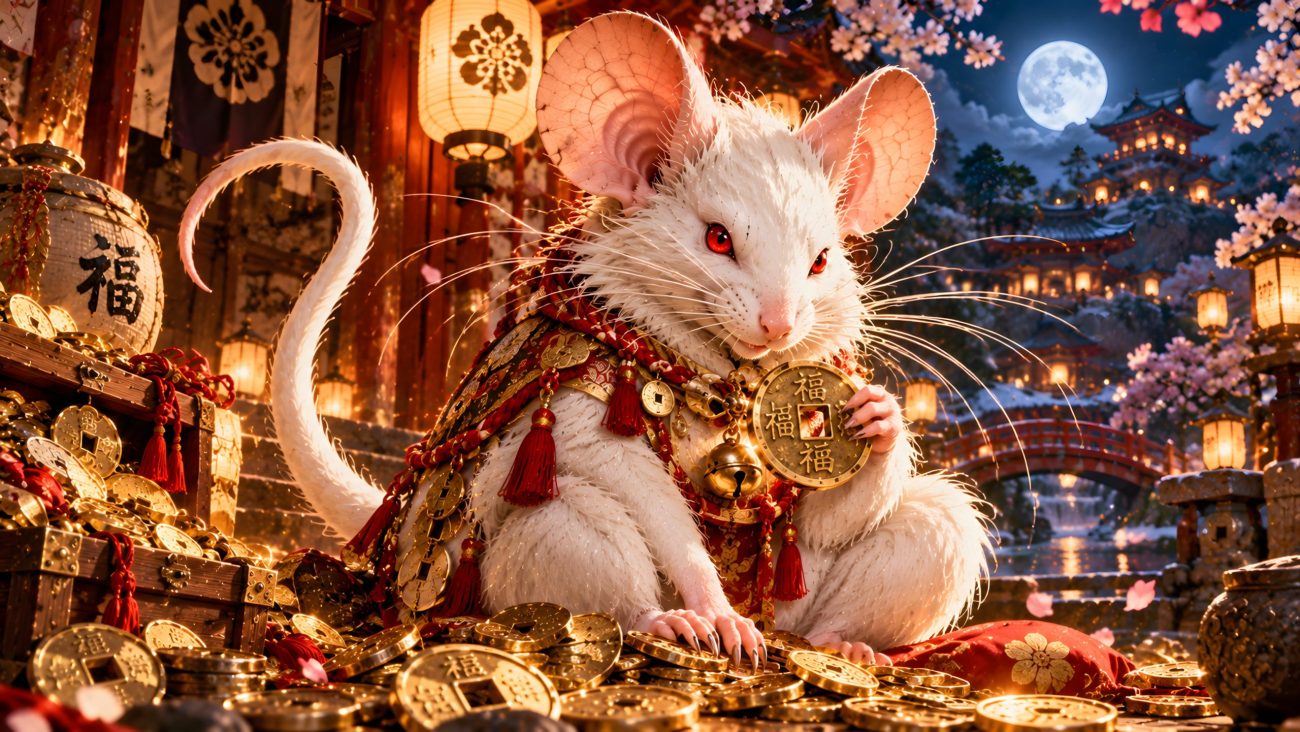
Fuku Nezumi, meaning “Fortune Mouse,” is an auspicious mouse in Japanese folklore. White mice were traditionally regarded as messengers of Daikokuten, a deity associated with wealth and prosperity, and were believed to bring good fortune to those who treated them well.

A folk tale from Yamaguchi Prefecture tells of a hardworking but impoverished old man who prayed for a better life on New Year’s Eve. In a dream, a divine messenger instructed him to clean his neglected home and drain. Following this advice, he discovered a black rat that followed him home and jumped onto his household altar. There, the old man found a white mouse sitting beside the New Year’s rice cakes. Afterward, good fortune came to him: the mouse massaged him at night and helped cultivate his fields. A greedy neighbour tried to take the mouse for himself, but his attempts to capture it only resulted in finding ordinary black rats covered in rice-cake flour. The true fortune mouse had already returned to the kind old man’s home.

Another account appears in Kii Chinjiroku, written by Kimuro Uun during the late eighteenth century. It tells of a man named Nishibayashi who built a small household altar around the New Year. Soon, mice began bringing coins to it each night, until the weight of the money threatened to break the wooden shelf. When he reinforced the altar, the mice stopped coming. The coins were later offered to temples and shrines, with the remainder kept as a personal treasure.


Sources

“Fukunezumi.” 新版TYZ 妖怪図鑑 (New TYZ Yokai Encyclopedia). https://tyz-yokai.blog.jp/archives/1010655157.html


Manzairaku

Tradition: Japanese Mythology
Alternative Names: 万歳楽, Manzai-raku
Category: Rat


The Myth

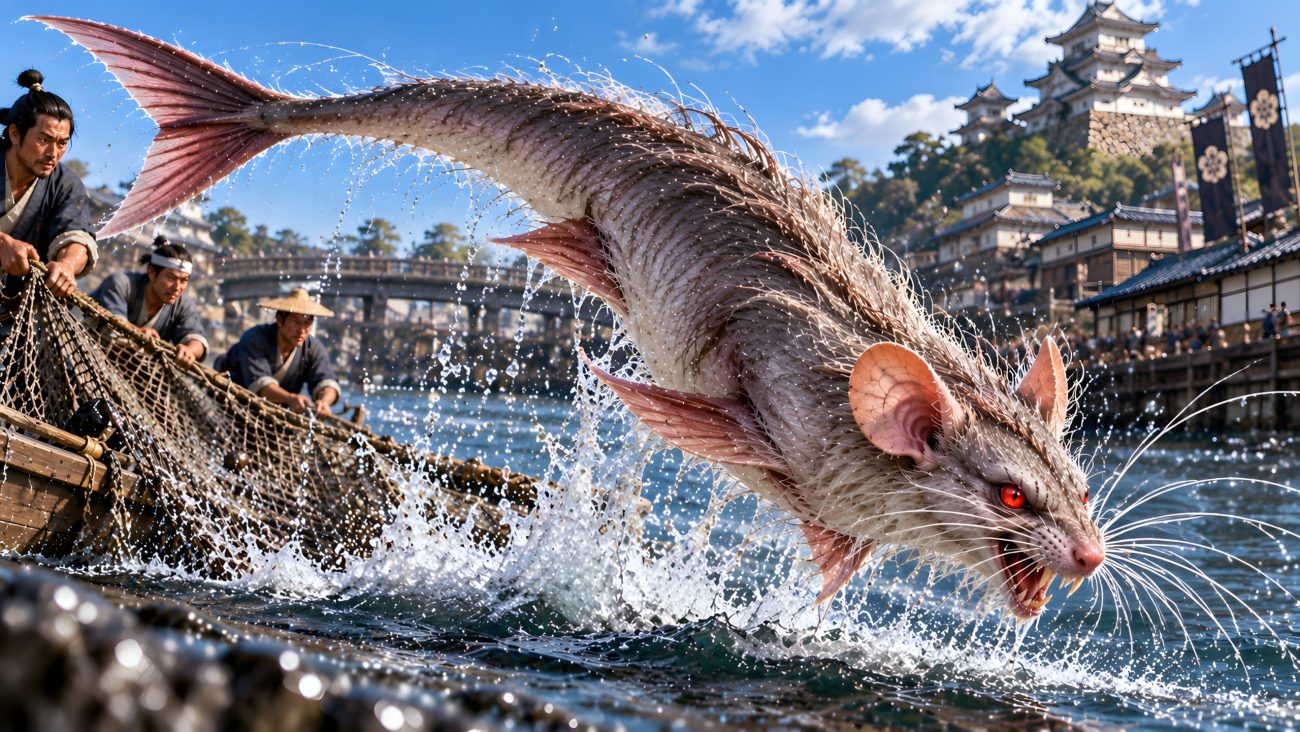
Manzairaku is a mysterious fish recorded in the Japanese work Getsudō Kenbunshū. In mid-March 1712, it was reportedly caught in a casting net in Fukagawa, Edo, now part of Tokyo. The creature measured approximately seven shaku in length and was grey like a mouse, with fur covering its body.

Its fur was said to be around seven sun long. It had a mouse-like head, red eyes, whiskers, and a forked tail resembling that of a swallow. After being caught, the fish passed from the fisherman to Takenaka Shuzan and was eventually presented to the shogun’s castle.

At the time, Konoe Motohiro, a retired imperial regent who was staying in Edo, gave the creature the auspicious name “Manzairaku,” associated with celebration and longevity.


Sources

“Manzairaku.” 新版TYZ 妖怪図鑑 (New TYZ Yokai Encyclopedia). https://tyz-yokai.blog.jp/archives/1010654457.html