Tradition: Japanese Mythology
Alternative Names: 頭の黒い鼠, Black-Headed Rat, Human Rat
Category: Rat
The Myth
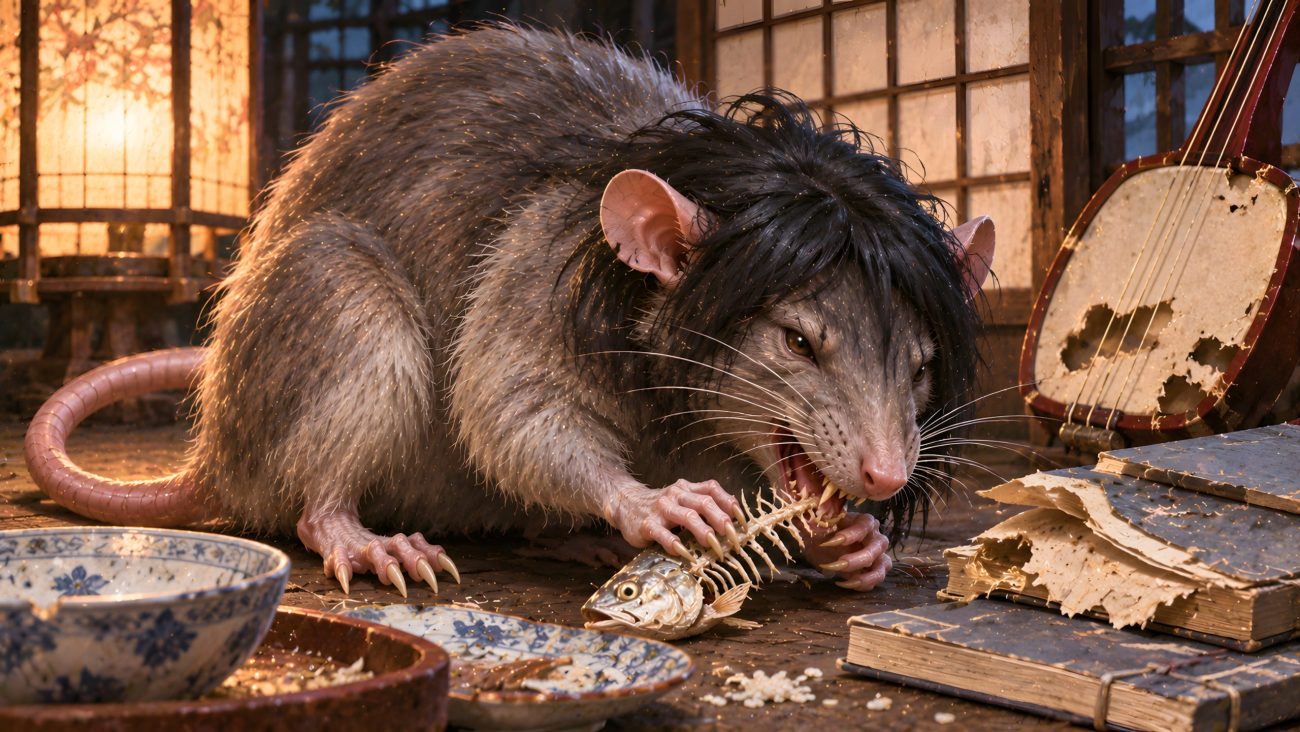
Atama Kuro Nezumi, meaning “Black-Headed Rat,” is a satirical figure in Japanese folklore and popular expression. The name originally refers to a human thief, particularly a servant or employee who secretly steals money and valuables from the household where they work. The phrase mocks people who behave like rats stealing from a home, while their black hair reveals that the culprit is actually human.
In Santō Kyōden’s illustrated work Bakemono Wakan Honzō, the Black-Headed Rat is depicted as a giant rat with black hair growing on its head, exhibited alongside other bizarre supernatural curiosities. It is also called Ashika. By day, it supposedly sleeps constantly, but at night it searches the dining table for food, gnawing on fish bones and other leftovers.
The creature is further accused of damaging books, chewing shamisen instruments, and generally making a nuisance of itself. These exaggerated animal behaviours satirize the habits of troublesome people who steal food, create disorder, sleep excessively, and make noise practising music. The Black-Headed Rat is therefore less a literal monster than a humorous portrayal of human misbehaviour.
Sources
“Ashika.” 新版TYZ 妖怪図鑑 (New TYZ Yokai Encyclopedia). https://tyz-yokai.blog.jp/archives/1076881525.html