Karyōbinga

Tradition / Region: Indian Mythology, Japanese Mythology
Alternative names: Kalavinka; Kalaviṅka; Karyōbinga
Category: Bird


The Myth

The Karyōbinga is a divine bird said to dwell in the Pure Land. It has the face of a human and the body of a bird, and its voice is so beautiful that it preaches the teachings of Buddhism through its song. In Buddhist art, it is sometimes shown playing a flute or another musical instrument as it sings.

The Karyōbinga is the Japanese form of the Sanskrit Kalaviṅka, a heavenly bird renowned for its incomparable voice. It is frequently depicted in temples and on Buddhist ornaments, often appearing beside the halo of Amida Buddha. The bird is also celebrated in gagaku, Japan’s classical court music, where the dance Karyōbinga portrays the celestial bird descending from the heavens to perform its graceful dance.


Sources

TYZ. (2009, July 26). 迦陵頻伽 (Karyōbinga / Kalyobinga). In 新版TYZ 妖怪図鑑. Retrieved June 29, 2026, from https://tyz-yokai.blog.jp/archives/1010655151.html
Pentachikoro Oyashi

Tradition / Region: Japanese Mythology
Alternative names: Pentachi-koro-oyashi; Ghost that Carries a Torch
Category: Bird


The Myth

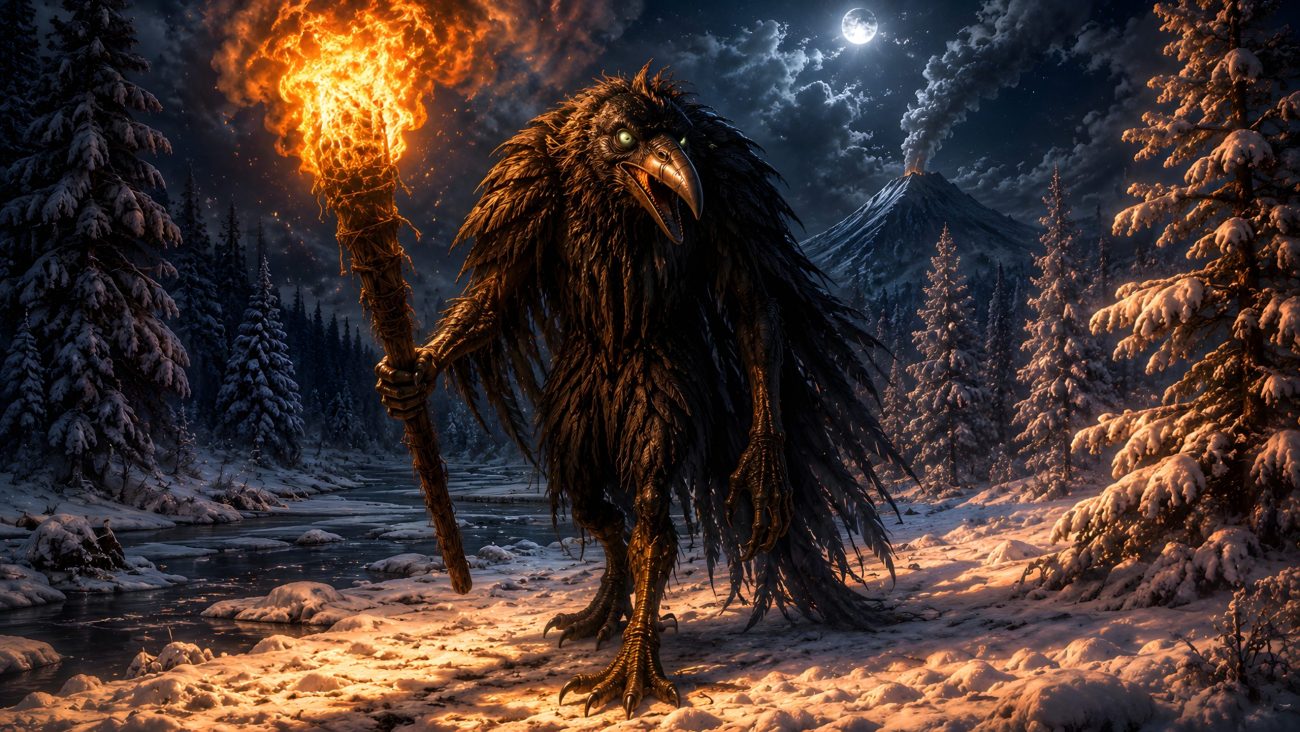
The Pentachikoro Oyashi is a supernatural being from the traditions of the Sakhalin Ainu. Its name means “Ghost that Carries a Torch,” and it is said to wander the night holding a blazing torch that frightens travelers.

One night, the chief of Toyukushi was traveling to the settlement of Kotankeshi when the torch-bearing apparition followed him. The light of its torch reflected across the snow, making the dark road as bright as day. Terrified, the chief reached Kotankeshi and reported that a monster had pursued him.

The brave chief of Kotankeshi set out with his sword to confront the creature. Before long, the mysterious torchlight appeared behind him, and the Pentachikoro Oyashi drew near. As it reached out to touch him, the chief thrust his sword into it. The creature writhed in agony before collapsing, while the chief himself fainted from the encounter. When others returned the following morning, they discovered that the slain monster was in fact a giant raven. The Pentachikoro Oyashi was said to be an evil raven that had disguised itself as a torch-bearing ghost.


Sources

TYZ. (2009, July 26). ペンタチコロオヤシ (Pentachikoro Oyashi). In 新版TYZ 妖怪図鑑. Retrieved June 29, 2026, from https://tyz-yokai.blog.jp/archives/1010654297.html


Tsuru-bakemono

Tradition / Region: Japanese Mythology
Alternative names: Crane Monster; Tsuru-bakemono
Category: Bird


The Myth

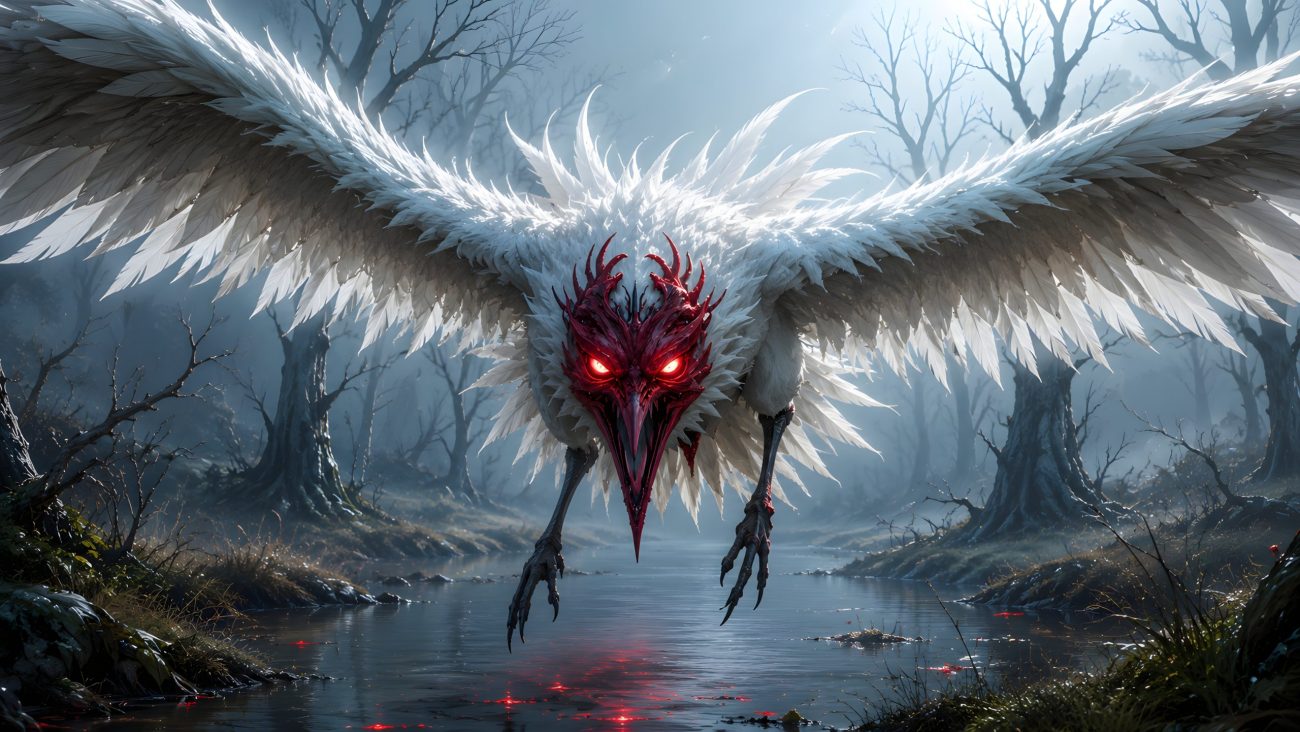
The Tsuru-bakemono is a yokai said to appear in the wetlands between Sanjo Town and Gomyō in present-day Niigata Prefecture. Travelers passing through the marshes at night may suddenly see a white, crane-like figure floating before their eyes.

Little else is recorded about the creature. It is simply described as a mysterious white apparition resembling a crane that haunts the marshes after dark, appearing unexpectedly before nighttime travelers.


Sources

TYZ. (2009, July 26). 鶴化け物 (Tsuru-bakemono). In 新版TYZ 妖怪図鑑. Retrieved June 29, 2026, from https://tyz-yokai.blog.jp/archives/1010653550.html


Kogarasu

Tradition / Region: Japanese Mythology
Alternative names: Old Crow
Category: Bird


The Myth

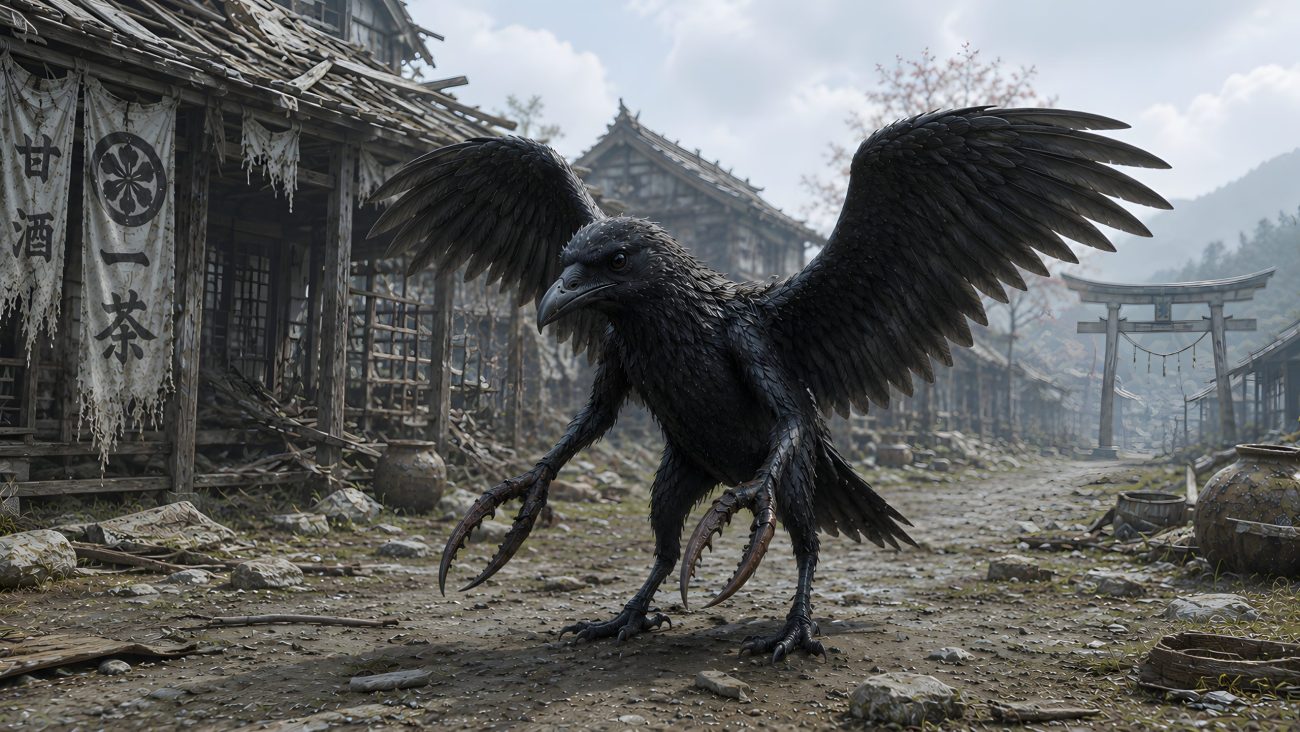
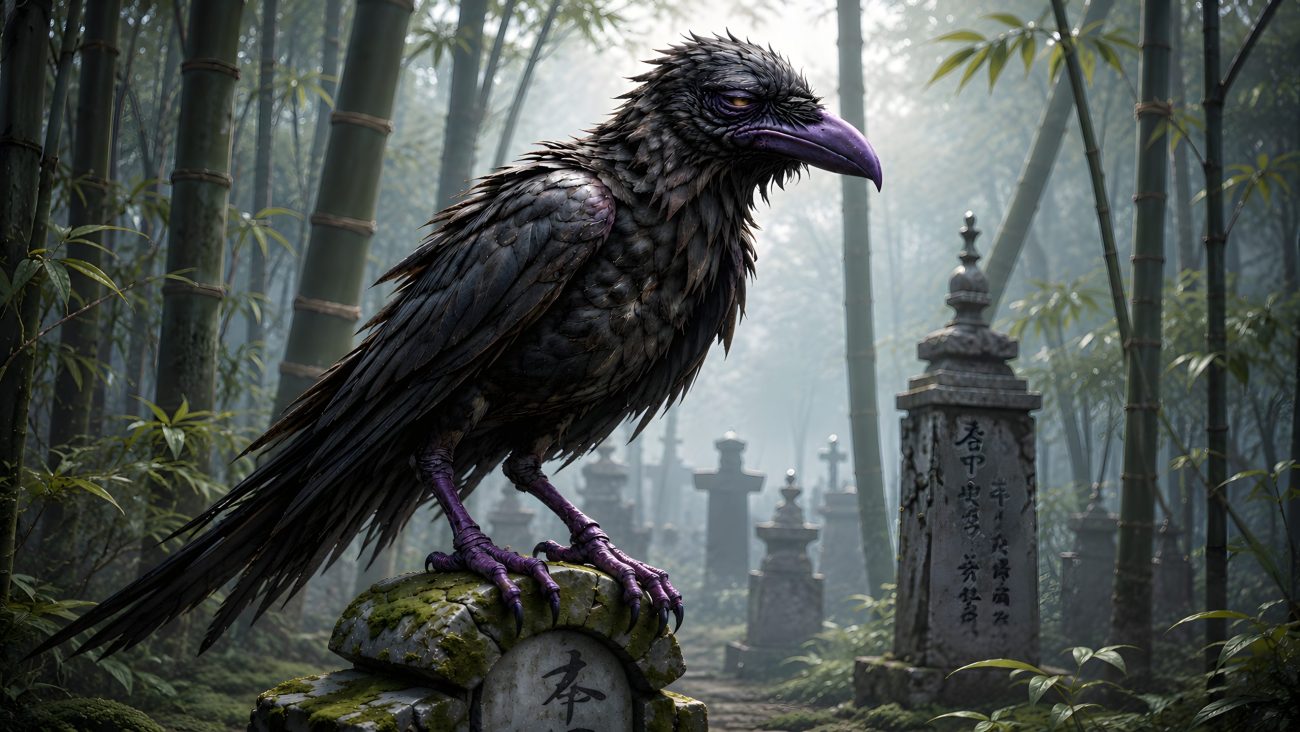
The Kogarasu (“Old Crow”) is a crow yokai from the Tosa Obake Zōshi (Tosa Ghost Scroll). According to the legend, it is an ordinary crow that has lived for a thousand years before transforming into a fearsome supernatural creature.

Unlike common crows, the Kogarasu remembers those who mistreated it during its lifetime. After gaining its yokai form, it takes revenge upon its former tormentors by digging up their graves after death and feeding upon their corpses. In this way, the creature punishes cruelty long after its victims have passed away.

The Kogarasu is portrayed as a grim embodiment of vengeance, demonstrating that even the smallest acts of malice toward living creatures may one day return to haunt those responsible. It remains one of the many strange yokai recorded in the Tosa Obake Zōshi, where ordinary animals become supernatural beings after surviving for an extraordinary length of time.


Sources

TYZ. (2009, July 26). 古烏 (Kogarasu). In 新版TYZ 妖怪図鑑. Retrieved June 29, 2026, from https://tyz-yokai.blog.jp/archives/1010652618.html


Inmō Oni

Tradition / Region: Japanese Mythology
Alternative names: Possibly Immora Oni
Category: Bird


The Myth

The Inmō Oni is a bird-like yōkai said to inhabit abandoned and neglected temples.

According to the legend, there was once a ruined temple in the castle town of Ina Takatō. Its former head priest, Mugai, had trained at the head temple in Kyoto, but he suddenly lost his sanity. He stopped chanting sutras, wandered aimlessly, and the temple gradually fell into decay.

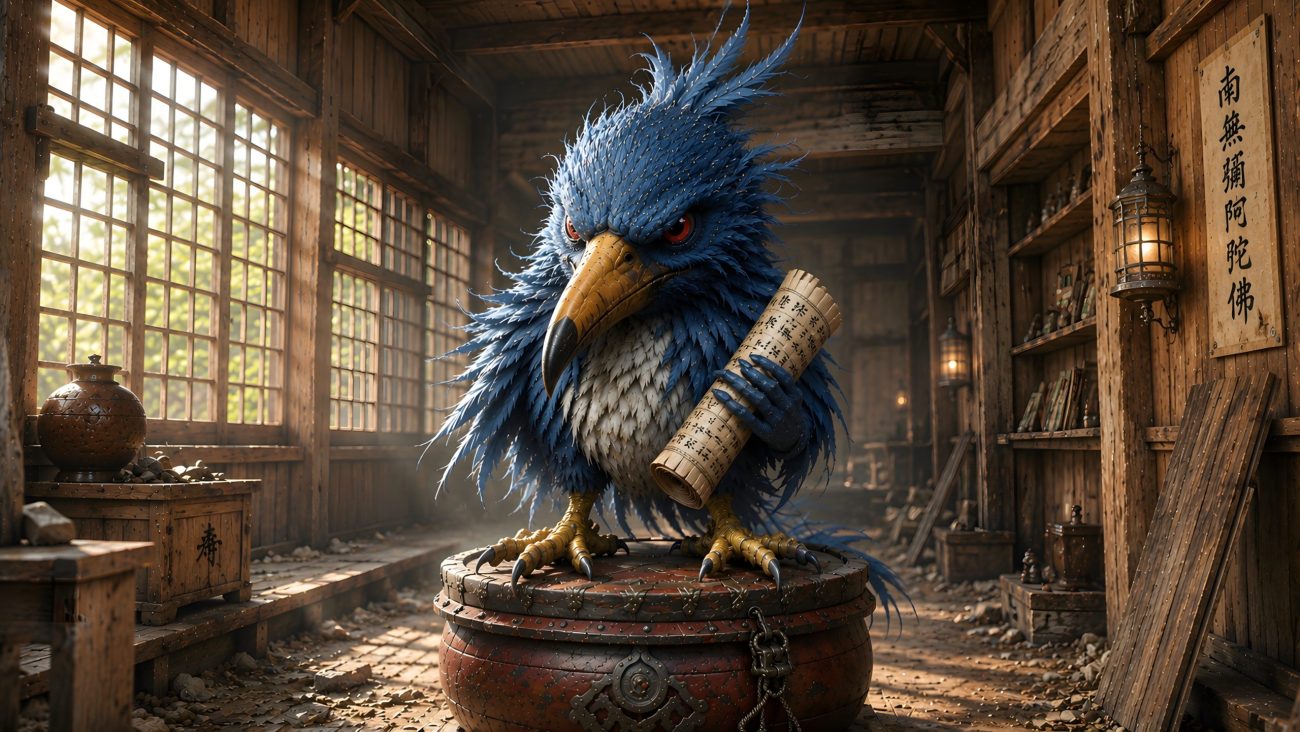
When an official from the Takatō domain inspected the abandoned temple, he found a strange blue bird, about the size of a chicken, perched upon a wooden fish drum. The creature had long ornamental feathers growing from its head and held a Buddhist sutra in its beak. As soon as it noticed the visitor, it spread its wings and flew wildly around the temple hall.

The mysterious bird was identified as the Inmō Oni, a yōkai said to dwell within ruined temples. Of the priest Mugai, however, there was no trace, leaving only the strange bird as the temple’s silent inhabitant.


Sources

TYZ. (n.d.). 陰毛鬼 (Inmō Oni). In 新版TYZ 妖怪図鑑. Retrieved June 29, 2026, from https://tyz-yokai.blog.jp/archives/1072742115.html


Gumyōchō

Tradition / Region: Japanese Mythology
Alternative names: Meimyōchō, Seiseichō, Jivajivaka
Category: Bird


The Myth

The Gumyōchō, or Joint Life Bird, is a sacred bird described in the Amitabha Sutra as one of the six wondrous birds that dwell in the Pure Land. It has one body with two heads, and in some traditions it is also portrayed with a human face and the body of a bird. Its beautiful song proclaims the teachings of the Buddha, inspiring all who hear it to contemplate the Three Jewels: the Buddha, the Dharma, and the Sangha.

Another famous legend tells of the bird’s tragic fate.

Long ago, on a snowy mountain, there lived a Joint Life Bird whose two heads were named Karuda and Upakaruda. Although they shared a single body, each head had its own thoughts and emotions. When one remained awake, the other slept.

One day, while Upakaruda slept, Karuda found a beautiful Mathuka fruit and ate it without sharing. When Upakaruda awoke and realized what had happened, he became consumed by jealousy and resentment.

Later, Upakaruda discovered a poisonous fruit. Knowing it would kill them both, he deliberately ate it to take revenge on Karuda. The poison spread through their shared body, and both heads perished together.

The Buddha explained that this story reflected events from a previous life. Karuda was later reborn as Siddhartha Gautama, while Upakaruda was reborn as Devadatta, the Buddha’s jealous cousin and rival. Because they had once shared the same body, Devadatta’s hatred followed him into his next life, leading him to repeatedly oppose and seek to harm the Buddha.


Sources

TYZ. (n.d.). 共命鳥 (Gumyōchō). In 新版TYZ 妖怪図鑑. Retrieved June 29, 2026, from https://tyz-yokai.blog.jp/archives/1064714812.html


Onmoraki

Tradition / Region: Japanese Mythology
Alternative names:
Category: Bird


The Myth

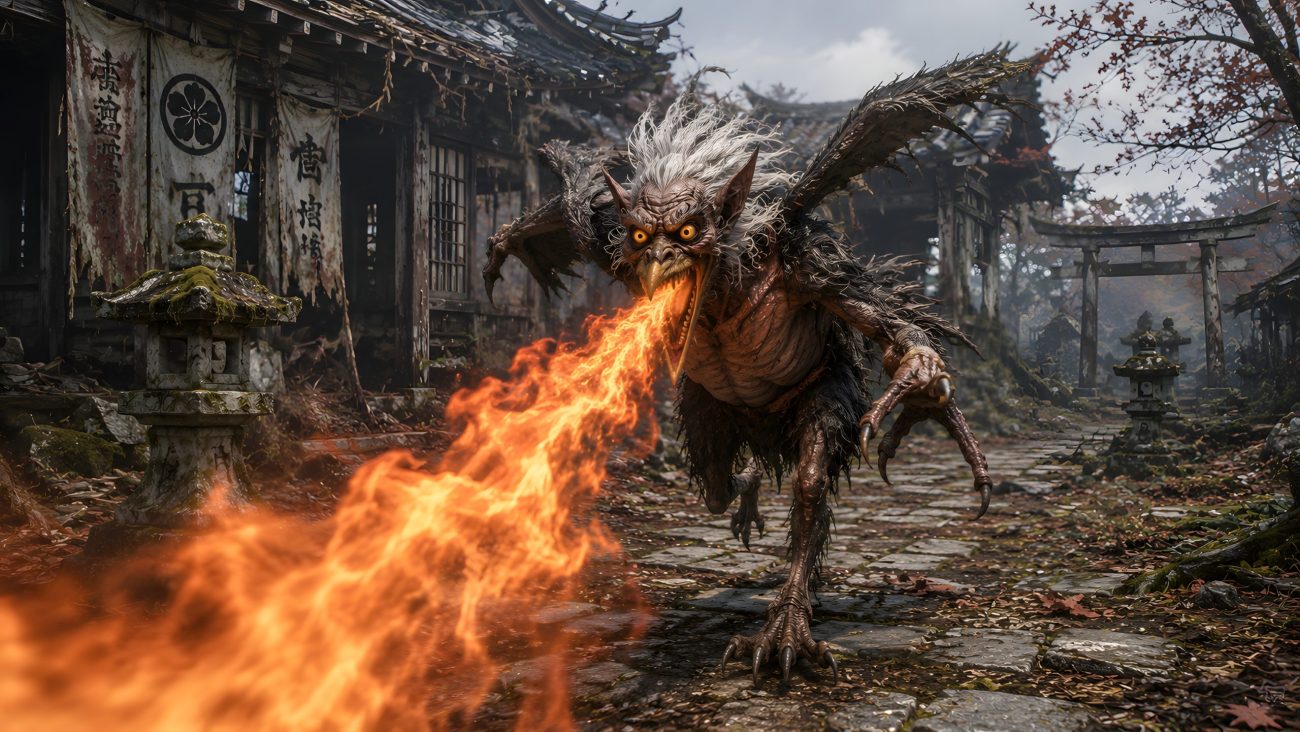
The Onmoraki is a grotesque bird-like yōkai born from the bodies of the recently deceased when they are not given sufficient memorial prayers. Unable to find peace, the lingering life force transforms into this demonic creature.

It appears as a large black bird covered in dark feathers, with a ghastly human face and brilliant eyes that glow like lanterns. It is also an excellent mimic, capable of perfectly imitating human voices while letting out shrill, terrifying cries.

Onmoraki haunt temples, especially those where priests have neglected their religious duties. They creep up to sleeping priests and, using the priest’s own voice, scold them for their failures. When the startled priest awakens and flees in terror, the Onmoraki disappears into the darkness, leaving only its eerie cries behind.

The creature serves as a supernatural reminder that the dead must be properly honored, for neglected memorial rites can give rise to demons instead of allowing the departed soul to find peace.


Sources

Meyer, M. (n.d.). Onmoraki. Yokai.com: The Illustrated Database of Japanese Folklore. Retrieved June 29, 2026, from https://yokai.com/onmoraki/.


Kamikiri

Tradition / Region: Japanese Mythology
Alternative names: Hair-Cutting
Category: Bird


The Myth

The Kamikiri is a mysterious yōkai blamed for the unexplained cutting of a person’s hair without them noticing. Victims would suddenly discover that part of their hair had been neatly cut away, even though no one had been seen approaching them.

Different traditions attributed these incidents to invisible hair-cutting insects, foxes, badgers, or the Kamikiri itself. In yōkai picture scrolls such as the Hyakkai Zukan, the Kamikiri is depicted as a tengu-like creature with enormous scissors in place of its hands, using them to silently snip the hair of unsuspecting people.

The Kamikiri later inspired the related yōkai known as the Amikiri (“Net-Cutter”), which first appeared in later illustrated collections of Japanese monsters.


Sources

TYZ. (n.d.). 神木 (Kamiki). In 新版TYZ 妖怪図鑑. Retrieved June 29, 2026, from https://tyz-yokai.blog.jp/archives/1010653484.html


Aosagibi

Tradition / Region: Japanese Mythology
Alternative names: Goi no Hikari (“Night Heron Light”)
Category: Bird


The Myth

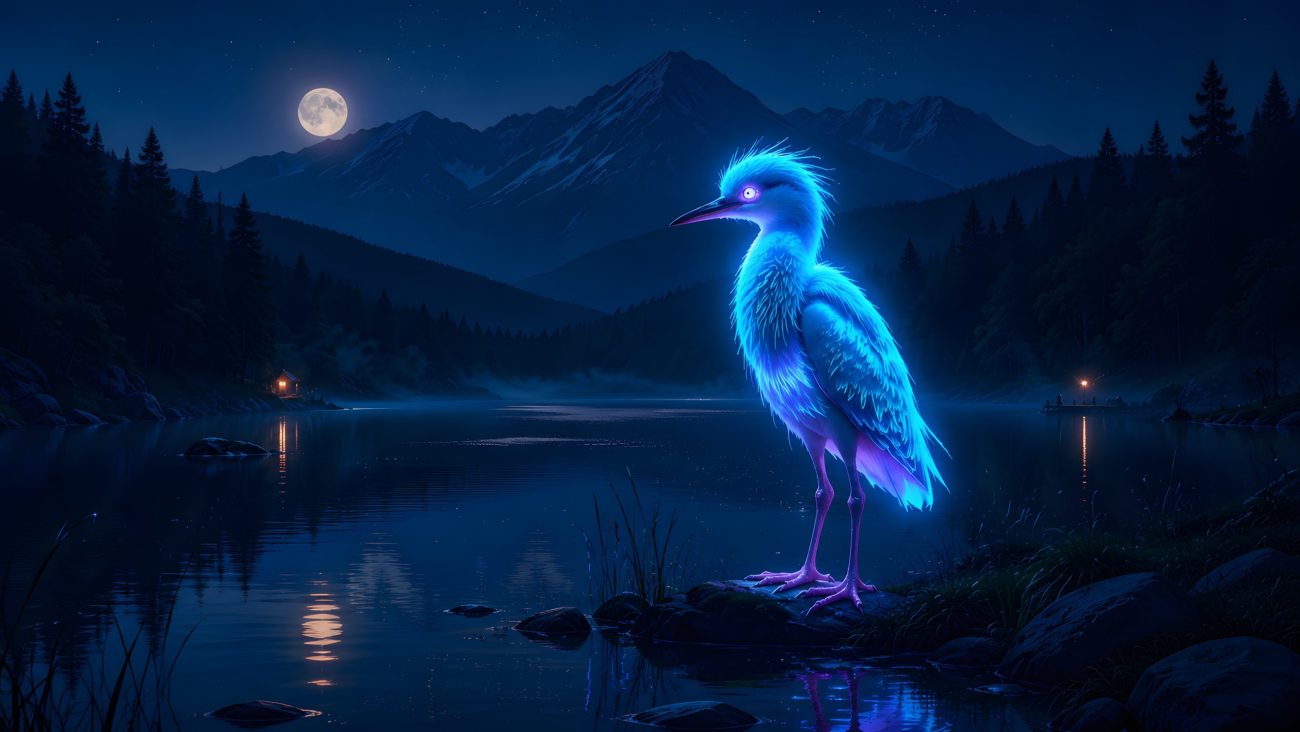
The Aosagibi is a mysterious yōkai created when an old heron—most commonly a black-crowned night heron—lives long enough to gain supernatural powers. These transformed birds appear around rivers, marshes, and reed-filled wetlands, especially on cool autumn nights.

As the heron ages, shining scales form upon its breast. With every breath, it exhales a fine yellow powder that drifts through the air. At night, its body glows with a bluish-white radiance, and the powder bursts into floating blue fireballs that drift over rivers, through the trees, or across the night sky.

Although these ghostly flames appear supernatural, they produce no heat and burn nothing they touch. Eventually, they fade away into the wind.

Despite their eerie appearance, Aosagibi are harmless. Like ordinary herons, they remain shy and avoid people, silently disappearing into the darkness when disturbed. Their glowing blue flames are often mistaken for other supernatural lights, but they are simply the strange manifestation of an ancient magical bird.


Sources

Yokai.com. (n.d.). Aosagibi. In Yokai.com: The Illustrated Database of Japanese Folklore. Retrieved June 29, 2026, from https://yokai.com/aosagibi/


Ubume

Tradition / Region: Japanese Mythology
Alternative names: Ubume, Ubugame, Guhuo Bird (姑獲鳥)
Category: Ghost, Bird


The Myth

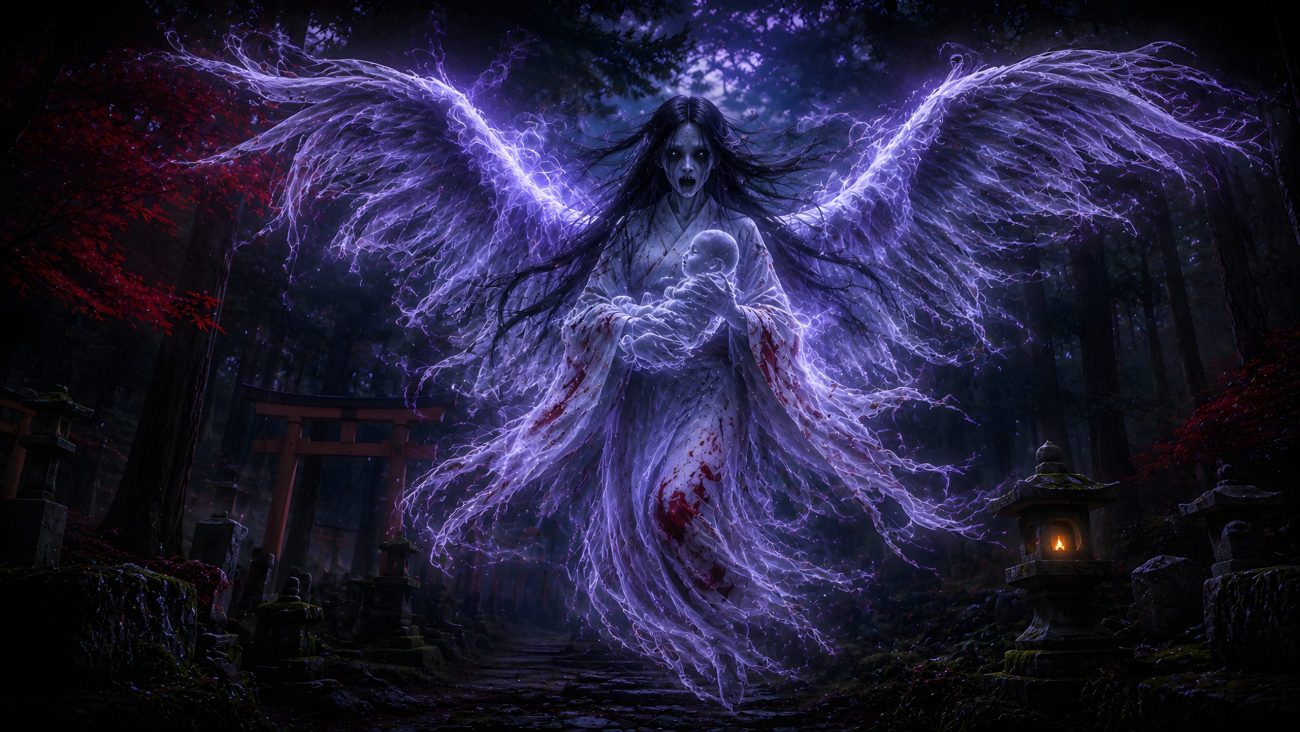
The Ubume is the restless spirit of a woman who died during childbirth. She appears at night along lonely roads, bridges, and riverbanks, carrying an infant in her arms. Dressed in blood-stained clothing, she weeps and asks passersby to hold her child for a moment while she fixes her hair or prays for salvation.

Anyone who accepts the baby soon discovers that it grows heavier and heavier. In some tales, the child eventually transforms into a stone or a bundle wrapped around a straw hammer. Other stories say that a person who fulfills the Ubume’s request and faithfully carries the child receives extraordinary physical strength as a reward. In Akita Prefecture, this supernatural power was known as Obōjikara.

The Ubume is one of Japan’s oldest ghostly beings and was already known during the time when the Konjaku Monogatari-shū was compiled. During the Edo period, it became closely associated with the Chinese Gu Huo Bird, since both were believed to originate from women who had died while pregnant or giving birth. Because of this connection, the two creatures gradually became confused with one another.

Most depictions portray the Ubume as a sorrowful woman holding a baby while wearing blood-soaked garments. Some illustrations, however, give her bird-like features, with wing-shaped arms wrapped protectively around the child.

Though feared, the Ubume is not considered a malicious spirit. She is remembered as a tragic mother unable to abandon her child, forever wandering the night and seeking someone willing to carry the burden she herself could no longer bear.


Sources

TYZ. (n.d.). Ubume [産女]. In 新版TYZ 妖怪図鑑. Retrieved June 20, 2026, from https://tyz-yokai.blog.jp/archives/1010652594.html