Tsuru-bakemono

Tradition / Region: Japanese Mythology
Alternative names: Crane Monster; Tsuru-bakemono
Category: Bird


The Myth

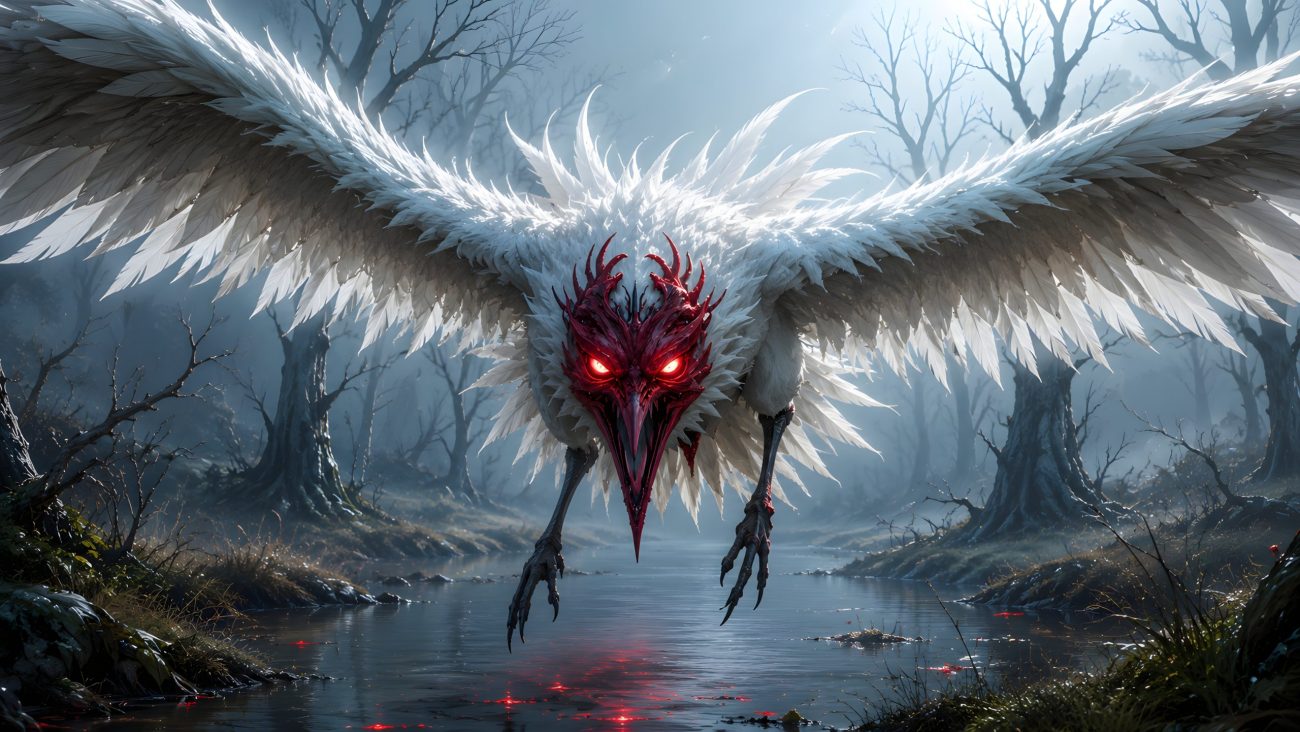
The Tsuru-bakemono is a yokai said to appear in the wetlands between Sanjo Town and Gomyō in present-day Niigata Prefecture. Travelers passing through the marshes at night may suddenly see a white, crane-like figure floating before their eyes.

Little else is recorded about the creature. It is simply described as a mysterious white apparition resembling a crane that haunts the marshes after dark, appearing unexpectedly before nighttime travelers.


Sources

TYZ. (2009, July 26). 鶴化け物 (Tsuru-bakemono). In 新版TYZ 妖怪図鑑. Retrieved June 29, 2026, from https://tyz-yokai.blog.jp/archives/1010653550.html


Bifang

Tradition / Region: Chinese Mythology
Alternative names: Bi Fang
Category: Bird


The Myth

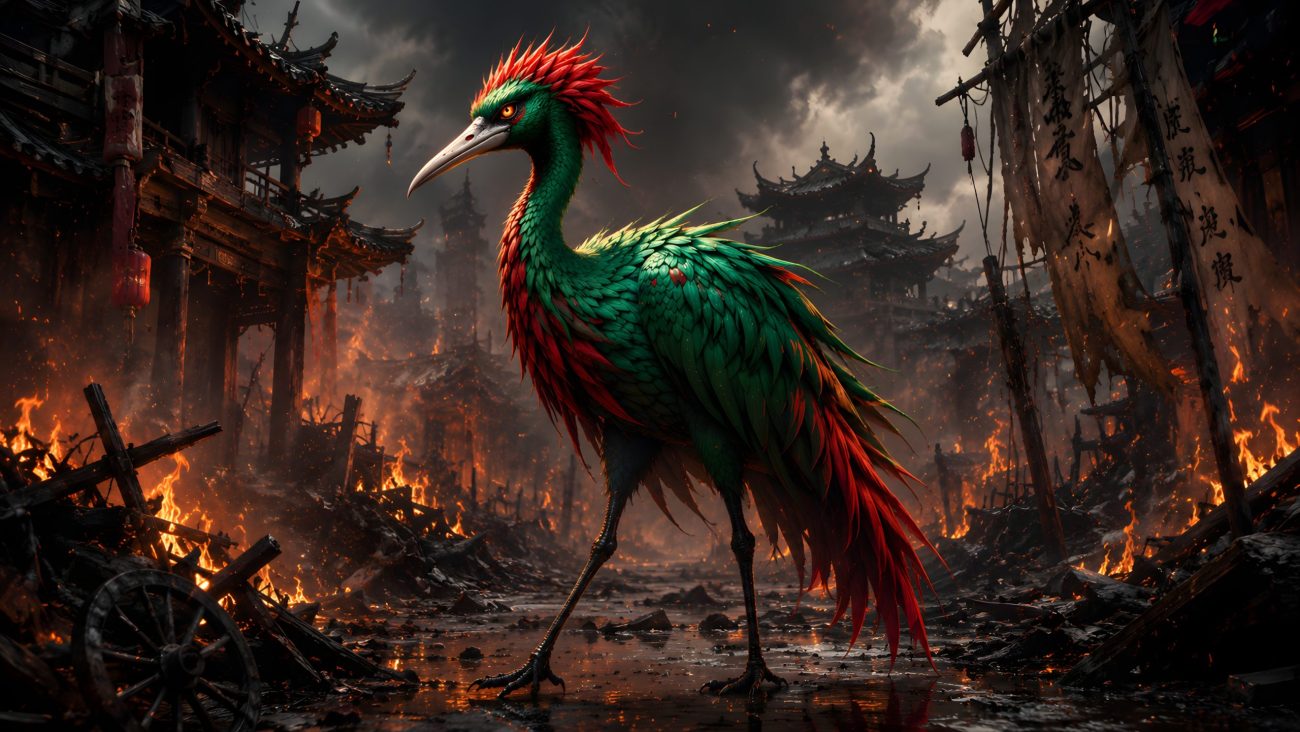
The Bifang is a legendary bird of Chinese mythology, most famously described in the Classic of Mountains and Seas (Shanhaijing). It is said to resemble a crane with a single leg, a green body marked with red patterns, and a white beak. Its name imitates the sound of its call, and it is believed to dwell on Mount Zhang’e, in the distant lands beyond the realm of ordinary people.

The Bifang is closely associated with fire. Its appearance is regarded as an omen that a great fire will soon occur, making it both a supernatural messenger and a harbinger of disaster. Despite this fearful reputation, the bird is not portrayed as malicious, but rather as a sign through which Heaven reveals what is to come.

Other ancient traditions present the Bifang in a more favorable light. The Hanfeizi describes it as a companion of the legendary Yellow Emperor (Huangdi), making it an auspicious creature connected with one of China’s greatest culture heroes. The Huainanzi further associates the bird with the element of Wood in the system of the Five Phases, reflecting its place within the cosmic order of ancient Chinese mythology.


Sources

Wikipedia contributors. (n.d.). Bifang. In Wikipedia. Retrieved June 29, 2026, from https://en.wikipedia.org/wiki/Bifang


Queen Crane

Tradition / Region: Swedish Mythology
Alternative names: Crane Queen
Category: Bird


The Myth

The Queen Crane appears in a Swedish fairy tale as the magical protector of a poor shepherd known as Sheep-Peter. When the youth once aims his crossbow at a crane resting in an oak tree, the bird begs him to spare her life. In return she promises to help him whenever he is in danger, instructing him to call, “God aid me, and Queen Crane stay by me, and I will succeed!” whenever he needs her assistance.

When war breaks out, Sheep-Peter secretly visits the oak where Queen Crane dwells after pretending that his worn-out horse has become stuck in a swamp. Each time she equips him with a magnificent warhorse, enchanted armor, and a magical sword. By invoking her name, he defeats the enemy armies, though everyone believes that a heavenly angel has come to save the kingdom. After each victory he returns the enchanted equipment to the crane and resumes tending his sheep, keeping his identity hidden.

Queen Crane later continues to aid the shepherd when three monstrous meer-women threaten to carry away the king’s daughters. She again provides him with enchanted steeds, weapons, and armor, allowing him to rescue each princess and slay the monsters. Although false heroes claim the credit, the youngest princess recognizes her true savior. Sheep-Peter eventually proves his deeds before the king through the tokens he collected during his adventures, wins the youngest princess’s hand in marriage, and inherits the kingdom, all through the faithful assistance of Queen Crane.


Sources

Stroebe, K. (Ed.). (1921). The Swedish fairy book (F. H. Martens, Trans.; G. W. Hood, Illus.). Frederick A. Stokes Company. Retrieved June 29, 2026, from https://www.gutenberg.org/ebooks/37193