Kruusstee Swan

Tradition / Region: Dutch Mythology
Alternative names:
Category: Bird


The Myth

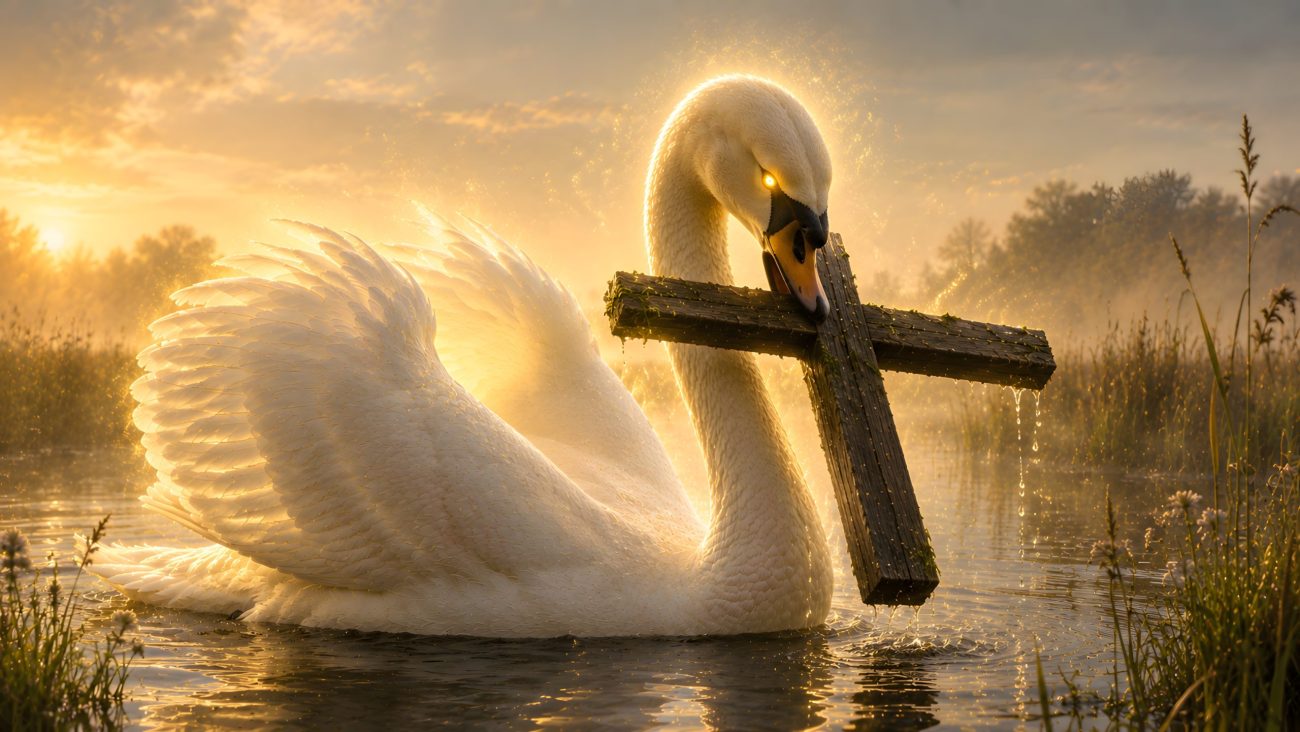
Many years ago, laborers working on the land behind Uskwerd witnessed a miracle. Two swans swam ashore carrying a dark object floating between them. When they reached the land, they beat their wings and flew away, revealing that they had brought a large wooden cross.

The people gathered around the miraculous find. Some believed a chapel should be built on that very spot to house the holy cross, while others argued that the location was unsuitable because the sea regularly flooded the land, and there were no dikes to protect it. Unable to decide, they sought a sign from Heaven.

A wise man proposed placing the cross on a wagon drawn by two oxen. The animals were to be left entirely alone, without guidance or command. Wherever the oxen stopped of their own accord would reveal the place chosen by the Higher Power for the cross.

The oxen began walking by themselves while the people followed in silence with uncovered heads. They continued until they reached the monastery of Wijtwerd, where they stopped and refused to go any farther. The cross remained there for as long as the monastery existed. The place where the swans first brought the holy cross ashore became known as Kruusstee (“Cross Place”), a name that has endured ever since.


Sources

Ter Laan, K. (1959). Groninger volksleven. Deel 1: Verhalende folklore. P. Noordhoff, p. 15.

Finnguala

Tradition / Region: Irish Mythology
Alternative names: Fionnghuala, Fionnuala, Finola, Fenella, Nuala
Category: Bird


The Myth

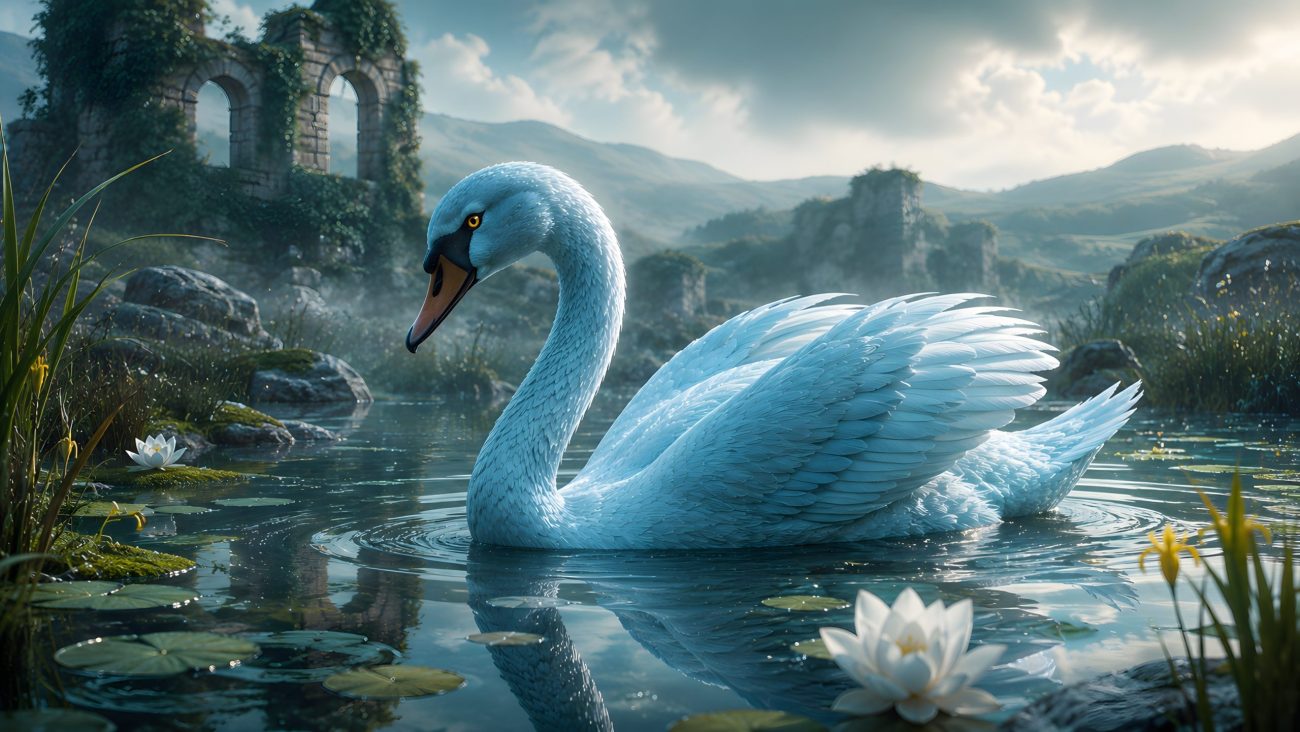
Finnguala was the daughter of Lir of the Tuatha Dé Danann and the eldest of the four Children of Lir. Out of jealousy, their stepmother Aoife cursed Finnguala and her brothers—Fiachra, Conn, and Aodh—transforming them into swans.

The curse condemned the four siblings to wander the lakes, rivers, and seas of Ireland for nine hundred years. Though they retained their human minds and voices, they were forced to live as swans, enduring loneliness, harsh winters, and the passing of kingdoms and generations while singing mournful songs.

At the end of the long exile, the curse could only be broken by the marriage of Lairgren, son of Colman, and Deoch, daughter of Finghin. When the prophecy was fulfilled, the swans regained their human forms, but they had become ancient with age. After receiving Christian baptism, Finnguala and her brothers peacefully died, bringing their centuries of suffering to an end.


Sources

Wikipedia contributors. (n.d.). Fionnuala. In Wikipedia. Retrieved June 29, 2026, from https://en.wikipedia.org/wiki/Fionnuala.


Zwanenjonkvrouw

Tradition / Region: Netherlands (Noord-Holland, Heemskerk)
Alternate Names:
Category: Swan maiden / nymph


The Myth

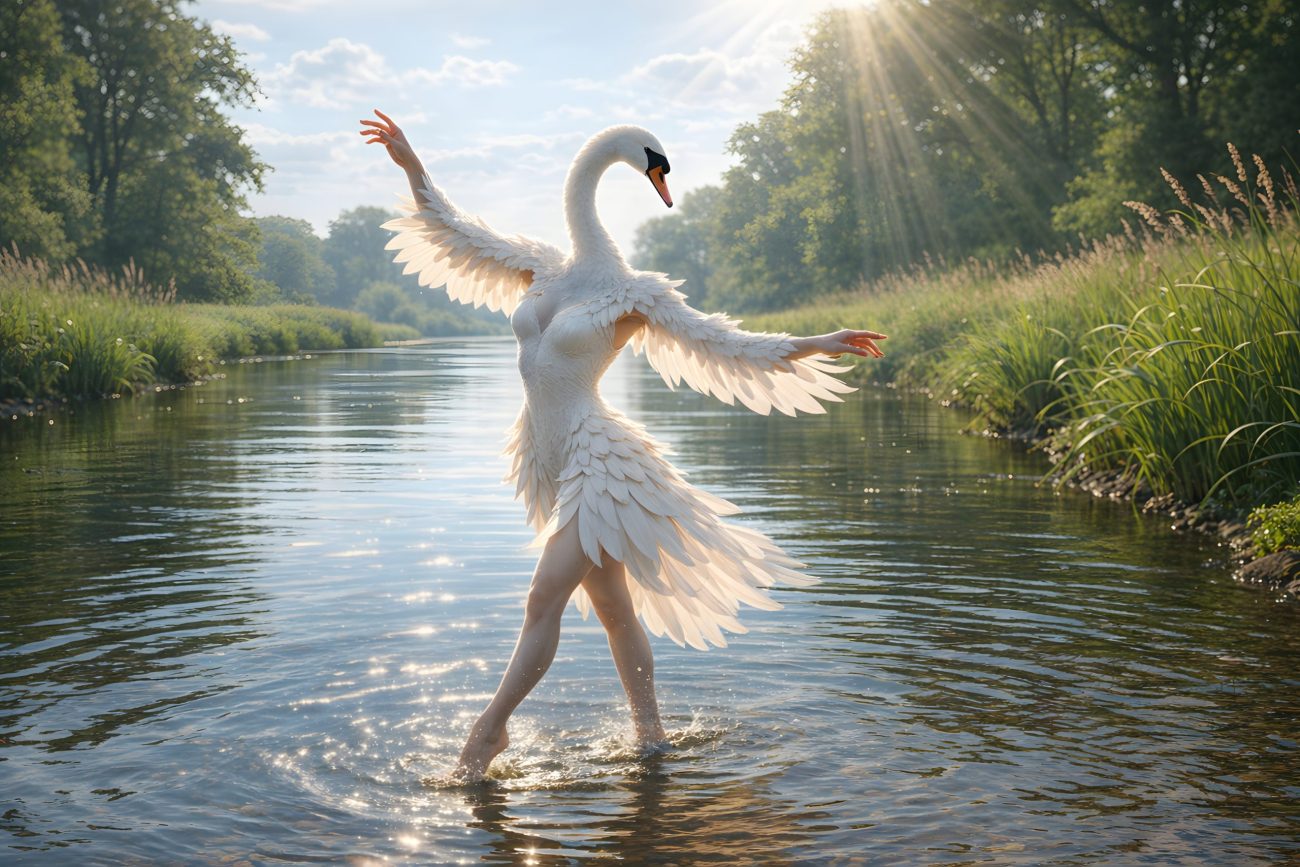
In Noord-Holland, people tell of the Zwanenjonkvrouw, a woman of extraordinary beauty who can take the form of a swan. She changes between swan and human shape by means of a magical swan shirt, known as her zwanenhemd. When she wears it, she becomes a swan; when it is removed, she remains human.

In many tales, a man discovers the Zwanenjonkvrouw while she is bathing and steals her swan shirt. Without it, she is unable to return to her true form. The man then forces her to become his wife, and she lives among humans, bound by the loss of her garment rather than by her own will.

For a time, she remains with him, but she never ceases to long for her swan shirt. When she eventually finds it again, she immediately leaves her husband without mercy and disappears, returning to her true nature and her former life.

In a legend from Heemskerk, the story ends more tragically. When the man chooses to abandon her in favor of an ordinary human woman, the Zwanenjonkvrouw falls down dead, her life ending the moment she is rejected.

Thus the Zwanenjonkvrouw is remembered as a swan-maiden bound by theft, marriage, and loss, whose fate is sealed by the recovery of her stolen form or by betrayal.


Interpretive Lenses

Religious Readings
Philosophical Readings
Psychological Readings
Esoteric Deep Dive
Political / Social Readings
Other