Waterwolf

Tradition / Region: Dutch Mythology
Alternate Names: None recorded
Category: Wolf

The Myth

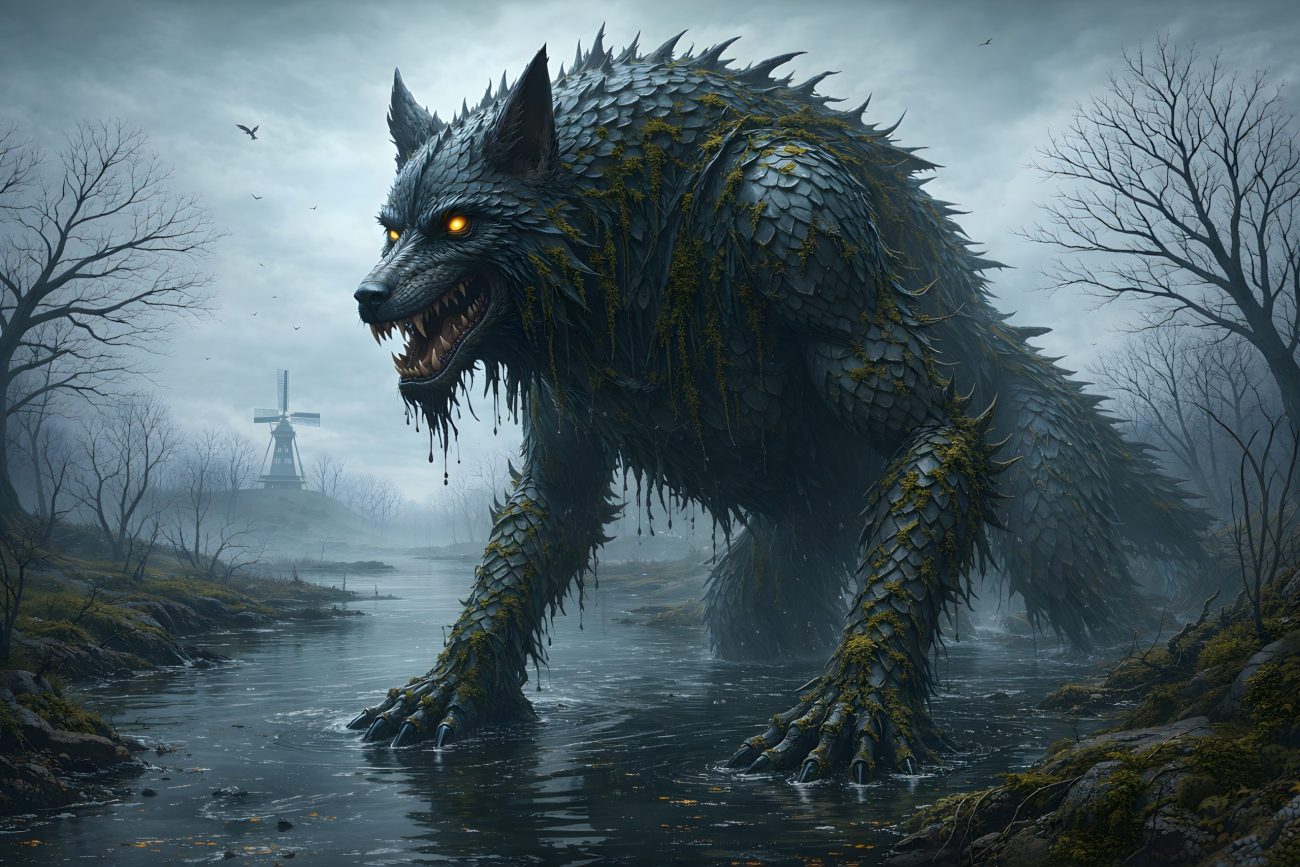
The Waterwolf is a dangerous spirit said to appear in the form of a wolf adapted to life in the water. Unlike a normal wolf, its body is covered in scales, over which moss and water plants such as algae and weeds have grown. It moves silently through rivers, marshes, and flooded lands, propelled by two large fins that allow it to glide swiftly and almost invisibly beneath the surface.

The creature is feared as a predator of humans, especially children. According to the stories, it lurks near banks and shorelines, dragging the unwary into the water where they disappear without a trace.

Like many Dutch water legends, the Waterwolf reflects anxieties about the dangers of marshes, floods, and deep water, giving those natural threats a monstrous, animal form.


Sources

Abe de Verteller. (n.d.). Van aardmannetje tot zwarte juffer: Een lijst van Nederlandse en Vlaamse elfen en geesten. From https://abedeverteller.nl/van-aardmannetje-tot-zwarte-juffer-een-lijst-van-nederlandse-en-vlaamse-elfen-en-geesten/


Korenwolf

Tradition / Region: Dutch Mythology
Alternative name: –
Category: Wolf


The Myth

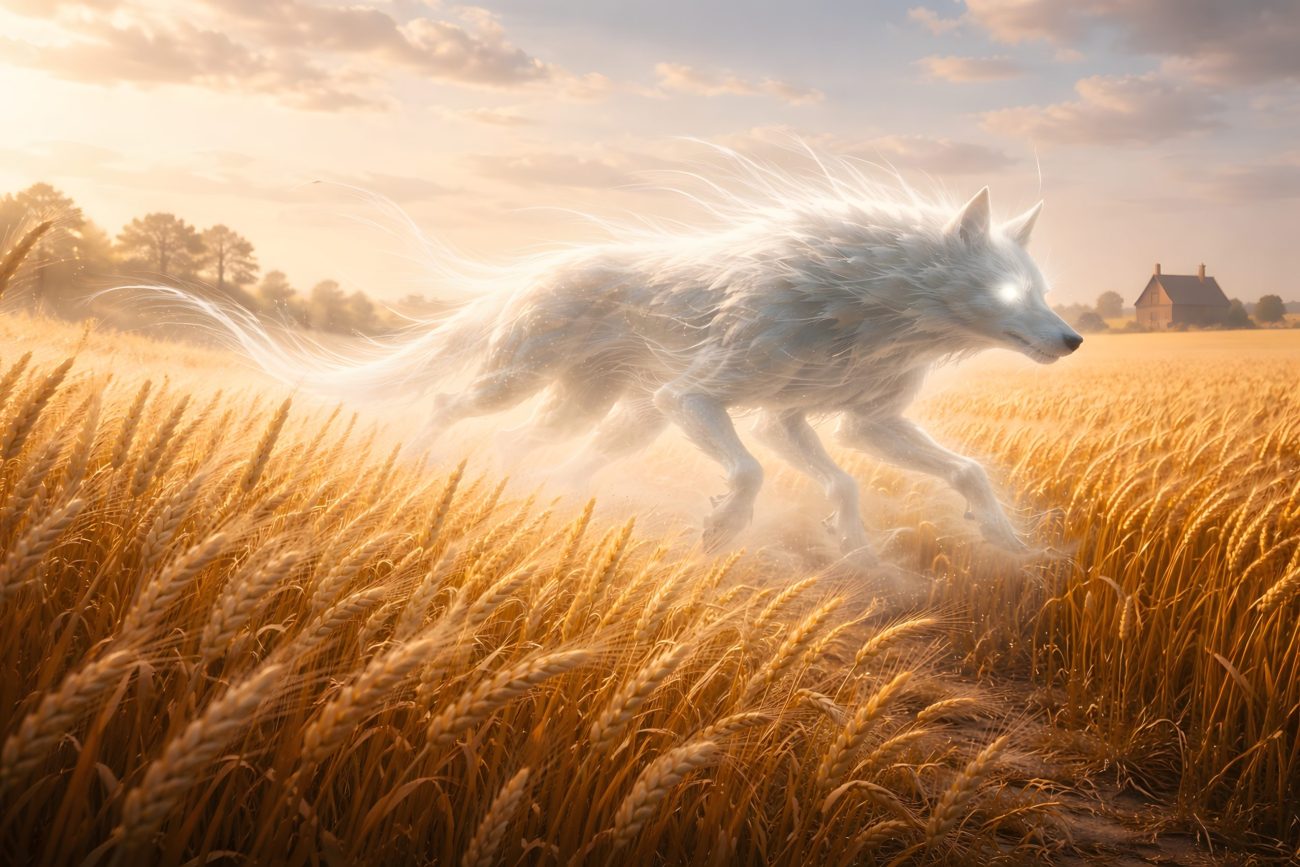
The Korenwolf or Roggewolf is not a literal wolf but the spirit believed to dwell within grain fields. It lives especially in the last sheaf left standing during harvest, and when that final bundle is cut, the spirit is thought to be captured.

Because of this belief, the last reaper was sometimes jokingly or ritually called “the wolf,” as if they had caught — or temporarily embodied — the field spirit.

The Korenwolf is invisible and can only be sensed through the strange rippling of grain in the wind, as if something unseen moves through it. When calm, it brings fertility to the fields; when angered, it may strip the ears from the grain and ruin the harvest.

It also serves as a warning figure in folklore. Children were told not to wander into the fields, since the Korenwolf might seize or devour them.

Some stories describe the spirit as having six legs, marking it as unnatural — a being of the harvest rather than an ordinary animal.


Sources

Abe de Verteller. (n.d.). Van aardmannetje tot zwarte juffer: Een lijst van Nederlandse en Vlaamse elfen en geesten. From https://abedeverteller.nl/van-aardmannetje-tot-zwarte-juffer-een-lijst-van-nederlandse-en-vlaamse-elfen-en-geesten/


Wulver

Tradition / Region: Scottish Mythology
Alternate Names: Wullver
Category: Wolf, Cave dweller


The Myth

The Wulver is a strange being said to dwell in the Shetland Islands. Unlike many wolf-creatures of legend, it is not remembered as savage, but as solitary and oddly kind.

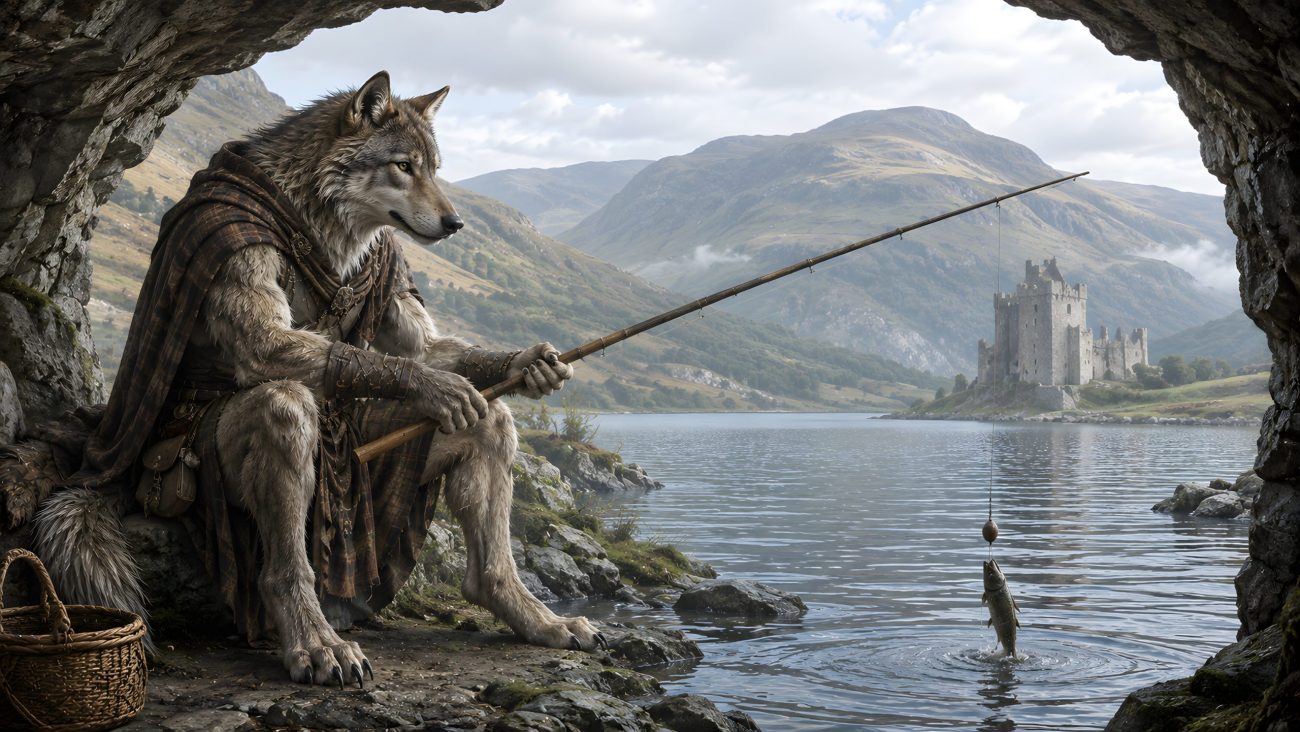
The Wulver is described as having the body of a man covered in short brown hair, with the head of a wolf. It lives alone in a cave dug into the side of a hill, keeping to itself and rarely approaching human settlements.

Though fearsome in appearance, the Wulver is not known to attack people without cause. Instead it spends its time fishing along the shore. It is said to sit for hours upon a rock in deep water, catching fish with patience and skill.

In many stories, the Wulver shows quiet generosity. After a successful catch, it sometimes leaves fish on the windowsills of poor families, slipping away unseen before anyone can thank it. Because of this, locals came to regard it not as a monster but as a strange neighbor — a creature of the wild who could be respected if left in peace.

The Wulver remains a figure of solitude rather than terror: a wolf-headed being who lives apart from mankind, neither fully beast nor fully human, sharing the land without seeking to rule it.


Gallery


Sources

Wikipedia contributors. (n.d.). Wulver. In Wikipedia, from https://en.wikipedia.org/wiki/Wulver


Interpretive Lenses

Religious Readings
  • Christian Ascetic Deep Dive
Philosophical Readings
  • Nietzschean Deep Dive
Psychological Readings
  • Jungian Deep Dive
Esoteric Deep Dive
  • Hermetic Deep Dive
Political / Social Readings
  • Marxist Deep Dive

Amaguq

Tradition / Region: Inuit Mythology, Canadian Mythology
Alternate Names:
Category: Wolf, Shapeshifter


The Myth

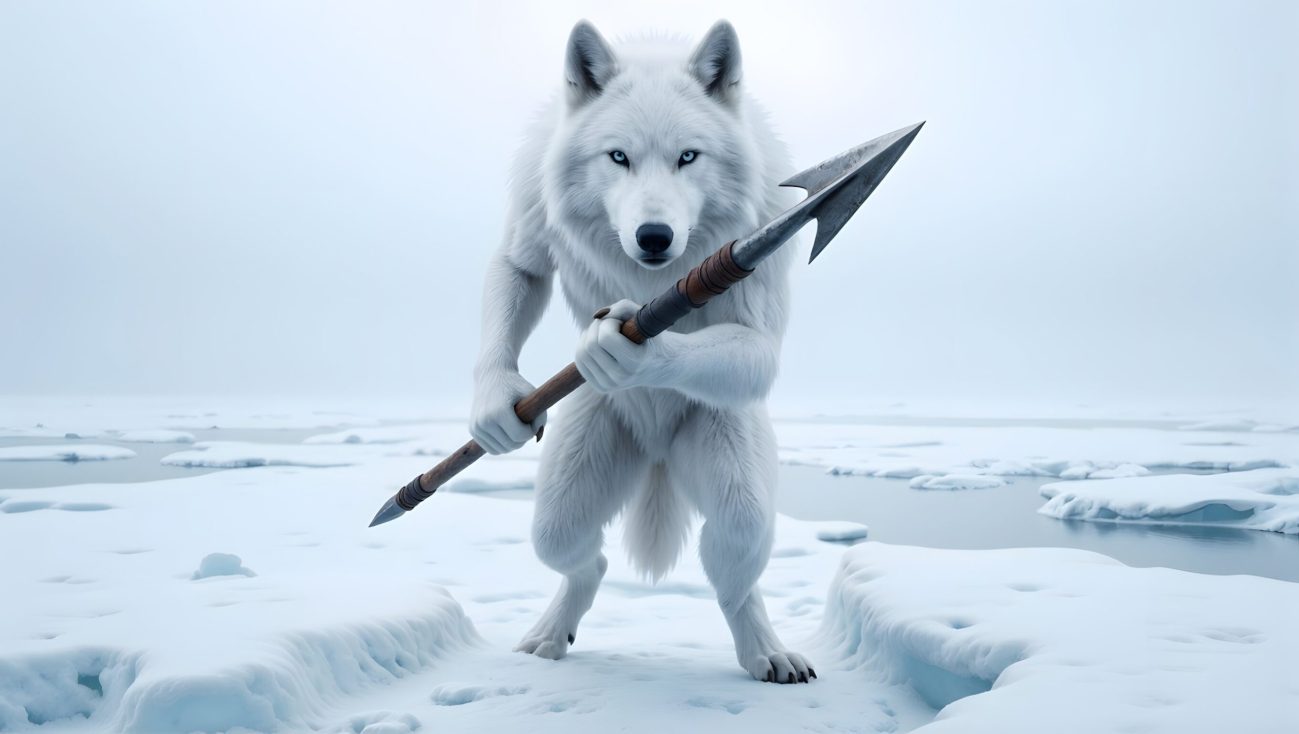
Amaguq is a wolf spirit of Inuit tradition, known for cunning, unpredictability, and the ability to change form. The name itself simply means “wolf,” yet in story it refers to something far more than an ordinary animal.

Amaguq moves between shapes and roles, sometimes appearing as a wolf, sometimes as something closer to human, and sometimes as a spirit whose presence is felt rather than seen. Like many trickster beings, it does not belong clearly to the side of good or evil.

In some tales Amaguq misleads hunters, steals food, or interferes with travel across the tundra. In others it acts as a teacher, forcing people to learn caution, humility, or cleverness in order to survive. Its actions are unpredictable: it may help or harm depending on the moment, the person, or its own whims.

Because of this, Amaguq is remembered not as a simple monster, but as a wild spirit of the northern world — a reminder that wolves, like the land itself, can be both guide and danger, both teacher and threat.


Sources

Wikipedia contributors. (n.d.). Amaguq. In Wikipedia, from https://en.wikipedia.org/wiki/Amaguq


Earth Wolf

Tradition / Region: Chinese Mythology
Alternate Names: Burrow Wolf
Category: Wolf


The Myth

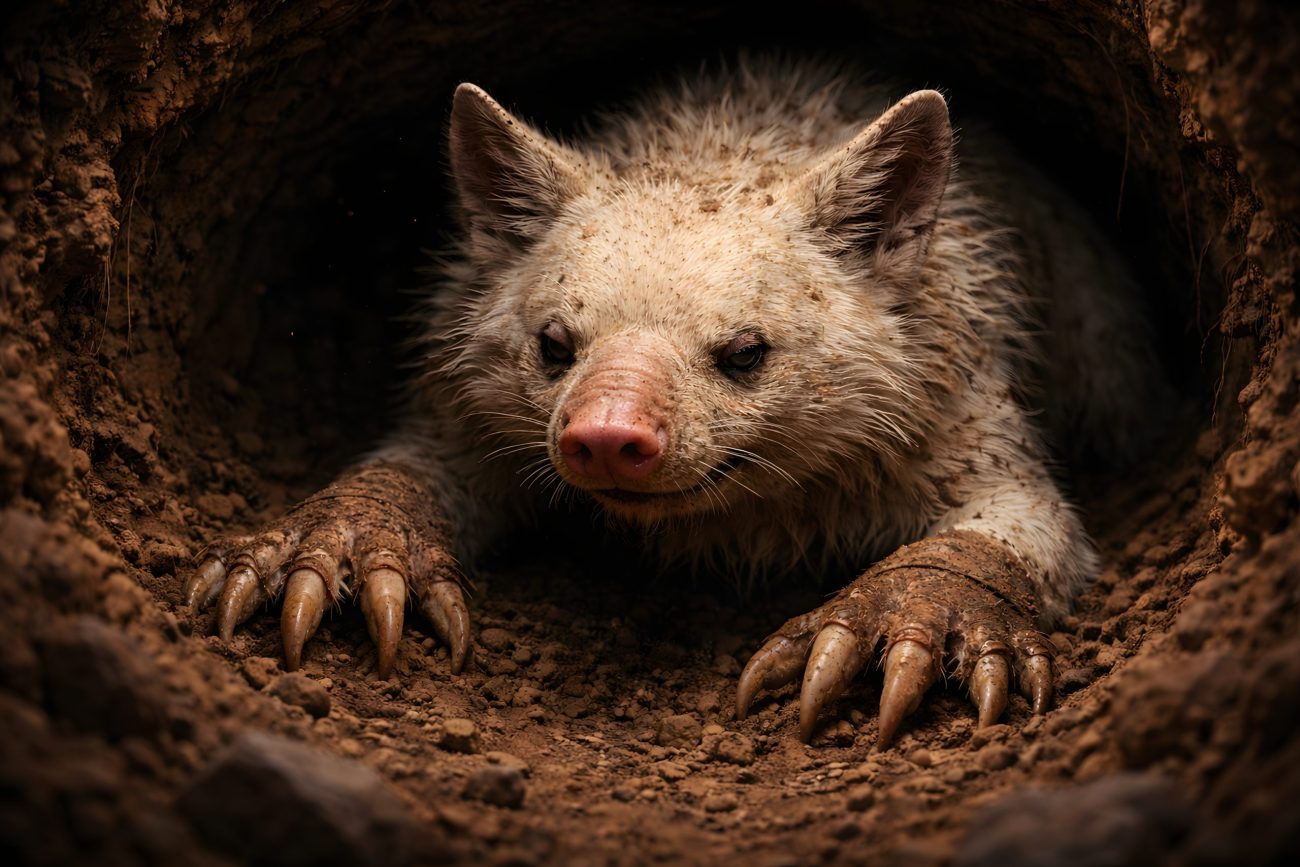
The Earth Wolf is a strange and ominous creature said to dwell beneath the ground. It is believed to live in burrows deep under the earth, rarely seen unless it is uncovered by accident.

At first it appears as a white wolf, covered in pale fur. Yet legends claim that over time it can change form. By feeding on human corpses, it may gradually take on a more human-like shape, becoming something between wolf and man.

The appearance of an Earth Wolf is always regarded as a bad omen. Ancient chronicles record several times when people heard howling or movement beneath their homes and dug into the ground to investigate. In these stories, pairs of white wolves — often a male and female — were discovered living underground.

Each time such wolves were captured and kept, they soon died. Not long afterward, disaster followed. Officials or householders connected with the discovery were later killed in uprisings, executions, or violent conflict. Because of these repeated events, people came to believe that uncovering an Earth Wolf foretold misfortune and death.

Thus the Earth Wolf is remembered not as a roaming


Gallery


Sources

Wikipedia contributors. (n.d.). 地狼. In Wikipedia, from https://zh.wikipedia.org/wiki/%E5%9C%B0%E7%8B%BC


Interpretive Lenses

Religious Readings
  • Christian Ascetic Deep Dive
Philosophical Readings
  • Nietzschean Deep Dive
Psychological Readings
  • Jungian Deep Dive
Esoteric Deep Dive
  • Hermetic Deep Dive
Political / Social Readings
  • Marxist Deep Dive