Simurgh

Tradition / Region: Persian Mythology, Iranian Mythology
Alternative names: Senmurv; Simorgh; Simurg; Simoorg; Simorq; Simourv
Category: Bird, Dog


The Myth

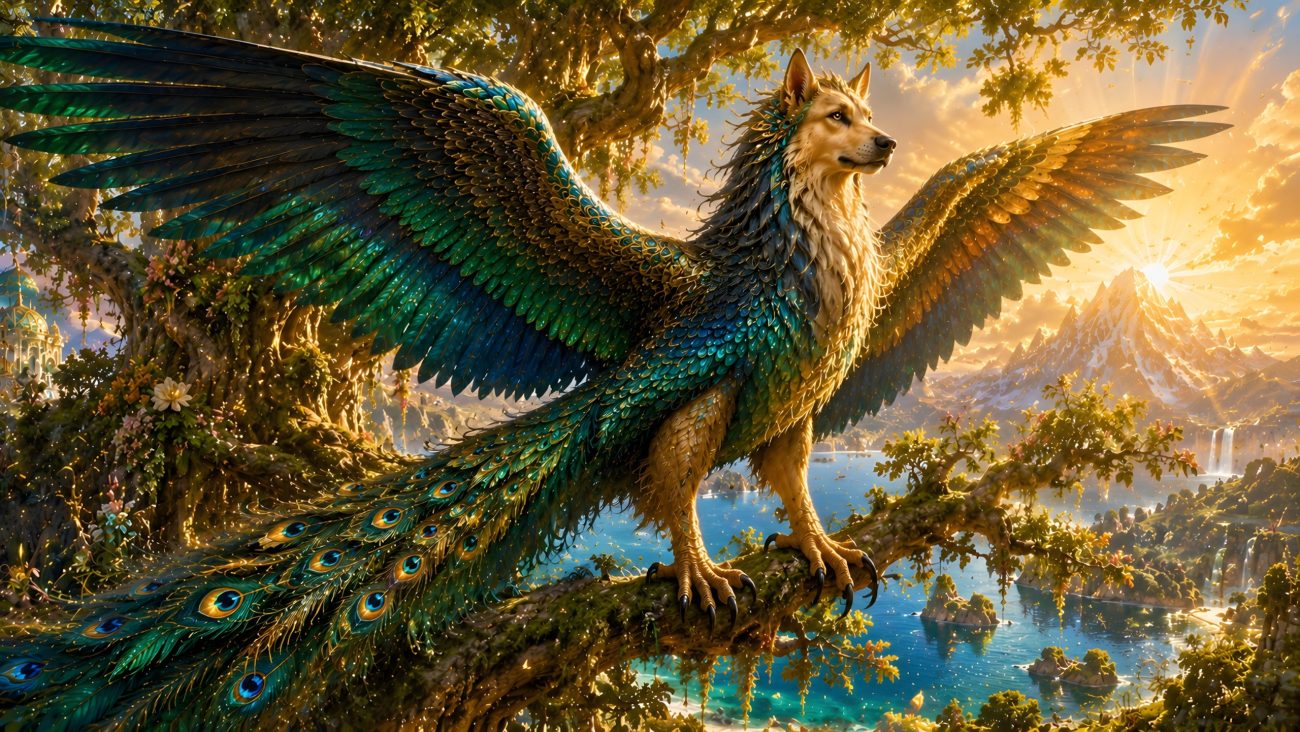
The Simurgh is a colossal and benevolent bird of Persian mythology, dwelling upon the Tree of Life that stands in the middle of the cosmic sea. Enormous enough to carry away an elephant, it is commonly described as having the body of a peacock, the head of a dog or human, the claws of a lion, and copper-colored feathers. Ancient beyond measure, the Simurgh is said to have witnessed the destruction of the world three times and possesses the wisdom of every age. When it takes flight from the Tree of Life, the seeds of every plant scatter across the world, bringing healing and fertility to the earth.

The Simurgh is best known for raising the abandoned prince Zal. Rejected at birth because of his white hair, Zal was left upon Mount Alborz, where the compassionate bird found him, nurtured him as her own, and taught him great wisdom. When he was grown, she returned him to humanity but gave him three golden feathers, telling him to burn one whenever he needed her aid. Later, when Zal’s wife Rudaba faced certain death in childbirth, the Simurgh answered his call and instructed him in performing a successful cesarean section, saving both mother and child. That child grew up to become the legendary hero Rostam.

The Simurgh later came to Rostam’s aid as well, healing both him and his horse Rakhsh after they were wounded in battle. She also revealed the only way to defeat the invincible prince Esfandiyār, instructing Rostam to fashion a double-headed arrow from a tamarisk branch. Although the Simurgh warned that killing Esfandiyār would bring lasting sorrow, Rostam followed her counsel, and the enchanted arrow ended the prince’s life, fulfilling the bird’s prophecy.


Sources

Wikipedia contributors. (n.d.). Simurgh. In Wikipedia. Retrieved June 29, 2026, from https://en.wikipedia.org/wiki/Simurgh

Caspilly

Tradition / Region: Arabic Mythology, Persian Mythology
Alternate Names: Caspilli; Neemora (Persian)
Category: Fish


The Myth

Sailors of the warm seas spoke of a fish both terrible and marvelous, known among the Arabs as the Caspilly and among the Persians as the Neemora. It was said to dwell in the Arabian Gulf and the wider Indian Ocean, feared by all who sailed those waters.

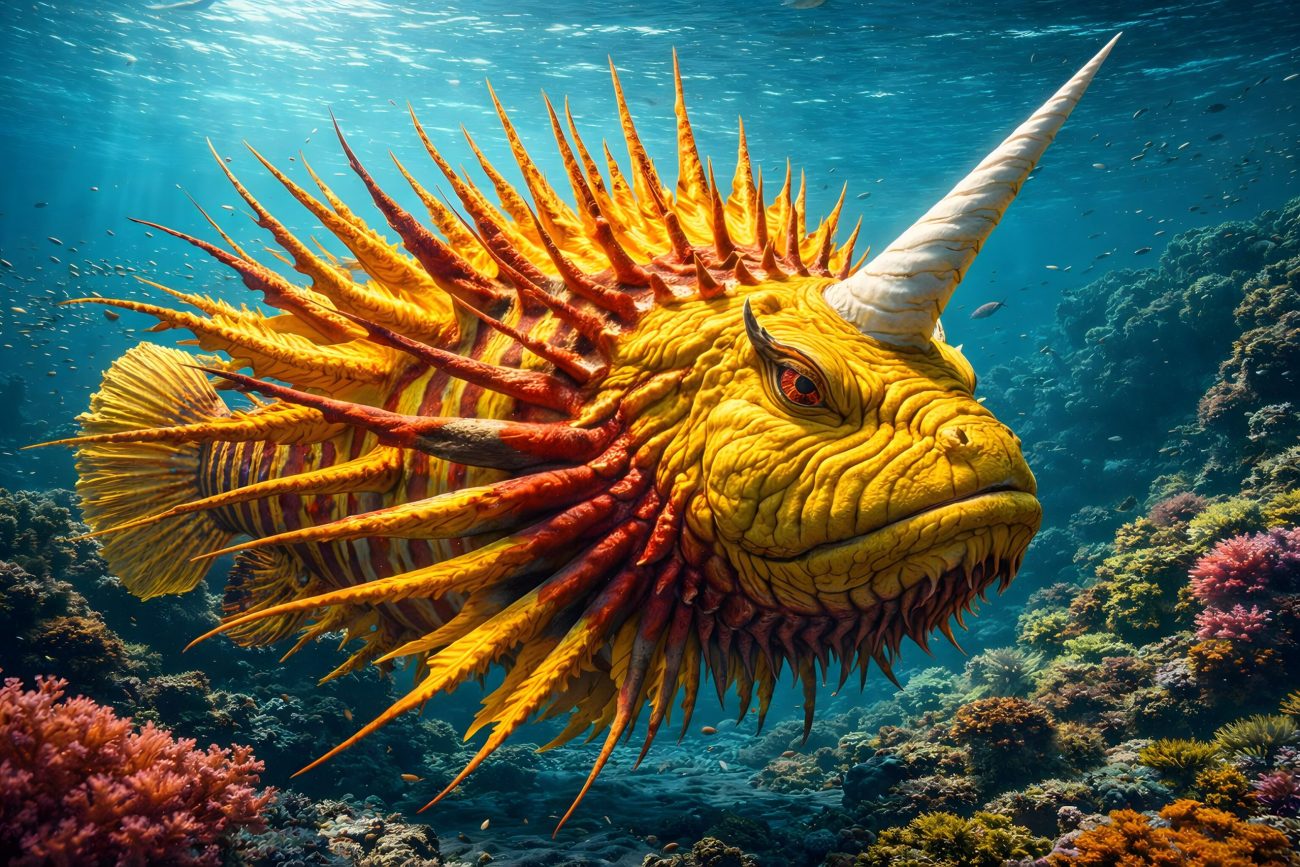
The Caspilly was described as almost as wide as it was long, yet no more than two feet in length. Its body bore no scales; instead, its skin was rough, spiked, and barbed like that of a shark. From its forehead grew a long, lancet-shaped horn, sometimes said to be longer than a man’s arm. When not in use, this horn lay folded back along its neck.

When hunger seized it, the Caspilly attacked the first creature it encountered. With a sudden thrust, it drove its horn into the belly of its prey, leaving it to bleed to death in the water. Its teeth were venomous, and even a single bite meant certain death. Yet paradoxically, the body of a dead Caspilly, laid upon such a wound, was said to draw out the poison and save the victim. Its horn was prized above all, believed to hold powerful medicinal virtues.

Another tale spoke of a similar fish in the seas near Peru, bearing a sword-like horn three feet long. This creature was said to hunt whales. It would slip beneath the great beast, stab it in the navel, and retreat while the wounded whale thrashed in agony, sometimes capsizing nearby ships. Only once the whale was dead would the fish return to feed at its leisure.

In later tellings, these stories were woven together. The Caspilly grew even more fearsome, its horn stretching to four feet in length, and its appetite expanding to make it the terror of the Arabian seas. Sailors claimed that local hunters pursued it with giant hooks baited with camel meat. When the Caspilly struck, it would exhaust itself fighting the line, allowing the hunters to shoot it with arrows, haul it aboard, and beat it to death.

Its flesh was said to be edible, and its horn—called caspilly alicorn—was believed to rival the unicorn’s horn in its power to counter venom.

Thus the Caspilly lived on in sailors’ lore: a spined, horned killer of fish and whales alike, born from the dangers of the sea and the fearful imagination of those who crossed it.


Gallery


Sources

A Book of Creatures contributors. (n.d.). Caspilly. In A Book of Creatures, from https://abookofcreatures.com/2015/03/15/caspilly/


Interpretive Lenses

Religious Readings
  • Christian Ascetic Deep Dive
Philosophical Readings
  • Nietzschean Deep Dive
Psychological Readings
  • Jungian Deep Dive
Esoteric Deep Dive
  • Hermetic Deep Dive
Political / Social Readings
  • Marxist Deep Dive
Other
  • How to Invite The Caspilly