Mawiang

Tradition / Region: Indoniesian Mythology
Alternative name:
Category: Dog


The Myth

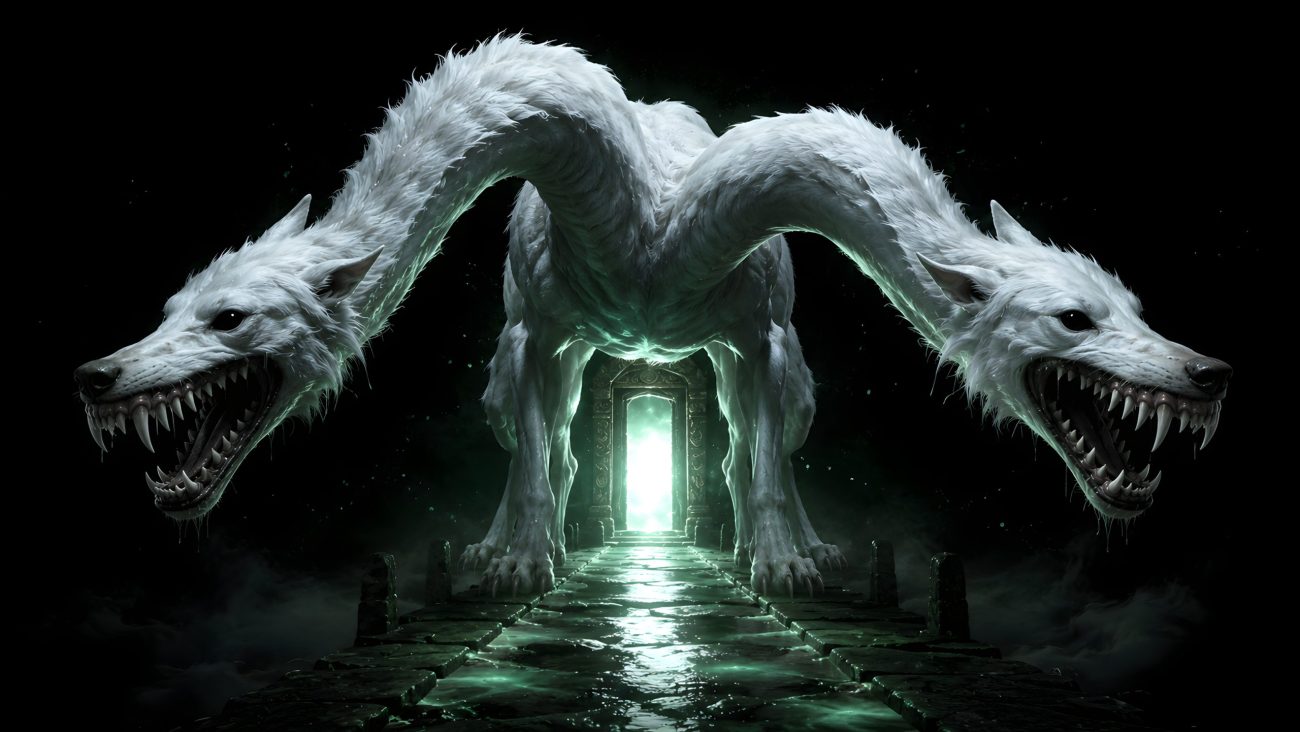
In the traditional beliefs of the Malanau people of Borneo, Mawiang is a terrifying double-headed dog that guards the narrow road leading to the afterlife. The creature stands watch at the entrance to the land of the dead and prevents souls from passing unless they offer a valuable bead as payment.

The Malanaus believed in another world that closely resembled the human world, with rivers, mountains, seas, and sago plantations. Above all spirits stood a supreme deity named Ipu. After death, souls were guided by a beautiful female spirit called Balu Adad, who escorted the dead to their future home only after funeral feasts and cockfighting ceremonies had ended.

Before a soul could reach paradise, it had to pass Mawiang. To ensure safe passage, families tied a precious bead to the right arm of the deceased before burial. Corpses were also buried with gold ornaments, weapons, gongs, and fine clothing so the dead could use them in the next world.

Older traditions claimed that slaves were sometimes tied near the tombs of important dead nobles and left to die so their spirits could continue serving their master in the afterlife.

The Malanaus also believed that those who died violently entered a different afterlife from people who died naturally. After living a long existence in the spirit world, the dead were believed to die again and later return as worms or caterpillars living in the forest.

Their spiritual world contained many dangerous beings besides Mawiang. Forests, rivers, seas, and the sky were inhabited by spirits connected to disease, storms, and misfortune. Rituals meant to calm these spirits included hanging plants around houses, floating miniature boats made of sago pith down rivers, and ceremonies involving gongs, feasting, and shamans performing rituals through the night.

Among all these beings, Mawiang remained one of the most feared, standing as the final guardian between the world of the living and the realm of the dead.


Sources

de Crespigny, Lieut. (1876). On the Milanows of Borneo. In The Journal of the Anthropological Institute of Great Britain and Ireland, 5. from https://doi.org/10.2307/2841361


Hantu Bongkok

Tradition / Region: Indonesian Mythology
Alternate Name: Nenek Bongkok
Category: Ghost


The Myth

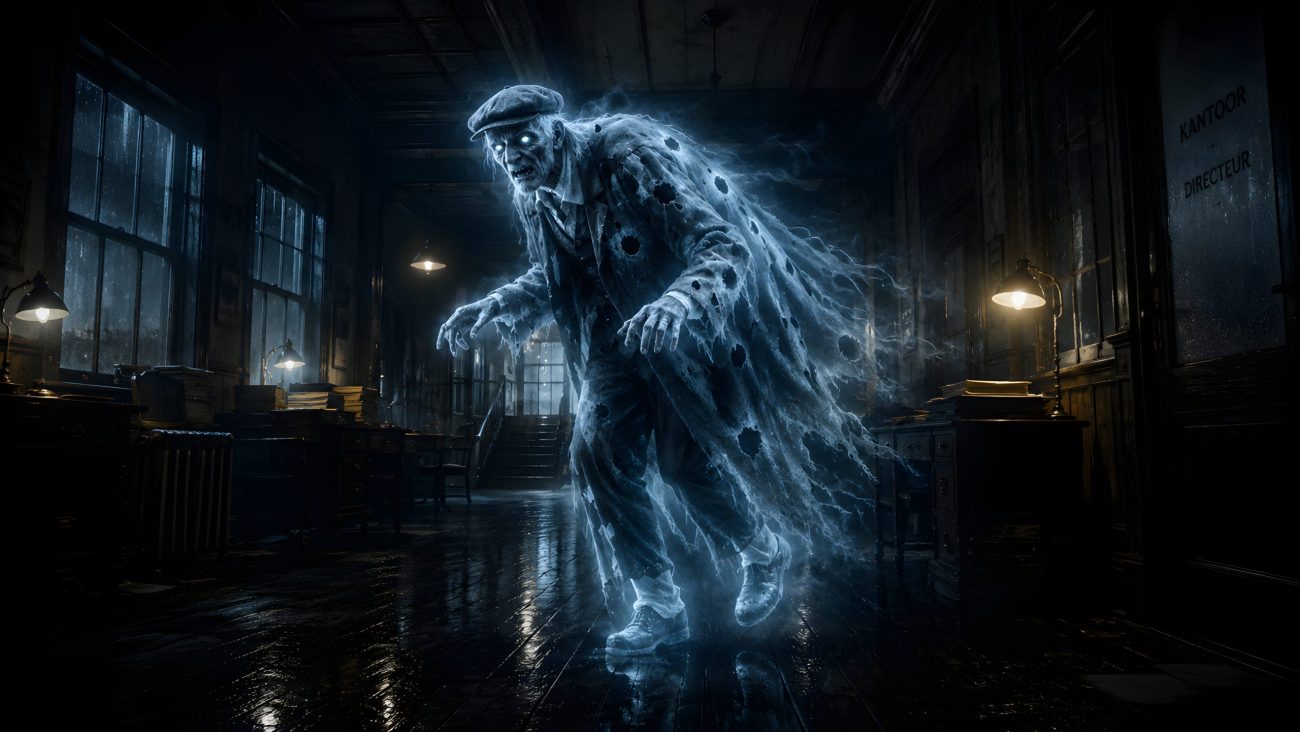
Hantu Bongkok, meaning “Humpback Ghost,” is a supernatural spirit from the folklore of Palembang in South Sumatra, Indonesia. The figure is usually described as a frightening old man with a hunched back who wanders near old colonial-era buildings at night. A female version of the spirit is known as Nenek Bongkok, or “Humpback Grandmother.”

The legend is most strongly associated with the old colonial water tower building in Palembang, commonly known as the Kantor Ledeng. The building was originally constructed during the Dutch colonial period in the 1920s as part of the city’s water distribution system. Its tall European-style structure later became linked to ghost stories and urban legends.

According to the legend, a Dutch water-system expert named Edwin Van Brower worked inside the building during the colonial era. During a violent conflict connected either to local uprisings or the Japanese occupation period, several Dutch workers inside the building were reportedly tortured and killed. Edwin Van Brower was said to have suffered a particularly brutal death after being beaten and left to die from his injuries.

After his death, stories began spreading that his spirit still haunted the building. Witnesses claimed to see the apparition of a bent old man carrying a wooden cane and wearing an old blue colonial uniform. His body was covered in wounds, and he was often seen silently standing near the front of the building or on top of the tower itself.

People described the ghost as appearing sorrowful and restless, staring into the distance as though searching for answers about his violent death. The spirit became known as Hantu Bongkok because of its hunched posture and elderly appearance.

Over time, the story became one of the most famous ghost legends in Palembang, especially surrounding the old Ledeng building, which remains closely tied to tales of hauntings and supernatural sightings.


Sources

Hantupedia contributors. (n.d.). Legenda Hantu Bongkok Edwin van Brower di Jantung Kota Palembang. In Hantupedia, from https://web.archive.org/web/20190724065224/https://hantupedia.com/legenda-hantu-bongkok-edwin-van-brower-di-jantung-kota-palembang/

Wikipedia contributors. (n.d.). Hantu Bongkok. In Wikipedia, from https://en.wikipedia.org/wiki/Hantu_Bongkok


Pocong

Tradition / Region: Indonesian Mythology and Malaysian Mythology
Alternate Names: Hantu Bungkus
Category: Ghost


The Myth

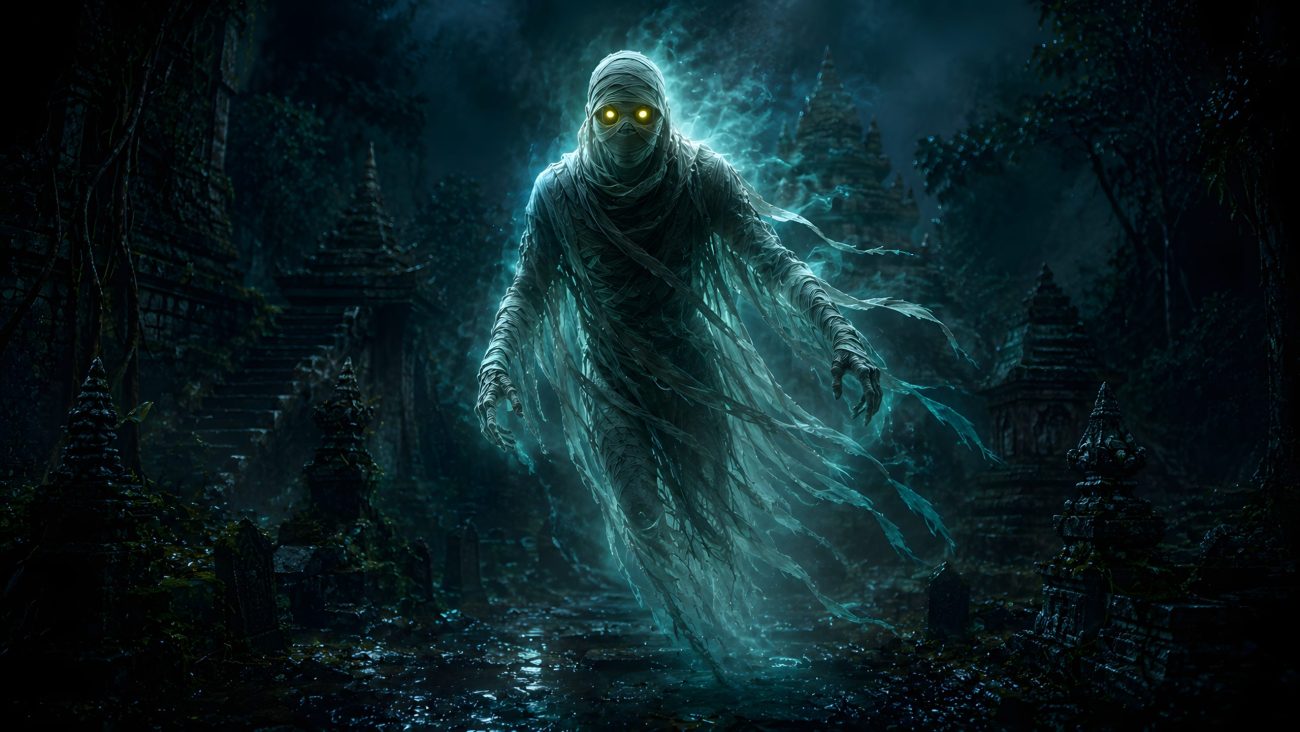
The Pocong is a ghost from Indonesian and Malaysian folklore said to resemble a dead body wrapped tightly in a burial shroud. The spirit is connected to Islamic funeral traditions, where the deceased is wrapped in a white cloth known as a kain kafan before burial. According to the legend, if the ties of the burial shroud are not properly released after burial, the dead may return as a Pocong.

The creature is usually described as pale and corpse-like, wrapped completely in white cloth with knots around the head, neck, and feet. Because its legs are bound together, the Pocong is unable to walk normally and is often said to move by hopping. Other stories describe it floating silently above the ground. Its appearance varies depending on the condition of the corpse. Some Pocongs resemble freshly buried bodies with pale skin and wide staring eyes, while older ones appear skeletal or badly decayed.

Pocongs are believed to appear near graveyards, banana trees, abandoned places, rivers, villages, and the homes they once inhabited. Their behavior is unpredictable. Some legends describe them as harmless spirits seeking prayers or attempting to deliver unfinished messages to the living. Others portray them as terrifying supernatural beings that deliberately frighten or attack humans.

Many regional variations of the Pocong exist throughout Indonesia. One famous version is the Red Pocong, a violent vengeful spirit wrapped in a blood-red shroud. According to folklore, these spirits are created from people who died in anger, betrayal, or murder and returned seeking revenge. They are considered far more dangerous than ordinary Pocongs and are sometimes described as leaders of ghostly colonies.

Another legend tells of the Plastic Pocong, the spirit of a murdered pregnant woman whose corpse was wrapped in plastic before burial due to uncontrollable bleeding. Her ghost was believed to wander because her soul could not rest peacefully.

In East Java, stories spread of the Andong Pocong, a ghostly shrouded figure riding a horse-drawn carriage through the night. According to the tale, the spirit belonged to a young groom who died together with his bride and horse during a violent pursuit after their marriage. The sound of bells from the carriage was said to foretell illness and death.

Some traditions claim Pocongs gather in large colonies, especially near rivers, forests, and banana groves, although many sightings involve solitary spirits wandering alone at night. Because Pocongs can reportedly move through solid objects and suddenly appear or vanish, they are regarded as dangerous supernatural beings that should be avoided rather than confronted.


Sources

Wikipedia contributors. (n.d.). Pocong. In Wikipedia, from https://en.wikipedia.org/wiki/Pocong


Sundel Bolong

Tradition / Region: Indonesian Mythology
Alternate Names: Prostitute Ghost
Category: Ghost


The Myth

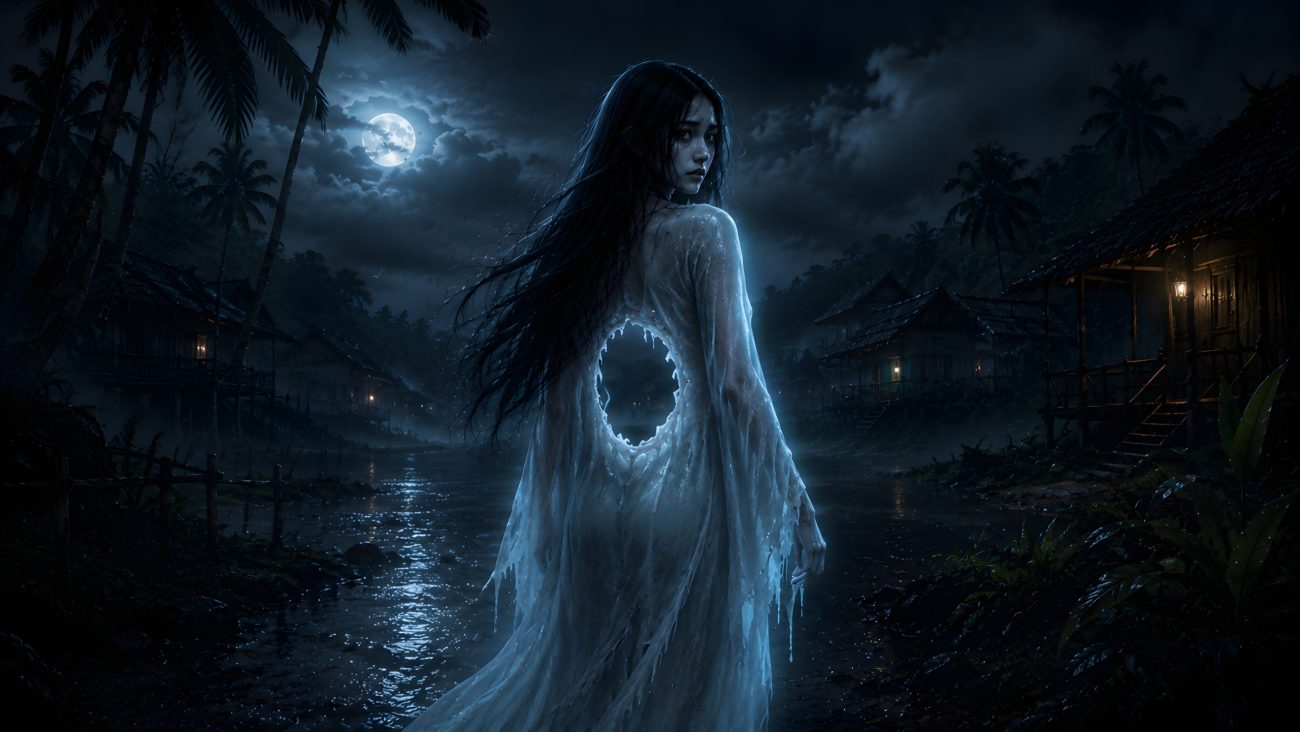
The Sundel Bolong is a female ghost from Indonesian folklore, especially associated with Javanese mythology. She is usually described as a beautiful woman with long black hair and a flowing white dress. Hidden beneath her hair is a large hole in her back, which is the creature’s most horrifying feature.

According to the legend, the Sundel Bolong is the spirit of a woman who died while pregnant outside of marriage or who died during childbirth. In some versions of the story, the child is said to have emerged through her back, leaving behind the gaping hole that defines her appearance.

The Sundel Bolong wanders at night searching for revenge or for a replacement for her lost child. Her victims are often men and children. Some stories claim that men who reject or insult her are attacked or mutilated, while newborn children may be abducted by the spirit.

Although she appears beautiful from the front, her true form is concealed by her long hair. In many tales, unsuspecting travelers are lured closer before discovering the terrible wound hidden on her back. The myth became one of the most feared ghost stories in Indonesian folklore and is commonly associated with death, grief, vengeance, and the dangers surrounding childbirth and social shame.


Sources

Wikipedia contributors. (n.d.). Sundel bolong. In Wikipedia, from https://en.wikipedia.org/wiki/Sundel_bolong