Bès Rap

Tradition: Malaysian Mythology
Alternative Names: Pig Spirit
Category: Pig


The Myth

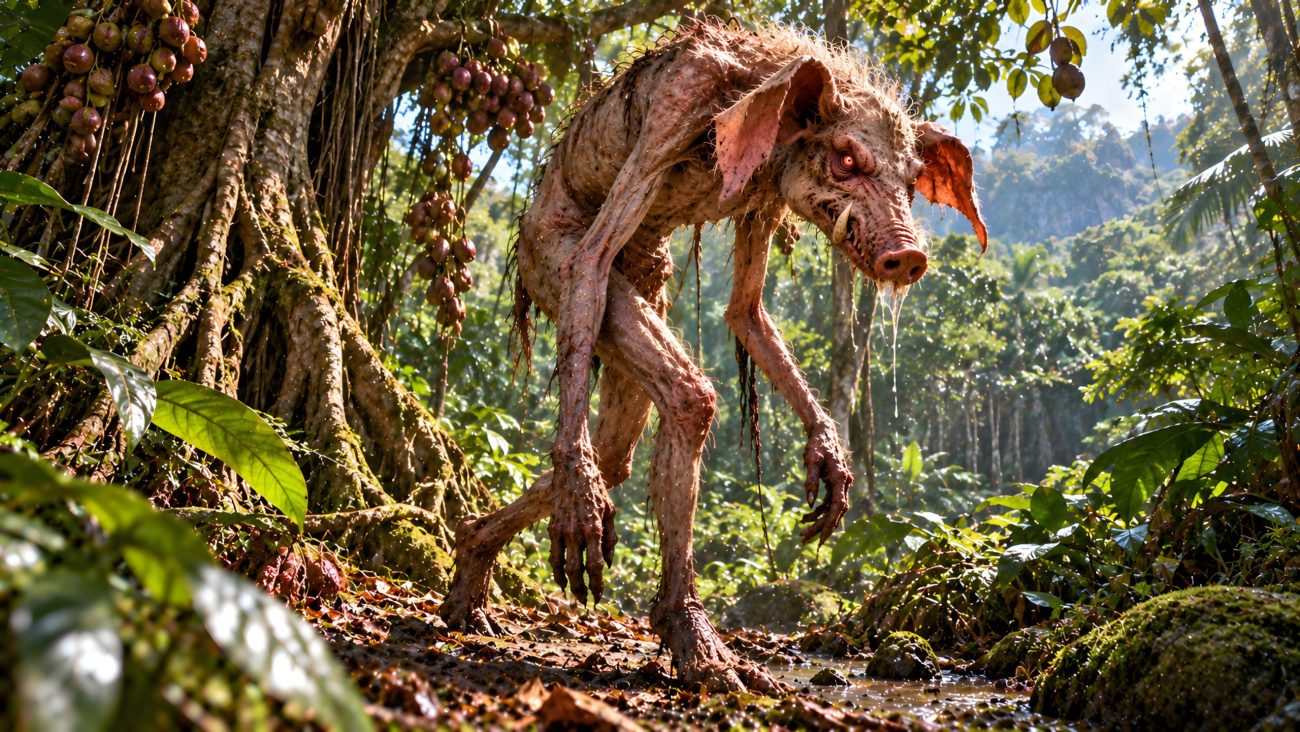
Bès Rap, meaning “pig spirit,” is a supernatural being in the traditions of the Jah Hut people of Malaysia. It inhabits the deep jungle, living among the roots of the pokok ara tree. The spirit is especially active when the tree bears fruit, making this period dangerous for anyone who enters the forest to gather it.

Those who approach the pokok ara to collect its fruit risk being attacked by Bès Rap, which blows its saliva at them. This causes severe illness, characterized by foaming at the mouth. According to tradition, only the blessing of a poyang, a traditional spiritual practitioner, can save the afflicted person from the spirit’s attack.

Even the spirit’s droppings are dangerous. Anyone who steps on its toxic faeces may suffer from an intense heat that penetrates the body through the toes, eventually causing illness accompanied by bubbling and frothing saliva. Bès Rap thus makes both the fruiting tree and the ground around its dwelling hazardous to those who venture into its territory.


Sources

“Bes Rap.” A Book of Creatures, February 5, 2021. https://abookofcreatures.com/2021/02/05/bes-rap/


Puaka

Tradition: Malaysian Mythology
Alternative Names: Pig Demon, Puaka
Category: Pig


The Myth

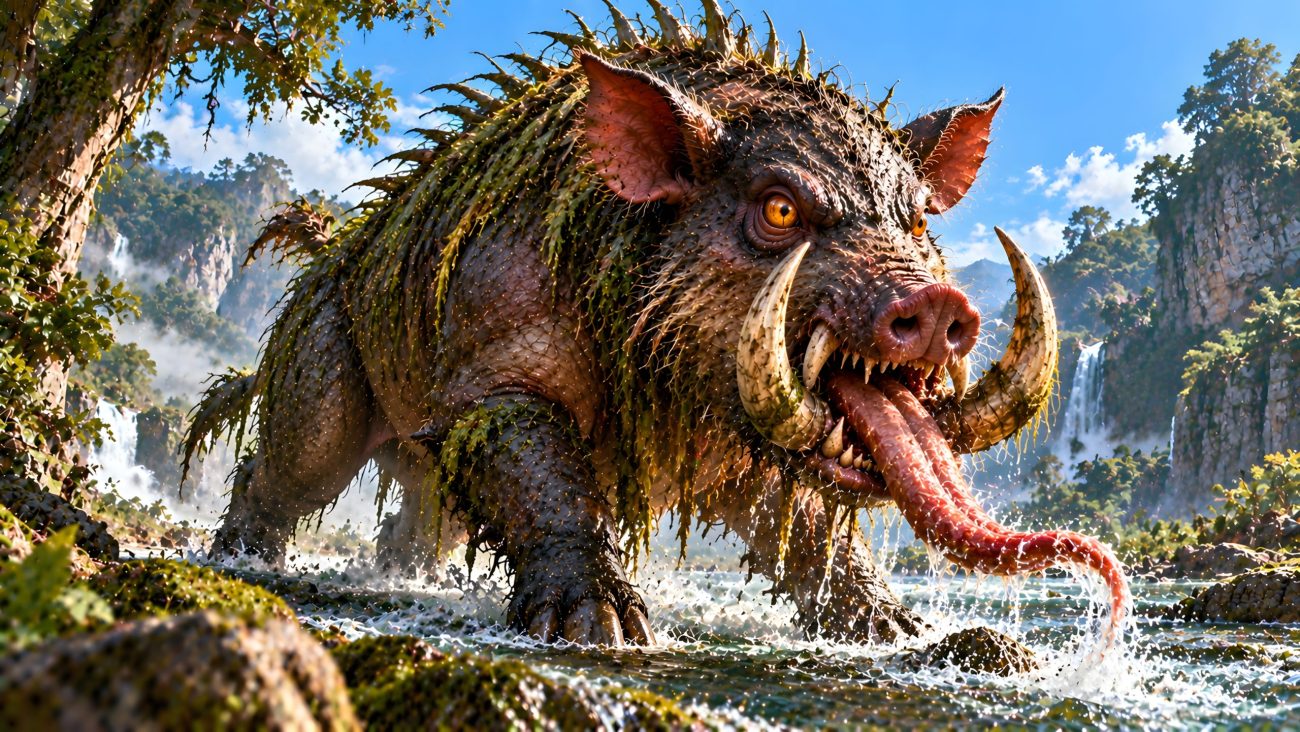
The Puaka, whose name means “pig,” is a demonic creature in Dusun mythology that guards water in eddies. It resembles a pig with a razor-sharp tongue and is said to feed from trees. Puakas can climb to reach branches by standing on one another’s backs, forming a living tower to reach their food.

The Puaka is a dangerous pursuer. When someone encounters one, it is said to attack whenever its victim moves and stop whenever the victim stands still. If the creature catches its prey, it licks the victim’s bones clean with its sharp tongue. One traditional method of escaping is to cross a stream. Although the Puaka may follow across the water, it will pause once it reaches dry land to lick itself dry. In doing so, it supposedly licks the flesh from its own bones, giving its intended victim an opportunity to escape.

The name puaka also has a wider linguistic distribution across Polynesian and other island languages, where related forms commonly mean “pig.” Examples include puaka in Rarotongan, Mangarevan, Rotuman, and Malay; vuaka in Fijian; puaʻa in Samoan; and poaka in Māori. Although the word has been compared with terms such as Sanskrit sukara, Latin porcus, and English porker, the source suggests that it may have an independent Polynesian origin. In some regions, puaka came to refer specifically to a pig-like demon, while in others its original meaning of “pig” may have been lost, possibly through the influence of Islam.


Sources

“Puaka.” A Book of Creatures, April 13, 2015. https://abookofcreatures.com/2015/04/13/puaka/


Pelesit

Tradition: Malaysian Mythology
Alternative Names: Palasik
Category: Insect


The Myth

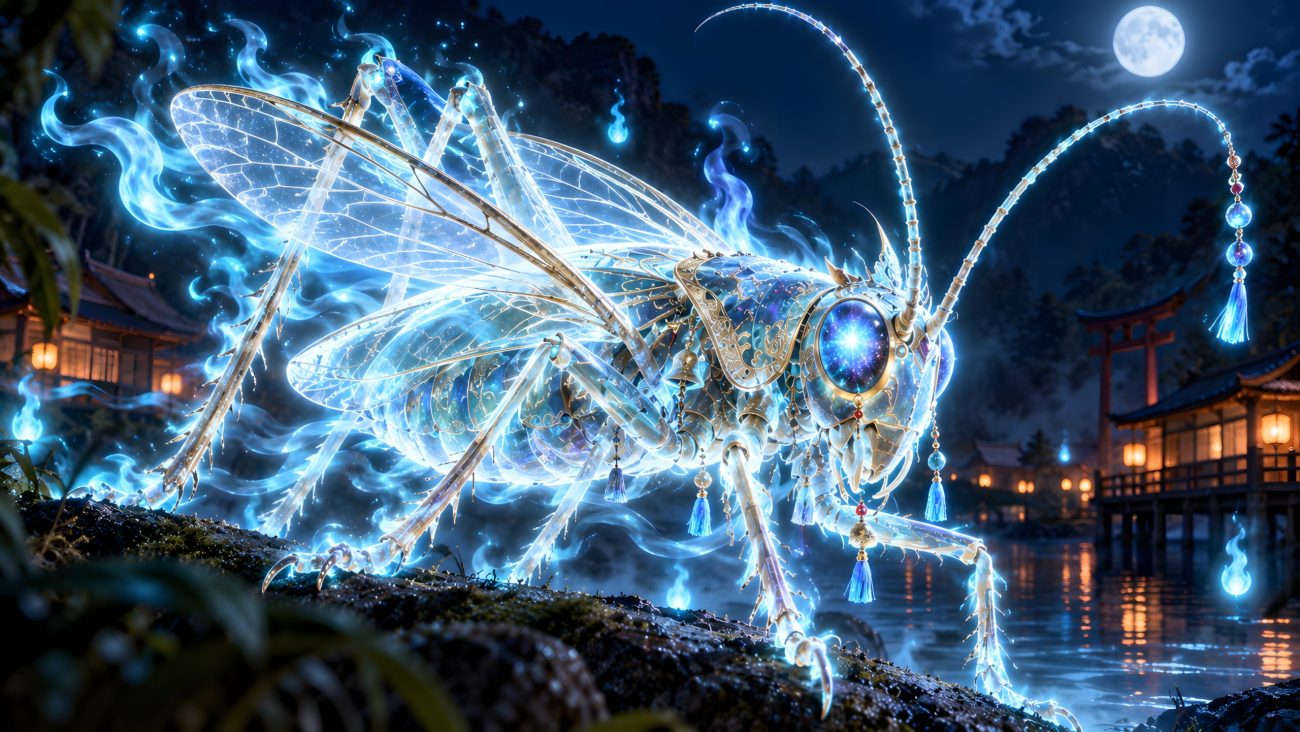
The Pelesit is a familiar spirit from Malay folklore that usually takes the form of a cricket, although it may sometimes appear as a grasshopper. Its name is associated with the buzzing or whizzing sound made by an insect. Unlike an ordinary insect, the Pelesit is a supernatural companion that can be kept by a human owner.

Belief in the Pelesit originated in Malay animistic traditions, before the introduction of monotheistic religions. It was said to be particularly prevalent in Kedah and was generally believed to be owned only by women. The spirit could be passed down through generations, making it part of a hereditary tradition.

The Pelesit is associated with another hereditary familiar spirit, the Bajang, which is considered its male equivalent. Because of their similarities, the two spirits are sometimes confused in folklore, although they are recognised as distinct beings.


Sources

“Pelesit.” Wikipedia: The Free Encyclopedia. Wikimedia Foundation. Accessed October 18, 2026. https://en.wikipedia.org/wiki/Pelesit


Bès Kěmwar

Tradition: Jah Hut Mythology, Malaysian Mythology
Alternative Names: Maggot Spirit; Bès Kěmwar Jě’la; Bès Kěmwar Sòk; Bès Kěmwar Těrbang
Category: Insect


The Myth

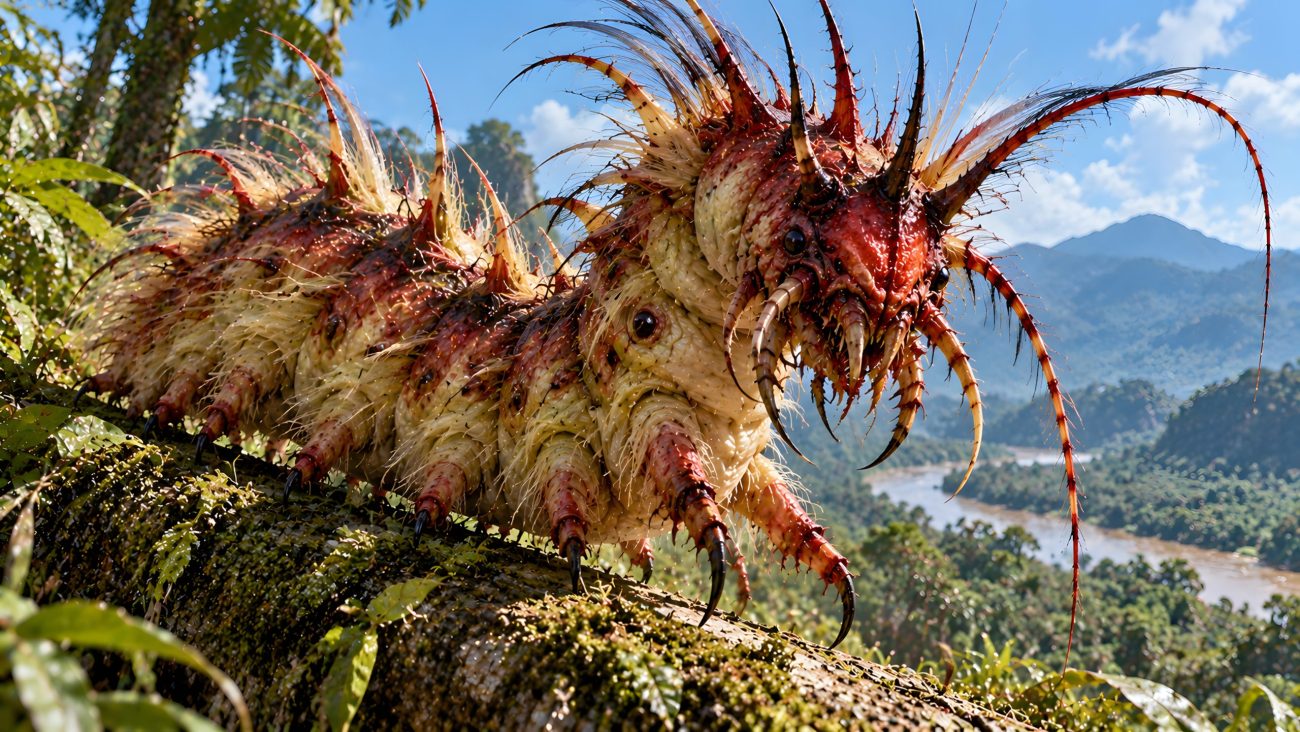
The Bès Kěmwar, or maggot spirit, is one of the many disease spirits known to the Jah Hut people of Malaysia. It can appear as a maggot or caterpillar, with different forms distinguished by features such as hair, thorns, and wings. These spirits inhabit vegetation and trees, feed on crops, and inflict painful illnesses on humans. Some cause aches in the bones, joints, and muscles, while others bring swelling, itching, throat irritation, and hair loss.

One kind of maggot spirit lives in rotten tree trunks, where it feeds on the decaying wood. Anyone approaching its fallen tree risks being bitten on the leg. The bite causes redness, swelling, and itching, and eventually all the victim’s toenails fall off. According to the account, the swelling disappears after two or three months. Another variety lives beside rivers and appears only during the jungle-fruit season in February. It flies onto the heads of elderly people, causing their hair to fall out.

The tip-of-leaf maggot spirit feeds on coconut and rice leaves, threatening cultivated crops. To protect the plants, a pawang, or ritual specialist, blesses them with a pounded mixture of daun setawa and kunyit mulai. The mixture is burned to ashes, which are then scattered over the plantation.

Bès Kěmwar Jě’la, the thorny-maggot spirit, lives on leaves and causes restlessness and rheumatism. Bès Kěmwar Sòk, the hairy caterpillar spirit, lives at the tips of tree branches. Its hairs may fall into drinking water, causing irritation and swelling in the throat. A poyang can cure the affliction in its early stages, but untreated victims eventually die because they can no longer eat or drink.

Bès Kěmwar Těrbang, the flying-maggot spirit, lives in bushes and feeds on the leaves of the daun mengkirai tree. Its urine and faeces fall onto people passing beneath the tree, causing baldness and swelling. At night, it flies onto house roofs and opens them up. Children who see its eyes reflecting like mirrors become terrified and cry. Burning daun-kesim is said to keep this nocturnal spirit away.


Sources

“Bes Kemwar.” A Book of Creatures, April 17, 2020. https://abookofcreatures.com/2020/04/17/bes-kemwar/


Bès Kotak

Tradition: Malaysian Mythology
Alternative Names: Box Spirit
Category: Object


The Myth

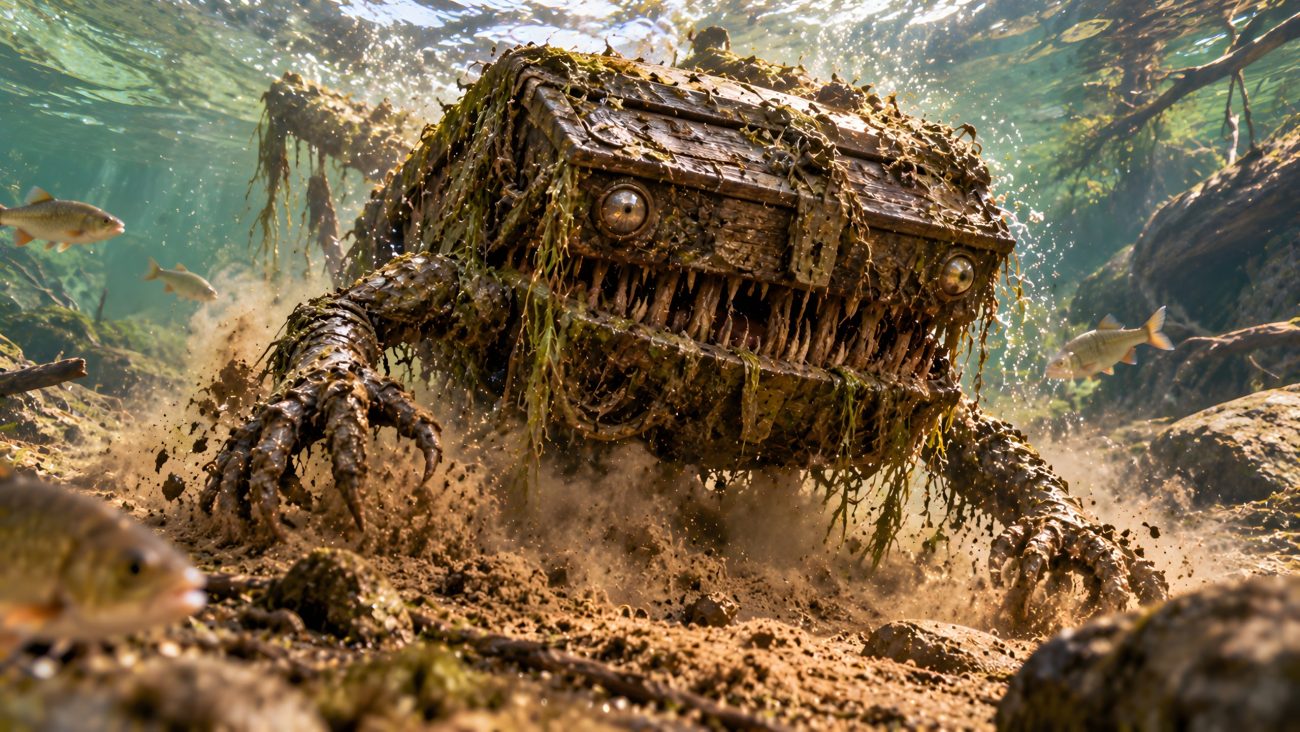
Bès Kotak, meaning “box spirit,” is a supernatural being in the traditions of the Jah Hut people of Malaysia. It is described as having a box-like appearance and inhabiting muddy hollows in rivers. As a river spirit, it dwells beneath the water in places where the riverbed is soft and muddy, making it dangerous to those who enter its domain.

When someone dives into a river to catch fish, Bès Kotak may press down upon them or sit on their body, making them unnaturally heavy. The victim sinks into the mud and drowns, unable to escape the spirit’s grip. The danger becomes apparent only after the person has entered the water, leaving little opportunity to resist.

According to the account, the victim’s body floats to the surface two or three days later. This grim outcome serves as a warning about the dangers of entering the muddy hollows inhabited by Bès Kotak. The spirit embodies the deadly hazards concealed beneath seemingly ordinary river waters, punishing those who venture into its underwater domain.


Sources

“Bès Kotak.” A Book of Creatures, November 23, 2020. https://abookofcreatures.com/2020/11/23/bes-kotak/


Bès Jě’la Kòy

Tradition: Malay Mythology
Alternative Names: Spiky-Head Spirit
Category: Forest dweller


The Myth

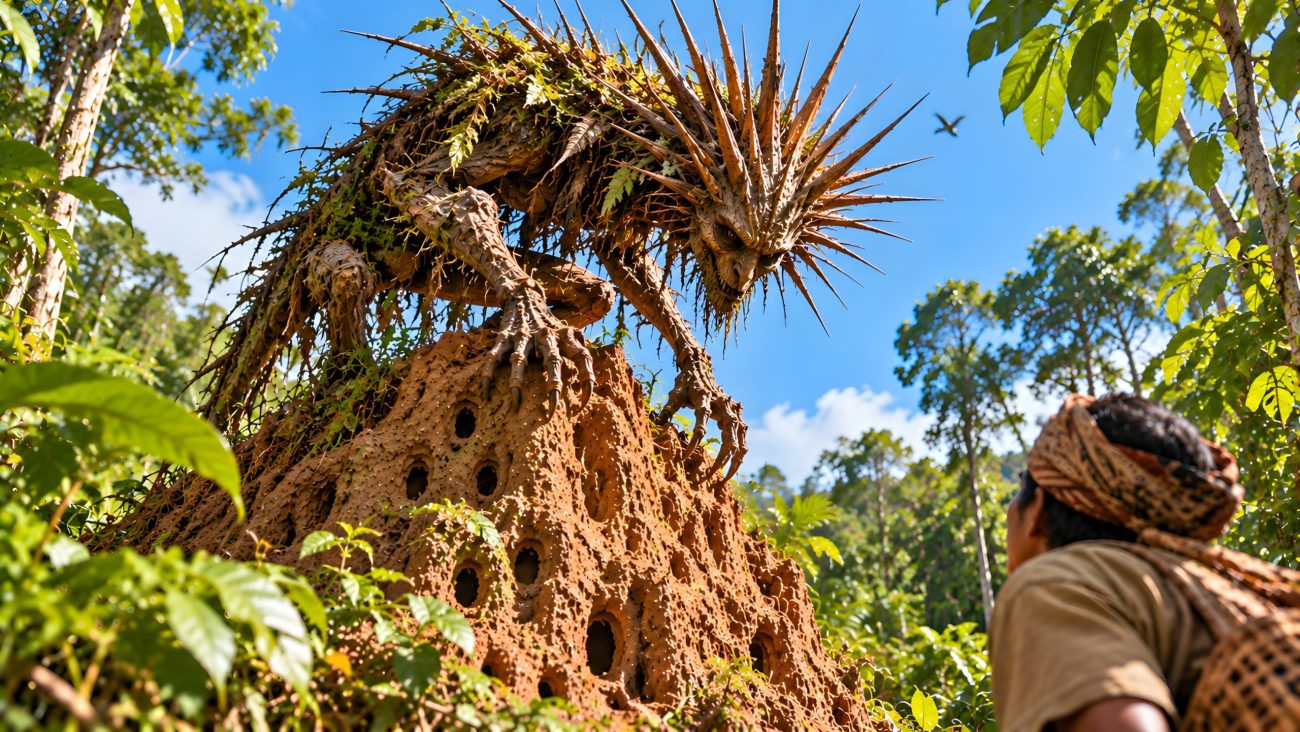
The Bès Jě’la Kòy, meaning “Spiky-Head Spirit,” is a supernatural being from the mythology of the Jah Hut people of Malaysia. It lives atop termite mounds, where it watches the world and possesses mysterious knowledge about human lifespans. Its most distinctive feature is its spiky head, which gives the spirit its name. Although its appearance is otherwise unclear, its association with termite hills makes these mounds the dwelling places of a being connected to fate and death.

The Spiky-Head Spirit knows how long every person is destined to live. When it encounters someone whose lifespan it judges to be too short, it takes that person into its termite mound. Rather than simply killing its victim, the spirit keeps them there to become its companion forever. Those taken into the mound are thus removed from the human world and drawn into the spirit’s strange, eternal existence.

The Bès Jě’la Kòy takes one person into its termite mound each year. Its quiet residence atop the mound conceals its knowledge of human fate and its power to claim a life. Anyone who encounters a termite hill may unknowingly be near a spirit that watches human lifespans and chooses someone to accompany it forever.


Sources

“Bès Jě’la Kòy.” A Book of Creatures. July 26, 2019. https://abookofcreatures.com/2019/07/26/bes-jela-koy/


Moyang Lang Kuit

Tradition / Region: Malaysian Mythology
Alternative names: —
Category: Bird


The Myth

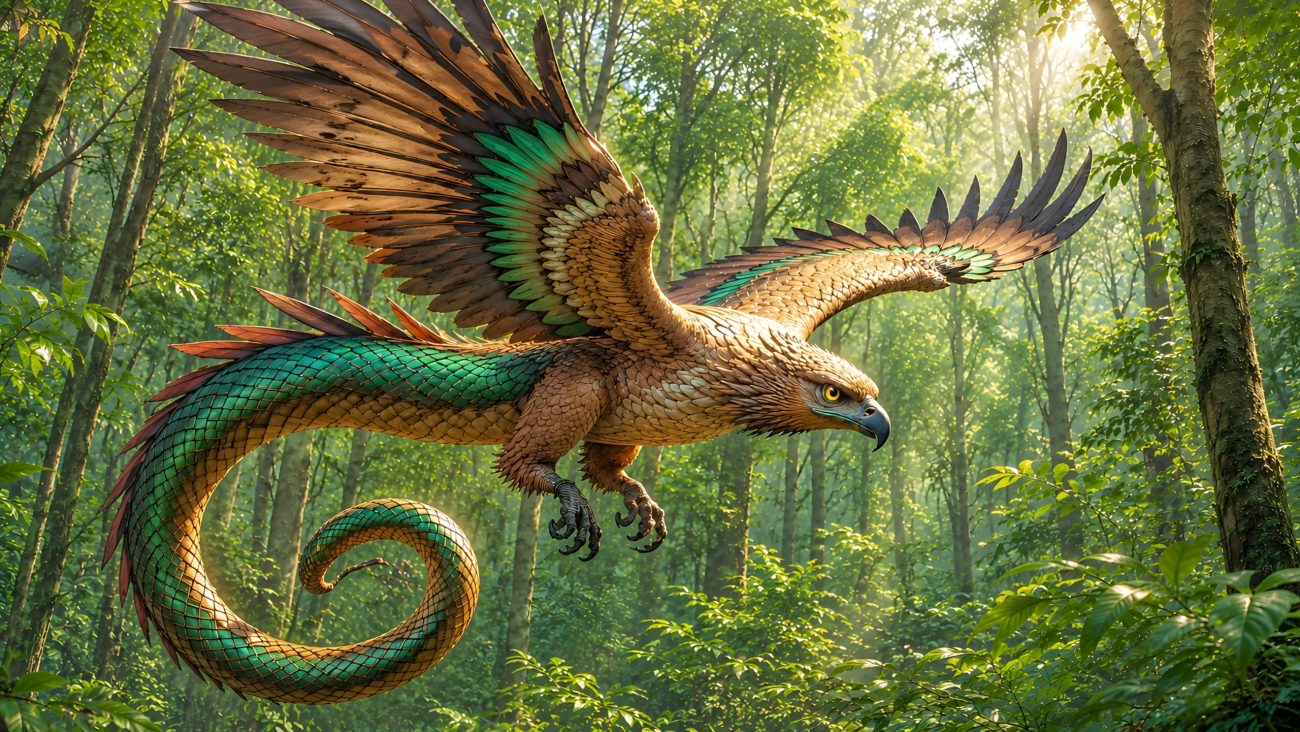
Moyang Lang Kuit is a supernatural serpent-eagle spirit in the folklore of the Mah Meri people of western Peninsular Malaysia.

It appears as a fearsome creature with the body of a great serpent and the upper form of a powerful eagle. Unlike many mythical beasts, it is not known for attacking people directly. Instead, its appearance is considered a terrible omen.

To see the Moyang Lang Kuit is believed to foretell the death of a person. In some traditions, its appearance predicts an even greater disaster—that an entire village will soon be abandoned, leaving its homes empty.

For this reason, the serpent-eagle is regarded as a harbinger of misfortune whose arrival warns that tragedy or the end of a community is near.


Sources

Bestiary.us. (n.d.). Moiang Lang Kuit. In New Bestiary: Encyclopedia of Imaginary Beings. Retrieved June 29, 2026, from https://www.bestiary.us/moiang-lang-kuit/en


Hantu Raya

Tradition / Region: Malaysian Mythology
Alternative names: Great Ghost
Category: Ghost


The Myth

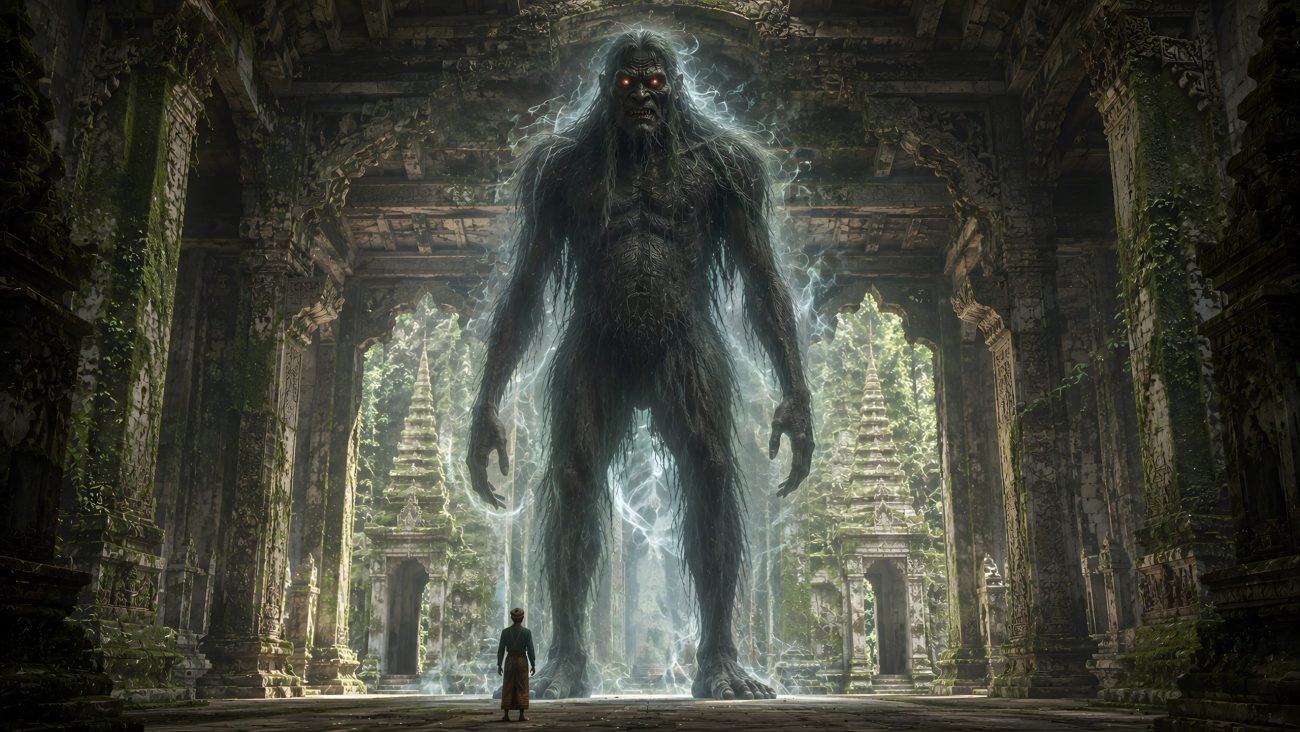
The Hantu Raya is a powerful familiar spirit that serves practitioners of black magic. It usually appears as a towering humanoid with a black, hairy body, rough gray skin, glowing red eyes, long sharp teeth, and a face largely free of hair. One of its most feared abilities is assuming the exact appearance of its master, allowing it to act as a perfect supernatural double.

According to Malay folklore, the Hantu Raya grants extraordinary strength and assistance to the person who controls it. It can perform heavy labor such as farming and clearing fields with superhuman speed, allowing its master to remain elsewhere while the work is completed. Because it can perfectly imitate its owner’s appearance, it can also provide an alibi, remaining at home while the real owner secretly travels, commits crimes, or engages in illicit affairs without arousing suspicion.

The spirit must be carefully maintained through regular offerings known as ancak, consisting of yellow glutinous rice, roasted chicken, eggs, rice flakes, and other foods prepared specifically for spirits. Failure to provide these offerings on time is believed to anger the Hantu Raya, causing it to turn against its master and bring misfortune.

The Hantu Raya has also been blamed for mysterious deaths during childbirth, particularly in times before modern medicine. Such tragedies were sometimes attributed to the invisible influence of the spirit rather than natural causes.

Unlike an ordinary ghost, the Hantu Raya is not simply a wandering spirit but a supernatural servant bound to its master through dark magic. Its immense power makes it one of the most dangerous and coveted spirit familiars in Malay folklore, capable of bringing prosperity and protection when controlled, but ruin if neglected or released.


Sources

Wikipedia contributors. (n.d.). Hantu Raya. In Wikipedia. Retrieved June 27, 2026, from https://en.wikipedia.org/wiki/Hantu_Raya


Hantu Tinggi

Tradition / Region: Malaysian Mythology
Alternative names: Tall Ghost, Bajang Tinggi, Tinggi Puaka, Bapak Hantu, Bapak Jin
Category: Ghost, Giant


The Myth

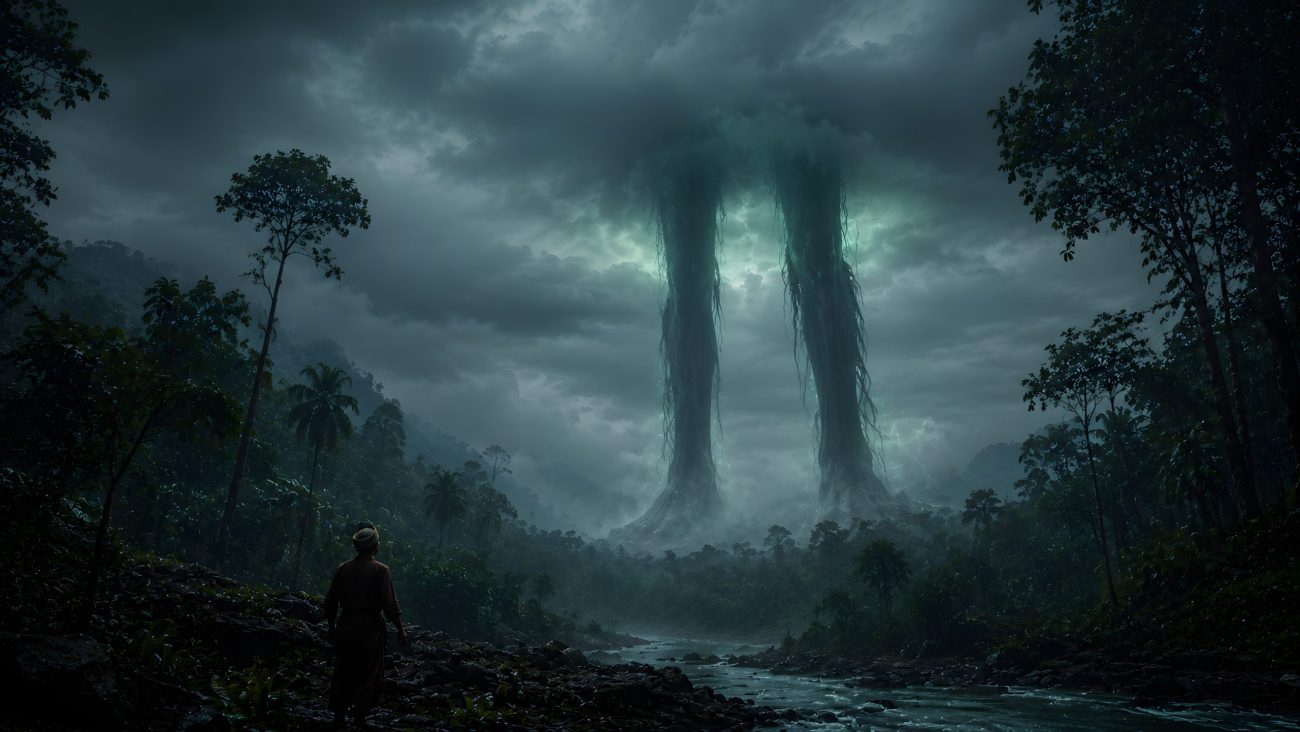
The Hantu Tinggi is a colossal supernatural being whose enormous body towers so high that its upper half disappears into the clouds. Resembling the fearsome Hantu Raya or the Indonesian Genderuwo, it is said to be thousands of times larger than any ordinary spirit. A single strand of hair from its leg is believed to be as thick as a muscular man’s arm.

According to Malaysian folklore, the Hantu Tinggi dwells in remote forests, mountains, and isolated wilderness. It is considered an immensely ancient being, existing since before the arrival of humanity and, in some traditions, even before the creation of Iblis. Because of its unimaginable size, a person may unknowingly walk between its legs or beneath its towering form without immediately realizing what they have encountered.

Looking directly at the Hantu Tinggi is said to bring terrible consequences. Those who meet its gaze may be struck blind, while others suffer broken necks, damaged spines, or become hopelessly lost after being drawn into the Ghaib Realm, the hidden supernatural world inhabited by spirits. For this reason, parents traditionally warned children to avoid lonely forests, hills, and mountains, especially after dark.

Protection against the Hantu Tinggi is believed to come through the recitation of verses from the Qur’an and sincere prayers. Those thought to have been cursed by the giant spirit often seek help from a bomoh, pawang, dukun, imam, or other Islamic spiritual healer to remove its influence.

Although often confused with the Hantu Galah, a bamboo-like forest spirit, the Hantu Tinggi is regarded as a completely different entity. Rather than resembling a living bamboo, it is an unimaginably massive giant whose presence alone inspires awe and terror.

Thus the Hantu Tinggi is remembered as one of Malaysia’s largest and most mysterious supernatural beings—a towering primordial spirit whose head vanishes into the heavens and whose mere gaze can bring ruin to those unfortunate enough to encounter it.


Sources

Wikipedia contributors. (n.d.). Hantu Tinggi. In Wikipedia. Retrieved June 27, 2026, from https://en.wikipedia.org/wiki/Hantu_Tinggi


Kuntilanak

Tradition / Region: Indonesia Mythology, Malaysia Mythology, and Singapore Mythology
Alternative names: Pontianak, Hantu Langsuyar
Category: Ghost


The Myth

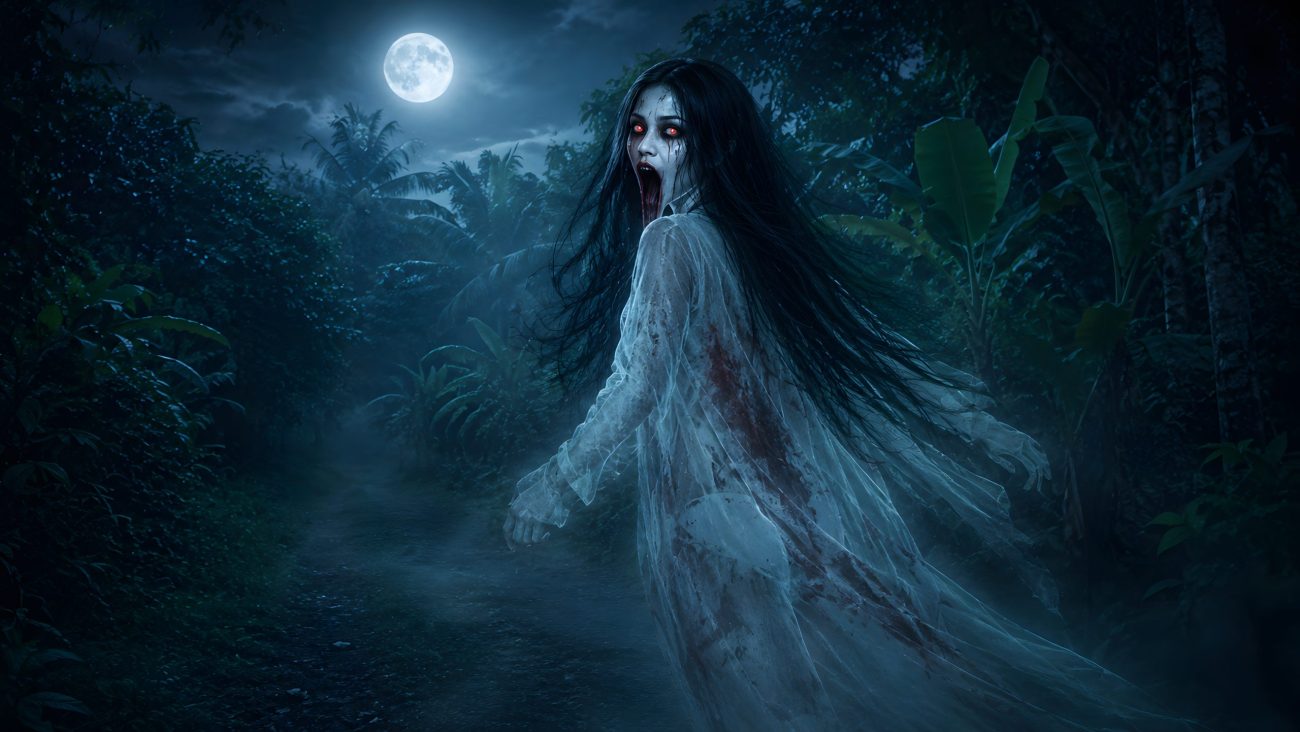
The Kuntilanak, known in Malaysia as the Pontianak, is one of the most feared female spirits of Southeast Asia. She appears as a beautiful woman with pale skin, long black hair, red eyes, and a white dress stained with blood. Beneath this alluring form hides a horrifying monster with long fangs and razor-sharp claws.

The spirit is commonly associated with women who died during childbirth or with unborn children that never entered the world. Some traditions describe the Kuntilanak as the daughter of the Langsuir, while others regard her as the restless soul of a woman consumed by rage and sorrow.

She emerges at night, especially during the full moon. Her presence is announced by the cries of an infant, feminine laughter, or the scent of plumeria flowers, which is often followed by the odor of decay. People say that if her laughter sounds distant, she is nearby, but if it sounds close, she is still far away. Dogs howling or whining during the night are also considered signs that she is approaching.

The Kuntilanak uses her beauty to lure unsuspecting victims. Once close, she reveals her true form and tears open their bodies with her claws, devouring their internal organs. Some traditions claim that she especially seeks revenge upon men, while others say she attacks pregnant women and children. In Indonesia, she is also believed to prey upon virgins and young women, sometimes appearing as a white bird whose cry resembles the sound “ke-ke-ke.”

One of her most terrifying forms reveals a hollow cavity in her back, exposing an empty body concealed beneath her beautiful appearance. She may also transform into an owl or a great white bird while searching for prey.

During the day, her spirit is said to dwell within banana trees. According to popular belief, she can be subdued by driving a nail into the back of her neck or the top of her head. Doing so transforms her into a beautiful and obedient woman, remaining harmless for as long as the nail is left in place.

The city of Pontianak in West Kalimantan derives its name from these spirits. Tradition says that when Sultan Syarif Abdurrahman sought to establish the settlement, the area was haunted by Pontianaks. He and his followers drove them away with cannon fire before building a mosque and palace, and bamboo cannons are still fired during celebrations in memory of this event.

Thus, the Kuntilanak remains one of the most dreaded ghosts of Southeast Asia: a white-clad beauty whose laughter echoes through the night and whose monstrous hunger waits behind a lovely face.


Sources

Wikipedia contributors. (n.d.). Kuntilanak. In Wikipedia. Retrieved June 20, 2026, from https://en.wikipedia.org/wiki/Kuntilanak