Bès Rap

Tradition: Malaysian Mythology
Alternative Names: Pig Spirit
Category: Pig


The Myth

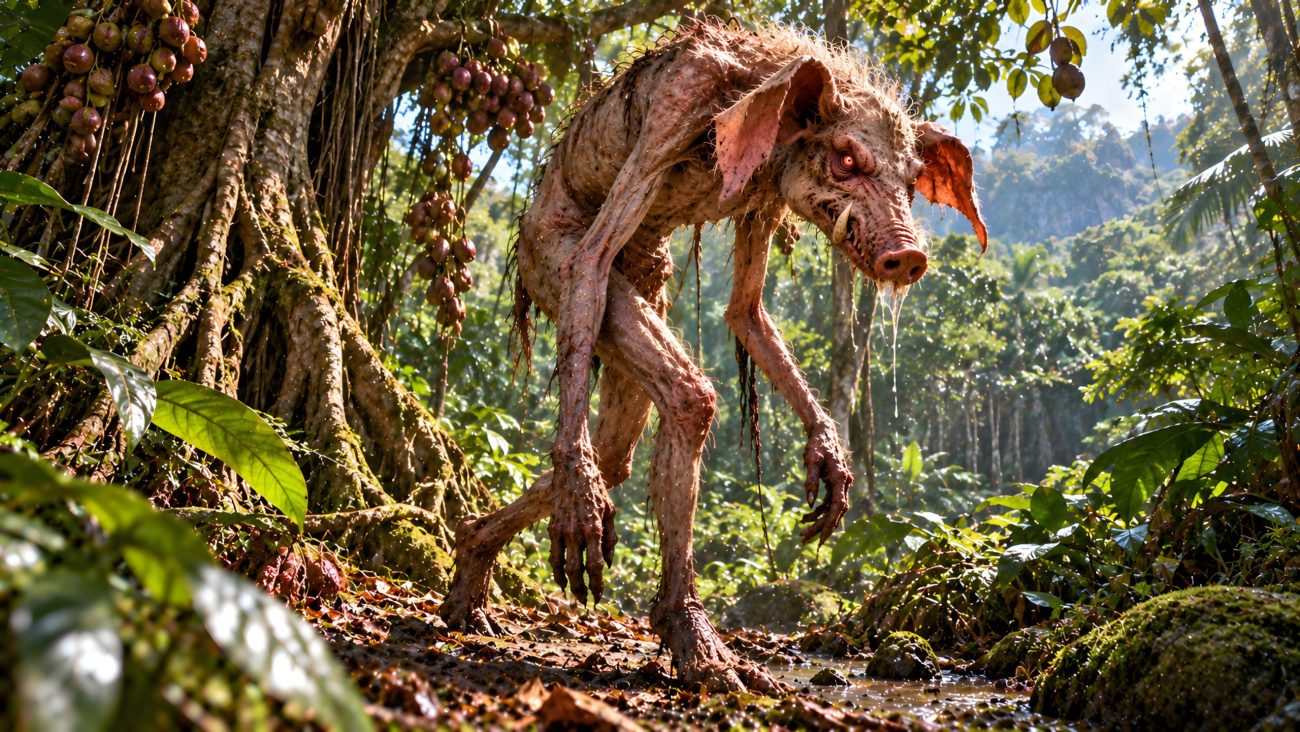
Bès Rap, meaning “pig spirit,” is a supernatural being in the traditions of the Jah Hut people of Malaysia. It inhabits the deep jungle, living among the roots of the pokok ara tree. The spirit is especially active when the tree bears fruit, making this period dangerous for anyone who enters the forest to gather it.

Those who approach the pokok ara to collect its fruit risk being attacked by Bès Rap, which blows its saliva at them. This causes severe illness, characterized by foaming at the mouth. According to tradition, only the blessing of a poyang, a traditional spiritual practitioner, can save the afflicted person from the spirit’s attack.

Even the spirit’s droppings are dangerous. Anyone who steps on its toxic faeces may suffer from an intense heat that penetrates the body through the toes, eventually causing illness accompanied by bubbling and frothing saliva. Bès Rap thus makes both the fruiting tree and the ground around its dwelling hazardous to those who venture into its territory.


Sources

“Bes Rap.” A Book of Creatures, February 5, 2021. https://abookofcreatures.com/2021/02/05/bes-rap/

Puaka

Tradition: Malaysian Mythology
Alternative Names: Pig Demon, Puaka
Category: Pig


The Myth

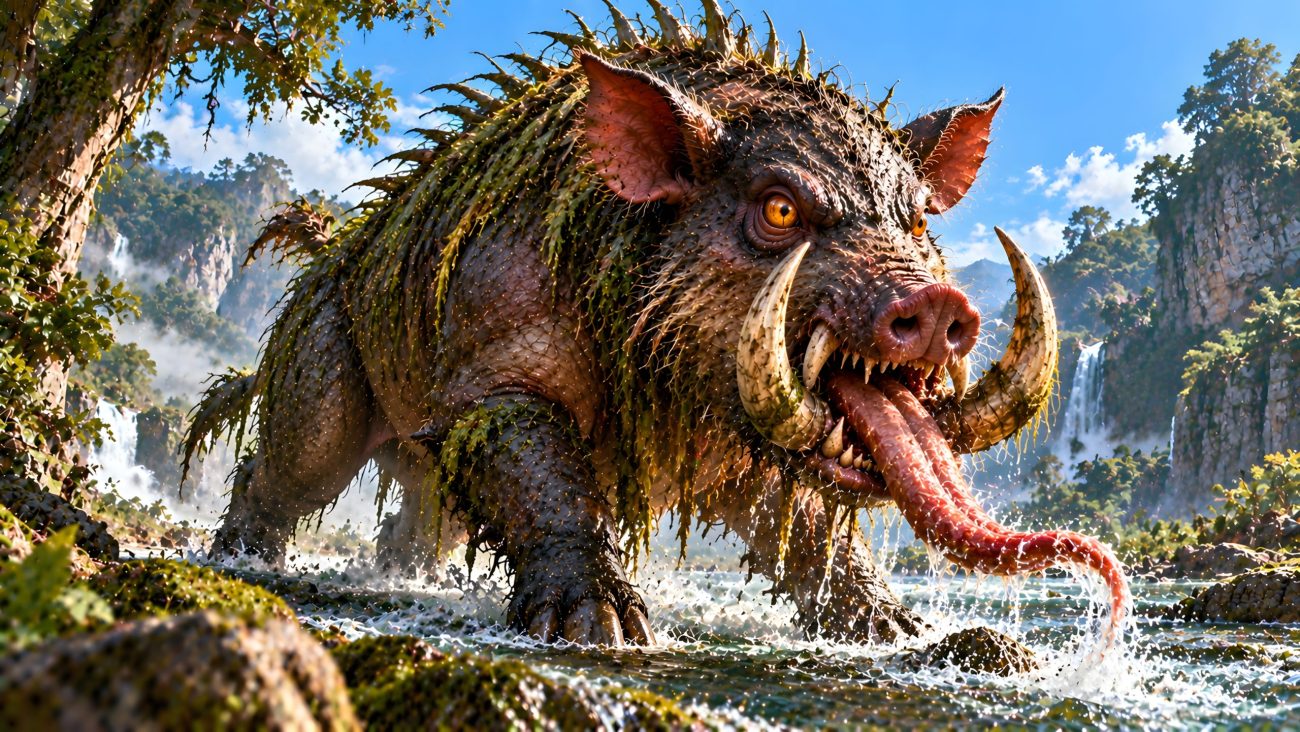
The Puaka, whose name means “pig,” is a demonic creature in Dusun mythology that guards water in eddies. It resembles a pig with a razor-sharp tongue and is said to feed from trees. Puakas can climb to reach branches by standing on one another’s backs, forming a living tower to reach their food.

The Puaka is a dangerous pursuer. When someone encounters one, it is said to attack whenever its victim moves and stop whenever the victim stands still. If the creature catches its prey, it licks the victim’s bones clean with its sharp tongue. One traditional method of escaping is to cross a stream. Although the Puaka may follow across the water, it will pause once it reaches dry land to lick itself dry. In doing so, it supposedly licks the flesh from its own bones, giving its intended victim an opportunity to escape.

The name puaka also has a wider linguistic distribution across Polynesian and other island languages, where related forms commonly mean “pig.” Examples include puaka in Rarotongan, Mangarevan, Rotuman, and Malay; vuaka in Fijian; puaʻa in Samoan; and poaka in Māori. Although the word has been compared with terms such as Sanskrit sukara, Latin porcus, and English porker, the source suggests that it may have an independent Polynesian origin. In some regions, puaka came to refer specifically to a pig-like demon, while in others its original meaning of “pig” may have been lost, possibly through the influence of Islam.


Sources

“Puaka.” A Book of Creatures, April 13, 2015. https://abookofcreatures.com/2015/04/13/puaka/