Yeti

Tradition / Region: Bhutan Mythology, Nepali Mythology, Indian Mythology, Chinese Mythology, Russian Mythology
Alternate Names: Abominable Snowman, Mi-rgod, Wild Man
Category: Mountain Dweller


The Myth

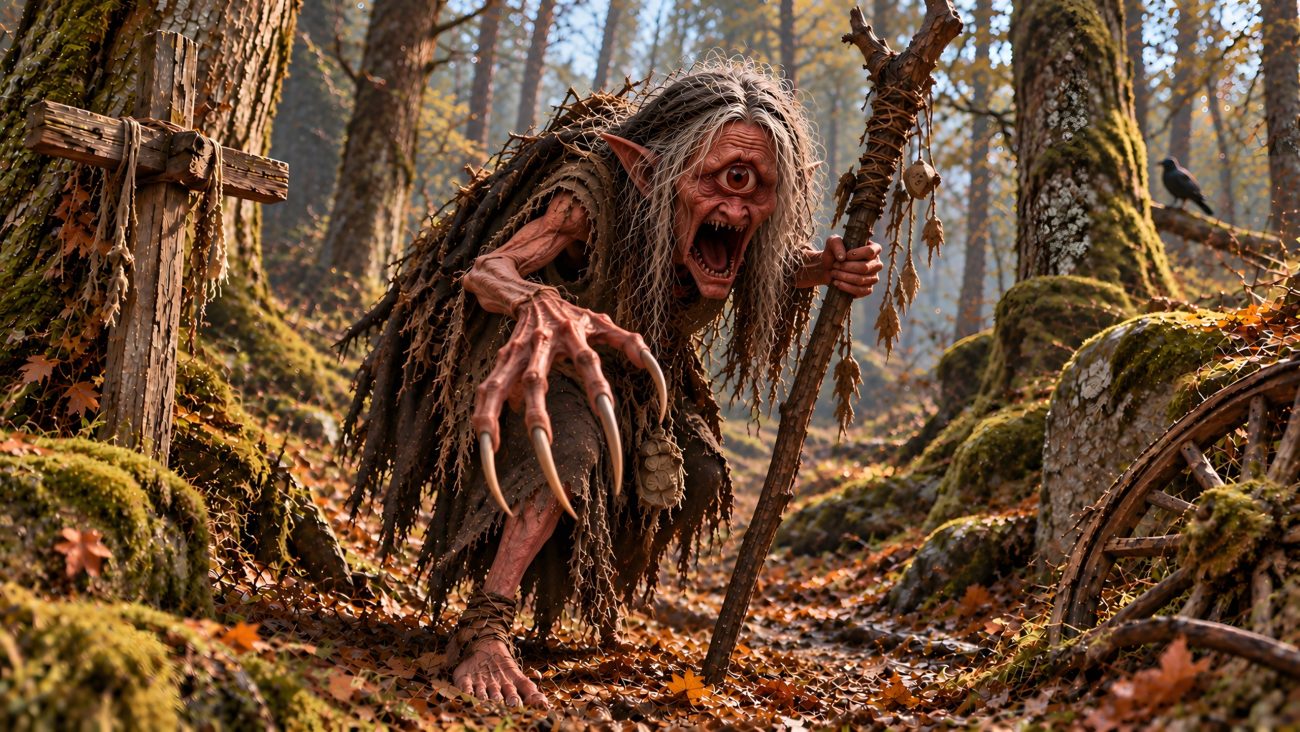
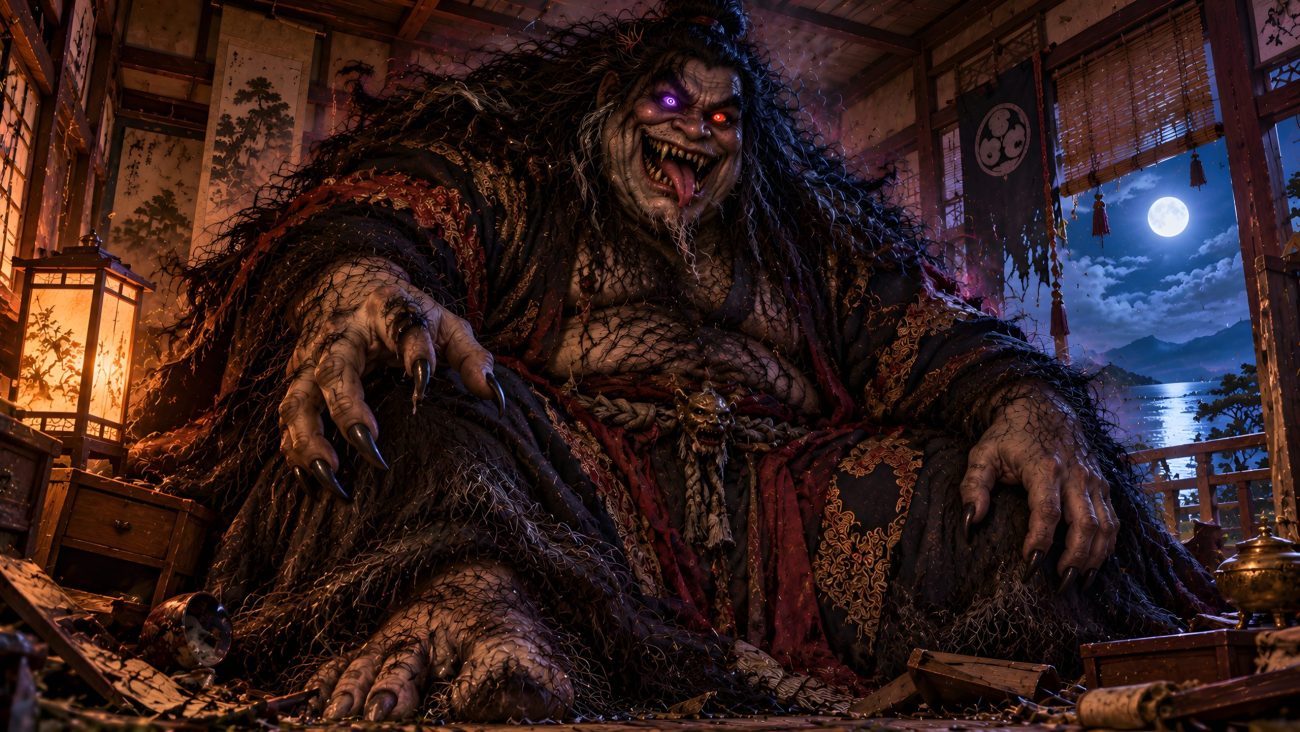
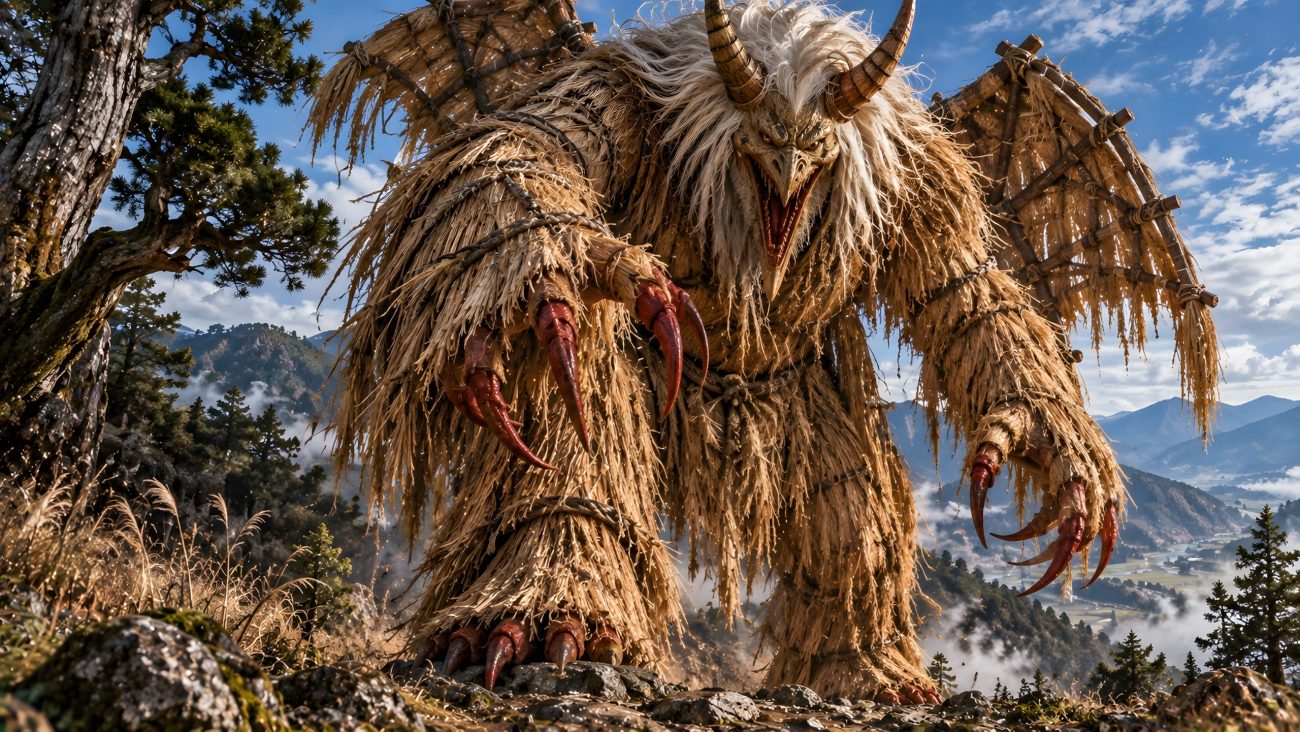
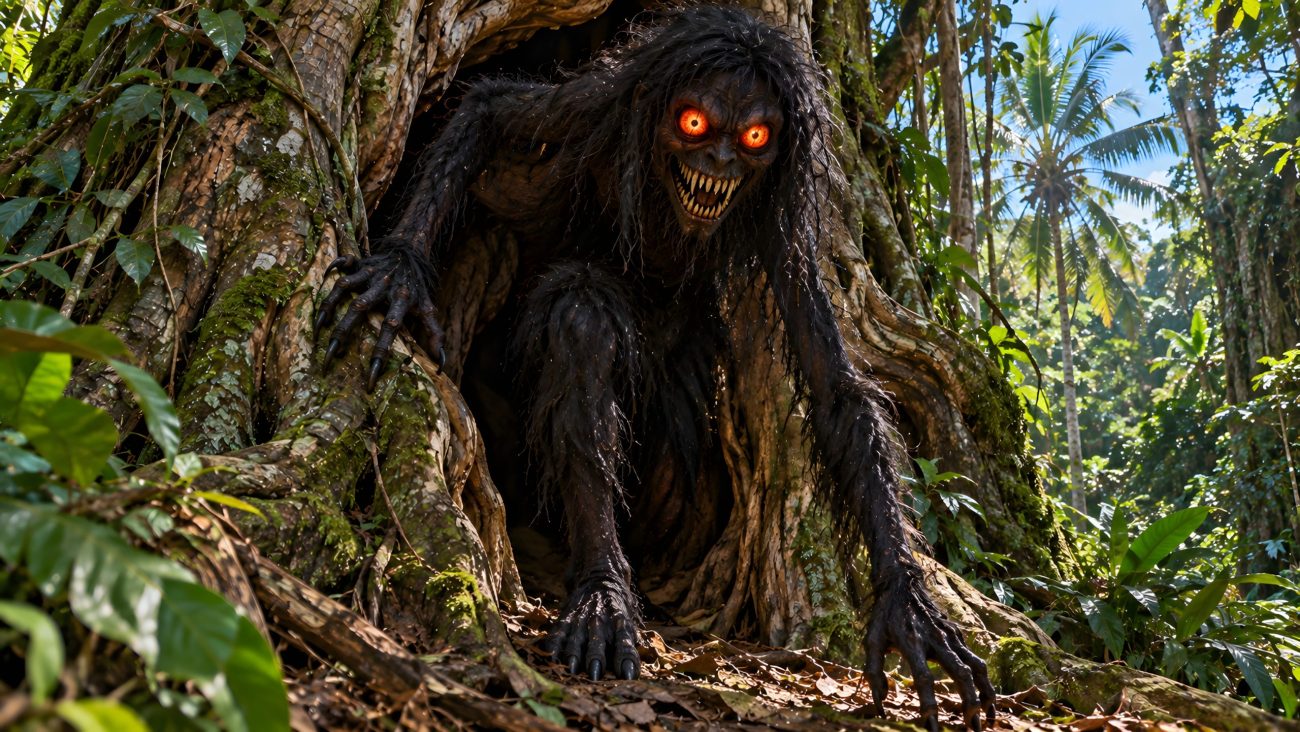
The Yeti is a legendary ape-like being said to inhabit the remote mountains and glaciers of the Himalayas. Descriptions vary between regions, but it is most often portrayed as a massive hairy humanoid creature that walks upright like a man. Its body is covered in dark or reddish fur, and it is associated with enormous footprints found in snow and ice. In older Himalayan traditions, the Yeti was not merely viewed as an animal but as a mysterious supernatural being connected to mountains, wilderness, and spiritual power.

Among several Himalayan peoples, especially before the spread of Buddhism, the Yeti was tied to religious beliefs. Some Lepcha traditions described a “Glacier Being” worshipped as a spirit or god of the hunt. Followers of the ancient Bön religion believed the blood of the wild mountain being possessed ritual power and could be used in spiritual ceremonies. In these stories the creature was depicted carrying large stones as weapons and roaming isolated snowy valleys far from human settlements.

In Tibetan Buddhist traditions, the Yeti became less of a god and more of a powerful nonhuman creature living beyond civilization. Some stories describe Yetis helping monks, saints, or religious figures after being tamed through spiritual teachings. Images of Yetis were sometimes carried in ceremonies as protective guardians against evil spirits. Despite this, encountering one was usually considered a terrible omen. Hearing its cries or glimpsing it in the mountains was believed to foretell danger, death, or misfortune unless the witness performed religious acts to cleanse the bad luck.

The Yeti became widely known outside the Himalayas during the nineteenth century when explorers and travelers reported seeing strange footprints and hairy creatures in remote mountain regions. Trekkers described tall bipedal figures covered in dark hair fleeing across snowy slopes, while guides told stories of wild mountain men wandering glaciers and forests. Reports of massive footprints in the snow became especially famous, though many later believed they may have belonged to bears or other animals distorted by melting ice.

Despite skepticism and many suspected hoaxes, the legend of the Yeti endured throughout the Himalayas and later spread into global popular culture as the “Abominable Snowman.” In folklore, however, the creature remained something more mysterious than a simple monster: a hidden being of the mountains, existing somewhere between animal, spirit, and wild man.


Sources

Wikipedia contributors. (n.d.). Yeti – Pre-19th century. In Wikipedia, from https://en.wikipedia.org/wiki/Yeti#Pre-19th_century


Helpful Fish

Tradition / Region: Qatari Mythology
Alternate Names: None Recorded
Category: Fish


The Myth

The Helpful Fish is a magical talking fish from Qatari folklore that appears in a Cinderella-like tale. Unlike dangerous sea spirits found in Gulf legends, the Helpful Fish is a benevolent creature connected to kindness, fortune, and reward. It lives in the sea and possesses supernatural powers, helping those who show it mercy. The fish is especially associated with granting food, wealth, fine clothing, jewelry, and good fortune to the innocent.

The story tells of a girl named Fsaijrah who lived under the cruelty of her stepmother. One day her stepmother ordered her to clean several fish by the seashore for dinner. As Fsaijrah prepared to cut the final small fish, it suddenly spoke and begged her not to kill it, promising to make her rich if she released it. Though afraid of angering her stepmother, Fsaijrah allowed the fish to escape back into the sea.

When she returned home and admitted one fish had escaped, her stepmother punished her by refusing her food. Later that night Fsaijrah was sent to throw fish bones into the sea, where the Helpful Fish appeared again. Waiting for her at the shore, it had prepared a tray of delicious food for her, rewarding her kindness.

Some time later a drums celebration was held. The stepmother dressed her own daughter in beautiful clothing and forbade Fsaijrah from attending. After they left, the Helpful Fish appeared carrying magnificent clothes, jewelry, and diamond slippers for the girl so she could secretly attend the celebration herself. Nobody recognized the beautifully dressed stranger as Fsaijrah.

As she rushed home before her stepfamily returned, one of her slippers fell into a well. The next day a shaikh discovered the glittering slipper and declared he would marry whichever woman it fit. The stepmother’s daughter failed to wear it, but when Fsaijrah tried it on, the slipper fit perfectly.

Before the wedding, the Helpful Fish returned one final time and dressed Fsaijrah in her most beautiful garments yet, covering her with pearls and red coral. Through the aid of the magical fish, the mistreated girl rose from suffering to wealth and marriage, while her stepmother’s daughter was left without the fortune she desired.


Sources

Taibah, N. J., & MacDonald, M. R. (n.d.). Folktales from the Arabian Peninsula: Tales of Bahrain, Kuwait, Oman, Qatar, Saudi Arabia, the United Arab Emirates, and Yemen. In World Folklore Series.


Bū Daryā

Tradition / Region: Bahrain Mythology, Qatari Mythology
Alternate Names: Lord of the Sea, Sea Devil, Shayṭān al-Baḥār
Category: Sea Dweller


The Myth

Bū Daryā is a monstrous sea spirit feared throughout the Persian Gulf, especially among sailors, pearl divers, and fishermen. Described as a gigantic half-human, half-fish being, the creature possessed the upper body of a man and the immense tail of a sea beast. Witnesses claimed it was enormous, hideous, and terrifying to behold, though many insisted no one had ever survived seeing it face to face. It was believed to dwell far out in the dark waters of the Gulf, haunting ships that traveled too far from shore.

According to the most common legends, Bū Daryā would silently climb aboard ships during the night while the crew slept. Sailors believed the creature moved through darkness unnoticed before dragging men away one by one to devour them in distant waters. Entire ships were sometimes said to vanish after encountering it, leaving only wreckage floating at sea. Because of this fear, pearl divers and sailors often kept night watches, staying awake in shifts to guard against attacks from the “Lord of the Sea.”

Another version of the legend tells of eerie cries echoing across the open water at night. The sounds resembled desperate human screams or mournful singing calling for help from somewhere in the darkness. Sailors who followed the cries were lured into deadly waters where Bū Daryā awaited them. Ships drawn toward the voice were believed to become lost, robbed of supplies, destroyed by storms, or dragged beneath the sea entirely. Many compared the creature’s hypnotic calls to the songs of sirens.

The only protection against Bū Daryā was believed to be the recitation of Quranic verses. Sailors repeated prayers aloud whenever strange cries were heard across the water, believing the sacred words could repel the sea demon and prevent it from luring the crew into disaster.

Among Gulf communities, the legend also became a warning tale used to frighten children away from the shoreline at night. Parents warned that if children wandered too close to the sea after dark, Bū Daryā would emerge from the water to carry them away. Despite its terrifying reputation, the creature remained one of the most enduring supernatural figures in Gulf maritime folklore, embodying the dangers, disappearances, storms, and mysteries of the open sea.


Sources

Pechcin, K. (Dyl). (n.d.). A Tale of “The Lord of the Sea” in Qatari Folklore and Tradition.

Wikipedia contributors. (n.d.). Qatari folklore – Mythical beings. In Wikipedia, from https://en.wikipedia.org/wiki/Qatari_folklore#Mythical_beings


Dilmun Serpent-Dragon

Tradition / Region: Dilmun Mythology, Bahrain Mythology, Qatari Mythology
Alternate Names: None Recorded
Category: Dragon, Snake


The Myth

The Dilmun Serpent-Dragon is a monstrous divine creature appearing in the mythology and seal art of ancient Dilmun. It is depicted as a long scaled serpent with massive jaws full of sharp teeth, large eyes, curved horns, and sometimes strange hoofed forelimbs. Certain depictions also show spikes running along its back, while some portray it crowned, suggesting that it was regarded as a supernatural or divine being rather than an ordinary beast.

The creature appears throughout Dilmun seal imagery as the enemy in a great mythological conflict. In one scene, a humanoid or divine champion leads several sacred beasts against the serpent-dragon, including a bull, lion, ibex, and a rare griffin-like creature. Together they confront the monster in what appears to be an epic supernatural battle.

Other seals depict the serpent-dragon captured, slain, or displayed upon sacrificial altars before the god Inzak. In some scenes the creature is shown stretched across offering tables after its defeat, while others appear to show the exact moment the divine champion strikes the fatal blow. The serpent-dragon’s death seems to represent the victory of divine order over a dangerous force tied to chaos and the sea.

The serpent-dragon was also closely associated with Dilmun ships. Ancient Dilmun boats often carried horned figureheads resembling the creature’s head, suggesting sailors believed the beast possessed power over the sea and invoked its image for protection or sacred authority during voyages across the Persian Gulf.

Very little of the full myth survives beyond the seal imagery, but the surviving scenes consistently portray the Dilmun Serpent-Dragon as a primordial chaos beast defeated by divine forces in one of the central mythological conflicts of ancient Dilmun tradition.


Sources

Laursen, S. T. (n.d.). Dilmun boats on seals, horned figureheads, and the serpent/dragon slaying myth, c. 2050–1500 BC.


Dilmun Griffin

Tradition / Region: Dilmun Mythology, Bahrain Mythology, Qatari Mythology
Alternate Names: None Recorded
Category: Bird


The Myth

The Dilmun Griffin is a rare chimeric creature appearing on ancient Dilmun seals from the Bronze Age civilization of Dilmun. It is shown as part of a mythological battle scene in which a humanoid or divine figure leads several beasts against a great serpent or dragon.

The griffin-like creature appears beside a bull, lion, and ibex as they confront the serpent. It is depicted as one of the creatures accompanying the divine champion during the battle. In other seal scenes, the same griffin-like being appears again beside the humanoid figure, suggesting it belonged to the same mythological motif.

Very little survives about the creature itself, and no detailed myths describing its origin or nature remain. The surviving imagery only shows it participating in the sacred conflict against the serpent-dragon alongside the other beasts.


Sources

Laursen, S. T. (n.d.). Dilmun boats on seals, horned figureheads, and the serpent/dragon slaying myth, c. 2050–1500 BC, p. 7-8.


Byangoma & Byangomi

Tradition / Region: Bengali MythologyIndian Mythology
Alternate Names: Byangoma, Byangomi
Category: Bird


The Myth

The Byangoma and Byangomi are legendary birds from Bengali folklore, most famously appearing in the tales of Thakurmar Jhuli. They are mysterious human-faced birds said to dwell far beyond the world of ordinary people, at the edge of Tepantorer Math — the “Field of Three Horizons,” a vast and dangerous expanse crossed only during great journeys and quests.

Though their bodies are those of birds, they possess human faces and the ability to speak like humans. They are regarded as wise beings with knowledge of distant lands, hidden dangers, and the paths travelers must follow. The birds rarely reveal themselves openly and are usually encountered only by those who have endured long hardships to reach their remote dwelling.

According to the stories, the Byangoma are born blind. Their young remain sightless until another living being willingly offers a few drops of blood. Only then do their eyes open and their true vision awaken. Once awakened, the birds gain the wisdom and supernatural sight for which they are known.

The Byangoma are also described as immensely powerful despite their strange appearance. In the tale Lalkamal Neelkamal, the princes reach the great tree where the birds live after crossing many dangers. The Byangoma then carry the princes upon their backs and fly them safely across the endless Tepantorer Math, a distance impossible for humans to travel alone. In this role the birds act as guides and helpers, aiding only those who prove themselves worthy through courage and endurance.

Unlike many creatures in folklore, the Byangoma are not evil spirits or monsters. They are mysterious watchers who exist between the human world and distant unknown realms. They do not alter fate or fight battles themselves, but instead reveal hidden paths and help travelers continue journeys they could never complete alone.

After guiding those they choose to help, the Byangoma return once more to their solitary tree at the edge of the world, remaining distant guardians of forgotten roads and impossible horizons.


Sources

Wikipedia contributors. (n.d.). Ghosts in Bengali culture. In Wikipedia, from https://en.wikipedia.org/wiki/Ghosts_in_Bengali_culture


Mechho Bhoot

Tradition / Region:  Bengali Mythology
Alternate Names: Mecho Bhoot
Category: Spirit, Ghost


The Myth

The Mechho Bhoot is a spirit from Bengali folklore associated with fish, rivers, ponds, and lakes. Its name comes from the Bengali word machh, meaning “fish,” reflecting the ghost’s well-known obsession with them. According to folklore, people who drown while fishing or die in the water may return as Mechho Bhoots, unable to leave behind their attachment to fish and the waterways where they died.

These spirits are believed to haunt village ponds, riverbanks, marshes, and fishing areas, especially after dark. They are known for stealing fish from fishermen, kitchens, or marketplaces, and many old stories describe fish mysteriously disappearing during the night as the work of a Mechho Bhoot. Because fishing has always been central to life in Bengal and Bangladesh, stories about these spirits became common in riverside villages.

The Mechho Bhoot is usually described as a ghostly human figure connected to water and darkness. Though sometimes portrayed as mischievous rather than openly violent, it is still feared because of its association with drowning and isolated waters at night. Villagers often warned children and fishermen to stay cautious around ponds and rivers after sunset, when spirits like the Mechho Bhoot were believed to wander.

Unlike many malevolent ghosts in Bengali folklore, the Mechho Bhoot is remembered mainly for its endless craving for fish and its lingering attachment to the waters where it died.


Sources

Wikipedia contributors. (n.d.). Ghosts in Bengali culture. In Wikipedia, from https://en.wikipedia.org/wiki/Ghosts_in_Bengali_culture


Boba

Tradition / Region: Bengali Mythology, Indian Mythology
Alternate Names: Boba Jinn, Bobay Dhora
Category: Demon, Spirit


The Myth

Boba is a terrifying nocturnal spirit from Bengali folklore, feared for attacking people while they sleep. The name Boba means “mute” or “speechless,” referring to the helpless condition its victims experience during an encounter. In many traditions, the entity is described as a type of jinn or malevolent spirit that preys upon sleeping humans, especially those lying flat on their backs during the night.

According to the legend, Boba attacks silently in the deepest hours of darkness. Victims suddenly awaken but find themselves completely unable to move, speak, or cry for help. They remain conscious while an invisible force pins them down. Many report feeling immense pressure on their chest, as though something heavy is crushing them, making breathing extremely difficult. The experience is accompanied by overwhelming terror and the sensation of being strangled.

Although the spirit is not always fully visible, witnesses often describe seeing a shadowy figure sitting on their chest or crouching nearby in the darkness. Some accounts portray Boba as a dark humanoid being with glowing eyes, while others describe it only as a suffocating presence lurking in the room. The victim may hear whispers, breathing, footsteps, or strange sounds while remaining unable to move even a finger. In some stories the spirit leans close to the victim’s face, watching silently while choking them.

The attack usually ends suddenly. After several moments — or what feels like an eternity — the pressure disappears and the victim regains the ability to move and speak. Many people are left shaken for hours afterward, convinced they narrowly escaped death. Because the experience feels completely real, belief in Boba became deeply rooted in Bengali culture, particularly in rural areas where stories of nighttime attacks were passed down for generations.

The phenomenon is commonly called Bobay Dhora, meaning “being seized by Boba.” Traditional beliefs warn people against sleeping alone, sleeping on their back, or falling asleep in spiritually unclean places. Some families recite prayers, verses, or protective rituals before bed to ward the spirit away. In certain stories, repeated attacks by Boba are believed to weaken a person physically and spiritually over time.

Unlike many monsters that haunt forests or rivers, Boba invades the safety of the home itself. It attacks in silence, during the most vulnerable moment of human weakness — sleep — turning the darkness of the bedroom into something terrifying and inescapable.


Sources

Wikipedia contributors. (n.d.). Ghosts in Bengali culture. In Wikipedia, from https://en.wikipedia.org/wiki/Ghosts_in_Bengali_culture


Nishi Daak

Tradition / Region: Bengali Mythology, Indian Mythology
Alternate Names: Nishir Daak, Nishi
Category: Ghost, Spirit


The Myth

The Nishi Daak is a feared nocturnal spirit from the folklore of eastern India, especially Bengal, Bihar, and Jharkhand. Its name means “Call of the Night,” and it is known for luring people away in darkness by mimicking the voice of someone they trust. The Nishi is rarely seen clearly. Most descriptions portray it as a distant, shadow-like figure that remains just beyond sight, hidden by fog, darkness, or trees. Sometimes it appears in the form of a familiar person, while other stories describe glowing red eyes and a twisted, unnatural face revealed only at the final moment before death.

The spirit hunts primarily at night, especially during moonless evenings or in heavy mist. It calls out softly to its victim using the voice of a loved one — often a parent, spouse, friend, or even a dead relative. The voice sounds completely real, which makes the spirit especially dangerous. Once the victim answers or begins following the voice, they gradually fall into a trance-like state. People under the Nishi’s influence become detached from reality and continue following the spirit no matter how far it leads them. Legends say victims can suddenly gain unnatural strength, forcing their way through obstacles or resisting anyone who tries to stop them.

The Nishi usually leads people into isolated places such as forests, abandoned roads, swamps, riverbanks, or mist-covered fields. Many stories claim the victim simply disappears forever without leaving behind a body or trace. In other tales, victims are later discovered dead, unconscious, or mentally broken after encountering the spirit. Some survivors are said to remain permanently traumatized after seeing the Nishi’s true appearance. Witnesses describe its eyes as burning like red embers and its presence as deeply unnatural and terrifying.

According to local beliefs, Nishis are often the restless souls of people who died violently, were abandoned without proper funeral rites, or failed to attain peace after death. In some traditions, entire families are cursed by such spirits, with the Nishi returning repeatedly over months or years to lure relatives to their deaths one by one. It is also believed that people killed by a Nishi may themselves become wandering night spirits if the proper rituals are not performed for them afterward.

Because of these stories, many villages developed strict warnings about answering voices after dark. People are told never to respond if someone calls their name from outside at night unless they can clearly see the caller. A familiar voice heard near lonely roads, forests, or fields is considered especially dangerous, since it may not belong to a living person at all.


Sources

Wikipedia contributors. (n.d.). Ghosts in Bengali culture. In Wikipedia, from https://en.wikipedia.org/wiki/Ghosts_in_Bengali_culture


Habetrot

Tradition / Region: English Mythology, Scottish Mythology
Alternate Names: Habitrot, Habtrot, Habbitrot
Category: Cave dweller


The Myth

Habetrot is an ancient and mysterious figure tied to spinning, cloth-making, and the hidden world beneath the earth. She is described as an old, deformed woman who lives underground, surrounded by other spinsters like herself—women whose bodies have been twisted and marked by endless years of spinning thread.

These women bear the physical cost of their craft. Some have flattened thumbs, others misshapen feet, and many have long, distorted lips from constantly wetting thread as they worked. Their appearance reflects both dedication and burden—beings shaped by labor to the point of becoming something almost inhuman.

Despite this unsettling form, Habetrot is not malevolent.

In the most well-known tale, she comes to the aid of a young woman who refuses or is unable to spin—an essential skill expected of women. Instead of punishing her, Habetrot secretly spins the yarn for her. When the girl later marries, Habetrot reveals herself (or is revealed) to the husband, showing the consequences of a life spent spinning.

Seeing the deformities of Habetrot and her companions, the husband is horrified and declares that his wife must never spin, sparing her from the same fate. In this way, Habetrot acts as both helper and warning—protecting the girl while embodying the extreme outcome of relentless labor.

Beyond this tale, Habetrot’s name appears in darker beliefs.

In border folklore, there were fears tied to stepping on “unchristened ground,” places where unbaptized or stillborn children were buried. Those who did were said to fall ill with a strange affliction—burning skin, trembling limbs, and difficulty breathing. This condition could not be cured by ordinary means.

The only remedy required an object of great purity and effort: a linen garment made under strict conditions—grown, spun, and crafted through a chain of honest and untouched processes. Crucially, the thread itself had to be spun by Habetrot.

This suggests that her work carried a special, almost sacred quality. Though she lived in darkness and appeared deformed, the products of her labor held protective and healing power.

Habetrot exists at the intersection of hardship and necessity. She is both a relic of relentless work and a quiet guardian who intervenes when needed—never fully kind, never truly cruel, but bound to the rhythms of labor, fate, and tradition.


Sources

Wikipedia contributors. (n.d.). Habetrot. In Wikipedia, from https://en.wikipedia.org/wiki/Habetrot