Tradition / Region: Icelandic Mythology
Alternative names: Cat-whale, Sea-cat
Category: Cat, Whale
The Myth
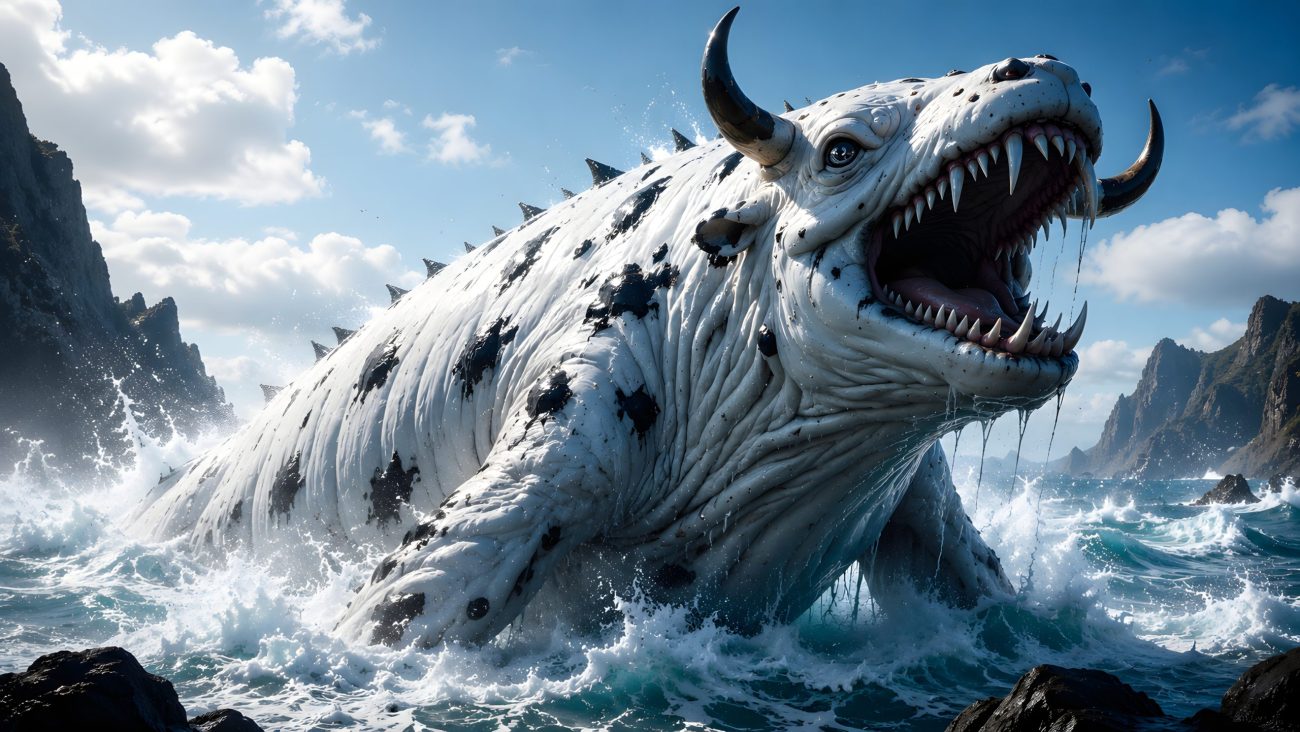
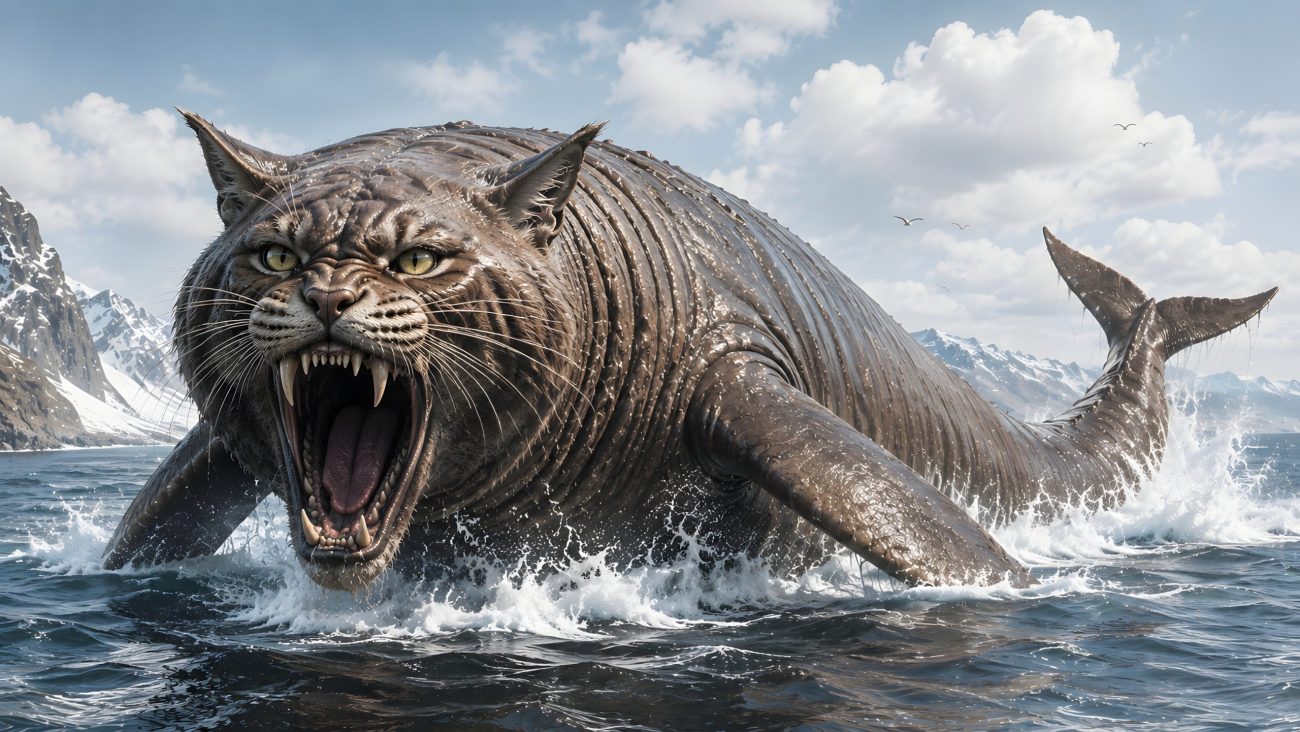
The Katthveli (“Cat-whale”) is one of Iceland’s legendary illhveli, or evil whales. Smaller than many of its monstrous relatives, it is nevertheless feared by sailors. It is said that merely speaking its name while at sea will attract the creature.
The Katthveli has the body of a small whale, dolphin, or seal with a broad front and narrower hindquarters. It has the face of a leopard, long whiskers like a cat, hooked claws on its flippers, gleaming eyes, and short tusk-like teeth. When calm it purrs as it exhales, but when angered it mews, hisses, and spits like a furious cat.
The creature is notorious for attacking boats. It swims beneath vessels to overturn them, rams their hulls, or follows ships for hours, preventing fishermen from working. One tale tells of a Katthveli that thrust its head through the side of a boat, while another describes one rearing from the sea, placing its flippers over a boat’s gunwale, hissing and snapping at the crew until a sailor fired a gun into its mouth.
A famous legend tells of Saint Brendan, who encountered a tame sea-cat that had been raised by pilgrims on an island. As it grew larger and more ravenous, it devoured all but one of its caretakers. Brendan prayed for deliverance, whereupon a gigantic whale rose from the sea, seized the monstrous sea-cat, and dragged it into the depths, where both creatures drowned.
Sources
Countess Sica. “Katthveli.” A Book of Creatures. October 26, 2015. Accessed July 28, 2026. https://abookofcreatures.com/2015/10/26/katthveli/