Yule Cat

Tradition / Region: Icelandic Mythology
Alternative names: Jólakötturinn, Jólaköttur, Christmas Cat
Category: Cat


The Myth

The Yule Cat is a gigantic, vicious cat that prowls the snowy countryside during the Christmas season. It is said to lurk outside homes searching for people who have not received new clothing before Christmas Eve. In some versions of the legend, it devours those unfortunate people, while in others it steals and eats only their Christmas food. The Yule Cat is closely associated with the ogress Grýla and the Yule Lads, and is commonly regarded as Grýla’s fearsome pet.

According to Icelandic tradition, the Yule Cat appeared each Christmas to punish laziness. Farm workers were expected to finish processing the autumn wool before the holiday. Those who completed their work were rewarded with new clothes, while those who failed received nothing. Anyone without new clothing risked becoming the Yule Cat’s next victim.

Later traditions connected the beast to Grýla and her thirteen Yule Lads. The enormous cat roamed the countryside during Christmas, and in some stories only the smallest Yule Lad, Stúfur, was capable of controlling the unruly monster, riding it across the snow-covered landscape in search of prey.


Sources

“Yule Cat.” Wikipedia: The Free Encyclopedia. Wikimedia Foundation. Accessed July 28, 2026. https://en.wikipedia.org/wiki/Yule_cat
Katthveli

Tradition / Region: Icelandic Mythology
Alternative names: Cat-whale, Sea-cat
Category: Cat, Whale


The Myth

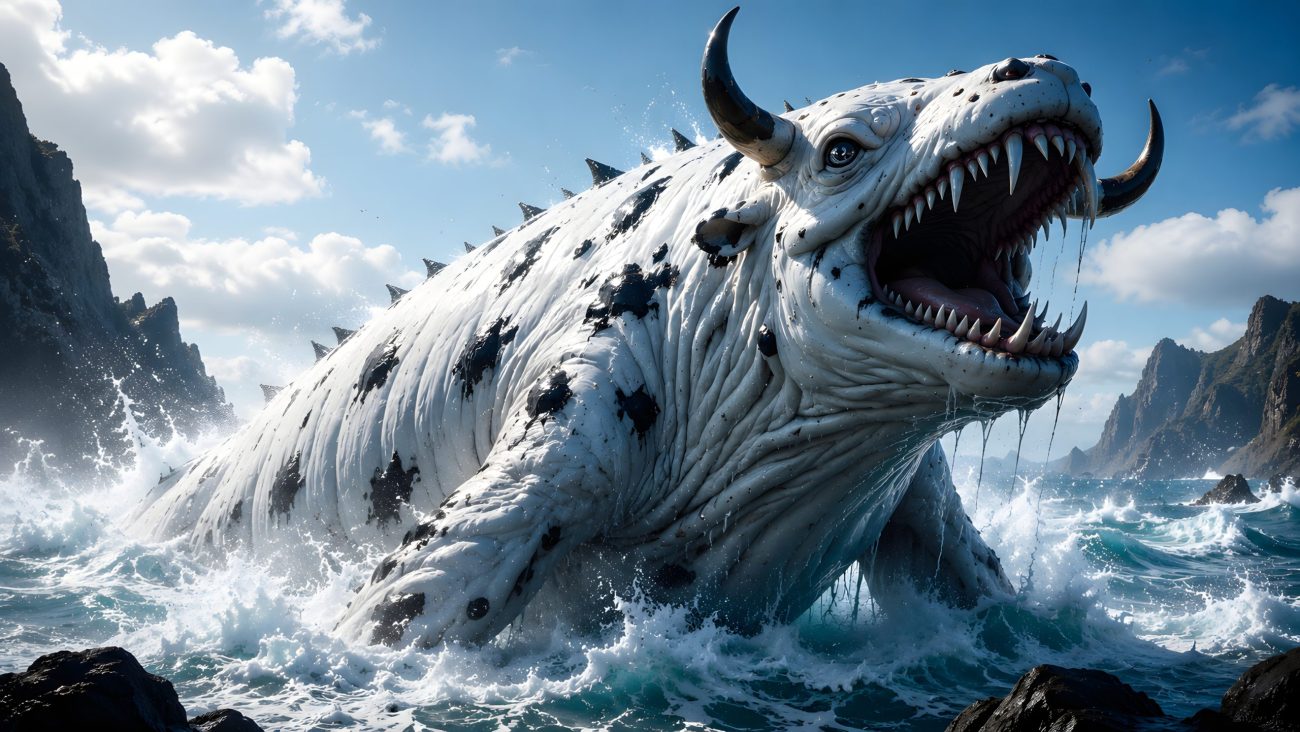
The Katthveli (“Cat-whale”) is one of Iceland’s legendary illhveli, or evil whales. Smaller than many of its monstrous relatives, it is nevertheless feared by sailors. It is said that merely speaking its name while at sea will attract the creature.

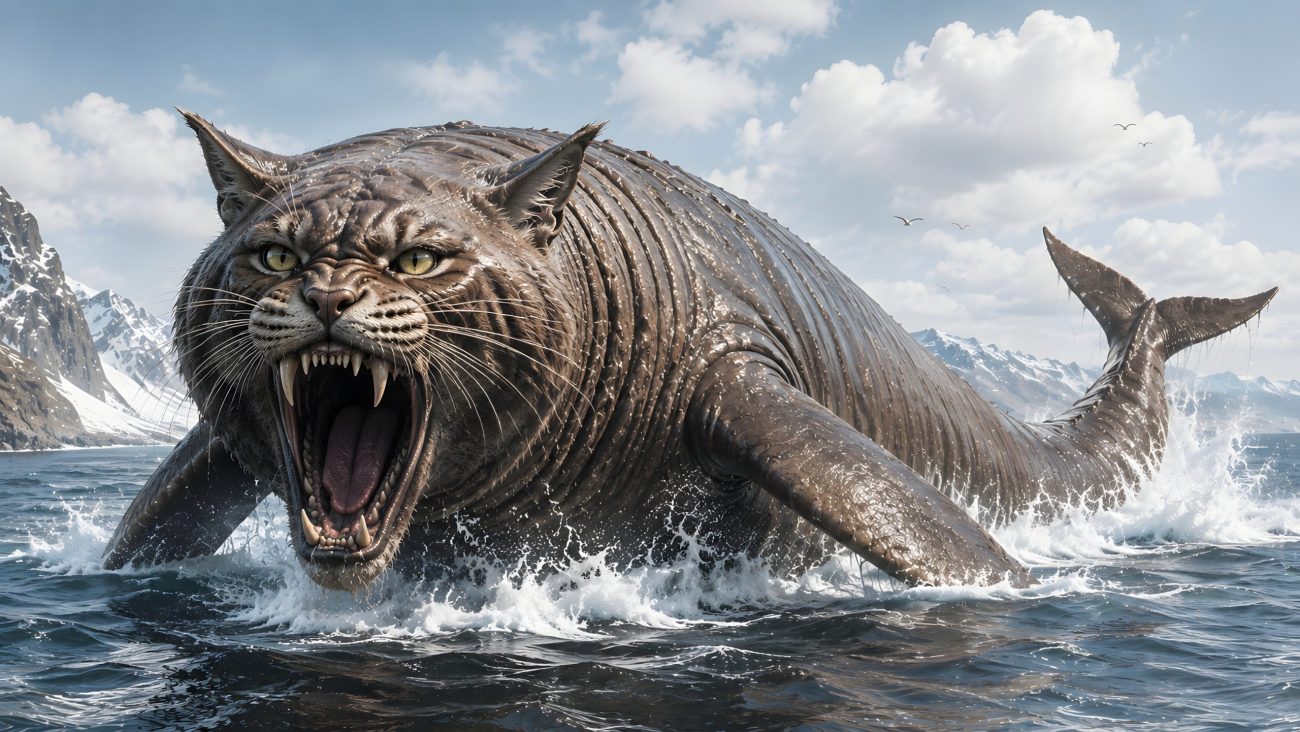
The Katthveli has the body of a small whale, dolphin, or seal with a broad front and narrower hindquarters. It has the face of a leopard, long whiskers like a cat, hooked claws on its flippers, gleaming eyes, and short tusk-like teeth. When calm it purrs as it exhales, but when angered it mews, hisses, and spits like a furious cat.

The creature is notorious for attacking boats. It swims beneath vessels to overturn them, rams their hulls, or follows ships for hours, preventing fishermen from working. One tale tells of a Katthveli that thrust its head through the side of a boat, while another describes one rearing from the sea, placing its flippers over a boat’s gunwale, hissing and snapping at the crew until a sailor fired a gun into its mouth.

A famous legend tells of Saint Brendan, who encountered a tame sea-cat that had been raised by pilgrims on an island. As it grew larger and more ravenous, it devoured all but one of its caretakers. Brendan prayed for deliverance, whereupon a gigantic whale rose from the sea, seized the monstrous sea-cat, and dragged it into the depths, where both creatures drowned.


Sources

Countess Sica. “Katthveli.” A Book of Creatures. October 26, 2015. Accessed July 28, 2026. https://abookofcreatures.com/2015/10/26/katthveli/


Bjarndýrakóngur

Tradition / Region: Icelandic Mythology
Alternative names: King of the Bears
Category: Bear


The Myth

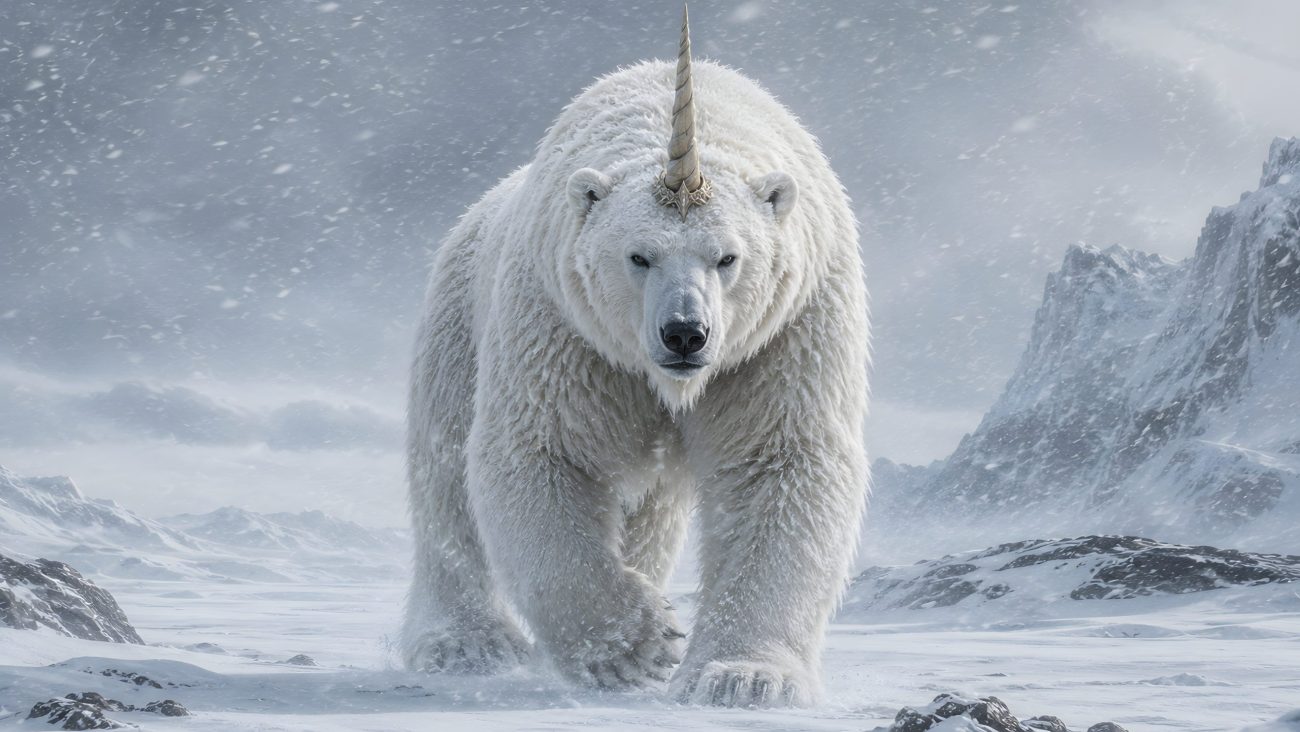
The Bjarndýrakóngur, meaning “King of the Bears,” is the legendary ruler of all polar bears in Icelandic folklore. It is said to be born from the union of a female polar bear and either a walrus or a bull. Distinguished by its red cheeks and a single horn upon its forehead, the creature carries this horn as a symbol of its royal authority. The horn ends in a sharp point capped with a shining platinum sphere that radiates light, allowing the king to find its way even through complete darkness.

The King of the Bears is renowned not only for its immense strength but also for its wisdom and justice. It understands human speech and commands absolute loyalty from every other polar bear. Although capable of killing with its horn, it does so only in self-defense or to punish bears that have broken its laws.

One famous legend tells of a Whitsun church service during the eighteenth century, when a procession of twelve or thirteen polar bears emerged from the remote parts of Iceland. At their head walked the majestic Bjarndýrakóngur. The local clergyman and congregation greeted the royal beast with bows, and the king respectfully returned the gesture before continuing its journey across southern Iceland.

During the procession, the last bear in the line killed and ate a sheep at Borgamór. The Bjarndýrakóngur immediately turned upon the offender and pierced it with its horn as punishment for its crime. After restoring order, the royal procession continued until it reached Grenivík, where the bears disappeared into the sea.

According to tradition, the only creature willing to challenge the Bjarndýrakóngur is the Redcheek, an unusually fierce polar bear marked by a patch of reddish-pink fur on one cheek. Aggressive toward every creature it encounters, the Redcheek is nevertheless no match for the wise and powerful King of the Bears.


Sources

A Book of Creatures. (2020, November 13). Bjarndýrakóngur. Retrieved June 29, 2026, from https://abookofcreatures.com/2020/11/13/bjarndyrakongur/


Thorgeir’s Bull

Tradition / Region: Icelandic Mythology
Alternative Name: –
Category: Cow


The Myth

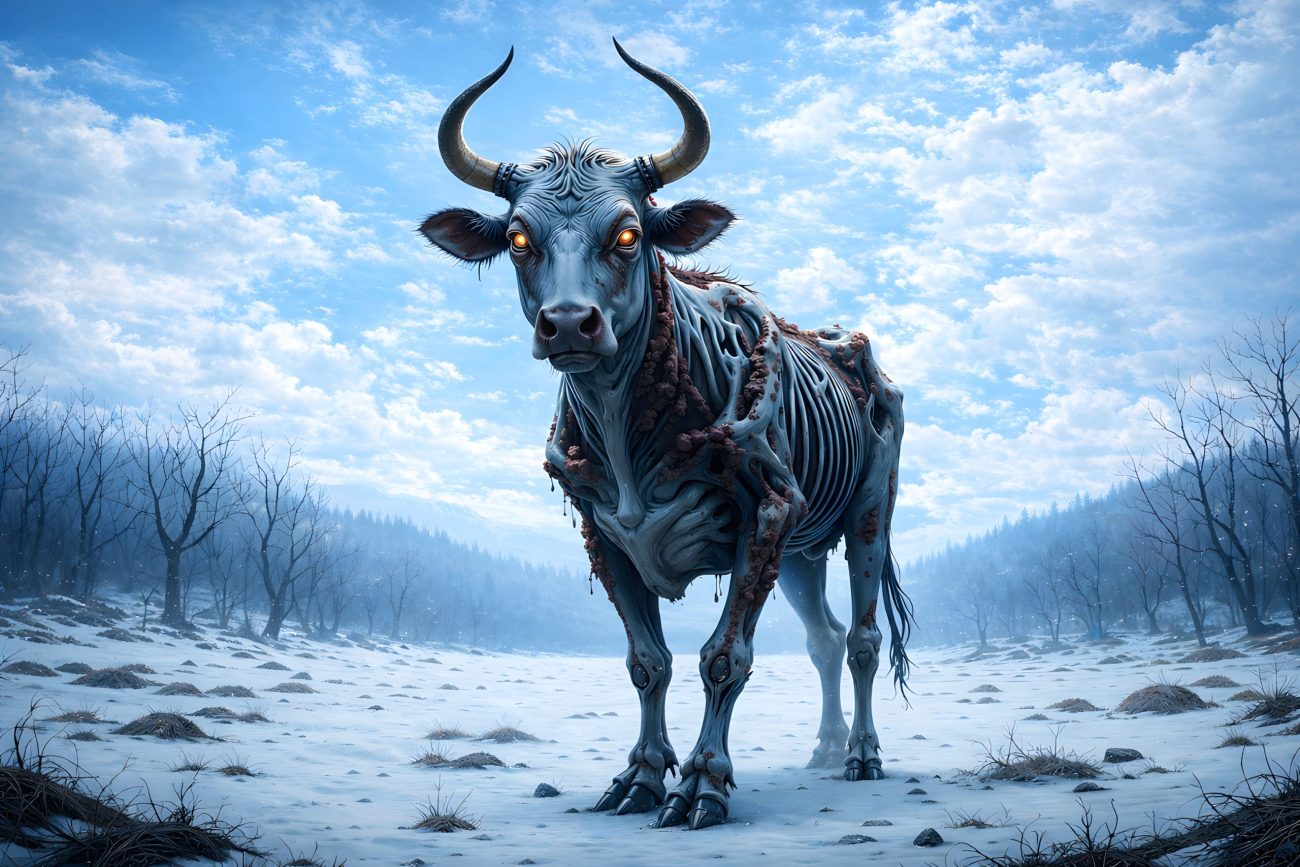
Thorgeir’s Bull was a powerful magical creature created by the Icelandic sorcerer Thorgeir the Wizard. To make it, Thorgeir flayed the hide from a newborn calf while it was still alive. He then placed inside the hide the bones or essence of eight different creatures—a bird, a man, a dog, a cat, a mouse, and two kinds of sea beasts, together with the calf itself—giving the Bull the combined nature of nine beings. Because of this, it could travel on land, in the sea, or through the air, and could appear in whatever form suited it best.

Thorgeir intended the Bull to help him win a feud with a woman named Gudrun after she rejected him. The Bull relentlessly hunted her, making her life miserable. Even when she fled between farms with armed escorts, it continued to pursue her. It tormented her so severely that she eventually died, and afterward her ghost was said to haunt the place where she had suffered.

After Gudrun’s death, the Bull remained devoted to Thorgeir and carried out his commands. It was used to stampede other people’s cattle, scatter horses, and perform acts of destruction. However, it also became increasingly dangerous to its own master. Whenever Thorgeir ordered it to perform some task, it would later return and attack him in revenge. Even Thorgeir, despite his magical knowledge, struggled to defend himself from the creature.

One day the Bull tried to kill Thorgeir. He fled into his house while his wife held their infant child. Believing the Bull wanted a sacrifice, she begged him to offer one of their heifers instead. Thorgeir released the animal, and the Bull tore it to pieces, sparing the family.

The Bull could also change shape. It sometimes appeared as a man, a dog, a grey cat, or even a black puppy, but most often it took the form of a gigantic horned bull draped in a flayed hide. Its appearance was so terrifying that anyone who saw it was filled with fear.

According to tradition, the Bull remained with Thorgeir until his death, and some claimed it was seen crouching upon his chest as he lay dying before vanishing forever.


Sources

Simpson, J. (Comp.). (1972). Icelandic folktales and legends. University of California Press.


Nauthveli

Tradition / Region: Icelandic Mythology
Alternative Name: –
Category: Whale, Cow


The Myth

The Nauthveli, also called the Ox-Whale, is one of Iceland’s feared illhveli (“evil whales”) and is said to be the second largest of these monstrous sea creatures. Like the other evil whales, it is considered inedible, and tradition warns that merely speaking its name aloud can summon it.

The Nauthveli is a massive toothed whale with a black-and-white body resembling a cow. Its enormous head resembles that of a bull, bearing two large nodules, while its long body narrows into a worm-like tail without fins.

Its most terrifying feature is its voice. When hungry, the Nauthveli lets out an immense bull-like bellow that echoes across the sea and coastline. The sound resembles the roar of enraged cattle and can be heard over great distances. Its vibrations shake the ground and are powerful enough to knock oars from sailors’ hands. Whenever its bellow is heard, people refuse to sail.

Like all evil whales, the Nauthveli attacks boats and delights in killing people, but it has a particular craving for cattle. Its supernatural bellow hypnotizes cows and bulls, compelling them to run over cliffs and plunge into the sea. Once they reach the water, the whale toys with them like a cat playing with a mouse before biting them in half and devouring them.

The creature is also drawn to cattle carried aboard ships. One legend tells of a Nauthveli that relentlessly pursued a vessel near Grímsey until the sailors released the single cow they were transporting. The animal immediately leapt into the sea, satisfying the monster.

After the Nauthveli has been heard, cattle are traditionally kept locked away for several days until its enchantment fades. In areas where the monster was believed to roam, herding cattle near the coast was discouraged. According to tradition, sacrificing a single bull or cow would appease the Nauthveli, making the sea safe once more.


Sources

Wikipedia contributors. (n.d.). Fylgja. In Wikipedia. Retrieved June 29, 2026, from https://en.wikipedia.org/wiki/Fylgja


Vætt

Tradition / Region: Icelandic Mythology
Alternative Name: –
Category: Spirit


The Myth

A Vætt is the guardian spirit of a particular place, such as a hill, waterfall, burial mound, or settlement. Most are believed to be female, although they can take many different forms. According to tradition, sailors removed the carved dragon heads from their ships before approaching land so they would not frighten the local landvættir (land spirits).

Over time, Vættir came to be seen as spirits of nature and the household. They can be helpful or troublesome depending on how people treat them. When offended, they may play pranks such as tangling hair, spoiling food, stealing milk or cream, making pigs grunt, or causing general disorder. When treated with respect, they care for children, watch over livestock, feed animals, keep the house tidy, and even bring water.

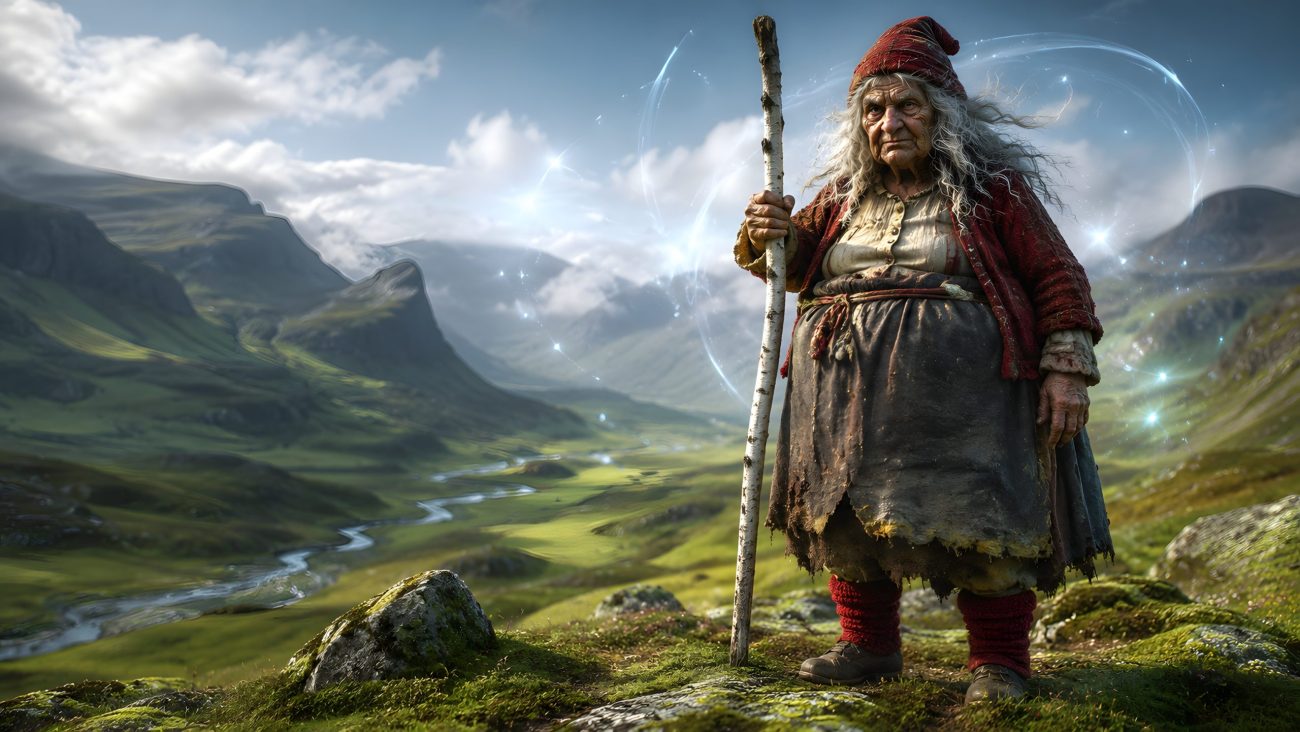
They are described as having long gray beards, deep-set eyes, round bodies, thin legs, rough voices, and wearing old-fashioned peasant clothing or red jackets with red stockings while carrying birch staffs.

In a broader sense, the Old Norse word vætt can refer to almost any supernatural being, including elves, dwarfs, trolls, jötnar, and even the Æsir and Vanir.


Sources

Bestiary.us. (n.d.). Vette. In New Bestiary: Encyclopedia of Imaginary Beings. Retrieved June 29, 2026, from https://www.bestiary.us/vette


Skoffín

Tradition / Region: Icelandic Mythology
Alternate Names: none firmly fixed; related beings include Skuggabaldur, Urdarköttur, and Modyrmi
Category: Fox


The Myth

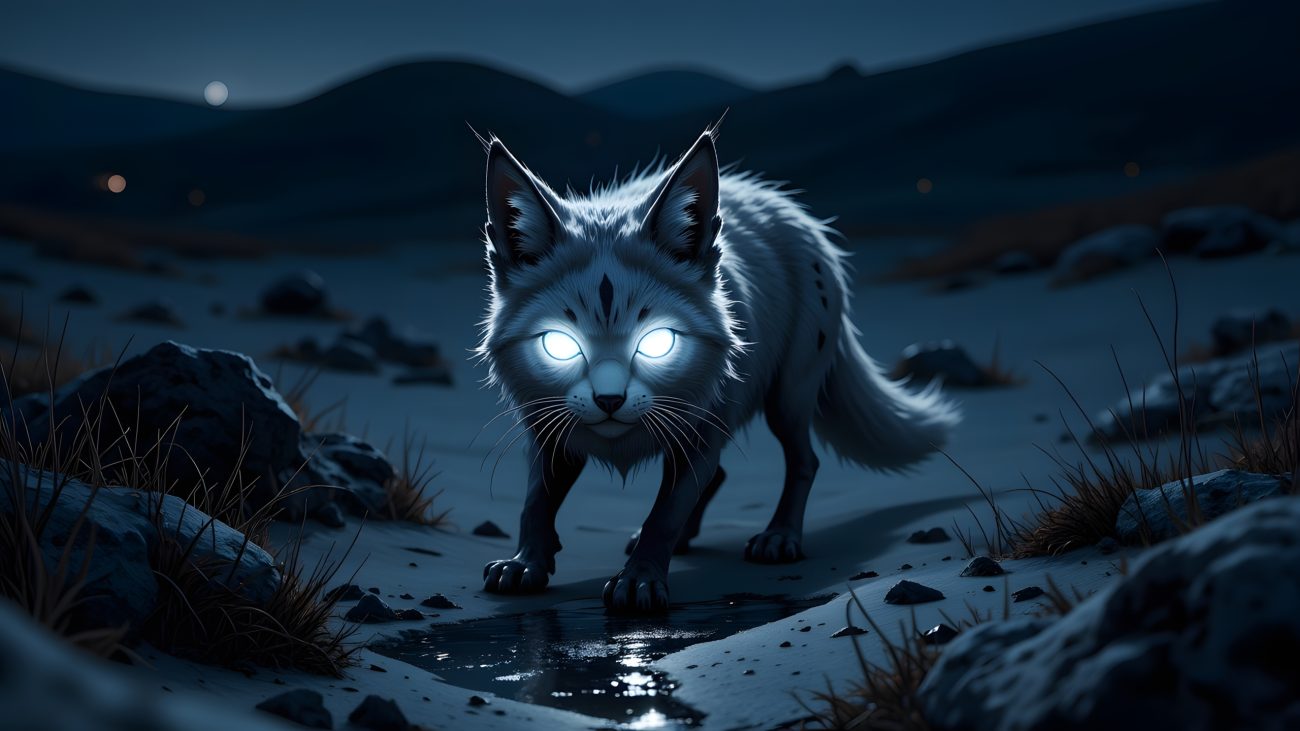
In Icelandic lore there is a dreadful creature called the Skoffín, born from the unnatural union of an Arctic fox and a house cat. It carries the cunning of the fox and the cruelty of the cat, and its very existence is considered a sign of evil.

The Skoffín resembles both parents at once. Its fur may change with the seasons like a fox’s coat, and some say its body bears bare patches of skin. Yet its most feared power lies in its eyes. The creature’s gaze is said to bring instant death to anything it looks upon, whether human or animal.

It is said that Skoffín kittens are born with their eyes already open. If they are not destroyed at once, they sink into the ground and vanish, only to emerge again after three years, fully grown and dangerous. Because of this, people once took great care to destroy such kittens before they could escape into the earth.

When grown, the Skoffín roams farms and wilderness alike, killing livestock and sometimes people simply by fixing its eyes upon them. The safest way to deal with one is from afar, with a bullet blessed by prayer or made of silver. Some stories say that even hardened sheep dung can serve as a missile against it.

Yet the creature is not invincible. If a Skoffín sees another of its kind, both die instantly from the meeting of their deadly gazes. Mirrors also defeat it, for if it sees its own reflection, it perishes at once. One tale tells of a Skoffín that perched upon a church roof, causing people to die as they stepped outside. A clever man raised a mirror toward it on a long pole, and the monster died the moment it saw itself.

The Skoffín belongs to a family of similar hybrid beasts — foxes, cats, and other creatures twisted into monstrous forms. But among them all, the Skoffín is remembered as one of the most feared: a creature whose eyes alone could end a life, and whose birth was taken as an omen of darkness in the land.


Sources

A Book of Creatures. (n.d.). Skoffín. Retrieved March 1, 2026, from https://abookofcreatures.com/2015/11/06/skoffin/.


Dog King

Tradition / Region: Danish Mythology, Swedish Mythology, Icelandic Mythology
Alternate Names: Raka, Rakke, Rakken, Saurr
Category: Dog


The Myth

In the old northern histories, there are tales of a strange and humiliating rule — the time when a dog was made king over men.

One version tells that after the deaths of the Danish rulers Haldan and Helgi, the Danes fell under the power of a foreign king from Sweden. Instead of sending them a prince or governor, the conqueror sent them a small dog and commanded that it should be their king. He warned that anyone who brought him news of the dog’s death would pay with his life.

The Danes were forced to accept the animal as their ruler. For a time the dog was treated with ceremony and obedience. But one day, when larger dogs began fighting, the small royal dog leapt among them and was torn apart.

No one dared announce what had happened. At last a herdsman named Snyo went to the foreign king’s court. Speaking in riddles and clever words, he maneuvered the king into declaring the dog dead himself. Because the king had spoken it, Snyo was spared and was then made king of Denmark in the animal’s place.

Another northern tale tells of a conqueror who invaded Norway and defeated its aged ruler. To shame the defeated people, he placed a dog upon the throne and ruled the country through officials who acted in the animal’s name. The dog was surrounded by nobles and guards, and strict laws were given that anyone who failed to show it proper honor would be punished. Thus the land was forced to bow before a beast.

A further story speaks of King Eysteinn, who conquered the region of Trondheim. After the people killed the son he had set over them, the king returned in anger and gave them a cruel choice: they must take either his slave Thorer or his dog Saurr as their new ruler.

Believing a dog would be easier to endure, the people chose Saurr.

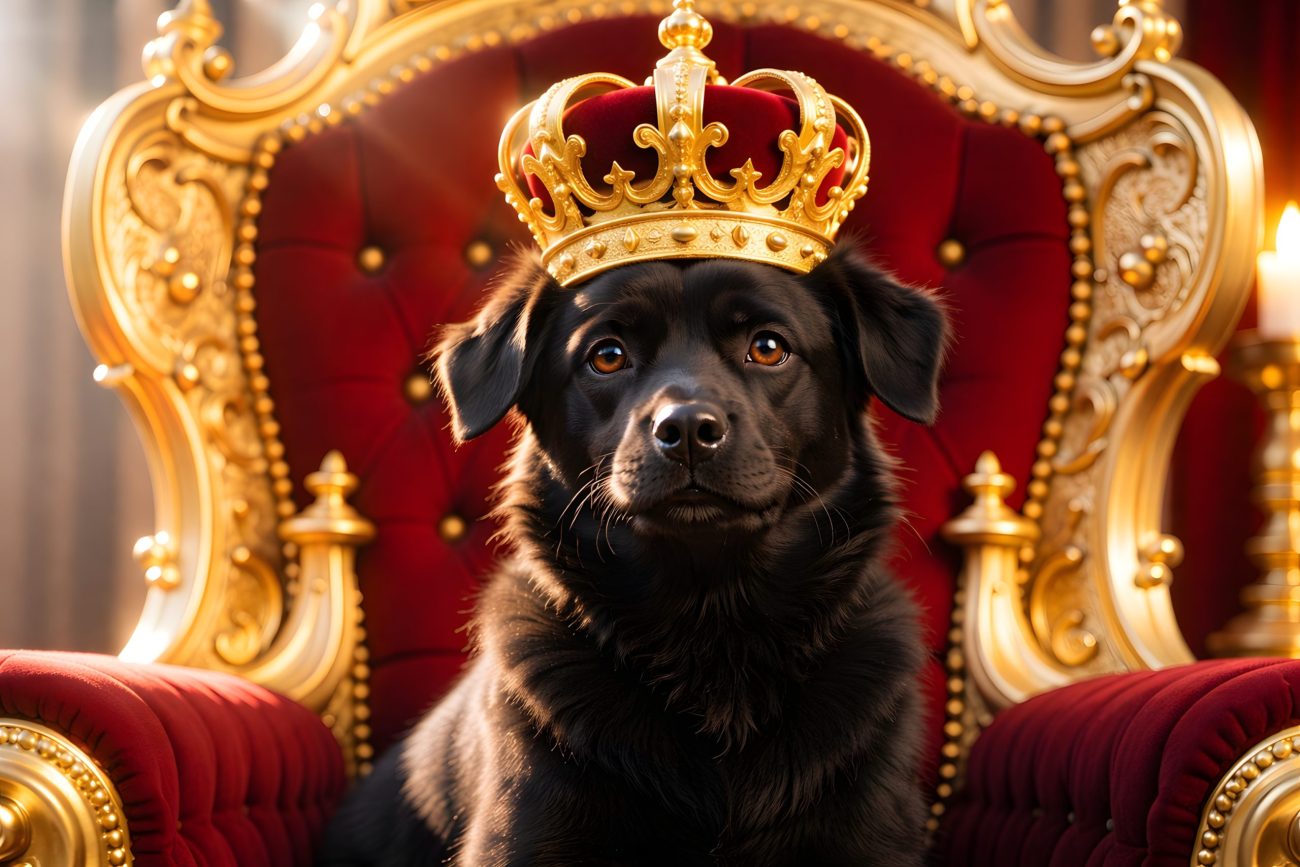
The dog was treated as a true king. He was given a golden collar, a throne, attendants, and a great hall to dwell in. Judgments were issued in his name, and decrees were marked with the print of his paw. For three years the land lived under the rule of the animal king.

At last wolves broke into the fold where Saurr was kept and tore him to pieces. So ended the strange reign of the dog king.

Yet the memory of these tales remained strong enough that poets spoke of the time when men bowed to a dog, and songs were even sung in honor of the beast who had once worn a crown.


Sources

Wikipedia contributors. (n.d.). Dog king. In Wikipedia, from https://en.wikipedia.org/wiki/Dog_king


Flyðrumóðir

Tradition / Region: Icelandic Mythology
Alternate Names: Halibut Mother; Laxamóðir (Salmon Mother); Silungamóðir (Trout Mother)
Category: Fish, Trout


The Myth

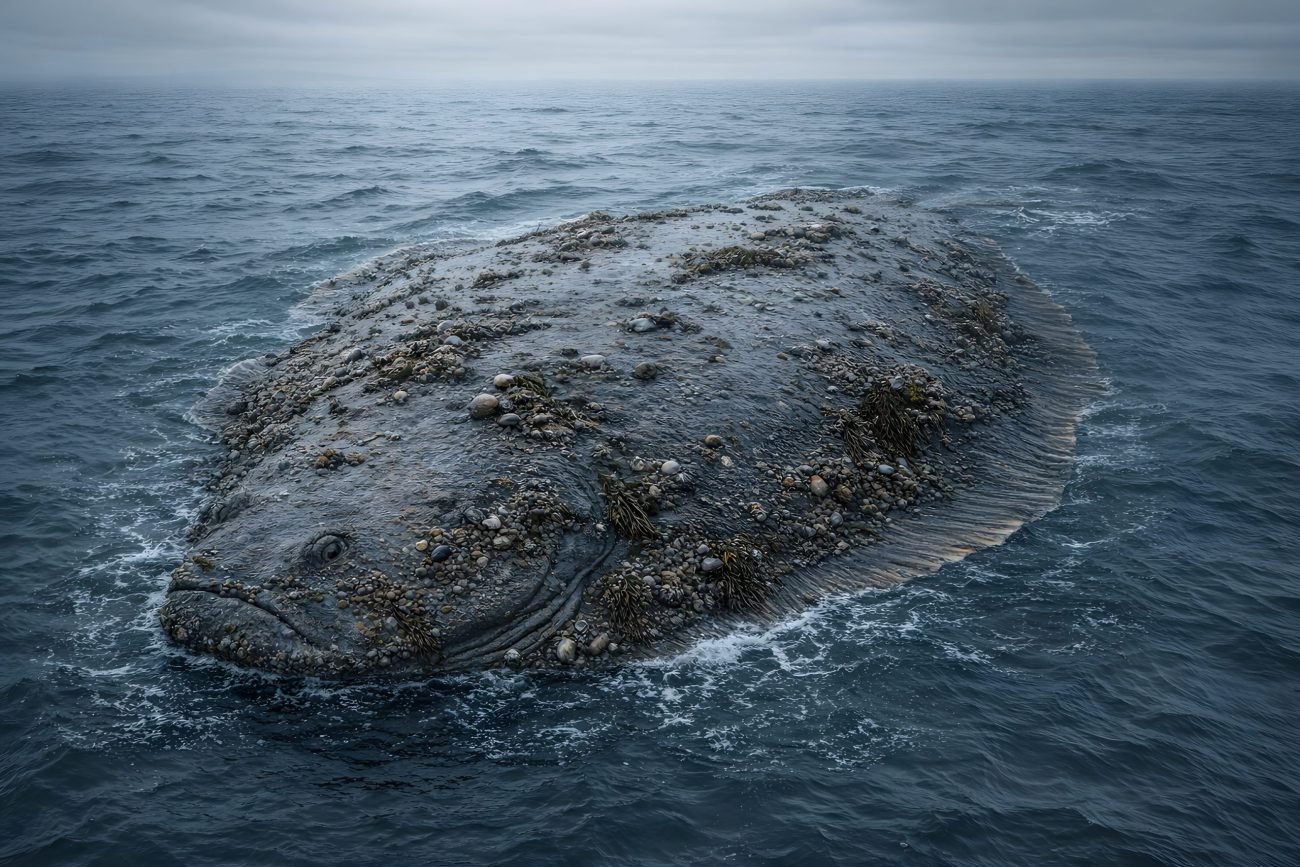
In the cold seas around Iceland there swims a being known as the Flyðrumóðir, the Halibut Mother. She appears as a halibut of monstrous size, so vast that she can rival a fishing boat. With age her body turns grey on both sides, and shells, barnacles, and seaweed cling to her skin, so that when she rises to the surface she resembles a small drifting island.

Though some say she is the mother of all fish in the sea, her true children are the halibut. Far offshore she is followed by entire schools of them, and she watches over them fiercely. When fishermen take too many halibut, the Flyðrumóðir rises in anger.

Once, a schooner in Faxaflói hauled forty halibut aboard. The Halibut Mother appeared and pursued the ship, though it narrowly escaped. Another vessel was not so fortunate. It caught a Flyðrumóðir on a coffin-nail hook, and in her fury she overturned the boat, drowning all who were aboard.

Even when a Flyðrumóðir is successfully killed, her death brings ruin. In Breiðafjörður, a halibut mother was snagged with a golden hook and cut apart. After that, the waters yielded no fish, and the man who caught her never caught another fish for the rest of his life.

Other mothers are known as well. The Laxamóðir, the Salmon Mother, swims down from salmon-rich rivers, tearing through fishing nets as she goes. The Silungamóðir, the Trout Mother, has an enormous head and brings great misfortune to anyone who catches her. Wise fishermen release such beings at once.

Thus the fish-mothers endure in memory as guardians of the waters—vast, ancient, and unforgiving to those who forget that the sea has its own kin to protect.


Sources

A Book of Creatures contributors. (n.d.). Flydrumodir. In A Book of Creatures, from https://abookofcreatures.com/2016/08/28/flydrumodir/


Hrökkáll

Tradition / Region: Icelandic Mythology
Alternate Names: Coil-eel
Category: Fish, Eel, Zombie


The Myth

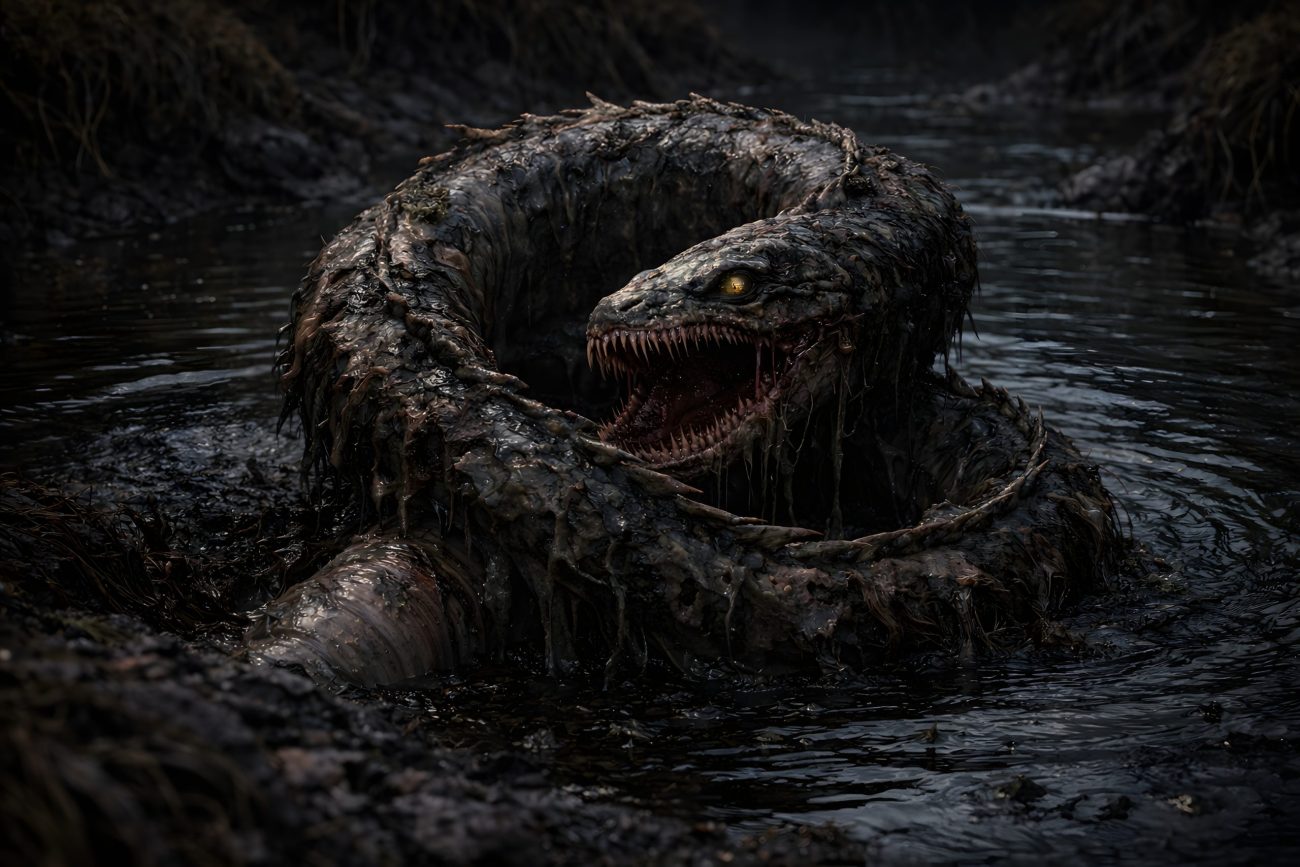
Long ago, a malicious wizard in Iceland defied the natural order. From polluted water he drew up a dead eel, half-rotted and foul, and by dark arts forced it back into motion. Thus was born the first Hrökkáll, the coil-eel—an unnatural thing animated by corruption and spite.

Though the wizard himself vanished with time, the creature did not. The Hrökkáll bred, and its descendants spread into stagnant ponds, still waters, and sluggish rivers, thriving wherever decay and filth gathered.

A Hrökkáll is about two feet long and shaped like an eel, but its body is armored with flexible scales as hard as iron. Along its sides run sharp, saw-toothed fins. Like many fearsome fishes of Iceland, it exudes a corrosive venom, and its flesh is deadly to eat. When captured, Hrökkálls have been known to melt through soil and stone alike, dissolving their escape and slipping back into the water.

They wait unseen beneath the surface until a person steps into their domain. Then the Hrökkáll strikes, coiling tightly around a leg. With crushing force and slicing edges, it cuts through flesh and bone, severing the limb entirely. Whether it is the acid of its venom, the blades of its fins, or both together that accomplish this horror is unknown.

Men and horses alike fall victim to the Hrökkáll, but sheep are spared, for their legs are too slender for the creature to grasp.

In later times, the name Hrökkáll passed into common speech, and came to be used for electric eels as well—but in old tales, it is remembered as a thing born of sorcery, rot, and water gone bad.


Sources

A Book of Creatures contributors. (n.d.). Hrokkall. In A Book of Creatures, from https://abookofcreatures.com/2015/08/12/hrokkall/