Grýla

Tradition: Icelandic Mythology
Alternative Names: Gryla, Grýlu
Category: Giant


The Myth

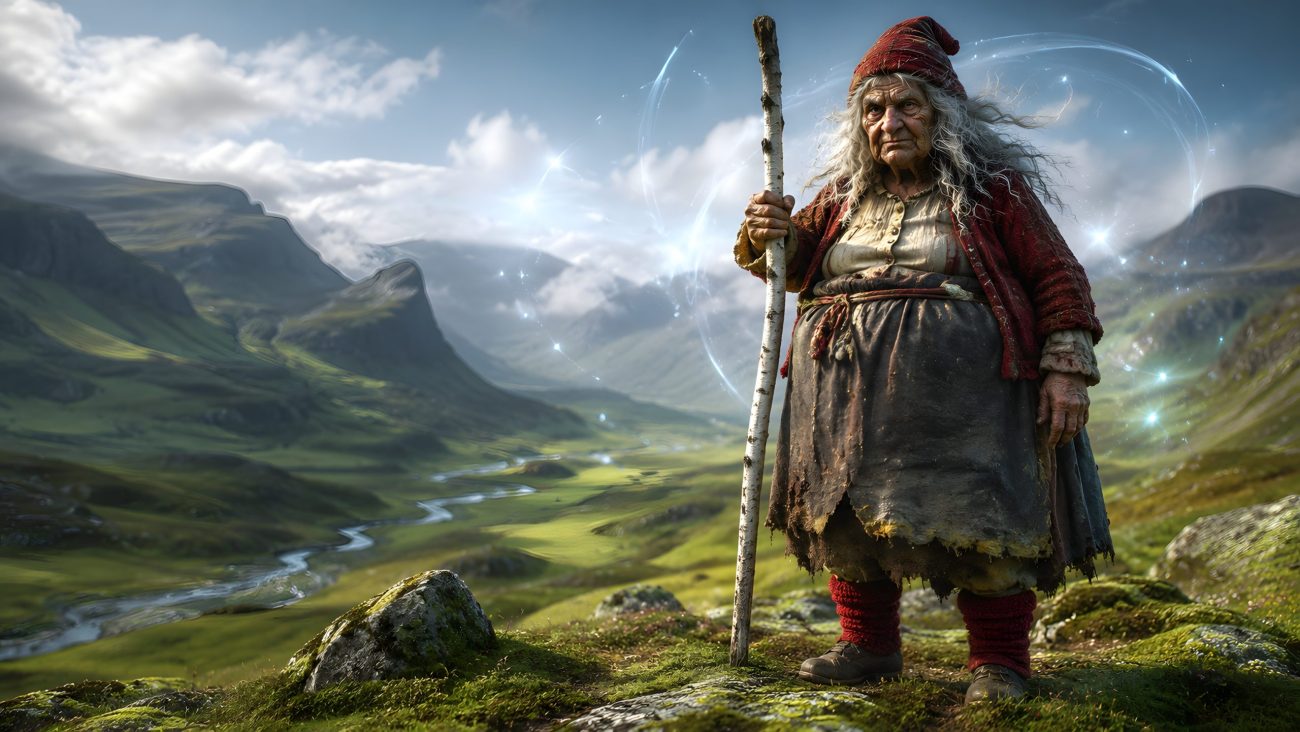
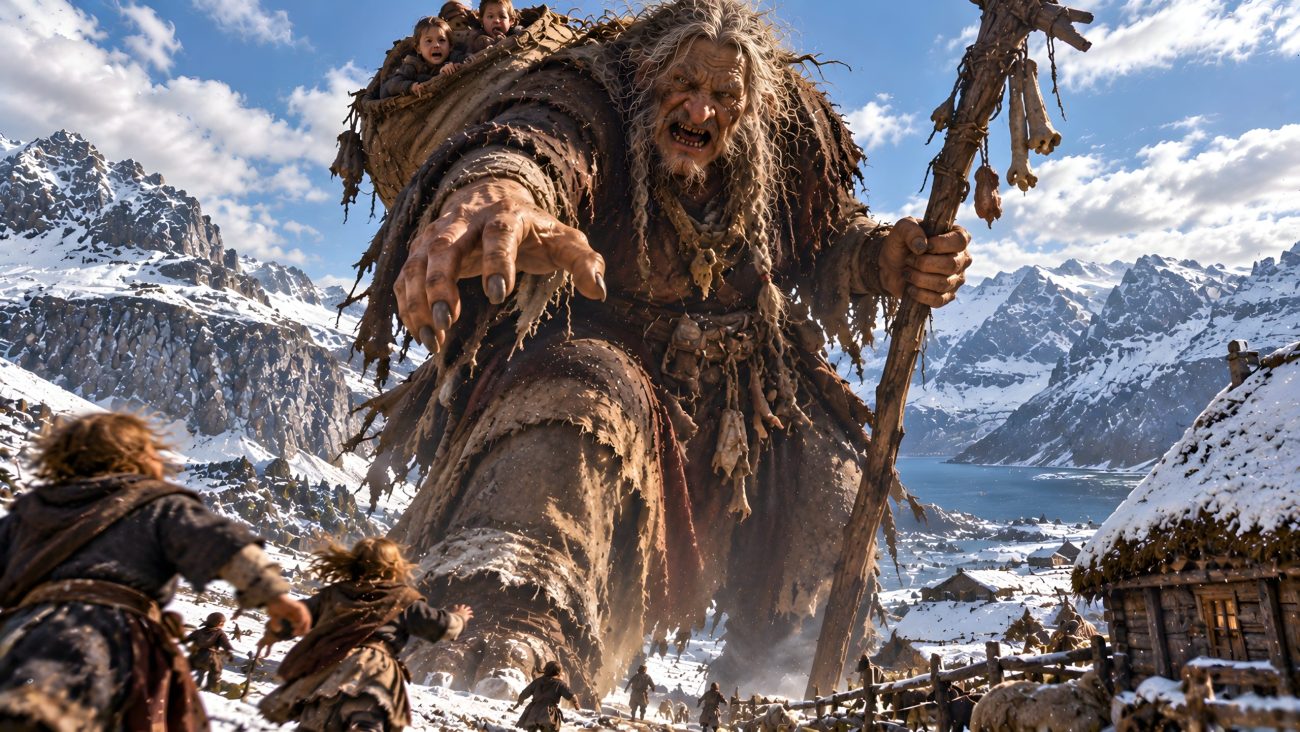
Grýla is a monstrous being in Icelandic folklore who dwells in the wilderness and is traditionally portrayed as a hideous, greedy, troll-like crone. Her name appears in medieval Icelandic sources, including the Prose Edda, where she is listed among the names used for troll-women. A manuscript from the early fourteenth century also contains a list of expressions associated with Grýla that refer to foxes, suggesting a possible connection with the Arctic fox. The earliest clear references identifying Grýla as female and associating her with Christmas, however, date only from the seventeenth century.

In seventeenth-century poems, Grýla wanders between farms and human settlements, demanding charity from the people she encounters. Her requests often involve naughty children, reflecting her frightening reputation as a monster associated with the threat of child-eating. One poem even describes her wandering between farms during summer rather than at Christmas and portrays her as a hermaphrodite, illustrating how varied her early representations could be.

Grýla’s origins and original nature remain uncertain. Related figures appear in the folklore of Iceland and the Faroe Islands, and some have been connected with traditions involving disguises and masked performers. These parallels have led to the suggestion that Grýla may once have been associated with similar seasonal customs in Iceland. Early traditions do not consistently identify her as female, and she may originally have been imagined as a male monster rather than an ogress.

In modern Icelandic Christmas folklore, Grýla is best known as the mother of the Yule Lads, or jólasveinar. Her monstrous appearance and appetite for children remain part of her traditional image, although these frightening characteristics are often softened in depictions intended for younger audiences.


Sources

“Grýla.” Wikipedia: The Free Encyclopedia. Wikimedia Foundation. Accessed October 16, 2026. https://en.wikipedia.org/wiki/Gr%C3%BDla
Djákninn á Myrká

Tradition: Icelandic Mythology
Alternative Names: The Deacon of Myrká, The Deacon of Dark River
Category: Ghost


The Myth

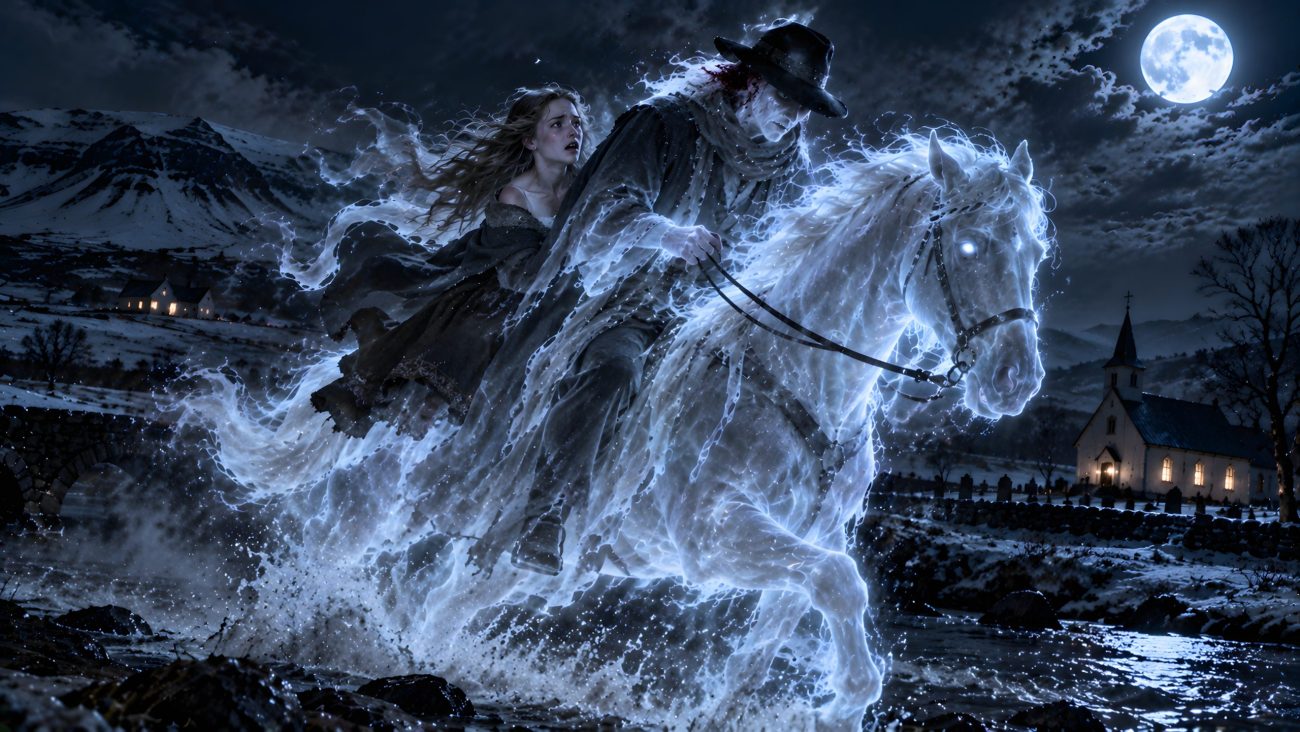
The Deacon of Dark River is the ghostly figure at the center of an Icelandic legend set around Myrká farm in Eyjafjörður. In life, the deacon was a man who lived at Myrká and loved a woman named Guðrún, who lived across the Hörgá River at Bægisá farm. Before Christmas, he visited her on his horse, Faxi, and promised to return on Christmas Eve to bring her home to celebrate the holiday together. On his journey back, however, a violent storm swept over the area. He fell into the icy river, suffered a terrible head injury, and drowned. His body was discovered the following day and buried, but Guðrún never received the news of his death.

On Christmas Eve, the deacon appeared at Bægisá as promised, riding Faxi to collect Guðrún. His face was concealed beneath a hat and scarf, and she mounted the horse with him, wearing a coat that she had only partly put on. As they crossed the dark landscape, the deacon spoke in strange, rhythmic phrases, repeating the final word of each line. When they reached the Hörgá River, the horse stumbled, causing his hat to slip forward. In the moonlight, Guðrún saw the dreadful white wound at the back of his head and realized that something was terribly wrong. The deacon uttered the ominous words, “The moon fades, death rides,” revealing the truth of his unnatural journey.

When they arrived at Myrká, the deacon told Guðrún to wait while he led Faxi over a fence. Nearby, she noticed an open grave in the churchyard. The dead man suddenly tried to drag her into it, but because she wore only one sleeve of her coat, he seized the empty sleeve instead. Guðrún grabbed the church bell’s rope and rang it desperately until people came to investigate. Her coat tore in two, leaving half in the ghost’s grasp as he disappeared into his grave. Now certain that her beloved was dead, Guðrún endured a night of haunting and disturbance as his restless spirit continued to trouble the farm. Eventually, an exorcist was summoned and succeeded in laying the deacon’s ghost to rest.


Sources

“Dj ákninn á Myrká.” Wikipedia: The Free Encyclopedia. Wikimedia Foundation. Accessed October 15, 2026. https://en.wikipedia.org/wiki/Dj%C3%A1kninn_%C3%A1_Myrk%C3%A1


Malmlogi

Tradition / Region: Icelandic Mythology
Alternate Names: Vaflogi, Hauga-eldrinn
Category: Flame


The Myth

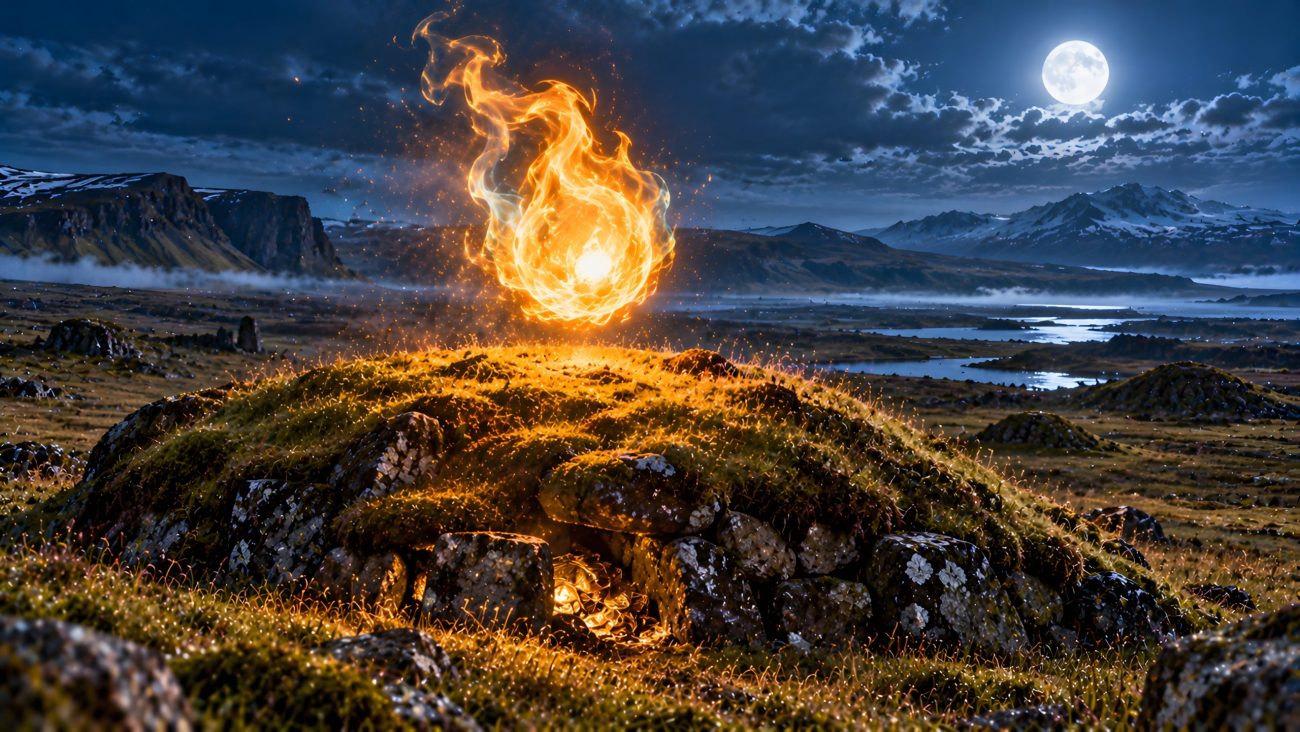
Malmlogi is a fire that burns over treasure hidden in burial mounds. It is also called vaflogi, meaning “hovering fire,” and is associated with “metal-fire.”

It is a widespread belief that fires appear over treasure hidden in burial mounds.


Sources

Reifegerste, E. Matthias. Die Hervarar Saga: Eine kommentierte Übersetzung und Untersuchungen zur Herkunft und Integration ihrer Überlieferungsschichten. Leverkusen, 1989.


Alvas

Tradition: Icelandic Mythology, Norwegian Mythology, Swedish Mythology
Alternative Names: Álfar, Álfr, Alv, Ælfur, Ljósálfar, Dökkálfar, Svartálfar
Category: Elf


The Myth

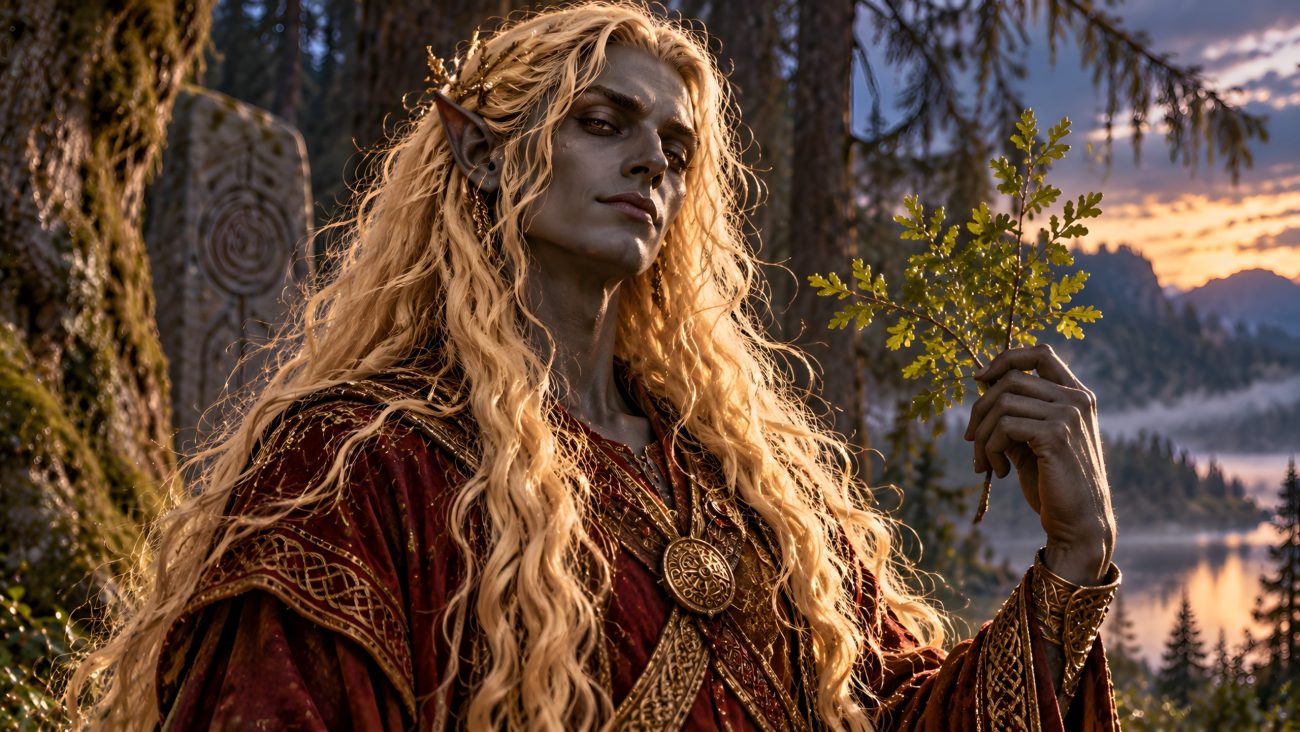
The Alvas were lower nature spirits of Scandinavian mythology and were regarded as the original beings behind the later tradition of elves. Their name appears in several Scandinavian forms: Ælfur in Icelandic, Álfar in Old Norse, Álvar in Swedish, and Alv in Norwegian. They were supernatural beings connected with nature, fertility, and the unseen world. The tradition also distinguished different kinds of elves, including the luminous Ljósálfar and the dark Dökkálfar or Svartálfar.

In the Elder Edda, the elves are presented as a distinct supernatural group alongside the Æsir, although the traditions sometimes blur the boundary between elves and dwarves. The distinction between light and dark elves gives the Alvas a divided nature: the Ljósálfar are associated with light, while the Dökkálfar and Svartálfar belong to the darker side of the supernatural world. The elves therefore occupied an important place among the various non-human beings of the Norse cosmos.

The Alvas were also associated with fertility and received their own cult in Scandinavian tradition. In the Elder Edda, the smith Völundr is called the “prince of the elves,” showing that the elves could possess their own hierarchy and prominent supernatural figures. They were consequently not simply small magical creatures, but a broader class of nature spirits inhabiting the supernatural world alongside gods, dwarves, and other beings.


Sources

“Alv.” New Bestiary (Bestiary.us). Accessed October 5, 2026.
https://www.bestiary.us/alv


Yule Cat

Tradition / Region: Icelandic Mythology
Alternative names: Jólakötturinn, Jólaköttur, Christmas Cat
Category: Cat


The Myth

The Yule Cat is a gigantic, vicious cat that prowls the snowy countryside during the Christmas season. It is said to lurk outside homes searching for people who have not received new clothing before Christmas Eve. In some versions of the legend, it devours those unfortunate people, while in others it steals and eats only their Christmas food. The Yule Cat is closely associated with the ogress Grýla and the Yule Lads, and is commonly regarded as Grýla’s fearsome pet.

According to Icelandic tradition, the Yule Cat appeared each Christmas to punish laziness. Farm workers were expected to finish processing the autumn wool before the holiday. Those who completed their work were rewarded with new clothes, while those who failed received nothing. Anyone without new clothing risked becoming the Yule Cat’s next victim.

Later traditions connected the beast to Grýla and her thirteen Yule Lads. The enormous cat roamed the countryside during Christmas, and in some stories only the smallest Yule Lad, Stúfur, was capable of controlling the unruly monster, riding it across the snow-covered landscape in search of prey.


Sources

“Yule Cat.” Wikipedia: The Free Encyclopedia. Wikimedia Foundation. Accessed July 28, 2026. https://en.wikipedia.org/wiki/Yule_cat


Katthveli

Tradition / Region: Icelandic Mythology
Alternative names: Cat-whale, Sea-cat
Category: Cat, Whale


The Myth

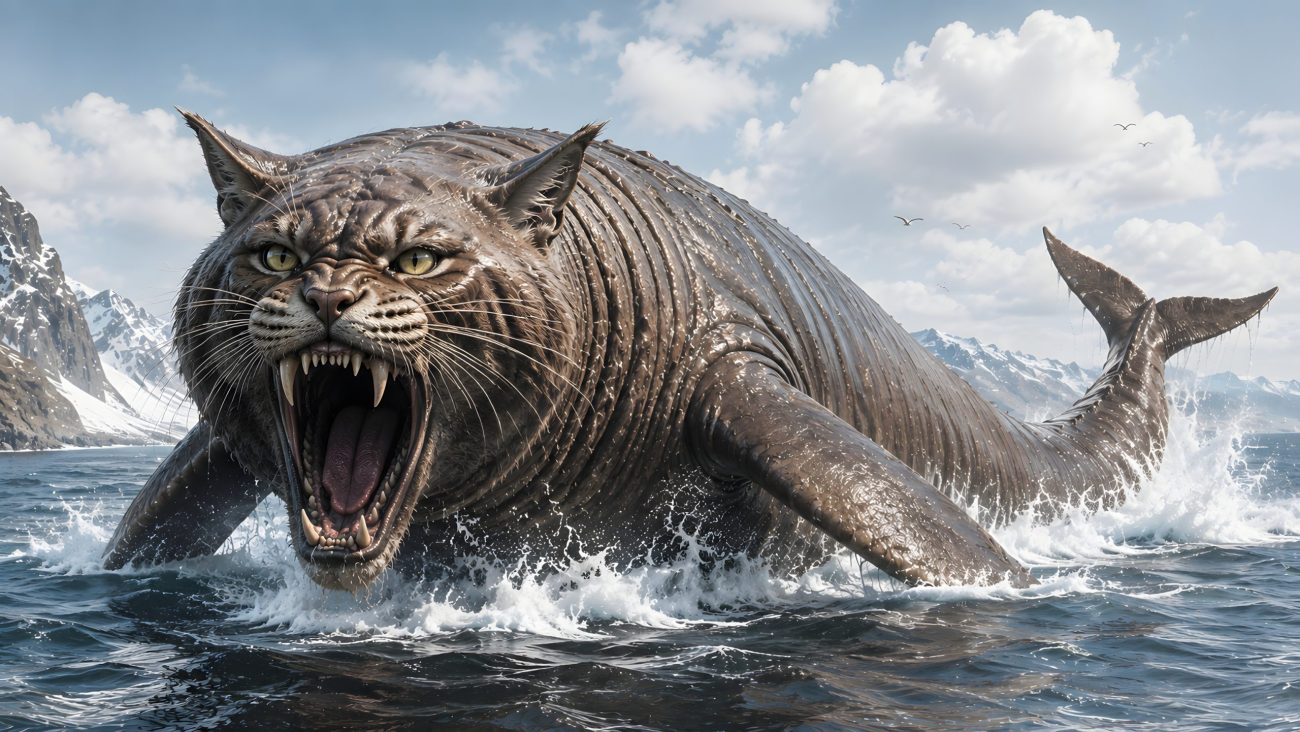
The Katthveli (“Cat-whale”) is one of Iceland’s legendary illhveli, or evil whales. Smaller than many of its monstrous relatives, it is nevertheless feared by sailors. It is said that merely speaking its name while at sea will attract the creature.

The Katthveli has the body of a small whale, dolphin, or seal with a broad front and narrower hindquarters. It has the face of a leopard, long whiskers like a cat, hooked claws on its flippers, gleaming eyes, and short tusk-like teeth. When calm it purrs as it exhales, but when angered it mews, hisses, and spits like a furious cat.

The creature is notorious for attacking boats. It swims beneath vessels to overturn them, rams their hulls, or follows ships for hours, preventing fishermen from working. One tale tells of a Katthveli that thrust its head through the side of a boat, while another describes one rearing from the sea, placing its flippers over a boat’s gunwale, hissing and snapping at the crew until a sailor fired a gun into its mouth.

A famous legend tells of Saint Brendan, who encountered a tame sea-cat that had been raised by pilgrims on an island. As it grew larger and more ravenous, it devoured all but one of its caretakers. Brendan prayed for deliverance, whereupon a gigantic whale rose from the sea, seized the monstrous sea-cat, and dragged it into the depths, where both creatures drowned.


Sources

Countess Sica. “Katthveli.” A Book of Creatures. October 26, 2015. Accessed July 28, 2026. https://abookofcreatures.com/2015/10/26/katthveli/


Bjarndýrakóngur

Tradition / Region: Icelandic Mythology
Alternative names: King of the Bears
Category: Bear


The Myth

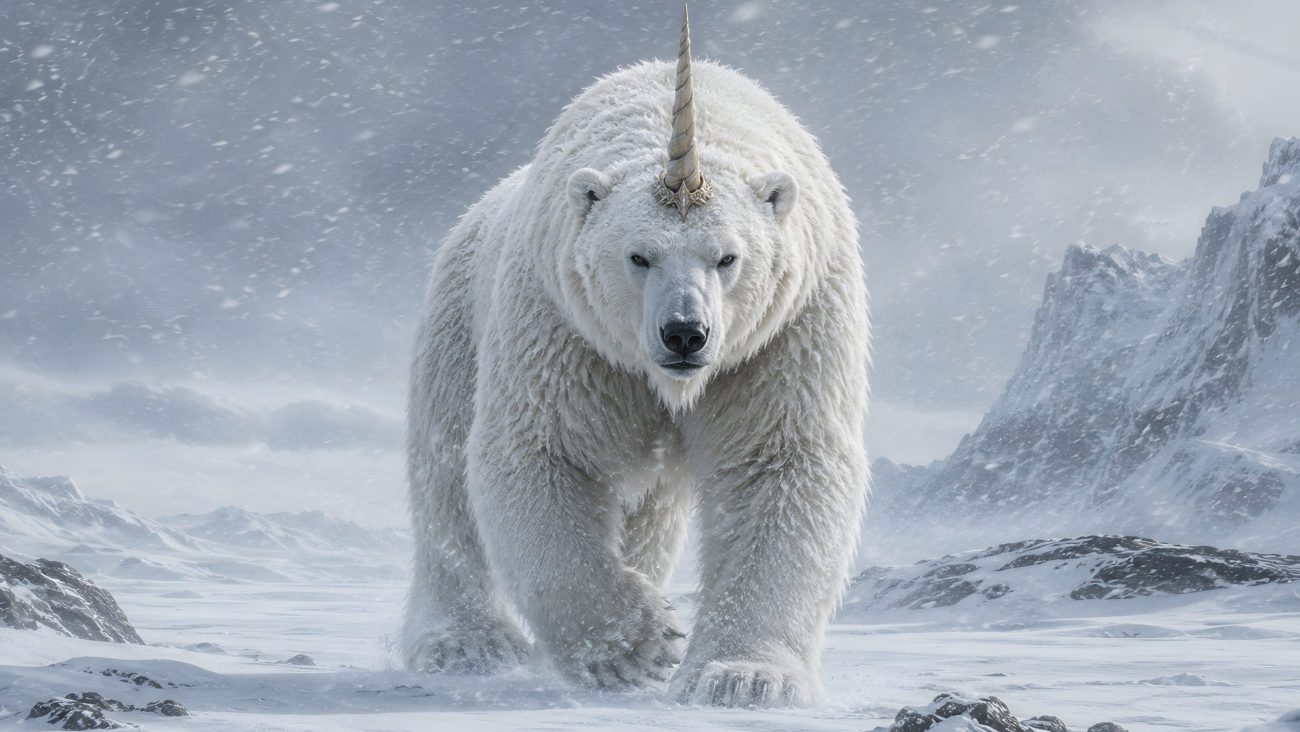
The Bjarndýrakóngur, meaning “King of the Bears,” is the legendary ruler of all polar bears in Icelandic folklore. It is said to be born from the union of a female polar bear and either a walrus or a bull. Distinguished by its red cheeks and a single horn upon its forehead, the creature carries this horn as a symbol of its royal authority. The horn ends in a sharp point capped with a shining platinum sphere that radiates light, allowing the king to find its way even through complete darkness.

The King of the Bears is renowned not only for its immense strength but also for its wisdom and justice. It understands human speech and commands absolute loyalty from every other polar bear. Although capable of killing with its horn, it does so only in self-defense or to punish bears that have broken its laws.

One famous legend tells of a Whitsun church service during the eighteenth century, when a procession of twelve or thirteen polar bears emerged from the remote parts of Iceland. At their head walked the majestic Bjarndýrakóngur. The local clergyman and congregation greeted the royal beast with bows, and the king respectfully returned the gesture before continuing its journey across southern Iceland.

During the procession, the last bear in the line killed and ate a sheep at Borgamór. The Bjarndýrakóngur immediately turned upon the offender and pierced it with its horn as punishment for its crime. After restoring order, the royal procession continued until it reached Grenivík, where the bears disappeared into the sea.

According to tradition, the only creature willing to challenge the Bjarndýrakóngur is the Redcheek, an unusually fierce polar bear marked by a patch of reddish-pink fur on one cheek. Aggressive toward every creature it encounters, the Redcheek is nevertheless no match for the wise and powerful King of the Bears.


Sources

A Book of Creatures. (2020, November 13). Bjarndýrakóngur. Retrieved June 29, 2026, from https://abookofcreatures.com/2020/11/13/bjarndyrakongur/


Thorgeir’s Bull

Tradition / Region: Icelandic Mythology
Alternative Name: –
Category: Cow


The Myth

Thorgeir’s Bull was a powerful magical creature created by the Icelandic sorcerer Thorgeir the Wizard. To make it, Thorgeir flayed the hide from a newborn calf while it was still alive. He then placed inside the hide the bones or essence of eight different creatures—a bird, a man, a dog, a cat, a mouse, and two kinds of sea beasts, together with the calf itself—giving the Bull the combined nature of nine beings. Because of this, it could travel on land, in the sea, or through the air, and could appear in whatever form suited it best.

Thorgeir intended the Bull to help him win a feud with a woman named Gudrun after she rejected him. The Bull relentlessly hunted her, making her life miserable. Even when she fled between farms with armed escorts, it continued to pursue her. It tormented her so severely that she eventually died, and afterward her ghost was said to haunt the place where she had suffered.

After Gudrun’s death, the Bull remained devoted to Thorgeir and carried out his commands. It was used to stampede other people’s cattle, scatter horses, and perform acts of destruction. However, it also became increasingly dangerous to its own master. Whenever Thorgeir ordered it to perform some task, it would later return and attack him in revenge. Even Thorgeir, despite his magical knowledge, struggled to defend himself from the creature.

One day the Bull tried to kill Thorgeir. He fled into his house while his wife held their infant child. Believing the Bull wanted a sacrifice, she begged him to offer one of their heifers instead. Thorgeir released the animal, and the Bull tore it to pieces, sparing the family.

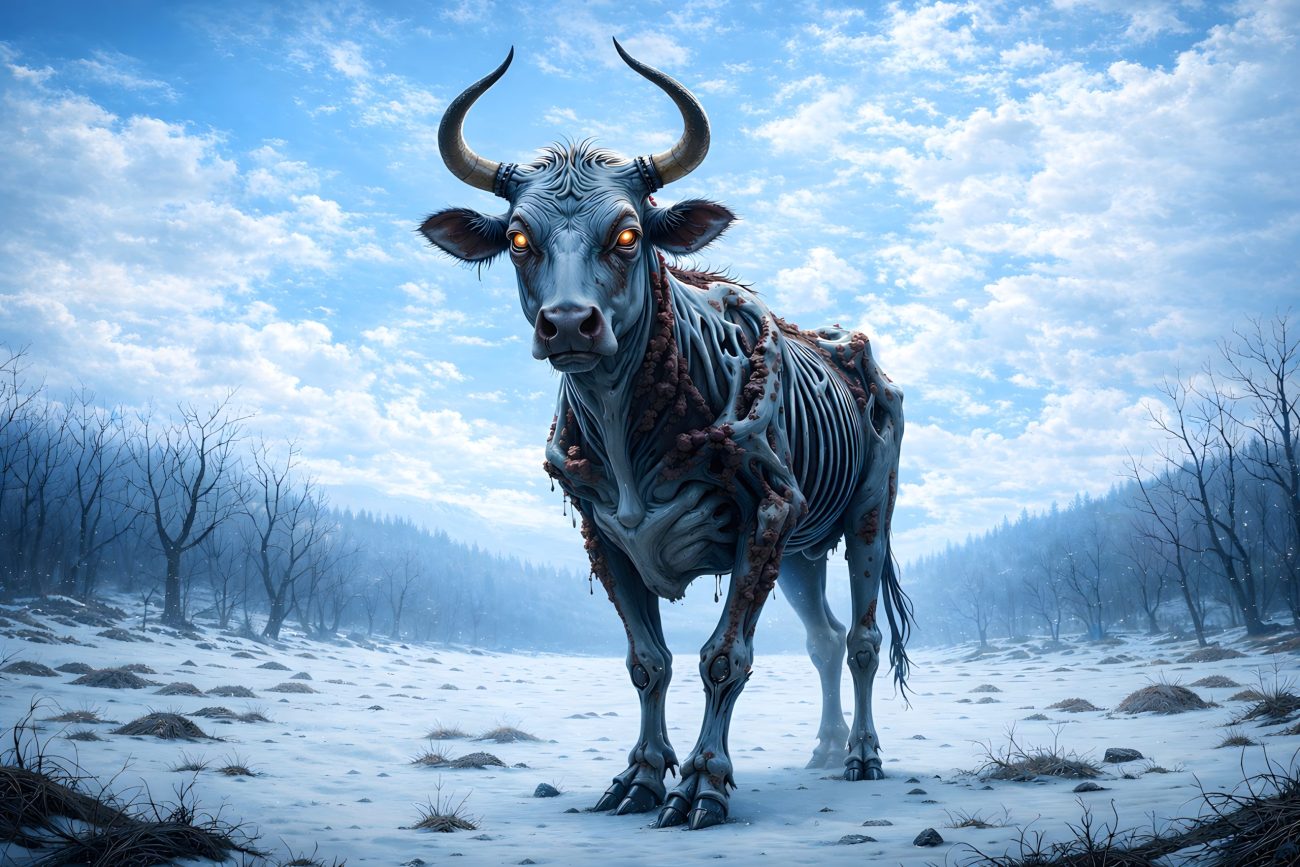
The Bull could also change shape. It sometimes appeared as a man, a dog, a grey cat, or even a black puppy, but most often it took the form of a gigantic horned bull draped in a flayed hide. Its appearance was so terrifying that anyone who saw it was filled with fear.

According to tradition, the Bull remained with Thorgeir until his death, and some claimed it was seen crouching upon his chest as he lay dying before vanishing forever.


Sources

Simpson, J. (Comp.). (1972). Icelandic folktales and legends. University of California Press.


Nauthveli

Tradition / Region: Icelandic Mythology
Alternative Name: –
Category: Whale, Cow


The Myth

The Nauthveli, also called the Ox-Whale, is one of Iceland’s feared illhveli (“evil whales”) and is said to be the second largest of these monstrous sea creatures. Like the other evil whales, it is considered inedible, and tradition warns that merely speaking its name aloud can summon it.

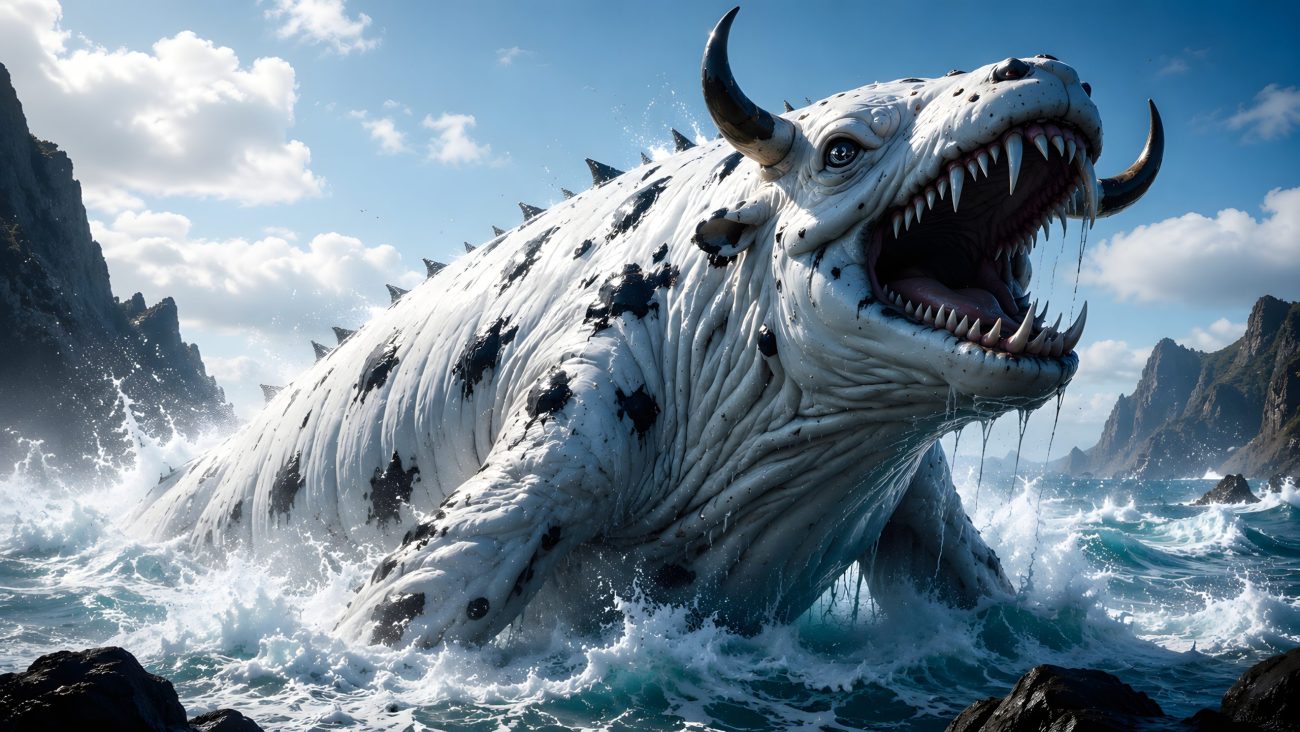
The Nauthveli is a massive toothed whale with a black-and-white body resembling a cow. Its enormous head resembles that of a bull, bearing two large nodules, while its long body narrows into a worm-like tail without fins.

Its most terrifying feature is its voice. When hungry, the Nauthveli lets out an immense bull-like bellow that echoes across the sea and coastline. The sound resembles the roar of enraged cattle and can be heard over great distances. Its vibrations shake the ground and are powerful enough to knock oars from sailors’ hands. Whenever its bellow is heard, people refuse to sail.

Like all evil whales, the Nauthveli attacks boats and delights in killing people, but it has a particular craving for cattle. Its supernatural bellow hypnotizes cows and bulls, compelling them to run over cliffs and plunge into the sea. Once they reach the water, the whale toys with them like a cat playing with a mouse before biting them in half and devouring them.

The creature is also drawn to cattle carried aboard ships. One legend tells of a Nauthveli that relentlessly pursued a vessel near Grímsey until the sailors released the single cow they were transporting. The animal immediately leapt into the sea, satisfying the monster.

After the Nauthveli has been heard, cattle are traditionally kept locked away for several days until its enchantment fades. In areas where the monster was believed to roam, herding cattle near the coast was discouraged. According to tradition, sacrificing a single bull or cow would appease the Nauthveli, making the sea safe once more.


Sources

Wikipedia contributors. (n.d.). Fylgja. In Wikipedia. Retrieved June 29, 2026, from https://en.wikipedia.org/wiki/Fylgja


Vætt

Tradition / Region: Icelandic Mythology
Alternative Name: –
Category: Spirit


The Myth

A Vætt is the guardian spirit of a particular place, such as a hill, waterfall, burial mound, or settlement. Most are believed to be female, although they can take many different forms. According to tradition, sailors removed the carved dragon heads from their ships before approaching land so they would not frighten the local landvættir (land spirits).

Over time, Vættir came to be seen as spirits of nature and the household. They can be helpful or troublesome depending on how people treat them. When offended, they may play pranks such as tangling hair, spoiling food, stealing milk or cream, making pigs grunt, or causing general disorder. When treated with respect, they care for children, watch over livestock, feed animals, keep the house tidy, and even bring water.

They are described as having long gray beards, deep-set eyes, round bodies, thin legs, rough voices, and wearing old-fashioned peasant clothing or red jackets with red stockings while carrying birch staffs.

In a broader sense, the Old Norse word vætt can refer to almost any supernatural being, including elves, dwarfs, trolls, jötnar, and even the Æsir and Vanir.


Sources

Bestiary.us. (n.d.). Vette. In New Bestiary: Encyclopedia of Imaginary Beings. Retrieved June 29, 2026, from https://www.bestiary.us/vette