Tradition / Region: Icelandic Mythology
Alternative Name: –
Category: Cow
The Myth
Thorgeir’s Bull was a powerful magical creature created by the Icelandic sorcerer Thorgeir the Wizard. To make it, Thorgeir flayed the hide from a newborn calf while it was still alive. He then placed inside the hide the bones or essence of eight different creatures—a bird, a man, a dog, a cat, a mouse, and two kinds of sea beasts, together with the calf itself—giving the Bull the combined nature of nine beings. Because of this, it could travel on land, in the sea, or through the air, and could appear in whatever form suited it best.
Thorgeir intended the Bull to help him win a feud with a woman named Gudrun after she rejected him. The Bull relentlessly hunted her, making her life miserable. Even when she fled between farms with armed escorts, it continued to pursue her. It tormented her so severely that she eventually died, and afterward her ghost was said to haunt the place where she had suffered.
After Gudrun’s death, the Bull remained devoted to Thorgeir and carried out his commands. It was used to stampede other people’s cattle, scatter horses, and perform acts of destruction. However, it also became increasingly dangerous to its own master. Whenever Thorgeir ordered it to perform some task, it would later return and attack him in revenge. Even Thorgeir, despite his magical knowledge, struggled to defend himself from the creature.
One day the Bull tried to kill Thorgeir. He fled into his house while his wife held their infant child. Believing the Bull wanted a sacrifice, she begged him to offer one of their heifers instead. Thorgeir released the animal, and the Bull tore it to pieces, sparing the family.
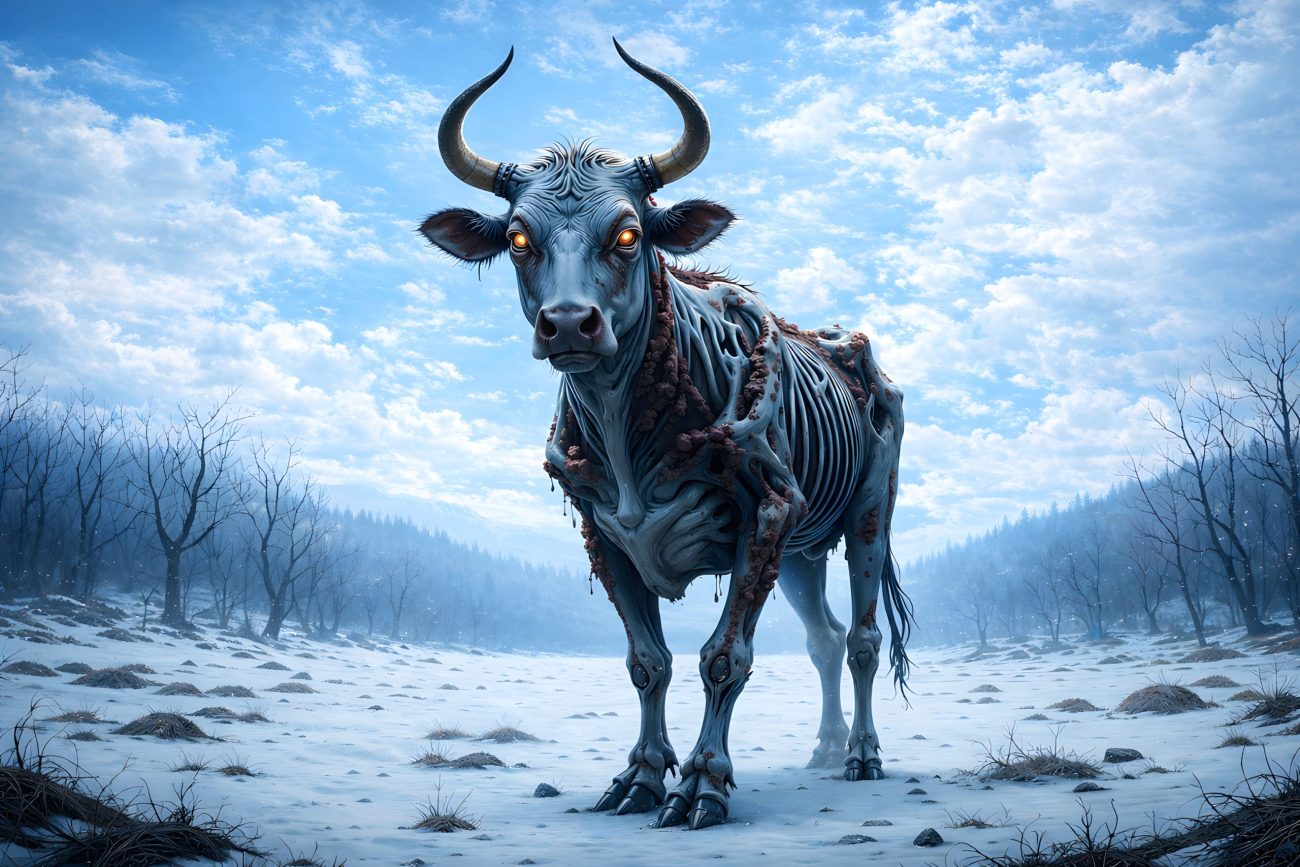
The Bull could also change shape. It sometimes appeared as a man, a dog, a grey cat, or even a black puppy, but most often it took the form of a gigantic horned bull draped in a flayed hide. Its appearance was so terrifying that anyone who saw it was filled with fear.
According to tradition, the Bull remained with Thorgeir until his death, and some claimed it was seen crouching upon his chest as he lay dying before vanishing forever.
Sources
Simpson, J. (Comp.). (1972). Icelandic folktales and legends. University of California Press.