Lou Carcolh

Tradition: French Mythology
Alternative Names: Carcolh, The Carcolh
Category: Dragon, Mollusc


The Myth

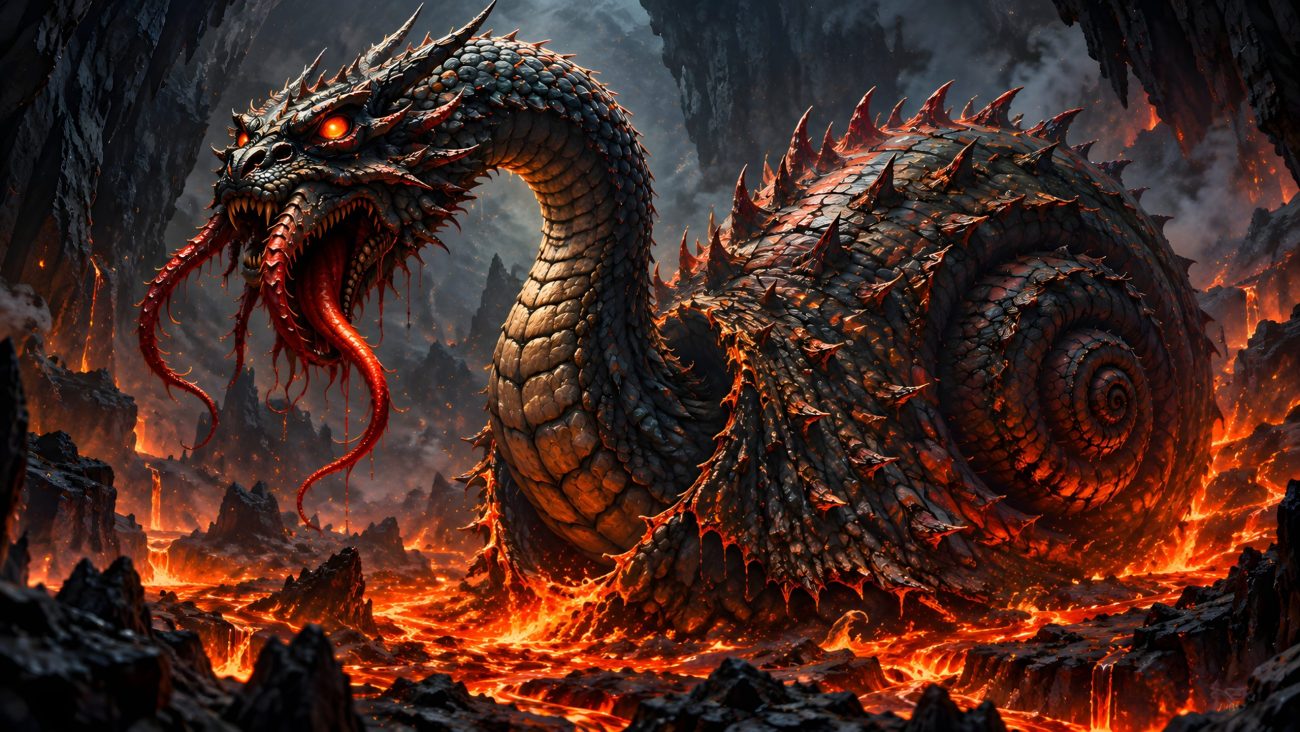
Lou Carcolh is a gigantic, slimy creature resembling a monstrous serpent combined with a snail. It has a huge shell upon its back and long, hairy tentacles capable of reaching far beyond its body. The creature is said to dwell in a cavern beneath Hastingues in the Landes of southwestern France.

The Carcolh’s approach could be detected before the beast itself appeared. A trail of thick slime would sometimes be seen stretching through the landscape, announcing that the enormous creature was drawing near. Its long tentacles were its most dangerous weapon. Hidden within or near its cavern, the Carcolh could stretch them out over a great distance, seize an unsuspecting person, and drag them back into its lair without ever revealing itself.

Hastingues itself became closely associated with the monster. The town sits upon a rounded hill, giving it the nickname “the Carcolh,” while local men were said to warn young and beautiful women with the ominous words that the Carcolh would catch them.


Sources

“Lou Carcolh.” Wikipedia: The Free Encyclopedia. Wikimedia Foundation. Accessed October 2, 2026. https://en.wikipedia.org/wiki/Lou_Carcolh

Sarmatian Sea Snail

Tradition / Region: Danish Mythology
Alternate Names: Sarmatian Snail, Cochlea Sarmatica, Philosmon, Aknib, Albakr, Lucrab
Category: Snail, Mollusc


The Myth

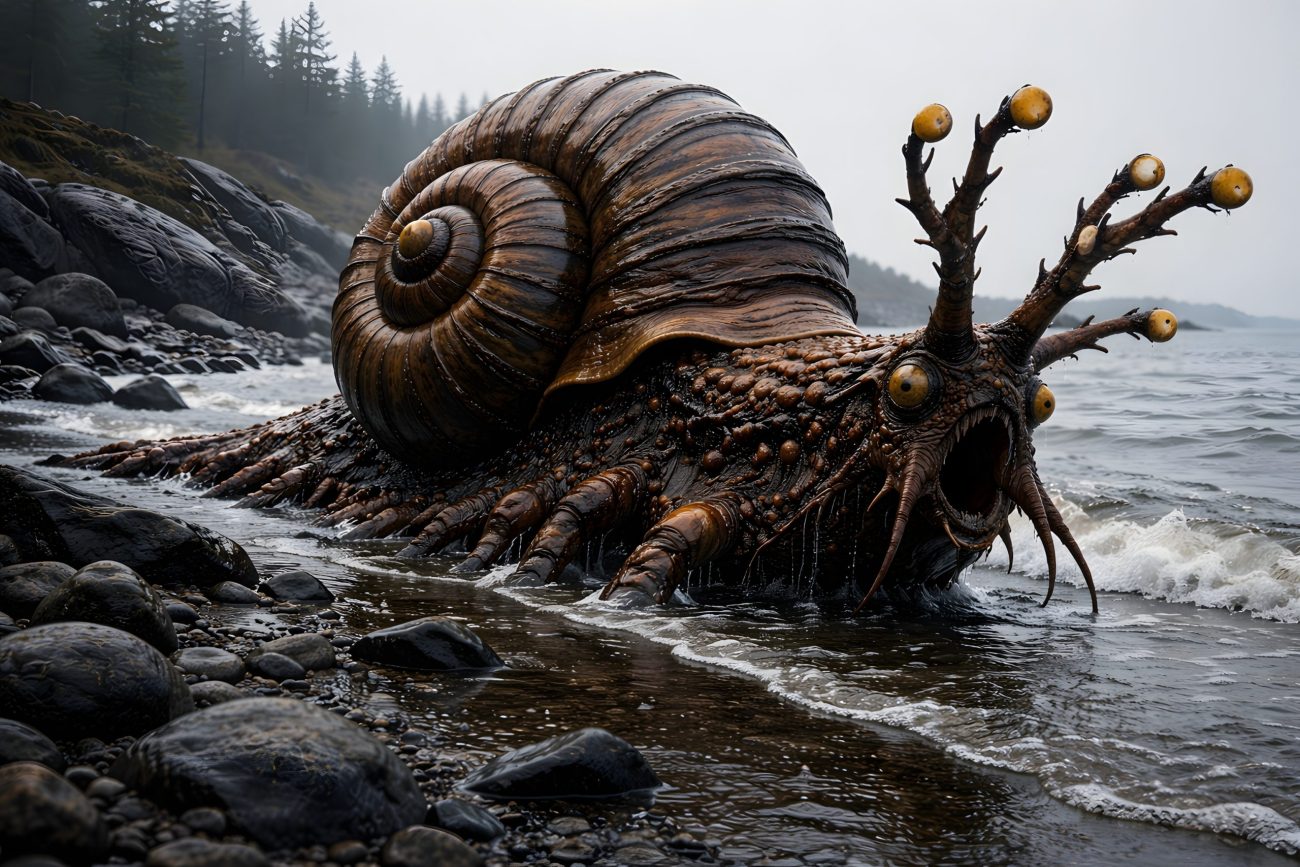
The Sarmatian Sea Snail is a gigantic marine creature described as inhabiting the Sarmatian Sea, identified with the Baltic Sea, and also reported in the Black Sea under various names.

It is said to be as large as a barrel and unlike ordinary snails in both form and behavior. It bears antlers like those of a stag, with bright, pearl-like tips. Its head has a rounded, cat-like snout with whiskers, and its eyes glow in the dark, lighting its way. Its mouth is long and deeply split, with a fleshy appendage hanging beneath it. The creature has a thick neck and a long, multicolored tail patterned like that of a tiger. Instead of a soft body, it possesses four legs armed with hooked claws.

Though capable of living both in water and on land, it is usually found in the open sea and rarely approaches the shore. In calm weather, it may crawl onto beaches to feed.

Its flesh is considered edible and even beneficial, believed to help with illnesses of the lungs and liver.

Reports place similar creatures across different regions, each culture naming it differently but describing the same or closely related being. These accounts present it as a rare and elusive inhabitant of northern and eastern seas.


Sources

A Book of Creatures contributors. (2015, August 31). Sarmatian Sea Snail. In A Book of Creatures, from https://abookofcreatures.com/2015/08/31/sarmatian-sea-snail/