Akkorokamui

Tradition: Japanese Mythology
Alternative Names: Atkor Kamuy, Atkorkamuy, Akkoro Kamui
Category: Mollusc


The Myth

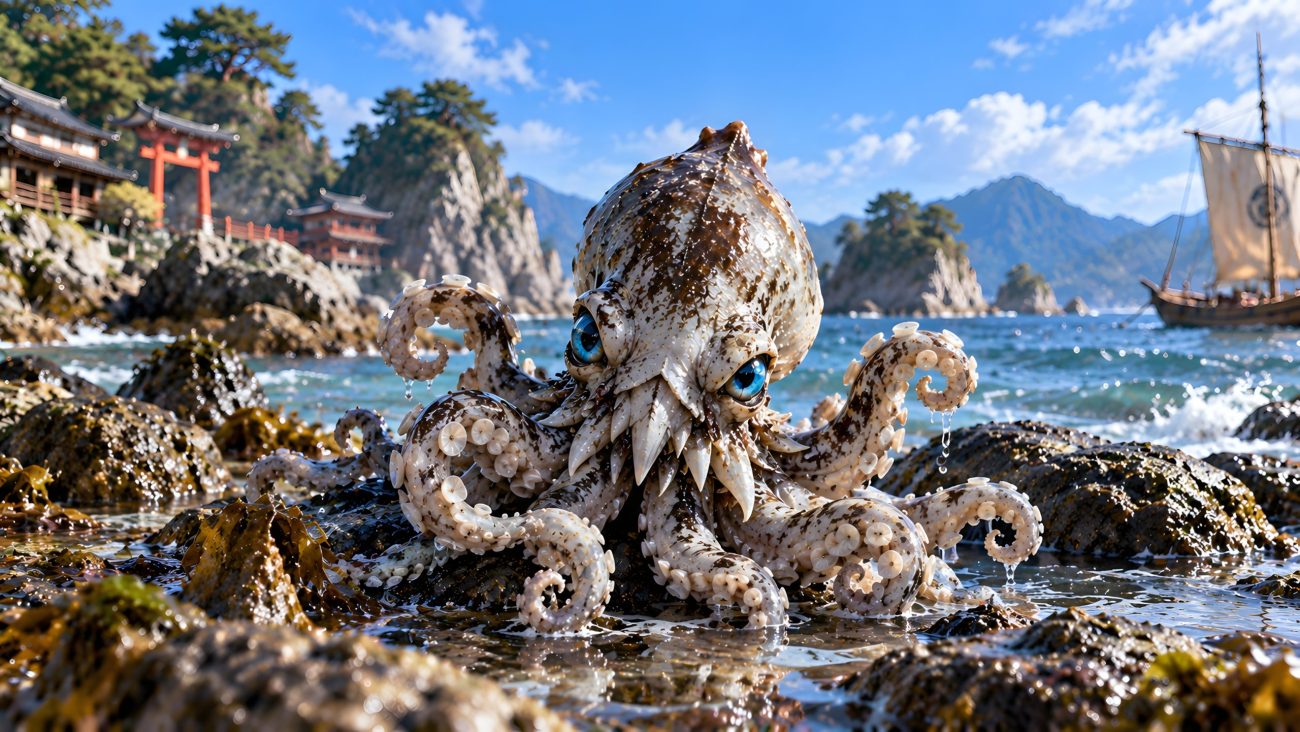
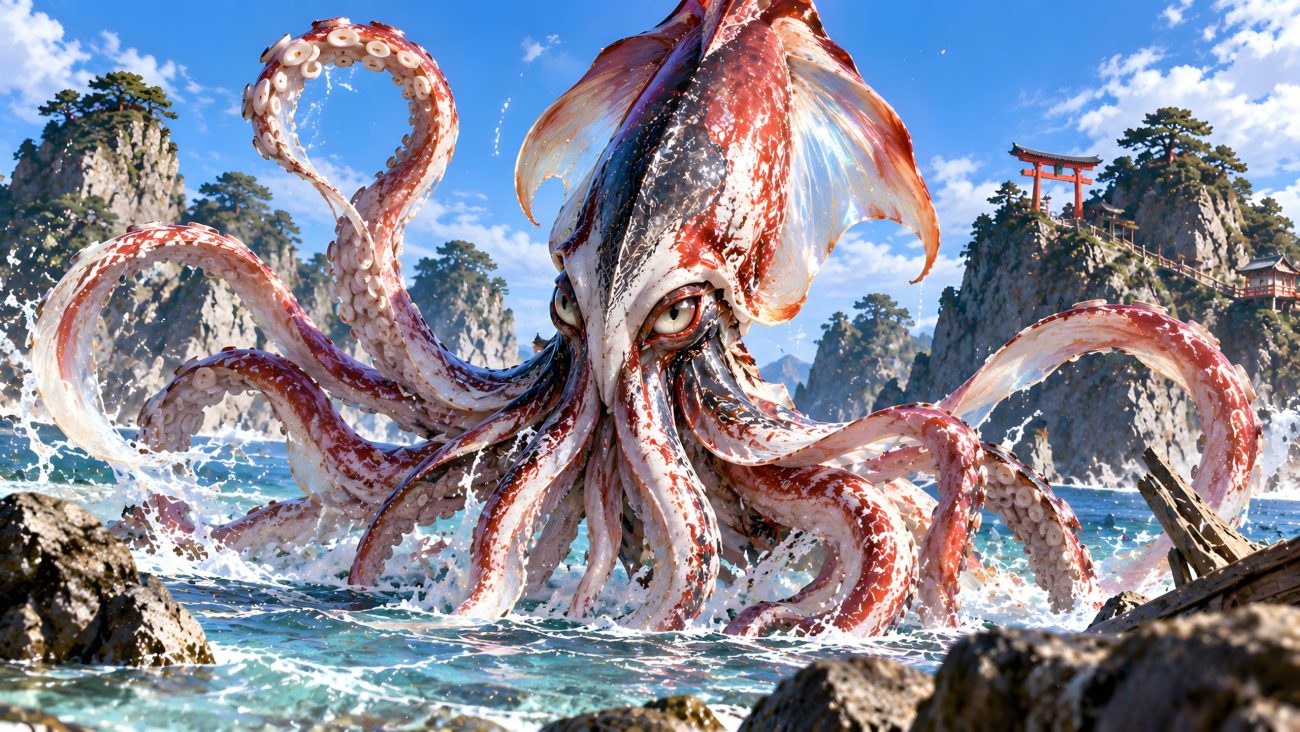
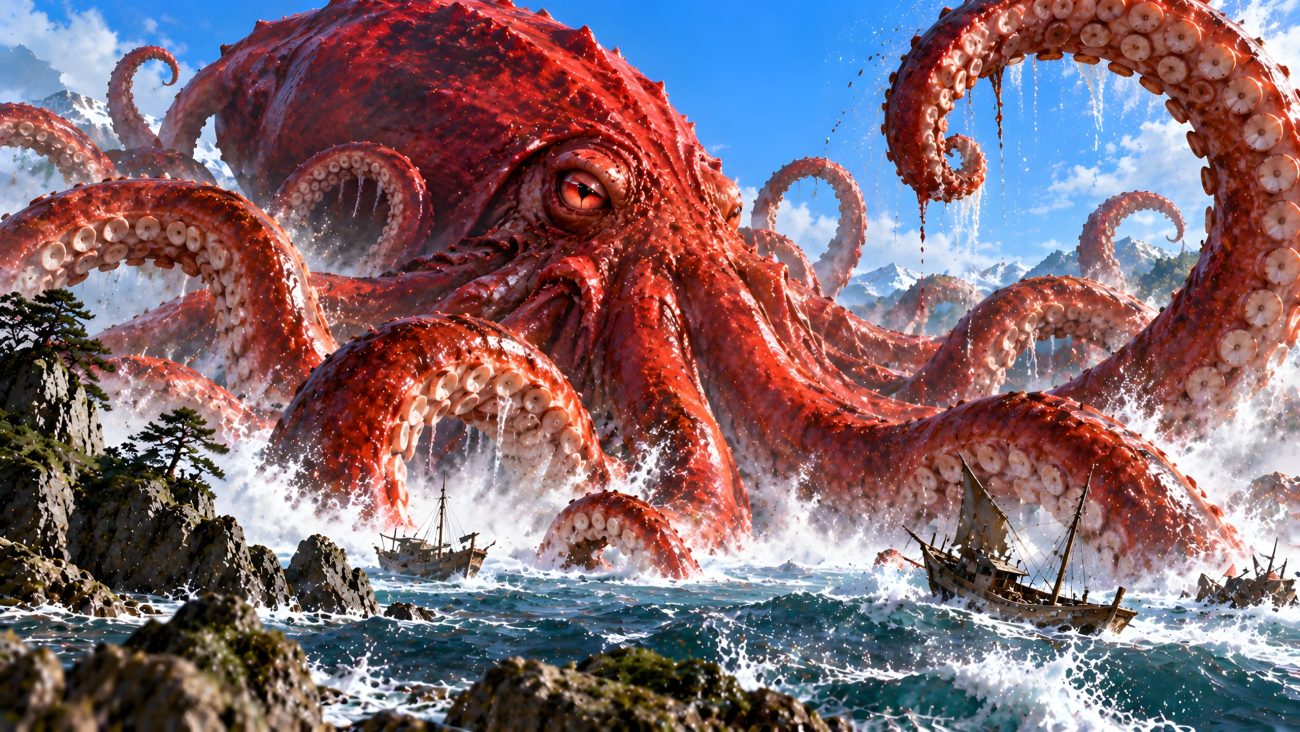
Akkorokamui is a gigantic red octopus deity that inhabits Uchiura Bay in Hokkaido, Japan. When it spreads its tentacles, its enormous body is said to cover an area of more than a hectare. It is large enough to swallow boats and even whales whole. Its brilliant red coloration is so intense that, when it rises from the water, the sea and sky appear to turn deep red. As a powerful water deity and the lord of Uchiura Bay, Akkorokamui inspires both reverence and fear.

Ships that venture too close to the creature risk being swallowed whole. For generations, local people have avoided the water whenever the sea and sky turn red. Fishermen and sailors who have no choice but to venture out carry scythes for protection against the enormous being. Its name derives from the Ainu name Atkor Kamuy, often interpreted as “string-holding kamuy,” referring to its long, string-like tentacles. The word kamuy denotes a divine or spiritual being in Ainu belief.

According to legend, Akkorokamui was once a gigantic spider named Yaushikep that lived in the mountains near the village of Rebunge. Its enormous red body covered more than a hectare, and one day it descended from the mountains and began rampaging through the village, shaking the earth and destroying everything in its path. The terrified villagers prayed for help, and Repun Kamuy, the god of the sea, answered their pleas. He dragged Yaushikep into Uchiura Bay, where the monstrous spider transformed into a gigantic octopus. From then on, it became the divine ruler of the bay, known as Atkor Kamuy, or Akkorokamui.


Sources

“Akkorokamui.” Yokai.com. https://yokai.com/akkorokamui/

Sazae Oni

Tradition: Japanese Mythology
Alternative Names: Sazae-oni, 栄螺鬼, Turban Snail Demon
Category: Mollusc


The Myth

Sazae oni are monstrous sea-dwelling yōkai associated with turban snails. They inhabit oceans, seas, and coastal areas, appearing on moonlit nights to dance across the water like exotic performers or dragons. Despite their unusual appearance, they are dangerous predators with powerful shapeshifting abilities. They often take the form of beautiful women to deceive unsuspecting sailors, sometimes pretending to be drowning victims who cry out for rescue. Once brought aboard a ship, they reveal their true nature and attack their rescuers. On land, they may disguise themselves as solitary women seeking shelter at inns, only to devour their hosts during the night.

There are several explanations for the origins of Sazae oni. One belief holds that animals gain supernatural powers when they reach a certain age, and that a turban snail becomes a yōkai after living for thirty years. Another story claims that a lustful young woman thrown into the sea transforms into a sea snail and eventually becomes a Sazae oni if she survives long enough.

A famous legend from the Kii Peninsula tells of pirates who spotted a woman apparently drowning at sea. They rescued her, intending to exploit her, unaware that she was a shapeshifted Sazae oni. During the night, she visited each pirate and bit off his testicles. By morning, she had collected them all and demanded the pirates’ treasure in exchange for their return. Desperate to recover what the story calls their “golden balls,” the pirates surrendered their ill-gotten gold. The tale presents Sazae oni as cunning and merciless creatures capable of turning human greed and lust against those who underestimate them.


Sources

“Sazae-oni.” Yokai.com. https://yokai.com/sazaeoni/


Namakusabōzu

Tradition: Japanese Mythology
Alternative Names: Namakusa Bōzu, 腥坊主
Category: Mollusc


The Myth

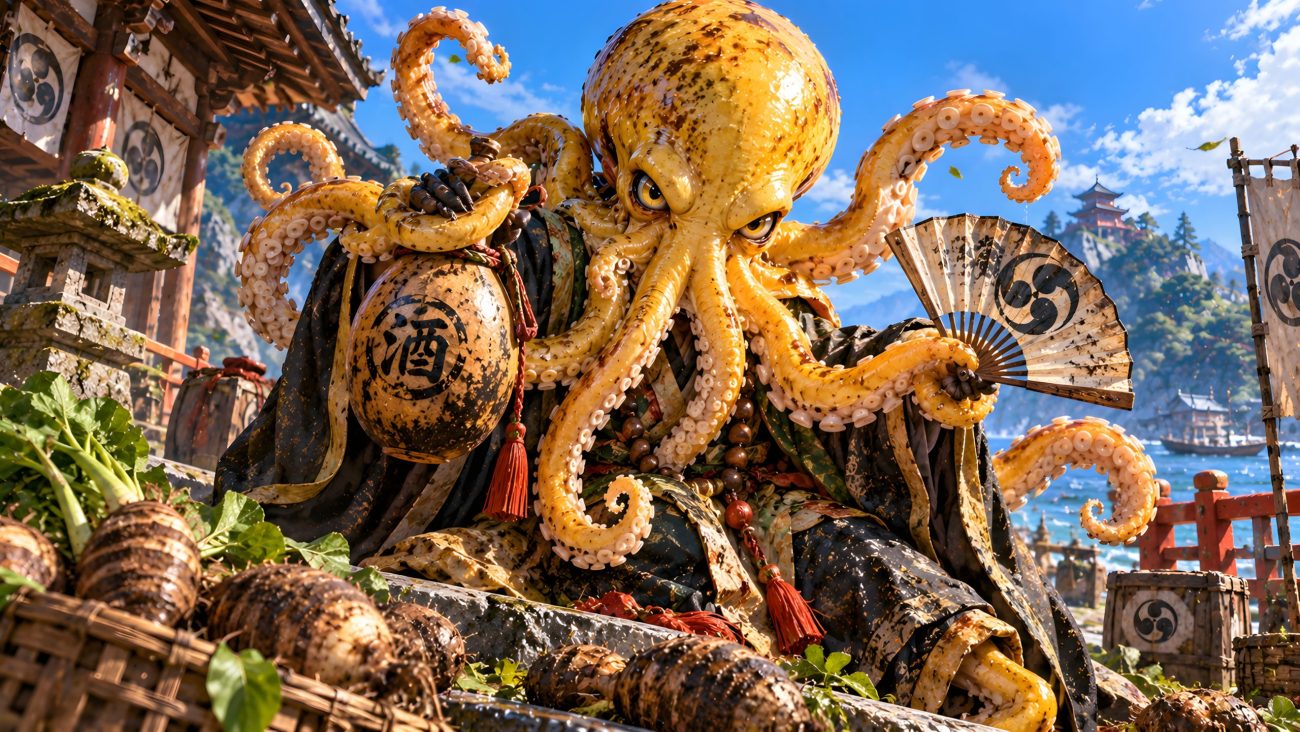
Namakusabōzu is a strange octopus yōkai described in the Japanese work Tōsei Koji Tsuke Kaiokoshi. Its name refers to a “rank-smelling monk,” a mocking expression for a hypocritical or disreputable Buddhist priest who disregards religious discipline. The creature is associated with taro digging and the popular belief that octopuses sometimes come ashore to eat yams.

In earlier times, Namakusabōzu supposedly disguised itself as a doctor or tea ceremony instructor to visit pleasure districts, including Shinagawa and the Iroha teahouses of Yanaka. These disguises reflect the story’s mockery of monks who secretly pursued women despite religious vows of celibacy. Doctors and tea masters were suitable disguises because they, like monks, commonly had shaved heads.

In more recent times, however, Namakusabōzu no longer bothers to disguise itself. It appears openly, shaking its bald head and revealing its true identity. Through its transformation into a supernatural octopus, the creature satirizes religious hypocrisy and the efforts of disreputable monks to conceal their worldly appetites.


Sources

“Namagusa Bozu.” 新版TYZ 妖怪図鑑 (New TYZ Yokai Encyclopedia). https://tyz-yokai.blog.jp/archives/1056529974.html


Choco Sai

Tradition: Japanese Mythology
Alternative Names: Choco, Choco-sai, Choco Rhino
Category: Mollusc


The Myth

Choco Sai is a strange aquatic creature depicted in an Edo-period yōkai picture scroll. It is said to inhabit the waters around Shikoku, Hachijō Island, and Matsumae, with its name varying by region: it is called Choco in Shikoku and Choco-sai around Hachijō Island and Matsumae. The creature has a small, charming appearance and is described as resembling a tiny octopus. When sprinkled with salt and grilled on skewers, it supposedly looks and tastes like dried sardines. One depiction shows six Choco Sai skewered together, while another portrays a creature with a squid-like beak and plate-shaped suckers on its limbs.

Despite its appealing appearance, Choco Sai can be dangerous. Fish that approach to prey on it are bitten and become its victims, while humans who encounter groups of these creatures underwater may also lose their lives. In 1783, a person in Matsumae reportedly encountered a school of Choco Sai and approached by boat, intending to catch and eat them. The creatures appeared unwilling to flee, but closer inspection revealed that they were being sucked up and eaten by people underwater.

A man named Sōzō from Nagiri Village in Iyo Province was said to have survived three life-threatening experiences. One occurred at Obama in Matsumae, where he was stung by a Choco Sai and suffered severe swelling and pain throughout his body for about a month. He eventually recovered naturally, but it was later claimed that applying spicy oil could immediately cure a Choco Sai sting. The creature remains an unusual and obscure yōkai, known from a surviving picture scroll and a handful of strange tales.


Sources

“Choco-Rhino.” 新版TYZ 妖怪図鑑 (New TYZ Yokai Encyclopedia). https://tyz-yokai.blog.jp/archives/1084332981.html


Hibushimi

Tradition: Japanese Mythology
Alternative Names: Hibushimi, Kobushime
Category: Mollusc


The Myth

Hibushimi is a supernatural squid associated with a legend from Okinoerabu Island in Kagoshima Prefecture, Japan. The story tells of Fuefukimatsu, known as the Little Father of the Rock Flute Pine, a lonely man without parents or siblings who spent his days aboard a boat playing the flute. One day, he discovered a kobushime squid by the seashore and had intercourse with it. When he returned to the same place the following day, the squid had disappeared.

Three years later, while Fuefukimatsu was playing his flute on his boat, two children emerged from the sea and called him their father. They explained that their grandparents wished to meet him, and he followed them into the water, carrying the children on his back. They led him to Nira Island, a beautiful undersea paradise, where an elderly man and woman welcomed him warmly as their son-in-law. Fuefukimatsu stayed with them for three days, enjoying their hospitality, before the children told him it was time to return home. He was astonished to learn that three years had passed in the world above while he had been beneath the sea.

Before his departure, the elderly couple asked what gift he desired. Fuefukimatsu requested seeds that would produce crops without being sown, and the old man gave him a shellfish called kujima, also known as hizaragai. Returning to his homeland with the children, Fuefukimatsu discovered that his only field had passed into someone else’s possession during his absence. With no land left to cultivate, he decided to live from the sea. He removed the shell from the kujima while aboard his boat and ate it, but in doing so, he himself became a kujima.


Sources

“Hibushimi.” 新版TYZ 妖怪図鑑 (New TYZ Yokai Encyclopedia). https://tyz-yokai.blog.jp/archives/1070234919.html


Tengai Daiou

Tradition: Japanese Mythology
Alternative Names: Tengai Daiō, King Tengai, Heavenly Canopy King
Category: Mollusc


The Myth

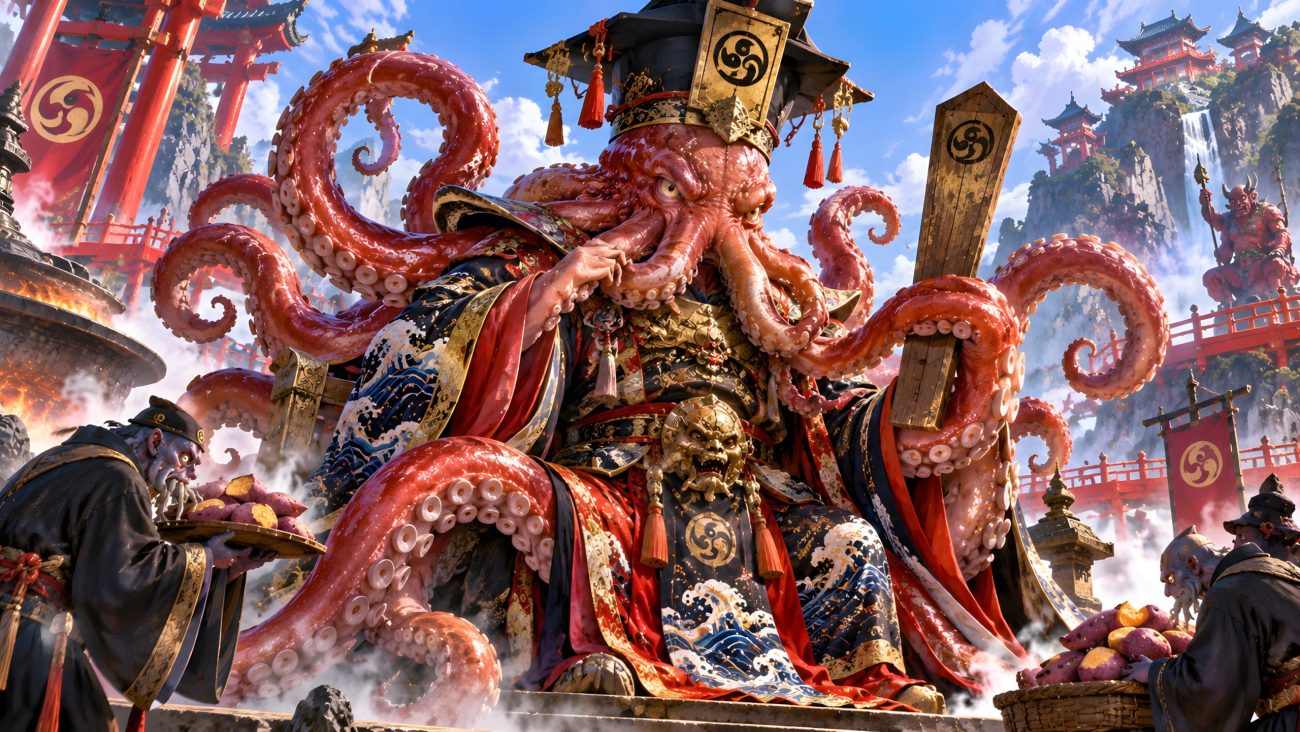
Tengai Daiou is a gigantic octopus who claims to be the King of Hell. He appears dressed like Enma Daiō, the ruler of the underworld, wearing robes decorated with waves and carrying a wooden implement in place of a sceptre. Despite his grand title and fearsome appearance, Tengai Daiou is an impostor with no rightful connection to the underworld. He secretly plots to kill Enma and seize control of Hell for himself.

His story unfolds when the heroic Asahina Kobayashi, returning from a journey through Hell, overhears children singing about a special realm called Sweet Potato Hell. Having visited the recognised 136 Hells, she regrets missing this additional destination and immediately turns back to investigate. Sweet Potato Hell lies beyond the usual boundaries of the underworld, where the King of the Heavenly Canopy judges the dead of the sweet potato. Its sinners endure punishments inspired by popular beliefs about different varieties of potatoes, including being weighed, grated, peeled, or subjected to unbearable stench. Asahina, a lover of sweet potatoes, feels pity for the suffering vegetables and attacks the false ruler with a gigantic medicinal kettle taken from the Scorching Hell.

Asahina captures Tengai Daiou and brings him before the true King Enma, who is furious at the impostor’s attempt to fabricate a Hell and usurp his authority. He sentences the octopus to an iron prison, where it is boiled in the Scorching Hell and transformed into the cooked octopus known as yakuko, which Asahina receives as a souvenir. The tale plays humorously on the traditional belief that octopuses eat sweet potatoes, as well as the slang term tengai, used by Buddhist monks to refer to an octopus.


Sources

“Tengai Daio.” 新版TYZ 妖怪図鑑 (New TYZ Yokai Encyclopedia). https://tyz-yokai.blog.jp/archives/1010655116.html


Tako Musume

Tradition: Japanese Mythology
Alternative Names: Tako-musume, Octopus Daughter
Category: Mollusc


The Myth

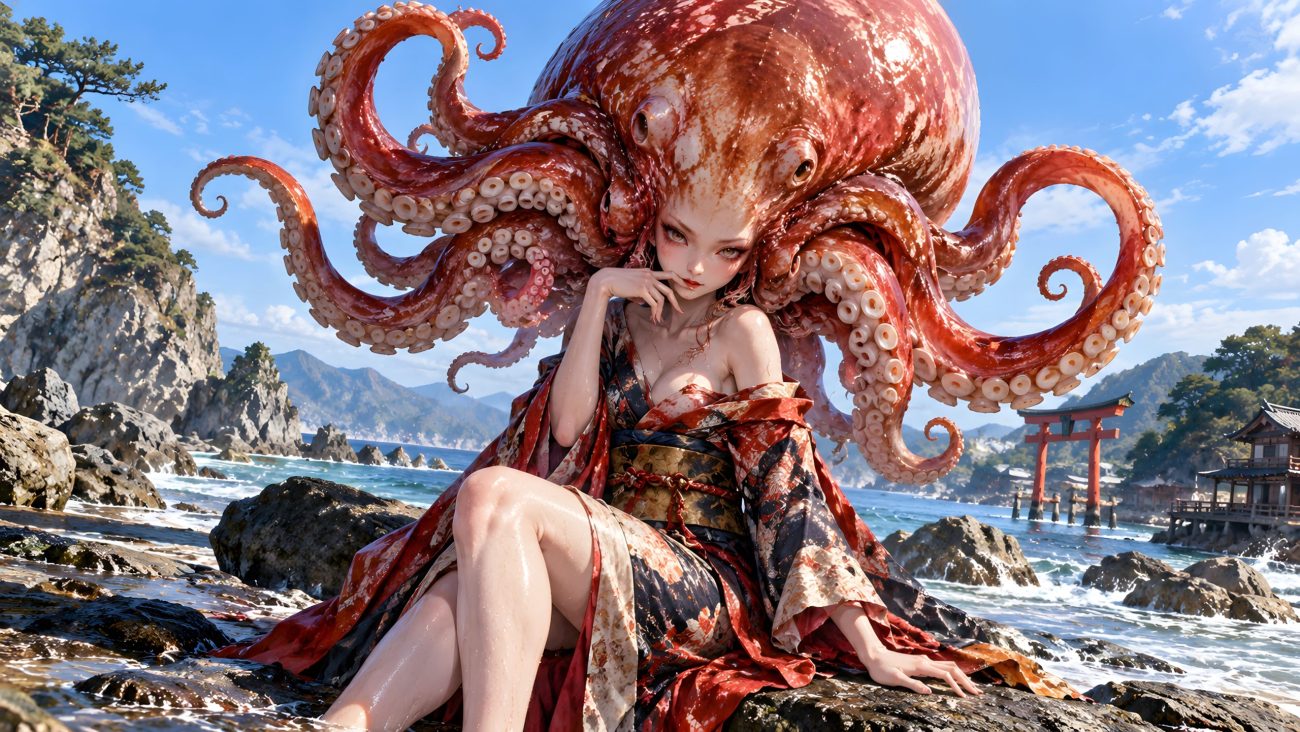
Tako Musume is a strange female yōkai depicted in a Japanese collection of supernatural creatures produced during the late Edo period. She is portrayed as a monstrous woman with an enormous head, giving her an unusual and unsettling appearance.

Beyond this depiction, little is known about Tako Musume’s characteristics or behaviour. Her surviving description focuses on her extraordinary head and her identity as a female monster, leaving her supernatural abilities and role in mythology unclear.


Sources

“Tako Musume.” 新版TYZ 妖怪図鑑 (New TYZ Yokai Encyclopedia). https://tyz-yokai.blog.jp/archives/1010654256.html