Shinchu

Tradition: Japanese Mythology
Alternative Names: Divine Insect
Category: Insect


The Myth

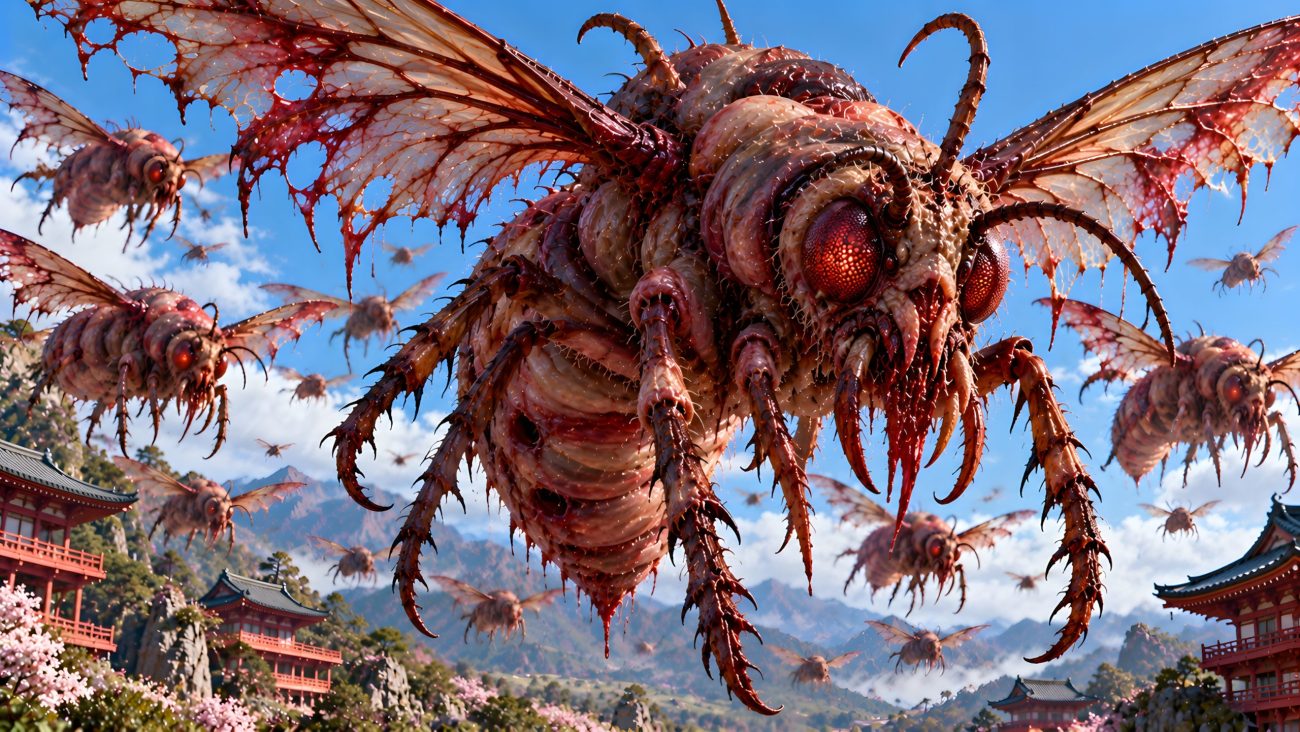
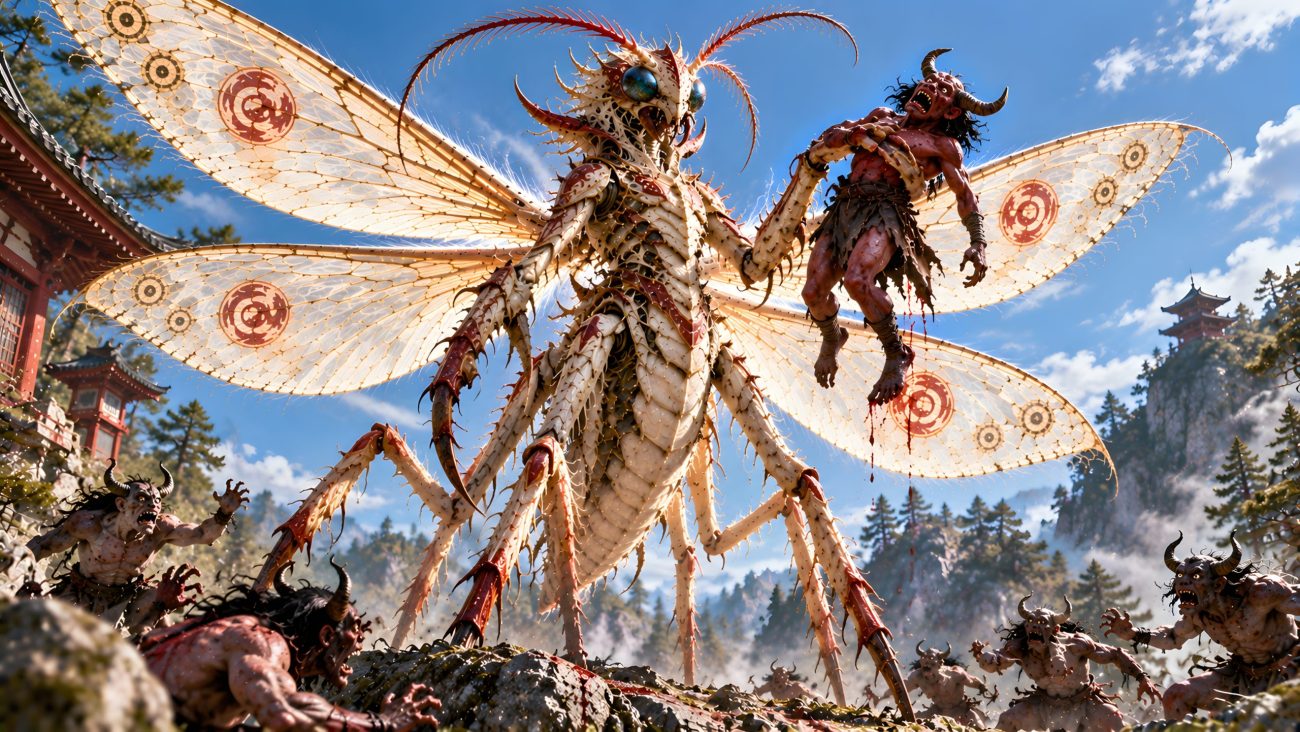
Shinchu is a gigantic divine insect that protects the world by devouring evil spirits and plague demons. It is depicted in the Hekija-e, a Japanese painting created in the latter half of the twelfth century to ward off evil. The painting, now held by the Nara National Museum, portrays Shinchu as an enormous insect with eight legs and wings, towering over the demons it hunts.

The divine insect is immensely powerful. Its body is far larger than that of the demons, and its strong hands can seize one of them in a single grasp. Shinchu devours its captives, covering the surrounding area with blood as it feeds. The demons appear terrified of the creature, and some are shown fleeing at full speed in desperate attempts to escape its grasp.

According to the accompanying text, Shinchu lives in the mountains south of Jambudvipa, the continent inhabited by humans in Buddhist cosmology. There, it feeds on various kinds of demons. Its appetite is extraordinary: it is said to devour three thousand demons in the morning and another three hundred in the evening.

Despite its frightening appearance and gruesome feeding habits, Shinchu is a benevolent protective deity. Its violence is directed against malevolent supernatural beings, making it a formidable defender against evil spirits and the forces responsible for plague and misfortune.


Sources

“Shinchū.” 新版TYZ 妖怪図鑑 (New TYZ Yokai Encyclopedia). https://tyz-yokai.blog.jp/archives/1010655148.html


Bakekatatsumuri

Tradition: Japanese Mythology
Alternative Names: Giant Snail Yōkai
Category: Insect, Mollusc


The Myth

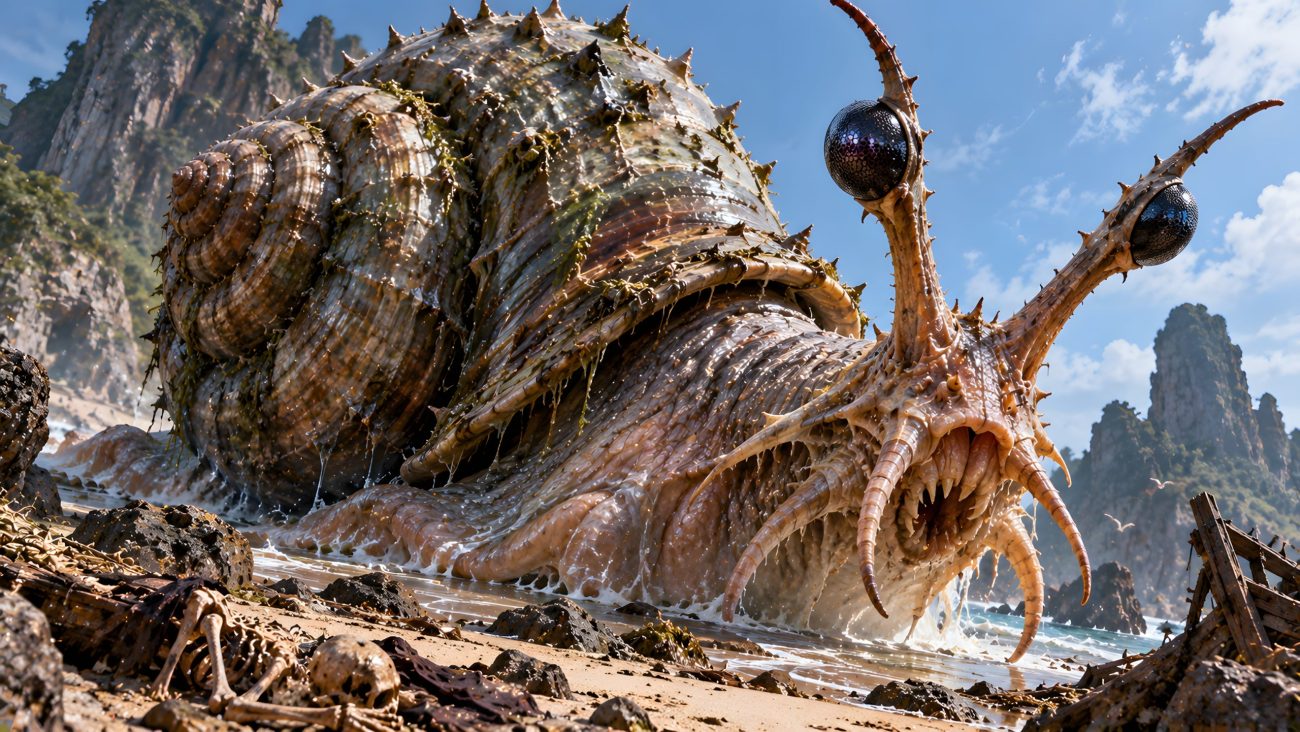
The Bakekatatsumuri is a gigantic supernatural snail said to grow much larger than a human. It inhabits a barren island without grass or trees, where it hunts people who become stranded after washing ashore. Rather than attacking immediately, the enormous snail slowly pursues its victims, steadily closing the distance until they become exhausted and can no longer escape.

Once its prey is worn out, the Bakekatatsumuri attacks and devours them. Its patient hunting method makes it particularly terrifying: the creature does not need to move quickly, relying instead on the isolation of its island and the gradual exhaustion of anyone trapped there.

The creature is described in The Complete Encyclopedia of World Yōkai, but the source of the legend is uncertain. One possible inspiration is Patricia Highsmith’s short story The Quest for Blank Claveringi, published in the 1970 collection Eleven. In that story, the protagonist encounters a giant snail on a remote island in the South Seas. The Bakekatatsumuri may have been created as a yōkai interpretation of this fictional creature rather than originating in an older Japanese folk tradition.


Sources

“Bakekatatsumuri.” 新版TYZ 妖怪図鑑 (New TYZ Yokai Encyclopedia). https://tyz-yokai.blog.jp/archives/1074589325.html


Akuta-mushi

Tradition: Japanese Mythology
Alternative Names: Akuta no Mushi; Akutamushi; Iron-Eating Insect
Category: Insect


The Myth

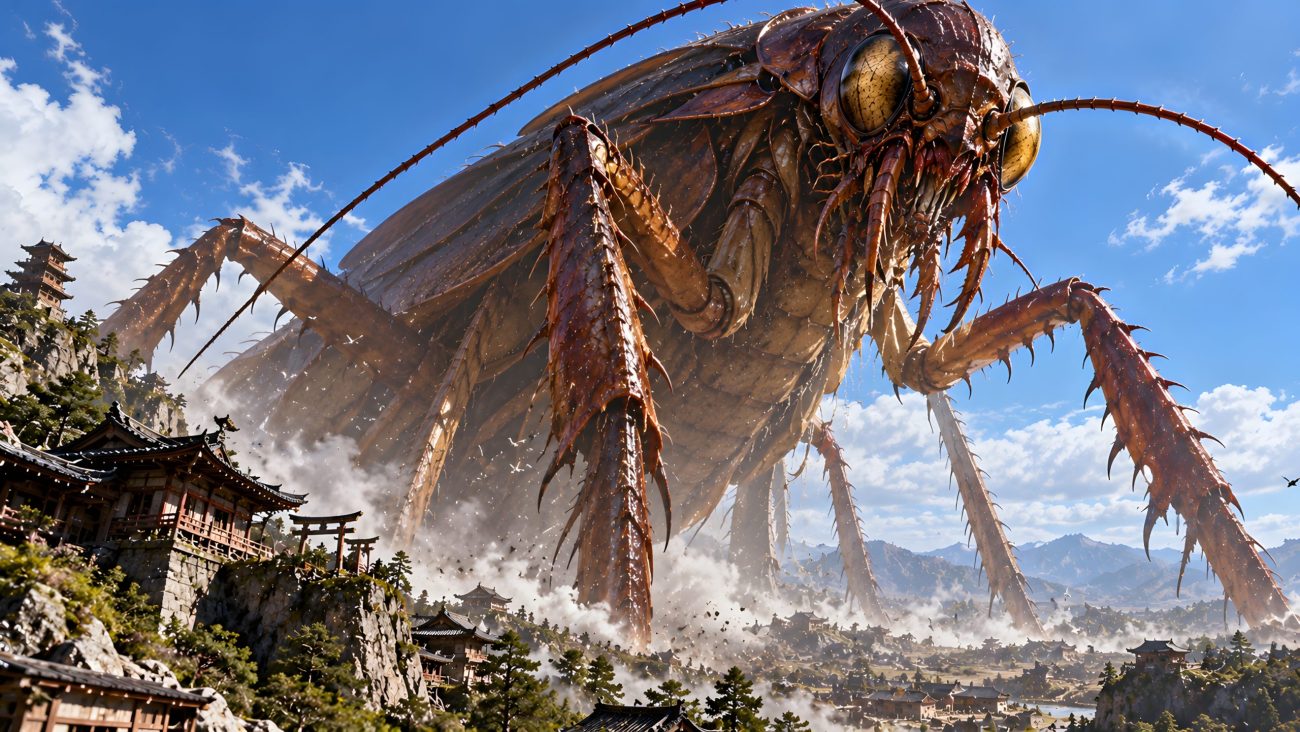
Akuta-mushi is a monstrous insect described in the Japanese text Shintō Yurai no Koto. It descended from the heavens during the reign of Emperor Yōmei (585–587), after the emperor expressed a desire to see a strange creature said to live in the sky and feed on iron. When the insect appeared, the emperor recognized it as the creature he had wished to see and ordered that it be kept and raised.

The insect fed on iron and grew to an enormous size, eventually becoming as large as a mountain. When iron was unavailable, it began devouring human beings instead. It also refused to obey the emperor’s commands, transforming from a remarkable creature into a threat to the imperial realm. The emperor ordered its destruction, but the insect’s body had become as hard as a mass of iron, rendering even swords useless against it.

As the people exhausted every possible means of defeating the monster, the sun goddess Amaterasu intervened. She submerged Akuta-mushi in a great river and finally destroyed it. According to the legend, the remains of its bones became gishaku, a magnetic stone obtained from the sea or other places and associated with the ability to attract iron.

The text survives in manuscripts dating to around the Muromachi period and presents Japanese myths within a worldview combining Shinto and Buddhist traditions. The story of Akuta-mushi appears in an explanation of the origins of Sakuku-no-Miya.

Although akuta-mushi resembles an old Japanese name for the cockroach, it is uncertain whether the creature in this story was intended to represent a real insect. Its tale follows a familiar pattern in which a ruler attempts to tame an extraordinary creature, only for it to grow uncontrollably powerful and turn against humanity. Similar stories describe the monstrous being known as Wazawai, whose iron-eating nature and magnetic remains also appear in the medieval Heike Monogatari tradition.


Sources

“Akuta-mushi.” 新版TYZ 妖怪図鑑 (New TYZ Yokai Encyclopedia). https://tyz-yokai.blog.jp/archives/1075890032.html


Saimōshō

Tradition: Japanese Mythology
Alternative Names: Pus-and-Blood Hell Worms
Category: Insect


The Myth

The Saimōshō are monstrous worms that inhabit the Pus and Blood Hell, one of the sixteen minor hells associated with the eight great hells in Buddhist cosmology. They are depicted as bee-like creatures that gather in swarms to attack the damned, pecking at their faces and devouring their flesh and bones.

According to the second volume of the Qishijing, translated into Chinese by Janagupta during the Sui dynasty, the Pus and Blood Hell punishes those who harboured wicked and foolish intentions during their lives and gave others filthy things to eat. The hell is filled with vast quantities of pus, and sinners are submerged in it up to their mouths and noses, leaving them trapped in a foul and agonizing environment.

The Saimōshō torment these sinners by consuming their flesh and bones, inflicting continual suffering. The Jigoku Zōshi (Scroll of Hell), preserved at the Nara National Museum, depicts this punishment with swarms of bee-like Saimōshō attacking the faces of sinners submerged in the sea of pus.


Sources

“Saimōshō.” 新版TYZ 妖怪図鑑 (New TYZ Yokai Encyclopedia). https://tyz-yokai.blog.jp/archives/1010655138.html


Kamakiri-zaka

Tradition: Japanese Mythology
Alternative Names: Praying Mantis Hill
Category: Insect


The Myth

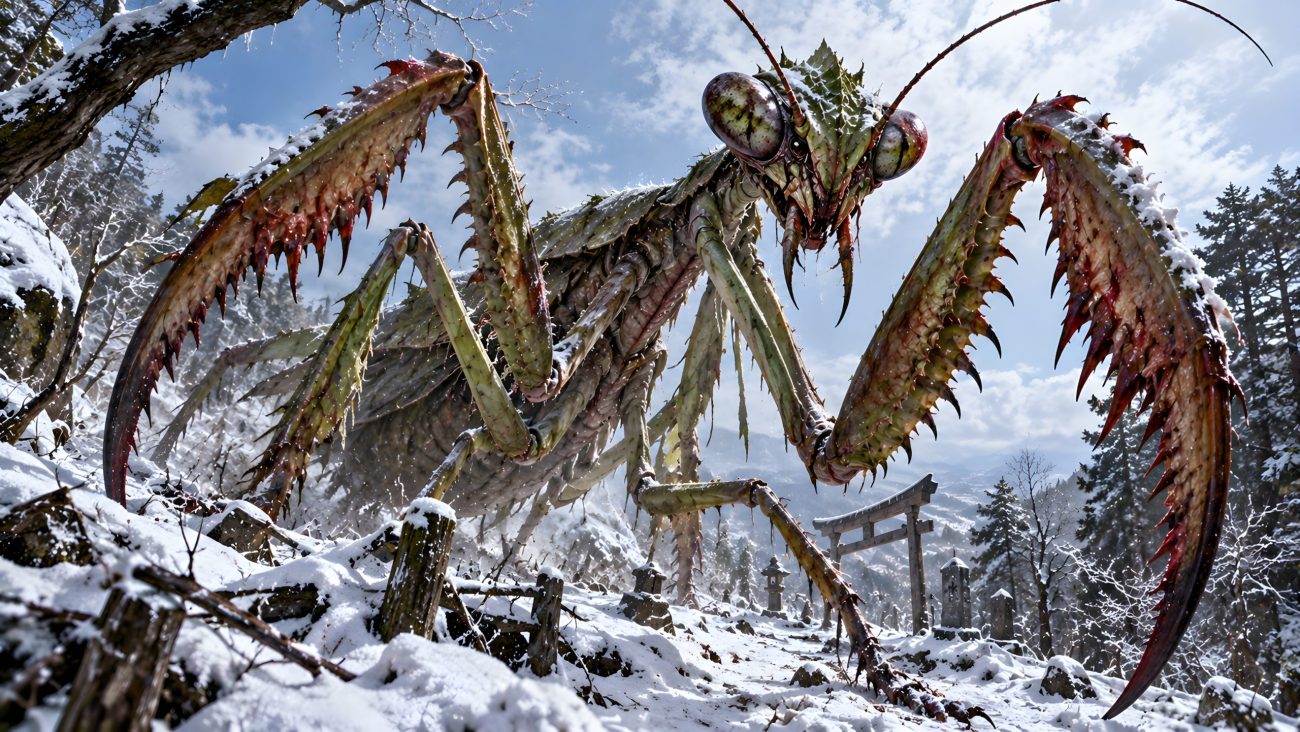
Kamakiri-zaka is a haunted hill in Katagai-machi, Mishima District, Niigata Prefecture, associated with the curse of a gigantic praying mantis. According to local legend, a monstrous mantis once lived in the area, growing so enormous that it could devour human beings.

One winter, a severe snowstorm crushed the giant insect to death. However, its death did not end the danger associated with the creature. The hill became the site of a strange supernatural phenomenon believed to be caused by the dead mantis’s curse.

Ever since the creature’s death, anyone who falls on the hill is said to suffer sickle-shaped wounds that bleed black blood. These strange injuries resemble cuts made by a praying mantis’s sharp forelegs, suggesting that the enormous insect continues to exact revenge even after its death.


Sources

“Kamakiri-zaka.” 新版TYZ 妖怪図鑑 (New TYZ Yokai Encyclopedia). https://tyz-yokai.blog.jp/archives/1010653961.html


Mukade

Tradition: Japanese Mythology
Alternative Names: Giant Centipede; Ōmukade
Category: Insect


The Myth

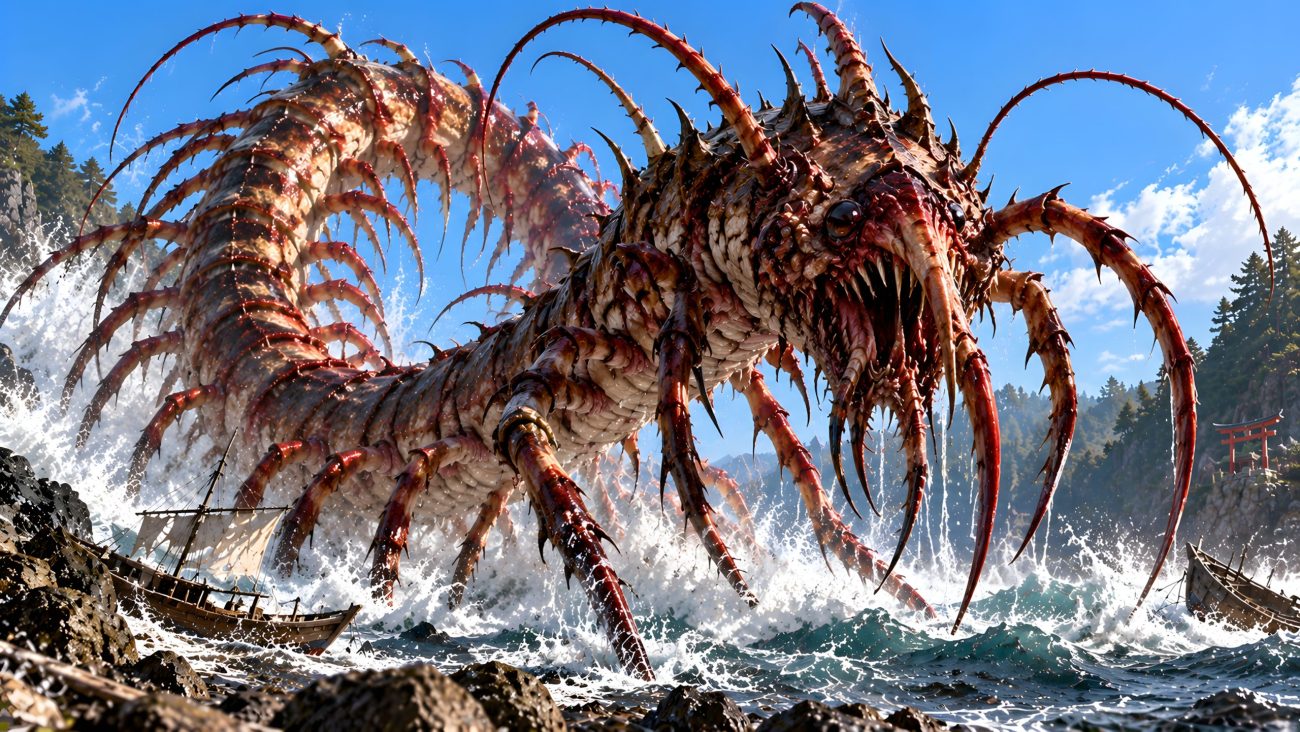
The Mukade is a monstrous centipede appearing in Japanese folklore, often described as growing to an enormous size. Some traditions speak of giant centipedes more than ten jō long, large enough to attack and devour cattle. Their tough hides were reportedly used to make drums, while their flesh served as food for local people. In other accounts, centipedes longer than one shaku could fly through the air and threaten dragons, which retaliated by striking them down with lightning.

Giant centipedes are frequently portrayed as enemies of dragons and great serpents. In Konjaku Monogatari-shū, seven fishermen from Kaga Province are swept away by a storm and stranded on an island. There they meet a well-dressed young man who reveals that he caused the storm to bring them there. He asks for their help in defeating the ruler of another island, who threatens his domain. The fishermen agree, bringing their bows and arrows into battle.

Near dawn, two strange lights appear offshore as powerful winds rise and the waves churn. The fishermen discover that the lights belong to a gigantic centipede and an enormous serpent locked in combat. The battle is so fierce that clouds scatter and the sea becomes turbulent. The centipede’s many legs give it the advantage, and the serpent begins to lose. The fishermen shoot arrows into the centipede and then attack it with their swords, eventually killing the monster. The wounded young man appears afterward to thank them, revealing that he is a dragon who had taken human form. At the dragon deity’s request, the fishermen bring their families to the island, where they live peacefully.

Another famous tale concerns Tawara Tōta, also known as Fujiwara no Hidesato, who defeats a giant centipede living on Mount Mikami in Ōmi Province. A great serpent or dragon, impressed by Tōta’s courage, asks him to destroy the monster. The story reinforces the traditional enmity between giant centipedes and dragons.

Giant centipedes also appear in legends surrounding Mount Akagi in Gunma Prefecture. The mountain’s deity, or one of its attendants, is said to take the form of a centipede. People living on the southeastern slopes traditionally avoided killing ordinary centipedes, instead releasing them with the words, “Go to Akagi.”

According to another legend, the deity of Mount Akagi once fought the serpent deity of Mount Nikkō over possession of Lake Chūzenji. The battle took place at Senjōgahara in present-day Tochigi Prefecture. In a version preserved in Akita tradition, Nikkō Gongen enlisted the help of Mantsu Saburō, a renowned archer from the foothills of Mount Nikkō. Akagi Myōjin appeared as a giant centipede so immense that it could cross mountain peaks. Armed with a white wooden bow and sacred arrows, Mantsu Saburō shot out both of the creature’s eyes and defeated it. In gratitude, Nikkō Gongen secured permission from the imperial court for him to hunt in the mountains. Mantsu Saburō later travelled to the mountains of Ani in Dewa Province, where he became regarded as an ancestor of the matagi, traditional Japanese mountain hunters.


Sources

“Mukade.” 新版TYZ 妖怪図鑑 (New TYZ Yokai Encyclopedia). https://tyz-yokai.blog.jp/archives/1010654236.html
Hiru-onna

Tradition: Japanese Mythology
Alternative Names: Leech Woman
Category: Insect


The Myth

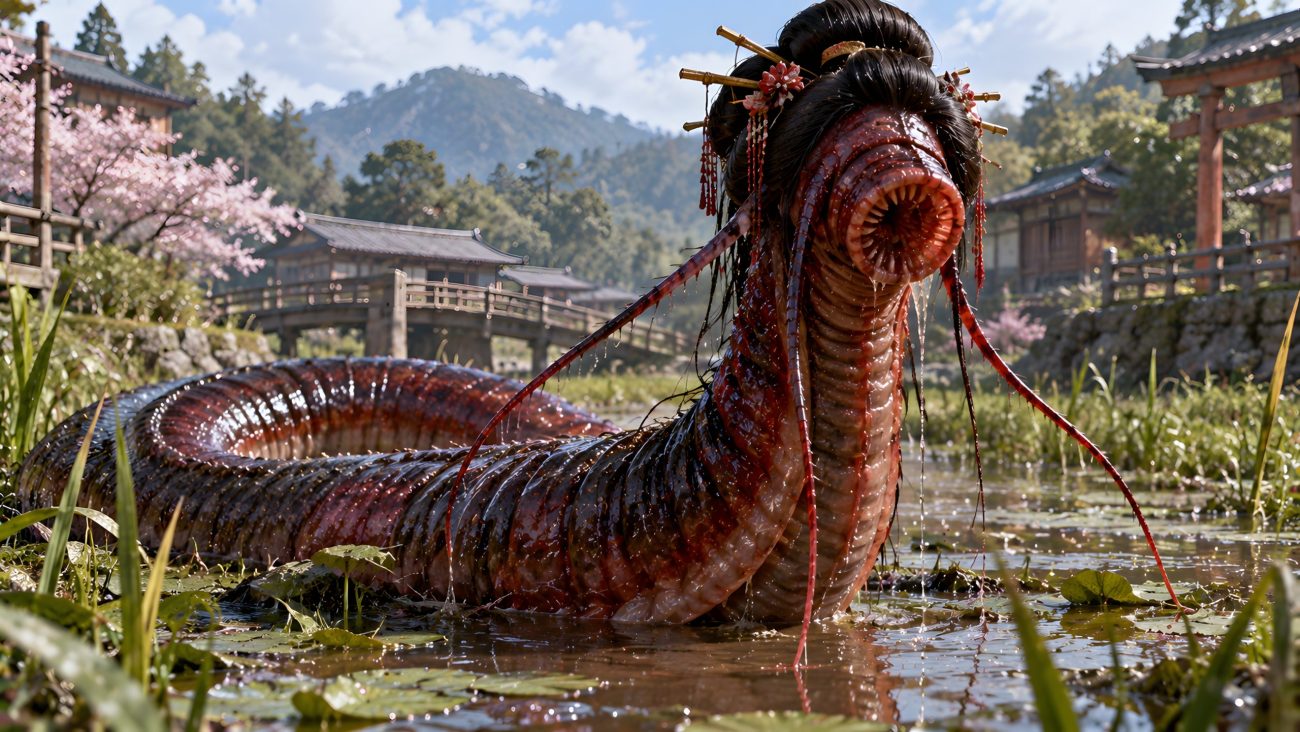
Hiru-onna is a female leech yōkai depicted as a large, leech-like creature with her hair tied up. She is said to inhabit muddy water, where she waits for humans to approach. Anyone who shows her warmth becomes her target, and she immediately latches on to suck their blood. Her attacks are so dangerous that people may even lose their lives to her.

Hiru-onna first appeared in 1908 in the opening installment of Shinsen Yōkai Zukushi (New Selection of Yōkai), published in Tokyo Puck, a satirical cartoon magazine founded during the Meiji era. Rather than simply presenting a monstrous insect, the illustration uses the leech as a metaphor for a ruthless woman who drains other people of their money, exploiting them until they are financially ruined.

The muddy water in which Hiru-onna lives is a euphemism for a red-light district, revealing the satirical intention behind the creature. The accompanying Chinese text states that courtesans can be considered a type of yōkai, making the comparison explicit. Hiru-onna thus embodies the idea of a woman who clings to her victims and drains them of their resources just as a leech sucks blood.


Sources

“Hiru-onna.” 新版TYZ 妖怪図鑑 (New TYZ Yokai Encyclopedia). https://tyz-yokai.blog.jp/archives/1084324737.html


Aburamushi-tata

Tradition: Japanese Mythology
Alternative Names: The Curse of the Cockroaches
Category: Insect


The Myth

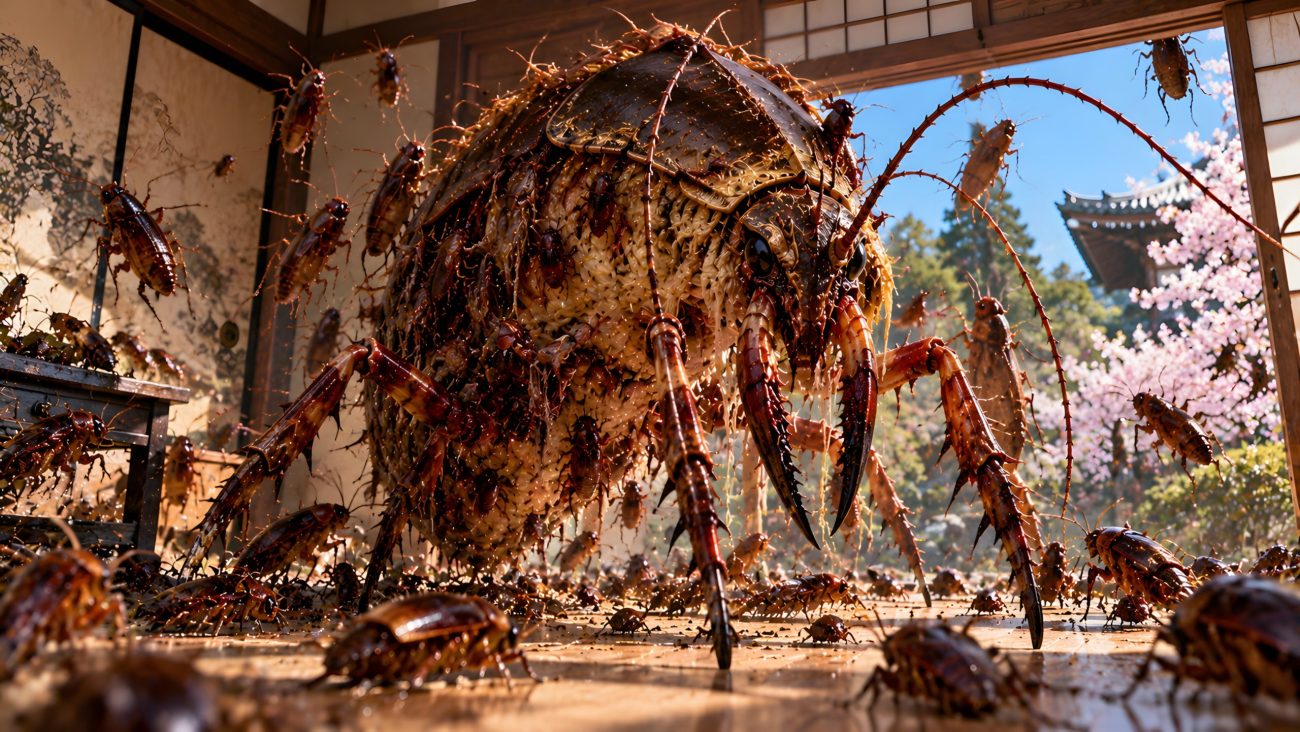
Aburamushi-tata is associated with a tale of supernatural retribution involving cockroaches. The story appears in Kidan Zashishi (Miscellaneous Stories of Strange Tales) and concerns a woman from Osaka who had hated cockroaches since childhood. Whenever she encountered one, she would kill it by pouring boiling water over it.

Years later, the woman became seriously ill. As she lay close to death, a multitude of cockroaches suddenly appeared beside her. Terrified, she cried out that the cockroaches were going to seize her and kill her. She eventually died in a fit of madness.

People feared that the woman’s terrible death was punishment for her lifelong habit of killing cockroaches. The tale presents the insects as agents of supernatural vengeance, returning at the moment of death to torment someone who had repeatedly destroyed them.


Sources

“Aburamushi-tata.” 新版TYZ 妖怪図鑑 (New TYZ Yokai Encyclopedia). https://tyz-yokai.blog.jp/archives/1075816535.html


Ka-sei

Tradition: Japanese Mythology
Alternative Names: Mosquito Spirit
Category: Insect


The Myth

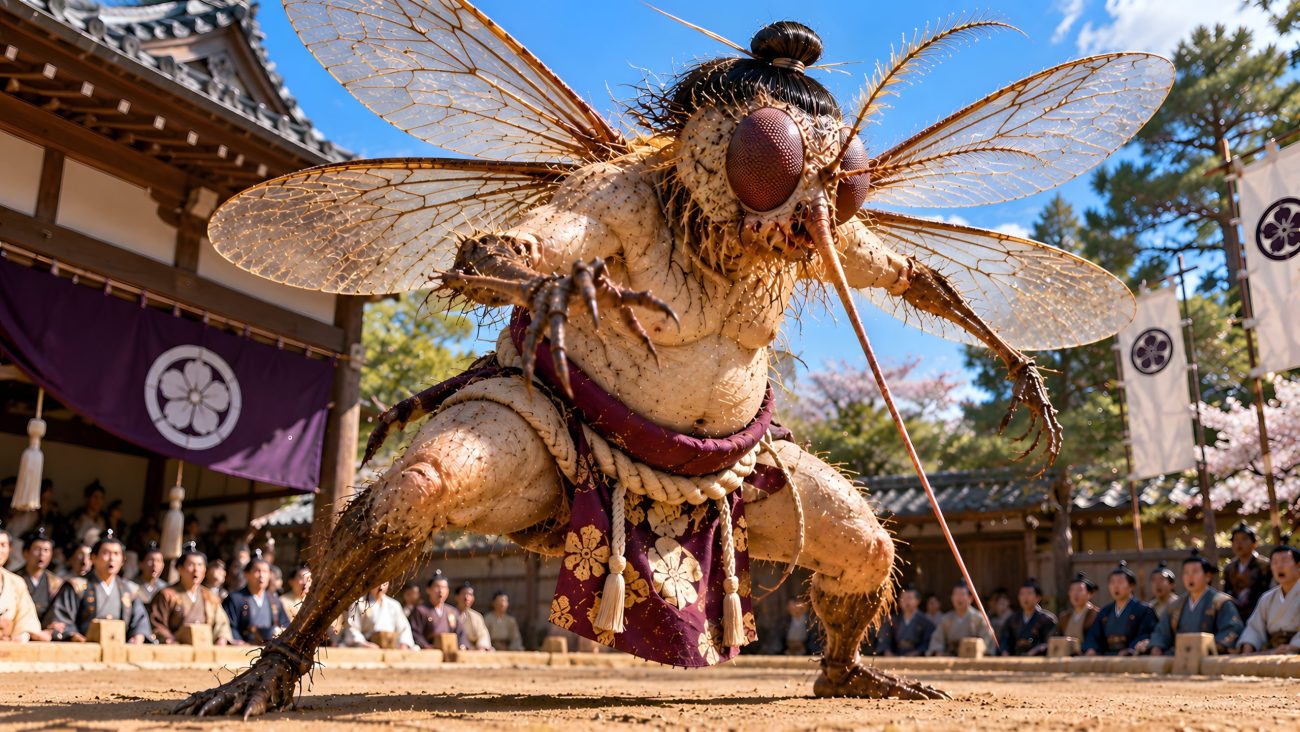
Ka-sei is a mosquito spirit that can transform into a human and disguise itself as a sumo wrestler. It appears in the Kyogen play Mosquito Sumo, where it comes from Moriyama in Ōmi Province, a place associated with mosquitoes. Taking advantage of the popularity of sumo wrestling, the spirit travels toward the capital in search of employment, intending to drink human blood.

The spirit encounters Taro Kaja, a servant tasked by his daimyo with finding a new retainer. Believing the stranger to be an ordinary sumo wrestler, Taro Kaja brings him to his master. The daimyo is delighted to discover that the newcomer is a wrestler and immediately challenges him to a match. However, the supposed wrestler moves with a buzzing, flying motion, making the daimyo dizzy and causing him to fall before he can touch his opponent. During the encounter, the mosquito spirit also bites him and sucks his blood.

In the Ōkura school’s version of the play, the daimyo eventually realizes the stranger’s true nature and devises a plan with Taro Kaja. During their next match, Taro Kaja uses a large fan to disrupt the spirit’s flight. Unable to move freely against the gusts of wind, the mosquito spirit is caught by the daimyo, who pulls out the stinger that has emerged from its mouthparts. Defeated, the spirit staggers away.

The Izumi school’s version ends differently. Although the daimyo initially manages to defeat the mosquito spirit with the help of Taro Kaja’s fan, the spirit throws him again while he celebrates his apparent victory. Having ultimately lost the match, the daimyo angrily throws Taro Kaja to the ground instead.

On stage, the mosquito spirit is represented using a mask called Usobuki or Usofuki, which has a narrowed mouth, along with a costume resembling mosquito wings. During the sumo scene, a long, thin roll of paper is inserted into the mask’s mouth to represent the mosquito’s needle-like proboscis.


Sources

“Ka-sei.” 新版TYZ 妖怪図鑑 (New TYZ Yokai Encyclopedia). https://tyz-yokai.blog.jp/archives/1070069162.html


Okiku Mushi

Tradition: Japanese Mythology
Alternative Names: Okiku Bug; Okiku Mushi (於菊虫, おきくむし)
Category: Insect


The Myth

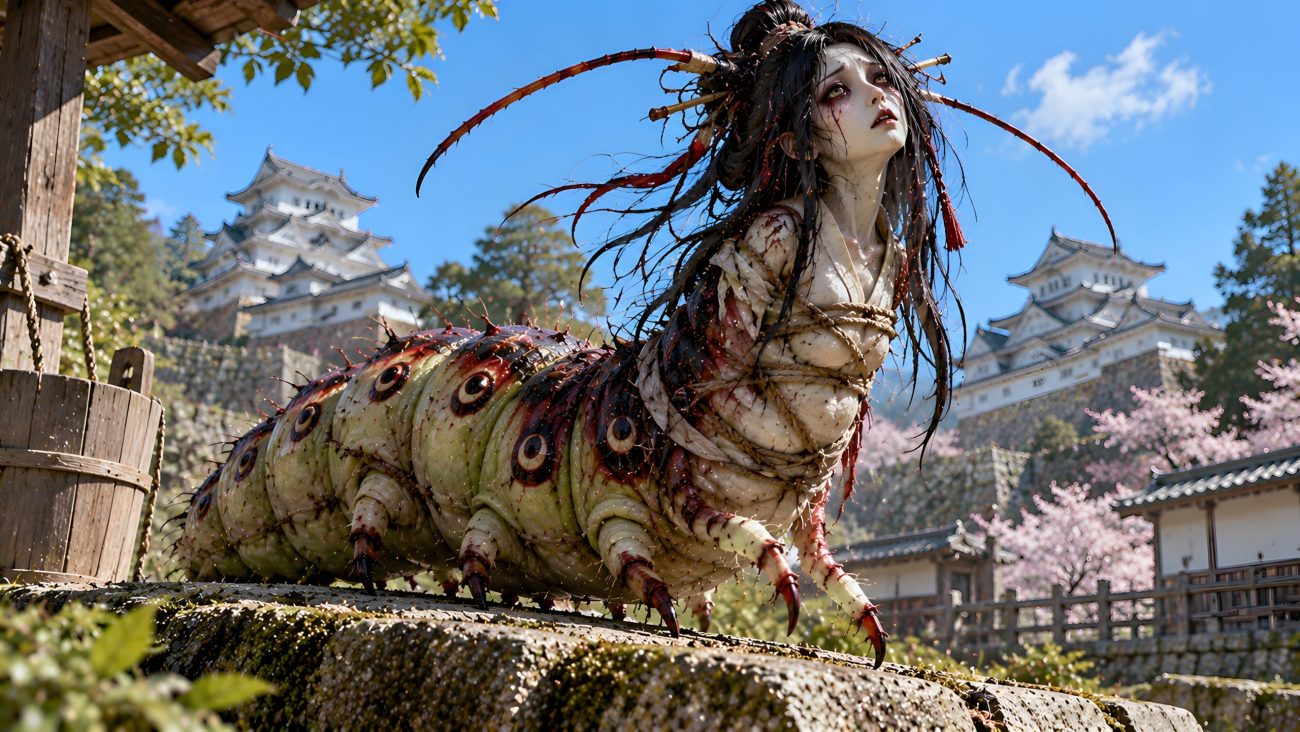
The Okiku mushi is a caterpillar-like yōkai with the torso of a human woman. It is associated with wells around Himeji Castle and is believed to have originated from the lingering vengeance of Okiku, the murdered servant girl whose ghost haunts the castle’s folklore. The creature is identified with the caterpillar of the Chinese windmill butterfly (Byasa alcinous), whose chrysalis was thought to resemble the body of a woman bound with ropes.

According to the tale of Banchō sarayashiki, Okiku was murdered by her lover. Her body was tied up and tortured before being thrown into a well at Himeji Castle. After her death, strange occurrences were attributed to her vengeful ghost. Among them was the sudden appearance of large numbers of unusual caterpillars. Because their chrysalises resembled a tied-up woman, people connected the insects with Okiku’s fate and believed they were manifestations of the resentment her spirit had left behind.

The butterfly is commonly known in Japan as the jakō ageha, but it also acquired the nickname Okiku mushi because of the popularity of the ghost story. During the Edo period, local shopkeepers near Himeji Castle reportedly sold the insects’ chrysalises as souvenirs to visitors at nearby shrines, further spreading the association between the caterpillars and Okiku’s tragic story.


Sources

“Okikumushi.” Yokai.com. https://yokai.com/okikumushi/