Santo Gato

Tradition / Region: French Mythology
Alternative names: Santa Gata
Category: Cat


The Myth

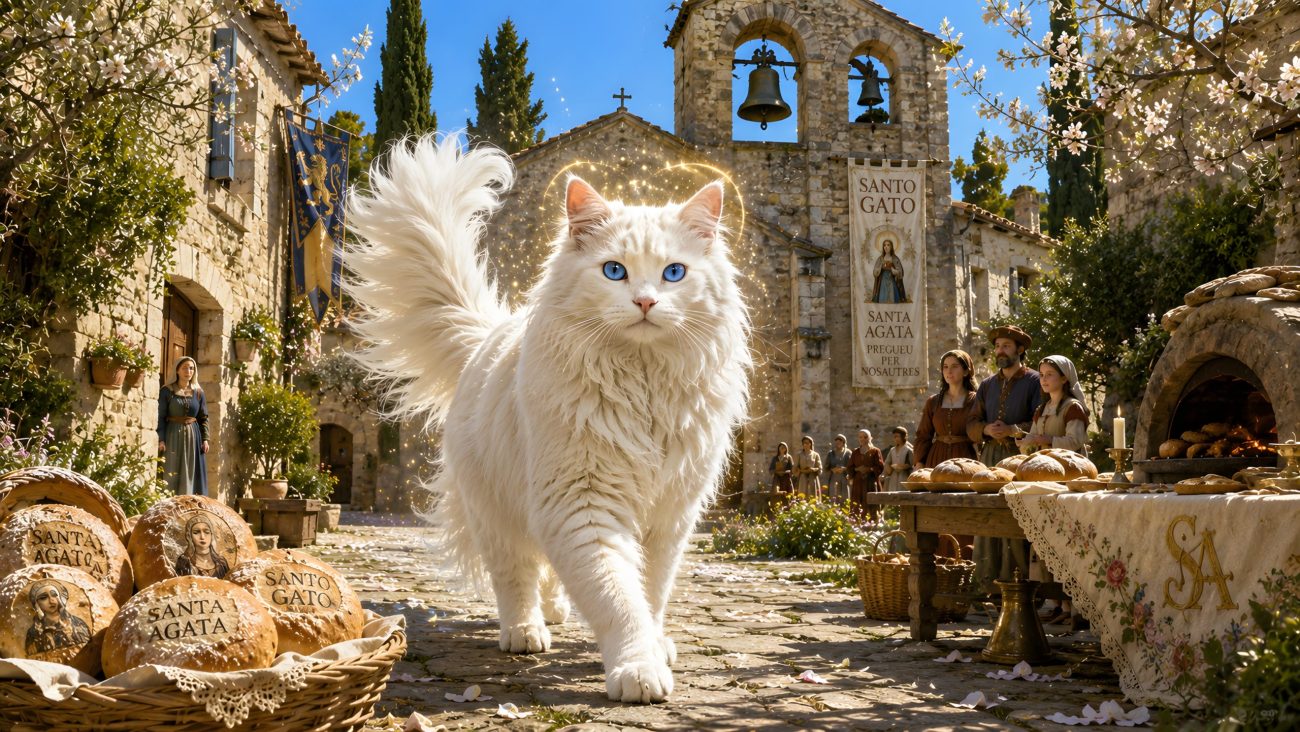
The Santo Gato appears as a cat that is believed to be the manifestation of Saint Agatha of Catania. Rather than being an evil creature, it is a supernatural form assumed by the saint to punish those who violate her feast day.

According to Occitan tradition, Saint Agatha’s cult became deeply rooted in Provence, Languedoc, Gascony, and the Pyrenees, where she was invoked for protection against lightning, storms, fire, and destructive weather. On the eve of her feast, church bells rang throughout the night to drive away the demons believed to cause these disasters.

A widespread folk belief held that women were forbidden to bake bread or wash clothes on Saint Agatha’s feast day, as such work was considered disrespectful to the saint. Those who ignored the prohibition risked her punishment. It was said that every year on 5 February, Saint Agatha appeared in the form of a cat—the Santo Gato—to visit and punish women who had worked on her holy day.

The saint’s blessed breads, baked on the eve of her feast and blessed during Mass, were believed to protect people, homes, and property from fire and lightning. In parts of the Pyrenees, her feast was also associated with seasonal rituals intended to hasten the end of winter and the arrival of spring, reflecting the blending of Christian devotion with older folk traditions.


Sources

“Santo Gato.” Wikipédia, l’encyclopédie libre (French Wikipedia). Wikimedia Foundation. Accessed July 28, 2026. https://fr.wikipedia.org/wiki/Santo_Gato
Matagot

Tradition / Region: French Mythology
Alternative names: Money Cat, Magician Cat
Category: Cat


The Myth

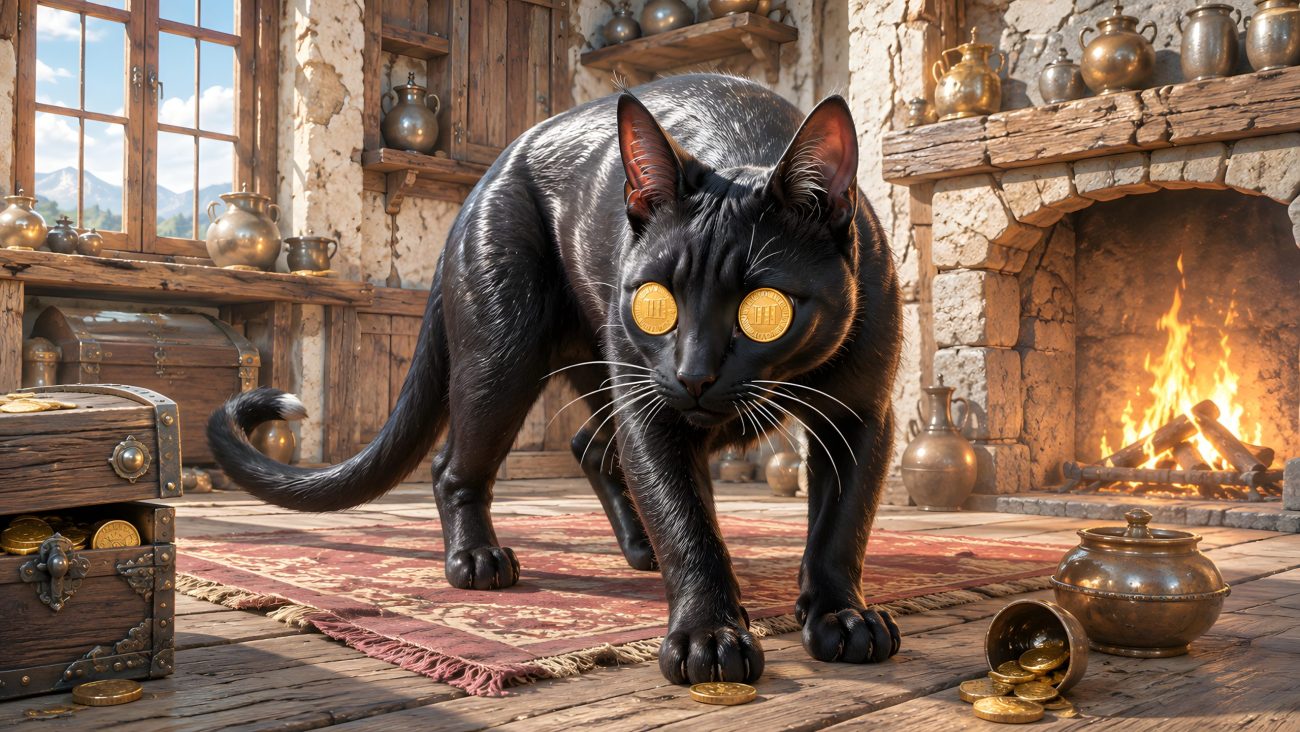
The Matagot is a supernatural spirit that most often appears as a black cat. While many Matagots are considered evil, some are believed to reward those who treat them properly with great wealth.

According to the legend, a wealth-bringing Matagot must first be lured with a fat, fresh chicken. Once captured, its new owner must carry it home without ever looking back. From then on, the Matagot must always receive the first bite of food and the first drink at every meal and be provided with a comfortable place to sleep.

If treated with this respect, the Matagot rewards its owner by leaving a solid gold coin every morning.

However, the creature demands lifelong devotion. In the traditions of Gascony, an owner must pass the Matagot on to someone else before dying. Anyone who keeps the spirit until death is said to suffer a long and agonizing end, unable to die until the Matagot has been released to a new master.


Sources

“Matagot.” Wikipedia: The Free Encyclopedia. Wikimedia Foundation. Accessed July 28, 2026. https://en.wikipedia.org/wiki/Matagot


Dard

Tradition / Region: French Mythology
Alternative names:
Category: Cat


The Myth

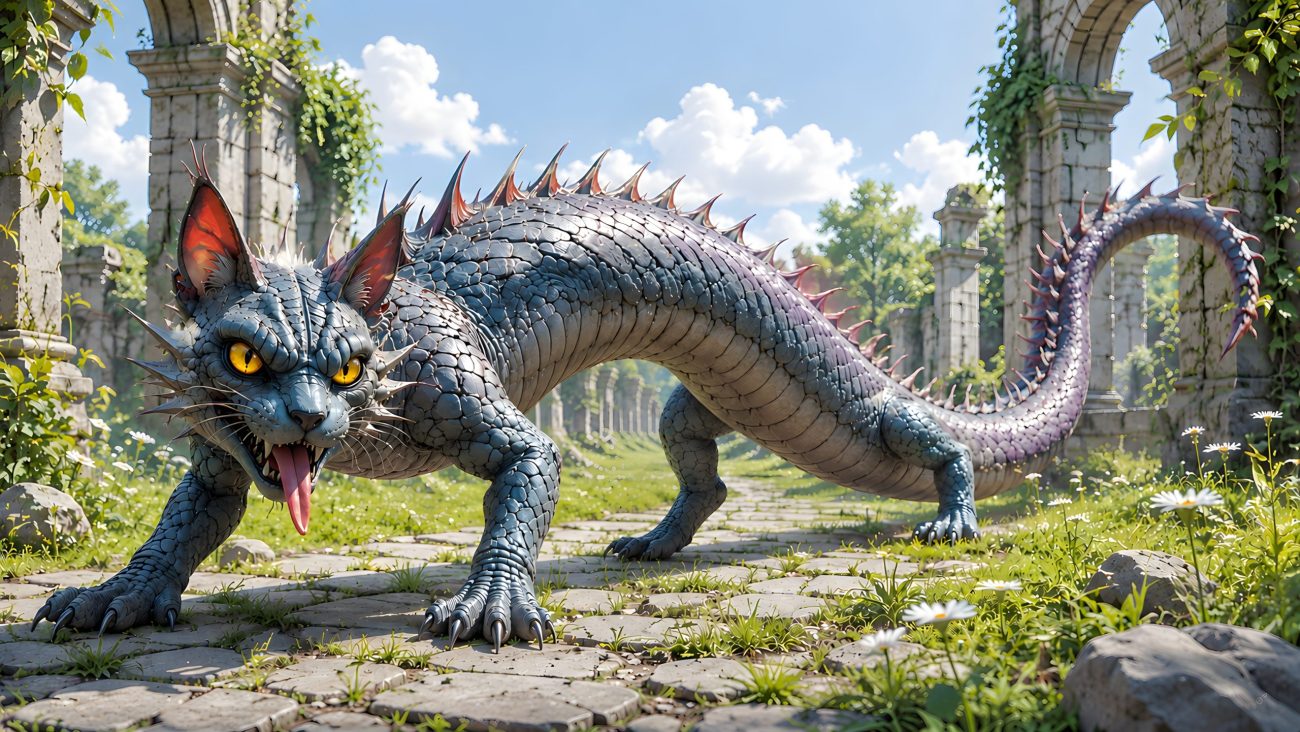
The Dard is a strange creature from the French department of Vienne, combining the features of several animals. It has the head of a cat, the long body of a serpent with four legs, a short viper-like tail, and a mane running along its spine.

The creature is known to steal milk directly from cows and is feared for its piercing, terrifying whistle. Although it is not venomous, the Dard has a powerful bite and will viciously attack anything that provokes it.

Local tradition claimed that the Dard’s distinctive appearance was preserved in the stone carvings of certain churches in Vienne, where its cat-like head and serpentine body could still be recognized.


Sources

Countess Sica. “Dard.” A Book of Creatures. November 22, 2019. Accessed July 27, 2026. https://abookofcreatures.com/2019/11/22/dard/


Arassas

Tradition / Region: French Mythology
Alternative names:
Category: Cat


The Myth

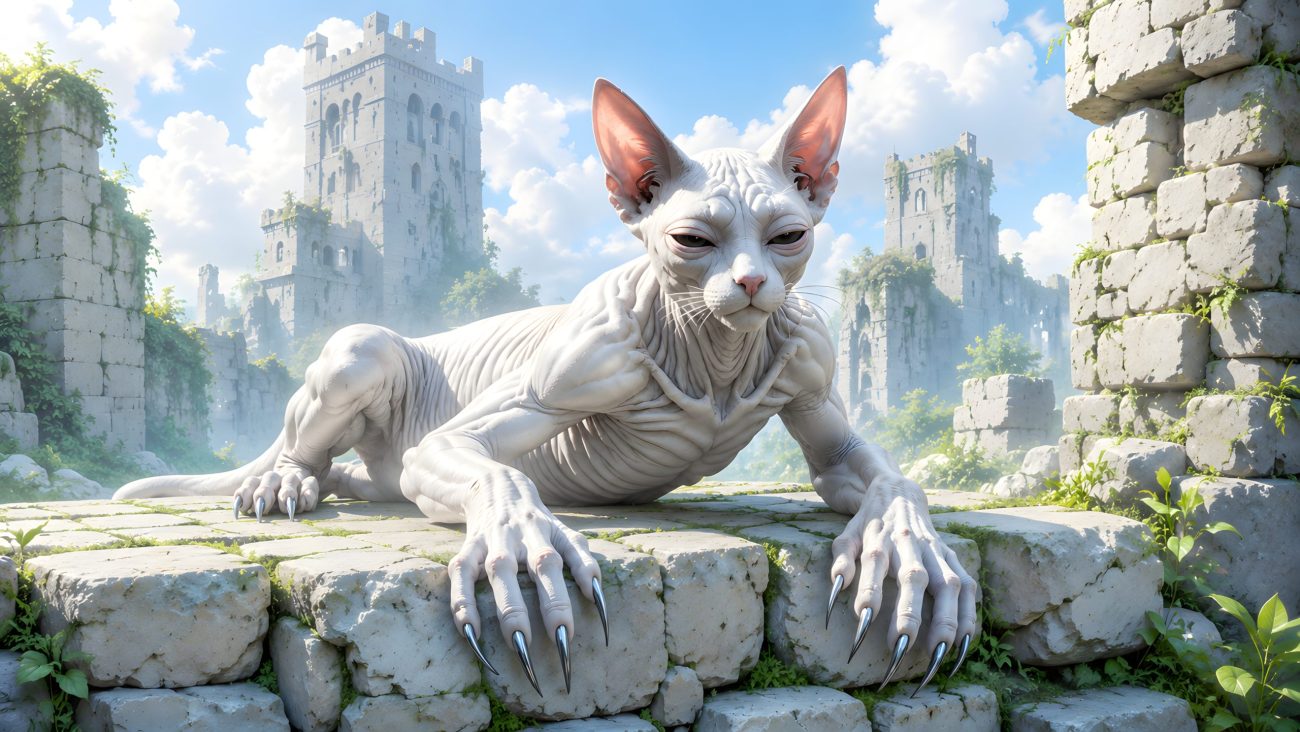
The Arassas is a strange creature with the head of a cat and the body of a lizard. Its gray skin blends with old stone, allowing it to hide among ruined houses, crumbling walls, and abandoned places where it makes its home.

Its most feared power is its gaze. Anyone who looks into its eyes dies instantly. The Arassas also possesses a venomous bite capable of killing those unfortunate enough to be struck by it.

Although deadly, the Arassas is not said to hunt people relentlessly. It remains hidden among ancient ruins, emerging only when disturbed. Children are traditionally believed to be unharmed by the creature, while adults who venture carelessly into its domain risk falling victim to its fatal stare.

The Arassas is also described as shy and occasionally playful, yet it never forgives those who intrude upon its refuge. Travelers are warned to avoid deserted buildings and ruined walls, for the creature may be waiting silently among the stones, nearly impossible to distinguish from the crumbling masonry until it is too late.


Sources

Countess Sica. “Arassas.” A Book of Creatures. November 18, 2019. Accessed July 27, 2026. https://abookofcreatures.com/2019/11/18/arassas/