Shakchunni

Tradition: Bengali Mythology
Alternative Names: Shakchunni, Shankhachunni, Shankhachurni
Category: Demon


The Myth

A Shakchunni is the ghost of a married Hindu woman who died while her husband was still alive. She retains her attachment to marriage and domestic life after death, particularly when the desires and experiences associated with married life remained unfulfilled.

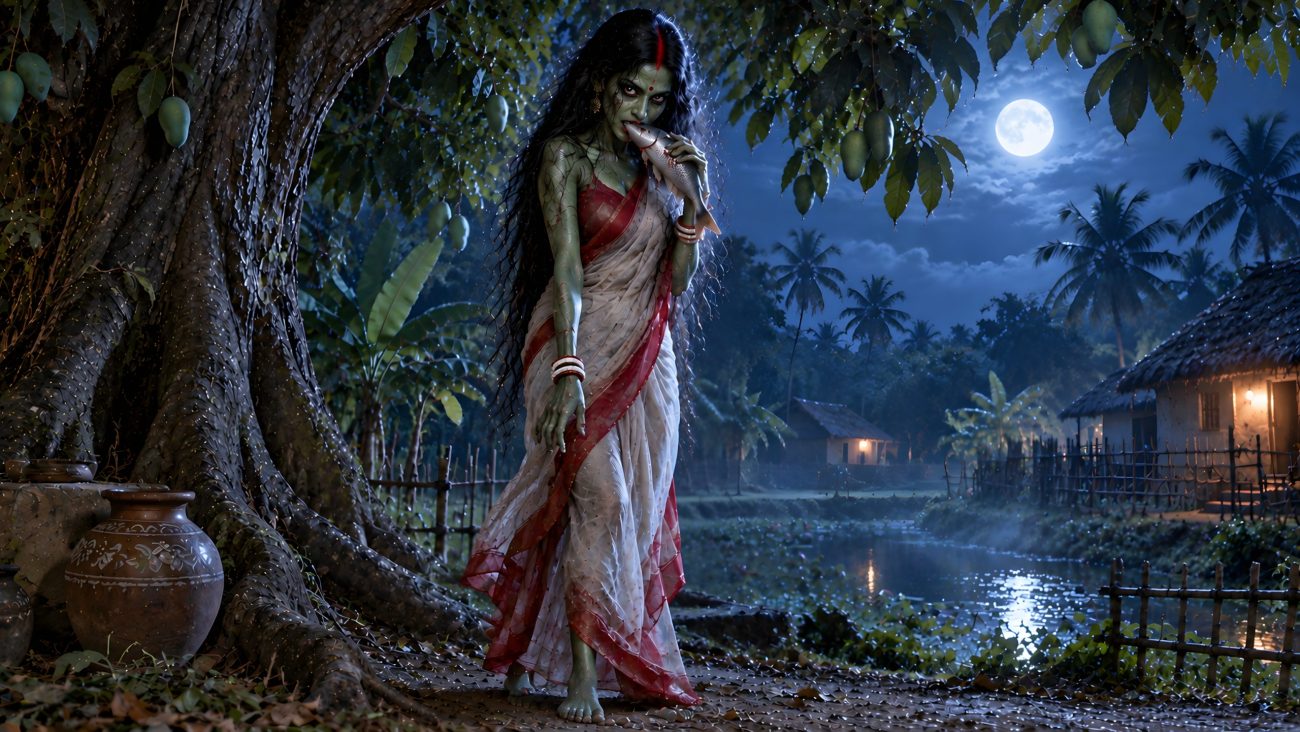
Shakchunnis are typically described as thin and emaciated, with greenish skin resembling leafy vegetables. They wear the red-and-white sari traditionally associated with married Bengali women, together with conch-shell bangles and vermilion on the forehead. Even as ghosts, they remain conscious of their appearance and adornment, retaining the symbols of their former married status.

Because of their longing for domestic and marital life, Shakchunnis are said to possess or influence married women, particularly women from wealthy households, in order to experience married life again through them. Stories of Shakchunni possession appear in Bengali folktales, including tales collected in Thakurmar Jhuli, where an ojha or exorcist eventually defeats or drives away the spirit.

The Shakchunni is particularly fond of fish. Her craving for fish reflects the traditional association of fish with married women’s domestic life and with the well-being and longevity of their husbands. Folklore differs over whether she prefers fish that is raw, fried, burnt, or even rotten.

Shakchunnis are also associated with certain trees, particularly sheora (Streblus asper) and mango trees. They are said to sprinkle water mixed with cow dung around the places where they dwell.


Sources

“Shakchunni.” Wikipedia: The Free Encyclopedia. Wikimedia Foundation. Accessed September 12, 2026. https://en.wikipedia.org/wiki/Shakchunni

Boba

Tradition / Region: Bengali Mythology, Indian Mythology
Alternate Names: Boba Jinn, Bobay Dhora
Category: Demon, Spirit


The Myth

Boba is a terrifying nocturnal spirit from Bengali folklore, feared for attacking people while they sleep. The name Boba means “mute” or “speechless,” referring to the helpless condition its victims experience during an encounter. In many traditions, the entity is described as a type of jinn or malevolent spirit that preys upon sleeping humans, especially those lying flat on their backs during the night.

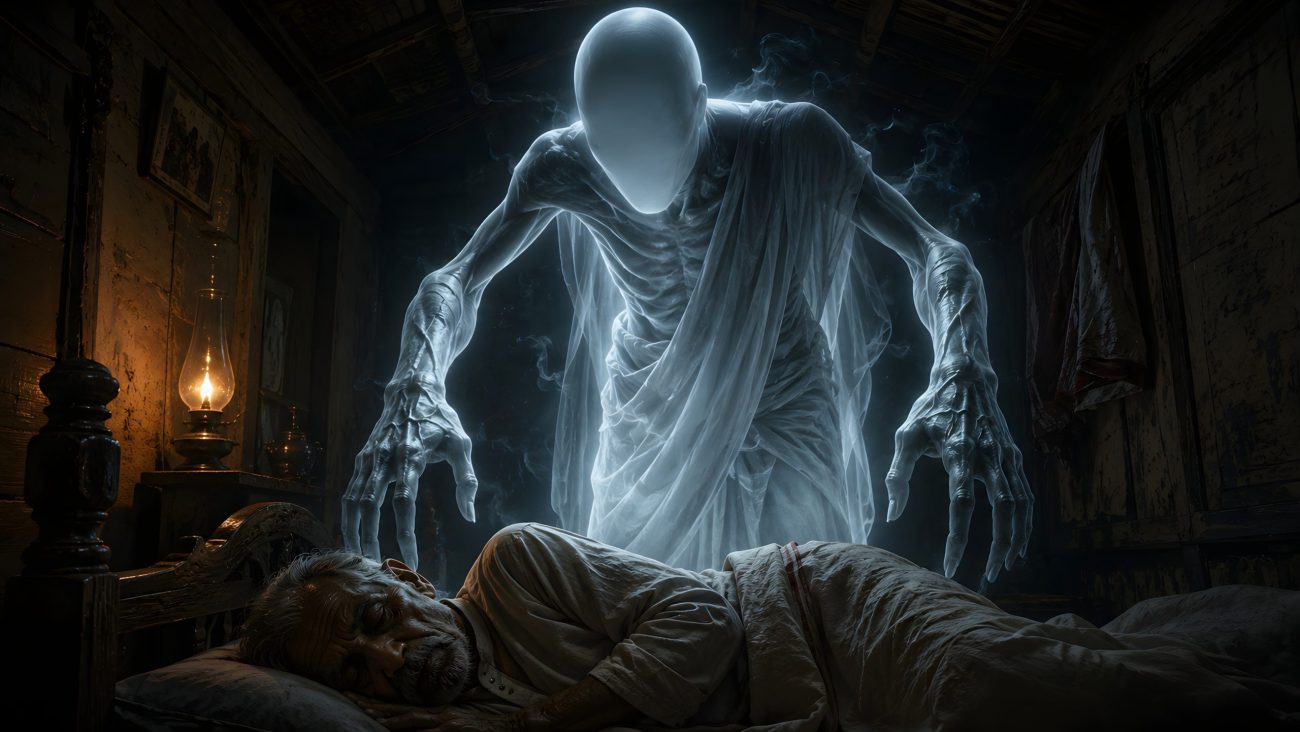
According to the legend, Boba attacks silently in the deepest hours of darkness. Victims suddenly awaken but find themselves completely unable to move, speak, or cry for help. They remain conscious while an invisible force pins them down. Many report feeling immense pressure on their chest, as though something heavy is crushing them, making breathing extremely difficult. The experience is accompanied by overwhelming terror and the sensation of being strangled.

Although the spirit is not always fully visible, witnesses often describe seeing a shadowy figure sitting on their chest or crouching nearby in the darkness. Some accounts portray Boba as a dark humanoid being with glowing eyes, while others describe it only as a suffocating presence lurking in the room. The victim may hear whispers, breathing, footsteps, or strange sounds while remaining unable to move even a finger. In some stories the spirit leans close to the victim’s face, watching silently while choking them.

The attack usually ends suddenly. After several moments — or what feels like an eternity — the pressure disappears and the victim regains the ability to move and speak. Many people are left shaken for hours afterward, convinced they narrowly escaped death. Because the experience feels completely real, belief in Boba became deeply rooted in Bengali culture, particularly in rural areas where stories of nighttime attacks were passed down for generations.

The phenomenon is commonly called Bobay Dhora, meaning “being seized by Boba.” Traditional beliefs warn people against sleeping alone, sleeping on their back, or falling asleep in spiritually unclean places. Some families recite prayers, verses, or protective rituals before bed to ward the spirit away. In certain stories, repeated attacks by Boba are believed to weaken a person physically and spiritually over time.

Unlike many monsters that haunt forests or rivers, Boba invades the safety of the home itself. It attacks in silence, during the most vulnerable moment of human weakness — sleep — turning the darkness of the bedroom into something terrifying and inescapable.


Sources

Wikipedia contributors. (n.d.). Ghosts in Bengali culture. In Wikipedia, from https://en.wikipedia.org/wiki/Ghosts_in_Bengali_culture