Mechho Bhoot

Tradition / Region:  Bengali Mythology
Alternate Names: Mecho Bhoot
Category: Spirit, Ghost


The Myth

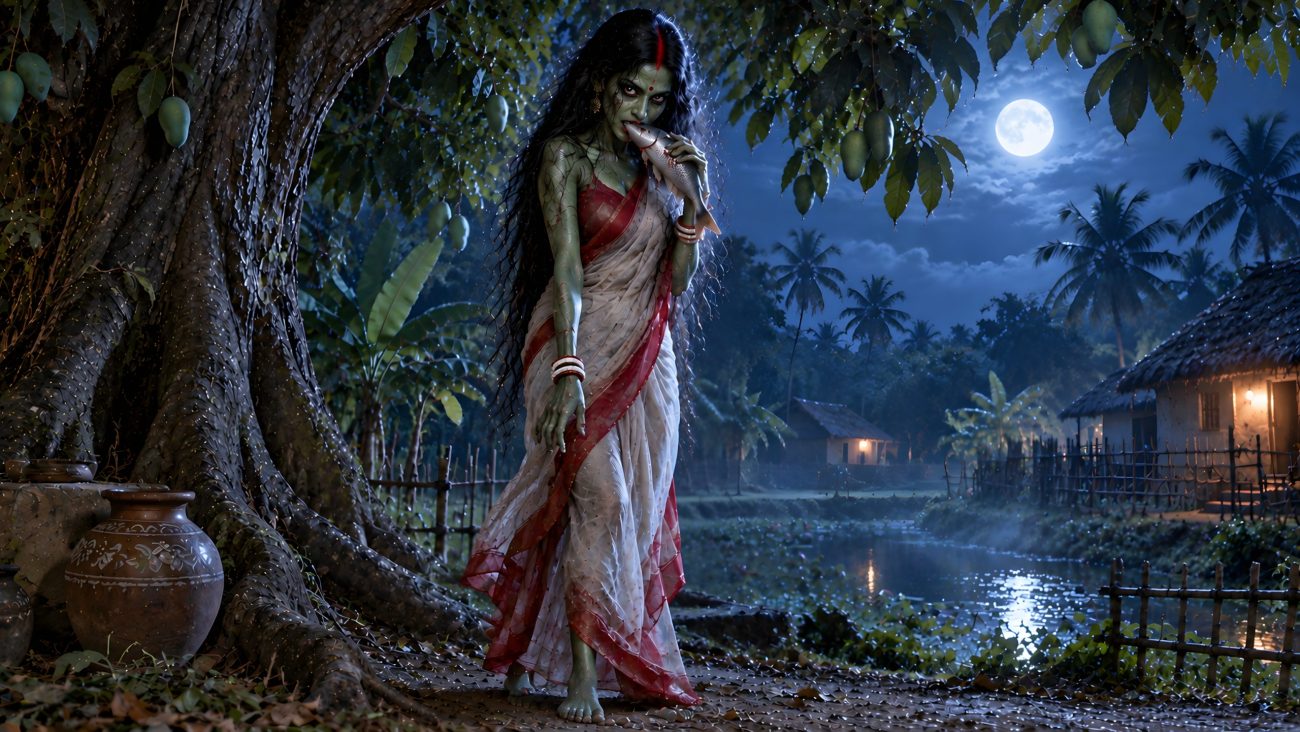
The Mechho Bhoot is a spirit from Bengali folklore associated with fish, rivers, ponds, and lakes. Its name comes from the Bengali word machh, meaning “fish,” reflecting the ghost’s well-known obsession with them. According to folklore, people who drown while fishing or die in the water may return as Mechho Bhoots, unable to leave behind their attachment to fish and the waterways where they died.

These spirits are believed to haunt village ponds, riverbanks, marshes, and fishing areas, especially after dark. They are known for stealing fish from fishermen, kitchens, or marketplaces, and many old stories describe fish mysteriously disappearing during the night as the work of a Mechho Bhoot. Because fishing has always been central to life in Bengal and Bangladesh, stories about these spirits became common in riverside villages.

The Mechho Bhoot is usually described as a ghostly human figure connected to water and darkness. Though sometimes portrayed as mischievous rather than openly violent, it is still feared because of its association with drowning and isolated waters at night. Villagers often warned children and fishermen to stay cautious around ponds and rivers after sunset, when spirits like the Mechho Bhoot were believed to wander.

Unlike many malevolent ghosts in Bengali folklore, the Mechho Bhoot is remembered mainly for its endless craving for fish and its lingering attachment to the waters where it died.


Sources

Wikipedia contributors. (n.d.). Ghosts in Bengali culture. In Wikipedia, from https://en.wikipedia.org/wiki/Ghosts_in_Bengali_culture


Boba

Tradition / Region: Bengali Mythology, Indian Mythology
Alternate Names: Boba Jinn, Bobay Dhora
Category: Demon, Spirit


The Myth

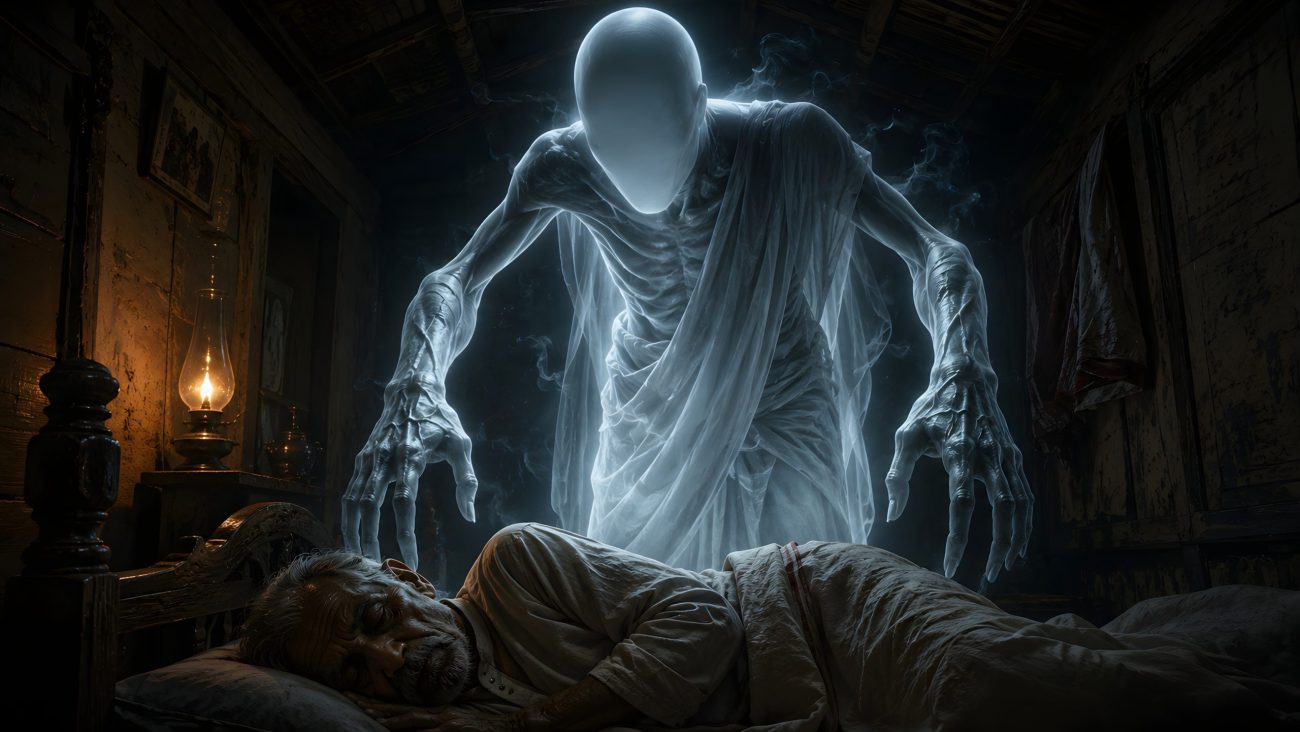
Boba is a terrifying nocturnal spirit from Bengali folklore, feared for attacking people while they sleep. The name Boba means “mute” or “speechless,” referring to the helpless condition its victims experience during an encounter. In many traditions, the entity is described as a type of jinn or malevolent spirit that preys upon sleeping humans, especially those lying flat on their backs during the night.

According to the legend, Boba attacks silently in the deepest hours of darkness. Victims suddenly awaken but find themselves completely unable to move, speak, or cry for help. They remain conscious while an invisible force pins them down. Many report feeling immense pressure on their chest, as though something heavy is crushing them, making breathing extremely difficult. The experience is accompanied by overwhelming terror and the sensation of being strangled.

Although the spirit is not always fully visible, witnesses often describe seeing a shadowy figure sitting on their chest or crouching nearby in the darkness. Some accounts portray Boba as a dark humanoid being with glowing eyes, while others describe it only as a suffocating presence lurking in the room. The victim may hear whispers, breathing, footsteps, or strange sounds while remaining unable to move even a finger. In some stories the spirit leans close to the victim’s face, watching silently while choking them.

The attack usually ends suddenly. After several moments — or what feels like an eternity — the pressure disappears and the victim regains the ability to move and speak. Many people are left shaken for hours afterward, convinced they narrowly escaped death. Because the experience feels completely real, belief in Boba became deeply rooted in Bengali culture, particularly in rural areas where stories of nighttime attacks were passed down for generations.

The phenomenon is commonly called Bobay Dhora, meaning “being seized by Boba.” Traditional beliefs warn people against sleeping alone, sleeping on their back, or falling asleep in spiritually unclean places. Some families recite prayers, verses, or protective rituals before bed to ward the spirit away. In certain stories, repeated attacks by Boba are believed to weaken a person physically and spiritually over time.

Unlike many monsters that haunt forests or rivers, Boba invades the safety of the home itself. It attacks in silence, during the most vulnerable moment of human weakness — sleep — turning the darkness of the bedroom into something terrifying and inescapable.


Sources

Wikipedia contributors. (n.d.). Ghosts in Bengali culture. In Wikipedia, from https://en.wikipedia.org/wiki/Ghosts_in_Bengali_culture


Nishi Daak

Tradition / Region: Bengali Mythology, Indian Mythology
Alternate Names: Nishir Daak, Nishi
Category: Ghost, Spirit


The Myth

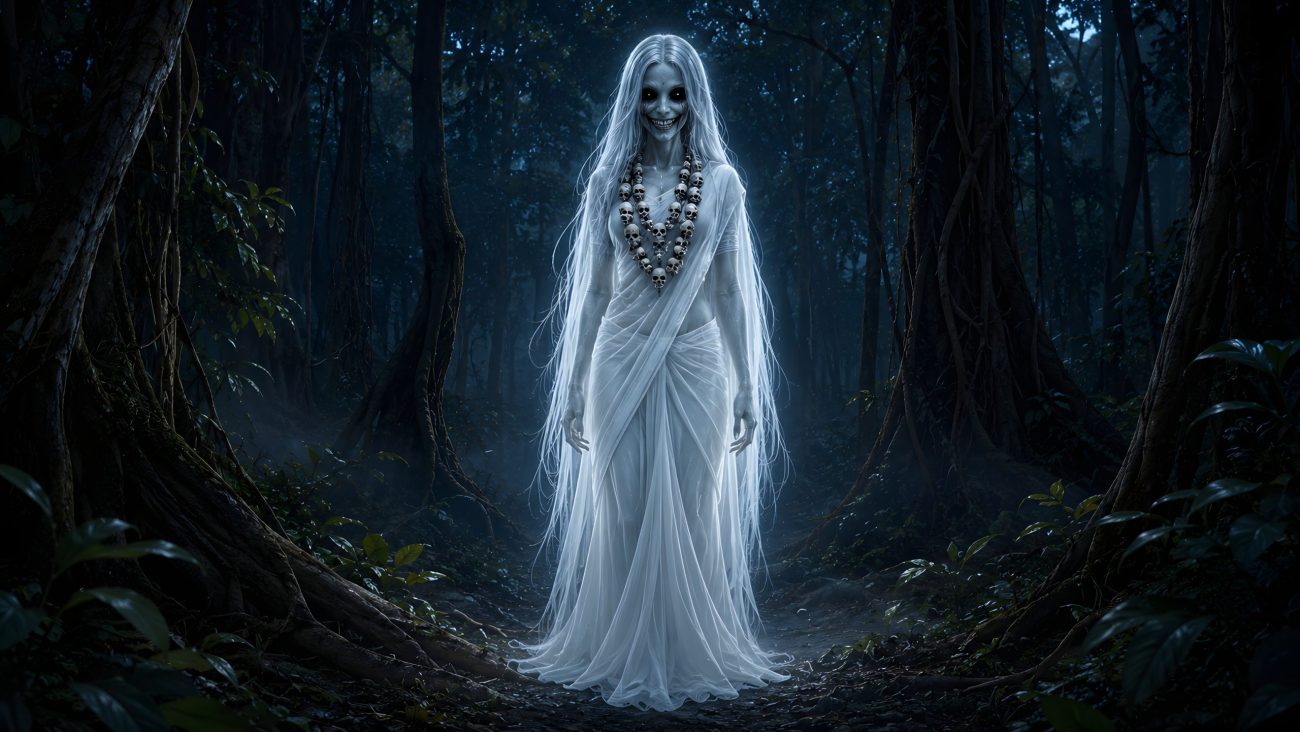
The Nishi Daak is a feared nocturnal spirit from the folklore of eastern India, especially Bengal, Bihar, and Jharkhand. Its name means “Call of the Night,” and it is known for luring people away in darkness by mimicking the voice of someone they trust. The Nishi is rarely seen clearly. Most descriptions portray it as a distant, shadow-like figure that remains just beyond sight, hidden by fog, darkness, or trees. Sometimes it appears in the form of a familiar person, while other stories describe glowing red eyes and a twisted, unnatural face revealed only at the final moment before death.

The spirit hunts primarily at night, especially during moonless evenings or in heavy mist. It calls out softly to its victim using the voice of a loved one — often a parent, spouse, friend, or even a dead relative. The voice sounds completely real, which makes the spirit especially dangerous. Once the victim answers or begins following the voice, they gradually fall into a trance-like state. People under the Nishi’s influence become detached from reality and continue following the spirit no matter how far it leads them. Legends say victims can suddenly gain unnatural strength, forcing their way through obstacles or resisting anyone who tries to stop them.

The Nishi usually leads people into isolated places such as forests, abandoned roads, swamps, riverbanks, or mist-covered fields. Many stories claim the victim simply disappears forever without leaving behind a body or trace. In other tales, victims are later discovered dead, unconscious, or mentally broken after encountering the spirit. Some survivors are said to remain permanently traumatized after seeing the Nishi’s true appearance. Witnesses describe its eyes as burning like red embers and its presence as deeply unnatural and terrifying.

According to local beliefs, Nishis are often the restless souls of people who died violently, were abandoned without proper funeral rites, or failed to attain peace after death. In some traditions, entire families are cursed by such spirits, with the Nishi returning repeatedly over months or years to lure relatives to their deaths one by one. It is also believed that people killed by a Nishi may themselves become wandering night spirits if the proper rituals are not performed for them afterward.

Because of these stories, many villages developed strict warnings about answering voices after dark. People are told never to respond if someone calls their name from outside at night unless they can clearly see the caller. A familiar voice heard near lonely roads, forests, or fields is considered especially dangerous, since it may not belong to a living person at all.


Sources

Wikipedia contributors. (n.d.). Ghosts in Bengali culture. In Wikipedia, from https://en.wikipedia.org/wiki/Ghosts_in_Bengali_culture