La Diablesse

Tradition: Saint Lucia Mythology
Alternative names: Ladjablès
Category: Demon, Cow


The Myth

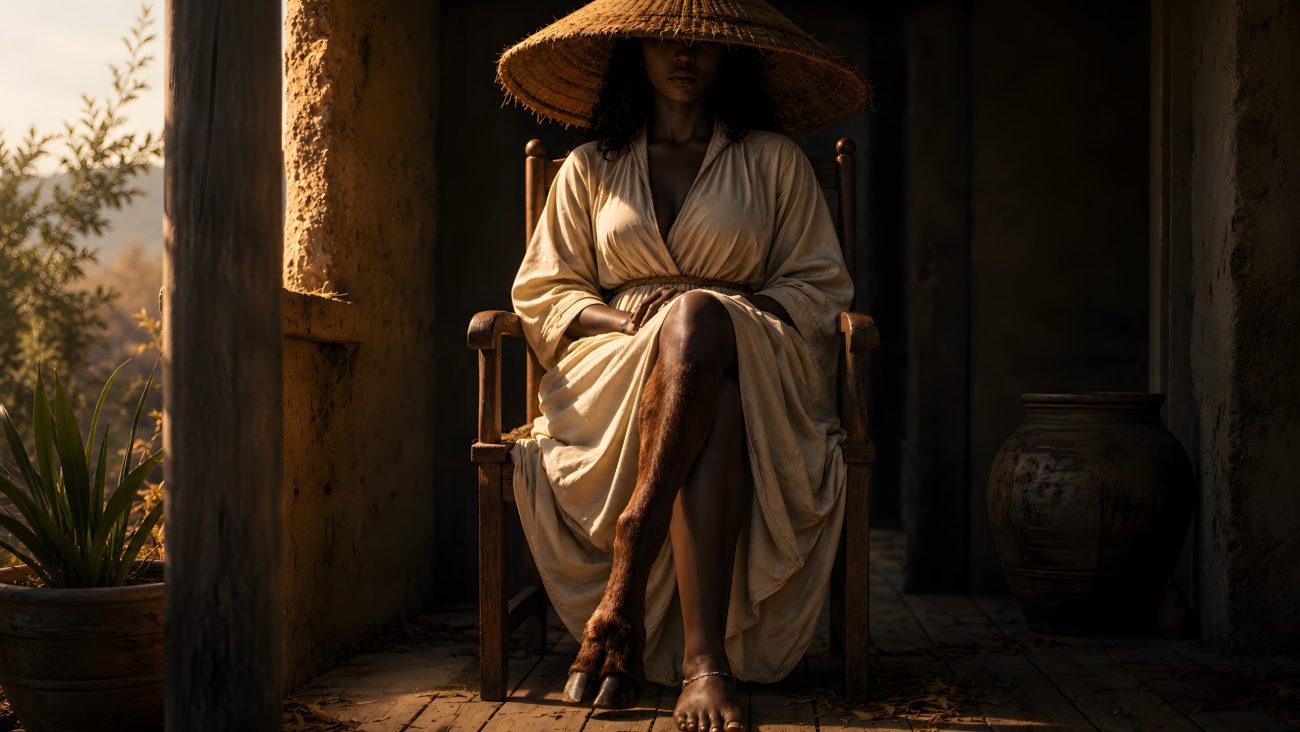
La Diablesse is a beautiful but deadly supernatural woman said to be the spirit of an enslaved African woman who made a pact with the Devil, surrendering her soul in exchange for eternal beauty.

She appears elegant and alluring, dressed in a long gown with a broad-brimmed hat that conceals her hideous face. Her greatest secret, however, is beneath her dress: one of her legs ends in a cow’s hoof. She walks with her human foot on the road while keeping the hoof hidden in the grass.

La Diablesse uses her beauty and supernatural powers to lure unsuspecting men away from the road and into the forest. Once deep among the trees, she suddenly disappears, leaving her victim confused and lost. He may eventually fall into a ravine or river, or become prey to wild animals.

Her cow hoof marks her as unmistakably demonic: beneath an attractive human appearance lies something inhuman and dangerous.


Sources

“La Diablesse.” Wikipedia: The Free Encyclopedia. Wikimedia Foundation. Accessed August 21, 2026. https://en.wikipedia.org/wiki/La_Diablesse


King Jinjiao and King Yinjiao

Tradition / Region: Chinese Mythology
Alternative names: Golden-Horned King, Silver-Horned King
Category: Cave dweller, Demon


The Myth

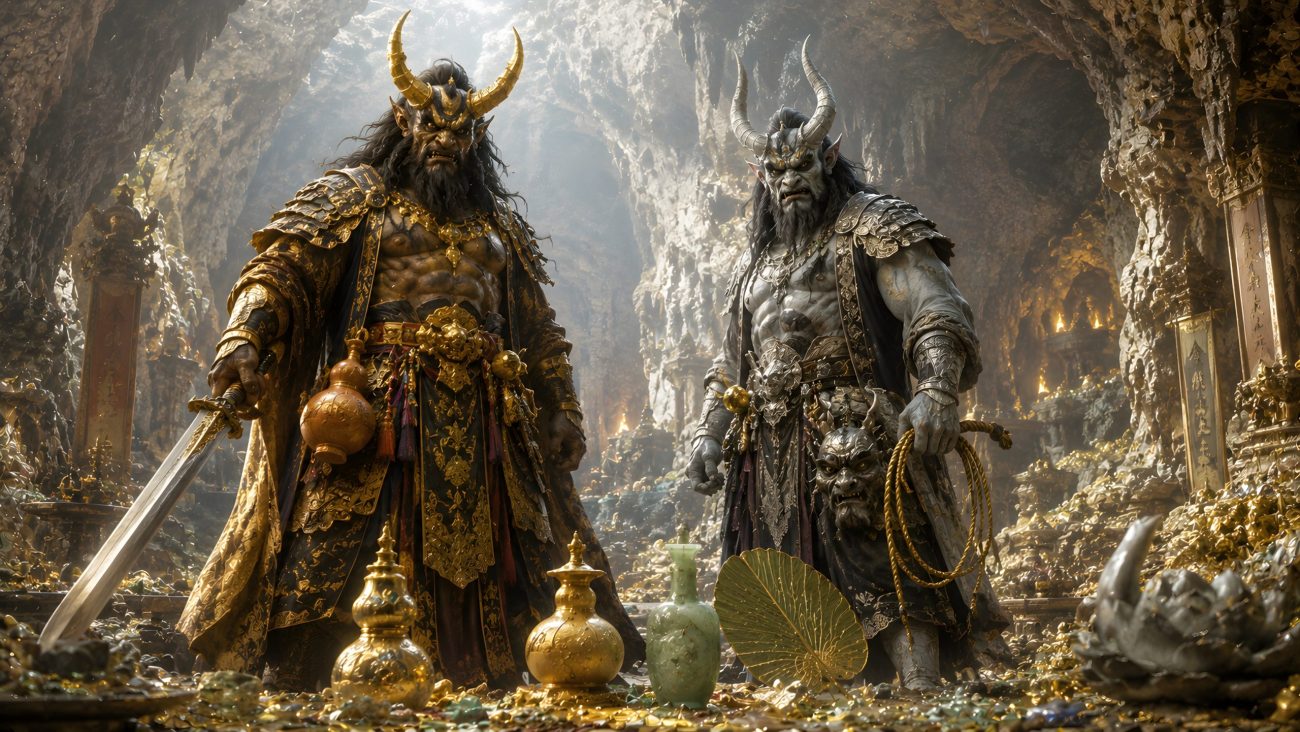
King Jinjiao and King Yinjiao are two powerful demon brothers who rule the Lotus Cave on Pingdingshan. They appear as formidable demon kings and possess a collection of magical weapons and treasures, including the Seven Star Sword, a gourd capable of absorbing and dissolving people, a jade bottle, a golden rope, and a banana-leaf fan that can produce the Samadhi Fire.

The two brothers were originally servants of Laozi and were responsible for guarding his alchemy furnace. They eventually stole several of his magical treasures and fled to the mortal world, where they established themselves as demon kings in the Lotus Cave.

When Tang Sanzang and his companions passed through the region, the two demon kings attacked them. They first defeated Sun Wukong and trapped him beneath three mountains before capturing Tang Sanzang.

The brothers later attempted to destroy Sun Wukong by using their magical gourd. They managed to suck him inside, intending for its supernatural power to dissolve him. Sun Wukong, however, escaped from the gourd before it could destroy him.

After escaping, Sun Wukong turned the magical weapon against its owners. He used the gourd to absorb both King Jinjiao and King Yinjiao, defeating the two demon kings with the very treasure they had used against him.


Sources

“金角大王和银角大王 (King Golden Horn and King Silver Horn).” Chinese Wikipedia. Wikimedia Foundation. Accessed August 15, 2026. https://zh.wikipedia.org/wiki/金角大王和银角大王


Murioshe

Tradition / Region: Breton Mythology, French Mythology
Alternative names: Mourioche
Category: Horse, Demon


The Myth

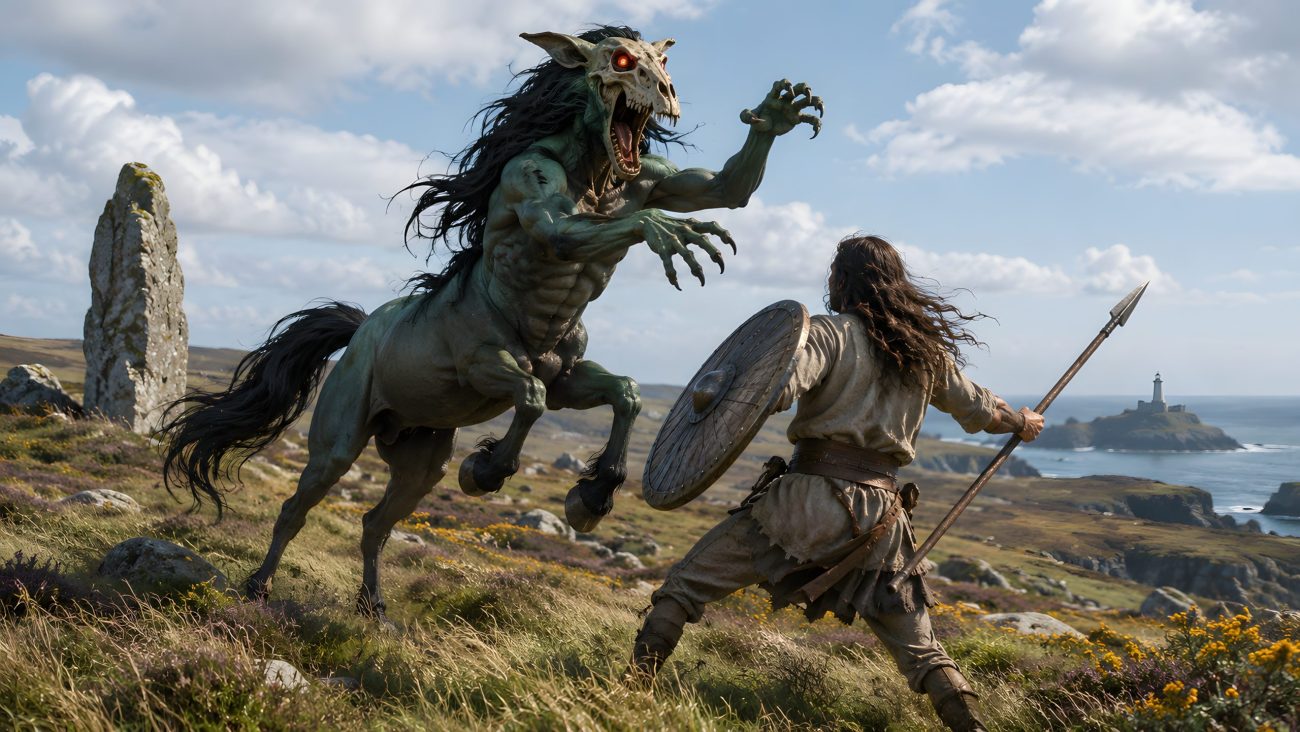
The Murioshe is a harmful demon of Breton folklore that can apparently transform into almost any animal. It has long been feared along the coast of the Côtes-d’Armor and around Jugon-le-Lac. Although it can assume many forms, it most commonly appears as a water horse or as a werewolf. It may also take the shape of a donkey, bull, pig, ox, sheep, or even a pair of human arms.

The Murioshe hunts at night, stalking lonely travelers. It sometimes appears as a horse standing quietly beside the road, waiting for someone to ride it. Once mounted, the victim finds the creature’s spine stretching beneath the saddle while it gallops into a lake, laughing as it drowns its rider. At other times it seizes travelers with its muscular arms and throws them into muddy ditches, or leaps onto a person’s back and forces them to carry it until they collapse from exhaustion.

One tale tells of a farmer from Saint-Cast who repeatedly found livestock missing from his barn. Each morning he discovered that a different animal had vanished, only to find another species in its place. After realizing all of his animals had been slaughtered, he armed himself with a shotgun, but the Murioshe destroyed his barn and kidnapped his three children, who were never seen again. Despite its cruelty, the creature left behind a gold necklace.

People believed the Murioshe could sometimes be driven away through cleverness rather than force. One story tells of a rider who escaped after threatening to cut off the ears of the werewolf-like horse with scissors.

The Murioshe was also used to frighten misbehaving children. Parents warned them, “If you don’t listen, a Murioshe will come for you!”

The creature’s true origin is uncertain. Some traditions claim it was once a Breton man or woman who practiced dark arts and sold their soul to the Devil. Others identify it as the Devil himself, while some describe it simply as a werewolf unable to control its transformations. Another tradition recorded by Pierre Dubois says that the Murioshe was once the court jester of the underwater king before being exiled for bad behavior.


Sources

Bestiary.us. (n.d.). Murioshe. In New Bestiary: Encyclopedia of Imaginary Beings. Retrieved June 29, 2026, from https://www.bestiary.us/murioshe


Mezu

Tradition / Region: Japanese Mythology
Alternative names: Mezuki, Horse Head Demon
Category: Horse, Demon


The Myth

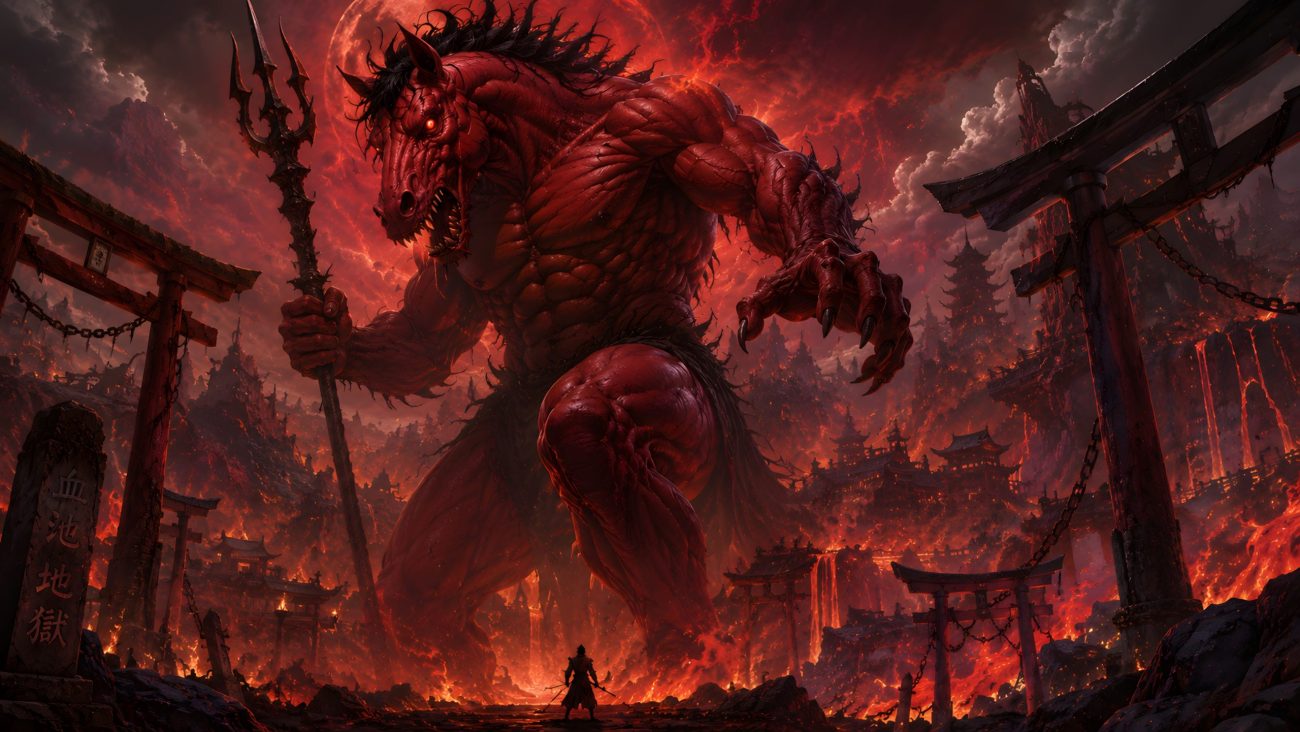
Mezu is one of the demon generals who guard the gates of hell in Japanese Buddhism. He appears as a powerful oni with the head of a horse and serves Great King Enma, the ruler of the underworld.

Together with his counterpart Gozu, who has the head of an ox, Mezu is among the first beings encountered by souls entering Jigoku. The two demons are immensely strong, possessing the power to move mountains, and rank among Enma’s chief servants. They oversee the punishment and torture of the wicked within hell.

If a soul attempts to escape from the underworld, Mezu and Gozu are dispatched to pursue and capture the fugitive, returning it to its rightful punishment.

Although Mezu and Gozu are the best-known of Enma’s servants, they are not the only animal-headed demons in hell. Other guardians with the heads of deer, tigers, lions, and boars also serve among the higher ranks, operating the torture chambers of Jigoku and supervising the torment of countless souls.

According to Buddhist tradition, Mezu and the other animal-headed demons ultimately trace their origins to Indian mythology, from which they spread to Japan through China along with Buddhism.


Sources

Foster, M. D. (n.d.). Mezu. In Yokai.com: The Illustrated Database of Japanese Folklore. Retrieved June 29, 2026, from https://yokai.com/mezu/


Kolju-taat

Tradition / Region: Estonian Mythology
Alternative names: Skull Grandfather
Category: Cow, Demon


The Myth

Kolju-taat is a guardian spirit of the sea from the coast of northern Estonia. He is especially associated with the waters near Keila-Joa and appears either as a huge bull rising from the sea or as a tall old man with a strangely shaped skull, traveling in a silver-white boat.

Although generally feared, Kolju-taat was not always hostile. He could both harm and help fishermen. It was believed that anyone who failed to offer him a sacrifice would be punished. Fish, alcohol, salt, and bread were commonly offered, often by throwing them directly into the sea. After returning home, fishermen also shared part of their catch with the poor, believing this would ensure a rich catch in the future.


Sources

Bestiary.us. (n.d.). Kolyu-taat. In New Bestiary: Encyclopedia of Imaginary Beings. Retrieved June 29, 2026, from https://www.bestiary.us/kolyu-taat


Hännamees

Tradition / Region: Estonian Mythology
Alternative names: —
Category: Demon


The Myth

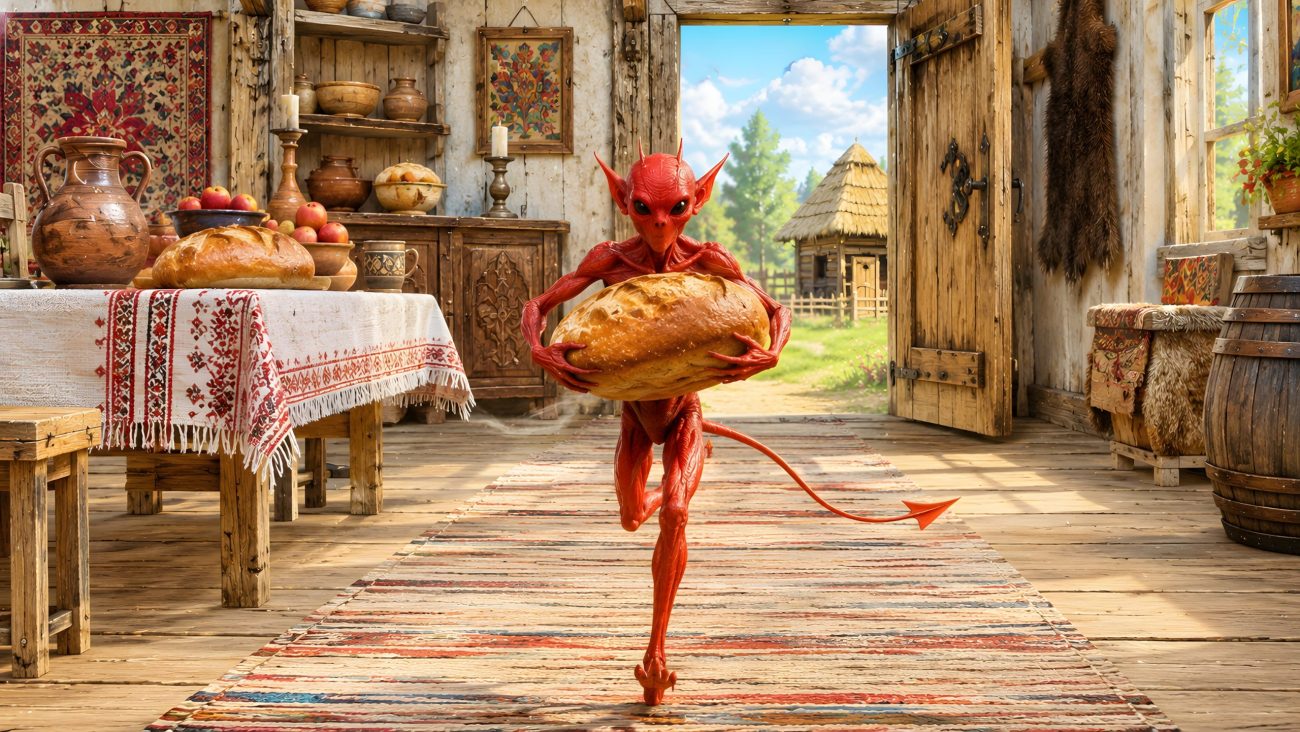
The Hännamees is a supernatural demon that steals food, money, and other valuables for its master. It secretly enters other people’s homes, takes whatever it has been ordered to steal, and delivers the stolen goods back to its owner.

The creature serves whoever controls it, tirelessly carrying out commands to enrich its master through theft. Its purpose is not to gather wealth for itself, but to bring prosperity to the person who commands it.


Sources

Wikipedia contributors. (n.d.). Estonian mythology. In Wikipedia. Retrieved June 29, 2026, from https://en.wikipedia.org/wiki/Estonian_mythology


Gul-yabani

Tradition / Region: Turkish, Azerbaijani, Kyrgyz and Tajik folklore
Alternative names: Gul, Ghul, Desert Demon
Category: Demon, Zombie


The Myth

The Gul-yabani is a fearsome spirit of the wild places, known throughout parts of Central Asia and the Turkic world. Its name means “Desert Demon,” and it is regarded as a dangerous being that inhabits lonely steppes, cemeteries, deserts, forests, and remote mountains. Travelers who encounter it after sunset are said to face terror or death.

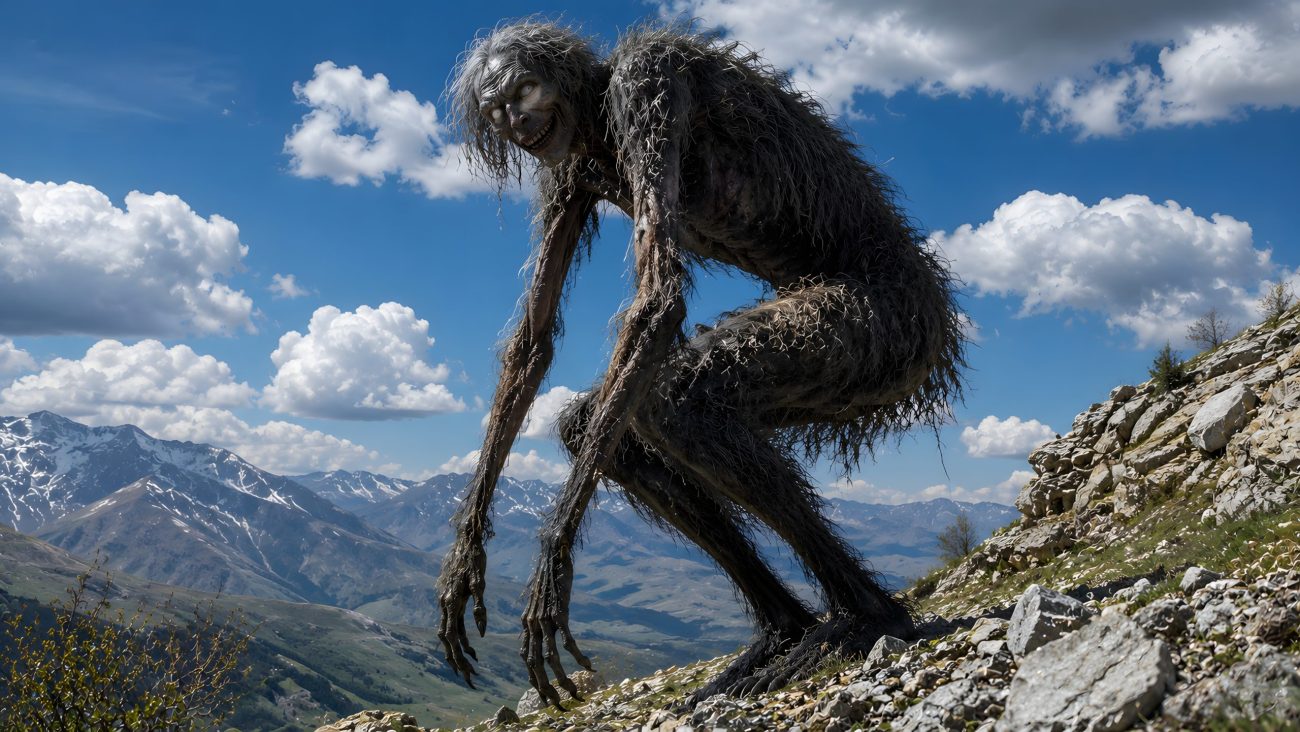
The creature is usually described as gigantic, standing three to four meters tall and covered in gray or black fur. It possesses an overpowering animal-like stench, backward-facing feet or clawed limbs, and often appears in the form of an enormous shepherd or hairy man. Its arrival is accompanied by shrill whistling in the darkness.

Among Turks and Azerbaijanis, Gul-yabani wanders cemeteries and desolate places at night. It frightens travelers and is especially known for riding horses, tangling their manes before vanishing into the darkness. In some parts of western Azerbaijan it was even identified with harmful water spirits. It was believed that if a Gul-yabani could be captured and pierced with a needle, it would become bound to its captor and perform work for them, although often doing the opposite of what was intended.

The Kyrgyz of the Eastern Pamirs and the Tajiks believed the creature lived in deserts and mountain forests. Although monstrous in appearance, it speaks with a human voice and often challenges strong men to wrestling matches. Only exceptionally powerful individuals are capable of fighting it as an equal.

Stories tell of a man near Tajikabad who encountered a giant shepherd after sunset. The two wrestled throughout the night, neither able to defeat the other. When dawn arrived, the stranger was revealed to be covered in wool. The creature gifted the man a piece of its fur and promised friendship, telling him that burning the hair would summon it. A mullah later explained that the mysterious shepherd had been a Gul-yabani and warned that revealing the encounter could bring death.

The Gul-yabani is said to understand every language, though it communicates through thoughts rather than spoken words. Those who establish contact with it may gain unusual powers, and only extremely pious mullahs are believed capable of seeing the creature clearly.

Hunters seldom encounter Gul-yabani because the monster greatly fears gunfire and can smell gunpowder from many kilometers away. One story tells of a police chief resting beside his car in the mountains when a tremendous force began shaking the vehicle. Looking outside, he saw an enormous hairy being devouring meat from a basin. The creature pressed its giant hands against the rear window of the car before fleeing when the officer fired his pistol. Two massive handprints were said to remain on the glass.

Mysterious, foul-smelling, and immensely powerful, the Gul-yabani is remembered as one of the great monsters of Turkic folklore—a giant hairy demon that roams the lonely wilderness and appears only when night falls.


Sources

Bestiary.us. (n.d.). Gjul-Jabani. In New Bestiary: Encyclopedia of Imaginary Beings. Retrieved June 16, 2026, from https://www.bestiary.us/gjul-jabani


Baubas

Tradition / Region: Lithuanian Mythology
Alternative names: None commonly recorded
Category: Demon


The Myth

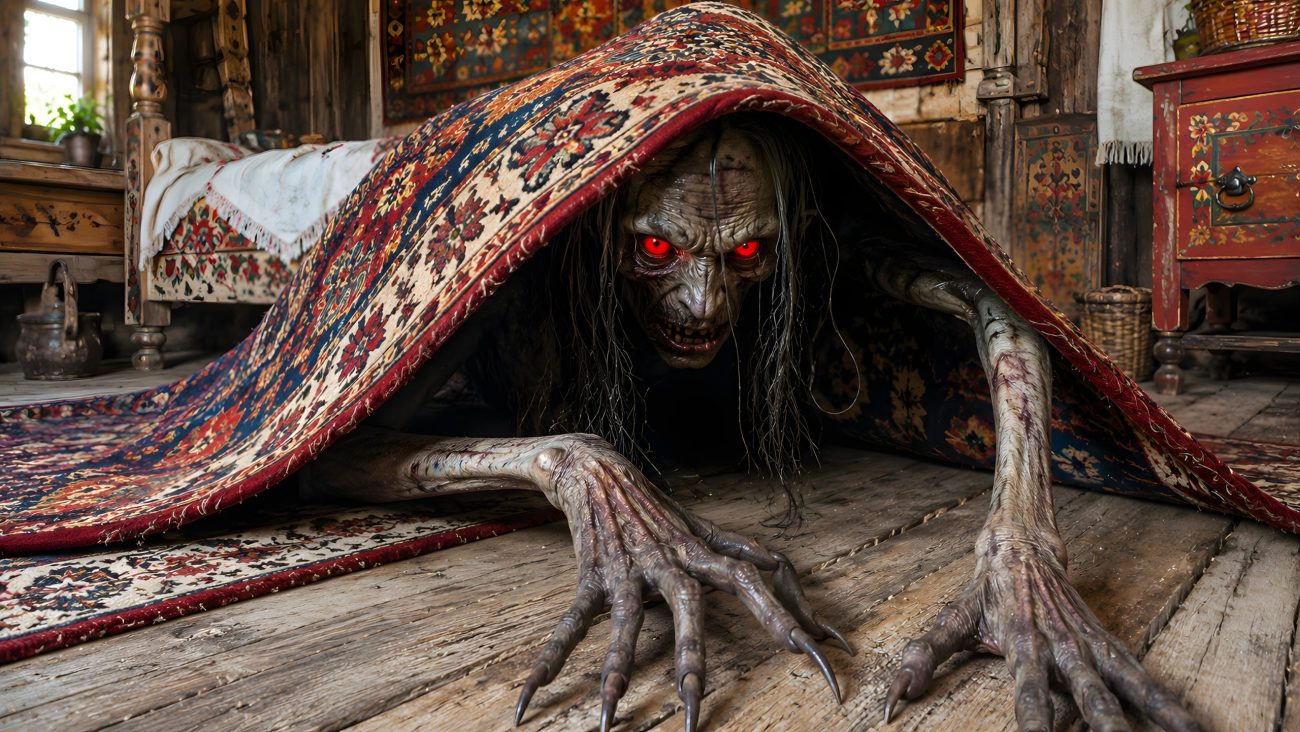
The Baubas is a sinister spirit feared throughout Lithuanian folklore. It is said to lurk in dark corners of houses, beneath carpets, under beds, or anywhere shadows gather. Children were taught to fear it, and parents often warned that the Baubas would come for those who misbehaved.

The creature is described as dark or black in color, with glowing red eyes, long thin arms, and wrinkled fingers. It hides silently and waits for an opportunity to trouble humans.

The Baubas is particularly dangerous at night. It harasses sleeping people, pulls their hair, and is sometimes said to sit upon their chests and suffocate them. Its touch brings terror, and few who encounter it ever clearly see its full form.

For children, the Baubas serves much the same role as the bogeyman in English-speaking traditions. Threats such as “Behave, or the Baubas will come and get you” were commonly used to frighten unruly youngsters into obedience.

Thus, the Baubas remains one of Lithuania’s most feared household spirits—a shadowy being with red eyes and grasping fingers that waits in the darkness for the careless and the disobedient.


Sources

Wikipedia contributors. (n.d.). List of Lithuanian gods and mythological figures. In Wikipedia. Retrieved June 16, 2026, from https://en.wikipedia.org/wiki/List_of_Lithuanian_gods_and_mythological_figures


Karakondzhul

Tradition / Region: Serbian, Macedonian, Bulgarian, Turkish, Albania, Kosovo
Alternative names: Karakondzhal, Karakoncolos
Category: Demon


The Myth

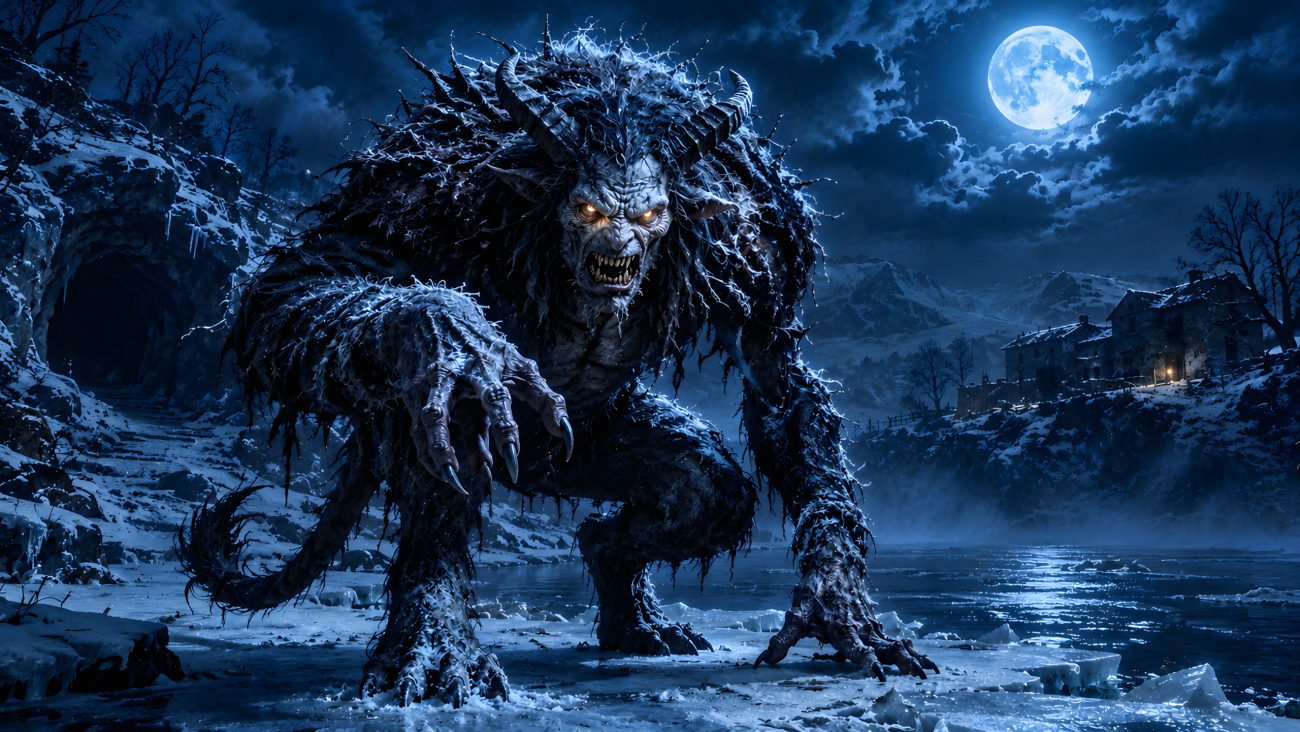
The Karakondzhul is a terrifying winter demon from Balkan and Anatolian folklore that appears during the darkest and coldest days of midwinter. These creatures emerge during the dangerous period between Christmas and Epiphany, especially during severe frosts and the “unbaptized days” of winter when the boundary between the human world and the spirit world was believed to weaken.

The demons rise from rivers, caves, frozen lakes, abandoned places, and other unclean locations after midnight. They wander through villages, fields, and riverbanks until the first rooster crows at dawn. During these nights people avoided traveling alone because the Karakondzhuls were believed to attack travelers, leap onto their backs, and force them to run wildly through the darkness until exhaustion or death.

In Serbian tradition, Karakondzhuls were associated with the spirits of children conceived or dead during the impure winter period. They were believed to especially target women and children, scratching faces, drinking blood, and devouring victims.

The appearance of the Karakondzhul changes constantly. Folklore describes them as shaggy black or red humanoids with horns and tails, naked thorn-covered creatures, horse-bodied beings with human heads and wings, monstrous little people that lure victims onto dangerous ice, or animals such as dogs, sheep, and calves. Some traditions considered them werewolf-like beings capable of changing shape freely.

In Turkish and Anatolian folklore, the related Karakoncolos appears as a small black hairy creature roughly the size of a monkey, child, or cat. It roams winter roads at night questioning travelers with strange riddles such as “Where are you from?” and “Where are you going?” The answer had to include the word kara, meaning “black.” If the traveler failed, the creature attacked them using a massive comb.

People believed iron, fire, bread, salt, ashes from the Christmas badnjak fire, and sharp metal objects could repel the demon. In some regions combs were hidden during winter so the Karakoncolos could not use them as weapons.

The Karakondzhul was feared not simply as a monster, but as a spirit of the dangerous winter season itself — a creature of darkness, frost, wilderness, and the chaotic nights when the world temporarily fell outside divine protection.


Sources

Bestiary.us. (n.d.). Karakonj. Retrieved May 16, 2026, from https://www.bestiary.us/karakonj


Vodeni Demoni

Tradition / Region: Serbian Mythology
Alternative names: Vodeni Čovek, Vodenjak, Water Demons
Category: Demon, River Dweller


The Myth

In Serbian folk belief, water was not viewed as an ordinary natural element but as a living supernatural force inhabited by spirits and demons. Rivers, springs, lakes, mills, and deep waters were believed to possess consciousness, magical power, and dangerous invisible inhabitants known as vodeni demoni — water demons.

People spoke to water as if it were alive, greeting it respectfully and asking it for healing and protection. Certain waters were believed to cure illness, restore youth, grant fertility, or protect against evil spirits. Other waters, however, were feared as haunted places inhabited by deadly supernatural beings that dragged humans beneath the surface.

According to folklore, many rivers demanded sacrifices and regularly claimed human lives through drowning. Some rivers became infamous for frequent deaths and were believed to hunger for victims. Water demons especially haunted deep rivers, whirlpools, mills, bridges, springs, and isolated crossings.

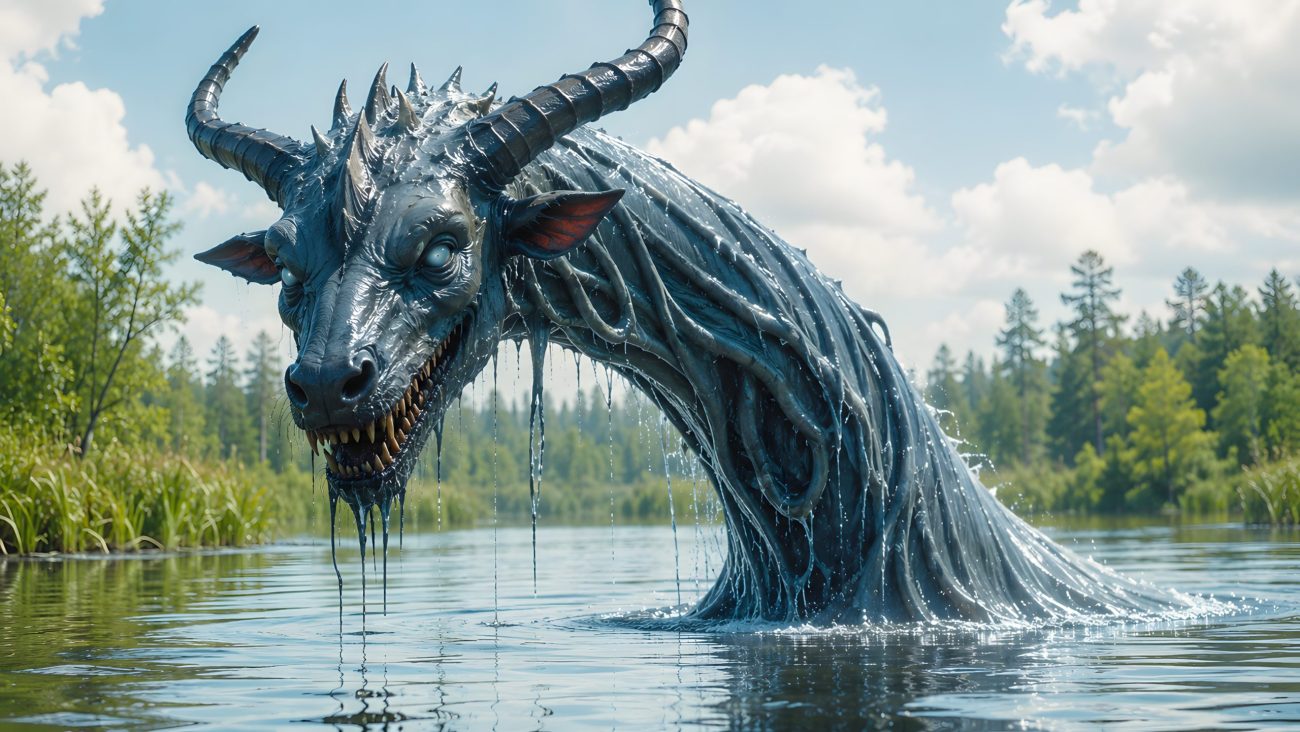
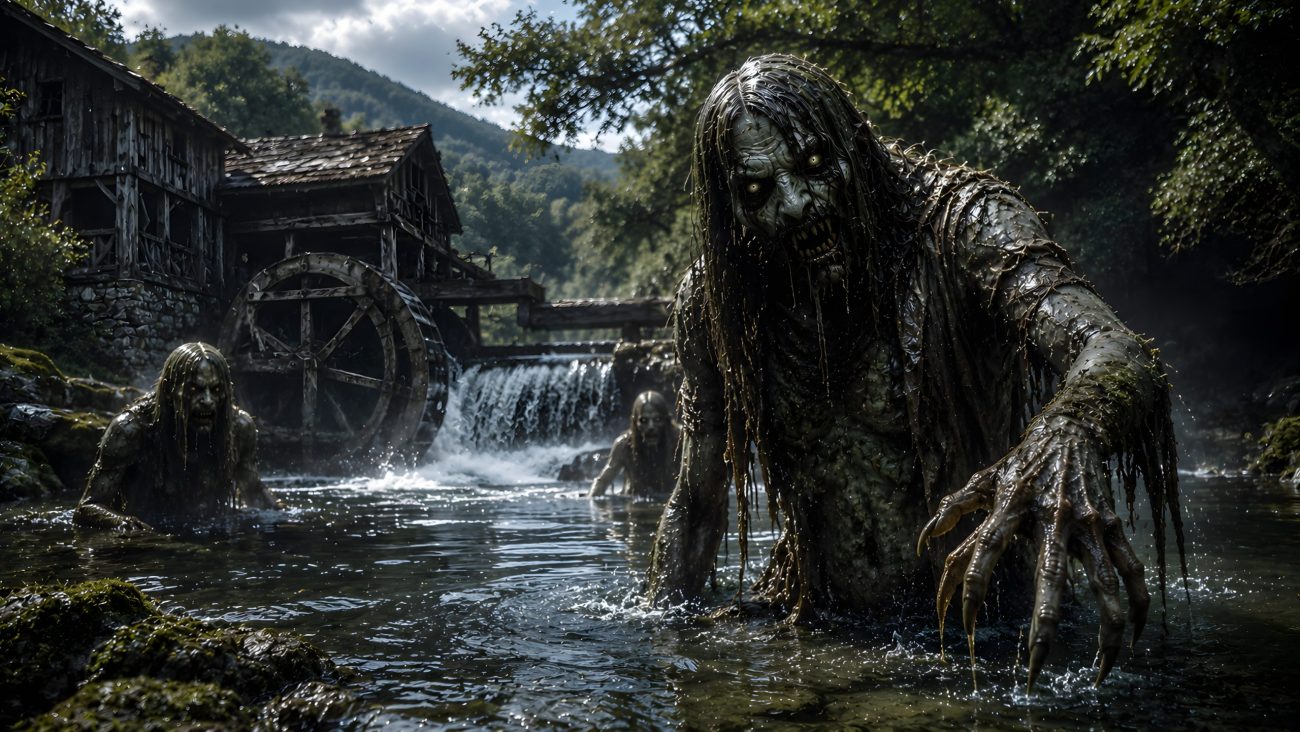
One of the most feared beings was the Vodeni Čovek — the Water Man — a spirit appearing in human form. He lured travelers crossing rivers or walking near dangerous waters, pulling them beneath the surface and drowning them. In Kosovo and other regions, adults frightened misbehaving children with warnings that the “Water Man” would carry them away.

Watermills were considered especially dangerous places because demons, vampires, and devils gathered there during the night. Serbian folklore claimed that every mill housed evil spirits, and many legends described vampires attacking travelers or millers inside lonely mills beside rivers. The famous vampire Sava Savanović was said to haunt a watermill where he murdered those who entered after dark.

Flowing water itself possessed magical properties. “Living water” was pure running water flowing naturally through springs and rivers, while stagnant “dead water” was considered spiritually dangerous. Some waters were believed to become wine for a moment at midnight before Epiphany, while miraculous springs hidden in caves or mountains supposedly healed blindness, deafness, infertility, and disease.

Many rituals involving water were performed for protection against demons. Before thunderstorms, containers of water were covered so devils fleeing lightning could not hide inside them. People avoided drinking from rivers or springs at night for fear of swallowing evil spirits together with the water.

Water was also deeply connected to death and the afterlife. It was believed the souls of the dead suffered terrible thirst in the next world, so water was placed near corpses, poured onto graves, or carried in funeral rituals for the deceased. After someone died, water inside the house was often thrown away because people believed the soul of the dead had entered it.

Certain magical waters possessed special powers. “Untouched water” collected before sunrise retained supernatural strength and was used in rituals, healing, childbirth, and sacred bread-making. “Water of forgetting” supposedly caused those who drank it to forget their families, homeland, and even their faith.

Demons were believed to hide within polluted or spiritually corrupted waters. Rivers before St. George’s Day were feared because devils supposedly dwelled in them during that time. Some springs were avoided because fairies, witches, or dark spirits bathed there and contaminated the water with supernatural power.

Despite their danger, water spirits were not always purely evil. Some waters were guarded by benevolent supernatural beings who protected communities, healed the sick, and brought fertility, rain, and prosperity. Serbian folklore therefore treated water as both sacred and terrifying — a living gateway between the human world and the invisible realm of spirits and demons.


Sources

Кулишић, Ш., Петровић, П. Ж., & Пантелић, Н. (1970). Српски митолошки речник. Београд: Нолит.