Daolao

Tradition: Chinese mythology
Alternative Names: Daolao demons
Category: Demon


The Myth

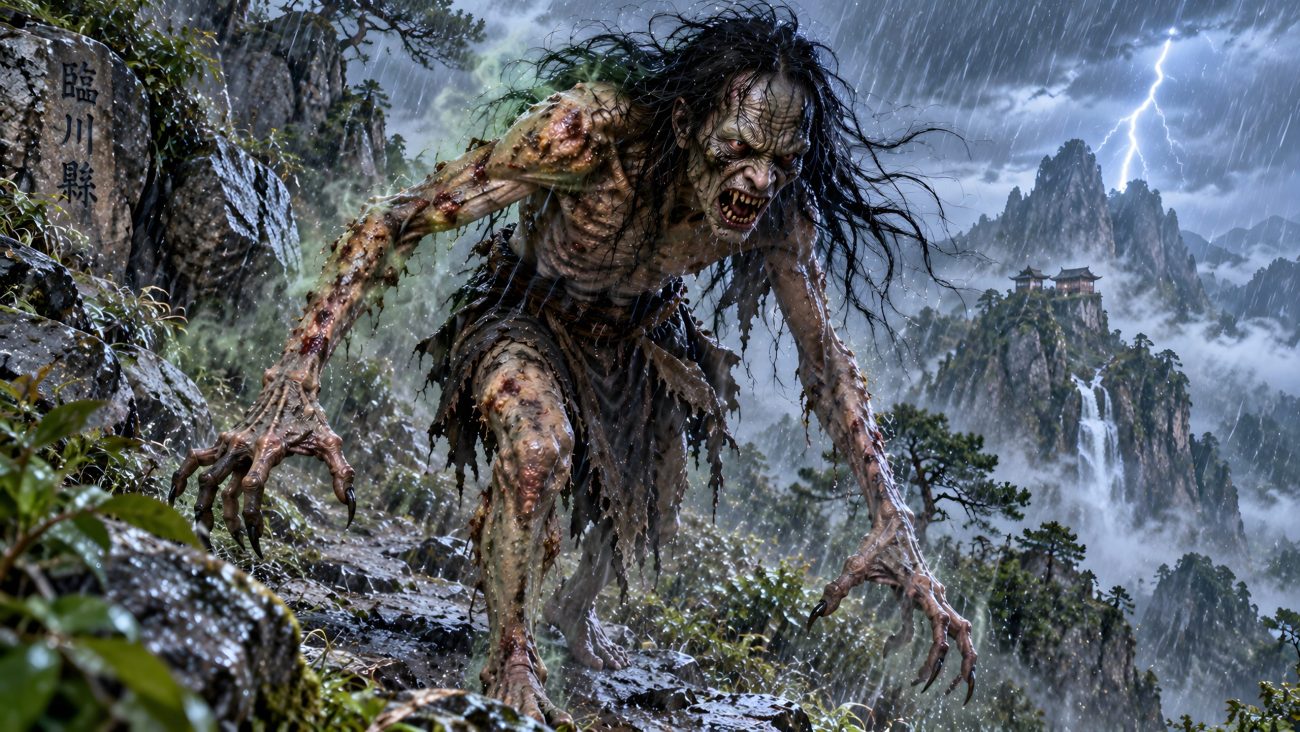
Daolao are malicious creatures that inhabit the mountains of Linchuan County in Jiangxi Province. They appear most often during storms and heavy rain, when they produce whistling sounds and can fire arrows at people. Anyone struck by one of these arrows is immediately covered in sores caused by a powerful poison.

Daolao are divided into males and females. The males are active, but their activity lasts for no more than half a day. The females are comparatively sluggish, and their sluggishness lasts much longer.

People who come into contact with Daolao are usually saved, but those who are rescued only slightly and not completely may die.

Daolao are described as demons whose supernatural nature can bring both trouble and happiness to the world. In the account of Gan Bao, they are presented as examples of the mysterious creatures that exist through the forces of Yin and Yang.

Gan Bao further explains that Heaven and Earth, demons and spirits, were originally born identical to humans. When the elements separated, their essences became different, and differences in the lands produced differences in their forms and natures. The existence of strange creatures such as the Daolao is therefore connected to the primordial forces of Yin and Yang.


Sources

“Даолао (Daolao).” New Bestiary (Bestiary.us). Accessed September 9, 2026. https://www.bestiary.us/Daolao
Puer

Tradition: Chinese Mythology
Alternative Names: Puer (疟鬼)
Category: Demon


The Myth

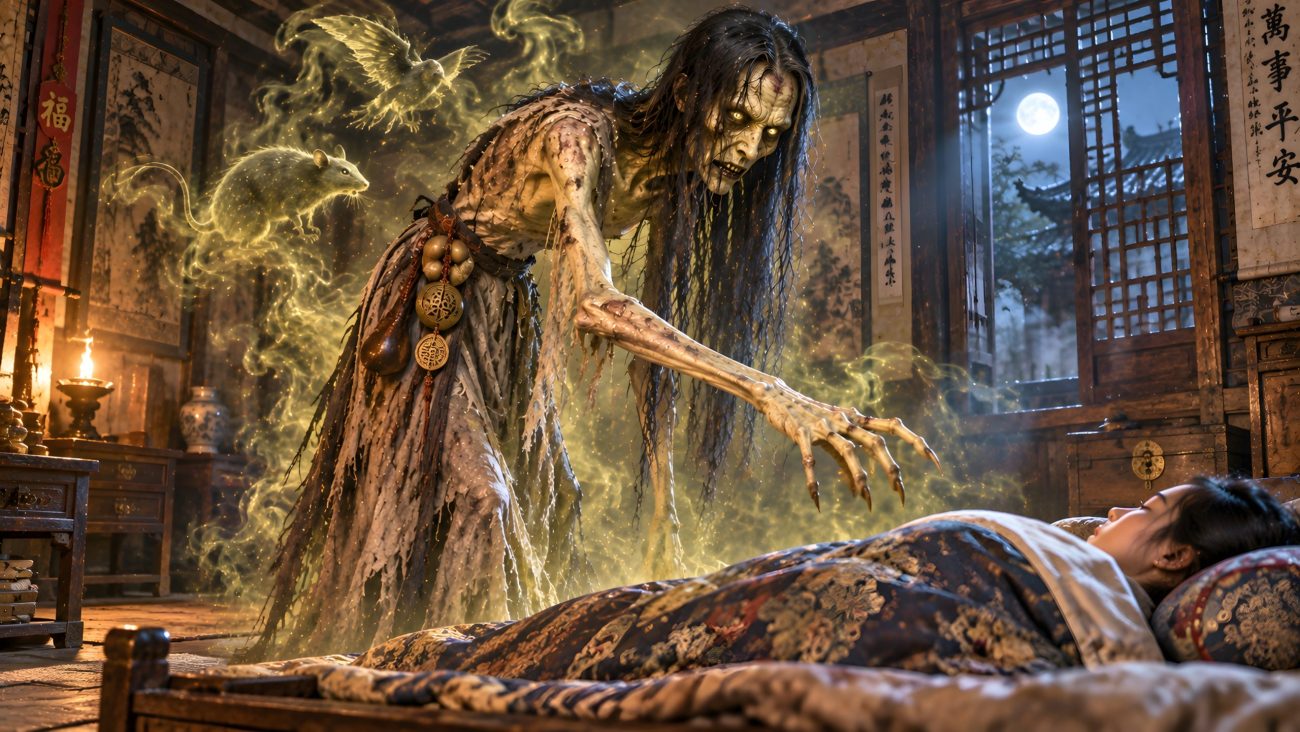
Puer is a Chinese supernatural being associated with malaria and other fevers. It was believed to be a demon responsible for causing illness.

In ancient Chinese accounts, Puer could appear before sleeping people in the form of a small animal, a bird, or a human. It would then approach the person’s body and cause them to fall ill. If the victim tried to drive the creature away, it would gradually grow larger.

Because Puer was associated with disease, people developed various customs intended to prevent it from entering their homes. A common practice was to seek refuge in temples or in other people’s houses before the illness was believed to strike, thereby avoiding the demon.

The Taiping Guangji records a story concerning a person from Jiangxi who was suffering from malaria. He encountered two people who told him that they had been sent to treat his illness.

In Anhui, there was also a custom connected with Puer. Before the local disease season, people would make a paste from soybeans, flour, and water, believing that this mixture could suppress the disease demons and prevent them from spreading illness.

Ancient Chinese medical and literary works likewise associated Puer with recurring fevers and disease. Its appearance and influence were understood through the supernatural framework of illness, with the demon serving as an explanation for the sudden onset of fever and other symptoms.


Sources

“疟鬼 (Nüèguǐ; Malaria Ghost).” Chinese Wikipedia. Wikimedia Foundation. Accessed September 6, 2026. https://zh.wikipedia.org/wiki/%E7%96%9F%E9%AC%BC


King Jinjiao and King Yinjiao

Tradition / Region: Chinese Mythology
Alternative names: Golden-Horned King, Silver-Horned King
Category: Cave dweller, Demon


The Myth

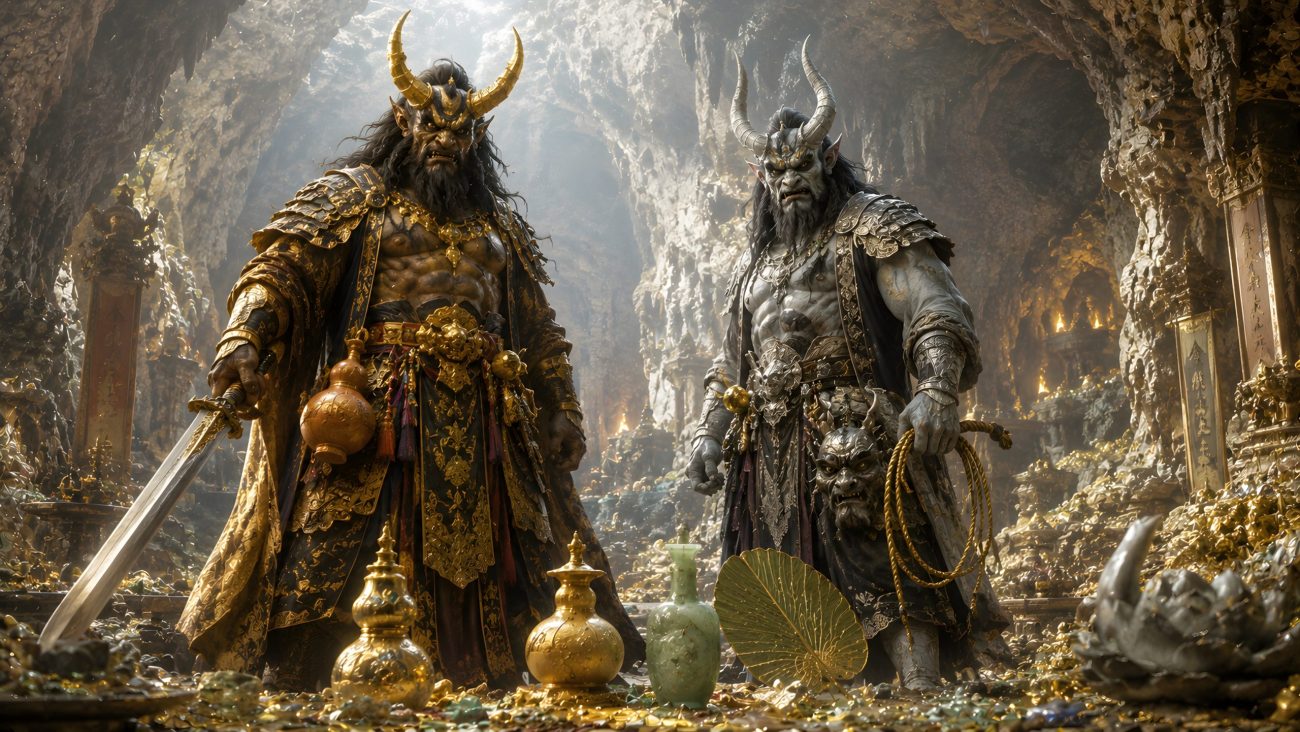
King Jinjiao and King Yinjiao are two powerful demon brothers who rule the Lotus Cave on Pingdingshan. They appear as formidable demon kings and possess a collection of magical weapons and treasures, including the Seven Star Sword, a gourd capable of absorbing and dissolving people, a jade bottle, a golden rope, and a banana-leaf fan that can produce the Samadhi Fire.

The two brothers were originally servants of Laozi and were responsible for guarding his alchemy furnace. They eventually stole several of his magical treasures and fled to the mortal world, where they established themselves as demon kings in the Lotus Cave.

When Tang Sanzang and his companions passed through the region, the two demon kings attacked them. They first defeated Sun Wukong and trapped him beneath three mountains before capturing Tang Sanzang.

The brothers later attempted to destroy Sun Wukong by using their magical gourd. They managed to suck him inside, intending for its supernatural power to dissolve him. Sun Wukong, however, escaped from the gourd before it could destroy him.

After escaping, Sun Wukong turned the magical weapon against its owners. He used the gourd to absorb both King Jinjiao and King Yinjiao, defeating the two demon kings with the very treasure they had used against him.


Sources

“金角大王和银角大王 (King Golden Horn and King Silver Horn).” Chinese Wikipedia. Wikimedia Foundation. Accessed August 15, 2026. https://zh.wikipedia.org/wiki/金角大王和银角大王


Mouryō

Tradition / Region: Chinese mythology
Alternate Names: Hōryō, Hōliang, Hōxiang, Hongliang, Mizuha
Category: Mountain dweller, Zombie, Demon


The Myth

In the deep places of the world—where mountains rise thick with trees and rivers slip silently through stone—there dwell beings known as the mouryō. They are not born as humans are, but arise from the spirit of the land itself: from forests, streams, roots, and shadows beneath the earth.

Ancient texts say that the mouryō appear like small children, no taller than three-year-olds, yet their forms are unsettling. Their skin is dark and reddish, their eyes glow red, their ears are long, and their hair is strangely beautiful. Though they resemble children, they are not innocent. They linger near graves, riverbanks, and old pine trees, places where the boundary between life and death is thin.

At night, the mouryō creep from the roots of trees or from wet earth. They dig into burial grounds and feast upon the livers of corpses, sustaining themselves on the remains of the dead. Because of this, people once feared them greatly, believing that graves left unguarded would invite these beings. Some said that when a corpse vanished, carried away in the night, it was not the work of hellfire or demons from below, but the mouryō dragging the body back into the forest.

In later tales, the mouryō became confused with other corpse-stealing monsters. Some claimed they were the same as the fiery kasha, while others insisted they were water spirits, haunting rivers and marshes. Still others said they were kin to the kappa, born of stagnant waters and rot. No matter the explanation, the fear remained the same: the mouryō were creatures that thrived where decay met neglect.

Travelers avoided old trees at night, and families guarded their dead, for it was said that once a mouryō had tasted a corpse, it would return again and again. Silent, patient, and hungry, the mouryō endured as a reminder that the land itself remembers death—and that some spirits feed upon what humans leave behind.


Gallery


Sources

TYZ-Yokai Blog contributors. (n.d.). 魍魎 (Mouryō). In TYZ-Yokai Blog, from https://tyz-yokai.blog.jp/archives/1072334859.html


Interpretive Lenses

Religious Readings
  • Christian Ascetic Deep Dive
Philosophical Readings
  • Nietzschean Deep Dive
Psychological Readings
  • Jungian Deep Dive
Esoteric Deep Dive
  • Hermetic Deep Dive
Political / Social Readings
  • Marxist Deep Dive
Other
  • How to Invite The Mouryō