Yeti

Tradition / Region: Bhutan Mythology, Nepali Mythology, Indian Mythology, Chinese Mythology, Russian Mythology
Alternate Names: Abominable Snowman, Mi-rgod, Wild Man
Category: Mountain Dweller


The Myth

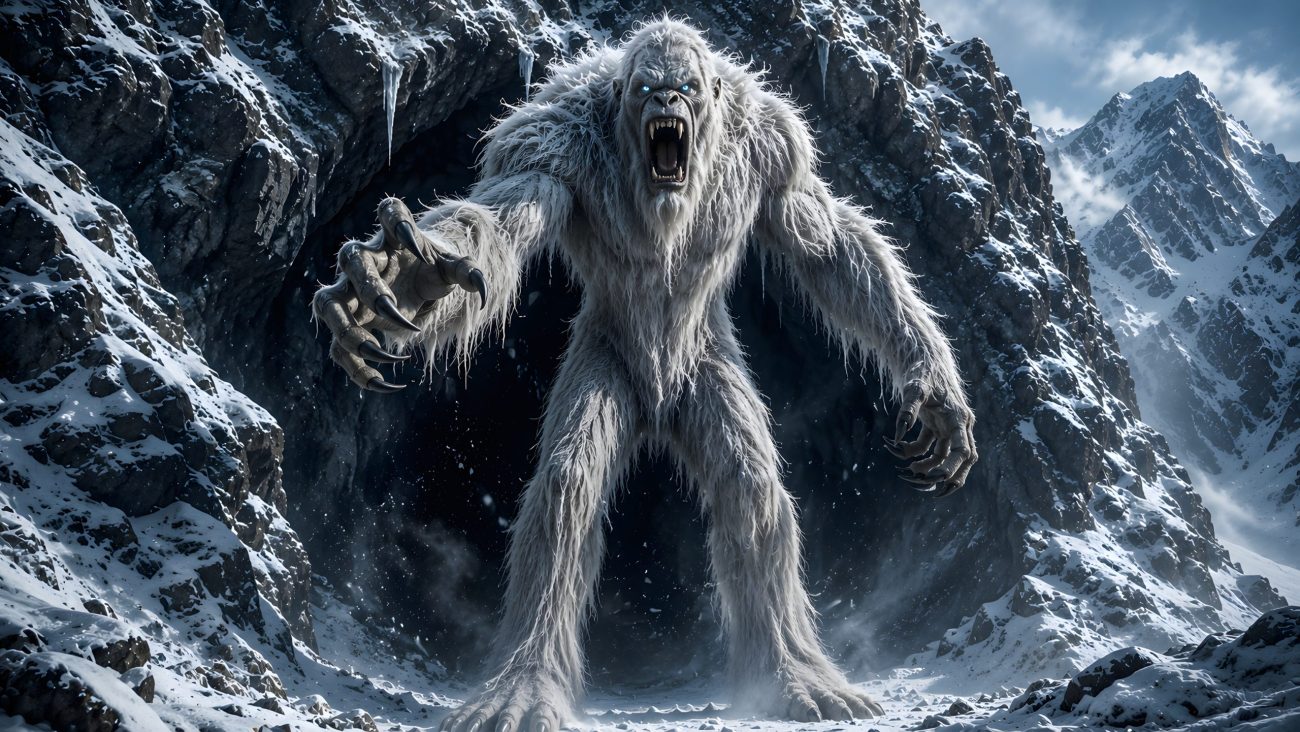
The Yeti is a legendary ape-like being said to inhabit the remote mountains and glaciers of the Himalayas. Descriptions vary between regions, but it is most often portrayed as a massive hairy humanoid creature that walks upright like a man. Its body is covered in dark or reddish fur, and it is associated with enormous footprints found in snow and ice. In older Himalayan traditions, the Yeti was not merely viewed as an animal but as a mysterious supernatural being connected to mountains, wilderness, and spiritual power.

Among several Himalayan peoples, especially before the spread of Buddhism, the Yeti was tied to religious beliefs. Some Lepcha traditions described a “Glacier Being” worshipped as a spirit or god of the hunt. Followers of the ancient Bön religion believed the blood of the wild mountain being possessed ritual power and could be used in spiritual ceremonies. In these stories the creature was depicted carrying large stones as weapons and roaming isolated snowy valleys far from human settlements.

In Tibetan Buddhist traditions, the Yeti became less of a god and more of a powerful nonhuman creature living beyond civilization. Some stories describe Yetis helping monks, saints, or religious figures after being tamed through spiritual teachings. Images of Yetis were sometimes carried in ceremonies as protective guardians against evil spirits. Despite this, encountering one was usually considered a terrible omen. Hearing its cries or glimpsing it in the mountains was believed to foretell danger, death, or misfortune unless the witness performed religious acts to cleanse the bad luck.

The Yeti became widely known outside the Himalayas during the nineteenth century when explorers and travelers reported seeing strange footprints and hairy creatures in remote mountain regions. Trekkers described tall bipedal figures covered in dark hair fleeing across snowy slopes, while guides told stories of wild mountain men wandering glaciers and forests. Reports of massive footprints in the snow became especially famous, though many later believed they may have belonged to bears or other animals distorted by melting ice.

Despite skepticism and many suspected hoaxes, the legend of the Yeti endured throughout the Himalayas and later spread into global popular culture as the “Abominable Snowman.” In folklore, however, the creature remained something more mysterious than a simple monster: a hidden being of the mountains, existing somewhere between animal, spirit, and wild man.


Sources

Wikipedia contributors. (n.d.). Yeti – Pre-19th century. In Wikipedia, from https://en.wikipedia.org/wiki/Yeti#Pre-19th_century
Mouryō

Tradition / Region: Chinese mythology
Alternate Names: Hōryō, Hōliang, Hōxiang, Hongliang, Mizuha
Category: Mountain dweller, Zombie, Demon


The Myth

In the deep places of the world—where mountains rise thick with trees and rivers slip silently through stone—there dwell beings known as the mouryō. They are not born as humans are, but arise from the spirit of the land itself: from forests, streams, roots, and shadows beneath the earth.

Ancient texts say that the mouryō appear like small children, no taller than three-year-olds, yet their forms are unsettling. Their skin is dark and reddish, their eyes glow red, their ears are long, and their hair is strangely beautiful. Though they resemble children, they are not innocent. They linger near graves, riverbanks, and old pine trees, places where the boundary between life and death is thin.

At night, the mouryō creep from the roots of trees or from wet earth. They dig into burial grounds and feast upon the livers of corpses, sustaining themselves on the remains of the dead. Because of this, people once feared them greatly, believing that graves left unguarded would invite these beings. Some said that when a corpse vanished, carried away in the night, it was not the work of hellfire or demons from below, but the mouryō dragging the body back into the forest.

In later tales, the mouryō became confused with other corpse-stealing monsters. Some claimed they were the same as the fiery kasha, while others insisted they were water spirits, haunting rivers and marshes. Still others said they were kin to the kappa, born of stagnant waters and rot. No matter the explanation, the fear remained the same: the mouryō were creatures that thrived where decay met neglect.

Travelers avoided old trees at night, and families guarded their dead, for it was said that once a mouryō had tasted a corpse, it would return again and again. Silent, patient, and hungry, the mouryō endured as a reminder that the land itself remembers death—and that some spirits feed upon what humans leave behind.


Gallery


Sources

TYZ-Yokai Blog contributors. (n.d.). 魍魎 (Mouryō). In TYZ-Yokai Blog, from https://tyz-yokai.blog.jp/archives/1072334859.html


Interpretive Lenses

Religious Readings
  • Christian Ascetic Deep Dive
Philosophical Readings
  • Nietzschean Deep Dive
Psychological Readings
  • Jungian Deep Dive
Esoteric Deep Dive
  • Hermetic Deep Dive
Political / Social Readings
  • Marxist Deep Dive
Other
  • How to Invite The Mouryō

Aoyin

Tradition / Region: Chinese mythology
Alternate Names:
Category: Cow, Mountain dweller


The Myth

Far to the west, beyond the reach of familiar roads, rises Three-Dangers Mountain, a place long feared by travelers. The mountain spans a hundred li around, and its three peaks are known to shelter beings both strange and deadly.

There lives a monster called Aoyin.

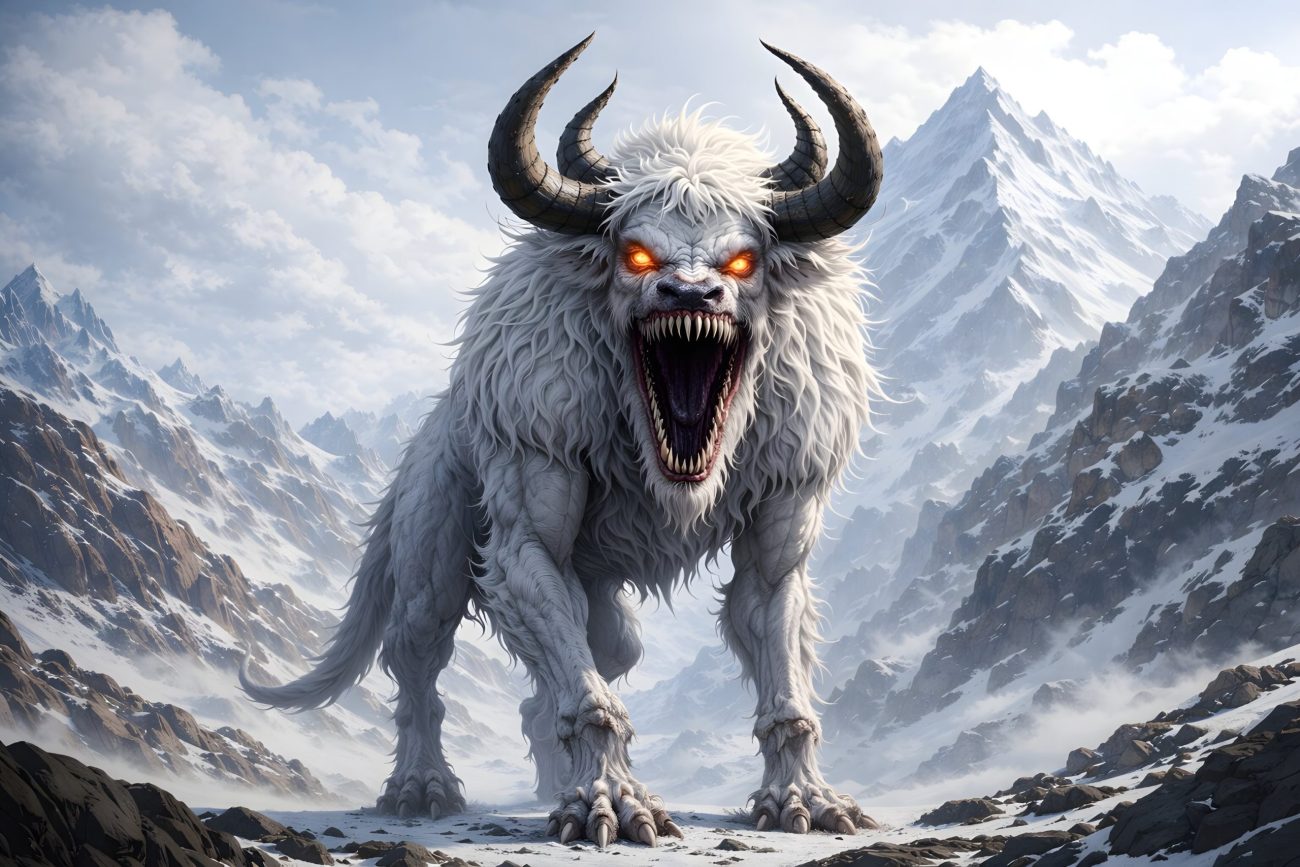
Its body is shaped like that of an ox, yet its hide is white as bone. Four horns rise from its head, and its body is covered in long, coarse hair like straw woven into rain capes. Though it bears the form of cattle, Aoyin is no gentle beast. It feeds on human flesh, preying on those who cross the mountain or linger too long beneath its peaks.

Three Green Birds are also said to dwell upon Three-Dangers Mountain. In later times they would be known as divine messengers, but here they share the heights with the man-eating Aoyin, marking the mountain as a place where sacred forces and mortal peril exist side by side.

Some say that Three-Dangers Mountain was also a land of exile. After rebelling against the ancient ruler Shun, the Three-Sprouts People were driven there and cast out to the edge of the world. Surrounded by barren land and deadly creatures, they disappeared from history.

Thus Aoyin became the living terror of Three-Dangers Mountain—a white, four-horned ox-beast that devours humans, standing as a warning that not all creatures shaped like cattle are meant to sustain life.


Sources

Strassberg, R. E. (2002). A Chinese bestiary: Strange Creatures from the Guideways Through Mountains and Seas. Univ of California Press, p. 112.


Ran Yi Fish

Tradition / Region: Chinese mythology
Category: Fish, Mountain dweller


The Myth

The Ran Yi fish lives in the Wan River, which flows from Yingdi Mountain. This mountain is unlike any other: its slopes are thick with lacquer trees, metal ores and jade lie at its base, and all the birds and beasts that dwell there are said to be entirely white. From this place the Wan River rises and runs northward into Lingyang Marsh, and within its waters the Ran Yi fish can be found.

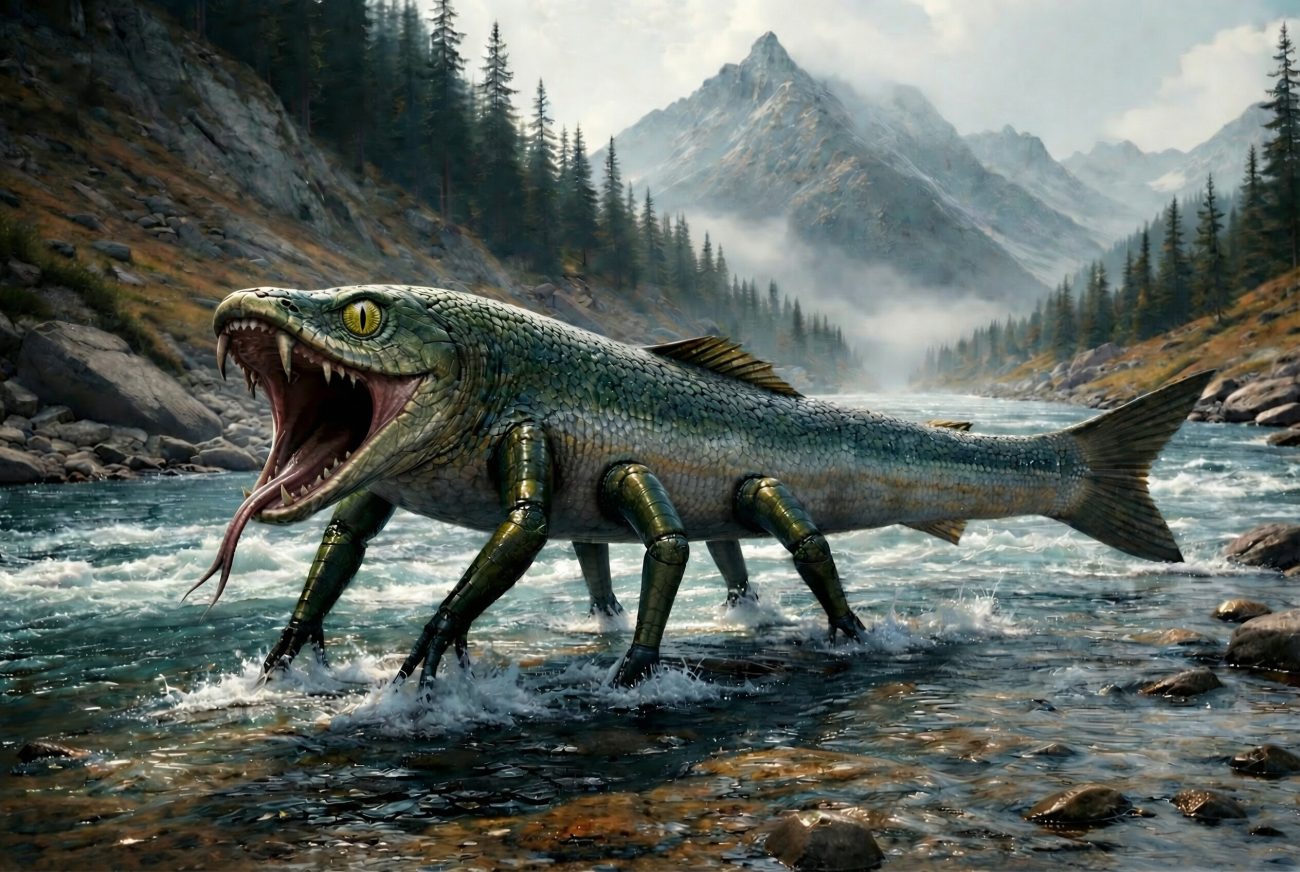
The Ran Yi fish has a fish’s body, but its head is that of a snake, and from its sides grow six legs. Its eyes resemble the ears of a horse, giving it a strange and unsettling appearance. Though it moves through water like a fish, its form marks it as something unnatural and powerful.

People believe that eating the Ran Yi fish brings protection. Those who consume it are said to be free from nightmares, untouched by disturbing dreams, and shielded from evil influences. Because of this, the Ran Yi fish is regarded not as a threat, but as a creature of warding and spiritual defense.

It remains hidden in the waters of the Wan River, tied to the strange mountain where white creatures roam and precious substances lie buried, a guardian presence within an uncanny landscape.


Gallery


Sources

Wikipedia contributors. (n.d.). 冷遺魚. In Wikipedia, The Free Encyclopedia, from https://zh.wikipedia.org/wiki/%E5%86%89%E9%81%97%E9%B1%BC


Interpretive Lenses

Religious Readings
  • Christian Ascetic Deep Dive
Philosophical Readings
  • Nietzschean Deep Dive
Psychological Readings
  • Jungian Deep Dive
Esoteric Deep Dive
  • Hermetic Deep Dive
Political / Social Readings
  • Marxist Deep Dive
Other
  • How to Invite The Ran Yi Fish

Zhu Yan

Tradition / Region: Ancient China
Alternate Names:
Category: Omen beast / monstrous ape


The Myth

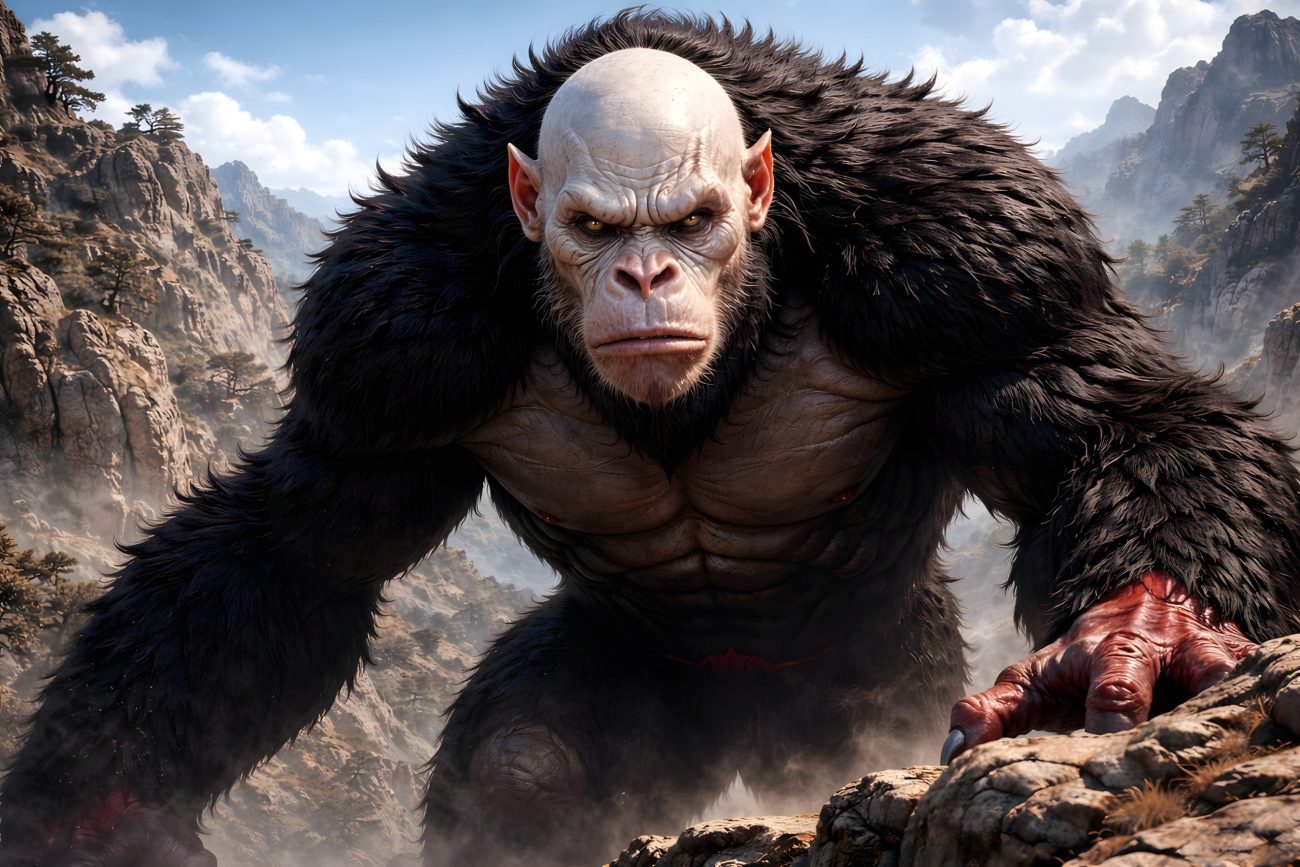
In the ancient text Classic of Mountains and Seas, it is said that in the Western Mountains there exists a strange beast called Zhu Yan. Its form is like that of a powerful ape, but its head is white and its feet are red. It possesses immense strength and an unsettling presence.

Zhu Yan does not wander without consequence. When it appears in the world, its coming is taken as a sign of catastrophe. The sighting of this beast foretells the outbreak of great war, bringing violence and upheaval wherever its presence is known. Thus, Zhu Yan is remembered not for deeds it performs, but for the disaster that follows in its wake.


Interpretive Lenses

Religious Readings
Philosophical Readings
Psychological Readings
Esoteric Deep Dive
Political / Social Readings
Other