Bosch

Tradition: Breton Mythology, French Mythology
Alternative names: —
Category: Demon


The Myth

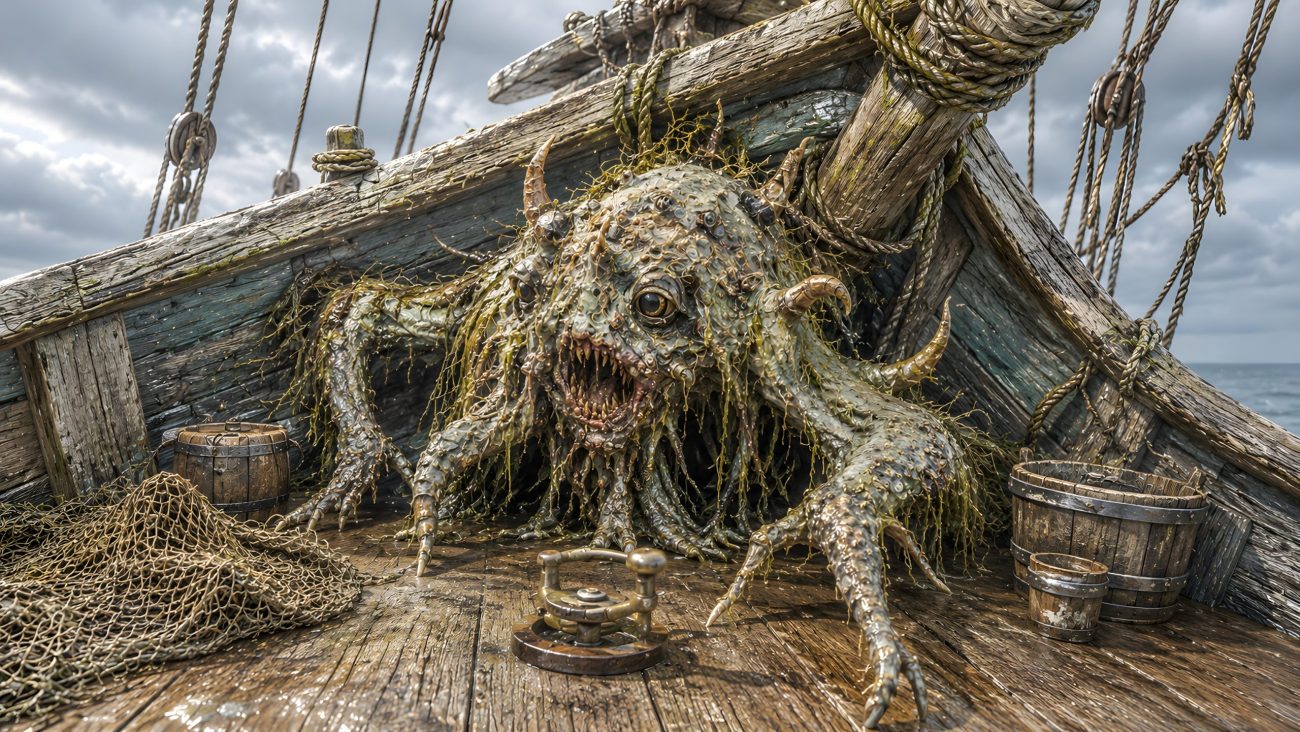
The Bosch is a supernatural creature believed to arise from theft committed aboard a ship. It has no fixed appearance and may take different forms depending on the nature of the crime that created it. Once born, it hides in the bow of the vessel and brings persistent misfortune to the crew.

A Bosch may survive for several months or even several years before gradually weakening and disappearing. While it remains aboard, the ship’s nets stay empty, favorable winds fail to appear, and misfortune continually afflicts the sailors.

In the Audierne region, maritime theft was paradoxically regarded as a source of good luck for the thief, because the Bosch created by the theft would remain behind on the ship. Elsewhere in Finistère, however, such supernatural consequences were regarded as a serious danger. Evil spirits could arise from acts of greed and wrongdoing aboard ships, making it necessary to fumigate a vessel before putting out to sea. The spirits were believed capable of becoming small enough to hide inside a thimble, so smoke had to reach every part of the ship.

There were two known ways to rid a vessel of a Bosch.

The first was to transfer it to another ship. The captain would identify a fortunate vessel whose crew enjoyed plentiful catches and good fortune. During the night, he would secretly board it and steal a small object, usually a pair of oarlocks. The Bosch would then leave its original ship and attach itself to the newly afflicted vessel.

The second method was to drive the creature into the sea. The captain would secretly steal some hay and hide it aboard the ship. At night, the hay would be set on fire near the mizzenmast while the captain shouted that there was a devil aboard.

The sailors, startled by the alarm, would seize whatever they could find and begin striking wildly around the vessel, beating every corner in an attempt to drive the supposed demon out. Faced with the smoke, flames, and blows, the Bosch would eventually flee into the sea, freeing the ship from its curse.


Sources

Countess Sica. “Bosch.” A Book of Creatures. July 8, 2015. https://abookofcreatures.com/2015/07/08/bosch/
Gaibyō-ki

Tradition: Japanese mythology
Alternative names: The Coughing Disease Oni
Category: Demon


The Myth

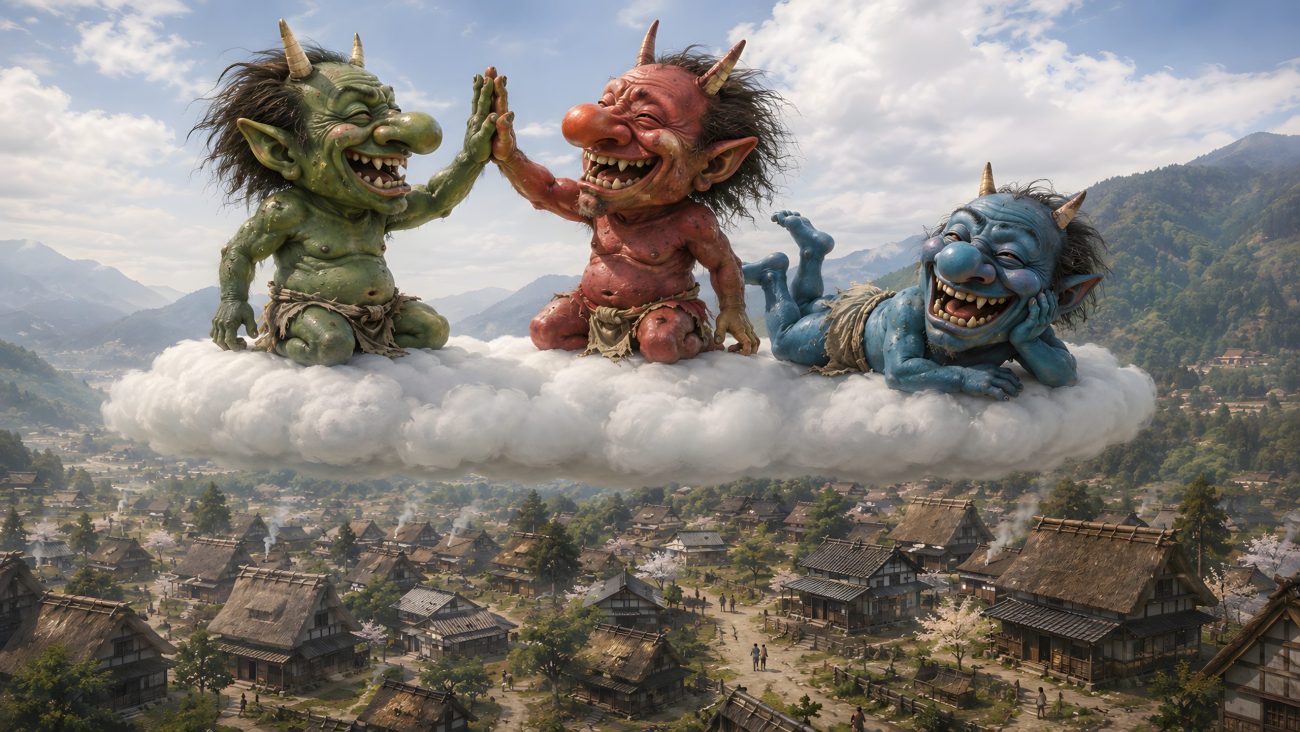
Gaibyō-ki are small oni associated with an outbreak of coughing sickness. They are depicted as three small demons riding on clouds and attempting to enter a household, where they spread the disease.

The story appears in Ehon Sayoshigure under the title Okina Ekijin o Fusegu.

Around the Eishō era (1504–1521), coughing sickness spread through four or five villages in Echizen Province. Many villagers became seriously ill and were confined to their beds.

A rōnin lived in one of the affected villages, but strangely, nobody in his household became sick.

One night, an old man appeared at the rōnin’s house and told him that he lived beneath the southeastern corner of the house. He explained that oni carrying the coughing disease had recently been entering people’s homes and causing them to suffer. Because he recognized the rōnin’s virtuous conduct, the old man had been standing guard outside the house each night to keep the oni away.

After the old man departed, the rōnin dug beneath the southeastern corner of the house. There he discovered a box buried in the ground.

Believing that the box represented the old man who had protected his household, the rōnin built a shrine and worshipped him.

The accompanying illustration shows three small oni riding through the clouds as they attempt to enter the rōnin’s home, while the old man stands before the gate and glares at them, preventing their entry.


Sources

Takahashi, Toshihiro. “咳病の鬼 [がいびょう‐き] (Gaibyō-ki).” 新版TYZ 妖怪図鑑 (New TYZ Yokai Encyclopedia). July 19, 2020. https://tyz-yokai.blog.jp/archives/1077741576.html


Kigyō-yubi

Tradition: Japanese mythology
Alternative names: Oni-shaped Finger
Category: Demon


The Myth

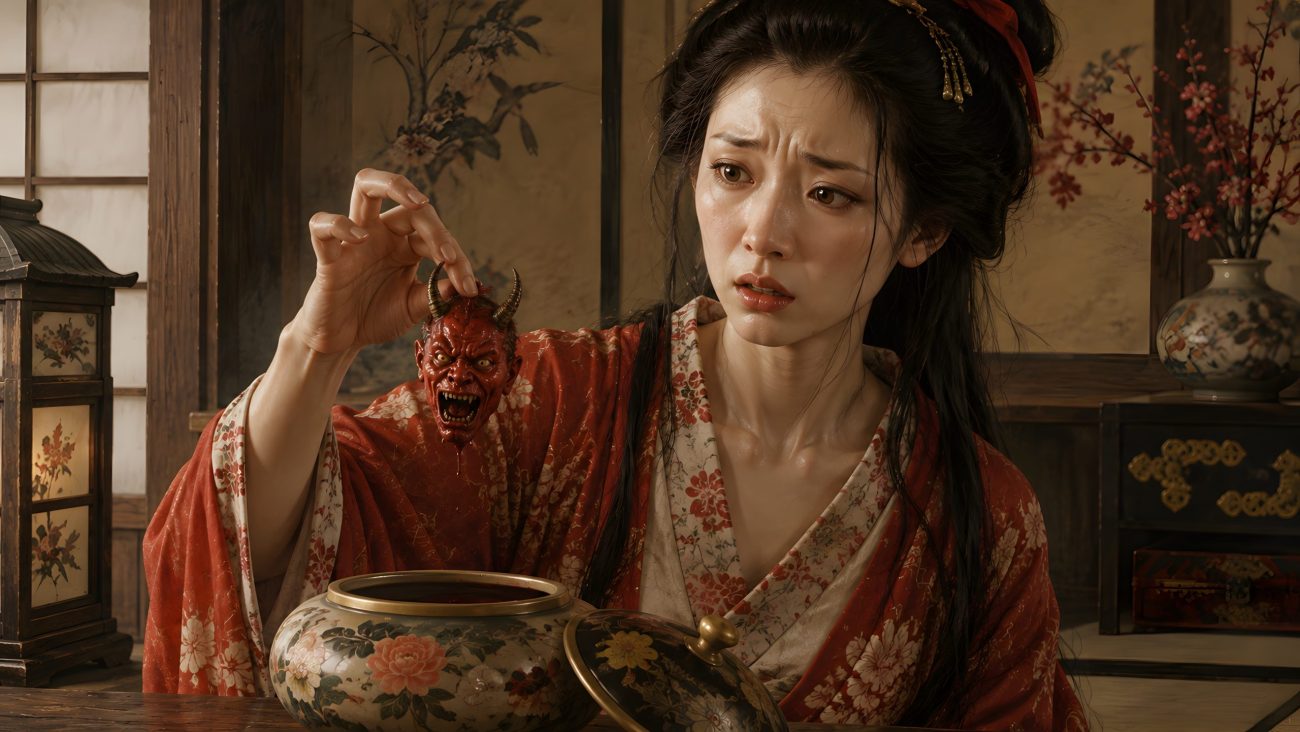
Kigyō-yubi is a severed human finger that appears to transform into the head of a small oni. The transformed finger is described as having a red complexion, two curled horns, and bright, star-like eyes, resembling the traditional Japanese depiction of an oni.

The story appears in the second volume of Kaishū Yakōkon, in a tale concerning a courtesan named Tatsuta.

Tatsuta was born in Kyoto and became a shirabyōshi, a female entertainer who performed songs and dances. After moving to Naniwa, she became highly sought after because of her beauty and skill at singing. She eventually fell deeply in love with a young merchant named Yamamoto Matashuke, and remained devoted to him even while continuing her work as a courtesan.

Matashuke, however, eventually abandoned her and married another woman. Tatsuta was devastated by his change of heart. She repeatedly sent him letters and, as proof of her devotion, even cut off her hair and one of her fingers and sent them to him. Matashuke regarded these gifts as troublesome and returned them.

Consumed by grief, jealousy, and resentment, Tatsuta became increasingly distraught. The severed finger remained in a container in her possession.

One day, when Tatsuta looked at the finger, she saw that it had transformed into the head of a tiny oni. It was red, had two curled horns, and possessed eyes that shone like stars. Terrified, Tatsuta covered the container and believed that her intense jealousy had caused her severed finger to become an oni.

She went to a reclusive monk named Ryōfū and confessed what had happened. When Ryōfū opened the container, however, he saw nothing unusual. The object was simply a human finger.

When he asked Tatsuta whether she still saw an oni, she insisted that she did. Ryōfū concluded that the oni was a manifestation of the demon within her own jealous mind, projected onto the severed finger.

Ryōfū taught her Buddhist teachings and gave her the ten recitations of the Buddha’s name. Three days later, Tatsuta returned and happily explained that she could no longer see the finger as an oni. She wished to shave her head and become Ryōfū’s disciple.

Ryōfū initially refused, explaining that she could not simply abandon her life as a courtesan. Instead, he taught her that she could turn her heart toward Buddhism even while remaining outwardly in her existing circumstances.

Tatsuta continued as a courtesan for some time, but eventually fulfilled her wish and became Ryōfū’s disciple. She shaved her head, took the name Eirin Bikuni, and established a hermitage at Sonezaki.


Sources

Takahashi, Toshihiro. “鬼形の指 [きぎょう‐ゆび] (Kigyo-yubi).” 新版TYZ 妖怪図鑑 (New TYZ Yokai Encyclopedia). September 22, 2018. https://tyz-yokai.blog.jp/archives/1072385607.html


Lantukhi

Tradition: Belarusian Mythology
Alternative names: Lantuch, Lantukh, Lantuchakh
Category: Demon


The Myth

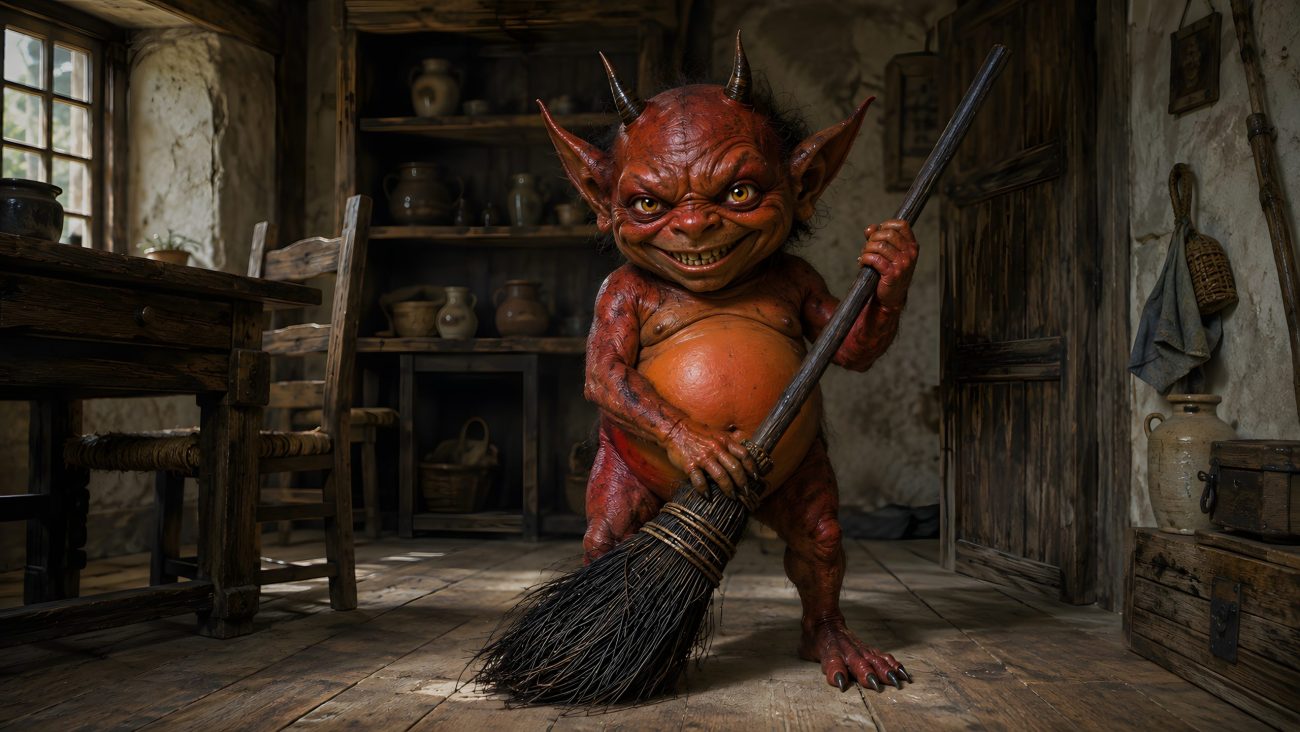
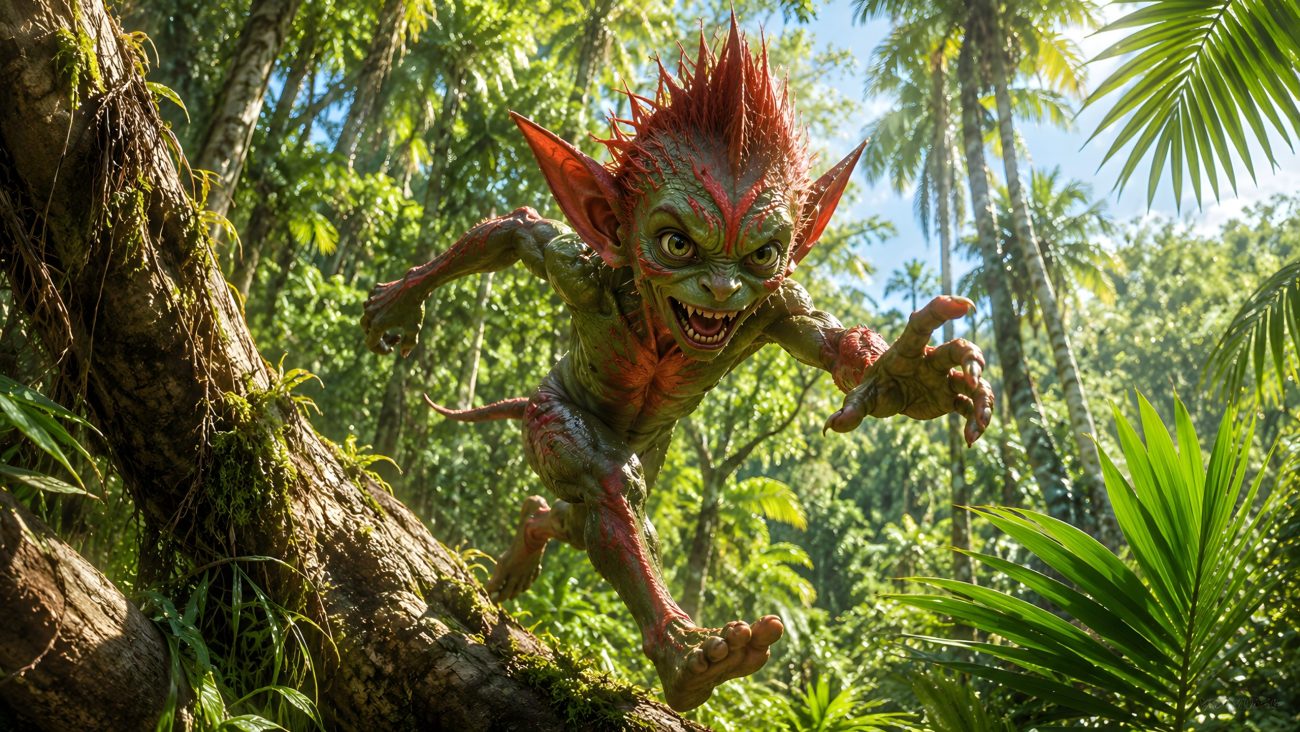
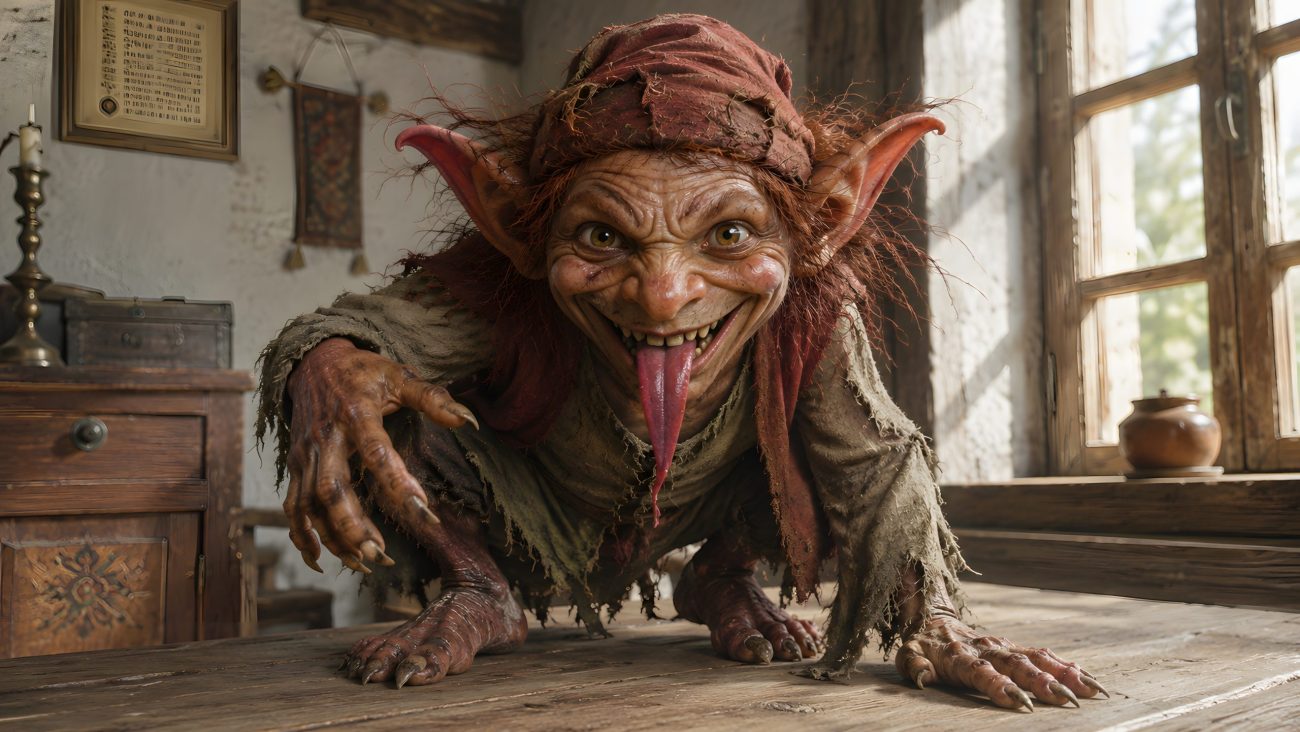
Lantukhi are small, mischievous spirits in the folklore of Eastern European Jews. They are generally harmless but enjoy causing disorder and playing tricks on people. They are sometimes described as brownie-like beings and may leave footprints resembling those of a huge bird.

Lantukhi can also interfere with travelers, taking on the role of a troublesome goblin or water spirit. They may try to push travelers from bridges or confuse them in forests, laughing loudly when their tricks succeed.

In Jewish folklore from Belarus, the Lantukhi are associated with petty mischief and hooliganism rather than serious evil. Stories about them were especially popular among the Jews of Belarus.

One tale tells of a learned Talmudist who remained alone in a synagogue at night, reading the Gemara. Since he was forbidden to sleep, he relied on tobacco to stay awake, but he had none. Suddenly, a huge red tongue emerged from the women’s gallery and began moving about, as if offering him something to smell. The man took the tobacco, and the strange apparition immediately disappeared. The spirit was identified as a Lantuch, who had appeared to help the scholar with his work.

Another tradition describes a Lantuch as a playful demon possessing a very long tongue. It could frighten or tease people by pushing its tongue through a window. This form is closely related to the Belarusian character Lick, another frightening being whose unusually long tongue was said to lick disobedient children until they bled.


Sources

“Lantukhi.” New Bestiary (Bestiary.us). Accessed August 30, 2026. https://www.bestiary.us/Lantukhi


Kutsodaimon

Tradition: Greek Mythology
Alternative names: Kutsodaimon
Category: Demon


The Myth

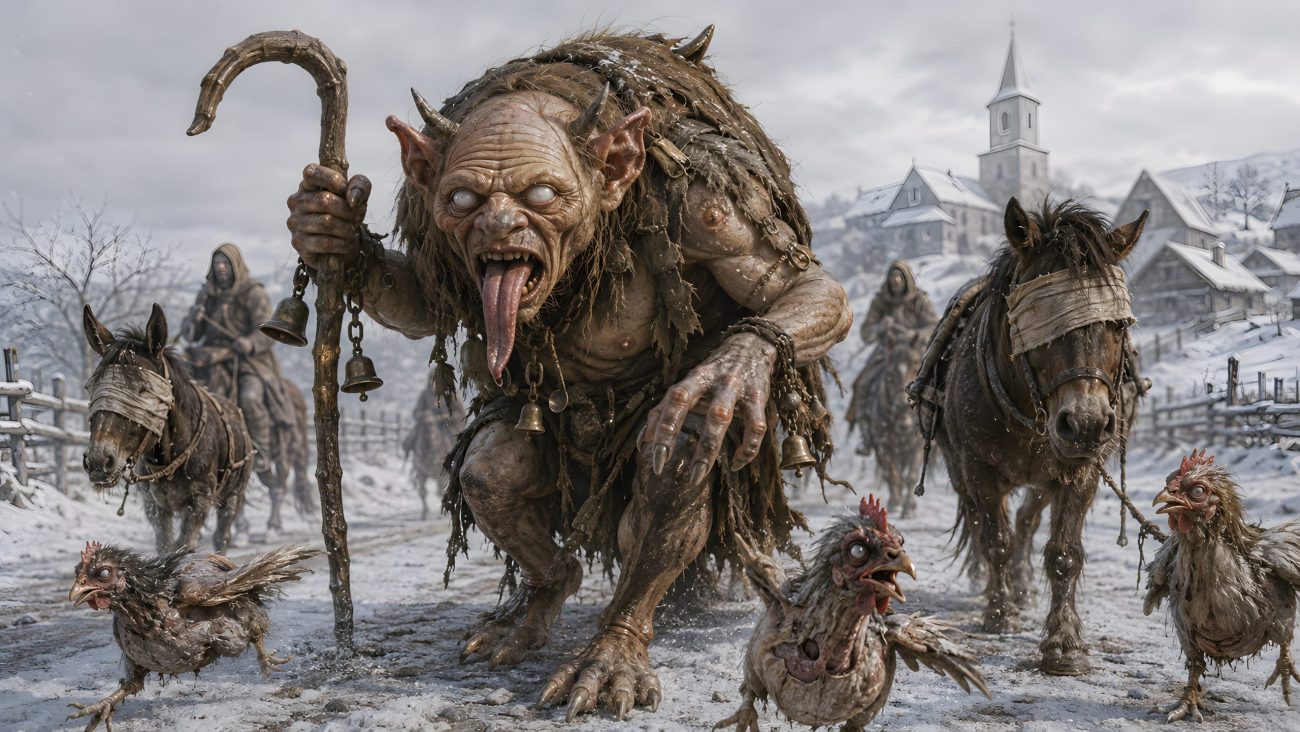
Kutsodaimon is a grotesque demon associated with the Kallikantsars, appearing in the human world during the Christmas season. He is lame and often blind, with a huge head, a long tongue hanging from his mouth, and a large hump on his chest. He usually accompanies a group of Kallikantsars and hobbles along at the end of their procession, constantly cursing and insulting his companions.

Kutsodaimon remains after the other Kallikantsars disappear with the first crowing of the rooster, waiting until the third crow in order to carry out one final malicious trick.

The humpbacked Kutsodaimon is described as the most dangerous of the Kallikantsars. He attacks pregnant women and girls, making him particularly feared during the Christmas period. Various measures were used to prevent him from entering houses, including placing a sieve with a pomel at the threshold, hanging pork bones in the chimney, burning incense at night, and burning old shoes in the fireplace because of their smell.

One story tells of Kutsodaimon blinding a king’s daughter by stabbing her in both eyes just before disappearing. He later boasted to the other Kallikantsars that the princess would never see again unless she rubbed soot and cobwebs from their chimney into her eyes.

However, a young traveler who had unknowingly spent the night in a cave inhabited by the Kallikantsars overheard him. After the demons departed, the traveler collected soot and cobwebs from the cave and brought them to the capital. The remedy restored the princess’s sight, and the grateful king rewarded him with a cart full of gold.


Sources

“Kutsodaimon.” New Bestiary (Bestiary.us). Accessed August 30, 2026. https://www.bestiary.us/Kutsodaimon


Iratshoak

Tradition: Basque mythology, Spanish Mythology
Alternative names: Iratxo, Iratxoak, Iratshoa
Category: Demon


The Myth

Iratshoak are small supernatural demons in Basque mythology that are generally friendly toward humans. They are helpful spirits that assist people with their work and business in exchange for a small symbolic reward.

They are especially associated with working during the night. Food left for them in a visible place can encourage them to work throughout the night, making them similar to the brownies of British folklore.

Despite being classified as demons, Iratshoak are not primarily hostile beings. Their relationship with humans is instead based on mutual benefit: they perform useful tasks while humans provide them with food or another small reward.


Sources

“Zlydnya.” New Bestiary (Bestiary.us). Accessed August 30, 2026. https://www.bestiary.us/Zlydnya


Zlydnya

Tradition: Belarusian Mythology
Alternative names: Zlydnya
Category: Demon


The Myth

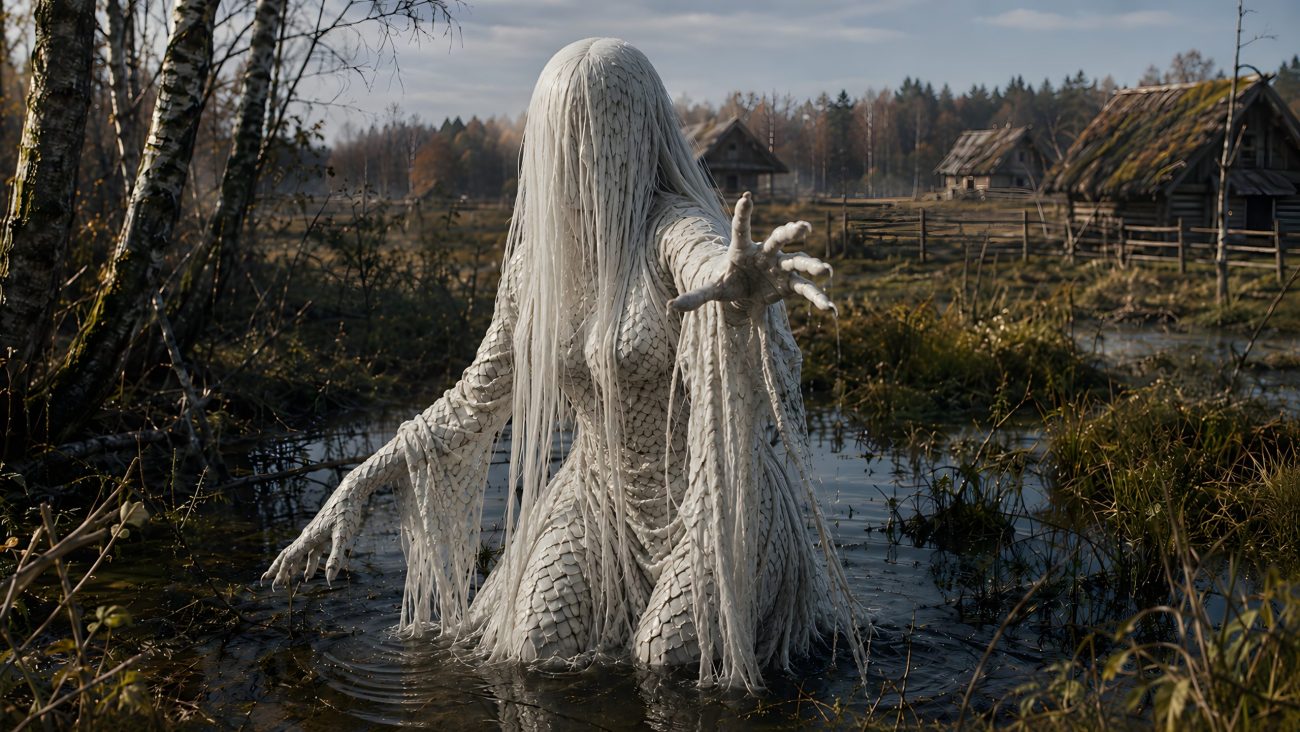
Zlydnya is a malevolent supernatural being appearing as an invisible woman without a tongue, eyes, or ears. She was once a snake, which was transformed into Zlydnya after a violent encounter with Lucifer.

The snake wrapped itself around its neck in a swamp and began to bite. During the struggle, Lucifer pulled the snake out and struck it with a saber. The snake then became Zlydnya.

Zlydnya has a particular love of soul-damning substances and keeps various abominations in a pot. She distributes these abominations among people, bringing them harm.


Sources

“Zlydnya.” New Bestiary (Bestiary.us). Accessed August 30, 2026. https://www.bestiary.us/Zlydnya


Bietebauw

Tradition: Belgian Mythology
Alternative names: Bitebau, Budde
Category: Demon


The Myth

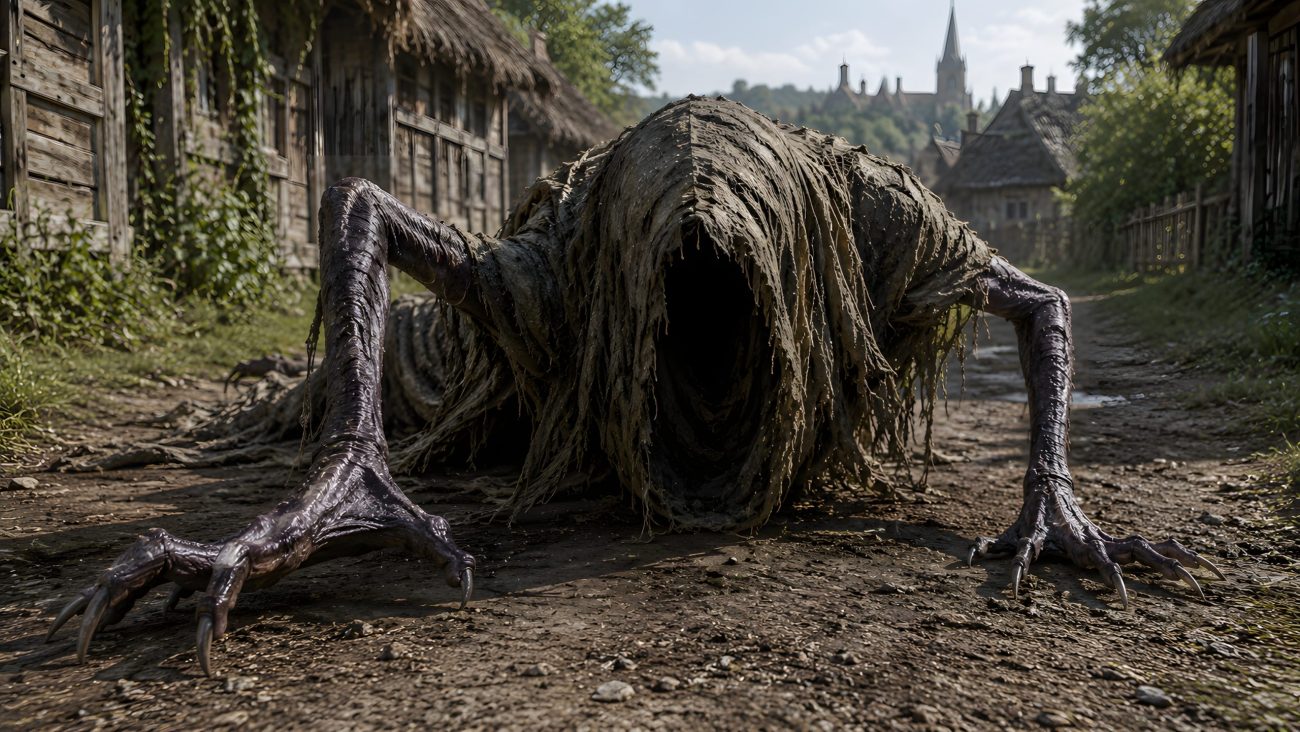
The Bietebauw is a frightening supernatural being from Flemish folklore, appearing as a boogeyman, devil-like creature, or ghost. In one recorded account from a 1595 witchcraft trial in Den Bosch, it is described as a black, crawling animal with no head and no tail.

In other traditions, the Bietebauw appears as a ghost in human form. People who were born with the caul were believed to be able to see it, while others could not. When it appeared to them, it could reveal a supernatural warning or prediction of something that was about to happen.

The Bietebauw was also used as a child-frightening figure, with Flemish traditions invoking it as a creature that would come from the black mountains and seize naughty children. In some older contexts it was associated with a devil or malevolent supernatural being.


Sources

“Van aardmannetje tot zwarte juffer: Een lijst van Nederlandse en Vlaamse elfen en geesten.” Abe de Verteller. Accessed August 29, 2026. https://abedeverteller.nl/van-aardmannetje-tot-zwarte-juffer-een-lijst-van-nederlandse-en-vlaamse-elfen-en-geesten/


Gagoze

Tradition: Japanese mythology
Alternative names: Gagojin, Gagoji, Gangoji, Gangōji, Gagoze
Category: Demon


The Myth

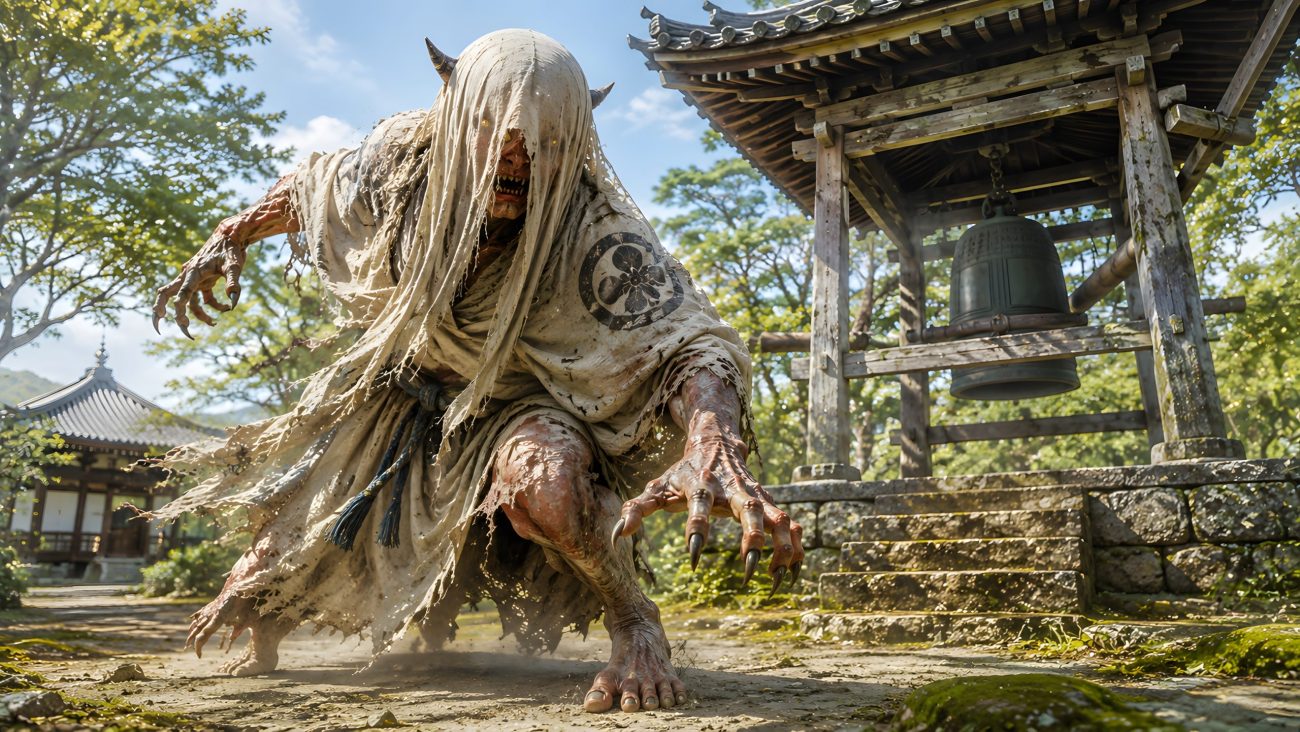
Gagoze is a Japanese yokai associated with the ancient Gangōji temple in Nara. In later yokai picture scrolls, it is depicted as an ogre-like figure with a cloth covering its head. These depictions are thought to have been inspired by the vengeful spirit said to have appeared in the temple’s bell tower.

During the reign of Emperor Bidatsu, a farmer from Katawa in Aichi District, Owari Province, encountered a small thunder deity that had fallen from the sky. After helping the deity return to heaven, the farmer was rewarded with a child.

The child was born with a snake wrapped around his head and grew into a person of extraordinary strength. He eventually became a temple servant at Gangōji.

At that time, a demon appeared every night in the temple’s bell tower and killed people. The exceptionally strong youth volunteered to defeat it. At midnight, he confronted the demon and fought with it. The demon eventually escaped, but the youth succeeded in tearing out some of its hair.

The following day, the monks followed the trail of blood left by the fleeing demon. It led them to a place where people who had committed evil deeds at the temple had been buried. The demon was therefore revealed to be the vengeful spirit of a wicked person who had died.

The demon’s hair was preserved at Gangōji as a temple treasure. The youth later became known as Dōjō Hōshi and became a Buddhist monk.

The names Gagoze, Gagoji, Gagojin, and Gangoji later became associated with words for monsters or bogeymen in children’s speech. During the Edo period, these names were understood as corruptions of Gangōji and were connected with the legend of the temple’s demon.


Sources

Takahashi, Toshihiro. “元興寺 [がごぜ] (Gagoze).” 新版TYZ 妖怪図鑑 (New TYZ Yokai Encyclopedia). December 6, 2010. https://tyz-yokai.blog.jp/archives/1010653554.html


Abak

Tradition: Mandaya Mythology, Philippine Mythology
Alternative names: Abak, Abaka
Category: Demon


The Myth

Abacus is an evil demonic spirit in the folklore of the Mandaya people of Mindanao in the Philippines. The name Abak is given as a Latin spelling of Abaka, the name of the evil spirit in Mandaya folklore.

The figure is also recorded as the proper name of one of the deities of the Bagobo people. The surviving description identifies Abacus primarily as a malevolent supernatural spirit, but provides no further details about its appearance, behavior, or associated legends.


Sources

“Abak.” New Bestiary (Bestiary.us). Accessed August 29, 2026. https://www.bestiary.us/abak