Cacodemon

Tradition: Greek mythology
Alternative Names: Cacodemon, Cacodaemon, Cacodaimon, Kakodemon, Kakodaemon, Kakodaimon
Category: Demon


The Myth

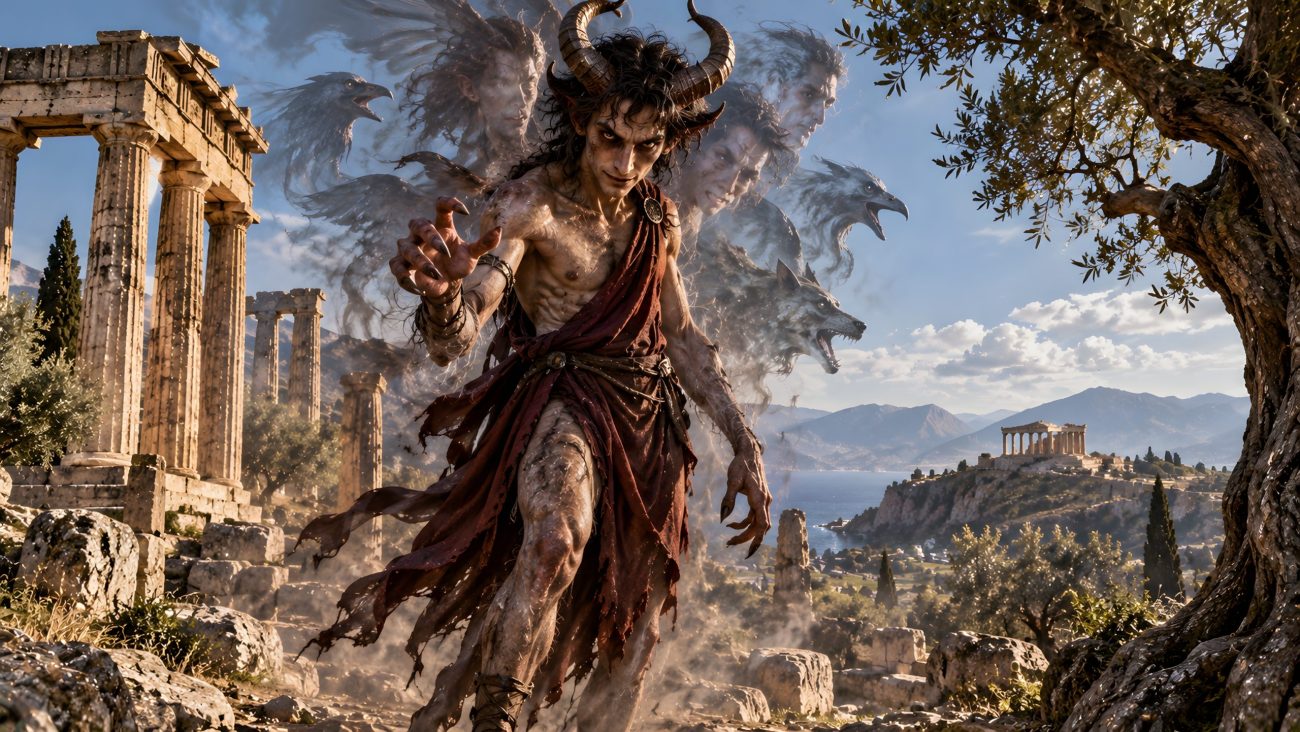
A cacodemon is an evil spirit capable of shapeshifting. The word comes from the Greek kakodaimōn, meaning “evil spirit.” Unlike a cacodemon, a daimon in Greek tradition could be a neutral or benevolent supernatural spirit.

Cacodemons are described as malevolent supernatural beings and can also refer to evil or malicious people. In one depiction attributed to Greek mythology, a cacodemon appears as a young, horned or winged-browed figure with exaggerated physical features.

Cacodemons are the evil counterparts of agathodaemons or eudaemons, which are benevolent spirits. In later tradition, the term came to mean a demon or malevolent supernatural being.


Sources

“Cacodemon.” Wikipedia: The Free Encyclopedia. Wikimedia Foundation. Accessed September 12, 2026. https://en.wikipedia.org/wiki/Cacodemon


Arae

Tradition: Greek mythology
Alternative Names: Arae, Arai (Αραί)
Category: Demon


The Myth

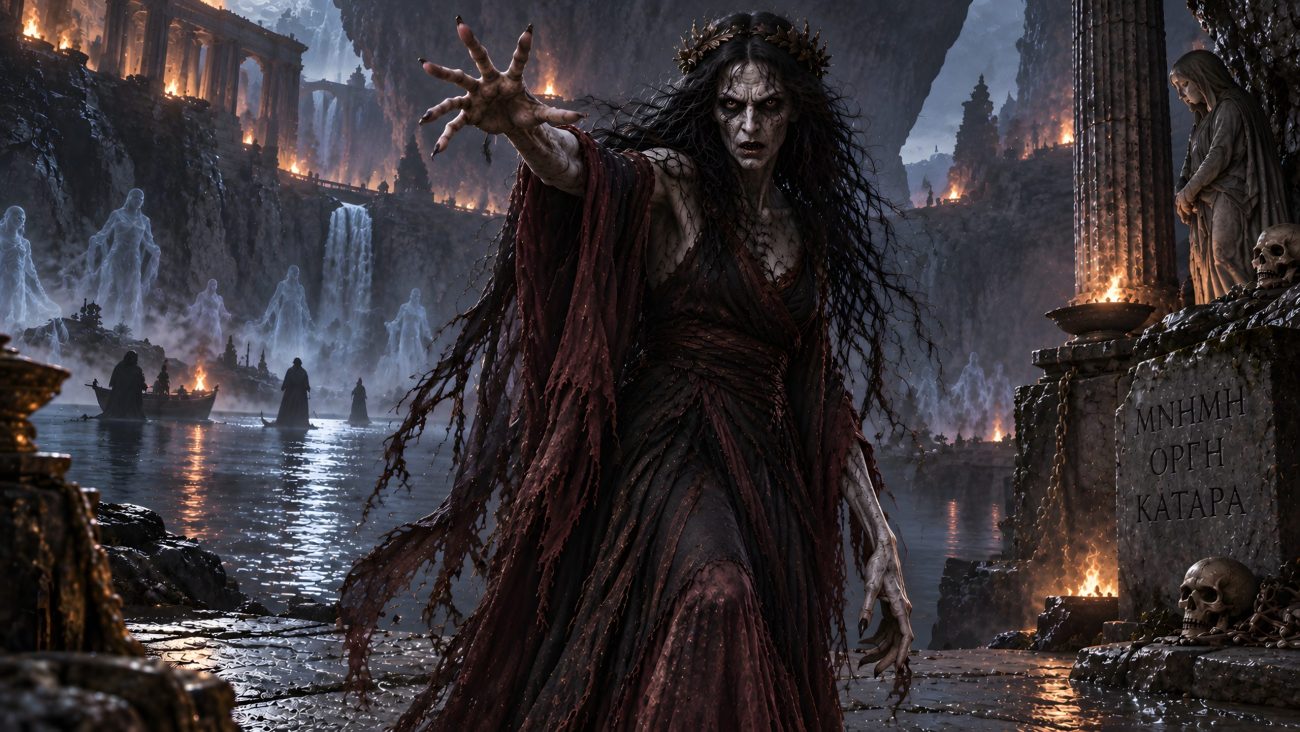
The Arae are female spirits of curses, particularly curses laid by the dead upon those responsible for their deaths. They are associated with the Underworld and are sometimes identified with the Erinyes, the Furies.

The Arae are described as powers residing beneath the earth. In the traditions preserved by Aeschylus, the Erinyes themselves say that they are the eternal children of Nyx (Night) and that they are called Arai, or Curses, in their dwelling beneath the earth.

Their curses are closely connected with bloodshed and vengeance. Blood spilled upon the earth demands further blood, and the Erinys arising from those who have been murdered brings destruction upon the guilty. The Arae therefore pursue the consequences of murder and wrongdoing, particularly within cursed families.

The House of Atreus is repeatedly associated with the Arae. Orestes calls upon the powerful Curses of the slain as he suffers the consequences of the violence within his family. Clytemnestra likewise addresses the Ara, the curse haunting the house of the Atreides, blaming it for taking away those she loves.

The curse is also connected with the downfall of Oedipus and his family. When his family is thrown into disorder, the Arae raise their piercing cry as the descendants of Oedipus are driven apart.

In the story of Eteocles and the Seven Against Thebes, Eteocles prays to Zeus, Earth, and the gods protecting Thebes, as well as to the Curse acting as the agent of his father’s vengeance. He begs that the Ara not destroy his city or its homes and hearths.

The Arae could also be invoked by those seeking vengeance for unjustly murdered people or those deprived of marriage. In the Electra tradition, Electra calls upon the powers of the Underworld, including Hermes Chthonios, the holy Ara, and the divine Erinyes, asking them to avenge the murder of her father.

The Arae thus represent curses arising from wrongdoing and bloodshed, particularly the vengeance of the dead against those responsible for their deaths.


Sources

“Arae.” Wikipedia: The Free Encyclopedia. Wikimedia Foundation. Accessed September 9, 2026. https://en.wikipedia.org/wiki/Arae
Kutsodaimon

Tradition: Greek Mythology
Alternative names: Kutsodaimon
Category: Demon


The Myth

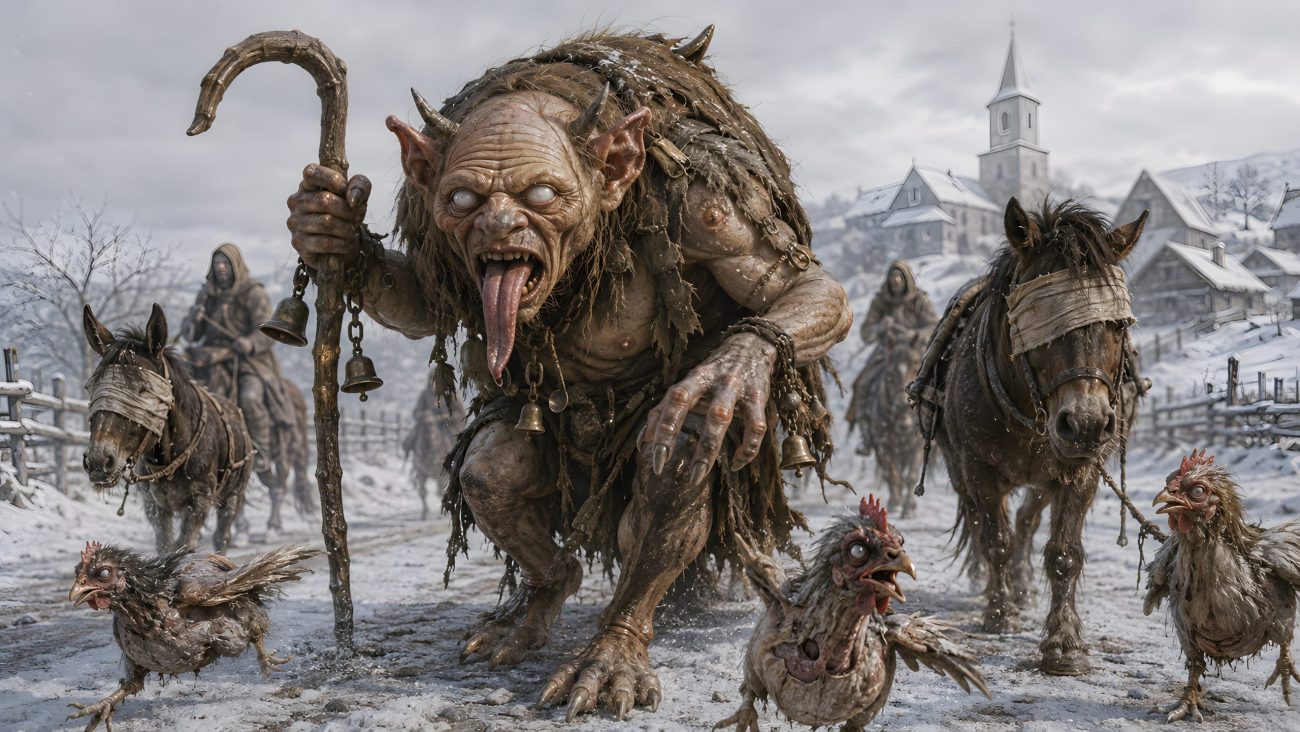
Kutsodaimon is a grotesque demon associated with the Kallikantsars, appearing in the human world during the Christmas season. He is lame and often blind, with a huge head, a long tongue hanging from his mouth, and a large hump on his chest. He usually accompanies a group of Kallikantsars and hobbles along at the end of their procession, constantly cursing and insulting his companions.

Kutsodaimon remains after the other Kallikantsars disappear with the first crowing of the rooster, waiting until the third crow in order to carry out one final malicious trick.

The humpbacked Kutsodaimon is described as the most dangerous of the Kallikantsars. He attacks pregnant women and girls, making him particularly feared during the Christmas period. Various measures were used to prevent him from entering houses, including placing a sieve with a pomel at the threshold, hanging pork bones in the chimney, burning incense at night, and burning old shoes in the fireplace because of their smell.

One story tells of Kutsodaimon blinding a king’s daughter by stabbing her in both eyes just before disappearing. He later boasted to the other Kallikantsars that the princess would never see again unless she rubbed soot and cobwebs from their chimney into her eyes.

However, a young traveler who had unknowingly spent the night in a cave inhabited by the Kallikantsars overheard him. After the demons departed, the traveler collected soot and cobwebs from the cave and brought them to the capital. The remedy restored the princess’s sight, and the grateful king rewarded him with a cart full of gold.


Sources

“Kutsodaimon.” New Bestiary (Bestiary.us). Accessed August 30, 2026. https://www.bestiary.us/Kutsodaimon