Tradition: Japanese mythology
Alternative names: Gagojin, Gagoji, Gangoji, Gangōji, Gagoze
Category: Demon
The Myth
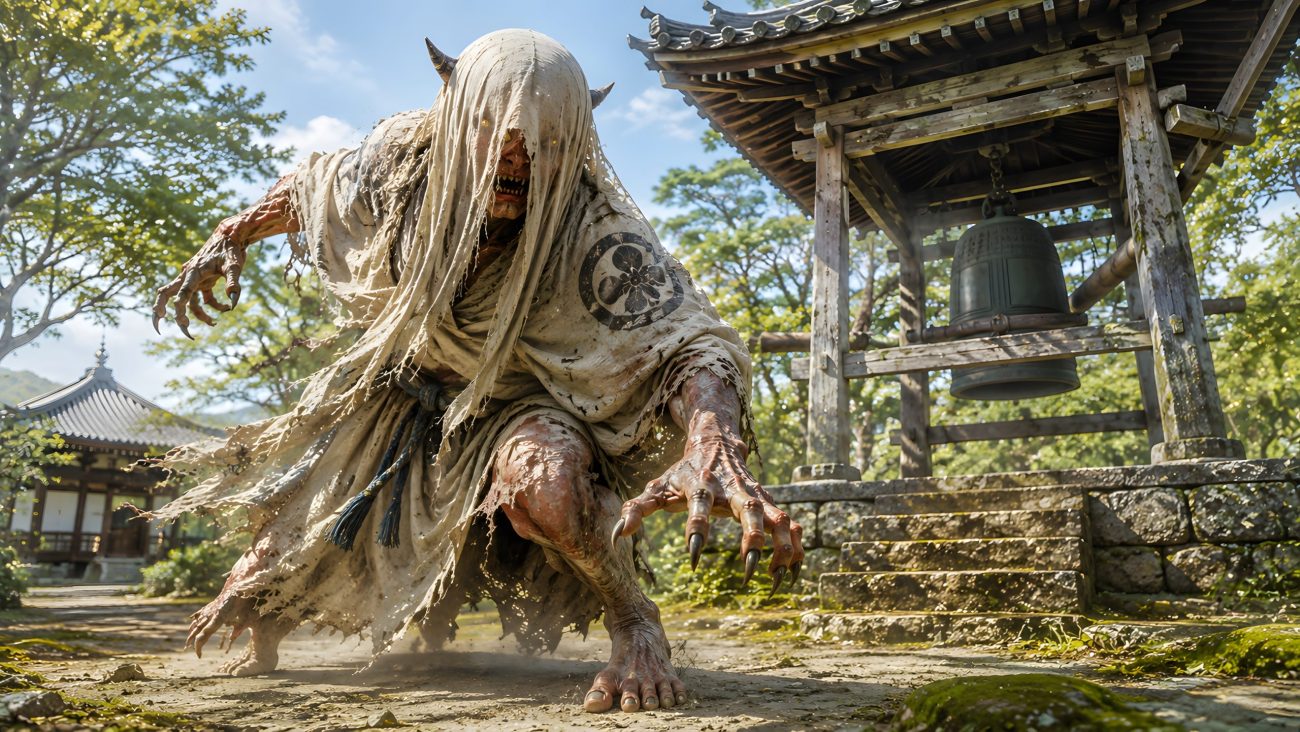
Gagoze is a Japanese yokai associated with the ancient Gangōji temple in Nara. In later yokai picture scrolls, it is depicted as an ogre-like figure with a cloth covering its head. These depictions are thought to have been inspired by the vengeful spirit said to have appeared in the temple’s bell tower.
During the reign of Emperor Bidatsu, a farmer from Katawa in Aichi District, Owari Province, encountered a small thunder deity that had fallen from the sky. After helping the deity return to heaven, the farmer was rewarded with a child.
The child was born with a snake wrapped around his head and grew into a person of extraordinary strength. He eventually became a temple servant at Gangōji.
At that time, a demon appeared every night in the temple’s bell tower and killed people. The exceptionally strong youth volunteered to defeat it. At midnight, he confronted the demon and fought with it. The demon eventually escaped, but the youth succeeded in tearing out some of its hair.
The following day, the monks followed the trail of blood left by the fleeing demon. It led them to a place where people who had committed evil deeds at the temple had been buried. The demon was therefore revealed to be the vengeful spirit of a wicked person who had died.
The demon’s hair was preserved at Gangōji as a temple treasure. The youth later became known as Dōjō Hōshi and became a Buddhist monk.
The names Gagoze, Gagoji, Gagojin, and Gangoji later became associated with words for monsters or bogeymen in children’s speech. During the Edo period, these names were understood as corruptions of Gangōji and were connected with the legend of the temple’s demon.
Sources
Takahashi, Toshihiro. “元興寺 [がごぜ] (Gagoze).” 新版TYZ 妖怪図鑑 (New TYZ Yokai Encyclopedia). December 6, 2010. https://tyz-yokai.blog.jp/archives/1010653554.html