Alp

Tradition: German Mythology
Alternative Names: Alpe, Alpen, Trud, Mar, Mart, Mahr, Schrat, Walrider
Category: Demon


The Myth

The Alp is a supernatural being from German folklore associated with nighttime oppression, nightmares, illness, and the bewilderment or deception of humans. The word Alp is the German form of the same ancient Germanic word that eventually became English elf.

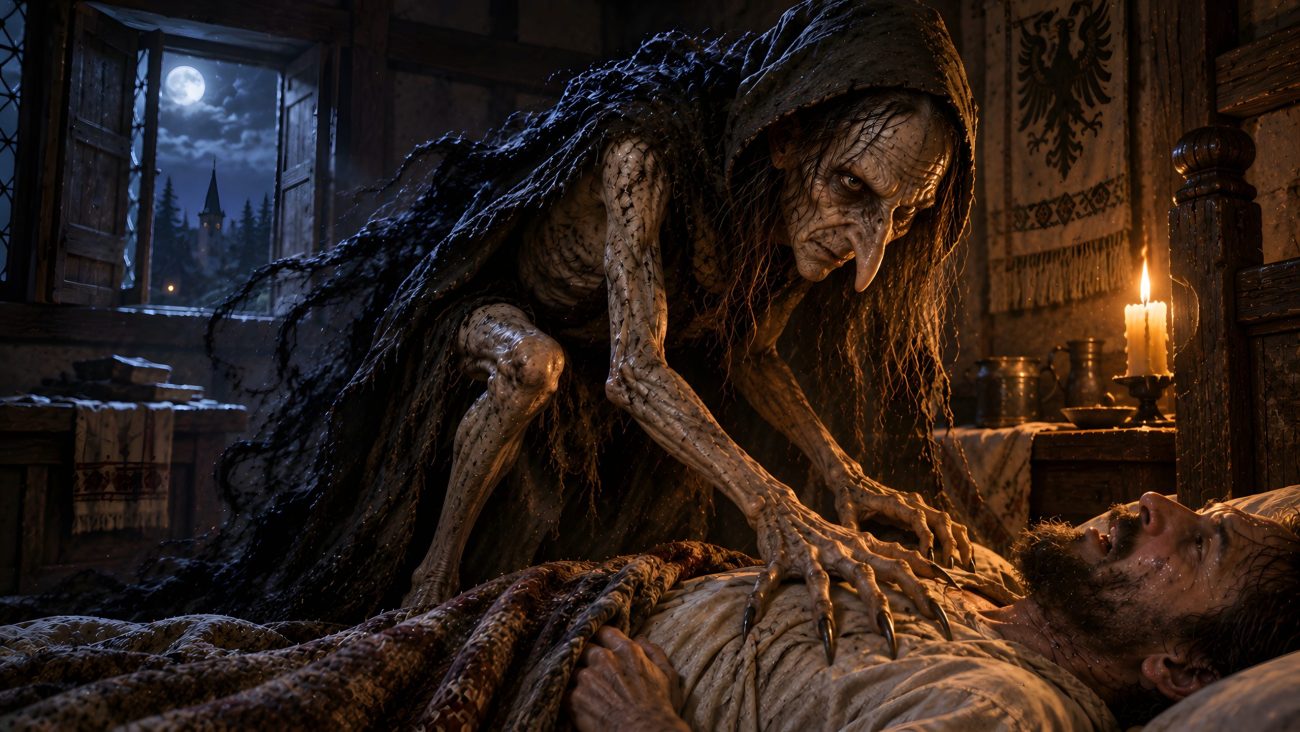
In older German traditions, the Alp was understood as a nature spirit or nature demon. It was regarded as an eerie and sometimes ferocious being, and was particularly associated with the mare, a supernatural creature that tormented people during sleep.

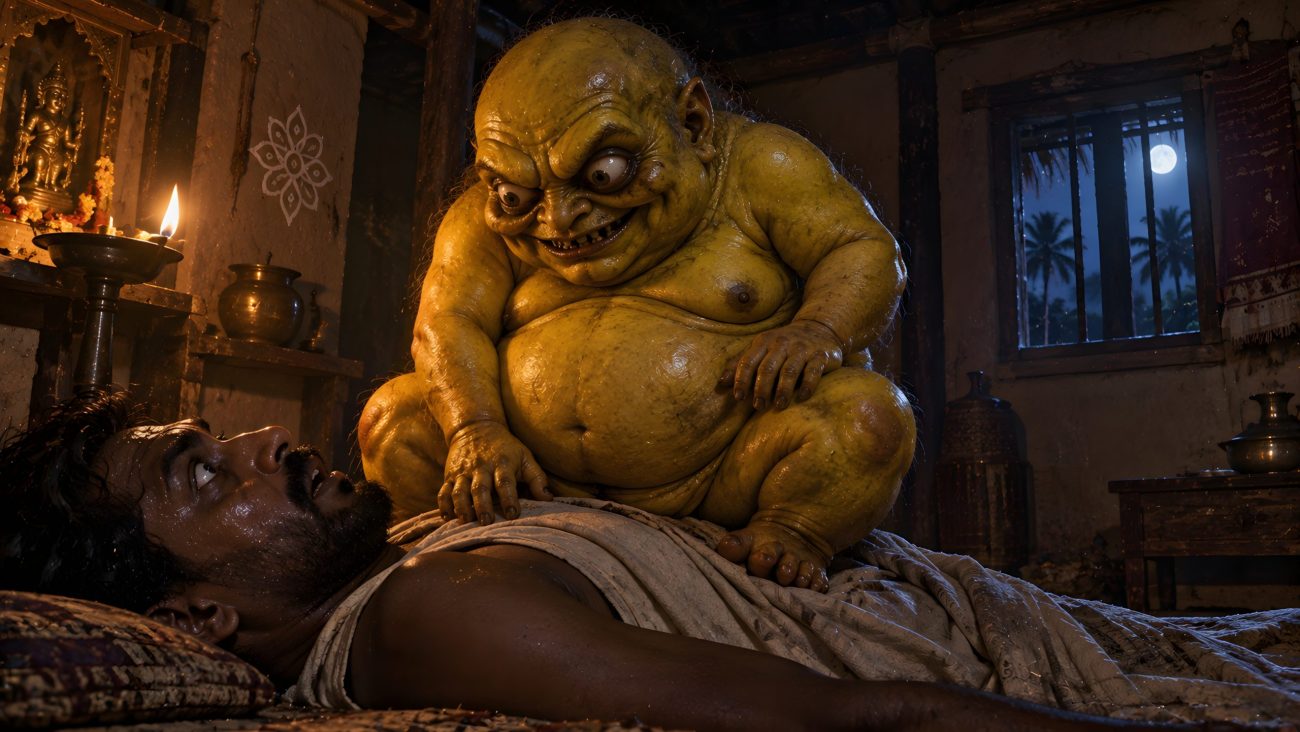
The Alp was believed to approach sleeping people and oppress them during the night. This association is preserved in the German word Alpdruck, literally “elf-oppression,” meaning a nightmare. The Alp could also be associated with illness, including epilepsy.

Medieval German traditions frequently portray elves as beings capable of deceiving or bewildering people. A recurring expression described a person as being deceived by the elves or by the Alp. Elves could also have a seductive aspect, with medieval poetry describing people as being enchanted or bewitched by them.

By the later medieval period, elves had increasingly acquired a threatening and demonic character. A fourteenth-century German prayer known as the Münchener Nachtsegen invokes protection from the Alp, the Trud, and the Mare, asking these beings not to oppress, pinch, ride, or mount the sleeper.

The Alp was therefore closely connected with other Germanic nightmare spirits. Names such as Trud, Mar, Mart, Mahr, Schrat, and Walrider were used for related forms of supernatural beings, while surrounding European traditions preserved similar figures such as the Drude and the Old Hag.

The Alp was also associated with supernatural influence over human beings beyond sleep. In Northern Germany during the early modern period, elves were described as carrying out the evil wishes of witches. Martin Luther himself believed that his mother had been afflicted in this manner.

German traditions also preserved older associations between elves and other supernatural races. Elves could be connected with dwarfs in German heroic literature, particularly figures whose names or characteristics preserved the older idea of elf power.

Thus, the Alp represents an older Germanic conception of the elf as a potentially dangerous supernatural being: a spirit capable of deception, illness, nocturnal oppression, and supernatural influence over humans.


Sources

“Alp (folklore).” Wikipedia: The Free Encyclopedia. Wikimedia Foundation. Accessed September 6, 2026. https://en.wikipedia.org/wiki/Alp_(folklore)

Black Gentleman

Tradition: Swedish Mythology
Alternative Names: Black Gentleman
Category: Demon


The Myth

The Black Gentleman appears as a fine gentleman dressed entirely in black, arriving in a black coach drawn by two black horses. He comes to claim the wicked Lady of Pintorp and take her away for punishment.

The Lady of Pintorp was a cruel noblewoman who abused the people living on her estate. She imprisoned innocent people in underground dungeons, set vicious dogs upon children and beggars, and brutally punished workers who failed to arrive at the appointed time.

One morning, she ordered a farm-hand who had arrived late to cut down the largest oak on the estate and bring it to the castle courtyard before evening. When the man despaired over the impossible task, he encountered an old man in the woods who told him to sit upon the fallen tree. Invisible bearers then carried the tree rapidly to the castle. The Lady recognized that Erik Gyllenstjerna and Svante Banér were somehow helping the farm-hand, but responded with anger rather than remorse.

At that moment the earth shook, and the Black Gentleman arrived at the castle in his black coach. He descended, bowed to the Lady, and ordered her to prepare herself and follow him.

Knowing who he was, the Lady desperately begged for more time. She first requested three years, then three months, three weeks, and finally three days. The Black Gentleman refused every request and granted her only three minutes to put her affairs in order.

She then asked that her chaplain, chamber-maid, and valet accompany her. The Black Gentleman permitted this, and they entered the coach. The horses immediately carried them away with such supernatural speed that the people at the castle saw only a black streak.

After travelling for some time, they arrived at a magnificent castle. The Black Gentleman led the Lady inside, where she removed her costly clothes and put on a coarse coat and wooden shoes. He then combed her hair three times until she could no longer endure it and danced with her three times until she was exhausted.

After the first dance, the Lady gave her golden ring to her valet, but it burned his finger like fire. After the second, she gave her bunch of keys to her chamber-maid, but the keys seared the girl’s hand like red-hot iron.

After the third dance, a trapdoor suddenly opened in the floor. The Lady disappeared through it amid smoke and flames.

The chaplain looked down into the opening, and a spark rose from the depths and struck him in the eye, leaving him blind in that eye for the remainder of his life.

The Black Gentleman then allowed the three servants to return home, but warned them not to look behind them. They entered the coach and travelled along a broad, even road. Eventually, however, the chamber-maid could no longer resist her curiosity and looked back.

Immediately the coach, horses, and road disappeared. The three travellers found themselves in a wild forest, from which it took them three years to find their way back to Pintorp.


Sources

Stroebe, Clara, ed. The Swedish Fairy Book. Translated by Frederick H. Martens, with illustrations by George W. Hood. New York: Frederick A. Stokes Company, 1921. https://www.gutenberg.org/ebooks/37193


Puer

Tradition: Chinese Mythology
Alternative Names: Puer (疟鬼)
Category: Demon


The Myth

Puer is a Chinese supernatural being associated with malaria and other fevers. It was believed to be a demon responsible for causing illness.

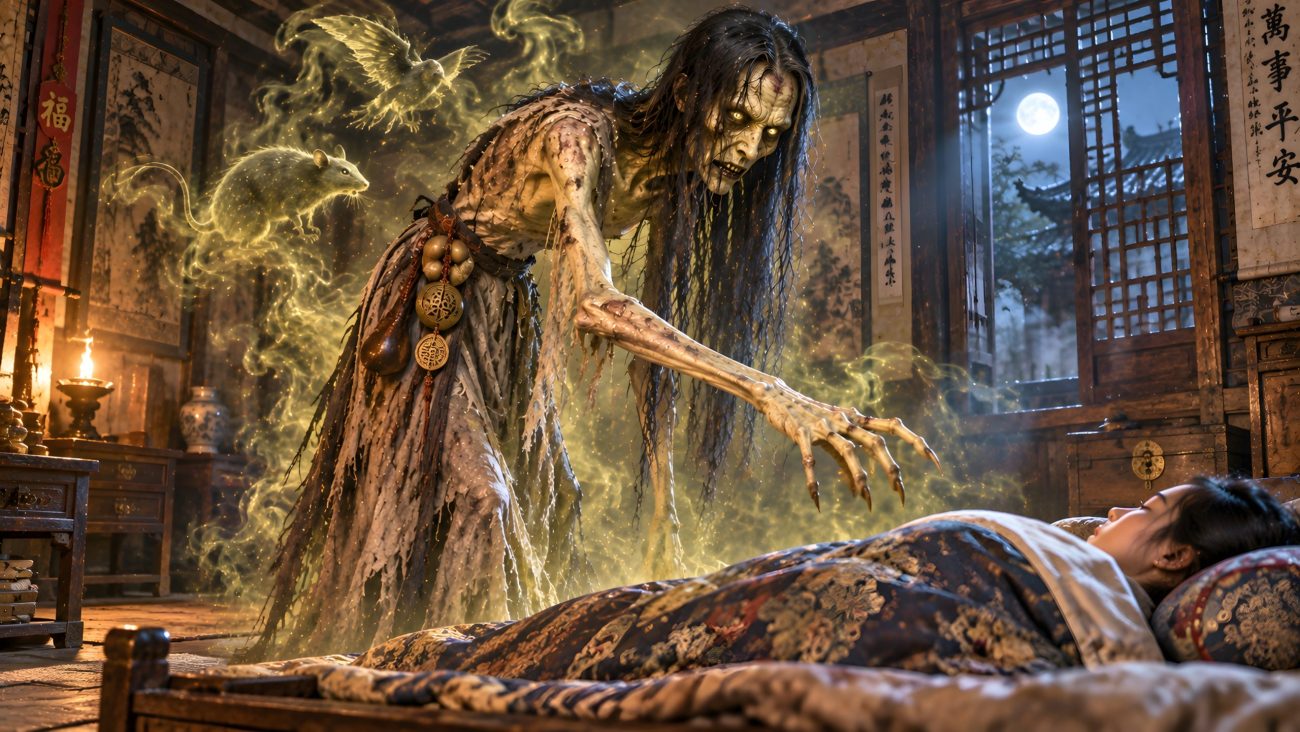
In ancient Chinese accounts, Puer could appear before sleeping people in the form of a small animal, a bird, or a human. It would then approach the person’s body and cause them to fall ill. If the victim tried to drive the creature away, it would gradually grow larger.

Because Puer was associated with disease, people developed various customs intended to prevent it from entering their homes. A common practice was to seek refuge in temples or in other people’s houses before the illness was believed to strike, thereby avoiding the demon.

The Taiping Guangji records a story concerning a person from Jiangxi who was suffering from malaria. He encountered two people who told him that they had been sent to treat his illness.

In Anhui, there was also a custom connected with Puer. Before the local disease season, people would make a paste from soybeans, flour, and water, believing that this mixture could suppress the disease demons and prevent them from spreading illness.

Ancient Chinese medical and literary works likewise associated Puer with recurring fevers and disease. Its appearance and influence were understood through the supernatural framework of illness, with the demon serving as an explanation for the sudden onset of fever and other symptoms.


Sources

“疟鬼 (Nüèguǐ; Malaria Ghost).” Chinese Wikipedia. Wikimedia Foundation. Accessed September 6, 2026. https://zh.wikipedia.org/wiki/%E7%96%9F%E9%AC%BC


Ao Andon

Tradition: Japanese mythology
Alternative Names: Ao Andō, 青行燈
Category: Demon


The Myth

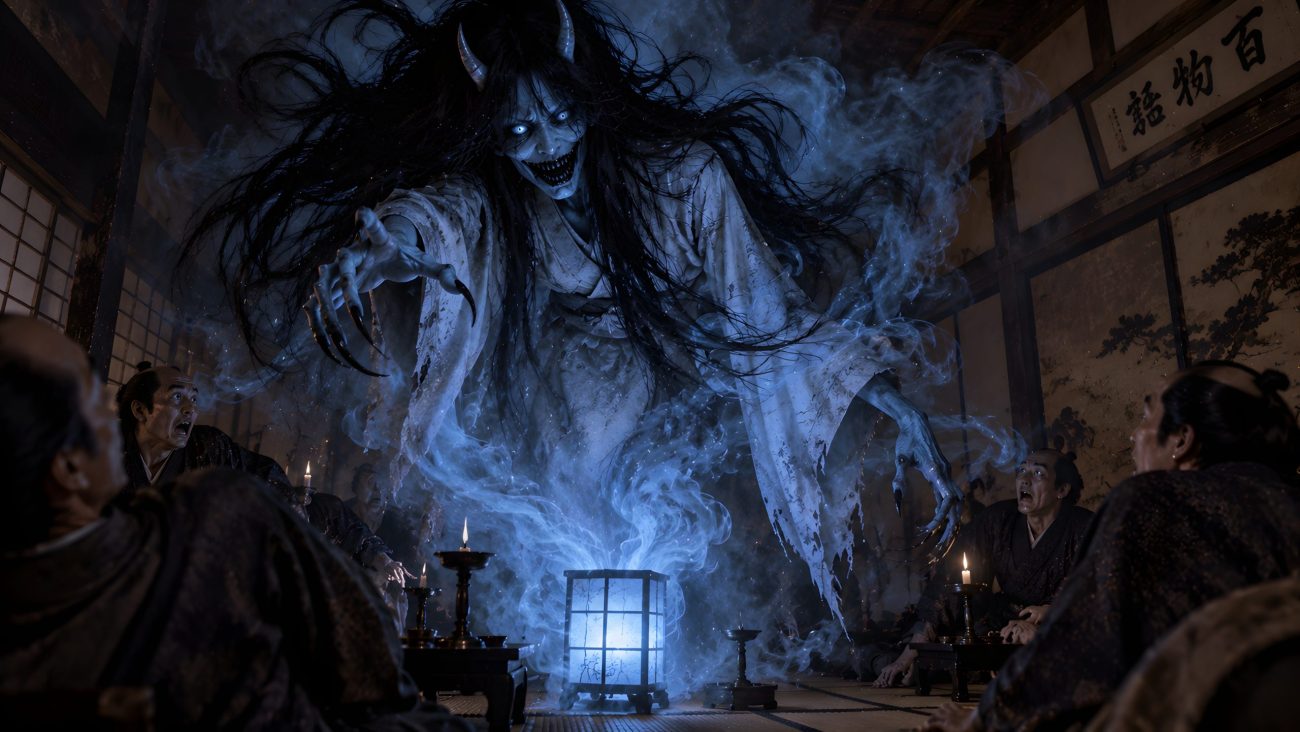
The Ao Andon, meaning “blue lantern,” is a supernatural spirit associated with the Japanese tradition of hyakumonogatari kaidankai, gatherings in which people told one hundred ghost stories. It appears as a demonic woman with long black hair, blue skin, blackened teeth, sharp claws, and horns. She wears a white or blue kimono and emits an eerie blue light.

During the Edo period, hyakumonogatari kaidankai became a popular summertime activity, particularly among the aristocratic classes. Groups gathered together to tell frightening stories in the hope that the fear would provide relief from the intense summer heat.

One hundred candles were placed inside blue paper lanterns called andon. The guests took turns telling increasingly frightening stories about yokai, demons, ghosts, and other supernatural beings. After each story, one candle was extinguished. As the night continued, the room gradually became darker until only the hundredth candle remained, its dim blue light casting long and unsettling shadows.

According to superstition, something terrible would happen when the final candle was extinguished. The accumulated fear of the participants would cause an actual spirit to materialize from the darkness. This spirit was called the Ao Andon.

The Ao Andon was said to emerge from the smoke of the final candle and attack the storytellers. Exactly what happened during this attack was never established. It might slaughter the participants in a horrific finale resembling the stories they had told, or it might simply appear suddenly and give them one final fright before disappearing.

In practice, however, the final story was traditionally never reached. By the time ninety-nine ghost stories had been told, the participants were supposedly too frightened to tell the hundredth. The gatherings therefore ended before the last candle was extinguished and the Ao Andon could appear.

The belief behind the Ao Andon was essentially that speaking about supernatural beings could cause them to appear. By gathering together, telling stories about ghosts and demons, and concentrating their fear upon them, the participants risked bringing the very spirits they discussed into the room.


Sources

“aoandon.” Yokai.com: The Japanese Yokai Encyclopedia. Accessed September 6, 2026. https://yokai.com/aoandon/


Amuku Pey

Tradition: Tamil folklore, Sri Lanka Mythology
Alternative Names: Amuku Pey
Category: Demon


The Myth

Amuku Pey is an evil spirit in Tamil folklore, particularly among the Tamil people of Sri Lanka. It is associated with sleep and is said to press down upon the chests of sleeping people.

The Amuku Pey is a personification of sleep paralysis, appearing at night while a person is asleep and creating the terrifying sensation of pressure upon the chest.


Sources

“Амуку-пей (Amuku Pey).” New Bestiary (Bestiary.us). Accessed September 6, 2026. https://www.bestiary.us/amuku-pei/en


Al Basty

Tradition: Sumerian Mythology, Armenian Mythology
Alternative Names: Al Basty, Al Kardai, Al Karısı, Albastı, Alvasti, Albasdı, Албасты
Category: Demon


The Myth

Al Basty is an ancient female spirit found in folklore across the Caucasus and Turkic-speaking regions. She is associated with guilt and is particularly connected with people whose families have committed bloody crimes that have gone unpunished.

The name is commonly associated with the Turkic words al, meaning “red,” and bastı, meaning “pressure” or “pressing.” The spirit is known under many different names across the region, including Al Karısı in Turkic folklore and Al Basty or Alvasti in various Turkic languages.

In some traditions, Al Basty has been associated with the ancient figure of Lilith. Later traditions connected with Lilith have also been attributed to Al Basty, although the stories vary according to the region.

In Turkic folklore, Al Basty has sometimes been confused with the Mare, the Succubus, and other female spirits said to visit people in their dreams. Unlike these spirits, however, Al Basty is not primarily described as a sexual being. Instead, she is said to visit people with guilty souls, particularly those descended from families responsible for violent crimes that were never punished.

Al Basty is especially feared by women during the period after childbirth. She is believed to haunt women during this vulnerable period and cause severe psychological distress. Traditional postpartum practices lasting forty days were consequently observed as a form of protection and care.

Those visited by Al Basty are said to awaken in an intense fever after suffering her torments. She is also associated with horses, which she is believed to steal during the night. Horses tormented by her are found the following morning sweating and exhausted and unable to work normally for the rest of the day. Because of this association, she is also known as the “red mother.”

In Armenian folklore, a related spirit called Āl appears as a demon of childbirth. She is said to blind unborn children and cause miscarriages and stillbirths to women who have committed crimes that have gone unpunished.

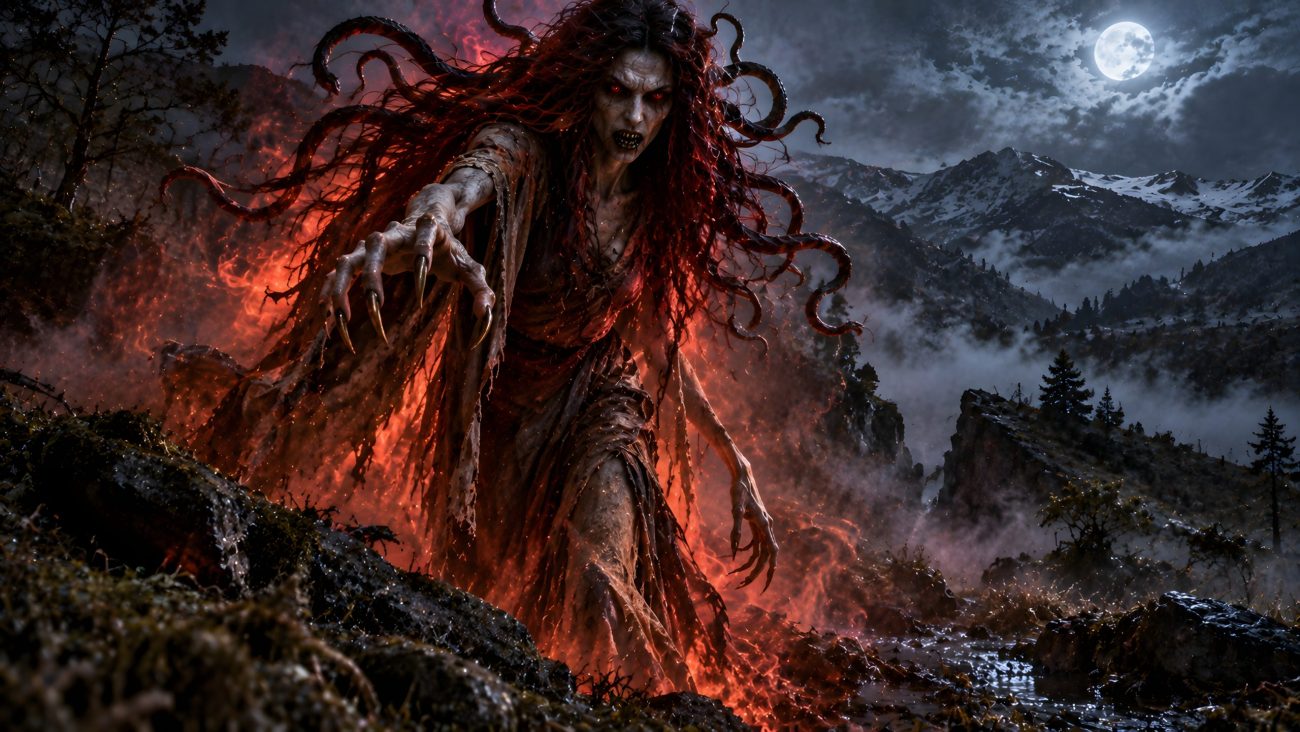
The Armenian Āl appears as a spirit of flame with snake-like hair, brass fingernails, and iron teeth. She hides in damp places and attacks women during childbirth. Similar traditions have also been recorded in Afghanistan.

Thus, the Al Basty tradition encompasses several related forms of a dangerous female spirit, particularly associated with guilt, childbirth, illness, and the consequences of violence left unpunished.


Sources

“Al Basty.” Wikipedia: The Free Encyclopedia. Wikimedia Foundation. Accessed September 6, 2026. https://en.wikipedia.org/wiki/Al_Basty


Nuribotoke

Tradition: Japanese mythology
Alternative Names: Nuribotoke
Category: Demon


The Myth

Nuribotoke is a yokai depicted in Japanese picture scrolls and illustrated collections of supernatural creatures, including Hyakkai Zukan and Toriyama Sekien’s Gazu Hyakki Yagyō (Illustrated Night Parade of One Hundred Demons).

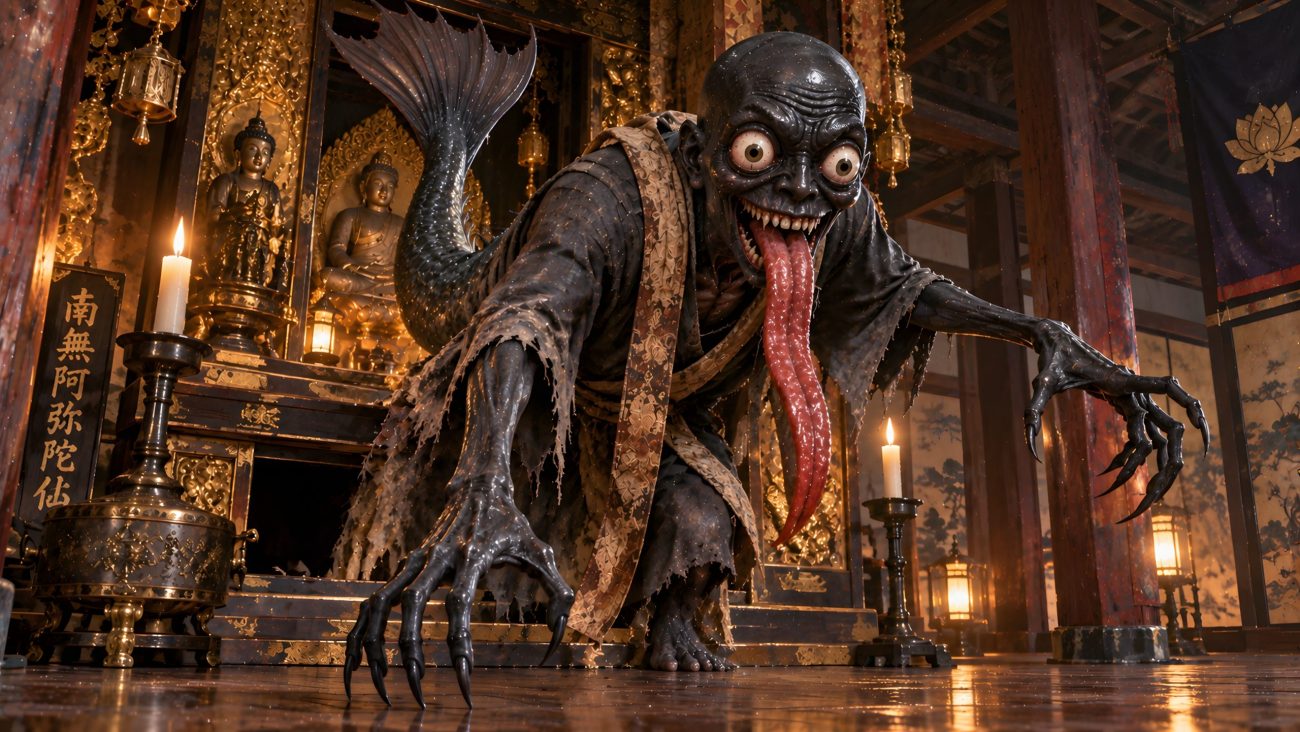
The creature is generally depicted as a completely black Buddhist monk with bulging eyes and a strange appendage resembling a fish’s tail extending from its back.

In Toriyama Sekien’s Gazu Hyakki Yagyō, the Nuribotoke appears emerging from inside a Buddhist altar. Its body is black, but unlike some other depictions, it does not have a tail on its back.

No accompanying text or explanation survives with the traditional illustrations, so there are no specific characteristics, legends, or stories associated with the Nuribotoke in these sources. In later children’s books dealing with yokai, it is sometimes described as suddenly appearing from a Buddhist altar to surprise people.


Sources

Takahashi, Toshihiro. “塗仏 [ぬりぼとけ] (Nuribotoke).” 新版TYZ 妖怪図鑑 (New TYZ Yokai Encyclopedia). October 25, 2009. https://tyz-yokai.blog.jp/archives/1010652662.html


Mill Devil

Tradition: Czech Mythology
Alternative names: Mill Devil
Category: Demon


The Myth

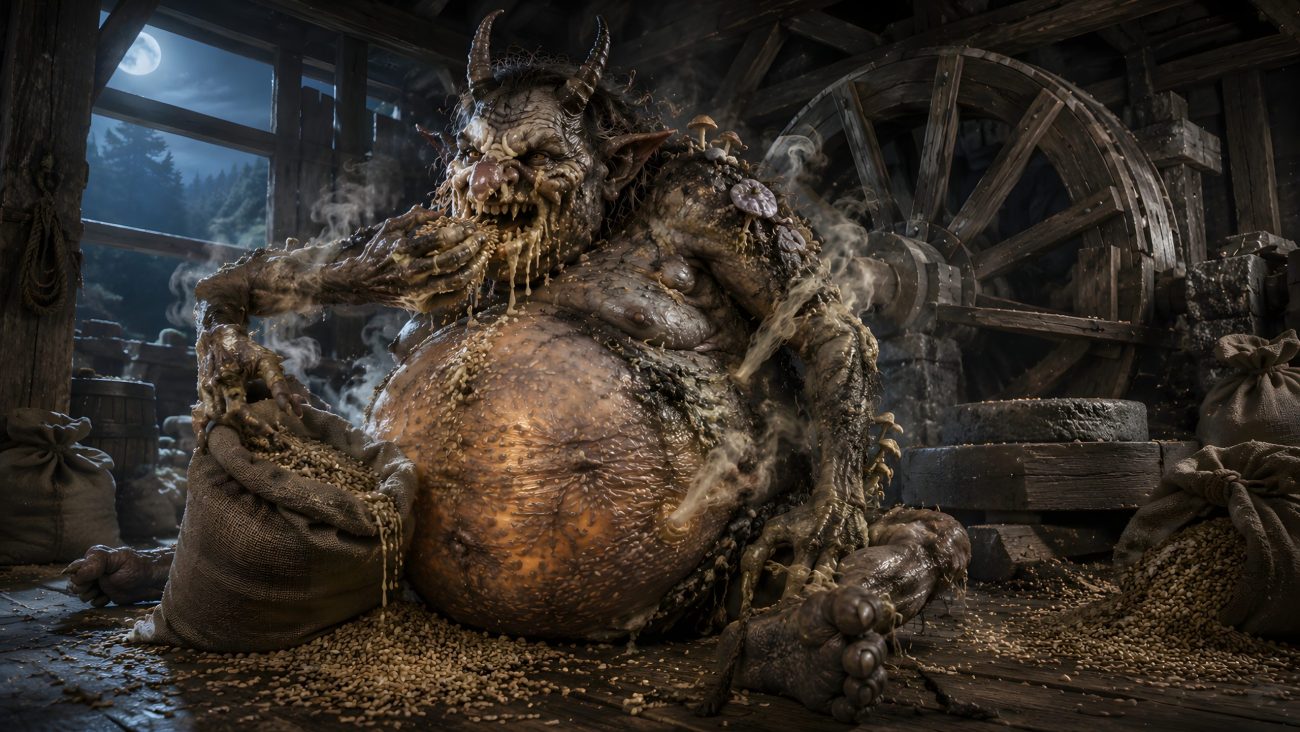
The Mill Devil is a group of hellish spirits summoned through a magical book and associated with an old mill near Langendorf. They appear as numerous devils with glowing eyes and licking tongues, capable of moving with great speed and performing impossible tasks.

The devils have a terrifying appearance, with glowing eyes and tongues that lick from their mouths. They appear in large numbers and are violent and threatening, seeking to strangle those who summon them.

Behind Langendorf stood an old mill whose miller possessed a grey book that allowed him to summon the forces of Hell. One Holy Day, the miller’s children were left alone at home. While rummaging through old things, they discovered the mysterious book. They opened it and began reading the words inside.

Suddenly, the entire mill filled with devils. They raged through the building with glowing eyes and licking tongues, threatening to strangle the children.

At that moment, the miller was sitting in church. During High Mass, he suddenly became restless and felt that something was wrong. He rose from his place and hurried home.

The devils were already waiting for him. They demanded that he quickly tell them what he wanted them to do. The miller tore the fur from his body and threw it before them, ordering them to count every hair in it.

The devils immediately fell upon the fur and began counting. While they were occupied, the miller ran into the mill and poured a sack of grain into the stream.

The devils soon finished counting and announced that the fur contained seven hairs. They demanded another task, threatening to tear the miller apart if he did not give them one quickly.

The miller ordered them to retrieve every grain he had thrown into the stream. The devils fished the grains from the water and returned, again demanding another task.

The miller then gave them an impossible command: they were to remove all the ice from the pond, carry it to the yeast stone, set it alight, and bring him the ashes.

Enraged by the miller’s mockery and impossible demands, the devils finally abandoned him and returned to Hell. Before leaving, however, they took the mill wheel with them as revenge.


Sources

Watzlik, Hans. “Schnelle Knechte.” In Böhmerwald-Sagen. Budweis: Böhmerwalder Dorfbücher, 1921, Heft 5. Reproduced by SAGEN.at. https://www.sagen.at/texte/sagen/tschechien/watzlik/schnelleknechte.html


Gesindel

Tradition: Czech Mythology
Alternative names: Gesindel
Category: Demon


The Myth

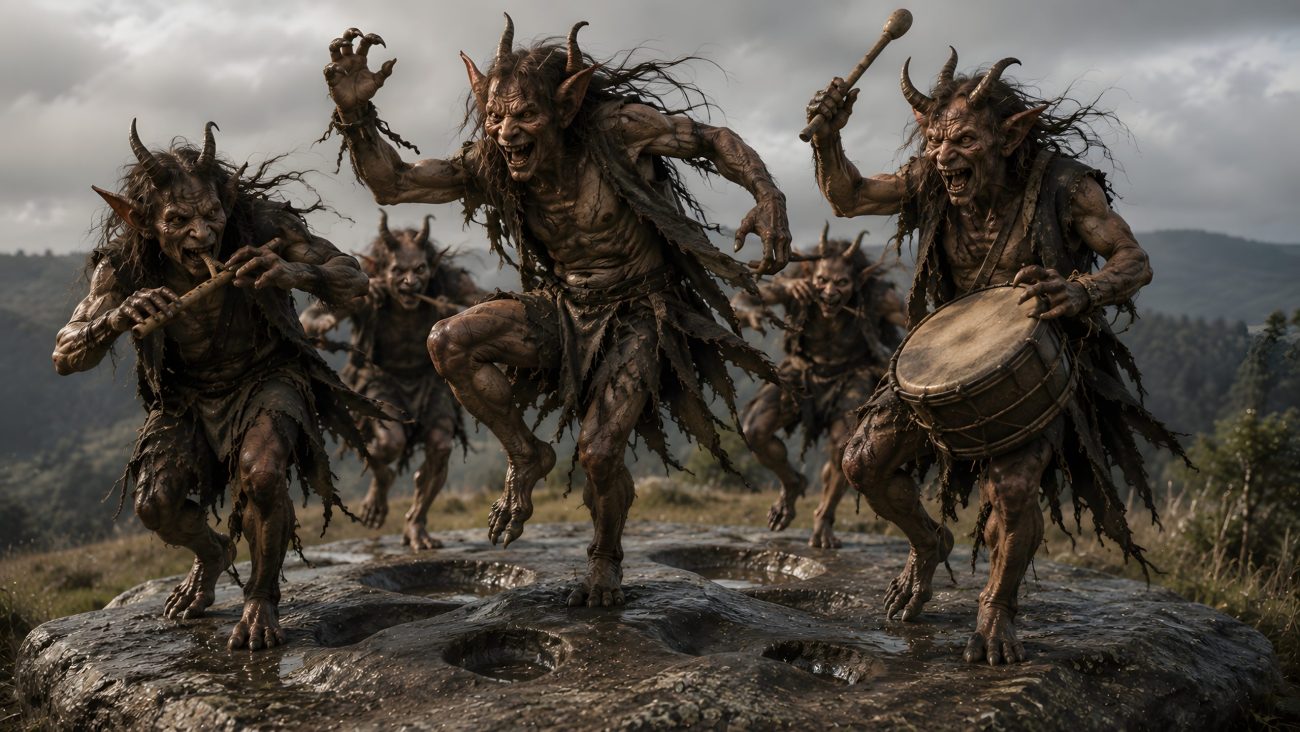
The Gesindel is a hellish rabble of supernatural beings from the folklore of the Bohemian Forest. They appear as groups of devil-like figures associated with strange gatherings, card playing, and supernatural music.

The Gesindel has no single fixed appearance. They are described as groups of devils, sometimes appearing as several figures gathered together in isolated places.

Near Rederhof in Eisenstraß lies a wide, flat stone with hoof-shaped impressions in it. According to local tradition, Satan was said to dance upon this stone. Because of this, the farmers avoided the stone and would not rest upon it.

Once, Martin passed by the stone and saw four figures sitting upon it. They appeared to be nodding devils and were playing cards. Martin would have liked to know which card was the trump, but he did not dare ask.

The hellish rabble also haunted the Huisriegel. In broad daylight, they would drum upon the ground, blow their instruments like a whole band of musicians, and play so loudly that the cattle in the pasture became agitated. The shepherd himself was frightened so badly that he fled over all nine mountains.


Sources

Watzlik, Hans. “Gesindel.” In Böhmerwald-Sagen. Budweis: Böhmerwalder Dorfbücher, 1921, Heft 5. Reproduced by SAGEN.at. https://www.sagen.at/texte/sagen/tschechien/watzlik/gesindel.html


Trud

Tradition: Czech Mythology
Alternative names: –
Category: Demon


The Myth

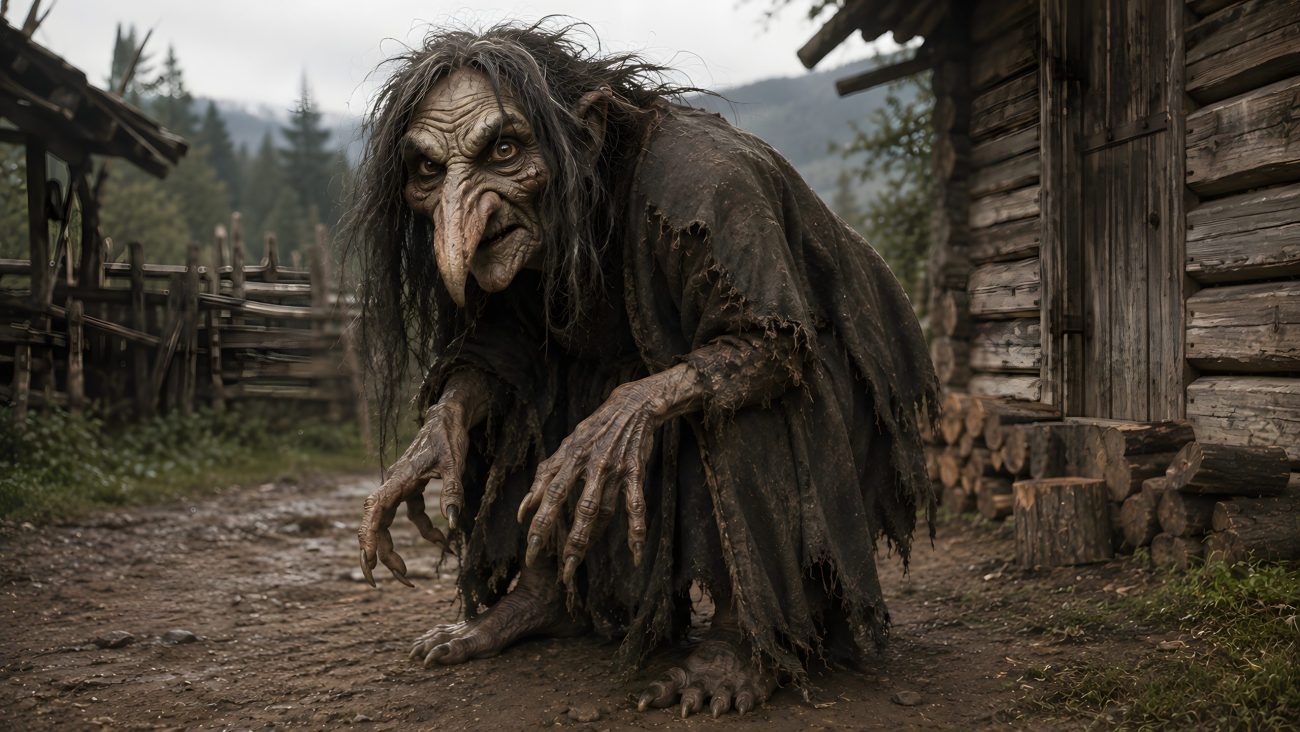
The Trud is a frightening supernatural being from the folklore of the Bohemian Forest. It is associated with nighttime attacks, borrowing objects, and a strange form of possession. The Trud can appear as a woman or an old, wrinkled female figure, and it is capable of becoming extremely heavy when it sits upon a sleeping person.

A musician from St. Catherine’s Church was once visited by a Trud during the night. After dealing with it, he apparently drove it away and warned it to return the following day for matches. Another story explains why people were afraid to lend household objects: a musician’s wife was about to borrow a hoe from a neighbor when her cousin warned her not to go. The neighbor had supposedly trapped the Trud the previous night and was waiting for someone to come to the house and borrow something. The woman immediately returned home.

The Trud could also attack sleeping people. A blacksmith’s apprentice once felt the Trud settle upon his chest while he slept. It was enormously heavy, making it difficult for him to breathe. He eventually grabbed a handful of threshed straw, and the weight immediately became lighter. He jumped from his bed and trapped the straw in a vise.

When morning came, the blacksmith discovered an old, wrinkled woman in his workshop, with her hair caught in the vise. She begged him to release her. He opened the gate and drove her away by beating her.

A miller from High Art described another encounter with the Trud. He heard it approaching while making a constant whirring sound and crying out. It then jumped onto him, sat on his chest, and seemed to draw something from his body. He described the creature as having a round, pig-like beak and claimed that the Trud consumed the vitality or substance of its victims.


Sources

Watzlik, Hans. “Die Trud.” In Böhmerwald-Sagen. Budweis: Böhmerwalder Dorfbücher, 1921, Heft 5. Reproduced by SAGEN.at. https://www.sagen.at/texte/sagen/tschechien/watzlik/dietrud.html