Mill Devil

Tradition: Czech Mythology
Alternative names: Mill Devil
Category: Demon


The Myth

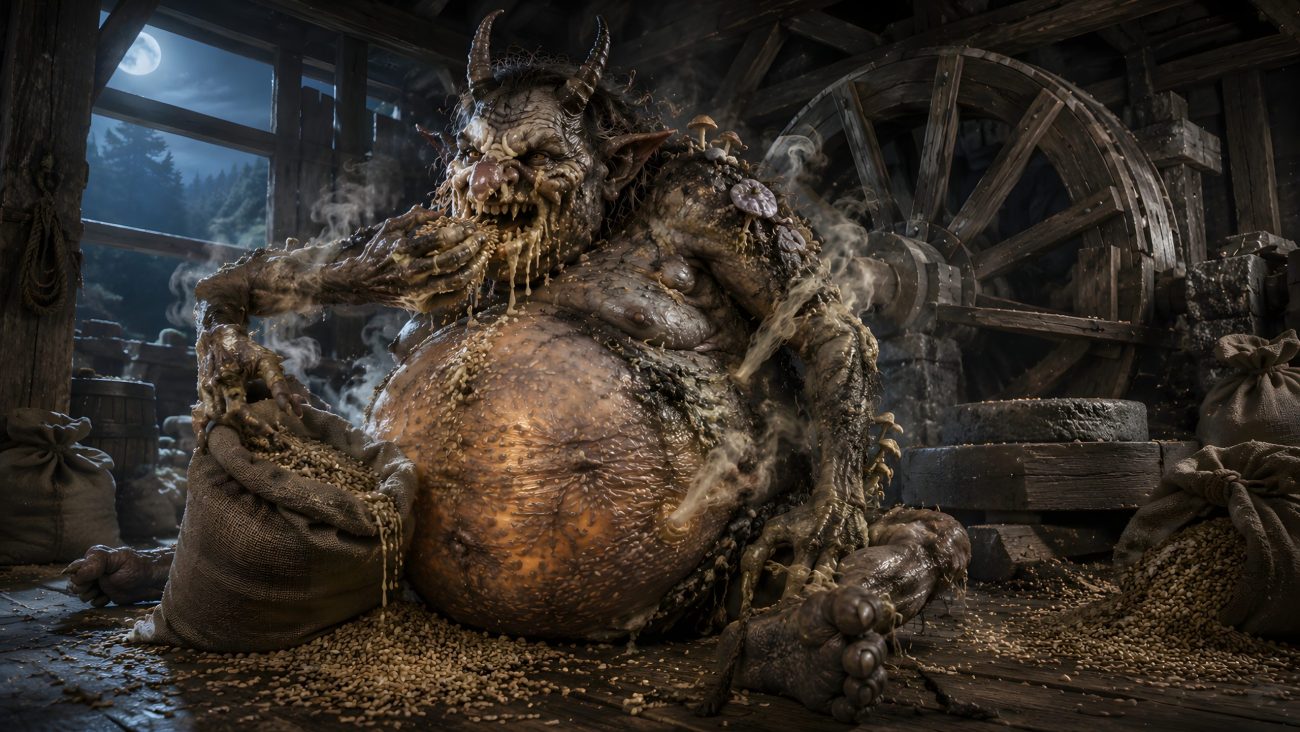
The Mill Devil is a group of hellish spirits summoned through a magical book and associated with an old mill near Langendorf. They appear as numerous devils with glowing eyes and licking tongues, capable of moving with great speed and performing impossible tasks.

The devils have a terrifying appearance, with glowing eyes and tongues that lick from their mouths. They appear in large numbers and are violent and threatening, seeking to strangle those who summon them.

Behind Langendorf stood an old mill whose miller possessed a grey book that allowed him to summon the forces of Hell. One Holy Day, the miller’s children were left alone at home. While rummaging through old things, they discovered the mysterious book. They opened it and began reading the words inside.

Suddenly, the entire mill filled with devils. They raged through the building with glowing eyes and licking tongues, threatening to strangle the children.

At that moment, the miller was sitting in church. During High Mass, he suddenly became restless and felt that something was wrong. He rose from his place and hurried home.

The devils were already waiting for him. They demanded that he quickly tell them what he wanted them to do. The miller tore the fur from his body and threw it before them, ordering them to count every hair in it.

The devils immediately fell upon the fur and began counting. While they were occupied, the miller ran into the mill and poured a sack of grain into the stream.

The devils soon finished counting and announced that the fur contained seven hairs. They demanded another task, threatening to tear the miller apart if he did not give them one quickly.

The miller ordered them to retrieve every grain he had thrown into the stream. The devils fished the grains from the water and returned, again demanding another task.

The miller then gave them an impossible command: they were to remove all the ice from the pond, carry it to the yeast stone, set it alight, and bring him the ashes.

Enraged by the miller’s mockery and impossible demands, the devils finally abandoned him and returned to Hell. Before leaving, however, they took the mill wheel with them as revenge.


Sources

Watzlik, Hans. “Schnelle Knechte.” In Böhmerwald-Sagen. Budweis: Böhmerwalder Dorfbücher, 1921, Heft 5. Reproduced by SAGEN.at. https://www.sagen.at/texte/sagen/tschechien/watzlik/schnelleknechte.html
Gesindel

Tradition: Czech Mythology
Alternative names: Gesindel
Category: Demon


The Myth

The Gesindel is a hellish rabble of supernatural beings from the folklore of the Bohemian Forest. They appear as groups of devil-like figures associated with strange gatherings, card playing, and supernatural music.

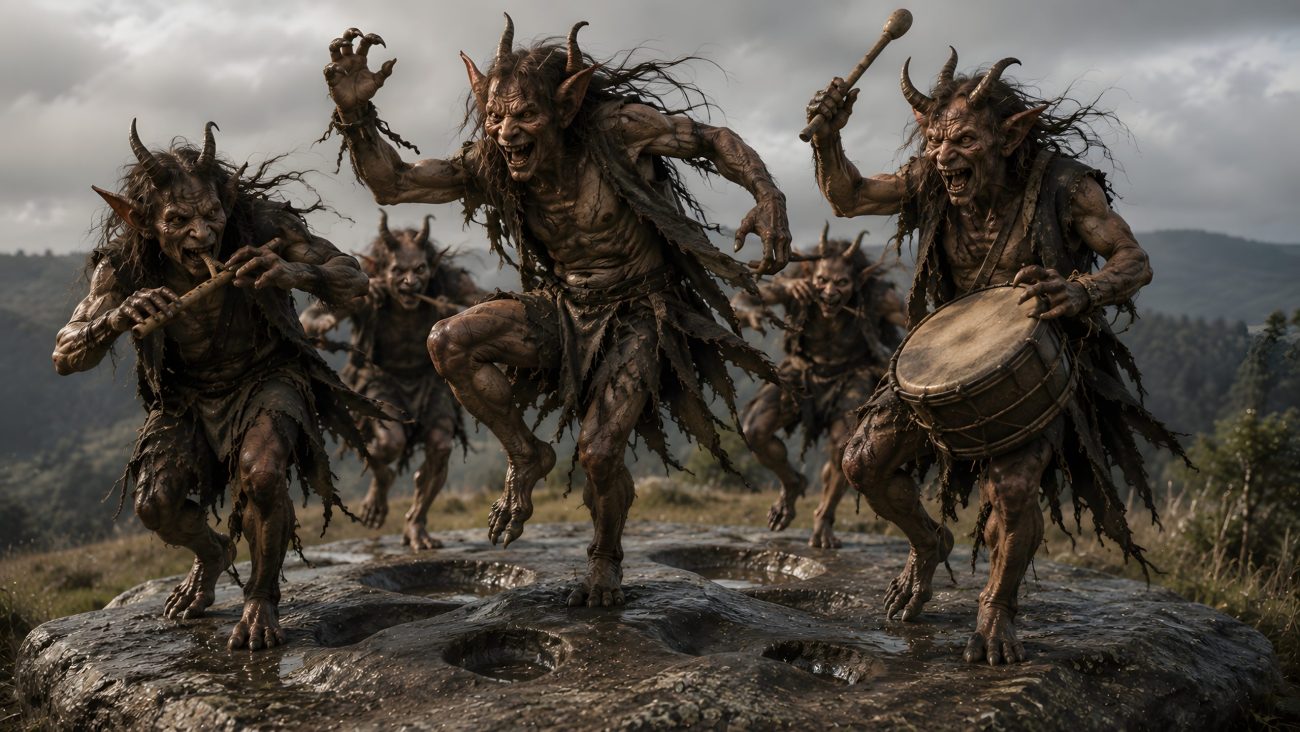
The Gesindel has no single fixed appearance. They are described as groups of devils, sometimes appearing as several figures gathered together in isolated places.

Near Rederhof in Eisenstraß lies a wide, flat stone with hoof-shaped impressions in it. According to local tradition, Satan was said to dance upon this stone. Because of this, the farmers avoided the stone and would not rest upon it.

Once, Martin passed by the stone and saw four figures sitting upon it. They appeared to be nodding devils and were playing cards. Martin would have liked to know which card was the trump, but he did not dare ask.

The hellish rabble also haunted the Huisriegel. In broad daylight, they would drum upon the ground, blow their instruments like a whole band of musicians, and play so loudly that the cattle in the pasture became agitated. The shepherd himself was frightened so badly that he fled over all nine mountains.


Sources

Watzlik, Hans. “Gesindel.” In Böhmerwald-Sagen. Budweis: Böhmerwalder Dorfbücher, 1921, Heft 5. Reproduced by SAGEN.at. https://www.sagen.at/texte/sagen/tschechien/watzlik/gesindel.html


Trud

Tradition: Czech Mythology
Alternative names: –
Category: Demon


The Myth

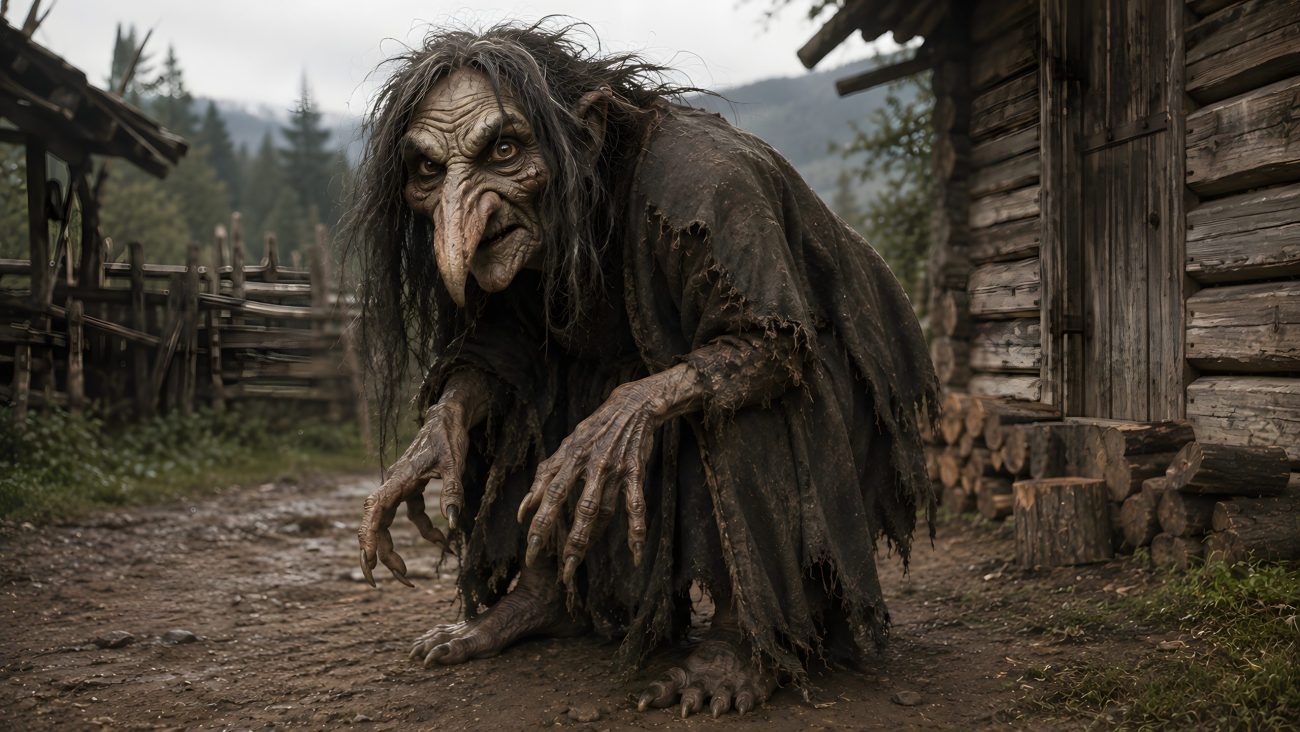
The Trud is a frightening supernatural being from the folklore of the Bohemian Forest. It is associated with nighttime attacks, borrowing objects, and a strange form of possession. The Trud can appear as a woman or an old, wrinkled female figure, and it is capable of becoming extremely heavy when it sits upon a sleeping person.

A musician from St. Catherine’s Church was once visited by a Trud during the night. After dealing with it, he apparently drove it away and warned it to return the following day for matches. Another story explains why people were afraid to lend household objects: a musician’s wife was about to borrow a hoe from a neighbor when her cousin warned her not to go. The neighbor had supposedly trapped the Trud the previous night and was waiting for someone to come to the house and borrow something. The woman immediately returned home.

The Trud could also attack sleeping people. A blacksmith’s apprentice once felt the Trud settle upon his chest while he slept. It was enormously heavy, making it difficult for him to breathe. He eventually grabbed a handful of threshed straw, and the weight immediately became lighter. He jumped from his bed and trapped the straw in a vise.

When morning came, the blacksmith discovered an old, wrinkled woman in his workshop, with her hair caught in the vise. She begged him to release her. He opened the gate and drove her away by beating her.

A miller from High Art described another encounter with the Trud. He heard it approaching while making a constant whirring sound and crying out. It then jumped onto him, sat on his chest, and seemed to draw something from his body. He described the creature as having a round, pig-like beak and claimed that the Trud consumed the vitality or substance of its victims.


Sources

Watzlik, Hans. “Die Trud.” In Böhmerwald-Sagen. Budweis: Böhmerwalder Dorfbücher, 1921, Heft 5. Reproduced by SAGEN.at. https://www.sagen.at/texte/sagen/tschechien/watzlik/dietrud.html


Ravenmill Demon

Tradition / Region: Czech Mythology
Alternate Names: Demon of the Rabenmühle
Category: Demon


The Myth

The Ravenmill Demon is associated with the infamous Rabenmühle, a mill feared by locals for its connection to dark forces and witchcraft. The miller himself was said to be deceitful and corrupt, while his wife was a practicing witch who cursed nearby farmers and their livestock if they refused to use the mill.

Because of its sinister reputation, travelers would make the sign of the cross when passing the mill, fearing the presence of evil forces tied to it.

The true horror revealed itself through the miller’s three daughters, who were described as even more wicked than their parents. One night, after a gathering, they swore that they would dance no matter what—even if it meant dancing with the devil.

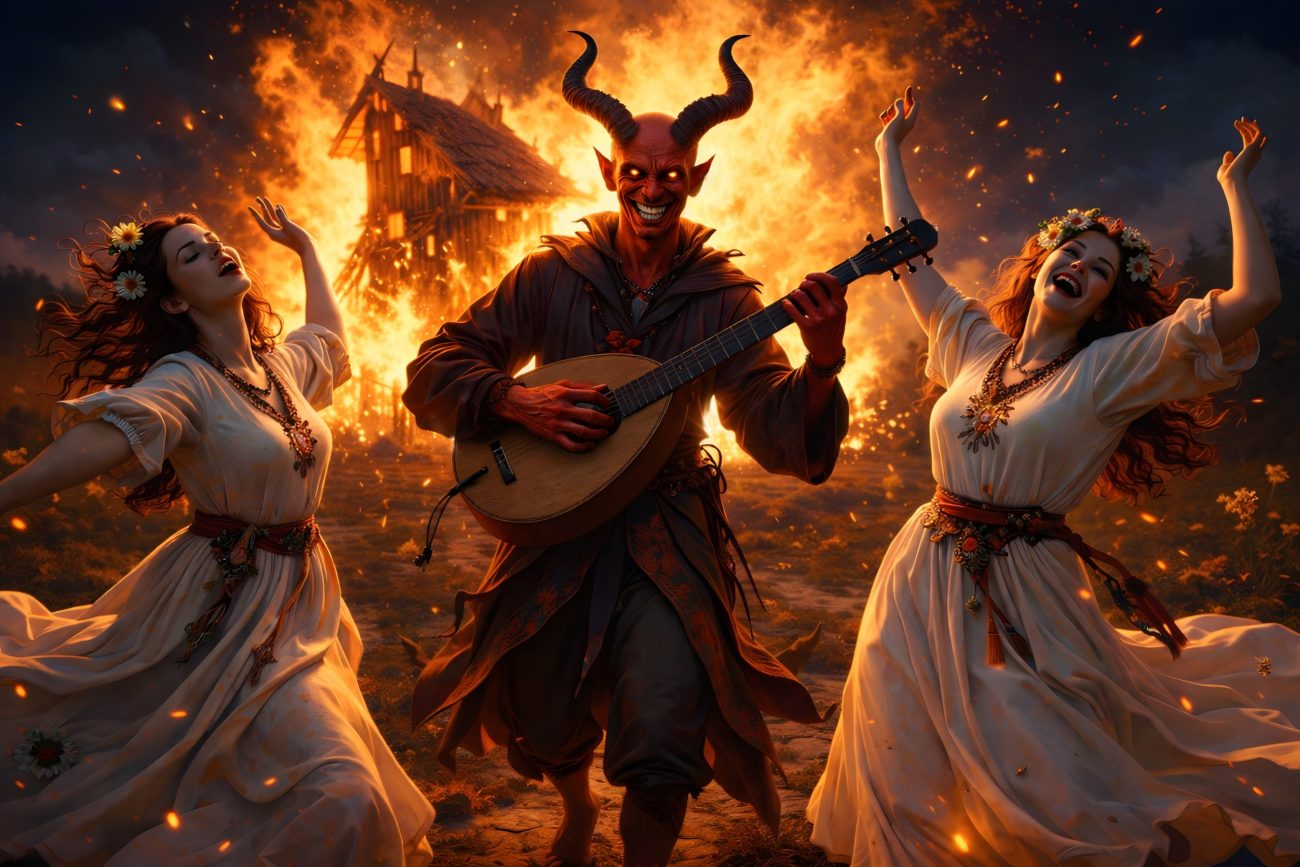
Soon after, mysterious strangers arrived, appearing as elegant musicians and noble men adorned with gold. They began dancing with the daughters, at first slowly and gracefully, but the dance quickly turned wild and unnatural.

As the music grew shrill and disturbing, the dancers revealed their true forms—horns sprouted from their heads, and their feet transformed into hooves. These were no humans, but demonic beings.

The dance reached a frenzy until suddenly the demons carried the daughters away into the air. At that very moment, the Ravenmill burst into flames and vanished, as if consumed by infernal forces.

The Ravenmill Demon represents a classic motif in Central European folklore: the devil answering reckless invitations. The daughters’ oath opened the door, and the demons came not merely to dance—but to claim what had been offered.


Sources

sagen.at contributors. (n.d.). Die Rabenmühle. In sagen.at, from https://www.sagen.at/texte/sagen/tschechien/watzlik/rabenmuehle.html