Tradition: Sumerian Mythology, Armenian Mythology
Alternative Names: Al Basty, Al Kardai, Al Karısı, Albastı, Alvasti, Albasdı, Албасты
Category: Demon
The Myth
Al Basty is an ancient female spirit found in folklore across the Caucasus and Turkic-speaking regions. She is associated with guilt and is particularly connected with people whose families have committed bloody crimes that have gone unpunished.
The name is commonly associated with the Turkic words al, meaning “red,” and bastı, meaning “pressure” or “pressing.” The spirit is known under many different names across the region, including Al Karısı in Turkic folklore and Al Basty or Alvasti in various Turkic languages.
In some traditions, Al Basty has been associated with the ancient figure of Lilith. Later traditions connected with Lilith have also been attributed to Al Basty, although the stories vary according to the region.
In Turkic folklore, Al Basty has sometimes been confused with the Mare, the Succubus, and other female spirits said to visit people in their dreams. Unlike these spirits, however, Al Basty is not primarily described as a sexual being. Instead, she is said to visit people with guilty souls, particularly those descended from families responsible for violent crimes that were never punished.
Al Basty is especially feared by women during the period after childbirth. She is believed to haunt women during this vulnerable period and cause severe psychological distress. Traditional postpartum practices lasting forty days were consequently observed as a form of protection and care.
Those visited by Al Basty are said to awaken in an intense fever after suffering her torments. She is also associated with horses, which she is believed to steal during the night. Horses tormented by her are found the following morning sweating and exhausted and unable to work normally for the rest of the day. Because of this association, she is also known as the “red mother.”
In Armenian folklore, a related spirit called Āl appears as a demon of childbirth. She is said to blind unborn children and cause miscarriages and stillbirths to women who have committed crimes that have gone unpunished.
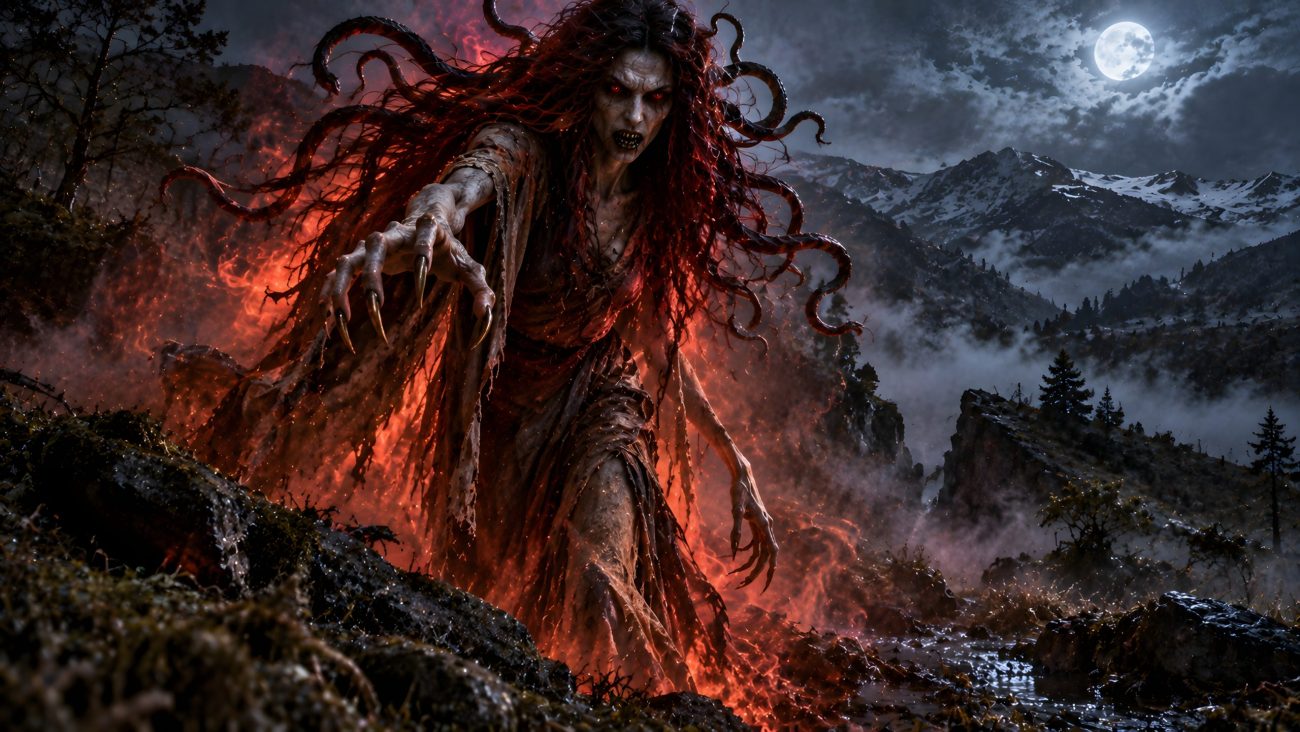
The Armenian Āl appears as a spirit of flame with snake-like hair, brass fingernails, and iron teeth. She hides in damp places and attacks women during childbirth. Similar traditions have also been recorded in Afghanistan.
Thus, the Al Basty tradition encompasses several related forms of a dangerous female spirit, particularly associated with guilt, childbirth, illness, and the consequences of violence left unpunished.
Sources
“Al Basty.” Wikipedia: The Free Encyclopedia. Wikimedia Foundation. Accessed September 6, 2026. https://en.wikipedia.org/wiki/Al_Basty