Krampus

Tradition: German Mythology
Alternative Names: Krampus, Krampusnacht Figure
Category: Demon


The Myth

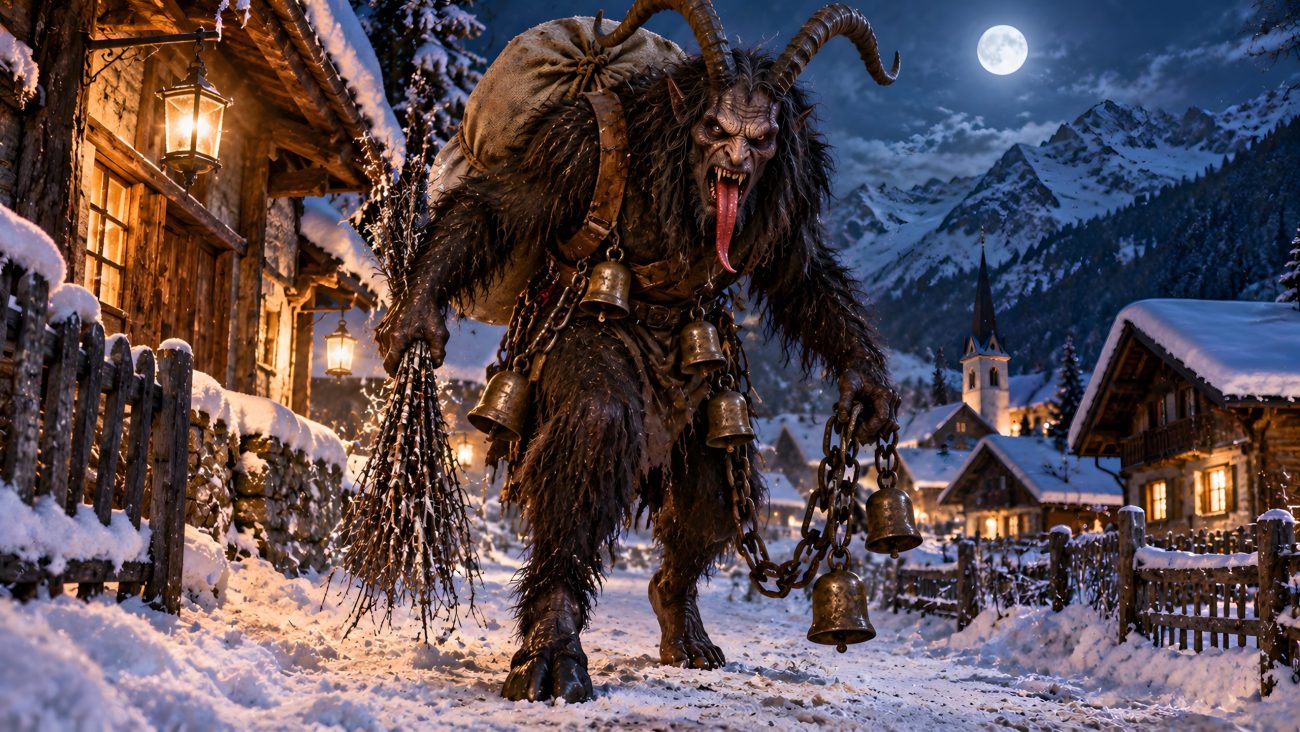
Krampus is a hairy, horned creature with black or brown fur, fangs, and a long pointed tongue. He has goat-like cloven hooves, sometimes depicted with one human-like foot and one goat’s foot. He carries heavy chains, often with bells attached, and a bundle of birch branches used to beat misbehaving children. He may also carry a sack or basket on his back.

On the night of 5 December, Krampus travels with Saint Nicholas as they visit children. Saint Nicholas rewards children who have behaved well with small gifts, while Krampus punishes those who have behaved badly. He lashes them with his birch branches and frightens them.

Particularly wicked children may be seized by Krampus and placed into his sack. In some traditions, he carries them away to drown them, eat them, or take them to Hell.

Krampus is the frightening companion of Saint Nicholas, dealing with the children whom the saint himself does not punish. He appears during the winter celebrations surrounding Saint Nicholas and is especially associated with Krampusnacht and the frightening processions known as Krampuslauf.


Sources

“Krampus.” Wikipedia: The Free Encyclopedia. Wikimedia Foundation. Accessed September 12, 2026. https://en.wikipedia.org/wiki/Krampus


Drude

Tradition: Germanic mythology
Alternative Names: Drude, Trude, Druden
Category: Demon


The Myth

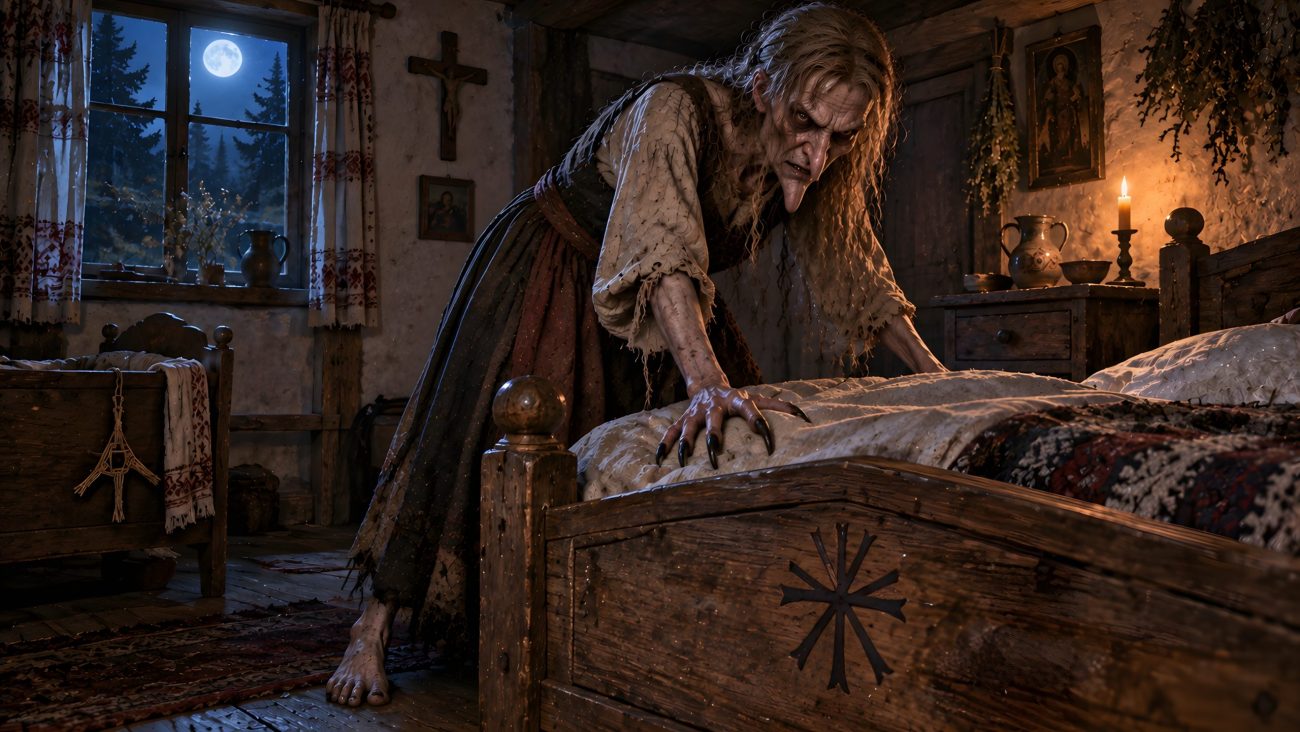
The Drude is a malevolent female nocturnal spirit, particularly associated with southern Germany. She is a kind of Alp or witch-hag who torments people in their sleep and causes nightmares known as Alpdruck, the sensation of being pressed down by a supernatural being.

The Drude is capable of changing her size. She may become small enough to enter a house as a tiny creature, or even appear in the form of a butterfly. At other times she can grow into a giantess, leaving enormous footprints impressed upon stone. In some traditions, it is not the physical body of the witch that attacks people, but her spirit, which leaves her body during the night and travels to torment sleeping victims.

A person oppressed by a Drude could attempt to drive her away in several ways. Grabbing an object could force the Drude to beg for its return. Throwing a pillow at her was believed to repel her, while pronouncing a holy name could frighten her away. In Tyrolean folklore, placing a flax-threshing comb on the chest with its spikes pointing upward was believed to deter the Drude and prevent her from returning.

The Drude was also associated with protective charms. The Drudenfuß, or “Drude’s foot,” was a magical symbol identified with either a pentagram or hexagram. It was placed on houses, stables, gates, cradles, and beds to protect people and animals from the Drude and other supernatural beings. In some regions, a fir-wood Drudenfuß was placed inside a baby’s cradle because the Trude was believed to press down upon infants and prevent them from crying.

Another protective object was the Drudenstein, or “Drude stone.” These were often naturally perforated stones, especially smooth stones shaped by rivers. A ribbon could be threaded through the hole and the stone hung inside a house, beside a cradle, or on the bars of a stable window. Such stones were believed to protect against the Drude, witches, nightmares, Alps, and other harmful spirits.

In southern German folklore, certain stones or landmarks were also known as Trudenstein. One tradition held that these were places where female spirits gathered to decide which humans they would torment. A Bavarian legend tells that the Druden once attempted to place a particular stone at a farmstead, but abandoned it when a rooster crowed.


Sources

“Drude.” Wikipedia: The Free Encyclopedia. Wikimedia Foundation. Accessed September 10, 2026. https://en.wikipedia.org/wiki/Drude


Myrlyava

Tradition: Sorbian Mythology, German Mythology
Alternative Names: Marawa, Myrlata, Myrlawa, Marava, Myrljata
Category: Demon


The Myth

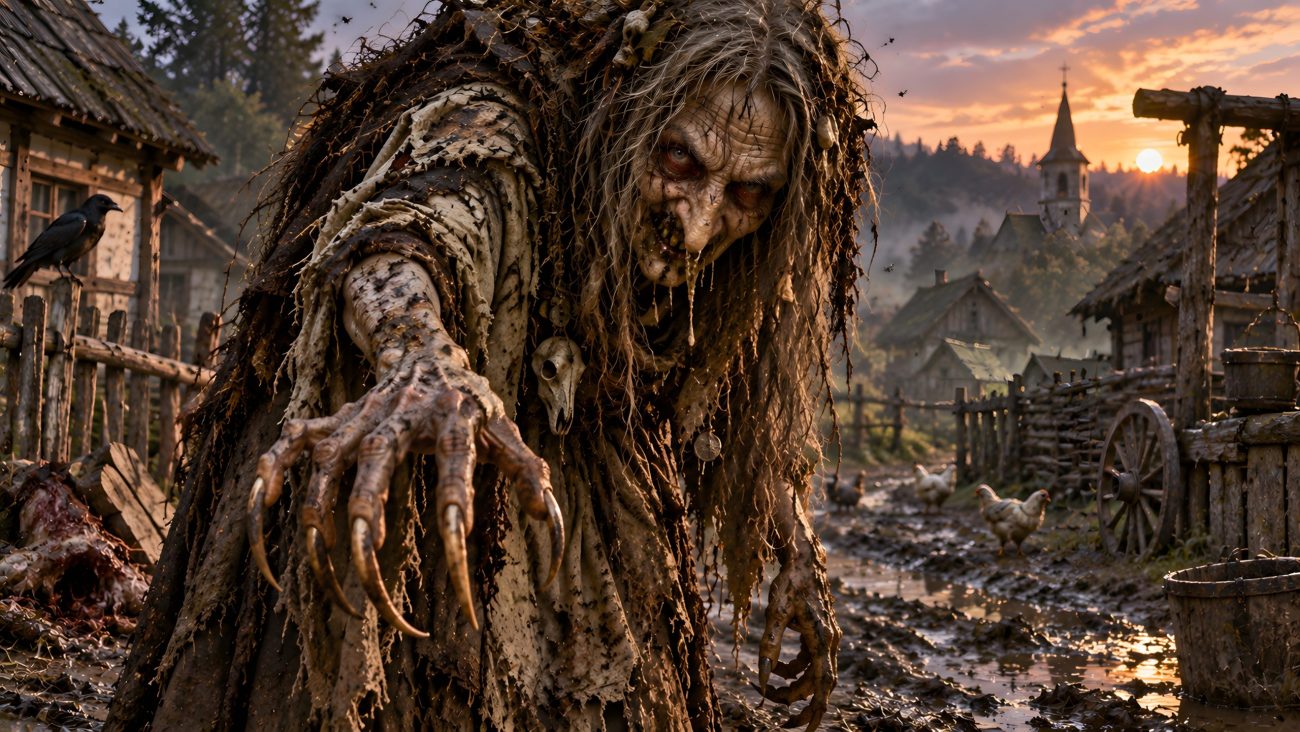
Myrlyava is an evil demoness from Upper Sorbian folklore who appears as a repulsive, ugly, and perpetually dirty woman.

She was rarely seen, and nobody knew where she came from, where she lived, or what she fed on. Her mysterious nature made her a frightening figure in local folklore.

In Müllrose, in northern Upper Lusatia, people had a saying about a woman who had been working for a long time and was constantly busy with her work. They would say:

“She must be an old Myrlyava.”

The name was therefore used to describe a woman who was regarded as particularly unpleasant or unattractive.


Sources

“Мырлява (Myrlawa).” New Bestiary (Bestiary.us). Accessed September 7, 2026. https://www.bestiary.us/Myrlyava


Alp

Tradition: German Mythology
Alternative Names: Alpe, Alpen, Trud, Mar, Mart, Mahr, Schrat, Walrider
Category: Demon


The Myth

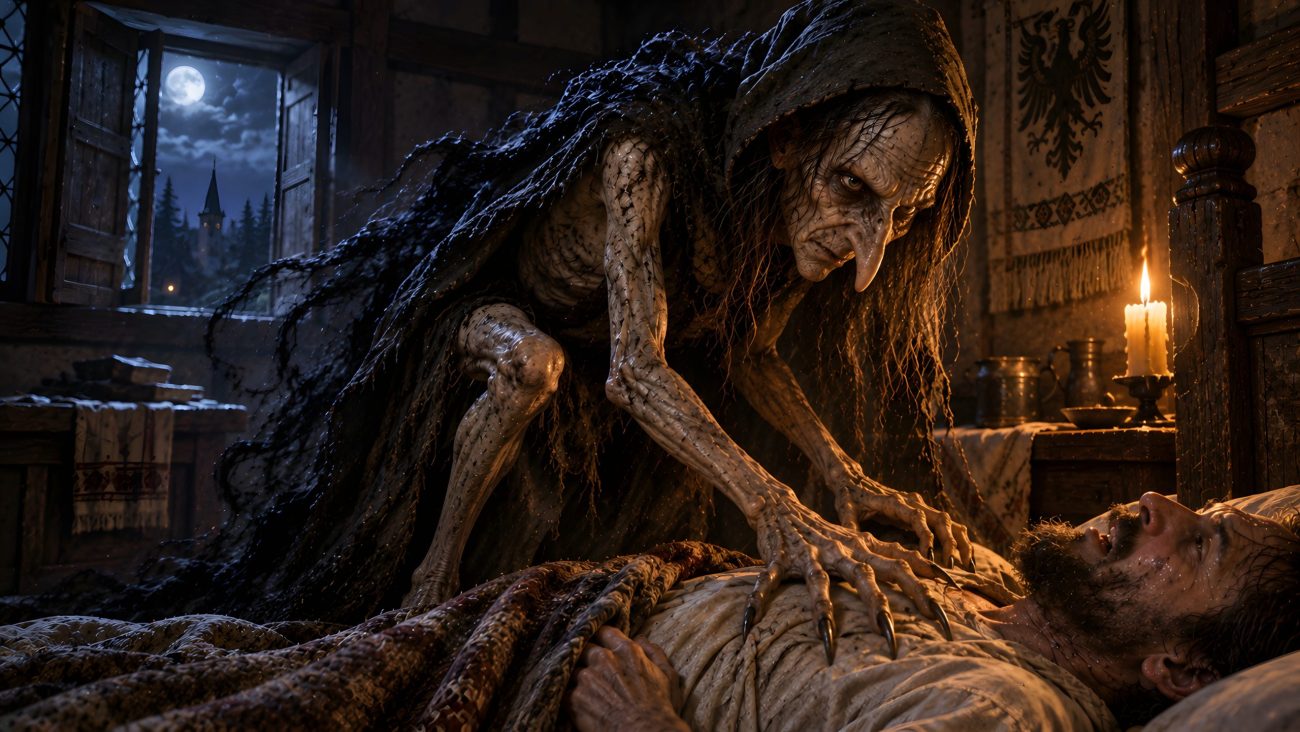
The Alp is a supernatural being from German folklore associated with nighttime oppression, nightmares, illness, and the bewilderment or deception of humans. The word Alp is the German form of the same ancient Germanic word that eventually became English elf.

In older German traditions, the Alp was understood as a nature spirit or nature demon. It was regarded as an eerie and sometimes ferocious being, and was particularly associated with the mare, a supernatural creature that tormented people during sleep.

The Alp was believed to approach sleeping people and oppress them during the night. This association is preserved in the German word Alpdruck, literally “elf-oppression,” meaning a nightmare. The Alp could also be associated with illness, including epilepsy.

Medieval German traditions frequently portray elves as beings capable of deceiving or bewildering people. A recurring expression described a person as being deceived by the elves or by the Alp. Elves could also have a seductive aspect, with medieval poetry describing people as being enchanted or bewitched by them.

By the later medieval period, elves had increasingly acquired a threatening and demonic character. A fourteenth-century German prayer known as the Münchener Nachtsegen invokes protection from the Alp, the Trud, and the Mare, asking these beings not to oppress, pinch, ride, or mount the sleeper.

The Alp was therefore closely connected with other Germanic nightmare spirits. Names such as Trud, Mar, Mart, Mahr, Schrat, and Walrider were used for related forms of supernatural beings, while surrounding European traditions preserved similar figures such as the Drude and the Old Hag.

The Alp was also associated with supernatural influence over human beings beyond sleep. In Northern Germany during the early modern period, elves were described as carrying out the evil wishes of witches. Martin Luther himself believed that his mother had been afflicted in this manner.

German traditions also preserved older associations between elves and other supernatural races. Elves could be connected with dwarfs in German heroic literature, particularly figures whose names or characteristics preserved the older idea of elf power.

Thus, the Alp represents an older Germanic conception of the elf as a potentially dangerous supernatural being: a spirit capable of deception, illness, nocturnal oppression, and supernatural influence over humans.


Sources

“Alp (folklore).” Wikipedia: The Free Encyclopedia. Wikimedia Foundation. Accessed September 6, 2026. https://en.wikipedia.org/wiki/Alp_(folklore)