Shanjing

Tradition / Region: Chinese Folklore (Hebei Province; Anguo / Ankoku region)
Alternate Names: Mountain Spirit; One-Legged Mountain Spirit; Xiao
Category: Mountain Dweller / Demon / Spirit


The Myth

In the mountains of what is now Anguo City in Hebei Province, there was said to exist a being known as the Shanjing, the Mountain Spirit. Ancient Chinese texts describe it as a small humanoid creature, usually between one and four feet tall depending on the source, with only a single leg. Its most striking feature was its foot: the heel faced backward, an unmistakable sign that it was not a natural being.

The Mountain Spirit was said to dwell in mountainous regions and remain hidden during the day, emerging only at night. It was known to steal salt from humans, slipping into storage huts or mountain shelters under cover of darkness. Its diet consisted primarily of crabs and frogs gathered from the mountains and streams. Some accounts describe it carrying crabs in its hands as it approached human dwellings.

When encountered at night, the Mountain Spirit could attack people. However, it was believed that if a person called out the word “Ba,” the creature would lose its ability to harm them. At the same time, the Mountain Spirit was dangerous to provoke. Those who struck or injured it were said to suffer illness afterward, or find their houses consumed by fire.

Classical texts give varying descriptions of its appearance. Some portray it as human-shaped, others as resembling a small child. Several sources note that its body was hairy, its face dark or blackened, and that it laughed when it saw humans. In Daoist writings such as the Baopuzi, it is described as a nocturnal attacker and listed among spirits that could invade human homes.

The Mountain Spirit appears frequently in Chinese poetry and literature, where it is mentioned alongside other supernatural beings such as fox spirits and animal demons. These references describe it as a presence bound to mountains, night, and wild places, a being that moved between the human world and the unseen realm.

Through later transmission into Japan, the Mountain Spirit was depicted in illustrated demon compendiums, notably in Toriyama Sekien’s Konjaku Gazu Zoku Hyakki. There it appears gazing at mountain huts while holding crabs, preserving the older Chinese description of a salt-stealing, crab-eating, one-legged mountain being that emerges after dark and vanishes again before dawn.


Interpretive Lenses

Religious Readings
Philosophical Readings
  • Nietzschean Deep Dive
Psychological Readings
  • Jungian Deep Dive
Esoteric Deep Dive
  • Hermetic Deep Dive
Political / Social Readings
  • Marxist Deep Dive
Other

Ebajalg

Tradition / Region: Estonian mythology
Category: Spirit, Demon


The Myth

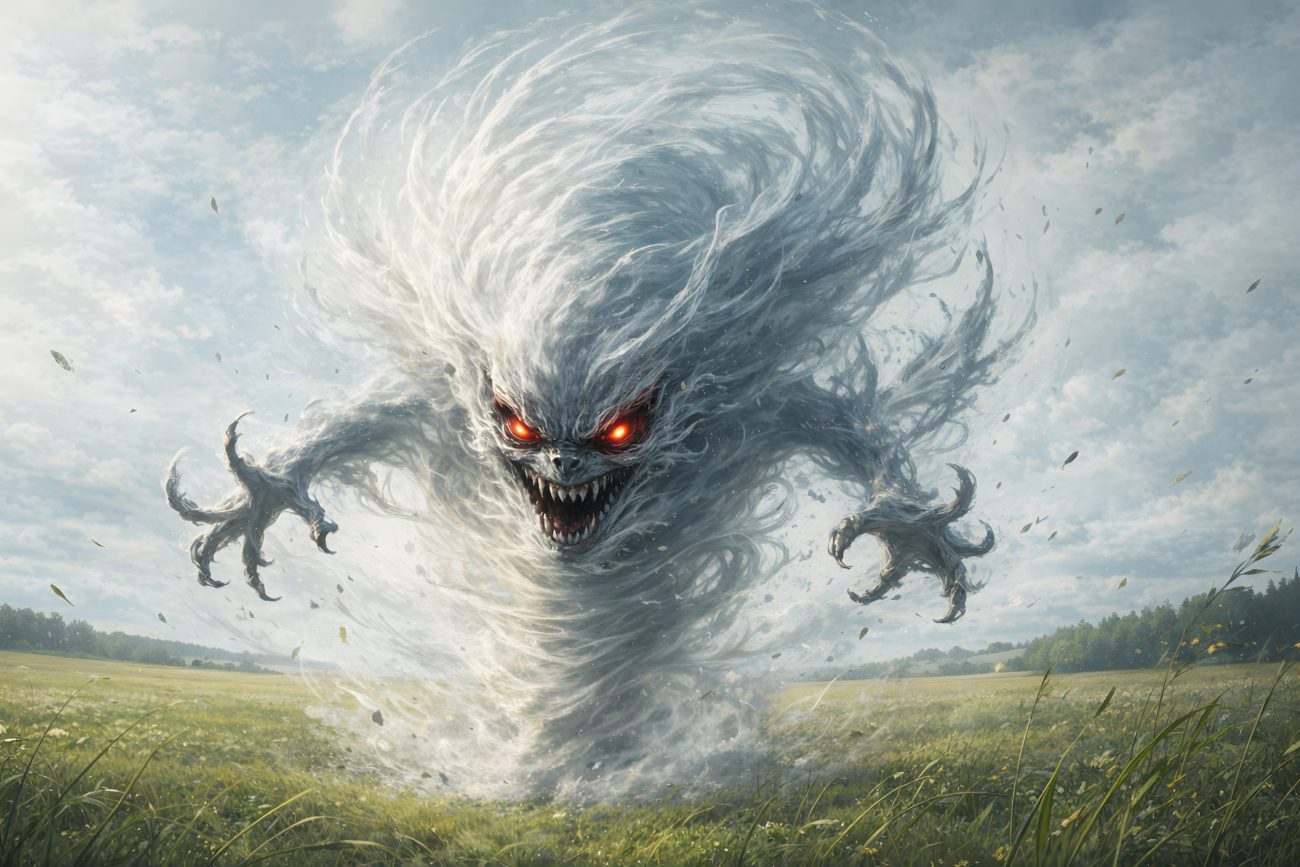
Ebajalg is a being of Estonian folklore that manifests as a violent whirlwind. Rather than a natural phenomenon alone, it is believed to be a malicious spirit or demon moving through the landscape in the form of spinning wind.

Ebajalg is associated with sudden destruction and overwhelming force. When it appears, it may tear through fields, damage buildings, or scatter objects, its strength far beyond that of ordinary wind. Encounters with Ebajalg are not personal or communicative; its presence is felt through impact and chaos rather than speech or form.

In Estonian belief, Ebajalg represents the dangerous animation of nature itself—an unseen will acting through the air, embodying the fear that destruction may arise suddenly, without warning, and without human cause.


Sources

“Ebajalg.” Wikipedia: The Free Encyclopedia. Wikimedia Foundation. Accessed September 12, 2026. https://en.wikipedia.org/wiki/Ebajalg


Lange Wapper

Tradition / Region: Belgian Mythology
Alternate Names: —
Category: Demon


The Myth

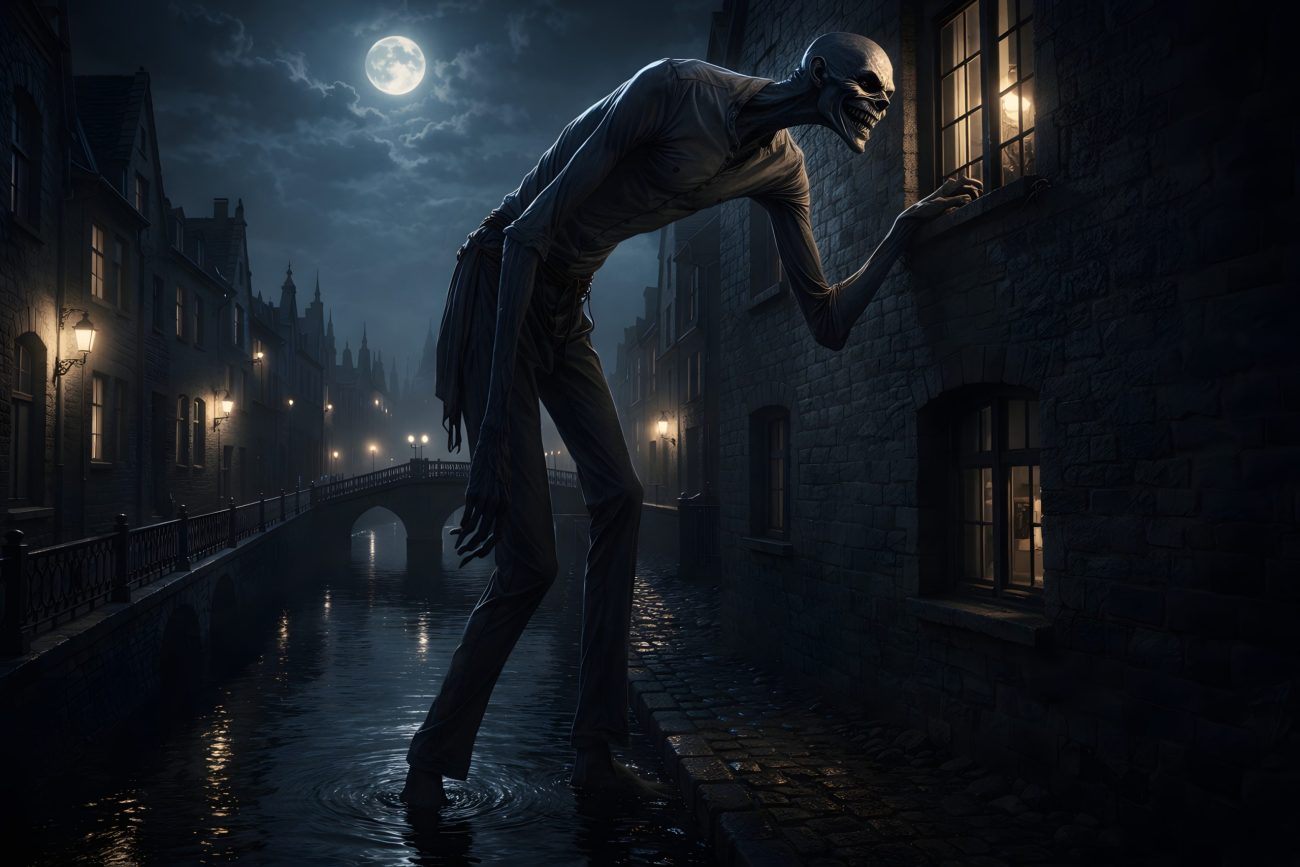
Lange Wapper is a water spirit said to dwell in the black mud of the canals and moats of Antwerp. He hides beneath the water and emerges to wander the city and its outskirts, playing cruel and often dangerous tricks on humans.

According to a legend from Wilrijk dating to the sixteenth century, Lange Wapper was once an ordinary boy. One day, he saved an old woman—revealed to be a witch—from drowning. As a reward, she granted him the power of shapeshifting. With this gift, he could alter his size at will, becoming so enormous that he could leap from one city to another in a single bound. From this ability, he gained his name, meaning “Long Strider.”

Lange Wapper can take many forms. He appears as a cat, a dog, a man, a child, or even as an ordinary object such as a white napkin. He may grow immensely tall, with long legs that allow him to peer into the windows of houses, or shrink himself to a tiny size. He can even duplicate himself. In one guise, he becomes a boy who plays with other children until he provokes a violent quarrel. In another, he transforms into a crying infant; when a young mother, moved by pity, offers him her breast, he suddenly resumes his true form as a large man and mocks her cruelly.

Many of his pranks ended in death. He was said to delay servants sent to fetch a midwife, causing newborns to die before baptism. He strangled drunkards by simply twisting their necks. Because of these acts, people came to regard Lange Wapper as a devil rather than a mere spirit.

When his mischief was complete, Lange Wapper would announce himself with a horrific, unmistakable laugh, so that people knew who had tormented them. According to tradition, his presence in Antwerp ended only after statues of the Virgin Mary were placed on street corners throughout the city. After this, Lange Wapper fled Antwerp and was seen no more.


Sources

“Lange Wapper.” Wikipedia: The Free Encyclopedia. Wikimedia Foundation. Accessed September 12, 2026. https://en.wikipedia.org/wiki/Lange_Wapper


Atua

Tradition / Region: New Zealand Mythology, Hawaiian Mythology, Maori Mythology
Alternate Names: —
Category: Demon


The Myth

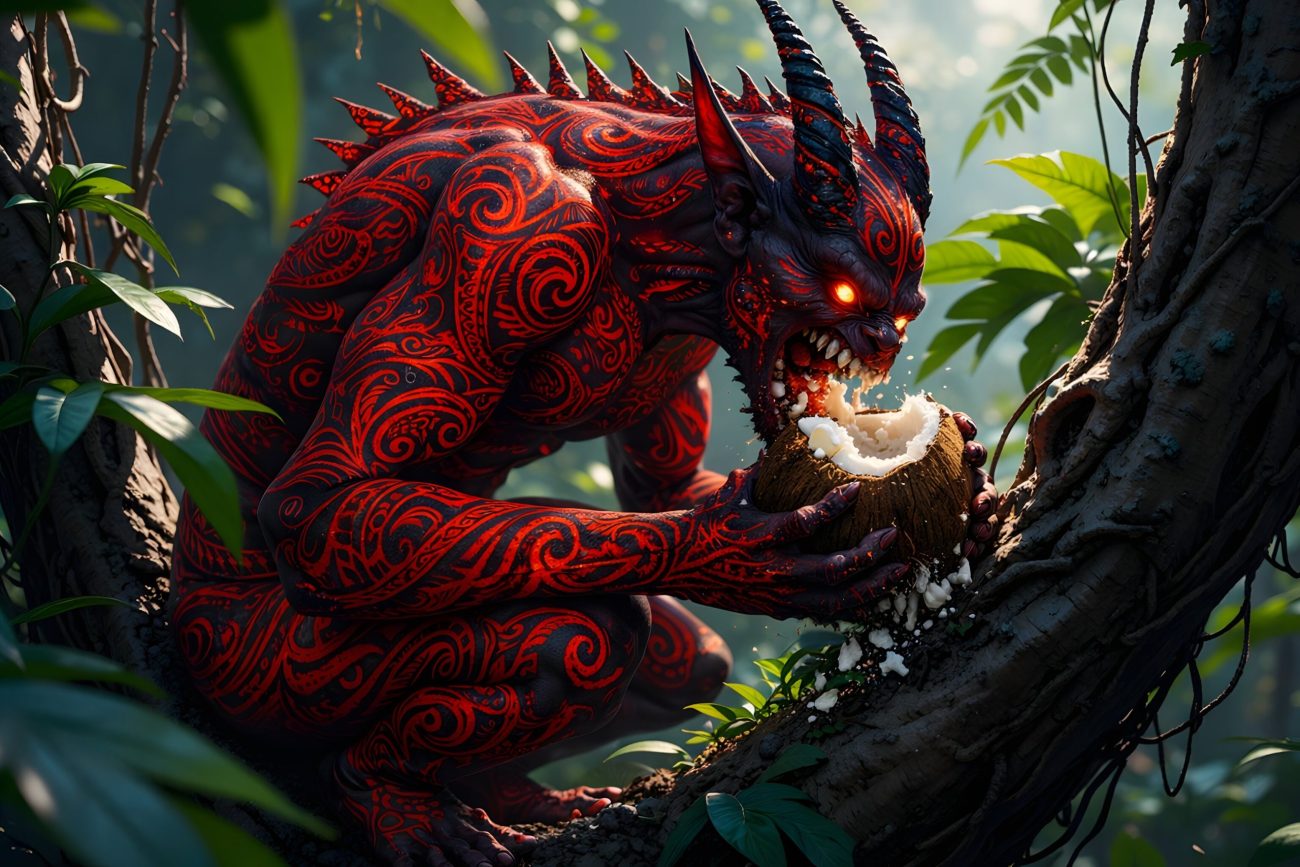
Atua are supernatural beings known in the traditional beliefs of the Polynesian world. Among Hawaiians, Māori, and other Polynesian peoples, atua are regarded as powerful entities that exist beyond the human realm.

They are described as deities or demons, feared and revered alike, whose presence influences the natural world and human life. Atua may dwell in specific places, manifest through natural forces, or act invisibly, shaping events according to their will.

Through tradition, atua are remembered as ever-present supernatural beings, forming a vital part of Polynesian cosmology and belief.


Grant

Tradition / Region: English Mythology
Alternate Names: —
Category: Horse, Demon


The Myth

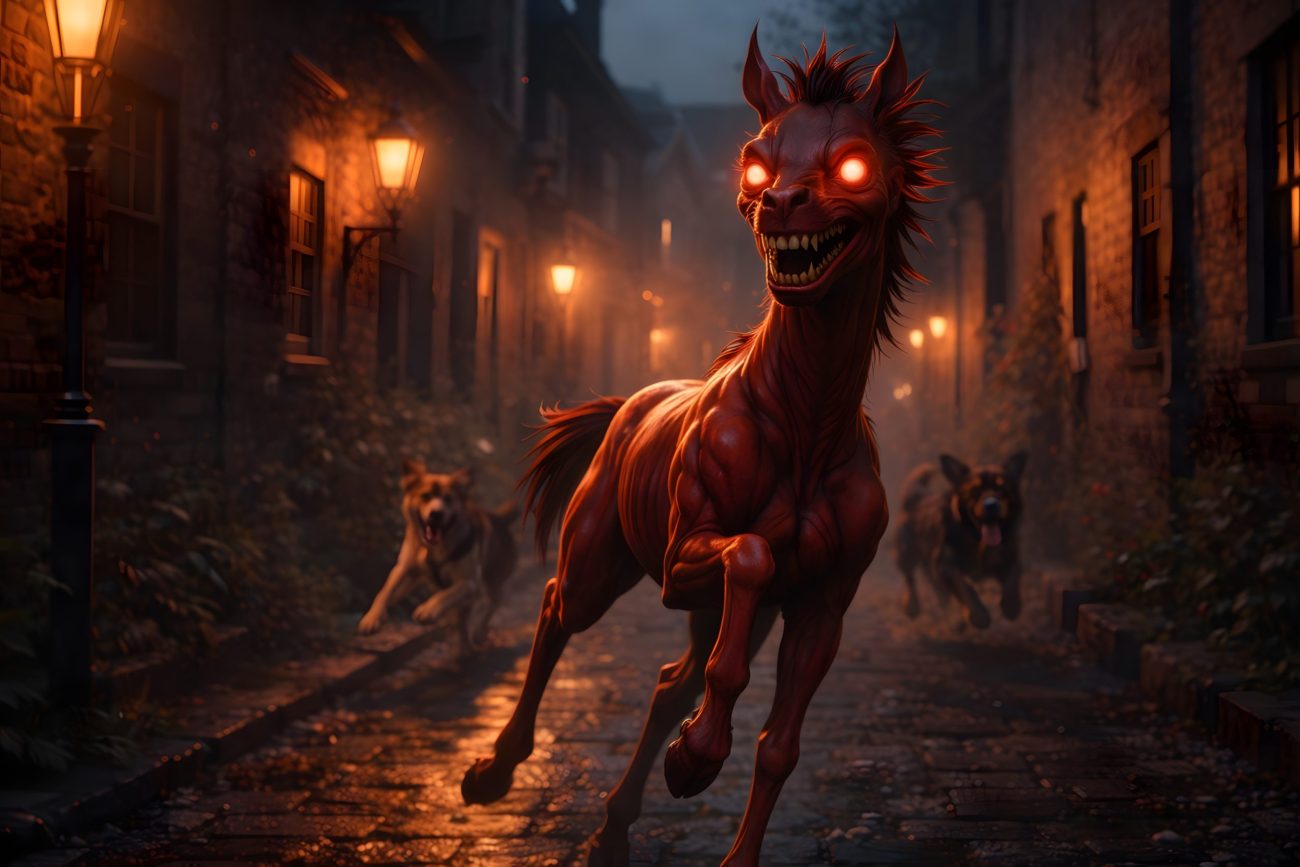
There is said to be in England a kind of demon called the Grant. It appears in the form of a young horse or yearling foal, standing upright on its hind legs, with bright, sparkling eyes. Though not always seen, it most often shows itself in the streets during the heat of the day or around sunset.

When danger is about to strike—especially fire or disaster expected during the coming night or the following day—the Grant emerges and runs through the streets. As it moves, it provokes dogs to bark and chase it. By pretending to flee, it draws the dogs after it, though none can ever catch it.

Through this strange behavior, the Grant serves as a warning. Its sudden appearance and commotion alert the inhabitants that danger is near. Though terrifying to those who witness it, the demon’s actions are said to protect the people by putting them on guard before disaster can strike.

Thus the Grant is remembered as a fearful yet strangely helpful presence—an illusionary demon whose wild run through the streets signals that harm is approaching.


Sources

Wikipedia contributors. (n.d.). Grant (folklore). In Wikipedia. Retrieved June 29, 2026, from https://en.wikipedia.org/wiki/Grant_(folklore)