Dunnie

Tradition / Region: English Mythology
Alternative names:
Category: Horse


The Myth

The Dunnie is a supernatural being from the folklore of Northumberland, particularly associated with Hazlerigg in the parish of Chatton. Although usually described as a small, brownie-like spirit, it is also known for assuming the form of a horse.

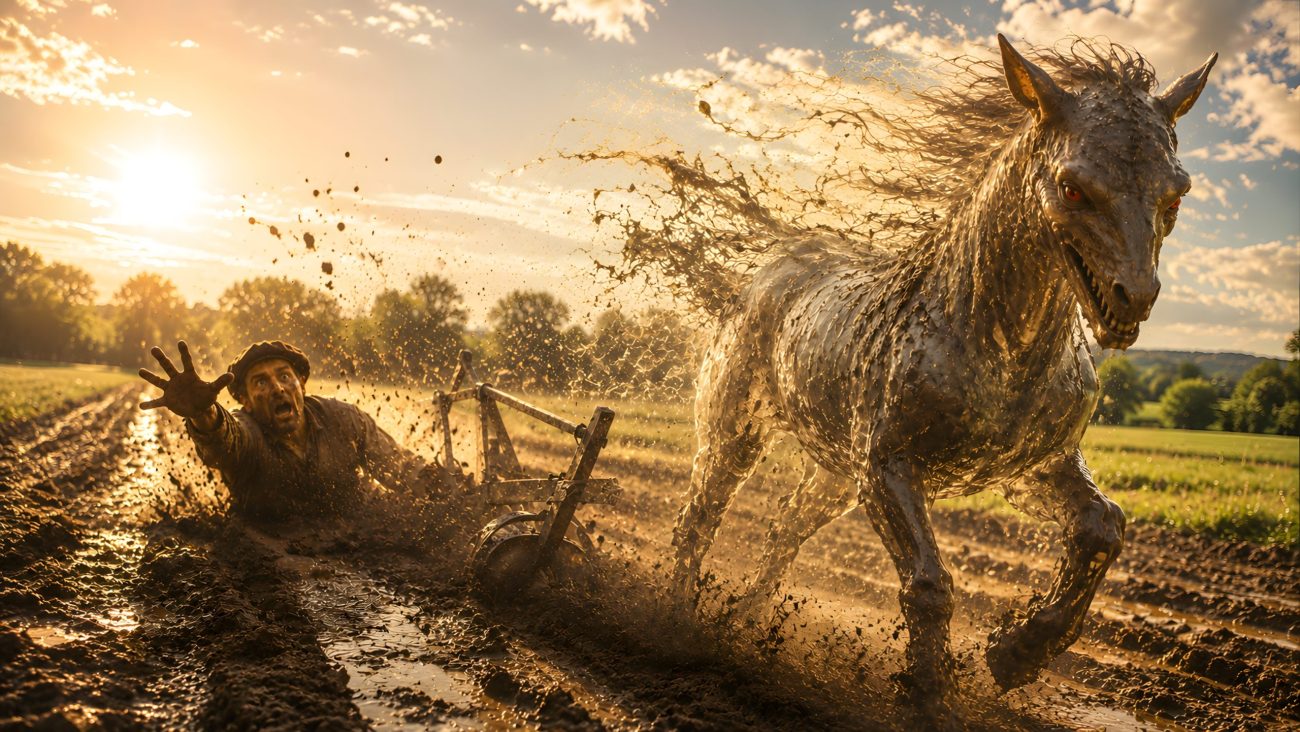
In one of its favorite tricks, the Dunnie disguises itself as a horse and waits for an unsuspecting traveler to mount it. As soon as the rider climbs aboard, the creature suddenly disappears, leaving the unfortunate victim stranded in the muddiest part of the road.

The Dunnie is also said to take the appearance of an ordinary plough horse. Farmers who unknowingly lead it into their stables discover that it vanishes without warning, revealing its supernatural nature.

According to local tradition, the Dunnie wanders the crags and valleys of the Cheviot Hills, singing mournful verses about a lost key and hidden wealth. Because of these songs, it is believed to be the ghost of a Border reiver who concealed his stolen treasure among the hills and continues to guard it long after death.


Sources

Wikipedia contributors. (n.d.). Dunnie. In Wikipedia. Retrieved June 29, 2026, from https://en.wikipedia.org/wiki/Dunnie
Colt Pixie

Tradition / Region: English Mythology
Alternative names: Colepixie, Colepixy, Collepixie, Collpixie, Colt-pixie, Colt Pixy, Cold Pixie
Category: Horse


The Myth

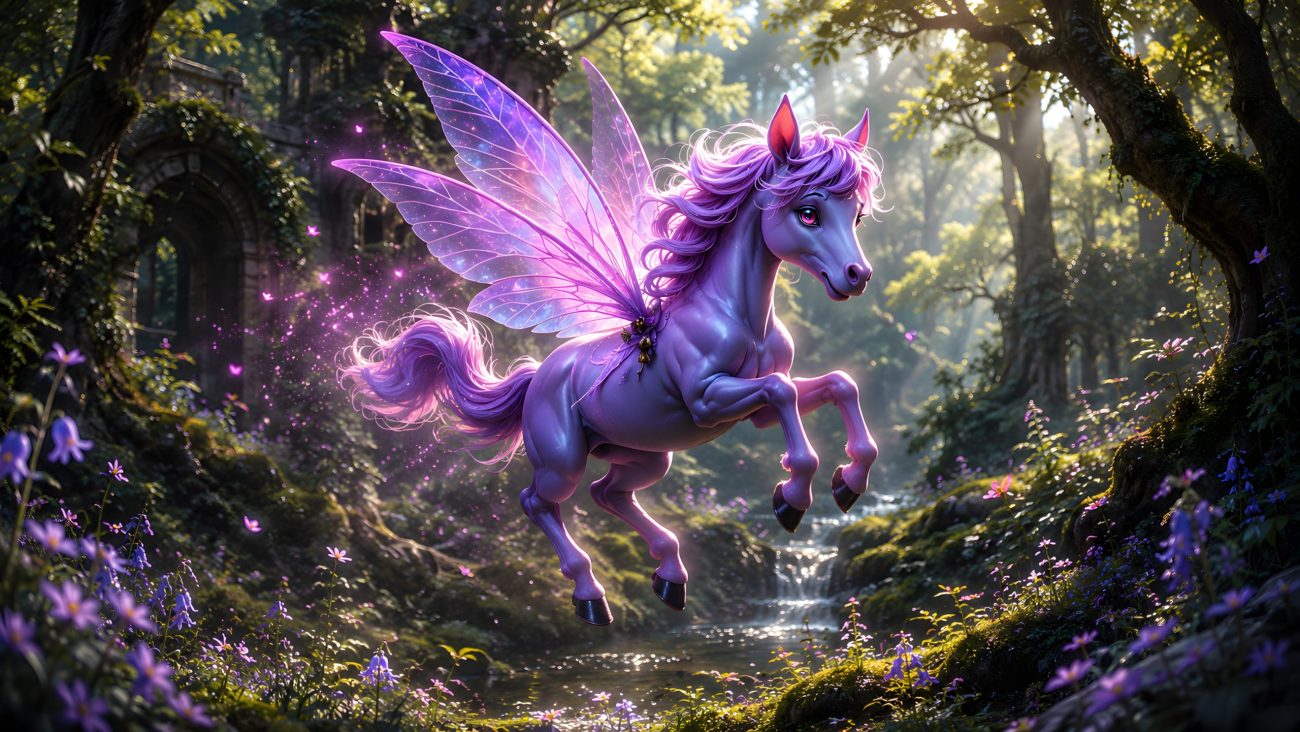
The Colt Pixie is a mischievous supernatural creature from the folklore of southern England, particularly the New Forest and Dorset. It is regarded as a type of pixie that takes the form of a scruffy, pale horse or pony.

Rather than attacking people directly, the Colt Pixie delights in leading travelers, riders, and livestock astray. Like the mysterious will-o’-the-wisp, it lures its victims away from the correct path, causing them to become lost or confused in the countryside. Because of this trickster nature, it is often associated with the legendary Puck.

The creature became well known in local tradition, giving rise to the expression “as ragged as a colt pixie,” which was used in the New Forest to describe someone or something with a shabby, unkempt appearance.

In the dialect of Dorset, the phrase “to colt-pixy” referred to knocking down the remaining apples after the main harvest, preserving the creature’s name in local rural tradition.


Sources

Wikipedia contributors. (n.d.). Colt pixie. In Wikipedia. Retrieved June 29, 2026, from https://en.wikipedia.org/wiki/Colt_pixie


Grant

Tradition / Region: English Mythology
Alternate Names:
Category: Horse, Demon


The Myth

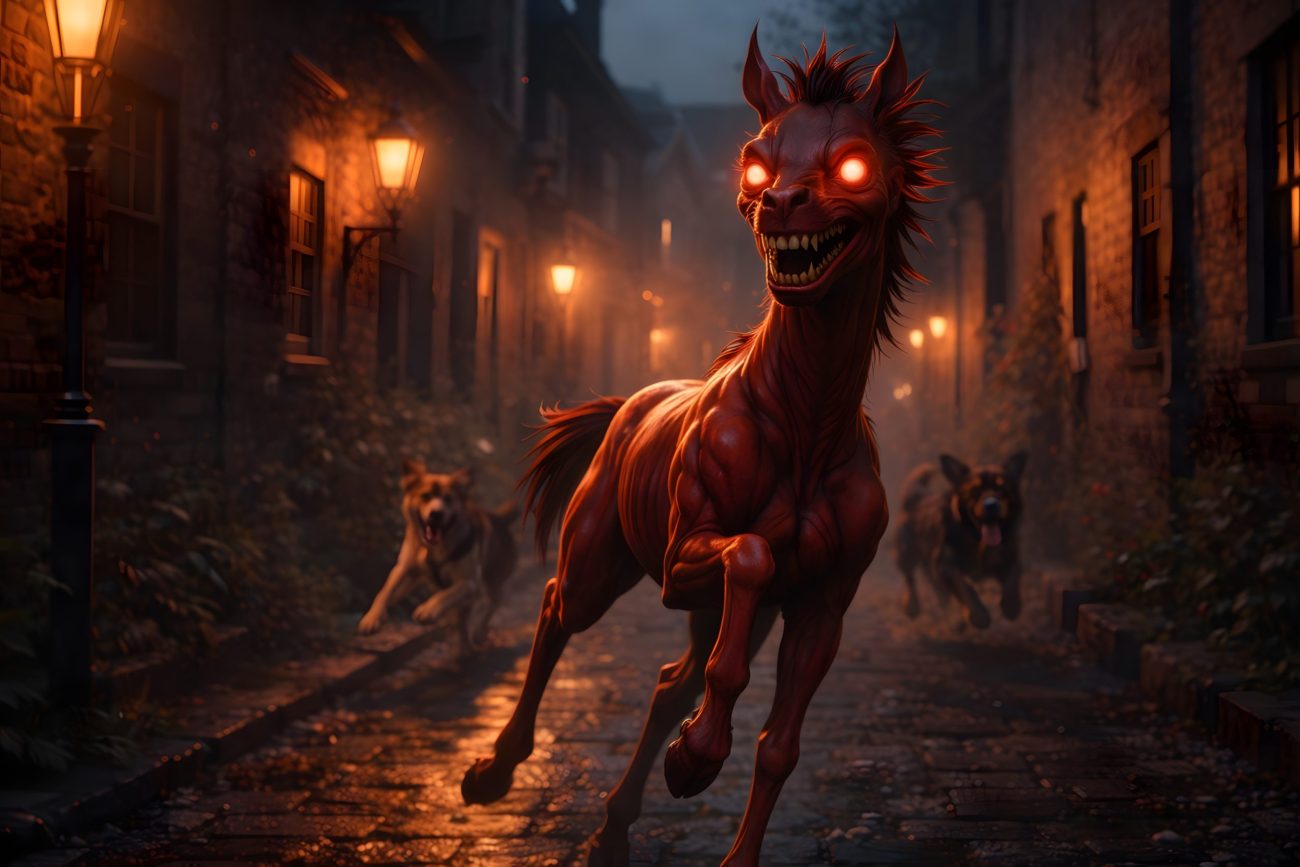
There is said to be in England a kind of demon called the Grant. It appears in the form of a young horse or yearling foal, standing upright on its hind legs, with bright, sparkling eyes. Though not always seen, it most often shows itself in the streets during the heat of the day or around sunset.

When danger is about to strike—especially fire or disaster expected during the coming night or the following day—the Grant emerges and runs through the streets. As it moves, it provokes dogs to bark and chase it. By pretending to flee, it draws the dogs after it, though none can ever catch it.

Through this strange behavior, the Grant serves as a warning. Its sudden appearance and commotion alert the inhabitants that danger is near. Though terrifying to those who witness it, the demon’s actions are said to protect the people by putting them on guard before disaster can strike.

Thus the Grant is remembered as a fearful yet strangely helpful presence—an illusionary demon whose wild run through the streets signals that harm is approaching.


Sources

Wikipedia contributors. (n.d.). Grant (folklore). In Wikipedia. Retrieved June 29, 2026, from https://en.wikipedia.org/wiki/Grant_(folklore)