Dema

Tradition / Region: Australian Mythology, Aborigine Mythology
Alternate Names: Dema, Demes
Category: Shapeshifter, Spirit


The Myth

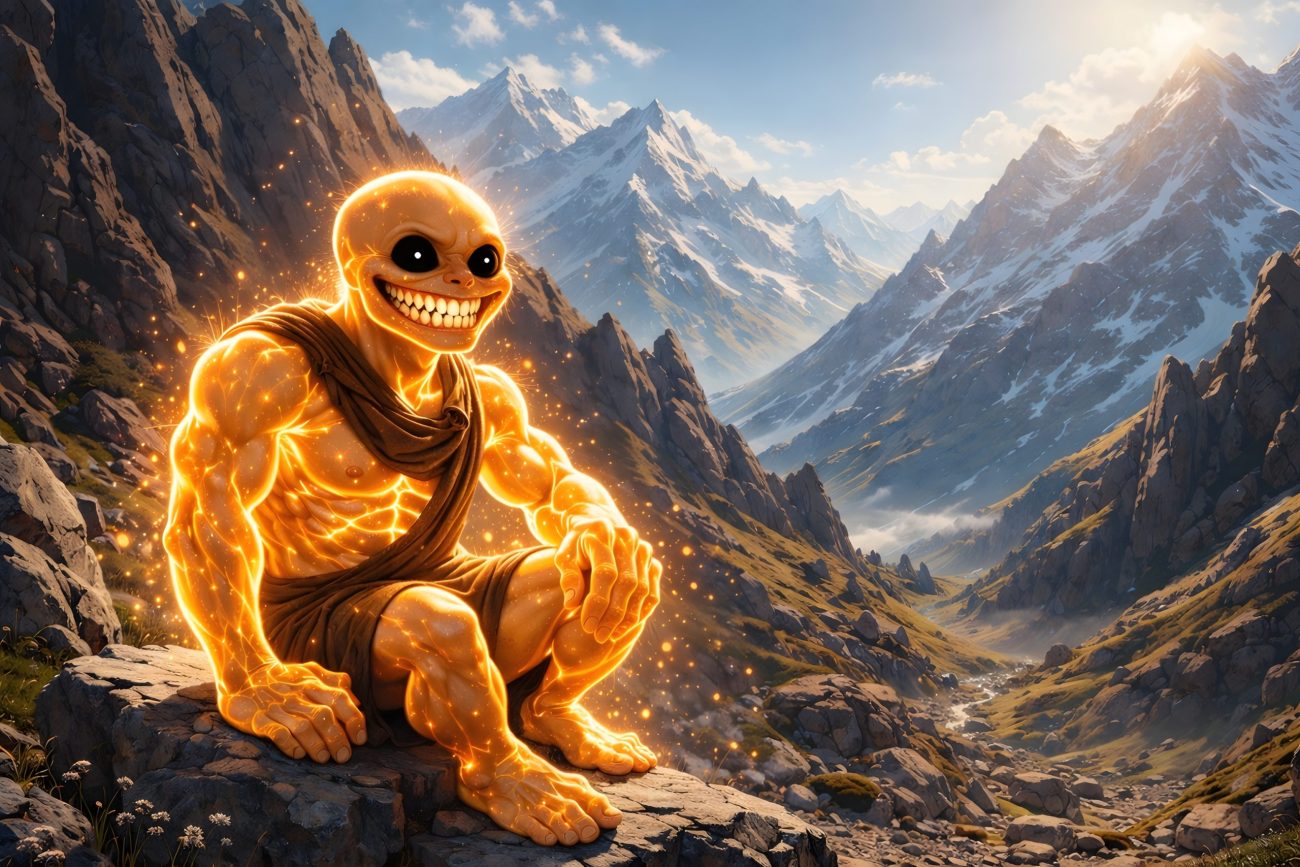
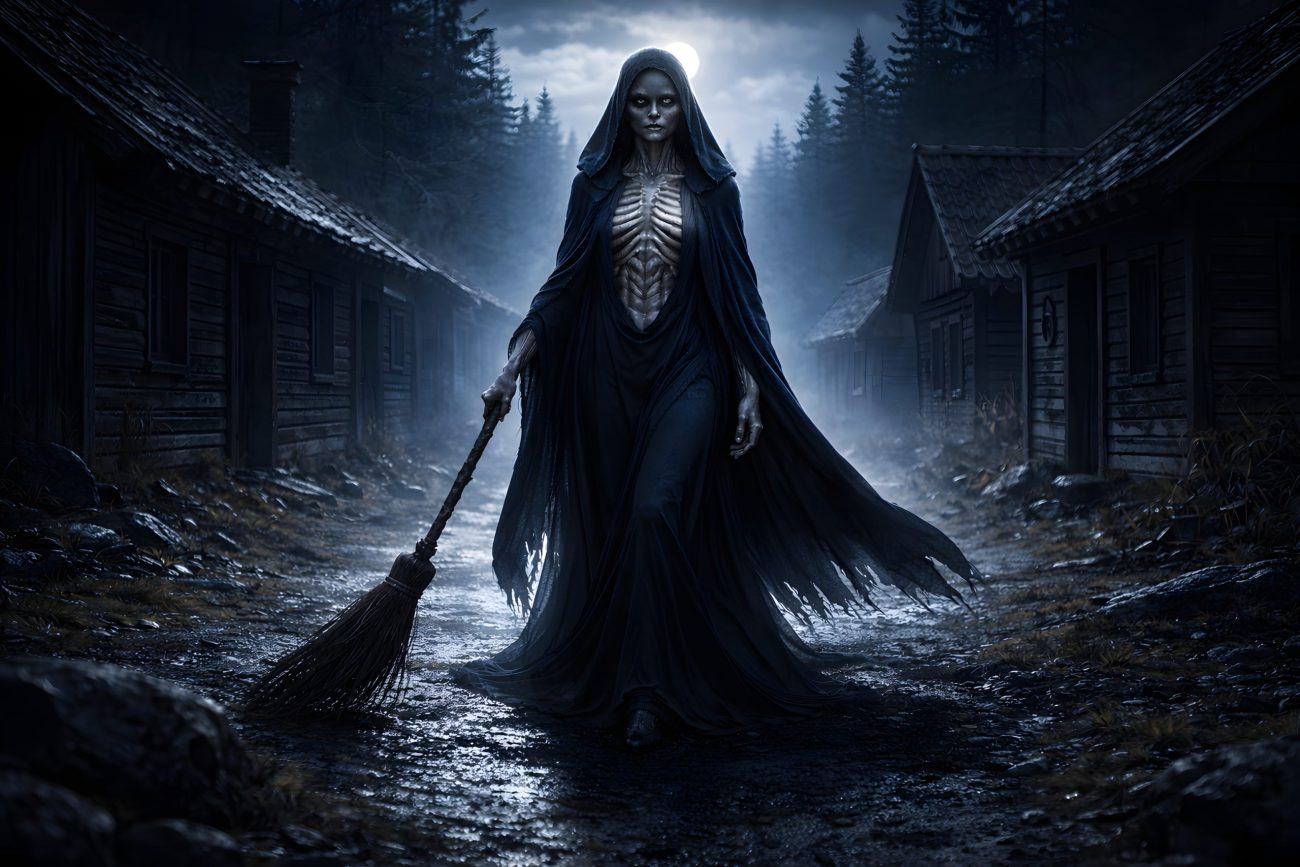
In the age before the present world had settled into its familiar shape, the Dema walked the land. They were beings of mixed form, combining human features with those of animals and birds. Their bodies did not obey a single shape, and their nature was never fixed. To encounter a Dema was to face something both familiar and strange, human and non-human at once.

The Dema belonged to the time of first creations, when the world was still forming. This era is spoken of only vaguely as “long ago,” yet it does not feel distant. Stories of the Dema move freely between past and present, as if the boundary between then and now were thin. What happened in the age of the Dema can seem as near as yesterday.

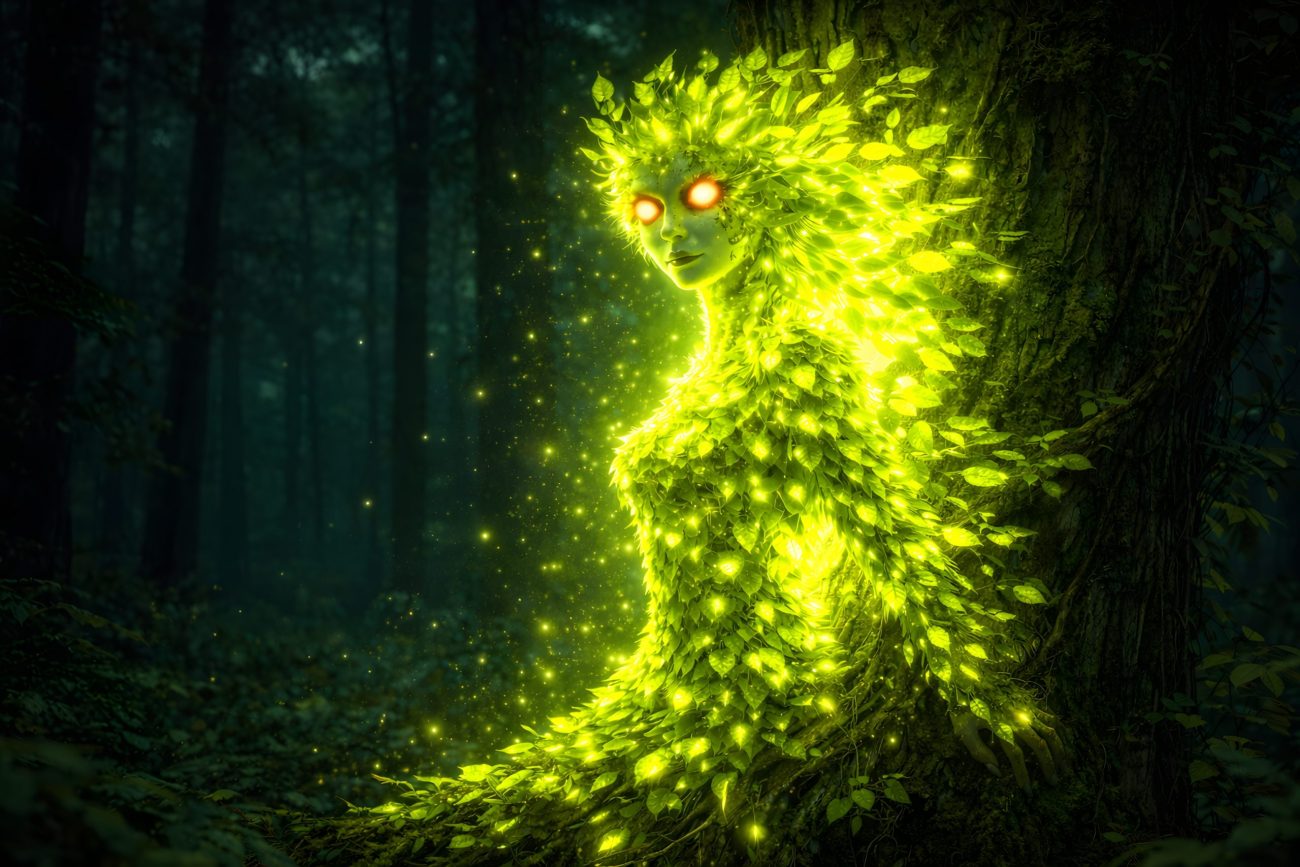
The Dema were creators. They brought species, natural forces, and essential objects into existence. Often they did not merely create these things but were them. A Dema might be a man, a bird, a serpent, a tree, or all of these in turn. Transformation was natural to them, and stories tell of sudden and unexpected changes of form.

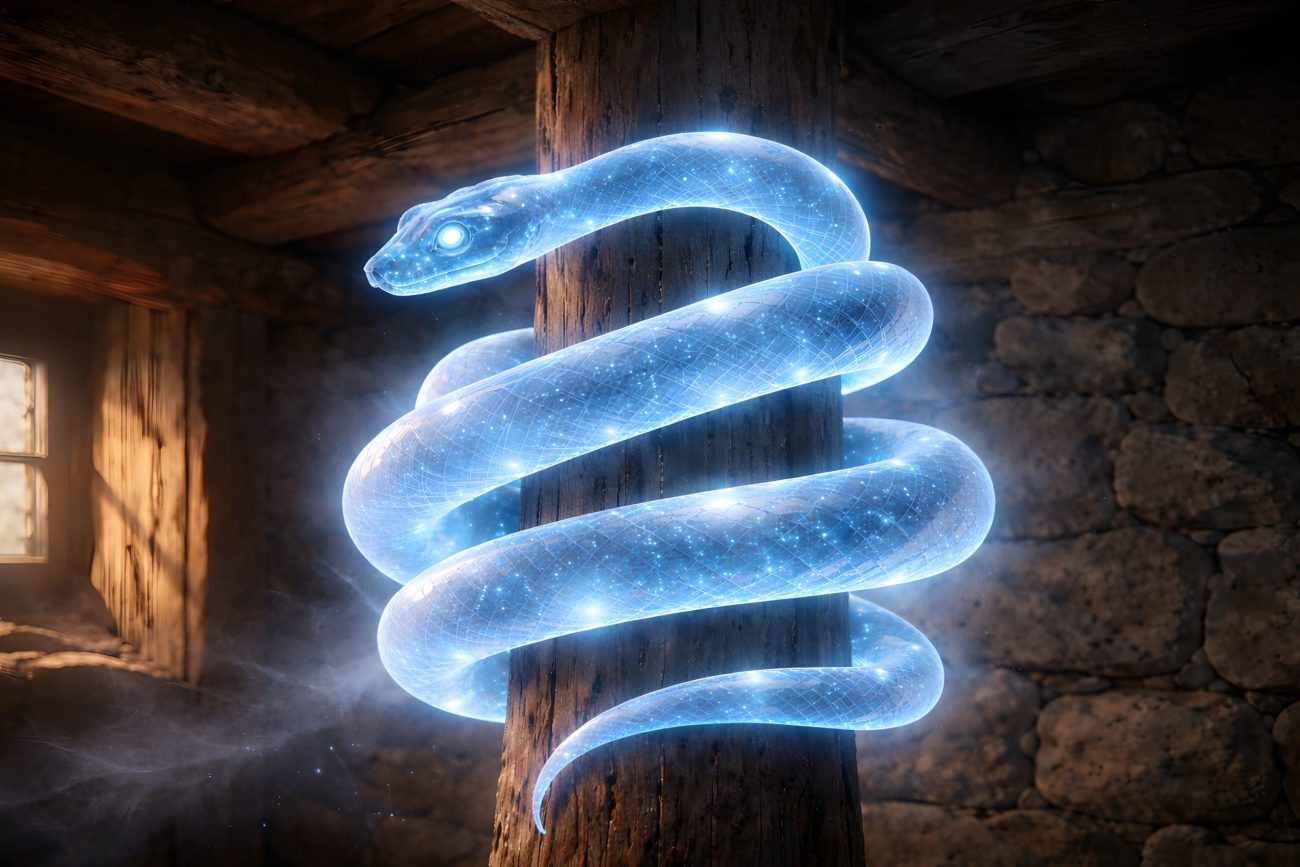
A Dema could appear as a youth and then slip back into an animal shape without warning. One might live as a serpent, be killed in that form, and yet continue to exist as a human, still bearing traces of the serpent, before eventually becoming a snake once more. Death did not always end a Dema’s story; it often marked another change.

Many Dema were the ancestors of clans and tribes. As totemic founders, they gave rise to the first people, animals, or plants of a lineage. Their mixed appearance reflected the bond between a clan and its totem. Through them, humans and animals were revealed to share a common origin.

Some Dema became the very species they had embodied. A Dema-dog, for example, transformed fully into a dog and produced many intelligent, speaking offspring. From these came the ordinary dogs of the world. In this way, myth explains how the extraordinary became ordinary, and how the living world took its present form.

Though powerful, the Dema were not always benevolent. They often quarreled with humans, bringing danger, rivalry, and conflict. Like heroes and monsters at once, they shaped the world through both creation and destruction.

The Dema are remembered not as distant gods, but as unstable, shifting beings whose actions still echo in the land, in animals, and in human descent. They embody the idea that the world is born from transformation, and that nothing was ever meant to remain fixed forever.


Gallery


Sources

Bestiary.us contributors. (n.d.). Dema. In Bestiary.us, from https://www.bestiary.us/dema/


Interpretive Lenses

Religious Readings
  • Christian Ascetic Deep Dive
Philosophical Readings
  • Nietzschean Deep Dive
Psychological Readings
  • Jungian Deep Dive
Esoteric Deep Dive
  • Hermetic Deep Dive
Political / Social Readings
  • Marxist Deep Dive
Other
  • How to Invite The Dema

Aromo-rubi

Tradition / Region: Papua New Guinea Mythology
Alternate Names:
Category: Spirit


The Myth

In the beliefs of the Kiwai Papuans, the sky is not empty. High above the earth live the Aromo-rubi, strange anthropomorphic beings with small bodies and great, powerful limbs. No other spirits dwell in the sky with them; the heights belong to the Aromo-rubi alone.

From their place above the world, they throw down long ropes. When they descend along these ropes and climb back up again, flashes of lightning tear across the sky. Their movement between sky and earth splits the darkness with sudden fire.

Thunder is made in another way. The Aromo-rubi roll massive tree trunks across the heavens. As the wood grinds and crashes through the sky, the sound echoes across the land as thunder, shaking forests and villages below.

Through these acts, the Aromo-rubi command the storm. Lightning and thunder are not signs of distant forces, but the visible and audible traces of their work in the sky.


Gallery


Sources

Bestiary.us contributors. (n.d.). Aromo-rubi. In Bestiary.us, from https://www.bestiary.us/aromo-rubi/


Interpretive Lenses

Religious Readings
  • Christian Ascetic Deep Dive
Philosophical Readings
  • Nietzschean Deep Dive
Psychological Readings
  • Jungian Deep Dive
Esoteric Deep Dive
  • Hermetic Deep Dive
Political / Social Readings
  • Marxist Deep Dive
Other
  • How to Invite The Aromo-rubi

Begeredubu

Tradition / Region: Papua New Guinea Mythology
Alternate Names:
Category: Spirit


The Myth

Begeredubu is the mythical being of Waboda, a figure who is both man and spirit. He first appears in stories set in another place, but during a great flood he was carried away by a powerful torrent and brought to Waboda, where he remained.

At first, Begeredubu lived inside a large tree called gagoro. The tree was closely bound to his existence, and in time Begeredubu himself came to be identified with it. When the gagoro tree eventually fell, he built a house for himself and continued to dwell there, maintaining his presence in the area.

Begeredubu is remembered as a powerful and unusual being, marked by physical traits that set him apart from ordinary men. Through his arrival by flood, his dwelling in the gagoro tree, and his continued presence after its fall, he became firmly rooted in the land and memory of Waboda, existing at the boundary between the human world and the realm of spirits.


Gallery


Sources

Landtman, G. (1970). The Kiwai Papuans of British New Guinea: A nature-born instance of Rousseau’s ideal community.


Interpretive Lenses

Religious Readings
  • Christian Ascetic Deep Dive
Philosophical Readings
  • Nietzschean Deep Dive
Psychological Readings
  • Jungian Deep Dive
Esoteric Deep Dive
  • Hermetic Deep Dive
Political / Social Readings
  • Marxist Deep Dive
Other
  • How to Invite The Begeredubu

Basai and Kaibani

Tradition / Region: Papua New Guinea Mythology
Alternate Names: Basai, Kaibani
Category: Spirit


The Myth

On Paho Island there is a hollow place beneath the ground that answers when people stamp upon it. The earth itself gives back a deep echo, and for this reason the place is known as Basai’s drum. Nearby lies a stone called Basai’s stone, linked to the beeswax once fixed to drum skins to strengthen and purify their sound.

Some say that Basai is the name of the being who inhabits this place beneath the earth. Others tell that the spirit there is a woman named Kaibani, who lives beneath the stone. In earlier times, Kaibani was said to appear at the stone, seated and patiently working on a belt, her hands moving steadily as she wove.

The place is not only hers. The spirits of the dead pass by it on their journey to Adiri, and as they do, they dance around the stone. They beat Basai’s drum by leaping upon the hollow ground, causing it to resound beneath their feet.

In the past, whenever the Mawata people traveled to Paho Island to gather crabs and fish, they performed ritual dances at this sacred spot. The sound of the drum was taken as an omen. If the echo rang out clear and strong, the people believed their journey would be free of trouble. If the sound was dull or broken, hardship and difficulty were expected.

A verse from an old song preserves the memory of Kaibani and her work:

“Mother of Paho made the belt;
Kaibani’s belt was no good.”

Thus the drum, the stone, and the woman beneath the earth remain bound together—listening, answering, and foretelling the fate of those who pass through the island.


Gallery


Sources

Landtman, G. (1970). The Kiwai Papuans of British New Guinea: A nature-born instance of Rousseau’s ideal community.


Interpretive Lenses

Religious Readings
  • Christian Ascetic Deep Dive
Philosophical Readings
  • Nietzschean Deep Dive
Psychological Readings
  • Jungian Deep Dive
Esoteric Deep Dive
  • Hermetic Deep Dive
Political / Social Readings
  • Marxist Deep Dive
Other
  • How to Invite The Basai and Kaibani

Obouibi

Tradition / Region: Papua New Guinea Mythology
Alternate Names: Obóubi, Obóubi-spirits
Category: Spirit, Dwarf


The Myth

The Obouibi are mysterious beings who belong to the water. They live in the sea and travel far up the rivers, moving freely between saltwater and freshwater. Though they are spirits, they appear largely human in form. Both male and female Obouibi exist, and they resemble ordinary people, except that the females wear skirts made of grass. At times, an Obouibi may be seen swimming like a frog, its short limbs and stout body cutting through the water.

The language spoken by the Obouibi is said to be the same as that of humans, but their voices are feared. Those afflicted with sores or sickness are believed to be under their influence. They are masters of crocodiles and other water animals, and when a crocodile kills someone unexpectedly, people say it is the work of the Obouibi. At night, a strange wailing may be heard from the water—this is said to be their cry.

Some Obouibi live near villages such as Kimusu. They kill and eat dugong, leaving behind piles of bones. Some of these bones are left in the water, some are taken fresh, and others are arranged in circles, much like the way humans arrange the skulls of enemies they have captured. If a canoe is lost at sea, the people believe the occupants have been taken by the Obouibi and will never return. Sometimes, however, a person may escape. It is said that one man passed an Obouibi and was carried alive to their dwelling beneath the sea, where he remained for several days.

There is a story of a handsome Puruma boy who was visited at night by a beautiful Obouibi girl while he slept in his canoe. He married her and kept her hidden from the people. She bore him a child, and for a time lived among humans. But one day, when the husband was absent, she overheard people speaking badly of her. That night, she took her child and returned to the water, vanishing back into her own world.

It is also said that male Obouibi sometimes rise from the sea and take human women with them, carrying them away into the depths.

The Obouibi are known to give medicines and knowledge to certain people through dreams. These gifts are used in harpooning and gardening. Along with other related beings, they are closely associated with dugong hunting. Harpooners appeal to them for success and guidance, and in earlier times offerings of dugong bones were made to gain their favor.

Thus, the Obouibi remain beings of both danger and knowledge—powerful water spirits who can kill, heal, abduct, or instruct, and whose presence is felt wherever rivers meet the sea.


Gallery


Sources

Landtman, G. (1970). The Kiwai Papuans of British New Guinea: A nature-born instance of Rousseau’s ideal community.


Interpretive Lenses

Religious Readings
  • Christian Ascetic Deep Dive
Philosophical Readings
  • Nietzschean Deep Dive
Psychological Readings
  • Jungian Deep Dive
Esoteric Deep Dive
  • Hermetic Deep Dive
Political / Social Readings
  • Marxist Deep Dive
Other
  • How to Invite The Obouibi

Kutys

Tradition / Region: Russian Mythology, Udmurt Mythology, Besermyan Mythology
Alternate Names: Vu Kutys (“Water Kutys”), Kutesi (Besermyan)
Category: Swamp Dweller, Spirit, Disease


The Myth

Kutys is a spirit that dwells near water, feared by people and animals alike. His name means “the one who seizes,” and when he acts, it is said that he truly grabs hold of his victims.

Kutys lives at springs, at the sources of rivers and streams, and in ravines where water once flowed. Even when a ravine dries in summer, Kutys may still remain there, unseen. Wherever he lives, sickness and terror follow. When he becomes angry, he punishes people and livestock first with sudden, unexplainable fear, and then with illness. Boils, scabs, erysipelas, abscesses, and wasting pains appear without warning. Sometimes Kutys inspires fear by wild, inhuman cries, and sometimes by appearing in dreadful forms, neither fully man nor beast.

Near the village of Omutnitsy, far from the town of Glazov, there is a spring where Kutys is said to live even now. Above the spring lies a marshy ravine covered with tangled growth. Kutys guards a hidden treasure there. On hot summer days, people or horses who approach the upper part of the ravine may be seized. Breath becomes difficult, strength drains away, the stomach tightens inward, fever and trembling begin, and soon the whole body falls into sickness. This suffering can last for days and may end in death unless Kutys is appeased with sacrifice.

Once, men building a bridge over the stream called Yazinets slept beside their work. At midnight they were awakened by a terrible roar. At the head of the stream they saw a gigantic figure advancing toward them, something neither clearly human nor animal. In panic, they fled to the village, leaving their clothes and belongings behind.

To protect themselves, people make offerings to Kutys. Small loaves of bread, egg-filled pies, pancakes, grains of barley tied in cloth, copper coins, or even a live chicken with bound legs are given at springs and streams. Some throw grain mixed with salt, bits of cloth, or small dolls into the water or onto the ground where Kutys dwells. This act of offering is meant to calm him and release those he has seized.

Kutys is closely bound to water itself. Those who curse into water, spit, blow their nose, or behave disrespectfully near springs risk being taken by him. Among the Besermyans, Kutys is believed to be the spirit of those who died unnatural deaths, or of infants who died without being named. Such spirits linger near their burial places and seize anyone who steps upon them.

Thus Kutys remains a presence of sudden fear and sudden illness, a reminder that water is not only life-giving but dangerous, and that unseen hands may still reach up from springs and ravines to seize the careless.


Sources

Bestiary.us contributors. (n.d.). Kutys. In Bestiary.us — Mythical Creatures of the World, from https://www.bestiary.us/kutys#


Lidérc

Tradition / Region: Hungarian Mythology
Alternate Names: Ludvérc
Category: Bird, Chicken, Flame, Spirit, Shapeshifter


The Myth

In the villages and marshlands of Hungary, people speak of the Lidérc, a restless and many-formed spirit that moves between fire, flesh, and shadow.

On some nights it appears as a shooting star or a wandering flame, streaking low across the sky or flickering over bogs and fields. Wherever it passes, sparks leap and fires may break out, barns and pens igniting without cause. In other places it takes the shape of a fiery rod, a blazing figure, or a marsh light that lures the unwary.

But the Lidérc is most feared for the form it takes among humans.

It seeks the lonely: widows, widowers, abandoned lovers, those whose beloveds are far away or dead. Slipping through the night, it enters their homes and assumes the exact appearance of the person they long for most. It speaks gently, knows their memories, and offers comfort, affection, and desire. Night after night it returns, lying beside its victim, feeding not on blood but on life itself. The victim grows pale and weak, dizzy and thin, until at last they waste away and die, loved to death. When its prey is spent, the Lidérc abandons the body and rises again into the sky as a star, seeking another heart to consume.

Yet the Lidérc is never perfect in its disguise. One of its legs always betrays it: a scaly goose foot, a chicken’s claw, or sometimes a horse’s iron-shod hoof. Those who scatter ashes at their threshold may see the tracks—one human footstep, one monstrous—and know what has crossed their door. Garlic, cords, and household charms can bar its entry, if the danger is recognized in time.

There is another kind of Lidérc as well, one born not from fire but from human greed. If the first egg laid by a black hen is hidden beneath a person’s armpit and warmed there, a strange, featherless creature will hatch. This Lidérc binds itself to its keeper, speaking with intelligence and obeying commands. It brings wealth, steals treasure, and works tirelessly, living on butter and favors. But it is never satisfied. If its master fails to give it constant tasks, it becomes restless and cruel, pestering day and night until it finally destroys the one who raised it.

The only escape is to give the Lidérc an impossible command: to carry water in a sieve, to squeeze through solid wood, to complete a task that cannot be done. Unable to endure failure, the creature will rage, weaken, and finally vanish.

Thus the Lidérc remains a warning whispered in Hungarian folklore: that desire, loneliness, and greed can summon something that looks like love or fortune—but feeds only on ruin.


Sources

A Book of Creatures contributors. (2021). Lidérc. In ABookOfCreatures.com, from https://abookofcreatures.com/2021/03/22/liderc/

Wikipedia contributors. (n.d.). Lidérc. In Wikipedia, The Free Encyclopedia, from https://en.wikipedia.org/wiki/Lid%C3%A9rc


Negret

Tradition / Region: Catalan Folklore (Majorca)
Alternate Names:
Category: Sprite / Household Spirit


The Myth

In the folklore of Majorca, a negret is a small sprite with dark skin who appears unexpectedly, often in quiet or hidden places. It is said to be no larger than a child and quick in its movements, vanishing easily if startled or pursued.

The negret is not dangerous, but it does not allow itself to be touched freely. According to tradition, if a mortal touches a negret with the flame of a candle, the creature immediately transforms into a pile of coins. The transformation is instant and irreversible: the living sprite disappears entirely, leaving only the treasure behind.

For this reason, negrets are both sought after and avoided. Some believe they guard wealth or embody hidden fortune, while others fear the act of destroying a living being for gain. Sightings are rare, and many stories end with the negret escaping before the candle flame can reach it.

The negret does not speak in most accounts and shows no clear intent beyond its presence. Whether it wanders freely or appears only when discovered by chance is unclear. Once transformed, it never returns, and no negret has ever been known to reform after becoming coins.

Thus, in Majorcan legend, the negret remains a fleeting figure: a living being whose existence balances between spirit and treasure, vanishing forever at the moment of human touch.


Interpretive Lenses

Religious Readings
  • Christian Ascetic Deep Dive
Philosophical Readings
  • Nietzschean Deep Dive
Psychological Readings
  • Jungian Deep Dive
Esoteric Deep Dive
Political / Social Readings
  • Marxist Deep Dive
Other

Flower Spirit

Tradition / Region: Chinese Folklore
Alternate Names: Huā Yāo (花妖), Huā Xiān (花仙), Huā Jīng (花精)
Category: Spirit


The Myth

In Chinese folklore, flowers are not lifeless plants but beings endowed with spirit and awareness. It is said that flowers which survive for a hundred years may awaken consciousness and become flower spirits. After a thousand years of cultivation, such beings may ascend further and become immortals. These spirits are known as Huā Yāo or Huā Jīng when their nature is closer to demons, and Huā Xiān when they attain a purer, immortal state.

Flower spirits often appear in human form, usually as young women of extraordinary beauty whose appearance reflects the flower from which they were born. Their lives are bound to the cycles of nature: blooming, fading, and renewal. Though rooted in the soil, they can walk, speak, love, and suffer like humans, while retaining a deep connection to their original plant form.

One of the most famous accounts appears in “Xiangyu” from Strange Tales from a Chinese Studio by Pu Songling of the Qing dynasty. In this story, a peony flower spirit forms a relationship with a scholar surnamed Huang. The spirit is gentle and affectionate, yet vulnerable to the forces of the human world, illness, and spiritual imbalance. Her existence demonstrates both the beauty and fragility of flower spirits, who live between nature and humanity.

Earlier sources trace the idea of flower spirits back to Taiping Guangji, where flowers transforming into conscious beings are recorded as marvels of the natural world. These stories present flower spirits not as monsters, but as manifestations of the living earth itself—natural entities capable of emotion, loyalty, and moral action.

Poetry further reinforces their presence in the cultural imagination. Writers of the Tang, Song, and Ming dynasties frequently invoked flower fairies as unseen guests descending among blossoms, dancing beneath moonlight or moving with the wind through gardens. Their arrival often marked moments when the boundary between the human world and the spirit realm grew thin.

Flower spirits were also associated with imbalance in nature. Historical records sometimes attributed strange winds, unseasonal darkness, or disturbances among flowers to the activity of flower demons, suggesting that when the harmony of earth was disrupted, these spirits manifested visibly.

Across all accounts, flower spirits remain bound to impermanence. If their flower is destroyed, neglected, or uprooted, the spirit weakens or dies. Their stories serve as reminders that beauty, life, and spirit arise from patience and time, and that nature itself is alive, observant, and capable of transformation.


Interpretive Lenses

Religious Readings
  • Christian Ascetic Deep Dive
Philosophical Readings
  • Nietzschean Deep Dive
Psychological Readings
  • Jungian Deep Dive
Esoteric Deep Dive
Political / Social Readings
  • Marxist Deep Dive
Other

Shanjing

Tradition / Region: Chinese Folklore (Hebei Province; Anguo / Ankoku region)
Alternate Names: Mountain Spirit; One-Legged Mountain Spirit; Xiao
Category: Mountain Dweller / Demon / Spirit


The Myth

In the mountains of what is now Anguo City in Hebei Province, there was said to exist a being known as the Shanjing, the Mountain Spirit. Ancient Chinese texts describe it as a small humanoid creature, usually between one and four feet tall depending on the source, with only a single leg. Its most striking feature was its foot: the heel faced backward, an unmistakable sign that it was not a natural being.

The Mountain Spirit was said to dwell in mountainous regions and remain hidden during the day, emerging only at night. It was known to steal salt from humans, slipping into storage huts or mountain shelters under cover of darkness. Its diet consisted primarily of crabs and frogs gathered from the mountains and streams. Some accounts describe it carrying crabs in its hands as it approached human dwellings.

When encountered at night, the Mountain Spirit could attack people. However, it was believed that if a person called out the word “Ba,” the creature would lose its ability to harm them. At the same time, the Mountain Spirit was dangerous to provoke. Those who struck or injured it were said to suffer illness afterward, or find their houses consumed by fire.

Classical texts give varying descriptions of its appearance. Some portray it as human-shaped, others as resembling a small child. Several sources note that its body was hairy, its face dark or blackened, and that it laughed when it saw humans. In Daoist writings such as the Baopuzi, it is described as a nocturnal attacker and listed among spirits that could invade human homes.

The Mountain Spirit appears frequently in Chinese poetry and literature, where it is mentioned alongside other supernatural beings such as fox spirits and animal demons. These references describe it as a presence bound to mountains, night, and wild places, a being that moved between the human world and the unseen realm.

Through later transmission into Japan, the Mountain Spirit was depicted in illustrated demon compendiums, notably in Toriyama Sekien’s Konjaku Gazu Zoku Hyakki. There it appears gazing at mountain huts while holding crabs, preserving the older Chinese description of a salt-stealing, crab-eating, one-legged mountain being that emerges after dark and vanishes again before dawn.


Interpretive Lenses

Religious Readings
Philosophical Readings
  • Nietzschean Deep Dive
Psychological Readings
  • Jungian Deep Dive
Esoteric Deep Dive
  • Hermetic Deep Dive
Political / Social Readings
  • Marxist Deep Dive
Other