Oarfish

Tradition / Region: Japanese Mythology
Alternate Names: Dragon Palace Guard Sword, Sea Messenger
Category: Fish, Spirit


The Myth

In the deep and distant seas lives an immense, slender fish known as the Oarfish, sometimes called the Messenger of the Dragon Palace. Its body is long and pale like polished silver, marked with strange circular patterns, and crowned with vivid red fins that trail behind it like a flowing mane. When it rises from the depths, it moves with slow, solemn grace, as though carrying a message from another world.

The oarfish is rarely seen. It normally dwells far below the surface, beyond the reach of ordinary fishermen. When it does appear near the shore, people believe it is not by chance. Its emergence is taken as a sign—a warning from the sea itself. The sight of its red crest cutting through the water is said to foretell great disturbances: earthquakes, storms, or upheavals hidden beneath the waves.

Because of its size and otherworldly appearance, the oarfish has long been regarded as a strange being rather than a mere fish. Those who encounter it often describe it as unfamiliar and unsettling, a creature that does not belong to the human world. Some say it glides just above the water’s surface, its fins spreading wide like wings, as though it could lift itself into the air.

The oarfish is also linked to tales of beings from the sea depths—palace guardians, messengers, and even merfolk. Its flowing red fins and pale body resemble the descriptions of sea spirits and mysterious women of the ocean, and it is sometimes said that the oarfish travels between the Dragon Palace beneath the sea and the world above, carrying omens rather than words.

Though it does not attack humans, its presence inspires unease. To see an oarfish is to be reminded that the sea has its own will, its own hidden realms, and its own warnings. When it appears, people watch the water closely, knowing that something unseen is stirring in the depths.


Gallery


Sources

TYZ-Yokai Blog contributors. (n.d.). 山姥 (Yama-uba). In TYZ-Yokai Blog, from https://tyz-yokai.blog.jp/archives/1077741626.html


Interpretive Lenses

Religious Readings
  • Christian Ascetic Deep Dive
Philosophical Readings
  • Nietzschean Deep Dive
Psychological Readings
  • Jungian Deep Dive
Esoteric Deep Dive
  • Hermetic Deep Dive
Political / Social Readings
  • Marxist Deep Dive
Other
  • How to Invite The Oarfish

Chairo-kaze

Tradition / Region: Japan
Alternate Names: Brown Wind
Category: Spirit wind / atmospheric yōkai


The Myth

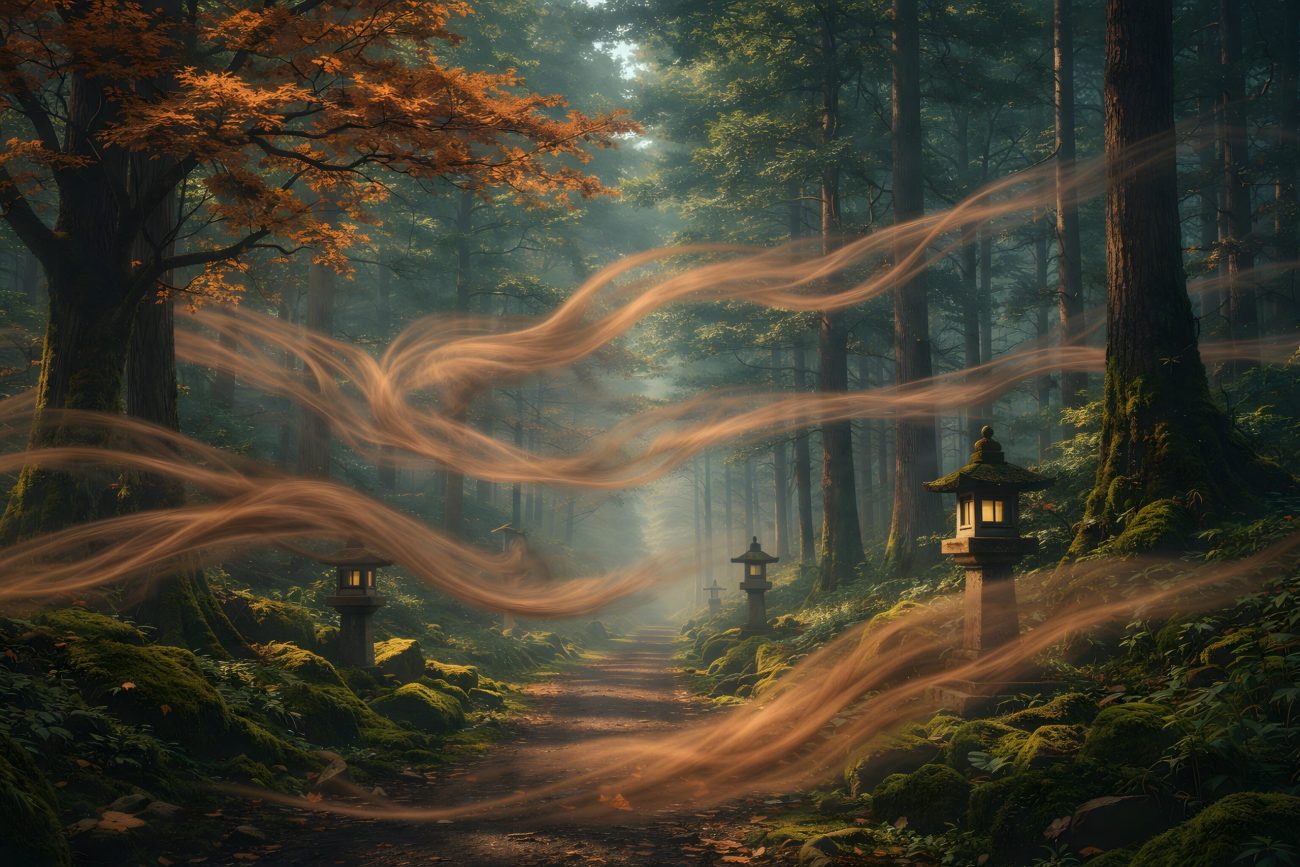
Chairo-kaze, or “Brown Wind,” is a mysterious spirit wind described by Shigeru Mizuki based on an experience from his childhood. He wrote about it in a school composition titled Brown Wind, later recalling it in his personal writings.

As a child, Mizuki would occasionally encounter a strange wind that made him feel uneasy and different from ordinary gusts of air. The experience always occurred at night, so he could never actually see the wind’s color. Despite this, he instinctively named it the “Brown Wind,” sensing that it carried an uncanny and mysterious presence.

This phenomenon is later mentioned in books about yōkai and supernatural phenomena, including sections devoted to so-called “spirit winds,” where Chairo-kaze is treated as an example of an unseen but perceptible supernatural force felt rather than seen.


Interpretive Lenses

Religious Readings
  • Christian Ascetic Deep Dive
Philosophical Readings
Psychological Readings
Esoteric Deep Dive
  • Hermetic Deep Dive
Political / Social Readings
Other

Kodama

Tradition / Region: Japanese folklore (mountain regions, Honshu, Izu Islands, Okinawa)
Alternate Names: Kidama-sama, Kodama-sama, Kiinushii
Category: Tree spirit / forest guardian


The Myth

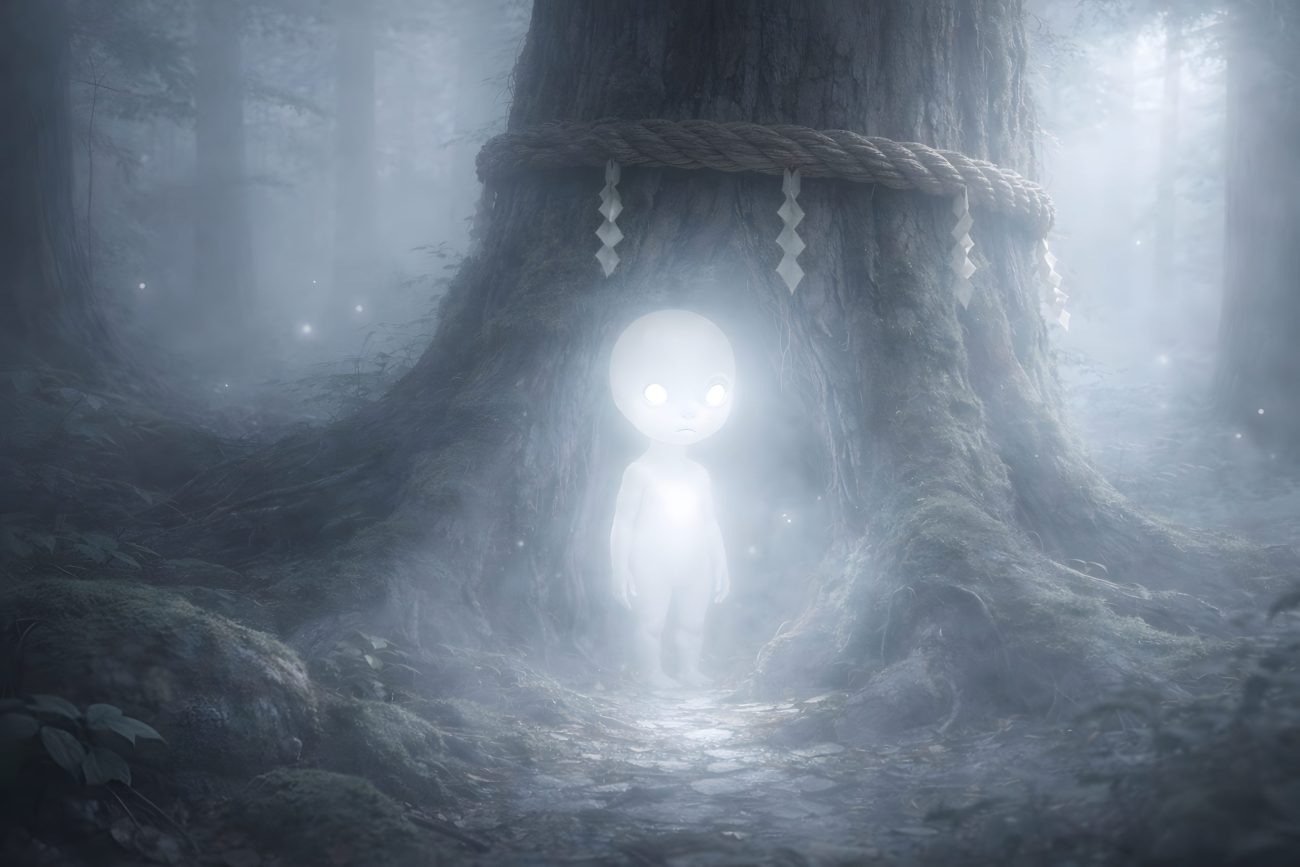
Deep in the mountainous forests of Japan, ancient trees are believed to be inhabited by spirits known as Kodama. These spirits dwell within very old trees, and their lives are inseparably bound to their host. If the tree dies, the kodama perishes with it; if the kodama is destroyed, the tree cannot survive.

Kodama are rarely seen, but their presence is often heard. In forests and mountain valleys, sounds sometimes echo longer than they should, returning with an unnatural delay. This phenomenon, known as yamabiko, is traditionally attributed to kodama responding to human voices. When they do appear visually, kodama may manifest as faint, distant orbs of light, or as small, oddly shaped, vaguely humanoid figures moving through the forest.

Although their bodies may leave the tree temporarily, kodama remain guardians of their groves, tending to the balance of nature. Trees inhabited by kodama are considered sacred. Villagers traditionally mark such trees with shimenawa, sacred ropes, to signal their divine status and warn against harm. Cutting down a tree that houses a kodama is believed to bring a powerful curse, capable of plunging an entire community into ruin. In some traditions, when an ancient tree is cut and blood appears to flow from the wood, it is taken as proof that a kodama lived within it.

The belief in tree spirits is ancient. In early Japanese texts, kodama are closely associated with gods and yōkai alike. The tree deity Kukunochi no Kami, recorded in the Kojiki (712 CE), is sometimes interpreted as a kodama. In the Heian-period dictionary Wamyō Ruijushō, tree gods are listed under the name “kodama.” Classical literature such as The Tale of Genji refers to kodama alongside oni, fox spirits, and gods, indicating their liminal nature between kami and yōkai.

Kodama are said to take many forms. Some appear as ghostly lights, others as animals or humans. One story tells of a kodama that fell in love with a human and left its tree, assuming human form in order to meet them. According to medieval Shinto texts such as the Reikiki, kodama may dwell in groups deep within the mountains and are sometimes heard speaking, particularly at moments of death.

Regional traditions preserve related beliefs. On Aogashima and Hachijō-jima in the Izu Islands, shrines are built at the base of great cryptomeria trees and worshipped under the names kidama-sama or kodama-sama, and festivals are held whenever such trees are cut. On Okinawa, tree spirits are called kiinushii, and prayers are made before felling any tree. Nighttime sounds resembling falling trees are believed to be the cries of kiinushii, followed by the tree withering days later. The Okinawan yōkai kijimuna is sometimes said to be a manifestation of these spirits.

In the Gazu Hyakki Yagyō by Toriyama Sekien, kodama are depicted as elderly men and women standing among trees, with the explanation that when a tree reaches a hundred years of age, a divine spirit comes to dwell within it. Through these traditions, kodama remain enduring symbols of the living soul of the forest and the sacred bond between trees and spirit.


Interpretive Lenses

Religious Readings
Philosophical Readings
Psychological Readings
Esoteric Deep Dive
  • Hermetic Deep Dive
Political / Social Readings
Other